

P0138 on 2010-2011 Toyota Camry 2.5L: O2 Sensor High Voltage Causes and Fixes
On a 2010-2011 Camry with the 2.5L 2AR-FE engine, P0138 is often misleading. Due to a known issue covered by Toyota TSB T-SB-0151-18, the most likely cause is a faulty upstream Air/Fuel sensor and outdated computer software, not the downstream O2 sensor. The fix usually requires a dealer to update the software and, in many cases, replace the upstream A/F sensor.
- For a 2010-2011 Camry 2.5L, do NOT automatically replace the rear O2 sensor for code P0138.
- The most probable cause is a known issue with the upstream Air/Fuel sensor and outdated computer software, as documented in Toyota TSB T-SB-0151-18.
- First, verify with a dealer if the TSB applies to your VIN (non-PZEV models only) and if the software update has been performed.
- If the TSB has been performed or does not apply, then proceed with standard diagnosis of the downstream O2 sensor and its wiring.
- When replacing sensors, use high-quality OEM (Toyota) or OEM-supplier (Denso) parts to ensure a lasting repair.
What's Unique About the 2010-2011 Toyota Camry
For this specific vehicle and engine, P0138 is frequently a 'tattletale' code. Toyota issued a Technical Service Bulletin (T-SB-0151-18), revised in December 2018, because the upstream Air/Fuel sensor can fail in a way that causes a rich exhaust condition. The downstream O2 sensor (Sensor 2) correctly reports this rich condition with a high voltage signal, triggering the P0138 code, even though the downstream sensor itself is working properly. This issue specifically affects non-PZEV (Partial Zero Emission Vehicle) models, and the official fix involves updating the engine computer's software and replacing the upstream A/F sensor. You can identify if your car is PZEV by checking the Vehicle Emission Control Information label under the hood.
Symptoms You May Notice
- Check Engine Light is on
- Potential for slightly reduced fuel economy
- Failure of a vehicle emissions test
- Possible disabling of VSC/TRAC warning lights on the dashboard.
- Potential for a strong exhaust odor due to a rich fuel mixture.
- Immediately replacing the downstream O2 sensor (Bank 1, Sensor 2) without first checking if TSB-0151-18 applies. This is the most common mistake on this specific vehicle, as the downstream sensor is often just reporting a problem from upstream.
- Replacing the catalytic converter. P0138 indicates a sensor circuit issue, not a converter efficiency problem, which would typically set a P0420 code.
Most Likely Causes
- Faulty Upstream Air/Fuel Sensor and Outdated ECM Logic (per TSB-0151-18) 🔴 High Probability Toyota identified an issue with the original A/F sensor's response characteristics and released a software update for the ECM to correct the diagnostic logic for non-PZEV models. The downstream sensor sets a code for a problem caused by the upstream sensor.
How to confirm: A Toyota dealer or a shop with a Techstream scan tool can check if TSB-0151-18 is applicable to your VIN and if the software update has been performed. The TSB applies to 2010-2011 Camry and 2009-2012 RAV4 with the 2AR-FE non-PZEV engine.
Typical fix: Reprogram the ECM with the updated software available from Toyota. The TSB procedure specifies replacing the upstream Air/Fuel Ratio Sensor (Bank 1, Sensor 1) as part of the repair. The ECM itself should not be replaced.
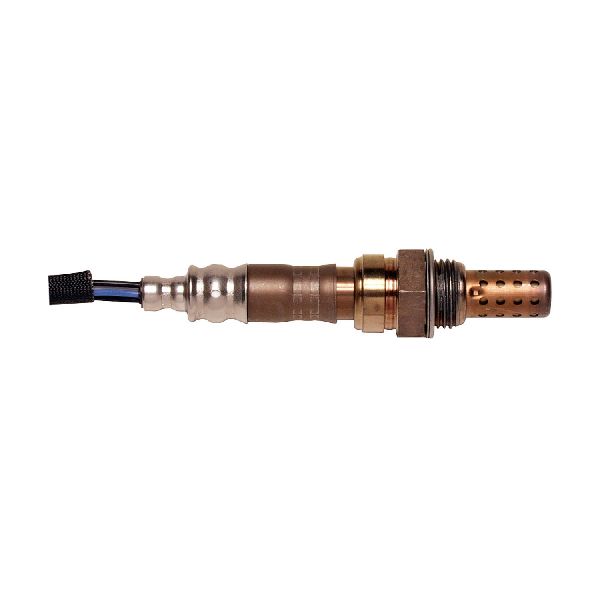
Est. part cost: $150-$280 - Failed Downstream Oxygen Sensor (Bank 1, Sensor 2) 🟡 Medium Probability → Shop Oxygen Sensor This is a standard wear-and-tear item that typically has a lifespan of 80,000-100,000 miles. If the TSB for the upstream sensor issue does not apply or has already been performed, this becomes the next likely cause. Owners often report this is a straightforward DIY replacement.
How to confirm: Using a scan tool, observe the live data for the B1S2 sensor. If the voltage is stuck high (e.g., above 0.9V) and does not fluctuate during normal operation (warm engine, steady RPM), the sensor has likely failed internally. A healthy downstream sensor should show relatively stable voltage, while the upstream A/F sensor fluctuates.
Typical fix: Replace the downstream oxygen sensor (Bank 1, Sensor 2). Using a 22mm oxygen sensor socket is recommended. Applying a penetrating lubricant like PB Blaster beforehand can help with removal.
Est. part cost: $60-$180 - Wiring or Connector Issue ⚪ Low Probability The wiring for the downstream sensor is located under the vehicle and is exposed to road debris, moisture, and heat from the exhaust, making it susceptible to damage over time.
How to confirm: Visually inspect the wiring harness and connector for the downstream O2 sensor for any signs of damage, melting from exhaust contact, corrosion in the pins, or a loose connection. Also check the associated fuse, often labeled 'A/F Heater' or similar in the engine bay fuse box.
Typical fix: Repair the damaged section of wiring or clean/replace the connector.
Est. part cost: $5-$50
Rare But Worth Checking
- Exhaust Leak: A significant exhaust leak between the upstream and downstream sensors can introduce oxygen and cause erratic sensor readings, though this more commonly leads to other codes.
- Failing Engine Control Module (ECM): This is extremely rare. Before condemning the ECM, all other possibilities, especially the TSB-related issue, must be thoroughly ruled out. Toyota explicitly states in TSB-0151-18 not to replace the ECM for this issue, but to reprogram it.
- Fuel Delivery Issue: A condition causing the engine to run excessively rich, such as a leaking fuel injector or high fuel pressure, could cause the downstream O2 sensor to read high voltage. This would typically be accompanied by other codes and symptoms.
Diagnosis Steps
- Connect an OBD-II scanner and confirm that P0138 is the primary code present.
- Check the Vehicle Emission Control Information label under the hood to determine if your Camry is a PZEV or non-PZEV model. The TSB only applies to non-PZEV.
- Contact a Toyota dealer or qualified shop with the vehicle's VIN to determine if TSB T-SB-0151-18 applies to your vehicle and if the software update has ever been performed.
- If the TSB applies and has not been performed, this is the most likely cause. The recommended fix is to have the ECM reprogrammed and the upstream A/F sensor replaced per the TSB.
- If the TSB does not apply or has already been performed, proceed with diagnosing the downstream sensor.
- Use the scanner to monitor live data for 'O2S B1S2'. Confirm if the voltage is stuck high (e.g., > 0.9V) while the engine is warm and running.
- Perform a thorough visual inspection of the downstream oxygen sensor's wiring and connector. Look for any signs of melting, chafing, corrosion, or loose pins.
- If the wiring is intact and the TSB has been addressed, the downstream oxygen sensor (Bank 1, Sensor 2) is the most likely failed component and should be replaced. It is highly recommended to use an OEM or Denso-branded sensor.
Parts You'll Likely Need
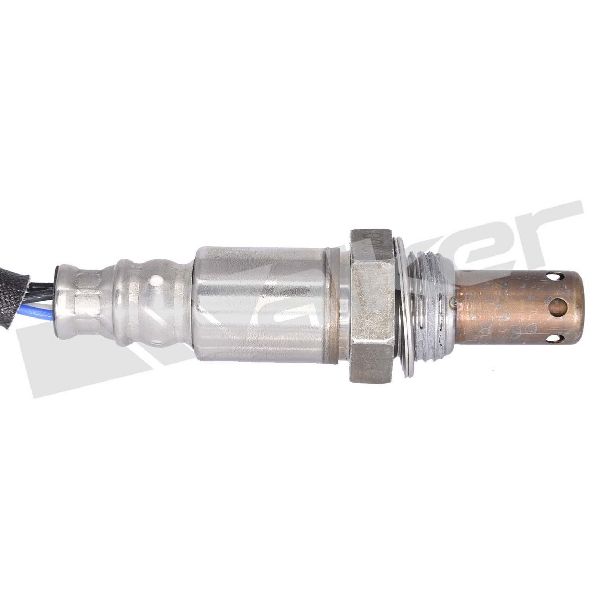
- Upstream Air/Fuel Ratio Sensor (Bank 1, Sensor 1)
(OEM #89467-06140)— This is the most likely cause of P0138 on this specific vehicle, as identified by Toyota TSB-0151-18.
Trusted brands: Denso (p/n 234-9049)
OEM price range: $200-$280
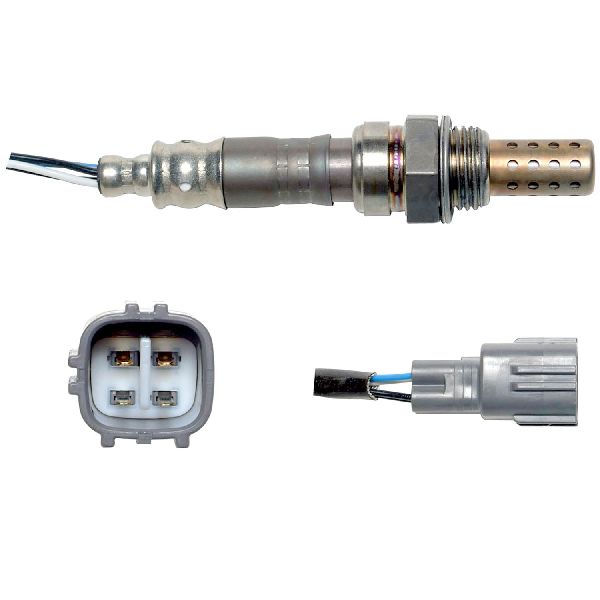
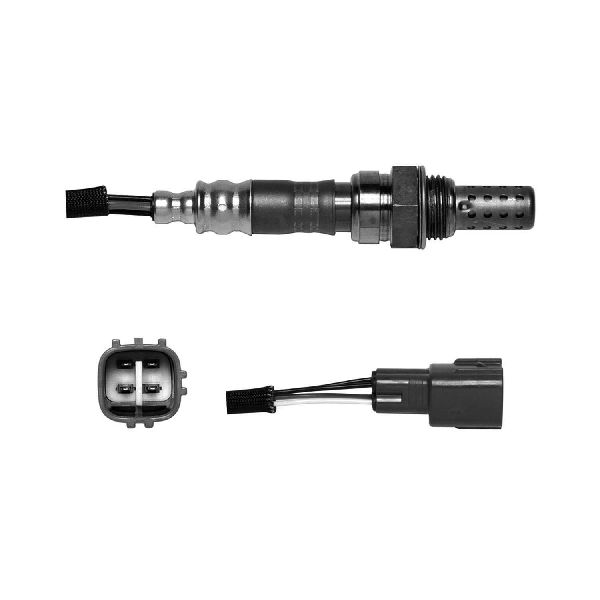
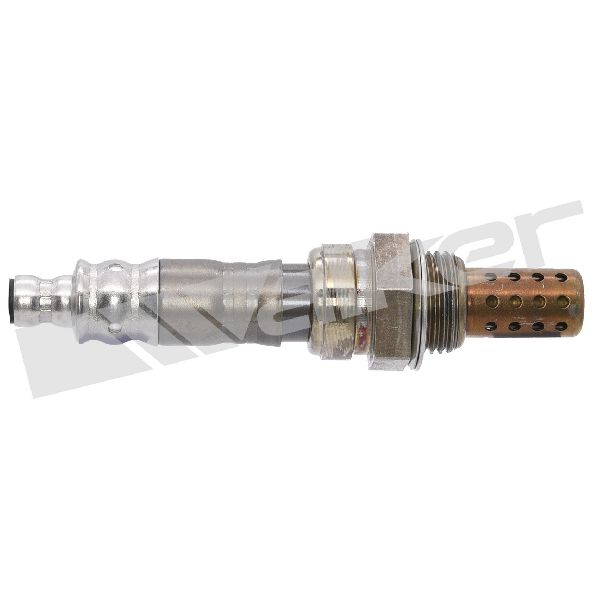
Aftermarket price range: $150-$250 - Downstream Oxygen Sensor (Bank 1, Sensor 2)
(OEM #89465-06240)— If the TSB does not apply or the issue persists after the ECM update, the downstream sensor itself is the next most common failure point.
Trusted brands: Denso (p/n 234-4622), Bosch
OEM price range: $120-$180
Aftermarket price range: $70-$110
Related Codes That Often Appear With This One
- P2195 — This code for "A/F Sensor Signal Stuck Lean (Bank 1, Sensor 1)" can sometimes accompany P0138, further pointing to the upstream Air/Fuel sensor as the root cause, as noted in other Toyota TSBs.
- P0606 — This code for "ECM/PCM Processor" can occasionally appear with O2 sensor codes. Toyota has noted this can be triggered by incorrect oxygen sensor operation and may not indicate a true ECM failure. 🎬 Watch: How to diagnose P0607 and P0138 codes together.
Technical Service Bulletins (TSBs) & Recalls
- T-SB-0151-18 (Revised Dec. 5, 2018): Addresses an issue where P0138 is set due to the upstream A/F sensor's characteristics, requiring an ECM update and potential A/F sensor replacement on non-PZEV 2AR-FE engines.
Platform-Specific Known Issues
- A Technical Service Bulletin (T-SB-0151-18) was issued by Toyota for 2010-2011 Camry models with the 2AR-FE engine (non-PZEV) for this specific code. The bulletin states that the issue is caused by the characteristics of the upstream A/F sensor and requires an ECM software update to fix.
Mechanic-Grade Diagnostic Values
- Downstream O2 Sensor (B1S2) Live Data Voltage (Warm Engine) — expected: Relatively stable, lazy fluctuation between 0.1V and 0.9V at steady speed.. Failure: Voltage is stuck high, consistently above 0.9V, often at 1.25V.
- Upstream A/F Sensor (B1S1) Live Data Voltage (Warm Engine, Idle) — expected: Stable between 2.8V and 3.8V.. Failure: Voltage biased high or low, for example, a constant 3.4V reading can indicate a lean bias, causing the ECM to command a rich mixture.
- Downstream O2 Sensor (B1S2) Heater Resistance — expected: Approximately 5 to 16 Ω at 20°C (68°F).. Failure: A reading significantly outside this range or an open circuit (infinite resistance) indicates a failed internal heater.
- Upstream A/F Sensor (B1S1) Heater Resistance — expected: 0.8 to 1.4 Ω at 20°C (68°F) between terminals +B and HT.. Failure: Resistance outside this narrow range indicates a faulty heater element.
Scan Tool Commands That Help
- Toyota Techstream: Active Test: Control the Injection Volume for A/F sensor — This dealer-level function is used to manually command the fuel mixture rich (+12.5% or +25%) or lean (-12.5%). A technician watches the B1S2 voltage response. If the voltage remains stuck high even when a lean mixture is commanded, it confirms the fault is with the B1S2 sensor or its circuit, not a true rich condition.
Wiring & Ground Locations
- Bank 1 Sensor 2 Connector — Underneath the car, a gray connector for the sensor located on the exhaust pipe after the catalytic converter.. This connector is exposed to road debris, moisture, and heat. Corrosion or damage at this point can cause a short or poor connection, leading to the high voltage reading of P0138.
- A/F Heater Fuse — Located in the engine bay fuse box, often labeled 'A/F Heater' or similar.. This fuse supplies power to the heater circuits for the A/F and O2 sensors. While a blown fuse typically causes a heater circuit code (like P0037/P0038), it should be checked as part of a complete electrical diagnosis.
- Engine Harness Grounds — Key grounding points for the engine harness are typically bolted directly to the cylinder head or engine block in the engine compartment.. A corroded or loose main engine ground can introduce electrical noise and voltage offsets throughout the engine management system, potentially affecting sensor readings. While not a common cause for this specific code, it's a foundational check for any electrical fault.
Real Owner Repair Stories
- YouTube channel 'my digital life' via article analysis (2007 Toyota Camry Hybrid (Illustrates the same principle)) — Check Engine Light with code P0138.
❌ Tried (didn't work) Replacing the downstream O2 sensor (Bank 1, Sensor 2).
✅ What actually fixed it The upstream Air/Fuel Ratio sensor (B1S1) was found to be biased lean (stuck at 3.4V), causing the ECM to command an overly rich mixture. The new downstream sensor was correctly reporting this rich condition with a high voltage. Replacing the faulty *upstream* A/F sensor resolved the P0138 code. - PriusChat Forum User (2006 Toyota Prius) — P0138 code, decreased fuel mileage.
❌ Tried (didn't work) Replacing the downstream O2 sensor had no effect on the code.
✅ What actually fixed it The user was advised to check short-term and long-term fuel trims. A high positive total fuel trim (e.g., +10% or more) would indicate the ECM is adding fuel to compensate for a lean reading from a faulty upstream A/F sensor, which is the likely root cause.
OEM Part Supersession History
Varies by VIN→89467-06140 (Upstream A/F Sensor for Camry per TSB)— Updated part to address incorrect response characteristics.
Heads up: The TSB lists a different A/F sensor part number for the RAV4 (89467-42120) even though it also has a 2AR-FE engine. This highlights that parts are not interchangeable based on engine alone; VIN verification is critical.89465-33520 (Example Downstream O2 Sensor)→89465-06290— Standard part revision and consolidation.
Heads up: Multiple part numbers exist for the downstream sensor for this model year (e.g., 89465-06240, 89465-06250). Using a non-OEM brand or the wrong OEM part number, even if it physically fits, can cause the code to persist. Always confirm the correct part number with the vehicle's VIN.
Model Year Variations Within This Range
- 2010-2011: The primary variation for this fault is not between model years, but between emission specifications. The TSB T-SB-0151-18 and its specific fix only apply to non-PZEV (Partial Zero Emission Vehicle) models. PZEV models have different software and potentially different sensor characteristics and do not fall under this specific bulletin.
Diagnostic Flowchart
Other Known Issues on This Vehicle
Issues unrelated to this code that are worth knowing about as an owner of this generation:
- Excessive Oil Consumption 🟠 Medium — Affects some 2AR-FE engines, particularly earlier models. Owners report consumption rates from one quart every 1,200 miles to as high as one quart every 500 miles. The issue is often attributed to the design of the low-tension piston rings. (Ref: While a well-known issue for the predecessor 2AZ-FE engine (with a warranty extension), there is no official TSB or recall specifically for oil consumption on the 2AR-FE.)
- Torque Converter Shudder 🟡 Low — More common on the slightly later 2012-2014 models with the U760E transmission, but can occur. Feels like driving over rumble strips under light throttle between 25-50 mph. (Ref: T-SB-0312-17 and a subsequent warranty extension program (ZE7) were issued for 2012-2014 models, but the underlying transmission design is similar. The first step is often a transmission fluid flush.)
- VVT-i Actuator Rattle on Cold Start 🟡 Low — Some early 2AR-FE engines can develop a brief rattling or knocking sound for a few seconds on a cold start. This is often caused by the VVT-i cam gear actuator. (Ref: Toyota issued a service bulletin for this issue on some models, offering a repair under warranty.)
- Water Pump Failure 🟡 Low — Considered a standard wear item, but failures can occur, typically after 80,000-100,000+ miles. Can present as a slow coolant leak or, more seriously, an internal failure leading to overheating.
Used vs. New Parts: Buying Guide for This Vehicle
When a used part is the smart pick: For this repair, a used part is almost never a smart choice. Oxygen and A/F sensors are wear-and-tear items with a finite lifespan. The cost savings are minimal compared to the risk of installing a part that is already failing or will fail soon, requiring the labor to be done a second time.
Donor-vehicle mileage cap: roughly under 20000 miles for the part to have meaningful remaining life.
What to inspect on the donor part:
- If forced to consider a used sensor, only choose one from a very low-mileage vehicle that was wrecked.
- Inspect the sensor tip for heavy, black, sooty deposits (rich running) or white, chalky deposits (oil/coolant contamination), all of which are bad signs.
- Ensure the wiring and connector are completely intact with no brittleness or signs of melting.
OEM-only on this vehicle (don't cheap out):
- Upstream Air/Fuel Ratio Sensor
- Downstream Oxygen Sensor
Aftermarket brands forum-validated for this vehicle:
- Denso (This is the Original Equipment Manufacturer for Toyota and is the most highly recommended).
- NTK (Also a highly regarded OEM supplier, considered a safe alternative to Denso).
Brands owners have reported issues with on this vehicle:
- Generic or unbranded 'universal' sensors that require splicing wires.
- While Bosch is a reputable brand, some forum users report compatibility issues specifically with Toyota applications, making Denso or NTK a safer bet.
Real Owner Stories
Aggregated from forums and TSBs cited above. Mileages and costs reflect what owners reported in those sources.
2010 Toyota Camry 2.5L 2AR-FE
Symptoms: The owner experienced both P0138 and P2195 codes simultaneously. The discussion noted the common mistake of replacing the downstream sensor first without addressing the TSB.
What fixed it: Replacing the upstream A/F sensor and performing an ECM reflash as per the TSB.
Source hint: ToyotaNation Forums thread titled 'p0138-and-p2195-on-2010-camry-2-5l.1678287/'
2011 Toyota Camry 2AR-FE
Symptoms: The owner reported code P0138 and noted that a mechanic had already attempted to swap sensors without successfully resolving the issue.
What fixed it: The thread suggests the standard fix is replacing the downstream sensor, though it notes confusion regarding the TSB logic.
Source hint: Reddit r/Cartalk thread titled '2011_camry_code_p0138/'
Related OBD-II Codes
Frequently Asked Questions
Does TSB-0151-18 apply to my 2010 Toyota Camry PZEV model?
Should I replace the ECM to fix the P0138 code on my 2011 Camry?
Why is my VSC and TRAC light on along with the Check Engine Light for P0138?
Can I use any aftermarket sensor to replace the downstream oxygen sensor?
Is there a specific tool I need to change the Bank 1, Sensor 2 oxygen sensor myself?
How can I tell if my Camry is a PZEV or non-PZEV model for the TSB?
Helpful Videos

We Have This Part in Stock


The information in this article is provided for general reference and educational purposes only. Vehicle specifications, procedures, and part compatibility can vary by production date, trim level, and region. Always consult your vehicle's factory service manual and verify part numbers before purchasing or performing repairs. Safety-critical components such as airbags, seat belts, and braking systems should be installed by a qualified professional.
- Toyota Camry:
- 🧭 Diagnostic Flowchart
- 🎬 Helpful Videos
- 🛍️ Shop This Part
- What's Unique About the 2010-2011 Toyota Camry
- Symptoms You May Notice
- Most Likely Causes
- Rare But Worth Checking
- Diagnosis Steps
- Parts You'll Likely Need
- Related Codes That Often Appear With This One
- Technical Service Bulletins (TSBs) & Recalls
- Platform-Specific Known Issues
- Mechanic-Grade Diagnostic Values
- Scan Tool Commands That Help
- Wiring & Ground Locations
- Real Owner Repair Stories
- OEM Part Supersession History
- Model Year Variations Within This Range
- Other Known Issues on This Vehicle
- Used vs. New Parts: Buying Guide for This Vehicle
- Real Owner Stories
- 2010 Toyota Camry 2.5L 2AR-FE
- 2011 Toyota Camry 2AR-FE
- Related OBD-II Codes
- Frequently Asked Questions
- 🎟️ Get 5% Off