

P0138 on 2009-2013 Toyota Corolla: O2 Sensor High Voltage Causes and Fixes
On a 2009-2013 Corolla, code P0138 is often a 'tattletale' code. While it points to the downstream O2 sensor (Sensor 2), the actual cause is frequently a failing upstream Air/Fuel Ratio sensor (Sensor 1). Before replacing any parts, check the upstream sensor's live data. A new Denso A/F sensor is about $120-$140. Also, check for water under the passenger carpet, as a clogged A/C drain can short the sensor's connector.
- Do not automatically replace the downstream (Sensor 2) oxygen sensor. The P0138 code on this Corolla is very often caused by a failing upstream (Sensor 1) Air/Fuel Ratio sensor.
- Use a scan tool to watch live data for both sensors. A lazy or stuck upstream sensor is a strong clue.
- Before buying parts, pull back the passenger-side carpet and check the downstream O2 sensor connector for moisture or corrosion from the A/C drain.
- When replacing sensors, use a quality brand like Denso, which is the Original Equipment Manufacturer (OEM) for Toyota.
- Ignoring this code can lead to poor fuel mileage and potential damage to your catalytic converter.
What's Unique About the 2009-2013 Toyota Corolla
On this generation of Corolla and its platform-mates (Matrix, Vibe), mechanics and owners frequently report that P0138 is misleading. The downstream sensor (Sensor 2) that triggers the code is often working perfectly; it's simply reporting a rich exhaust condition caused by a failing upstream Air/Fuel Ratio sensor (Sensor 1). Additionally, the downstream sensor's electrical connector is located inside the cabin. While a GM TSB for the Pontiac Vibe points to water damage on the passenger side from a clogged A/C drain, multiple owner videos for the Toyota Corolla specifically show the connector is located under the driver's side carpet, making the A/C drain a less likely cause for the Corolla sedan.
Symptoms You May Notice
- Check Engine Light is on
- Traction control light may also illuminate
- Decreased fuel economy
- Rough or unstable idle
- Failing a vehicle emissions test
- Immediately replacing the downstream O2 sensor (Sensor 2) without first checking the live data from the upstream Air/Fuel Ratio sensor (Sensor 1). The upstream sensor is the more likely culprit on this vehicle.
Most Likely Causes
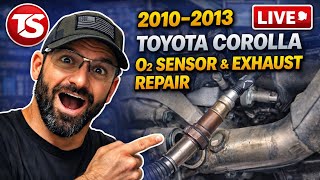
- Failing Upstream Air/Fuel Ratio Sensor (Bank 1, Sensor 1) 🔴 High Probability → Shop Oxygen Sensor This is a widely documented 'tattletale' scenario on this platform. The A/F sensor becomes lazy or fails, causing a rich fuel mixture. The downstream O2 sensor correctly reports this rich condition with a high voltage signal, triggering P0138. 🎬 Watch: A detailed breakdown of why this code triggers on Corollas.
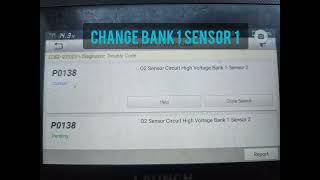
How to confirm: Use an OBD-II scanner to monitor live data for the upstream A/F sensor (B1S1). A healthy sensor will show fluctuating voltage/equivalence ratio readings that respond quickly to engine RPM changes. A failing sensor may be stuck or slow to respond, causing the downstream sensor (B1S2) to read consistently high.
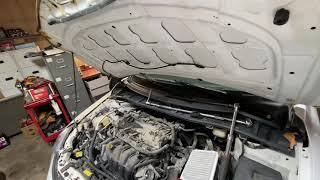
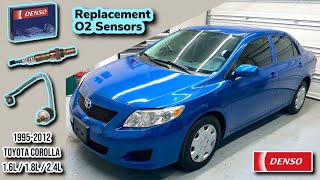
Typical fix: Replace the upstream Air/Fuel Ratio sensor located on the exhaust manifold. 🎬 Watch: How to replace the upstream and downstream oxygen sensors. The OEM part is Denso. Note that the part number differs by model year.
Est. part cost: $120-$250 - Failed Downstream Oxygen Sensor (Bank 1, Sensor 2) 🟡 Medium Probability → Shop Oxygen Sensor Oxygen sensors are wear items and fail over time due to heat and contaminants. While often replaced unnecessarily for this code, it can be the actual point of failure, especially if the voltage is stuck at a fixed high value like 1.25V.
How to confirm: With a scanner, check live data for B1S2. If the voltage is stuck high (e.g., >1.1V) and the upstream A/F sensor appears to be functioning correctly, the downstream sensor has likely failed internally. You can also test the sensor's internal heater resistance, which should typically be between 5 and 20 ohms when cold.
Typical fix: Replace the downstream oxygen sensor located after the catalytic converter. 🎬 See this DIY walkthrough for replacing the downstream sensor and bolts. The OEM part is Denso.
Est. part cost: $80-$150 - Water Intrusion or Damage at Downstream O2 Sensor Connector ⚪ Low Probability → Shop Oxygen Sensor The downstream O2 sensor harness for the Corolla runs through the floor and connects under the driver-side carpet, near the center console. While less common than on the Pontiac Vibe (where a clogged A/C drain on the passenger side is a known issue), moisture can still enter the cabin and corrode or short out the connector pins.
How to confirm: Pull back the driver-side floor mat and carpet near the center console and pedals. Inspect the area for moisture, rust, or green/white corrosion on the O2 sensor's electrical connector.
Typical fix: Dry out the connector (using compressed air, for example) and clean the pins with electrical contact cleaner. Apply dielectric grease to the connector to prevent future moisture intrusion. Find and fix the source of the water leak.
Est. part cost: $5-$50
Rare But Worth Checking
- Exhaust Leak: An exhaust leak between the upstream and downstream O2 sensor can allow extra oxygen into the exhaust stream, which can sometimes confuse the sensor readings and, in rare cases, contribute to this code.
- Failing Catalytic Converter: While a failing converter typically triggers a P0420 code, a severely damaged or clogged converter can sometimes cause erratic O2 sensor readings, including a P0138. This is usually a last resort after sensors and wiring have been checked. One owner reported this was the ultimate fix after a new sensor didn't work.
- PCM (Engine Computer) Issue: In very rare cases, a fault within the Powertrain Control Module itself can cause a false P0138 code. Toyota has issued TSBs for other models of this era where an ECM software update was required to correct a P0138. This should only be considered after all other possibilities have been exhausted.
Diagnosis Steps
- Connect an OBD-II scanner and confirm the P0138 code is present. Note any other codes like P0136 or P0607.
- View live data. Pay attention to 'O2S B1S1' (Upstream A/F Sensor) and 'O2S B1S2' (Downstream O2 Sensor).
- Observe B1S2 voltage. If it is stuck high (e.g., > 0.9V, often at 1.1V or 1.25V), this confirms the reading that set the code.
- Critically, observe B1S1 data. Does it react quickly to throttle changes? If it is stuck, slow, or reading lean, it is the primary suspect for causing a rich condition that B1S2 is reporting.
- If B1S1 seems okay, the next step is to inspect the wiring. Pull back the driver-side carpet and locate the downstream O2 sensor connector. Check for any signs of water damage, corrosion, or loose pins.
- If the connector is wet, dry it thoroughly, clean with contact cleaner, apply dielectric grease, and find and fix the water leak.
- If wiring and connector are clean and dry, perform a wiring test. Check for 12V heater power (+B), ground, and the signal wires (OX1B, E2) at the connector with the key on.
- If the wiring and upstream A/F sensor are confirmed to be working properly, the downstream O2 sensor (B1S2) is the most likely failed component.
- Before replacing any sensor, inspect the exhaust system for any obvious leaks between the upstream and downstream sensors.
Parts You'll Likely Need
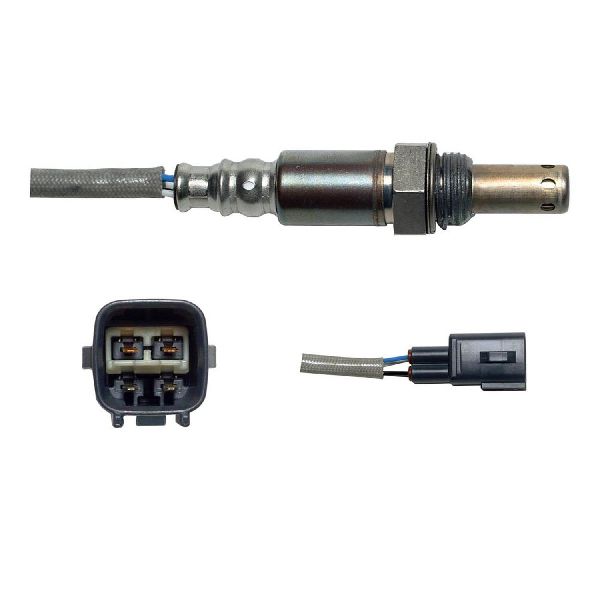
- Upstream Air/Fuel Ratio Sensor (Bank 1, Sensor 1)
(OEM #Denso 234-9056 (2009-2010) or Denso 234-9112 (2011-2013))— This is the most common root cause of P0138 on this Corolla, as it fails and causes a rich condition that the downstream sensor reports.
Trusted brands: Denso (OEM)
OEM price range: $180-$250
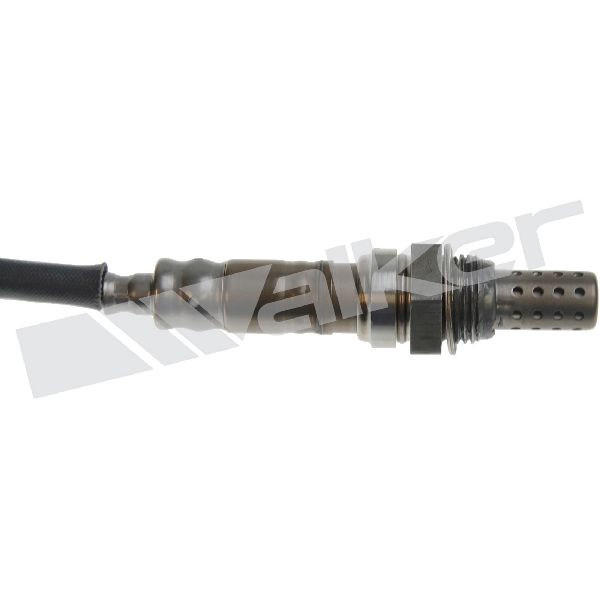
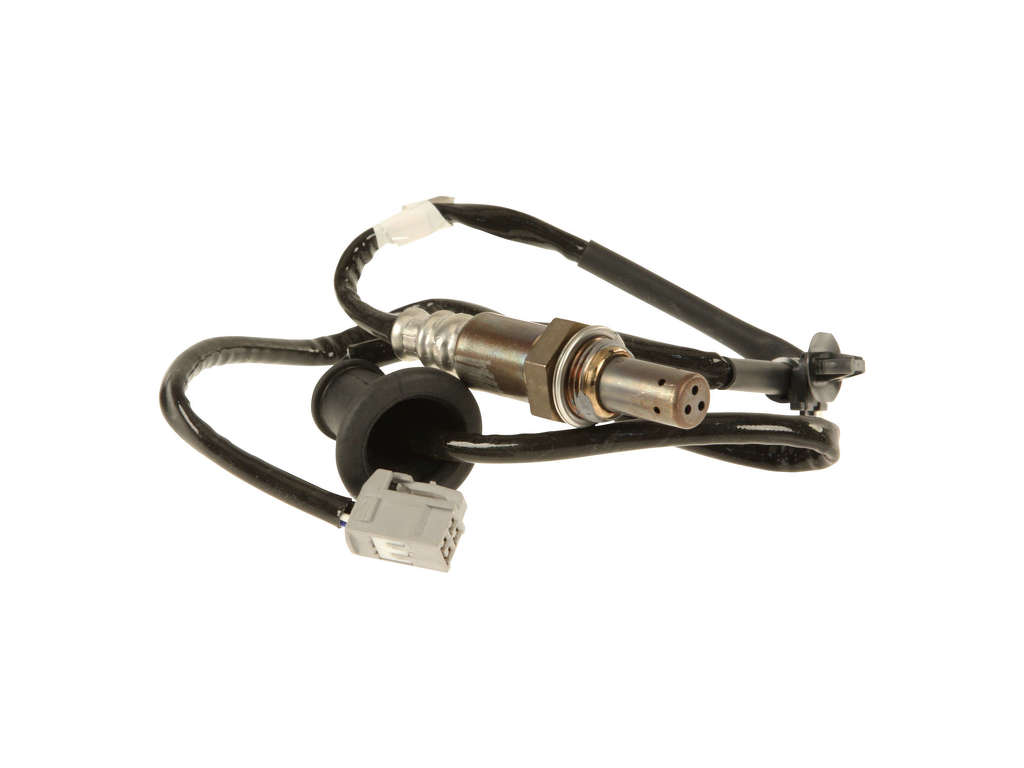
Aftermarket price range: $120-$160 - Downstream Oxygen Sensor (Bank 1, Sensor 2)
(OEM #Denso 234-4305 (replaces OEM 89465-02380))— This is the part directly indicated by the code. It may have failed, or it may be replaced due to misdiagnosis.
Trusted brands: Denso (OEM), Bosch, NTK
OEM price range: $150-$200
Aftermarket price range: $80-$130
Related Codes That Often Appear With This One
- P0136 — P0136 indicates a general circuit malfunction for the same sensor (Bank 1, Sensor 2), and the two codes often appear together when the sensor or its wiring has a serious fault.
- P0607 — This code for 'Control Module Performance' can sometimes appear alongside P0138, specifically when the cause is water intrusion shorting the O2 sensor connector. The water can cause broader electrical communication issues. This is more commonly documented on the Pontiac Vibe platform-mate.
Technical Service Bulletins (TSBs) & Recalls
- GM TSB #10-06-04-010A: While for the Pontiac Vibe, this TSB directly addresses P0138 and P0607 caused by a restricted A/C drain tube allowing water to drip on the downstream O2 sensor connector inside the vehicle. This is directly applicable to the identical Toyota Matrix and Corolla.
Platform-Specific Known Issues
- The electrical connector for the downstream O2 sensor is located inside the vehicle. On the Corolla sedan, this is under the driver-side carpet near the center console, not the passenger side as on the related Pontiac Vibe.
- The upstream Air/Fuel Ratio sensor is a common failure point that causes a rich fuel mixture, which in turn causes the downstream sensor to report a high voltage, setting the P0138 code as a 'tattletale'.
Mechanic-Grade Diagnostic Values
- Downstream O2 Sensor (B1S2) Heater Resistance — expected: 5 to 20 Ohms (when cold). Failure: An open circuit (infinite resistance) or resistance far outside the expected range indicates a failed heater element.
- Downstream O2 Sensor (B1S2) Voltage at Idle — expected: Relatively stable voltage, typically between 0.1V and 0.9V.. Failure: Voltage stuck consistently high, above 1.1V, for an extended period.
- Downstream O2 Sensor (B1S2) Voltage during Techstream Active Test — expected: During the 'Control the Injection Volume for A/F sensor' test, voltage should respond to commanded rich/lean conditions.. Failure: If voltage does not change or responds sluggishly when commanding +/- 12.5% fuel injection, it points to a sensor or circuit issue.
Scan Tool Commands That Help
- Toyota Techstream: Active Test: Control the Injection Volume for A/F sensor — This is a critical test to determine if the upstream A/F sensor is responding correctly. By commanding a -12.5% (lean) or +12.5% (rich) fuel change, a technician can observe the live data from both the upstream and downstream sensors to see if they react as expected. A lazy upstream sensor will fail to respond properly, confirming it as the likely root cause of the P0138.
Wiring & Ground Locations
- Downstream O2 Sensor Connector — Inside the cabin, under the driver's side carpet, near the center console. Requires pulling back the carpet and possibly a plastic trim piece to access.. This is the physical connection point for the sensor. It can be a point of failure due to corrosion from moisture in the cabin or physical damage from being kicked or having wires stressed.
- ECM Pins (B4 Connector) — At the Engine Control Module (ECM).. These are the specific terminals where the downstream O2 sensor communicates with the ECM. Pin 1: HT1B (Heater Control), Pin 2: OX1B (Sensor Signal), Pin 3: +B (Heater Power), Pin 4: E2 (Sensor Ground). This is essential for advanced circuit testing.
Real Owner Repair Stories
- Reddit user on r/Toyota (2011 Toyota Corolla, ~180,000 miles) — Check Engine Light and traction light on, code P0138. Live data showed downstream O2 sensor stuck at 1.25V.
❌ Tried (didn't work) Replaced upstream O2 sensor (fixed a previous code, but P0138 appeared a month later)., Replaced downstream O2 sensor (code P0138 returned after 3 days)., Repaired an exhaust leak.
✅ What actually fixed it Replacing the catalytic converter with an OEM part. The original converter was damaged by coolant contamination from a prior head gasket failure and engine misfires.
Model Year Variations Within This Range
- 2009-2010 vs 2011-2013: The upstream Air/Fuel Ratio Sensor (Bank 1, Sensor 1) has a different part number. 2009-2010 models use Denso 234-9056. 2011-2013 models use Denso 234-9112 (or 234-9301 for Japan-built vehicles). Using the wrong part can cause persistent issues. The downstream sensor (Denso 234-4305) remains the same for all years.
Diagnostic Flowchart
Other Known Issues on This Vehicle
Issues unrelated to this code that are worth knowing about as an owner of this generation:
- Premature Water Pump Failure 🔴 High — Commonly reported between 60,000 and 100,000 miles. Failure can cause overheating and lead to catastrophic engine damage if ignored.
- Excessive Oil Consumption 🟠 Medium — The 2009 model year is particularly noted for this issue, where the engine may consume oil at a high rate, requiring frequent top-offs. A related TSB (EG045-07) was issued for the earlier 1ZZ-FE engine, but the 2ZR-FE in the 2009 model is also widely reported by owners to have this problem. (Ref: TSB EG045-07 (for previous engine, but issue is known on 2ZR-FE))
- Melting/Sticky Dashboard 🟡 Low — In conditions of high heat and humidity, the dashboard material can degrade, becoming sticky, shiny, and prone to cracking. While not a mechanical failure, it is a widespread cosmetic issue. (Ref: Toyota Warranty Enhancement Program ZE6 (Note: While the Corolla was not officially on the list, many other Toyotas of this era were, and the issue is reported on Corollas. Owners may have had success getting coverage.))
- Faulty Starter Motor 🟠 Medium — A common failure point where the starter produces a single click but does not turn the engine over, even with a good battery.
- Clunking from Steering Intermediate Shaft 🟡 Low — A clunking or popping noise may be heard when turning the steering wheel at low speeds, caused by a faulty intermediate shaft.
Used vs. New Parts: Buying Guide for This Vehicle
When a used part is the smart pick: For this repair, using used parts is not recommended for the sensors themselves. The only scenario where a used part is viable is sourcing a wiring connector pigtail from a junkyard if the original connector is physically broken.
Donor-vehicle mileage cap: roughly under 150000 miles for the part to have meaningful remaining life.
What to inspect on the donor part:
- For a connector pigtail, ensure the plastic is not brittle or cracked.
- Check for any signs of corrosion (green or white powder) on the pins.
- Ensure the locking tab is intact and functional.
OEM-only on this vehicle (don't cheap out):
- Air/Fuel Ratio Sensor (Upstream)
- Oxygen Sensor (Downstream)
- Catalytic Converter
Aftermarket brands forum-validated for this vehicle:
- Denso (OEM manufacturer)
- NTK
Brands owners have reported issues with on this vehicle:
- Unbranded, low-cost sensors from online marketplaces like Amazon or eBay are frequently reported to fail quickly or be dead-on-arrival.
Real Owner Stories
Aggregated from forums and TSBs cited above. Mileages and costs reflect what owners reported in those sources.
2009 Toyota Corolla 1.8L
Symptoms: Check Engine Light with codes P0138 and P0607.
What fixed it: Drying out the O2 sensor connector under the carpet after an A/C drain clog.
Source hint: Reddit r/AskMechanics - '09 Corolla P0138 and P0607'
Toyota Corolla 1.8L
Symptoms: P0138 code; replacing the downstream sensor did not resolve the issue.
What fixed it: Replacing the upstream A/F sensor (Denso 234-9056).
Source hint: YouTube - 'P0138 toyota corolla 1.8 2.4 engine O2 sensor problem fixed downstream'
2009 Toyota Corolla
Symptoms: Codes P0136 and P0138.
What fixed it: The problem was the upstream Sensor 1 giving poor signals, causing the downstream sensor to report high voltage.
Source hint: 2CarPros Forum - '2009 Toyota Corolla Codes P0138 and P0136'
2009 Pontiac Vibe 1.8L (2ZR-FE)
Symptoms: P0607 and P0138 codes present simultaneously.
What fixed it: Clearing a clogged evaporator drain that caused water to enter the O2 sensor connector.
Source hint: GenVibe Forums - 'P0607, P0138'
Related OBD-II Codes
Frequently Asked Questions
I have a 2009 Toyota Corolla with P0138 and P0607. Does the GM TSB #10-06-04-010A apply to my car?
Where is the downstream O2 sensor connector located on my Corolla? I can't find it under the car.
My mechanic wants to replace the downstream sensor for P0138, but I heard the upstream sensor is often the problem. Is that true for the Corolla?
What brand of sensor should I use for my 2009-2013 Corolla?
Can a clogged A/C drain really cause an O2 sensor code on this car?
Are there other common issues on the 2009 Corolla I should watch for while fixing this?
Helpful Videos
We Have This Part in Stock



The information in this article is provided for general reference and educational purposes only. Vehicle specifications, procedures, and part compatibility can vary by production date, trim level, and region. Always consult your vehicle's factory service manual and verify part numbers before purchasing or performing repairs. Safety-critical components such as airbags, seat belts, and braking systems should be installed by a qualified professional.
- Toyota Corolla:
- 🧭 Diagnostic Flowchart
- 🎬 Helpful Videos
- 🛍️ Shop This Part
- What's Unique About the 2009-2013 Toyota Corolla
- Symptoms You May Notice
- Most Likely Causes
- Rare But Worth Checking
- Diagnosis Steps
- Parts You'll Likely Need
- Related Codes That Often Appear With This One
- Technical Service Bulletins (TSBs) & Recalls
- Platform-Specific Known Issues
- Mechanic-Grade Diagnostic Values
- Scan Tool Commands That Help
- Wiring & Ground Locations
- Real Owner Repair Stories
- Model Year Variations Within This Range
- Other Known Issues on This Vehicle
- Used vs. New Parts: Buying Guide for This Vehicle
- Real Owner Stories
- 2009 Toyota Corolla 1.8L
- Toyota Corolla 1.8L
- 2009 Toyota Corolla
- 2009 Pontiac Vibe 1.8L (2ZR-FE)
- Related OBD-II Codes
- Frequently Asked Questions
- 🎟️ Get 5% Off