

P0138 on 2010-2015 Toyota Prius: Causes, Fixes, and Parts
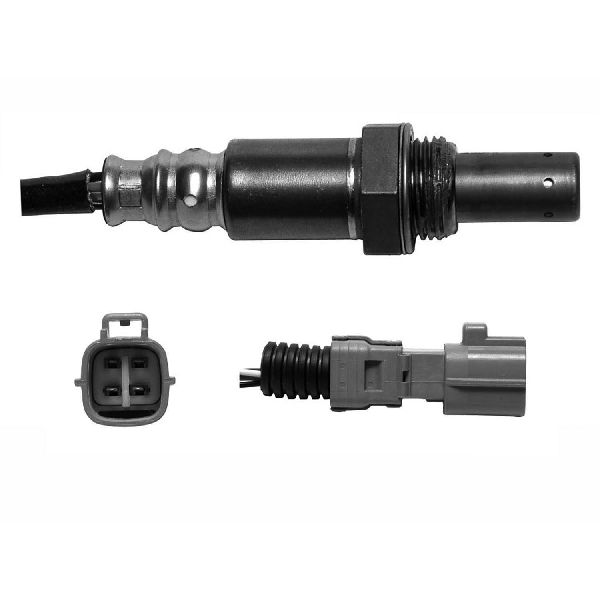
On a 2010-2015 Prius, code P0138 is most often caused by a failed rear (downstream) oxygen sensor. It's a common DIY repair, with an OEM-quality Denso replacement part (Denso 234-4521) costing around $70-$100. Before replacing, always check for rodent-chewed wires, a known Prius vulnerability.
- P0138 on a Gen 3 Prius almost always points to the rear (downstream) oxygen sensor or its wiring.
- Before buying any parts, visually inspect the sensor's wiring harness under the car for damage, especially from rodents, as this is a very common failure point for this vehicle.
- The most likely fix is replacing the rear O2 sensor (Bank 1, Sensor 2). This is a manageable DIY job for most. The Denso 234-4521 is the OEM-equivalent part.
- If a new rear sensor doesn't fix the code, the next most likely cause is a failing upstream Air/Fuel ratio sensor, which is tricking the downstream sensor into reporting a problem.
What's Unique About the 2010-2015 Toyota Prius
On many Toyota vehicles, including the Prius, the P0138 code can sometimes be a 'tattletale' code. A failing upstream Air/Fuel ratio sensor (Sensor 1) can cause the engine to run rich. The downstream O2 sensor (Sensor 2) correctly detects this rich condition and sends a high voltage signal, triggering the P0138 code, even though Sensor 2 itself is functioning properly. Therefore, while the code points directly to the rear sensor, the root cause can occasionally be the front sensor.
Symptoms You May Notice
- Check Engine Light is on
- Failure to pass an emissions inspection
- Slightly decreased fuel economy (though often not noticeable by the driver)
- Replacing the catalytic converter. This code indicates a sensor or circuit issue, not a converter efficiency problem (which would typically set a P0420 code). A P0138 appearing with a P0420 may point to a sensor issue masking the true state of the converter.
- Replacing the upstream Air/Fuel sensor first. While it can be the cause, the downstream sensor is the more common failure point and should be diagnosed first unless other data (like fuel trims) strongly suggests an upstream problem.
Most Likely Causes
- Failed Rear (Downstream) Oxygen Sensor (Bank 1, Sensor 2) 🔴 High Probability → Shop Oxygen Sensor Oxygen sensors are wear items that degrade over time due to constant exposure to high-temperature exhaust gases. Contamination or simple age can cause them to fail internally, leading to a short circuit that produces a high voltage signal.
How to confirm: Use an OBD-II scanner to monitor the live data for 'O2S B1S2'. If the voltage is stuck at or above 0.9V and does not fluctuate during normal operation, the sensor has likely failed.
Typical fix: Replace the rear oxygen sensor. The OEM part is made by Denso.
Est. part cost: $70 - $190 - Damaged Wiring or Connector 🟡 Medium Probability The sensor wiring is located under the vehicle and is exposed to road debris and moisture. More specifically on the Prius, the soy-based wire insulation is known to attract rodents, which chew the wires and cause a short to power, leading to a high voltage reading.
How to confirm: Visually inspect the entire wiring harness from the sensor to where it enters the cabin. Look for frayed wires, melted insulation, corrosion in the connector, or obvious signs of chewing. A real-world example can be seen in a PriusChat forum thread where a user's P0138 was fixed after finding chewed wires.
Typical fix: Repair the damaged section of the wiring harness or replace the sensor pigtail. In cases of extensive rodent damage, a new sensor may be required.
Est. part cost: $5 - $50 for wire repair, or cost of new sensor if pigtail is damaged. - Failed Upstream Air/Fuel Ratio Sensor (Bank 1, Sensor 1) ⚪ Low Probability → Shop Oxygen Sensor As a 'tattletale' code, a lazy or failing upstream A/F sensor can send incorrect data to the ECM, causing a rich fuel mixture. The downstream sensor accurately reports this rich condition with a high voltage signal, setting P0138. This scenario is common enough to be a well-known diagnostic trap for Toyota vehicles.
How to confirm: This is harder to diagnose and is often suspected after a new downstream sensor fails to fix the code. A detailed discussion on PriusChat highlights this exact scenario, where a user's P0138 was ultimately caused by the A/F sensor. Monitoring fuel trims and upstream sensor response with an advanced scan tool can help confirm. A total fuel trim (Short Term + Long Term) consistently above +10% points towards a faulty A/F sensor.
Typical fix: Replace the upstream Air/Fuel ratio sensor (Denso 234-9136 or OEM 89467-47020).
Est. part cost: $120 - $210
Rare But Worth Checking
- Exhaust Leak: An exhaust leak before the rear O2 sensor can sometimes, though rarely, cause erratic readings that might trigger a high voltage code. It's more likely to cause a low voltage or lean code, but it is a possibility mentioned by owners.
- Engine Control Module (ECM) Fault: This is extremely rare. The ECM should only be considered a potential cause after all other possibilities, including both sensors and all wiring, have been exhaustively ruled out. A P0606 code may be present, but a TSB suggests this can be triggered by the faulty sensor data itself, not a failed ECM.
Diagnosis Steps
- Read the code: Use an OBD-II scanner to confirm P0138 is the only code present. If other codes like P0420 or A/F sensor codes are present, the diagnostic path may change.
- Inspect wiring: Perform a thorough visual inspection of the rear O2 sensor's wiring and connector. Look for any signs of damage, melting, corrosion, or rodent activity. This is a critical first step on a Prius.
- Check live data: With the scanner, view the live data stream for the Bank 1 Sensor 2 O2 sensor. With the engine warm and running, the voltage should fluctuate slowly between approximately 0.1V and 0.8V. If it is stuck high (e.g., 0.9V - 1.2V), this points towards a faulty sensor or a short to power in the wiring.
- Test the sensor heater: A faulty internal heater can cause incorrect readings, especially when the engine is not fully hot. Using a multimeter, you can check the resistance of the heater circuit at the sensor's connector. Compare the reading to the manufacturer's specification (typically a few ohms).
- Replace the sensor: If the wiring is intact and the live data confirms a stuck-high voltage, the most probable cause is a failed sensor. Replace the Bank 1, Sensor 2 oxygen sensor.
- Clear code and test drive: After replacement, clear the code with the scanner and perform a test drive to ensure the light does not return.
- Investigate upstream sensor: If the P0138 code returns after replacing the downstream sensor, the upstream Air/Fuel ratio sensor becomes the next likely suspect.
Parts You'll Likely Need
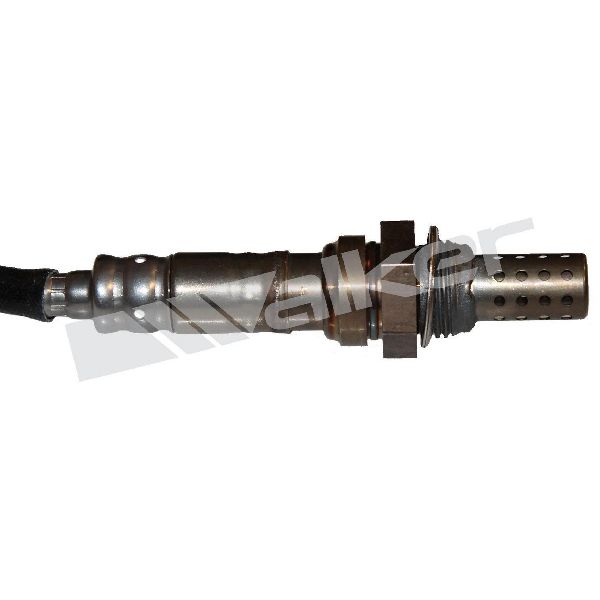
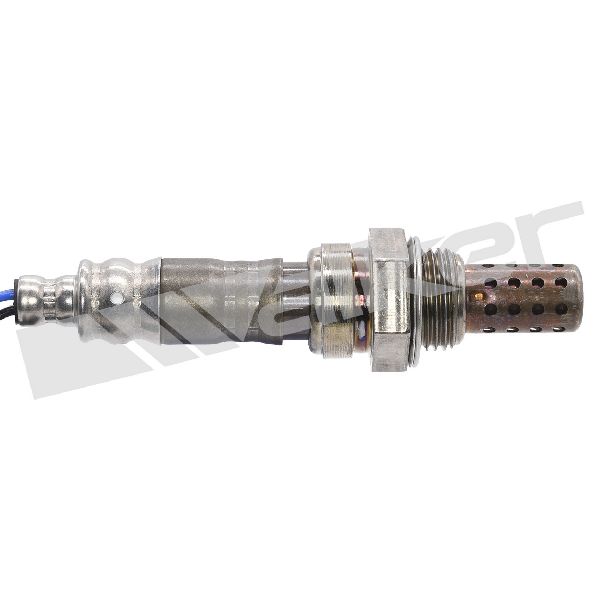
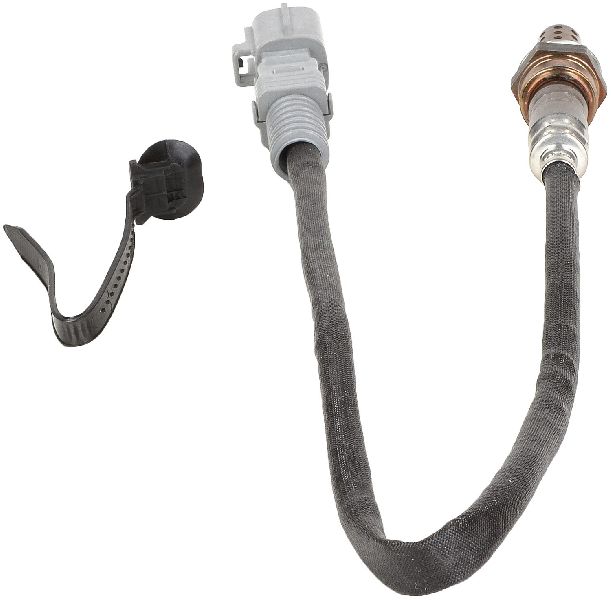
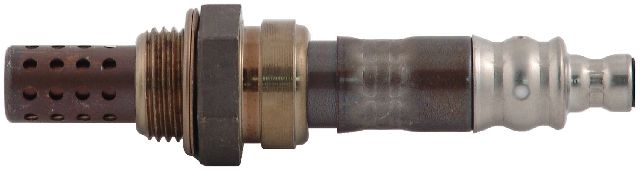
- Rear (Downstream) Oxygen Sensor
(OEM #89465-47080)— This is the sensor (Bank 1, Sensor 2) that the code directly identifies as having a circuit high voltage. It is the most common failure point for this code.
Trusted brands: Denso (OEM supplier), NGK/NTK
OEM price range: $130-$190
Aftermarket price range: $70-$110 - Upstream Air/Fuel Ratio Sensor
(OEM #89467-47020)— This is the second most likely part to fail, causing P0138 as a 'tattletale' code. It should be replaced if a new downstream sensor does not resolve the issue.
Trusted brands: Denso (OEM supplier)
OEM price range: $180-$250
Aftermarket price range: $120-$210
Technical Service Bulletins (TSBs) & Recalls
- T-SB-0001-10 (Rev1): While not written for the Prius, this TSB for other Toyota models (Camry, RAV4, Highlander) from the same era discusses diagnostic tips for P0138. It explicitly states that a P0138 code can be caused by an incorrect Air Fuel Ratio Sensor (upstream) response, instructing technicians to replace the A/F sensor—not the O2 sensor—if certain conditions are met. This officially corroborates the 'tattletale' theory.
Platform-Specific Known Issues
- Relationship to Clogged EGR System: The Gen 3 Prius is notorious for a clogging EGR (Exhaust Gas Recirculation) system. While a clogged EGR typically causes misfires and eventually head gasket failure, it can also alter exhaust gas composition and temperatures. In some edge cases, this could contribute to erratic O2 sensor readings or be misdiagnosed when sensor codes appear, as both are common high-mileage issues. An owner diagnosing P0138 on a high-mileage Prius should also be aware of their EGR system's service history.
Mechanic-Grade Diagnostic Values
- Upstream A/F Sensor (B1S1) Heater Resistance — expected: 1.8 to 3.4 Ω at 68°F (20°C). Failure: A reading outside this range indicates a faulty heater element in the A/F sensor.
- Downstream O2 Sensor (B1S2) Heater Resistance — expected: 11 to 16 Ω at 68°F (20°C) (Based on Gen 2 specs, likely similar for Gen 3). Failure: A reading significantly outside this range suggests a faulty heater element.
- Downstream O2 Sensor (B1S2) Live Data Voltage — expected: Stuck at or above 0.9V. Failure: The code P0138 itself indicates the voltage is stuck high. Some sources say the threshold is >0.59V, while others say >1.1V. A consistent reading above 0.9V is a strong indicator of failure.
- Upstream A/F Sensor (B1S1) Live Data Voltage — expected: Fluctuates around 3.3V at idle. Should respond to forced rich/lean commands.. Failure: If P0138 persists after replacing the downstream sensor, check the A/F sensor. Using Techstream, command a lean mixture; voltage should rise to ~3.8V. Command a rich mixture; voltage should drop to ~2.0V. Failure to respond correctly indicates a bad A/F sensor.
- TSB Diagnostic Freeze Frame Condition — expected: AFS Voltage B1S1 = 3.35-3.70V AND O2S B1S2 = 0.70-0.90V. Failure: If these values are present in the freeze frame data for a P0138 code, Toyota advises replacing the upstream Air Fuel Ratio Sensor, not the downstream O2 sensor.
Hidden / Shadow Codes Worth Checking
- P0606: ECM/PCM Processor Fault. A Toyota TSB notes that this code can appear alongside P0138. It may be triggered by the incorrect oxygen sensor operation and does not necessarily mean the ECM has failed. The root cause is more likely the sensor circuit issue. (see via Standard OBD-II Scanner)
- P2195: A/F Sensor Signal Stuck Lean (Bank 1 Sensor 1). This code may be present with P0138, further strengthening the case that the upstream A/F sensor is the root cause. (see via Standard OBD-II Scanner)
Scan Tool Commands That Help
- Toyota Techstream: Active Test: 'Control the Injection Volume for A/F Sensor' — This is a critical diagnostic step when the 'tattletale' code theory is suspected (i.e., P0138 returns after replacing the downstream sensor). By commanding the fuel mixture to be richer (-12.5%) or leaner (+12.5%), a technician can verify if the upstream A/F sensor responds correctly. A healthy sensor's voltage will change predictably; a faulty one will not.
Wiring & Ground Locations
- Rear O2 Sensor Connector (4-pin) — On the sensor pigtail, connecting to the main vehicle harness under the car, post-catalytic converter.. This is where voltage and resistance tests are performed. On a 2010 Prius, one technician identified the upper-right pin as heater power and the bottom-right pin as sensor ground, which is crucial for testing the correct circuit.
- Engine/Chassis Ground Points — The main 12V system ground for heavy loads is from the inverter case to the chassis. There are multiple other ground points on the engine block and body.. A poor ground connection for the sensor circuit can cause erratic or biased voltage readings. Toyota often uses dedicated, shielded sensor grounds to prevent noise; bundling these with other grounds can create problems. Technicians should ensure factory ground points are clean and secure, not create new, consolidated ground paths.
Real Owner Repair Stories
- PriusChat user 'pjksr02' (2015 Toyota Prius, 55,000 miles) — P0138 code appeared. Car was running great with excellent MPG.
❌ Tried (didn't work) Clearing the code multiple times.
✅ What actually fixed it The rear oxygen sensor was replaced. The root cause was discovered to be rodent-chewed wires on the sensor harness. - Torque News article by Peter Neilson (Toyota Prius (generation not specified, but principle applies)) — P0138 code appeared shortly after acquiring a used, neglected Prius.
❌ Tried (didn't work) Initial diagnosis pointed to the rear O2 sensor or its circuit based on the code definition.
✅ What actually fixed it Replacing the upstream Air/Fuel Ratio sensor. The article explains that the failing A/F sensor caused a rich condition, and the downstream O2 sensor was correctly reporting this with a high voltage signal, acting as a 'tattletale' on the upstream sensor. - PriusChat user 'colmenedo' (2008 Toyota Prius (Gen 2, but logic is identical for Gen 3)) — Intermittent P0138 code, primarily appearing in cold, wet winter weather.
❌ Tried (didn't work) Replacing the catalytic converter., Replacing the downstream oxygen sensor three times., Replacing the upstream A/F sensor.
✅ What actually fixed it A fault within the engine wiring harness itself. Technicians at a Toyota dealer ran temporary, direct wiring from the ECM to the sensors, and the code did not return, proving the harness was the issue.
OEM Part Supersession History
89465-47080→89465-47080— This part number appears to be stable for the entire 2010-2015 generation.
Heads up: While some parts vendors suggest this PN may only fit up to 2013/2014 models, Toyota's own parts sites list it for the full 2010-2015 range. Always verify with VIN, but it is the correct part for the specified vehicle range.
Diagnostic Flowchart
Other Known Issues on This Vehicle
Issues unrelated to this code that are worth knowing about as an owner of this generation:
- Clogged EGR Cooler, Pipe, and Intake Manifold 🔴 High — Extremely common, typically starting around 80,000-100,000 miles. If left unaddressed, it is a primary contributor to head gasket failure.
- Excessive Oil Consumption 🟠 Medium — Common, particularly in 2010-2014 models, due to piston and ring design. Often becomes noticeable after 60,000 miles. (Ref: T-SB-0169-16 (Repair Procedure), T-SB-0168-16 (Inspection Procedure))
- Head Gasket Failure 🔴 High — A significant risk, often occurring between 150,000-220,000 miles. The failure is frequently caused by localized overheating from a clogged EGR system.
- Brake Booster and Actuator Assembly Failure 🔴 High — Common enough that Toyota issued a Warranty Enhancement Program (ZE1 for Gen 3). Failure results in multiple brake warning lights and can lead to a loss of braking assist. (Ref: Warranty Enhancement Program ZG1 (covers some 2010 models) and ZJB.)
- Inverter Failure 🔴 High — Less common than other issues but can cause the vehicle to stall while driving. Affects 2010-2014 models. (Ref: Recalls 18V684000 and 14V053000)
Used vs. New Parts: Buying Guide for This Vehicle
When a used part is the smart pick: A used part is generally not recommended for this repair, with the sole exception of a wiring harness pigtail. If the connector is damaged, sourcing a used pigtail from a junkyard is a viable and cost-effective repair.
Donor-vehicle mileage cap: roughly under 50000 miles for the part to have meaningful remaining life.
What to inspect on the donor part:
- For a used sensor (not recommended): Ask for mileage of donor vehicle. A low-mileage sensor is a better gamble.
- For a wiring pigtail: Inspect closely for any signs of rodent chewing, melted insulation, or corrosion on the pins. Ensure the locking tab is intact.
OEM-only on this vehicle (don't cheap out):
- Oxygen Sensor / Air/Fuel Ratio Sensor
Aftermarket brands forum-validated for this vehicle:
- Denso (This is the OEM supplier; it is the best choice besides the Toyota-branded part)
- NGK / NTK
Brands owners have reported issues with on this vehicle:
- Generic unbranded sensors from online marketplaces (e.g., eBay, Amazon). Forum users frequently report that cheap aftermarket sensors either don't work, fail quickly, or cause other codes on Toyota vehicles.
Real Owner Stories
Aggregated from forums and TSBs cited above. Mileages and costs reflect what owners reported in those sources.
2015 Toyota Prius 1.8L — 55000 miles
Symptoms: Check engine light with code P0138; the owner cleared the code multiple times but it continued to return.
What fixed it: Replacement of the rear oxygen sensor after confirming the wiring had been chewed by a rodent.
Source hint: PriusChat: P0138 Fixed, Rodent Damage Confirmed
2010-2015 Toyota Prius 1.8L
Symptoms: P0138 and P0420 codes present; owner performed a technical analysis of live sensor data to determine if the downstream sensor was actually at fault.
What fixed it: The discussion identified that the upstream A/F sensor was inaccurate, causing the ECM to run rich, which the downstream sensor correctly reported as a high voltage condition.
Source hint: PriusChat: Diagnosing P0138 - Upstream vs. Downstream Sensor
2013 Toyota Prius 1.8L
Symptoms: Intermittent P0138 code that specifically appeared during cold or wet weather conditions.
What fixed it: Investigation into the sensor's heater circuit and wiring harness connections for intermittent electrical issues.
Source hint: PriusChat: Intermittent P0138 - Wiring Harness vs. Sensor
Related OBD-II Codes
Frequently Asked Questions
Does TSB-0001-10 (Rev1) apply to my Prius if I have a P0138 code?
What specific replacement parts should I use for the oxygen sensors on my 2010-2015 Prius?
Could my Prius's habit of burning oil be related to the P0138 code?
Is it true that rodents are a common cause for this code on a Prius?
Should I clean my EGR system if I'm seeing O2 sensor codes?
Why does my P0138 code only seem to appear during cold or wet weather?
We Have This Part in Stock


The information in this article is provided for general reference and educational purposes only. Vehicle specifications, procedures, and part compatibility can vary by production date, trim level, and region. Always consult your vehicle's factory service manual and verify part numbers before purchasing or performing repairs. Safety-critical components such as airbags, seat belts, and braking systems should be installed by a qualified professional.
- Toyota Prius:
- 🧭 Diagnostic Flowchart
- 🛍️ Shop This Part
- What's Unique About the 2010-2015 Toyota Prius
- Symptoms You May Notice
- Most Likely Causes
- Rare But Worth Checking
- Diagnosis Steps
- Parts You'll Likely Need
- Technical Service Bulletins (TSBs) & Recalls
- Platform-Specific Known Issues
- Mechanic-Grade Diagnostic Values
- Hidden / Shadow Codes Worth Checking
- Scan Tool Commands That Help
- Wiring & Ground Locations
- Real Owner Repair Stories
- OEM Part Supersession History
- Other Known Issues on This Vehicle
- Used vs. New Parts: Buying Guide for This Vehicle
- Real Owner Stories
- 2015 Toyota Prius 1.8L — 55000 miles
- 2010-2015 Toyota Prius 1.8L
- 2013 Toyota Prius 1.8L
- Related OBD-II Codes
- Frequently Asked Questions
- 🎟️ Get 5% Off