

P0138 on 2006-2012 Toyota RAV4: O2 Sensor High Voltage Causes and Fixes
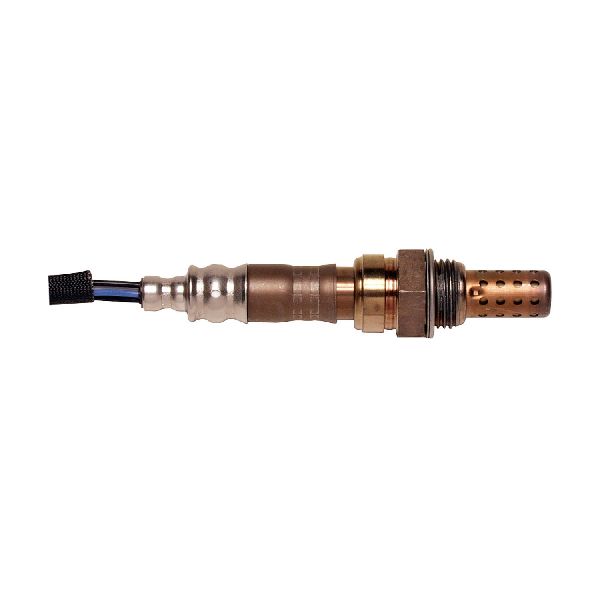
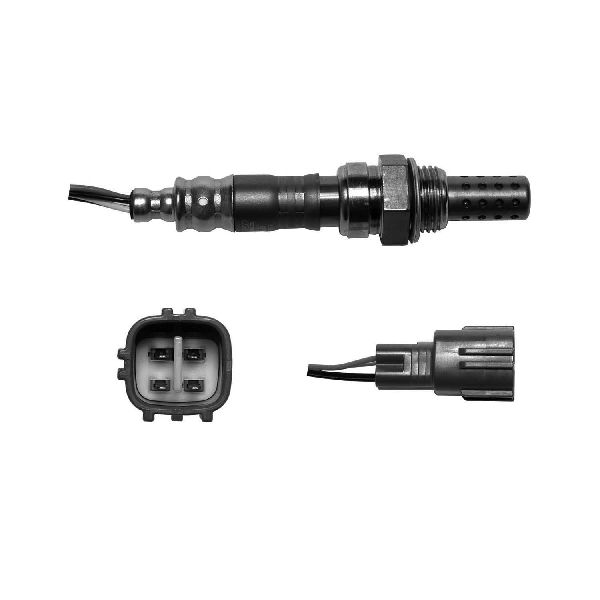
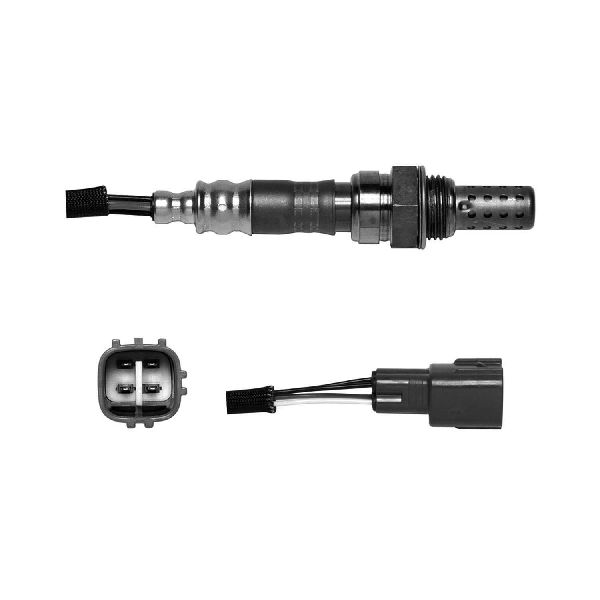
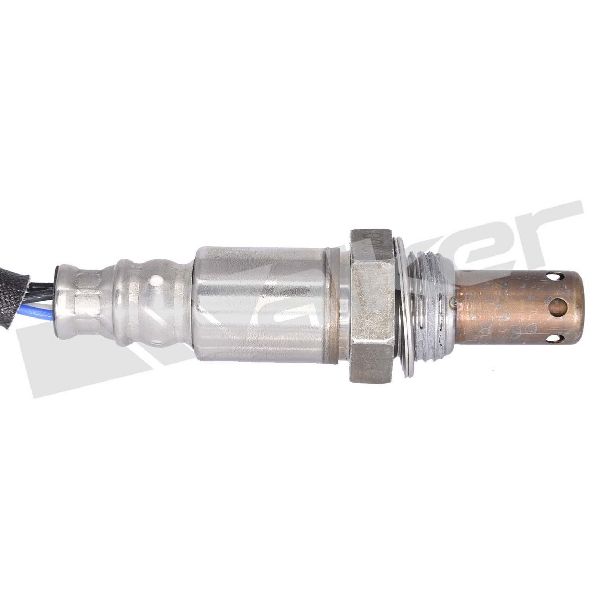
This code almost always points to a failed downstream oxygen sensor (Bank 1, Sensor 2). On a 2006-2012 RAV4, this is a common failure due to age. Expect to pay $50-$120 for an aftermarket sensor (Denso is the OEM manufacturer and a recommended choice) or around $150-$200 for an OEM part from a dealer. It's a straightforward DIY replacement for many owners, often requiring a 22mm or 7/8" wrench, or a specialized O2 sensor socket.
- P0138 on a 2006-2012 RAV4 is most often fixed by replacing the downstream oxygen sensor (Bank 1, Sensor 2).
- Before buying parts, use a scan tool to watch the sensor's live voltage data to confirm it's stuck high.
- Always inspect the sensor's wiring for damage before replacing the sensor itself.
- If you have a 2009-2012 model with the 2.5L (2AR-FE) engine, be aware that a dealer ECM reflash might be the required fix, as per TSB T-SB-0151-18.
- Don't be alarmed if the VSC and 4WD lights come on with the check engine light; this is a common Toyota behavior that usually resolves when the engine code is fixed.
What's Unique About the 2006-2012 Toyota RAV4
For the 2009-2012 RAV4 with the 2.5L 2AR-FE engine (non-PZEV models), Toyota issued a Technical Service Bulletin (T-SB-0151-18) acknowledging that code P0138 can be triggered by incorrect ECM logic, not just a failed sensor. This is caused by an incorrect air-fuel ratio sensor response. In these specific cases, the fix involves reprogramming the ECM and replacing the upstream Air/Fuel ratio sensor, not the downstream O2 sensor that the code points to. This is a critical distinction from a standard P0138 diagnosis.
Diagnostic Flowchart
Tap your situation to follow the diagnostic path that matches what you're seeing on this vehicle.
Generation note: This guide covers the third generation (XA30) of the Toyota RAV4. This generation saw a mid-cycle refresh which included engine changes. Models from 2006-2008 typically have the 2.4L (2AZ-FE) 4-cylinder or 3.5L (2GR-FE) V6. Models from 2009-2012 use the updated 2.5L (2AR-FE) 4-cylinder or the same 3.5L V6. The location and part numbers for the sensors will vary based on the engine. For the V6, Bank 1 is the cylinder bank closer to the firewall.
Symptoms You May Notice
- Check Engine Light is on
- VSC (Vehicle Stability Control), TRAC (Traction Control) and/or 4WD warning lights may illuminate on the dashboard
- Increased fuel consumption
- Failure to pass an emissions inspection
- Rough idle or engine hesitation in some cases
- Replacing the upstream Air/Fuel Ratio Sensor (Bank 1, Sensor 1) instead of the downstream Oxygen Sensor (Bank 1, Sensor 2), unless specifically required by TSB T-SB-0151-18.
- Replacing the catalytic converter. A P0138 code points to a sensor or circuit issue, not necessarily a bad converter. A failing converter usually sets a P0420 code.
- Using a cheap, non-OEM equivalent (non-Denso) sensor, which may not work correctly with the Toyota ECU and can cause the code to return.
Most Likely Causes
- Failed Downstream Oxygen Sensor (Bank 1, Sensor 2) 🔴 High Probability → Shop Oxygen Sensor Oxygen sensors are wear items and typically have a lifespan of around 100,000 miles. Vehicles in this year range are old enough that sensor failure is very common. Extreme cold weather can sometimes be the final straw for an aging sensor.
How to confirm: Use a scan tool to monitor the live data for 'O2S B1S2'. If the voltage is stuck high (e.g., >0.9V) and does not fluctuate on a warm engine, the sensor has likely failed. You can also test the sensor's internal heater circuit with a multimeter set to ohms; a healthy sensor usually shows resistance between 2-30 ohms, while an open circuit (infinite resistance) indicates failure.
Typical fix: Replace the Bank 1, Sensor 2 oxygen sensor. This sensor is located on the exhaust pipe after the catalytic converter. 🎬 Watch: A quick guide to fixing the P0138 code on your RAV4. Using a Denso-branded sensor is highly recommended as they are the OEM manufacturer for Toyota.
Est. part cost: $50-$125 - Damaged Wiring or Connector 🟡 Medium Probability The sensor wiring runs underneath the vehicle and is exposed to road debris, moisture, and extreme exhaust heat, which can cause corrosion, melting, or physical damage over time, leading to a short circuit.
How to confirm: Visually inspect the wiring harness and connector leading to the downstream O2 sensor for any signs of melting, chafing, corrosion, or broken wires. Check for 12V power at the heater circuit and for continuity on the signal wires at the connector with a multimeter.
Typical fix: Repair the damaged section of the wiring harness or replace the connector pigtail.
Est. part cost: $15-$50 - Incorrect ECM Logic (2009-2012 2AR-FE only) ⚪ Low Probability As documented in TSB T-SB-0151-18, some non-PZEV vehicles with the 2AR-FE engine have software that can misinterpret sensor readings, causing a false P0138 code. This TSB is covered under Toyota's Federal Emission Control Warranty for 96 months or 80,000 miles.
How to confirm: This must be confirmed by a Toyota dealership or a qualified shop with access to Toyota's TIS (Technical Information System). They will check if the vehicle's calibration ID is outdated and if it falls under the specific VIN range of the TSB.
Typical fix: The ECM must be reprogrammed with updated software. The TSB also calls for the replacement of the upstream Air Fuel Ratio sensor (Bank 1 Sensor 1) as part of this specific repair. A dealer reflash can cost between $100-$200 if not covered by warranty.
Est. part cost: $150-$250 (for the A/F sensor if needed)
Rare But Worth Checking
- Exhaust Leak: An exhaust leak upstream of the sensor can allow extra oxygen into the exhaust stream, confusing the sensor and potentially causing incorrect voltage readings. Check for leaks before replacing expensive parts.
- Blown Fuse: The oxygen sensor's heater circuit is protected by a fuse. While less common for a high voltage code, a short circuit in the harness could potentially blow a related fuse, affecting sensor operation.
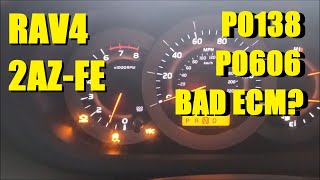
- Failing ECM: This is extremely rare. On some Toyotas, P0138 can appear alongside a P0606 (ECM/PCM Processor Fault) code. Forum and video evidence strongly suggests that fixing the P0138 by replacing the O2 sensor will also clear the P0606 code. Do not replace the ECM unless all other possibilities have been exhausted. 🎬 Watch: Why P0138 and P0606 don't always mean a bad ECM.
Diagnosis Steps
- Read the code with an OBD-II scanner and confirm P0138 is present. Note any other codes, especially P0606 or C1201.
- Check if your RAV4 is a 2009-2012 model with the 2.5L 2AR-FE engine. If so, be aware of TSB T-SB-0151-18 regarding a potential ECM software update.
- Use the scanner's live data feature to observe the voltage of 'O2S B1S2'. At idle on a warm engine, it should fluctuate between approximately 0.1V and 0.9V. If it is stuck high (above 0.9V), it confirms the fault condition.
- Inspect the wiring harness and connector for the downstream O2 sensor. Look for any signs of melting, corrosion, or physical damage. The harness is under the car and susceptible to damage.
- If wiring looks good, test the sensor's heater circuit. Disconnect the sensor and measure resistance across the two heater wires (often the same color). A reading of 2-30 ohms is typical; infinite resistance means a failed heater.
- If the wiring looks good and the voltage is stuck high, the oxygen sensor itself is the most likely cause of failure.
- Check for exhaust leaks between the engine and the downstream O2 sensor. A hissing or ticking sound from the exhaust is a key indicator.
- If a new, quality (Denso) sensor and good wiring do not fix the issue, investigate the possibility of a required ECM update (for applicable models) or, in very rare cases, an ECM hardware fault.
Parts You'll Likely Need
- Downstream Oxygen Sensor (Bank 1, Sensor 2)
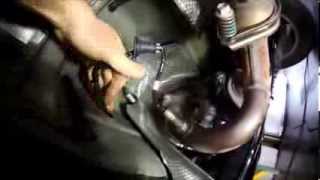
(OEM #89465-42170 (for 2.4L 2AZ-FE), 89465-0R010 (for 2.5L 2AR-FE))— This is the most common failure point for code P0138. Part numbers vary by engine. 89465-42170 is listed for the 2006-2008 2.4L engine. 89465-0R010 is for the 2009-2012 2.5L engine. The V6 (2GR-FE) uses different part numbers. 🎬 See this walkthrough for replacing the Bank 1 Sensor 2 on a V6. Always verify with VIN.
Trusted brands: Denso (OEM Manufacturer), NGK, Bosch
OEM price range: $120-$180
Aftermarket price range: $50-$125 - Upstream Air/Fuel Ratio Sensor (for TSB fix)
(OEM #89467-42120)— Only needed if performing the repair outlined in TSB T-SB-0151-18 for 2009-2012 RAV4s with the 2AR-FE engine, which requires an ECM reflash and replacing this specific sensor.
Trusted brands: Denso
OEM price range: $180-$250
Aftermarket price range: $120-$180 - O2 Sensor Socket — A specialized socket with a slit for the wire makes removal and installation much easier than a standard wrench. A 22mm or 7/8" size is typically required. Some owners have had success with a basin wrench when access is tight.
Trusted brands: OEM Tools, Lisle, GearWrench
OEM price range: $10-$25
Aftermarket price range: $10-$25
Related Codes That Often Appear With This One
- P0606 — On some RAV4s, particularly 2.4L 2AZ-FE models, an internal processor fault code for the ECM can be triggered as a companion to the P0138. Experience shows that resolving the P0138 by replacing the downstream O2 sensor often resolves the P0606 without needing to replace the ECM.
- P2195 — Mentioned in TSB T-SB-0001-10 Rev as a code that can appear with P0138, indicating an A/F Sensor Signal Stuck Lean condition.
- P2197 — Also mentioned in TSB T-SB-0001-10 Rev as a possible companion code for an A/F Sensor Signal Stuck Lean condition.
- C1201 — This is an Engine Control System Malfunction code stored in the ABS/VSC module. It is often triggered as a secondary code whenever the main Check Engine Light is illuminated, particularly when it disables the VSC system.
Technical Service Bulletins (TSBs) & Recalls
- T-SB-0151-18: MIL ON DTC P0138 - A/F Sensor Stuck Lean (AR Engine). Addresses an ECM logic issue on some 2009-2012 RAV4s and 2010-2011 Camrys.
- T-SB-0001-10 Rev: Mentions P0138 (Oxygen Sensor Circuit High Voltage Bank 1 or 2) may be present, sometimes with other codes.
Platform-Specific Known Issues
- TSB T-SB-0151-18: ECM Logic Fault: Some 2009–2012 RAV4s with the 2AR-FE engine (non-PZEV) may set a P0138 due to incorrect ECM logic misinterpreting A/F sensor response. The official fix is an ECM software update and replacing the upstream Air/Fuel Ratio sensor, not the downstream O2 sensor.
- Companion Code P0606: It is a documented phenomenon on this platform, particularly with the 2.4L engine, for a P0606 (ECM Processor Fault) to appear with P0138. In the vast majority of cases, replacing the faulty O2 sensor resolves both codes. The P0606 should be considered a 'ghost' code until the P0138 is fixed.
- VSC / 4WD System Deactivation: As a safety measure, the Toyota ECU will often disable the Vehicle Stability Control (VSC), Traction Control (TRAC), and 4WD systems when a P0138 code is active. This results in multiple warning lights on the dashboard and is considered normal behavior until the emissions fault is corrected.
Mechanic-Grade Diagnostic Values
- Downstream O2 Sensor (B1S2) Voltage — expected: Should fluctuate between ~0.1V and 0.9V on a warm, running engine.. Failure: Voltage is stuck high (>0.9V), or exceeds 1.2V for 10 seconds or more. A reading of 0.69V or higher when the ECM is commanding a lean mixture via active test also indicates a fault.
- Downstream O2 Sensor (B1S2) Impedance — expected: Below 300 ohms.. Failure: More than 300 ohms when the engine is at normal operating temperature.
- A/F Sensor (B1S1) and O2 Sensor (B1S2) Voltage Correlation — expected: Normal fluctuating values for both sensors.. Failure: If AFS Voltage (B1S1) is between 3.35V-3.70V AND O2S Voltage (B1S2) is between 0.70V-0.90V, the upstream A/F sensor is likely faulty, not the downstream O2 sensor.
Scan Tool Commands That Help
- Techstream: Active Test: Control the Injection Volume for A/F sensor — This allows a technician to force the engine rich or lean (typically by +/- 12%) to check if the O2 sensor voltage responds accordingly. It's a definitive way to test sensor responsiveness without waiting for the ECU to make its own adjustments.
- Techstream: ECU Check Mode — After a repair, placing the ECU in 'Check Mode' will cause it to set a DTC on a single trip if a fault is still present, rather than waiting for the standard multi-trip detection logic. This allows for faster verification of the fix.
Wiring & Ground Locations
- B1S2 Connector — For 2008 models, the wiring harness for the downstream sensor passes through the floor and the electrical connector is located inside the cabin, under the passenger side carpet near the firewall.. Instead of being exposed under the vehicle, the connector is protected inside. This makes it less prone to corrosion but requires interior disassembly to access for testing.
- E1, E2g — These are engine-related ground points. For the 2.4L 2AZ-FE, E1 is located on the left side of the dash.. The O2 sensor circuit relies on a solid ground connection to provide an accurate voltage signal to the ECM. A corroded or loose ground at these points can cause erratic or high voltage readings, mimicking a sensor failure.
Real Owner Repair Stories
- YouTube user 'YARDMAN MOTOR WORKS' (2007 Toyota RAV4) — Check Engine Light with codes P0138 and P0606.
❌ Tried (didn't work) Initial diagnosis to confirm the issue.
✅ What actually fixed it After confirming signals were present at the connector, the user replaced the downstream oxygen sensor (Bank 1, Sensor 2). The codes cleared immediately upon starting the car, resolving the issue. - YouTube user 'Merryfrankster' (2006 Toyota RAV4 with 2.4L 2AZ-FE engine) — Check Engine Light, VSC light, and Traction Control light on. Codes P0138 and P0606 were present.
❌ Tried (didn't work) None mentioned; went straight to the likely fix.
✅ What actually fixed it The user replaced the rear (downstream) O2 sensor. After the replacement, live data showed the new sensor cycling correctly. Putting the ECU into 'check mode' confirmed the repair held and no codes returned. - Car Talk Community Forum (2013 Toyota Corolla (similar Toyota platform)) — Check Engine light and TRAC control light with codes P0138 and P0607 (a similar ECM fault code).
❌ Tried (didn't work) The user noted that other Toyota owners on forums reported that replacing only the downstream O2 sensor (as indicated by P0138) failed to fix the issue and the P060x code.
✅ What actually fixed it The consensus from other owners was that replacing the *upstream* Air/Fuel ratio sensor was the actual fix that resolved both the P0138 and the companion ECM fault code.
When the Usual Fixes Don't Work
- While P0138 directly points to the downstream oxygen sensor (Bank 1, Sensor 2), there is significant evidence that the code can be falsely triggered by a failing upstream Air/Fuel Ratio sensor (Bank 1, Sensor 1). In these cases, the upstream sensor provides incorrect data to the ECM, which then misinterprets the signal from the (perfectly functional) downstream sensor. This is particularly noted on Toyota platforms where replacing the downstream sensor does not resolve the code, but replacing the upstream sensor does. This scenario is also described in TSB T-SB-0151-18 for specific 2009-2011 models where an ECM reflash and upstream sensor replacement is the specified fix.
OEM Part Supersession History
89465-0R010→89465-0R080— Standard part revision by the manufacturer.
Heads up: The new part number (89465-0R080) is the correct replacement for the original.
Model Year Variations Within This Range
- 2006-2008: On the 2.4L (2AZ-FE) models, the electrical connector for the downstream O2 sensor is often located inside the vehicle cabin, requiring the passenger-side carpet to be pulled back for access.
Helpful Videos
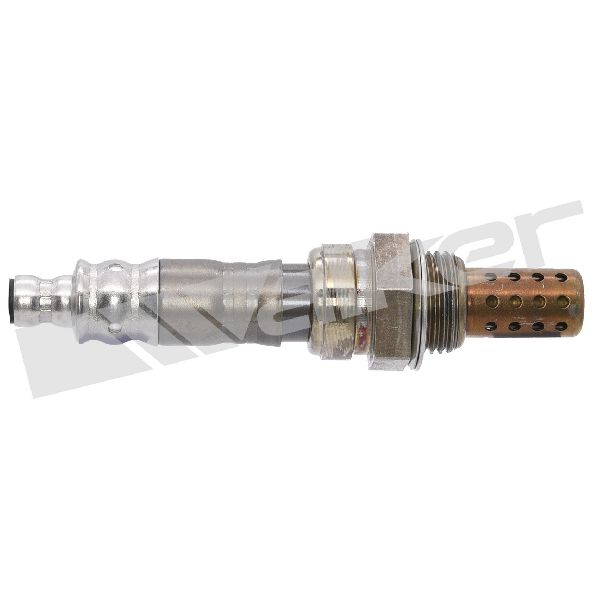
We Have This Part in Stock


The information in this article is provided for general reference and educational purposes only. Vehicle specifications, procedures, and part compatibility can vary by production date, trim level, and region. Always consult your vehicle's factory service manual and verify part numbers before purchasing or performing repairs. Safety-critical components such as airbags, seat belts, and braking systems should be installed by a qualified professional.
- Toyota RAV4:
- 🧭 Diagnostic Flowchart
- 🎬 Helpful Videos
- 🛍️ Shop This Part
- What's Unique About the 2006-2012 Toyota RAV4
- Symptoms You May Notice
- Most Likely Causes
- Rare But Worth Checking
- Diagnosis Steps
- Parts You'll Likely Need
- Related Codes That Often Appear With This One
- Technical Service Bulletins (TSBs) & Recalls
- Platform-Specific Known Issues
- Mechanic-Grade Diagnostic Values
- Scan Tool Commands That Help
- Wiring & Ground Locations
- Real Owner Repair Stories
- When the Usual Fixes Don't Work
- OEM Part Supersession History
- Model Year Variations Within This Range
- 🎟️ Get 5% Off