

P0138 on 2009-2012 Toyota RAV4 2.5L: O2 Sensor High Voltage Causes and Fixes
On a 2009-2012 RAV4 2.5L, P0138 is often misleading. A Toyota Technical Service Bulletin (T-SB-0151-18) states the true cause is frequently a faulty upstream Air/Fuel sensor combined with outdated engine computer software, not the downstream O2 sensor the code points to. The fix requires an ECM update and a new A/F sensor (Toyota P/N 89467-42120). If the TSB doesn't apply, the cause is a failed downstream O2 sensor, which costs about $60-$120 for an OEM-quality Denso part.
- Before buying any parts for a P0138 on a 2009-2012 RAV4 2.5L, investigate Toyota TSB T-SB-0151-18.
- The actual problem is likely the upstream Air/Fuel sensor and outdated computer software, not the downstream O2 sensor the code points to.
- If the TSB applies, the fix requires a trip to a dealer or qualified shop to update the ECM software and replace the A/F sensor.
- If the TSB does not apply, the cause is most likely a failed downstream O2 sensor. Use a quality Denso or NTK replacement.
What's Unique About the 2006-2012 Toyota RAV4
The user-specified 2.5L 2AR-FE engine was only available in the 2009-2012 RAV4, not the full 2006-2012 range. For these specific non-PZEV models, P0138 is a well-documented 'tattletale' code. Toyota released a Technical Service Bulletin (T-SB-0151-18) acknowledging that the downstream sensor (Sensor 2) often correctly reports a high voltage condition that is actually caused by a failing upstream Air/Fuel Ratio sensor (Sensor 1) and outdated ECM software logic. Simply replacing the downstream sensor will not fix the issue if this TSB applies, a common experience for many owners.
Generation note: The 2006-2012 year range covers the entire third generation (XA30) of the RAV4. However, the specified 2.5L 2AR-FE engine was only introduced for the 2009 model year, replacing the previous 2.4L 2AZ-FE. This guide is specific to the 2009-2012 models with the 2AR-FE engine.
Symptoms You May Notice
- Check Engine Light is on
- VSC, TRAC, and/or 4WD warning lights may also illuminate
- Poor fuel economy
- Rough idle or engine hesitation
- Failed emissions test
- Replacing the downstream O2 sensor when TSB-0151-18 applies. This will not fix the root cause, and the code will likely return.
- Replacing the catalytic converter. P0138 points to a sensor or circuit fault, not converter inefficiency (which is typically code P0420).
Most Likely Causes
- Faulty Upstream Air/Fuel Sensor & Outdated ECM Logic (per TSB-0151-18) 🔴 High Probability This is a known issue documented by Toyota for 2009-2012 RAV4s (and 2010-2011 Camrys) with the 2AR-FE engine (non-PZEV models). The original ECM software is too sensitive to the response from a degrading A/F sensor.
How to confirm: Check if your vehicle is a non-PZEV model by looking at the Vehicle Emission Control Information label under the hood. A Toyota dealership can verify if TSB-0151-18 applies to your VIN and if the ECM update has been performed. The TSB applies if no exhaust leaks are present and DTC P0138 is stored.
Typical fix: The official procedure is to reprogram the Engine Control Module (ECM) with updated software and replace the upstream Air/Fuel Ratio Sensor (Bank 1, Sensor 1). This is typically performed by a Toyota dealer or a shop with Toyota-specific programming tools like Techstream.
Est. part cost: $150-$200 - Failed Downstream Oxygen Sensor (Bank 1, Sensor 2) 🟡 Medium Probability → Shop Oxygen Sensor If the TSB does not apply, this is the most common cause. Oxygen sensors are wear items and fail over time due to constant exposure to high heat and exhaust gases. Cheaper aftermarket sensors are known to fail quickly or not work at all.
How to confirm: Use an OBD-II scanner to monitor live data for the B1S2 O2 sensor. If the voltage is stuck high (e.g., >0.9V) and does not fluctuate, the sensor has likely failed. Before replacing, inspect the wiring harness for melting, chafing, or corrosion.
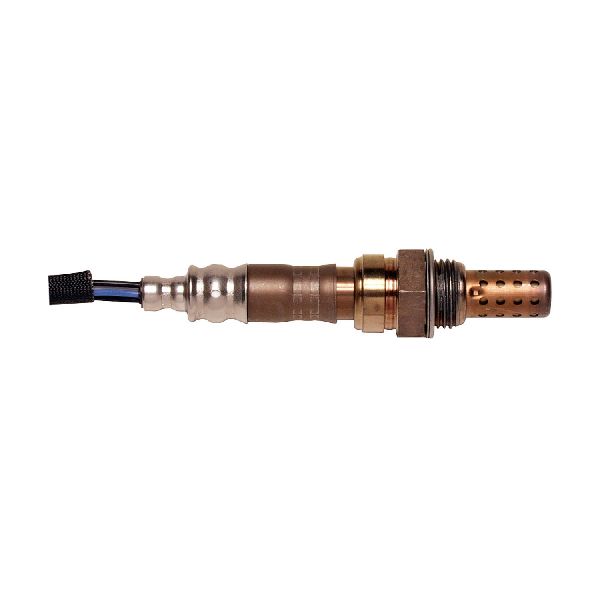
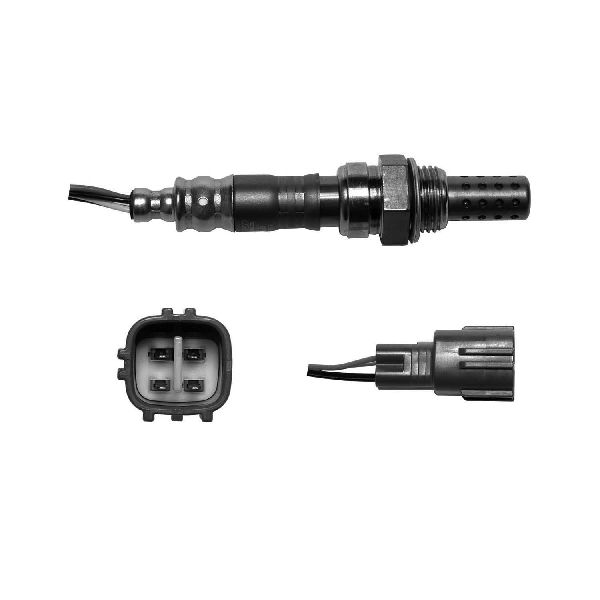
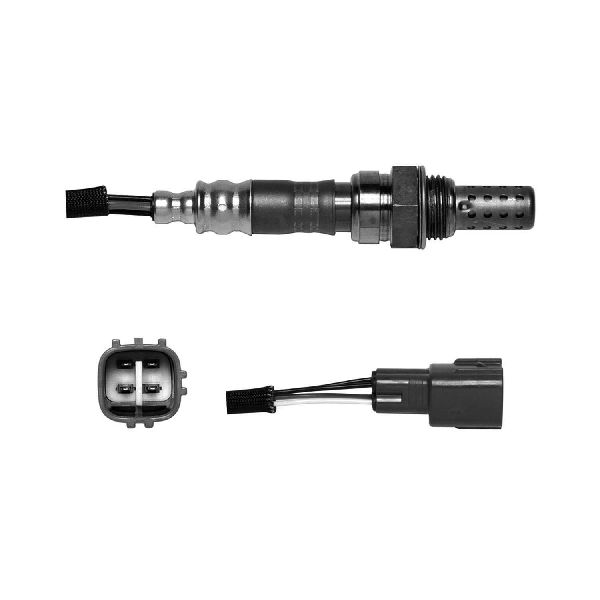
Typical fix: Replace the downstream oxygen sensor (Bank 1, Sensor 2). An O2 sensor socket is recommended for removal and installation. Using an OEM or Denso sensor is highly recommended.
Est. part cost: $60-$120 - Damaged Wiring or Connector ⚪ Low Probability The sensor and its wiring are located under the vehicle, exposed to road debris, moisture, and heat from the exhaust, which can cause damage over time.
How to confirm: Visually inspect the entire wiring harness from the O2 sensor to its connection point. Look for melted plastic, frayed wires, or corrosion in the connector pins. Test for a short to power in the signal wire using a multimeter.
Typical fix: Repair the damaged section of the wiring harness or clean/replace the connector.
Est. part cost: $5-$50
Rare But Worth Checking
- Exhaust Leak: An exhaust leak upstream of the O2 sensor can introduce oxygen into the exhaust stream, potentially confusing the sensor readings. The TSB specifically instructs to check for leaks first.
- Engine Running Rich: A severe rich condition (too much fuel) caused by another issue (like a leaking fuel injector) can overwhelm the catalytic converter and cause the downstream sensor to read high voltage. This would typically be accompanied by other codes, like P0172 (System Too Rich).
Diagnosis Steps
- Read the code with an OBD-II scanner to confirm P0138 is present.
- Check the Vehicle Emission Control Information label under the hood to determine if you have a PZEV or non-PZEV vehicle.
- If you have a non-PZEV 2009-2012 RAV4, investigate TSB-0151-18. The most reliable fix may be a dealer visit for an ECM update and upstream A/F sensor replacement.
- If the TSB does not apply or has already been performed, proceed with standard diagnosis.
- Inspect the exhaust system for any leaks between the engine and the downstream O2 sensor.
- Visually inspect the downstream O2 sensor's wiring and connector for any signs of melting, chafing, or corrosion.
- Use a scanner to observe live data for 'O2S B1S2'. If the voltage is stuck above 0.9V and does not fluctuate during normal operation, the sensor is the primary suspect.
- If wiring is intact and the sensor is suspect, replace the downstream oxygen sensor (Bank 1, Sensor 2).
- If the problem persists, a more advanced diagnosis of the ECM or a potential rich running condition is needed.
Parts You'll Likely Need
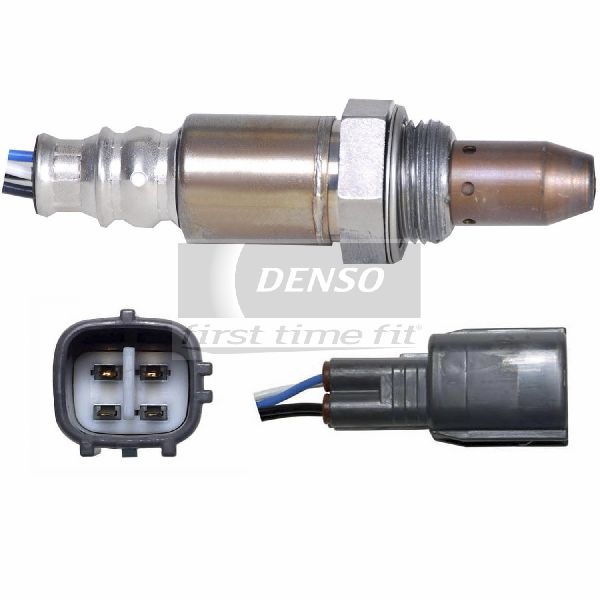
- Air Fuel Ratio Sensor (Upstream, Bank 1 Sensor 1)
(OEM #89467-42120)— This is the part required by TSB-0151-18, which is a very common cause for P0138 on this specific vehicle.
Trusted brands: Denso (OEM), NTK
OEM price range: $150-$200
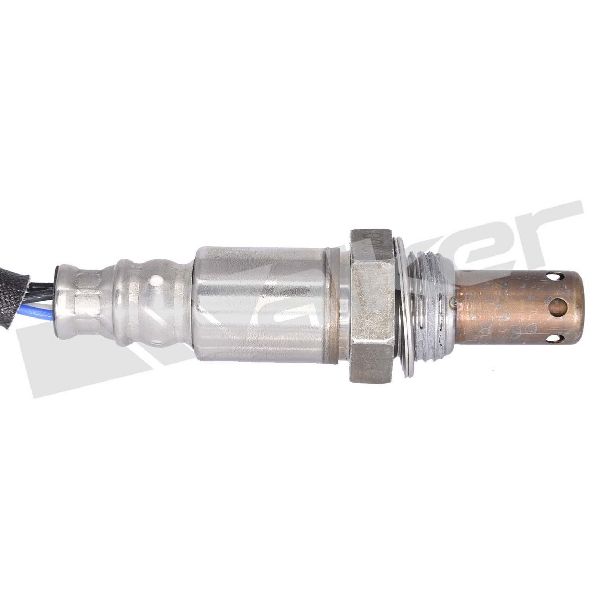
Aftermarket price range: $100-$160 - Oxygen Sensor (Downstream, Bank 1 Sensor 2)
(OEM #89465-42170 or 89465-0R010)— If the TSB does not apply, a failed downstream sensor is the next most likely cause.
Trusted brands: Denso (OEM, P/N 234-4509), NTK
OEM price range: $100-$150
Aftermarket price range: $60-$120
Related Codes That Often Appear With This One
- P0136 —
- P0606 —
Technical Service Bulletins (TSBs) & Recalls
- T-SB-0151-18: MIL ON DTC P0138 - A/F Sensor Stuck Lean (AR Engine). Addresses the specific condition where the upstream A/F sensor and ECM logic cause a false P0138 code. The fix involves an ECM reflash and replacing the A/F sensor with P/N 89467-42120.
Platform-Specific Known Issues
- TSB T-SB-0151-18: Issued for 2009–2012 RAV4s (and 2010-2011 Camrys) with the 2AR-FE engine. It states that DTC P0138 may be set due to an incorrect air-fuel ratio sensor response and requires an ECM software update and replacement of the upstream A/F sensor to fix.
Mechanic-Grade Diagnostic Values
- Downstream O2 Sensor (B1S2) Voltage at Idle (Warm Engine) — expected: Relatively stable voltage between 0.5V and 0.8V.. Failure: Voltage is stuck high, consistently above 0.9V.
- Upstream A/F Sensor (B1S1) Voltage (Freeze Frame Data) — expected: If P0138 is present due to the TSB issue, the AFS Voltage B1S1 may be between 3.35V and 3.70V.. Failure: This specific voltage range in freeze frame data, when paired with a high B1S2 voltage (0.70V-0.90V), points towards the A/F sensor being the root cause per a diagnostic procedure.
- Downstream O2 Sensor (B1S2) Impedance — expected: Should be below 300 ohms when the engine is at normal operating temperature.. Failure: Impedance greater than 300 ohms can indicate a faulty sensor, potentially triggering a P0606 alongside the P0138.
Scan Tool Commands That Help
- Techstream: Active Test: 'Control the Injection Volume for A/F sensor' — This test is specifically called for in TSB-0151-18. A technician uses it to manually alter the fuel mixture rich and lean. By observing the B1S2 voltage response, they can confirm if the sensor and wiring are functional. If the sensor voltage changes correctly, it proves the sensor is working and the issue lies with the A/F sensor and ECM logic, confirming the TSB applies.
Wiring & Ground Locations
- Integration Relay (EFI MAIN Relay) — Located in the engine room No. 1 relay block.. This relay supplies power to the ECM. While not a direct cause of a high voltage signal, a faulty relay or poor connection here can cause erratic ECM behavior and various DTCs. It's a key part of the ECM power source circuit to check during advanced diagnostics.
- ECM (Engine Control Module) — In the RAV4, the ECM is located in the engine compartment, near the battery.. The ECM is the source of the P0138 code. It processes the sensor signals and requires a stable power supply and solid ground connections to function correctly. The TSB fix involves reprogramming this module.
- B1S2 Connector — The downstream O2 sensor connector is located under the vehicle, where the sensor pigtail meets the main wiring harness. On the 2AR-FE, the harness routes up through the floorpan, and the connection may be inside the vehicle, requiring pulling back the carpet on the driver's side to access.. This connector is a common point of failure due to corrosion or damage. A poor connection can cause incorrect voltage readings. Verifying its integrity is a key diagnostic step before replacing the sensor.
Real Owner Repair Stories
- RAV4World Forum User (2010 Toyota RAV4 2.5L) — Check Engine Light with code P0138.
❌ Tried (didn't work) Replaced the downstream O2 sensor (Bank 1, Sensor 2).
✅ What actually fixed it The code returned after replacing the sensor. A trip to the Toyota dealer confirmed TSB-0151-18 applied. The dealer reprogrammed the ECM and replaced the upstream Air/Fuel sensor (Bank 1, Sensor 1), which permanently resolved the code. - Reddit user on r/Cartalk (2007 Toyota RAV4 (Note: 2.4L engine, but demonstrates sensor brand issues)) — Check Engine Light with P0138.
❌ Tried (didn't work) Replaced the downstream O2 sensor with a new NTK brand sensor.
✅ What actually fixed it The light came back on immediately. The Toyota dealer recommended replacing the new NTK sensor with an OEM Denso sensor, citing that Toyotas can be finicky with non-OEM sensors. The user was contemplating doing this themselves, highlighting the common wisdom that Denso parts are preferred to avoid issues.
OEM Part Supersession History
89465-42170→This part number is still active but is also cross-referenced with 89465-0R010 for the downstream sensor on this vehicle.— Standard part evolution or multi-sourcing.
Heads up: While many aftermarket parts are listed as compatible, forums and mechanics strongly recommend using the OEM Denso part (Denso P/N 234-4509) to avoid immediate or premature failure, as the ECM is sensitive to the sensor's specific response curve.89467-42120→N/A— This is the specific upstream A/F sensor required by TSB-0151-18.
Heads up: This is a specific part for the TSB fix. Using a different or aftermarket upstream sensor may not resolve the issue even if the ECM is reflashed.
Diagnostic Flowchart
Other Known Issues on This Vehicle
Issues unrelated to this code that are worth knowing about as an owner of this generation:
- Excessive Oil Consumption 🔴 High — More common on earlier 2AR-FE engines (2009-2012) and can become noticeable after 60,000-100,000 miles. It is exacerbated by extended oil change intervals.
- Intermediate Steering Shaft Clunk 🟠 Medium — A very common issue where a clunking or popping noise is heard/felt when turning the steering wheel at low speeds. Usually appears after 50,000 miles. (Ref: T-SB-0033-11)
- Water Leaks into Rear Cargo Area 🟡 Low — Can occur at any time. Owners report leaks from failed body seams, poorly sealed roof rack or antenna mounts, or missing rubber plugs under the bumper.
- VVT-i Gear Rattle on Cold Start 🟡 Low — A brief rattling or knocking sound for a few seconds after a cold start. While addressed by a TSB, it's often considered more of an annoyance than a critical failure. (Ref: Yes (internal TSB for dealers))
- Water Pump Failure 🟠 Medium — Water pumps on the 2AR-FE can fail, typically after 80,000 miles, leading to coolant leaks and potential overheating.
Used vs. New Parts: Buying Guide for This Vehicle
When a used part is the smart pick: For this repair, using a used part is strongly discouraged. Oxygen and Air/Fuel sensors are wear-and-tear items with a finite lifespan. A used sensor has an unknown history and could fail shortly after installation.
What to inspect on the donor part:
- Not applicable as used sensors are not recommended.
OEM-only on this vehicle (don't cheap out):
- Air/Fuel Ratio Sensor (Upstream)
- Oxygen Sensor (Downstream)
Aftermarket brands forum-validated for this vehicle:
- Denso (This is the Original Equipment Manufacturer for Toyota and is the most recommended choice).
- NTK (Also a reputable OEM supplier, but Denso is generally preferred for Toyotas).
Brands owners have reported issues with on this vehicle:
- Generic, unbranded, or 'white-box' sensors from online marketplaces. Owners and mechanics report very high failure rates or out-of-box incompatibility with Toyota's sensitive ECM logic.
Real Owner Stories
Aggregated from forums and TSBs cited above. Mileages and costs reflect what owners reported in those sources.
2011 RAV4
Symptoms: Check Engine Light for P0138.
What fixed it: Replaced the downstream oxygen sensor with Denso 234-4622. The owner noted that an O2 sensor wrench was useless due to the angles and used a floor jack with a 7/8" wrench to break the sensor free.
Cost: $35
Source hint: YouTube comment by Honkin Zone on video '2012 RAV4 O2 Sensor Bank 1 Sensor 2 P0138 P0607'
2010 RAV4 2.5L
Symptoms: Check Engine Light with P0138 code; code returned even after owner replaced the downstream O2 sensor (Sensor 2) himself.
What fixed it: Reprogramming the ECM and replacing the upstream A/F sensor (Sensor 1) as per TSB-0151-18.
Source hint: RAV4World - 'P0138 Code - O2 Sensor Bank 1 Sensor 2'
2010 Toyota RAV4
Symptoms: P0138 code returned quickly after replacing the sensor with an Autozone part and then again after using an OEM part.
What fixed it: The issue was identified as the TSB-related ECM logic problem rather than a hardware failure of the downstream sensor.
Source hint: Reddit r/Cartalk - '2010 toyota rav4 p0136 p0138 replaced w autozone'
Related OBD-II Codes
Frequently Asked Questions
Does TSB-0151-18 apply to my 2009-2012 RAV4 with the 2.5L engine?
I replaced the downstream O2 sensor on my 2010 RAV4 but the P0138 code came back. What did I miss?
What specific part should I use if I need to replace the downstream oxygen sensor?
Why are my VSC, TRAC, and 4WD lights on when the code is for an oxygen sensor?
Can I perform the TSB-0151-18 repair myself at home?
Is there a specific part number for the updated upstream sensor mentioned in the TSB?
Helpful Videos
We Have This Part in Stock


The information in this article is provided for general reference and educational purposes only. Vehicle specifications, procedures, and part compatibility can vary by production date, trim level, and region. Always consult your vehicle's factory service manual and verify part numbers before purchasing or performing repairs. Safety-critical components such as airbags, seat belts, and braking systems should be installed by a qualified professional.
- Toyota RAV4:
- 🧭 Diagnostic Flowchart
- 🎬 Helpful Videos
- 🛍️ Shop This Part
- What's Unique About the 2006-2012 Toyota RAV4
- Symptoms You May Notice
- Most Likely Causes
- Rare But Worth Checking
- Diagnosis Steps
- Parts You'll Likely Need
- Related Codes That Often Appear With This One
- Technical Service Bulletins (TSBs) & Recalls
- Platform-Specific Known Issues
- Mechanic-Grade Diagnostic Values
- Scan Tool Commands That Help
- Wiring & Ground Locations
- Real Owner Repair Stories
- OEM Part Supersession History
- Other Known Issues on This Vehicle
- Used vs. New Parts: Buying Guide for This Vehicle
- Real Owner Stories
- 2011 RAV4
- 2010 RAV4 2.5L
- 2010 Toyota RAV4
- Related OBD-II Codes
- Frequently Asked Questions
- 🎟️ Get 5% Off