

P0138 on 2009-2012 Toyota RAV4 2.5L: O2 Sensor High Voltage Causes and Fixes
On a 2009-2012 RAV4 with the 2.5L 2AR-FE engine, code P0138 is most often caused by a faulty upstream Air/Fuel Ratio sensor and an outdated engine computer logic, not the downstream O2 sensor the code points to. A Toyota dealer may need to update the computer, and the A/F sensor costs ~$150 (OEM) to replace.
- Before buying any parts for a P0138 code, investigate Toyota TSB T-SB-0151-18. The true cause is likely the upstream Air/Fuel sensor and outdated computer software, not the downstream sensor.
- Replacing the downstream O2 sensor (Bank 1, Sensor 2) will likely not fix the problem if the TSB applies to your vehicle.
- This is a known issue for the 2009-2012 RAV4 with the 2.5L 2AR-FE engine and also affects the 2010-2011 Toyota Camry with the same engine.
What's Unique About the 2009-2012 Toyota RAV4
For this specific RAV4, a Technical Service Bulletin (T-SB-0151-18) reveals that P0138 is often a 'ghost code' triggered by a failing *upstream* Air/Fuel (A/F) sensor and outdated Engine Control Module (ECM) software. The failing upstream sensor sends incorrect data that causes a rich fuel mixture, and the downstream sensor (Sensor 2) correctly reports this rich condition with a high voltage, setting the P0138 code. Many owners and shops mistakenly replace the downstream sensor when the true fault lies with the upstream sensor or the ECM programming.
Symptoms You May Notice
- Check Engine Light is on
- Vehicle Stability Control (VSC) and/or 4WD warning lights may also illuminate (This is a common Toyota behavior; the ECM disables these systems as a precaution whenever a CEL is triggered).
- Reduced fuel economy
- Rough or unstable idle
- Failure to pass an emissions test
- Immediately replacing the downstream oxygen sensor (Bank 1, Sensor 2) without first checking for the applicability of TSB-0151-18. The actual fault is often the upstream A/F sensor and the ECM software.
Most Likely Causes
- Faulty Upstream Air/Fuel Ratio Sensor (Bank 1, Sensor 1) & ECM Logic 🔴 High Probability → Shop Oxygen Sensor Toyota issued TSB-0151-18 specifically for this issue on 2009-2012 RAV4s (and 2010-2011 Camrys) with the 2AR-FE engine, indicating a known problem with A/F sensor response and ECM logic. The bulletin states the condition is caused by 'incorrect air fuel ratio sensor response'.
How to confirm: A technician with a Toyota Techstream scan tool can check if the ECM has the latest calibration update. If it does not, the TSB procedure should be followed. The TSB outlines a specific diagnostic test using Techstream to confirm the faulty sensor response before replacement. The upstream A/F sensor is sending incorrect data, causing a rich condition that the downstream sensor is correctly reporting.
Typical fix: Reprogram the Engine Control Module (ECM) to the latest software version and replace the upstream Air/Fuel Ratio Sensor (Bank 1, Sensor 1). 🎬 Watch: How to replace the upstream air/fuel ratio sensor This is often best performed by a Toyota dealer or a qualified independent shop with Toyota-specific tools.
Est. part cost: $130-$200 - Failed Downstream Oxygen Sensor (Bank 1, Sensor 2) 🟡 Medium Probability → Shop Oxygen Sensor
How to confirm: If the TSB for the upstream sensor does not apply or has already been performed, the downstream sensor should be tested. Using a scan tool, monitor the voltage for Bank 1, Sensor 2. If it is stuck high (e.g., >0.9V) and does not fluctuate on a fully warmed-up engine, the sensor has likely failed internally.
Typical fix: Replace the downstream oxygen sensor located after the catalytic converter. 🎬 See this walkthrough for replacing the downstream O2 sensor
Est. part cost: $60-$125 - Wiring Harness or Connector Damage ⚪ Low Probability
How to confirm: Visually inspect the wiring and connector for the downstream O2 sensor. Look for any signs of melting from contact with the exhaust, corrosion in the connector, or frayed/broken wires. A multimeter can be used to check for a short to power on the signal wire, which would cause a constant high voltage reading.
Typical fix: Repair the damaged section of the wiring harness or replace the connector pigtail.
Est. part cost: $15-$50
Rare But Worth Checking
- Exhaust Leak: An exhaust leak before or near the oxygen sensor can sometimes skew readings, although it more commonly causes low voltage codes. It's a quick check worth performing before replacing parts.
- Failing Engine Control Module (ECM): In very rare cases, the ECM itself can fail. This should only be considered after all other possibilities, including the TSB, have been exhausted.
Diagnosis Steps
- Connect an OBD-II scanner to check for P0138 and any other codes. Note the freeze frame data.
- Research TSB-0151-18. Determine if your vehicle's VIN falls within the scope and if the ECM software update has been performed. This is the most critical step.
- If the TSB applies and has not been done, the recommended procedure is to have a dealer or qualified shop update the ECM and replace the upstream Air/Fuel Ratio sensor.
- If the TSB does not apply or has been completed, proceed with diagnosing the downstream sensor.
- Visually inspect the wiring and connector for the downstream O2 sensor (Bank 1, Sensor 2) for any signs of damage, melting, or corrosion.
- Using a scan tool with live data, observe the voltage of Bank 1, Sensor 2. A healthy downstream sensor on a warm engine at steady RPM should show a relatively stable voltage (usually between 0.5V-0.8V). If it is stuck high (above 0.9V) and does not change, it points to a problem.
- If the wiring is intact and the sensor voltage is stuck high, the downstream O2 sensor is the likely cause and should be replaced. 🎬 Watch: Diagnosing P0138 and P0607 codes on a 2012 RAV4
- After any repair, clear the codes and perform a drive cycle to ensure the Check Engine Light does not return.
Parts You'll Likely Need
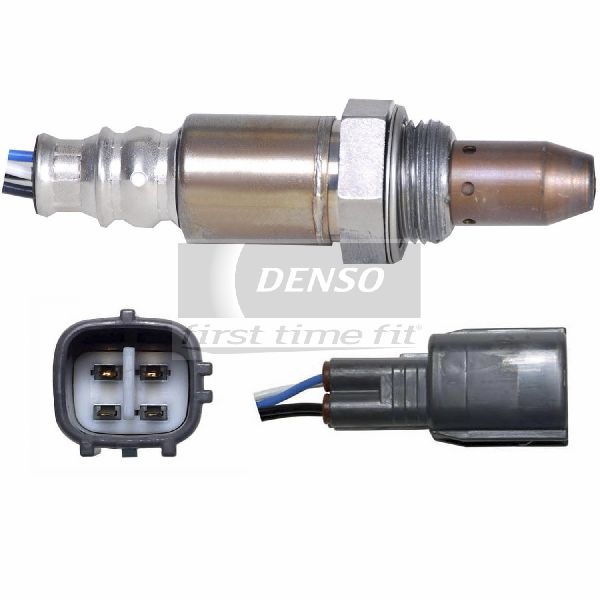
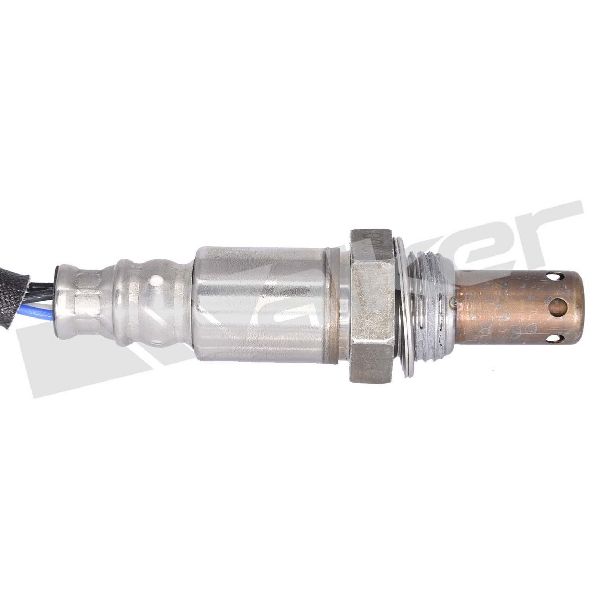
- Air Fuel Ratio Sensor (Upstream)
(OEM #89467-42120)— This is the part identified in TSB-0151-18 as the root cause for P0138 on this vehicle.
Trusted brands: Toyota (OEM), Denso (OEM supplier, P/N 234-9022)
OEM price range: $150-$220
Aftermarket price range: $100-$160 - Oxygen Sensor (Downstream)
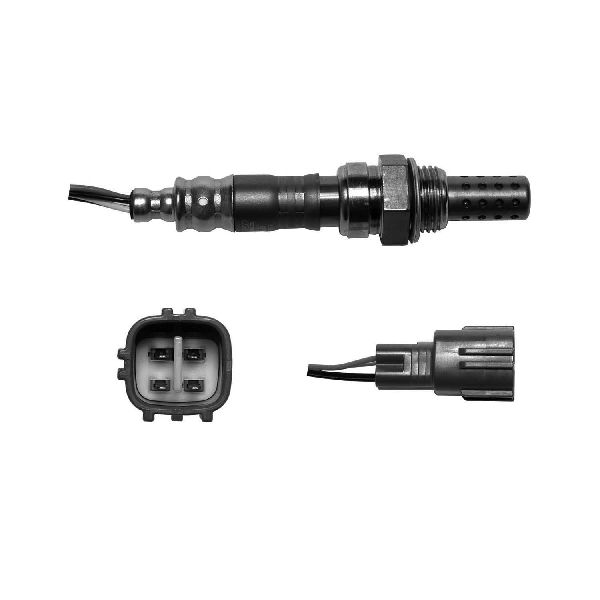
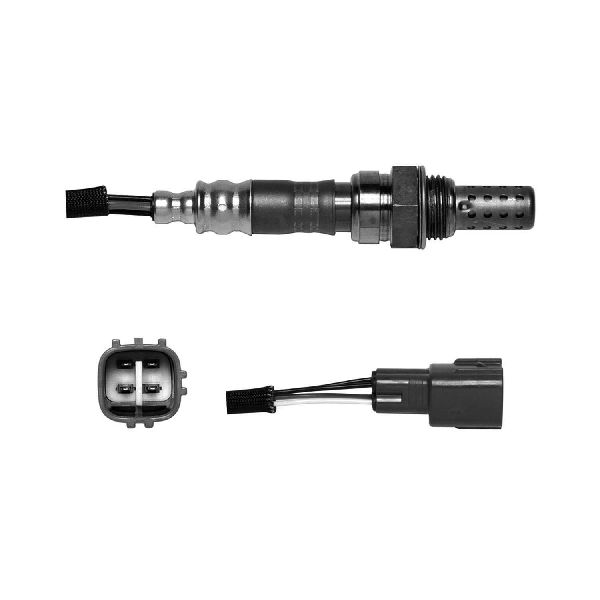
(OEM #89465-42170)— If the TSB does not apply or has already been performed, a failed downstream sensor is the next most likely cause.
Trusted brands: Toyota (OEM), Denso (OEM supplier, P/N 234-4521 or similar, verify by VIN)
OEM price range: $120-$175
Aftermarket price range: $60-$100
Related Codes That Often Appear With This One
- P0172 — If the upstream A/F sensor fails and causes a rich condition, the ECM may also set a 'System Too Rich (Bank 1)' code alongside P0138.
- P2195 — This code for 'A/F Sensor Signal Stuck Lean' can sometimes accompany P0138, as noted in related Toyota diagnostic bulletins, indicating a complex failure of the upstream sensor.
Technical Service Bulletins (TSBs) & Recalls
- T-SB-0151-18: MIL ON DTC P0138. This TSB is the central document for this issue, confirming the cause is often the upstream A/F sensor and outdated ECM logic, not the downstream O2 sensor. It applies to both the RAV4 and Camry with the 2AR-FE engine.
Platform-Specific Known Issues
- TSB T-SB-0151-18: Toyota Technical Service Bulletin T-SB-0151-18 was issued for 2009–2012 RAV4s with the 2AR-FE engine, indicating that a P0138 code may be caused by an incorrect air-fuel ratio sensor response, requiring an ECM software update and replacement of the upstream A/F sensor.
- Real-World Repair Story: A user on RAV4World forums with a 2010 RAV4 reported getting the P0138 code. After replacing the downstream O2 sensor (Sensor 2) himself, the code returned. A trip to the dealer confirmed the issue was covered by TSB-0151-18, and the fix involved reprogramming the ECM and replacing the upstream A/F sensor (Sensor 1), which solved the problem permanently. This highlights the common misdiagnosis.
Mechanic-Grade Diagnostic Values
- Downstream O2 Sensor (B1S2) Voltage at Idle (Warm Engine) — expected: Relatively stable voltage between 0.5V and 0.8V.. Failure: Voltage is stuck high, consistently above 0.9V.
- TSB Active Test: O2S B1S2 Voltage Response — expected: When using Techstream to command fuel injection volume, the sensor voltage should switch. For example, it should change from below 0.45V to above 0.55V when commanded from lean to rich.. Failure: If the voltage responds correctly, the sensor is good, and the TSB fix (A/F sensor + ECM reflash) is required. If it does not respond, the sensor or wiring is faulty.
Scan Tool Commands That Help
- Toyota Techstream: Active Test: 'Control the Injection Volume for A/F sensor' — This test, outlined in TSB T-SB-0151-18, is used to definitively test the downstream O2 sensor's functionality. By forcing the engine rich and lean, a technician can observe the sensor's voltage response. If the sensor responds correctly, it proves the sensor and its wiring are not the cause of P0138, pointing instead to the upstream A/F sensor and ECM logic as the root problem.
Wiring & Ground Locations
- ECM Pins (Downstream O2 Sensor) — At the Engine Control Module (ECM) connector.. For advanced diagnostics, technicians can test for continuity and voltage directly at the ECM. The key pins for Bank 1 Sensor 2 are OX1B (Signal), HT1B (Heater Control), and a sensor ground reference like E2. A short to power on the OX1B wire would cause a constant high voltage reading.
- Engine Ground Points — Various points on the 2AR-FE engine block and cylinder head, typically connecting to the chassis via braided straps or heavy gauge wire.. While not a common cause for this specific code, a poor engine-to-chassis ground can create a voltage potential difference, causing erratic behavior in various sensors that use the engine block as a ground reference. A visual inspection of main ground straps is a quick and valid step in any electrical diagnosis.
Real Owner Repair Stories
- Torque News article on a Toyota Prius with a similar engine control strategy (Toyota Prius (demonstrates the shared logic)) — Persistent P0138 'Oxygen Sensor High Voltage' code.
❌ Tried (didn't work) Initially suspecting the downstream O2 sensor or its circuit was shorted.
✅ What actually fixed it The actual cause was a failing upstream Air/Fuel ratio sensor. The ECU uses the upstream sensor for primary fuel control. When it fails, it can cause a rich condition. The downstream sensor correctly detects this rich exhaust, reports a high voltage, and sets the P0138 code. The downstream sensor was acting as a 'messenger' for the upstream sensor's failure.
Model Year Variations Within This Range
- 2009 vs 2010-2012: The OEM part number for the downstream oxygen sensor (Bank 1, Sensor 2) may differ. Part number 89465-42170 is primarily listed for models up to 2009. For 2010-2012 models, part number 89465-0R010 is more commonly listed. It is critical to verify the correct part number by VIN before purchasing.
Diagnostic Flowchart
Other Known Issues on This Vehicle
Issues unrelated to this code that are worth knowing about as an owner of this generation:
- VVT Gear Rattle on Cold Start 🟠 Medium — Common on early 2AR-FE engines, especially on cold startup. The rattle typically lasts for only a second or two. (Ref: T-SB-0041-13, T-SB-0012-11)
- Torque Converter Shudder 🟠 Medium — A brief shudder or vibration may be felt under light throttle between 25-50 mph. More prominent on slightly later models (2013-2015) but can occur. (Ref: T-SB-0023-15, Warranty Enhancement Program ZH1 (Primarily for 2013+ models but describes the issue well))
- Excessive Oil Consumption 🟡 Low — Less common on the 2AR-FE than its predecessor (2AZ-FE), but some owners report higher-than-expected oil use. Often linked to piston ring design or PCV system issues. (Ref: Warranty Enhancement Program ZE7 (Primarily for 2AZ-FE, but contextually relevant))
- Water Pump Failure 🟡 Low — While the 2AR-FE is highly reliable, the water pump is a potential failure point, usually presenting as a small coolant leak.
Used vs. New Parts: Buying Guide for This Vehicle
When a used part is the smart pick: For this repair, using used parts is generally not recommended. The only potential exception is a used ECM from a reputable source, but only if the ECM is confirmed to be faulty and a specialist is available for VIN programming.
Donor-vehicle mileage cap: roughly under 70000 miles for the part to have meaningful remaining life.
What to inspect on the donor part:
- For a used ECM, ensure there is no water damage to the case or pins.
- Verify the donor vehicle was not in a flood or fire.
- Obtain the VIN of the donor car to cross-reference its original equipment and software version.
OEM-only on this vehicle (don't cheap out):
- Engine Control Module (ECM) - Aftermarket ECMs are not available, and used units require specialized programming to the vehicle's VIN and options.
Aftermarket brands forum-validated for this vehicle:
- Denso (for both Air/Fuel and Oxygen sensors - they are the OEM supplier)
- NTK (also a highly regarded OEM supplier for many Japanese vehicles)
Brands owners have reported issues with on this vehicle:
- Unbranded 'universal' sensors that require cutting and splicing wires.
- Bosch sensors are sometimes reported by forum members to be less compatible with Toyota engine management systems compared to Denso or NTK.
Real Owner Stories
Aggregated from forums and TSBs cited above. Mileages and costs reflect what owners reported in those sources.
2010 Toyota RAV4 2AR-FE
Symptoms: Check Engine Light with code P0138. Owner replaced the downstream O2 sensor (Sensor 2) himself, but the code returned shortly after.
What fixed it: A trip to the dealer to perform TSB-0151-18, which involved reprogramming the ECM and replacing the upstream A/F sensor (Sensor 1).
Source hint: RAV4World.com thread titled 'P0138 Code - O2 Sensor Bank 1 Sensor 2'
2009-2012 RAV4 2AR-FE
Symptoms: MIL ON with DTC P0138 (Oxygen Sensor Circuit High Voltage [Bank 1 Sensor 2]).
What fixed it: Reprogramming the ECM (PCM) and replacing the upstream Air Fuel Ratio sensor (Part No. 89467-42120).
Source hint: NHTSA / Toyota T-SB-0151-18
Related OBD-II Codes
Frequently Asked Questions
Does TSB-0151-18 apply to my 2009-2012 Toyota RAV4?
Why are my VSC and 4WD lights on along with the Check Engine Light?
Can I fix P0138 by just replacing the downstream oxygen sensor?
What is the specific part number for the upstream sensor mentioned in the Toyota bulletin?
Is the 2010-2011 Camry affected by the same P0138 issue as the RAV4?
Should I replace the ECM if the software update doesn't work?
Helpful Videos
We Have This Part in Stock


The information in this article is provided for general reference and educational purposes only. Vehicle specifications, procedures, and part compatibility can vary by production date, trim level, and region. Always consult your vehicle's factory service manual and verify part numbers before purchasing or performing repairs. Safety-critical components such as airbags, seat belts, and braking systems should be installed by a qualified professional.
- Toyota RAV4:
- 🧭 Diagnostic Flowchart
- 🎬 Helpful Videos
- 🛍️ Shop This Part
- What's Unique About the 2009-2012 Toyota RAV4
- Symptoms You May Notice
- Most Likely Causes
- Rare But Worth Checking
- Diagnosis Steps
- Parts You'll Likely Need
- Related Codes That Often Appear With This One
- Technical Service Bulletins (TSBs) & Recalls
- Platform-Specific Known Issues
- Mechanic-Grade Diagnostic Values
- Scan Tool Commands That Help
- Wiring & Ground Locations
- Real Owner Repair Stories
- Model Year Variations Within This Range
- Other Known Issues on This Vehicle
- Used vs. New Parts: Buying Guide for This Vehicle
- Real Owner Stories
- 2010 Toyota RAV4 2AR-FE
- 2009-2012 RAV4 2AR-FE
- Related OBD-II Codes
- Frequently Asked Questions
- 🎟️ Get 5% Off