

P0138 on 2011-2020 Toyota Sienna: O2 Sensor Circuit High Voltage Causes and Fixes
On a 2011-2020 Toyota Sienna, code P0138 almost always means the rear downstream oxygen sensor (Bank 1, Sensor 2) has failed or its wiring is damaged. Before replacing the sensor, thoroughly inspect the wiring, especially on 2015-2016 models which had a service campaign for this exact issue. An OEM-quality Denso replacement part costs about $50-$80 and is a straightforward DIY fix for many owners.
- P0138 on a Sienna points directly to the rear downstream O2 sensor (Bank 1, Sensor 2) or its wiring.
- Before buying parts, check the wiring harness for damage, especially on 2015-2016 models, which have a known wiring issue per a Toyota service campaign.
- The engine changed in 2017. Ensure you buy the correct O2 sensor for your specific year: 89465-08080 for 2011-2016 (2GR-FE) and 89465-0E210 for 2017-2020 (2GR-FKS).
- This is a very manageable DIY repair for most home mechanics, but do not assume replacing the sensor will fix it; a wiring check is mandatory.
- Using a Denso-branded sensor (the OEM supplier) is a cost-effective and reliable alternative to the more expensive Toyota-branded part.
What's Unique About the 2011-2020 Toyota Sienna
The 2011-2020 Sienna uses two different V6 engines: the 2GR-FE (2011-2016) and the 2GR-FKS (2017-2020), which use different part numbers for the same sensor. Notably, Toyota issued a Special Service Campaign (SSC G0G) for 2015-2016 models because vehicle vibrations could cause the O2 sensor wiring to degrade and fail, directly triggering code P0138. This makes inspecting the wiring harness for damage a critical diagnostic step on these specific years, not just a generic suggestion.
Generation note: This range covers the third generation (XL30) Sienna, but there was a significant engine update. 2011-2016 models use the 2GR-FE engine. 2017-2020 models use the updated 2GR-FKS engine with D-4S direct and port injection. The oxygen sensors are not interchangeable between these two engine versions.
Symptoms You May Notice
- Check Engine Light is on
- Disabling of Traction Control and/or Cruise Control systems
- Decreased fuel economy
- Rough or unstable idle
- Failure to pass an emissions test
- Replacing the catalytic converter. This code points to a sensor or circuit issue, not a converter efficiency issue (like a P0420 or P0430).
- Replacing the wrong oxygen sensor. The Sienna V6 has four O2 sensors. P0138 specifically refers to Bank 1 (rear/firewall side), Sensor 2 (downstream/post-converter). Replacing any other sensor will not fix this code.
- Immediately replacing the sensor without checking the wiring. As evidenced by Toyota's own service campaign and numerous owner accounts, the wiring is a known weak point.
Most Likely Causes
- Failed Bank 1, Sensor 2 Oxygen Sensor 🔴 High Probability → Shop Oxygen Sensor Oxygen sensors are wear-and-tear items that operate in a harsh exhaust environment. They degrade over time from heat, vibration, and contamination from fuel or coolant, causing them to fail and send an incorrect, fixed high-voltage signal.
How to confirm: Using a scan tool, observe the live data for the B1S2 voltage. If it is stuck high (e.g., >0.9V) and does not fluctuate, and the wiring is confirmed to be good, the sensor has failed. A healthy downstream sensor should have a relatively stable voltage, while a stuck high reading confirms a fault.
Typical fix: Replace the Bank 1, Sensor 2 (rear, downstream) oxygen sensor. This sensor is located on the exhaust pipe for the rear cylinder bank, after the catalytic converter. Using an O2 sensor socket and penetrating oil is highly recommended.
Est. part cost: $50-$160 - Damaged Wiring or Connector 🟡 Medium Probability Toyota issued Special Service Campaign G0G for 2015-2016 models due to sensor wiring failing from vibration. The wiring harness runs under the vehicle and is susceptible to road debris, heat damage from the exhaust, and corrosion. A short to power on the signal wire will cause a constant high voltage reading.
How to confirm: Visually inspect the entire wiring harness from the O2 sensor to its connection point. Look for chafing, melting on the exhaust, corrosion in the connector, or broken wires. Test for a short to power in the signal wire using a multimeter. On platform-mates like the Lexus RX350, water intrusion in the driver-side kick panel junction box has been known to cause this code, so checking for moisture inside the cabin is also a valid step.
Typical fix: Repair the damaged section of the wiring harness or clean/replace the connector. Ensure the harness is properly secured away from heat sources or moving parts.
Est. part cost: $5-$50 - Rich Running Condition ⚪ Low Probability While less common to be the root cause, issues like a leaking fuel injector or faulty fuel pressure regulator can create an overly rich exhaust. The downstream O2 sensor will correctly report this as a high voltage reading, but the problem lies upstream in the fuel system, not with the O2 sensor itself.
How to confirm: Look for other accompanying codes related to the fuel system or misfires. Analyze fuel trim data with a scan tool. A consistently high positive fuel trim (e.g., over +10%) might indicate the computer is trying to compensate for a rich condition, which could point to a faulty upstream Air/Fuel ratio sensor.
Typical fix: Diagnose and repair the root cause of the rich condition, such as replacing a faulty fuel injector or regulator.
Est. part cost: $100-$500+
Rare But Worth Checking
- Exhaust Leak: An exhaust leak before the O2 sensor can introduce oxygen into the exhaust stream, potentially causing incorrect sensor readings. This is less common for a high voltage code but worth checking if a new sensor doesn't fix the issue.
- Blown A/F Heater Fuse: The oxygen sensor's heater circuit is often protected by a fuse (labeled 'A/F Heater' or similar) in the engine bay fuse box. If this fuse is blown, the sensor may not operate correctly, potentially leading to erroneous voltage readings. This should be a quick check before replacing parts.
- Engine Control Module (ECM) Fault: While extremely rare, a fault within the ECM's internal driver for the O2 sensor circuit can cause this code. This should only be considered after all other possibilities have been exhaustively ruled out. A TSB for other Toyota models (2AR-FE engine) notes that an ECM software update was issued to correct logic that could falsely trigger P0138, so checking for available updates is a valid step.
Diagnosis Steps
- Connect an OBD-II scanner and confirm P0138 is the primary code. Check for any other codes, like P0607.
- View the live data stream for the Bank 1, Sensor 2 O2 sensor. A reading that is stuck high (e.g., 0.9V - 1.2V) confirms the fault condition.
- Check the A/F Heater fuse in the engine compartment fuse box to ensure it is not blown.
- Perform a thorough visual inspection of the B1S2 oxygen sensor's wiring harness and connector. Look for any signs of melting, chafing, or corrosion. Pay extra attention if you have a 2015-2016 model due to the service campaign.
- If wiring damage is found, repair it and clear the code. Test drive to see if the code returns.
- If the wiring appears intact, the most likely cause is the sensor itself. Pre-soak the sensor threads with penetrating oil to make removal easier.
- Using an O2 sensor socket, remove and replace the Bank 1, Sensor 2 oxygen sensor. It is highly recommended to use an OEM (Toyota) or OEM-supplier (Denso) part.
- Clear the trouble code with the scanner and perform a test drive to ensure the repair was successful.
Parts You'll Likely Need
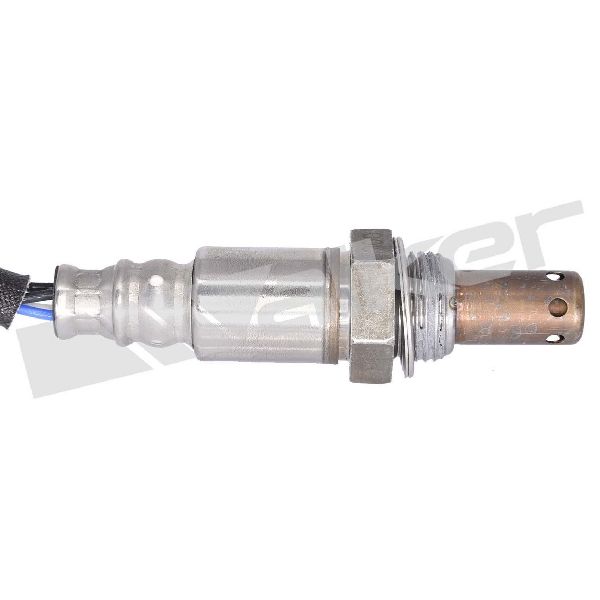
- Oxygen Sensor (Bank 1, Sensor 2)
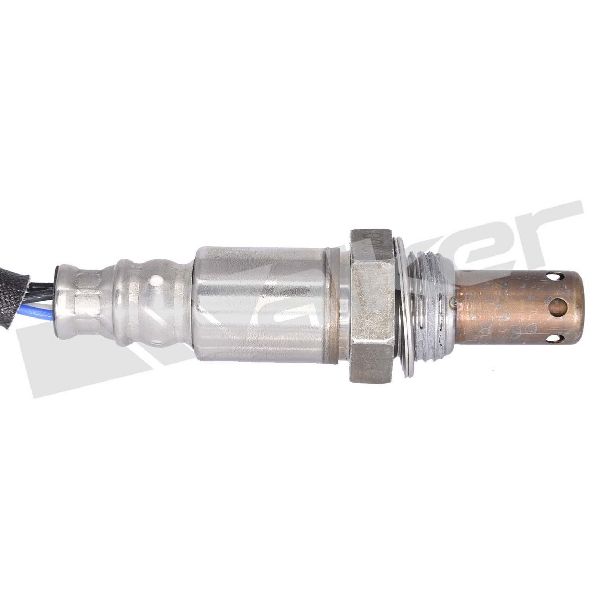
(OEM #89465-08080)— This is the downstream oxygen sensor for the rear bank on 2011-2016 models with the 2GR-FE engine. It is the most common failure part for this code.
Trusted brands: Toyota (OEM), Denso (OEM Supplier, Part #234-4530)
OEM price range: $105-$160
Aftermarket price range: $50-$80 - Oxygen Sensor (Bank 1, Sensor 2)
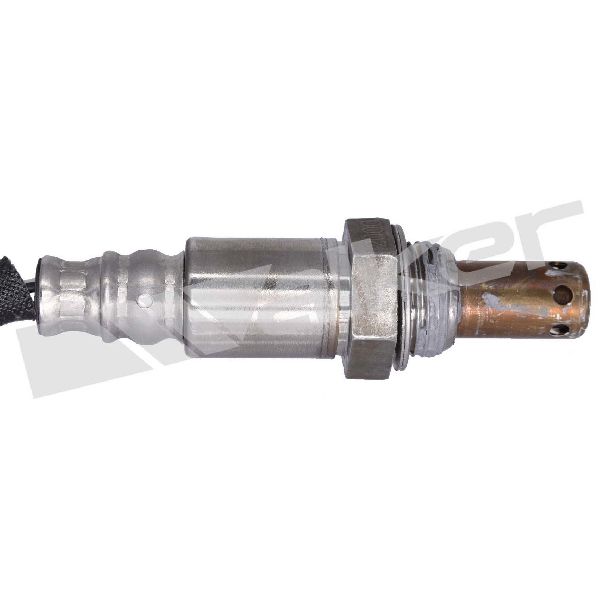
(OEM #89465-0E210)— This is the downstream oxygen sensor for the rear bank on 2017-2020 models with the 2GR-FKS engine. It is the most common failure part for this code.
Trusted brands: Toyota (OEM), Denso (OEM Supplier)
OEM price range: $150-$230
Aftermarket price range: $70-$120
Related Codes That Often Appear With This One
- P0607: On some Toyota/Lexus models, a P0138 can be accompanied by a P0607 (Control Module Performance) code. A TSB for the 2010 Lexus RX 350 suggests this combination can point to connector corrosion or water intrusion.
Technical Service Bulletins (TSBs) & Recalls
- SSC G0G - Certain 2015-2016 Model Year Sienna Vehicles, Oxygen Sensor Replacement. Corroborated that wiring failure is a known issue causing P0138 on these specific years.
- L-SB-0023-10 (For platform-mate 2010 Lexus RX 350): Notes that P0138 appearing with P0607 can be caused by corrosion or moisture in an electrical connector, a relevant diagnostic tip.
Platform-Specific Known Issues
- Special Service Campaign (SSC) G0G: Issued for 2015-2016 Toyota Sienna models. It addresses potential wire degradation inside the oxygen sensor wiring harness due to vehicle vibration, which can cause DTC P0138. This makes a wiring inspection particularly important for these model years.
Mechanic-Grade Diagnostic Values
- Heated Oxygen Sensor (B1S2) Heater Resistance — expected: 5 to 10 Ω at 20°C (68°F). Failure: A reading outside this range indicates a faulty heater element within the sensor.
- Heated Oxygen Sensor (B1S2) Heater Current — expected: 0.4 to 1 A at idle. Failure: Current greater than 2 A will trigger a high voltage/short circuit DTC (like P0038/P0058), while current less than 0.3 A will trigger a low voltage/open circuit DTC (like P0037/P0057). P0138 is a signal circuit code, but heater failure can affect signal performance.
- Live Data - Downstream O2 Sensor (O2S B1S2) Voltage — expected: Relatively stable voltage, typically between 0.1V and 0.9V after warm-up.. Failure: Voltage stuck high, at or above 0.9V (often seen at 1.25V in fault conditions) for more than 10 seconds.
- Live Data - Total Fuel Trim (Short Term + Long Term) — expected: Should average near 0%.. Failure: A sustained positive value of +10% or more suggests the system is adding fuel to correct a perceived lean condition, which could be caused by a faulty upstream A/F sensor, leading to an actual rich condition that the downstream sensor correctly reports as high voltage.
Scan Tool Commands That Help
- Toyota Techstream: Active Test: 'Control the Injection Volume for A/F sensor' — This function allows a technician to manually force the engine rich or lean. While observing the B1S2 voltage on the live data screen, the technician can confirm if the sensor responds correctly to the commanded changes. If the voltage remains stuck high despite commanding a lean mixture, it strongly points to a sensor or circuit fault rather than a true rich condition.
Wiring & Ground Locations
- B1S2 Sensor Connector (B19 or E35) — The connector for the Bank 1, Sensor 2 oxygen sensor is located on the vehicle's underbody, attached to the wiring harness leading from the sensor on the rear (firewall side) exhaust pipe.. This is the primary connection point to test for power, ground, and signal integrity. The ECM sends a reference voltage, and the sensor returns a signal voltage. Technicians can test for voltage and continuity at the harness-side of this connector to differentiate between a sensor failure and a wiring issue.
- A/F Heater Fuse — Located in the engine room relay/fuse block.. This fuse supplies power to the oxygen sensor's internal heater. While a blown fuse typically sets a heater circuit code (like P0141), a non-functioning heater can prevent the sensor from reaching operating temperature, leading to incorrect and potentially high voltage signal readings.
Real Owner Repair Stories
- Reddit user on r/ToyotaSienna (2011 Toyota Sienna, 140,000 miles) — P0138 code, Check Engine Light, Traction Control disabled, Cruise Control disabled.
❌ Tried (didn't work) Replaced entire exhaust system (OEM manifolds/cats, Walker pipes)., Replaced the B1S2 oxygen sensor with a new NGK part., Replaced the NGK sensor a second time under warranty., Confirmed continuity in the sensor wiring.
✅ What actually fixed it The user did not post a final resolution, but the thread highlights a critical diagnostic scenario: when multiple new sensors and a continuity test fail to resolve the code, the next step is to check for a short-to-power or an intermittent open in the harness that a simple continuity test might miss. - Reddit user on r/Toyota (2011 Toyota Corolla, 180,000 miles) — P0138 code with CEL and traction light, live data for B1S2 stuck at 1.25V.
❌ Tried (didn't work) Replaced the downstream oxygen sensor with a genuine Toyota part.
✅ What actually fixed it The catalytic converter had failed. The user notes that an aftermarket converter was 'trash' and an OEM replacement was required to solve the issue. A prior engine misfire was suspected as the root cause of the converter failure. - Torque News article citing a Toyota technician's experience (Toyota Prius (also applies to Yaris, RAV4)) — P0138 code.
❌ Tried (didn't work) Assuming the P0138 code means the downstream (B1S2) sensor is faulty.
✅ What actually fixed it The upstream Air/Fuel ratio sensor (B1S1) was faulty. On some Toyotas, a failing A/F sensor provides incorrect data to the ECU, causing a rich condition. The downstream O2 sensor correctly detects this rich exhaust and sends a high voltage signal, setting the P0138 code as a 'tattletale' on the upstream sensor. The actual problem was the B1S1 sensor, not the B1S2 sensor that triggered the code.
When the Usual Fixes Don't Work
- While P0138 is most commonly a failed sensor, multiple owner accounts confirm that replacing the sensor—even with an OEM part—does not always fix the issue. In a 2011 Corolla, the final fix was a new OEM catalytic converter after a new sensor failed to resolve the 1.25V reading. In another case involving a 2011 Sienna, two new sensors and a wiring continuity check did not resolve the code, pointing towards a more elusive wiring short or an ECM-level problem. Furthermore, experienced Toyota technicians note that a faulty upstream A/F sensor can cause a rich condition that makes the downstream sensor correctly report high voltage, meaning the P0138 code is a symptom of a different failed part.
OEM Part Supersession History
89465-08080→N/A— This part number appears to be current for the 2011-2016 2GR-FE models.89465-0E210→N/A— This part number appears to be current for the 2017-2020 2GR-FKS models.
Model Year Variations Within This Range
- 2011-2016: Uses the 2GR-FE engine and requires downstream O2 sensor part number 89465-08080.
- 2017-2020: Uses the updated 2GR-FKS engine with D-4S injection and requires downstream O2 sensor part number 89465-0E210.
- 2015-2016: These specific years were subject to Special Service Campaign (SSC) G0G for O2 sensor wiring degradation due to vibration, making a wiring inspection a top priority for P0138 on these models.
Diagnostic Flowchart
Real Owner Stories
Aggregated from forums and TSBs cited above. Mileages and costs reflect what owners reported in those sources.
2011 Toyota Sienna — 138000 miles
Symptoms: Check engine light illuminated with codes P0136 and P0138. The CEL disabled traction control and cruise control. The light came back on immediately after replacing the sensor with an aftermarket NGK part.
What fixed it: Replaced the aftermarket sensor with a genuine OE Toyota sensor (P/N 89465-07060) after a dealer diagnosed the NGK sensor as having the wrong resistance.
Cost: $300
Source hint: Reddit thread titled 'NGK oxygen sensor' in r/ToyotaSienna
2011 Toyota Sienna
Symptoms: Check Engine Light on requiring an O2 sensor replacement, with a shop quoting $450 for the repair.
What fixed it: Performed a 10-minute DIY replacement of the oxygen sensor, avoiding the high shop diagnostic and repair fees.
Source hint: youtube.com - A video for a 2011 Sienna O2 sensor replacement
2010 Lexus RX 350 (Platform-mate)
Symptoms: DTC P0138 appearing in conjunction with P0607 due to water intrusion in the driver-side kick panel.
What fixed it: Addressed corrosion and moisture in the electrical connector to resolve the short circuit causing the codes.
Source hint: TSB L-SB-0023-10 and forum evidence for 2010 Lexus RX 350
Related OBD-II Codes
Frequently Asked Questions
Is there a recall or service campaign for the P0138 code on the 2015-2016 Toyota Sienna?
Why did my Traction Control and Cruise Control stop working when the P0138 code appeared?
Where is the Bank 1, Sensor 2 oxygen sensor located on my Sienna's V6 engine?
Can I use an aftermarket oxygen sensor to fix P0138 on my Sienna?
My Sienna has both P0138 and P0607 codes. What does this combination mean?
Is replacing the Bank 1 Sensor 2 oxygen sensor a difficult DIY job on the Sienna?
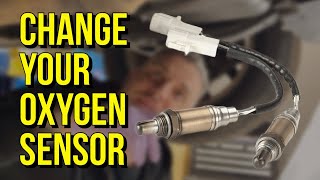
Helpful Videos
We Have This Part in Stock

The information in this article is provided for general reference and educational purposes only. Vehicle specifications, procedures, and part compatibility can vary by production date, trim level, and region. Always consult your vehicle's factory service manual and verify part numbers before purchasing or performing repairs. Safety-critical components such as airbags, seat belts, and braking systems should be installed by a qualified professional.
- Toyota Sienna:
- 🧭 Diagnostic Flowchart
- 🎬 Helpful Videos
- 🛍️ Shop This Part
- What's Unique About the 2011-2020 Toyota Sienna
- Symptoms You May Notice
- Most Likely Causes
- Rare But Worth Checking
- Diagnosis Steps
- Parts You'll Likely Need
- Related Codes That Often Appear With This One
- Technical Service Bulletins (TSBs) & Recalls
- Platform-Specific Known Issues
- Mechanic-Grade Diagnostic Values
- Scan Tool Commands That Help
- Wiring & Ground Locations
- Real Owner Repair Stories
- When the Usual Fixes Don't Work
- OEM Part Supersession History
- Model Year Variations Within This Range
- Real Owner Stories
- 2011 Toyota Sienna — 138000 miles
- 2011 Toyota Sienna
- 2010 Lexus RX 350 (Platform-mate)
- Related OBD-II Codes
- Frequently Asked Questions
- 🎟️ Get 5% Off