

P0139 on 2003-2005 Dodge Neon SRT-4: Downstream O2 Sensor Slow Response Causes and Fixes
On a 2003-2005 Neon SRT-4, code P0139 is almost always caused by a failing downstream (post-catalytic converter) oxygen sensor. Before replacing it, check for exhaust leaks and melted wiring, which are also common on these cars. A new sensor costs about $40-$80 for a quality aftermarket replacement.
- P0139 on your SRT-4 points to the downstream (post-cat) O2 sensor responding too slowly.
- Before buying any parts, visually inspect for exhaust leaks (soot marks, ticking sounds) and check the sensor's wiring harness for any signs of melting on the exhaust.
- If the exhaust and wiring are intact, the fix is almost certainly a new downstream O2 sensor.
- Recommended aftermarket brands like NGK/NTK or Denso are reliable and cost-effective.
- This is a common DIY repair that can be done with a rented O2 sensor socket.
What's Unique About the 2003-2005 Dodge Neon SRT-4
The Neon SRT-4's turbocharged engine creates a very hot exhaust environment. This makes the downstream O2 sensor wiring particularly vulnerable to melting if it sags and touches the exhaust pipe. Additionally, exhaust leaks at the turbo, downpipe flanges, or flex pipe are common and can introduce outside air, tricking the sensor and causing this code. While the code itself is generic, these platform-specific mechanical issues should be checked before assuming the sensor itself has failed. A frequent cause of this code on modified SRT-4s is the installation of an aftermarket downpipe, which can create small leaks or change exhaust harmonics enough to trigger a lazy sensor code on an aging sensor.
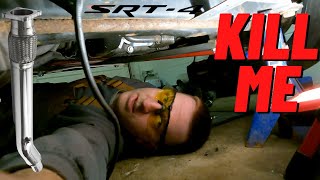
🎬 See this aftermarket downpipe and O2 housing installSymptoms You May Notice
- Check Engine Light is on.
- Failing a state emissions/smog test.
- Slightly reduced fuel economy (in some cases).
- Occasional engine hesitation, though this is rare for a Sensor 2 code.
- Replacing the upstream (pre-cat) O2 sensor. This code is specifically for the downstream sensor (Sensor 2).
- Replacing the catalytic converter. A P0420 code would typically indicate a bad converter; P0139 points to the sensor that *monitors* the converter.
Most Likely Causes
- Failing Downstream Oxygen Sensor 🔴 High Probability → Shop Oxygen Sensor O2 sensors are wear items with a finite lifespan, typically 80,000-100,000 miles. Contamination from carbon, fuel, and age causes the internal ceramic element to degrade, slowing its reaction time. This is the most common reason for P0139 on any vehicle, including the SRT-4.
How to confirm: After ruling out exhaust leaks and wiring damage, the sensor itself is the most likely culprit. A scan tool capable of graphing live data can show a flat or very slow-to-react voltage pattern from the 'O2S B1S2' sensor. A healthy sensor's voltage should change quickly when the engine is revved or when a rich/lean condition is induced.
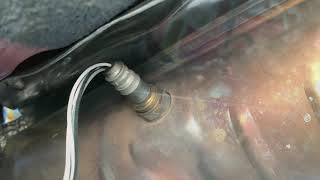
Typical fix: Replace the downstream (post-cat) Bank 1 Sensor 2 oxygen sensor. This requires a 22mm or 7/8" O2 sensor socket and is a common DIY repair. 🎬 Watch: How to replace the downstream O2 sensor
Est. part cost: $40-$80 - Exhaust Leak 🟡 Medium Probability The high-pressure, high-heat exhaust from the turbocharger puts stress on gaskets and connections. A leak before the O2 sensor allows fresh air into the exhaust stream, which alters the oxygen reading and can cause a slow response code. Common leak points on the SRT-4 are the turbo-to-downpipe flange and the flex pipe, especially with aftermarket components.
How to confirm: Listen for a 'ticking' or 'hissing' sound from the exhaust, especially when the engine is cold, as the noise may disappear once the metal expands. Visually inspect the exhaust manifold, turbo-to-downpipe flange, and any other connections for black soot marks, which are a clear sign of a leak.
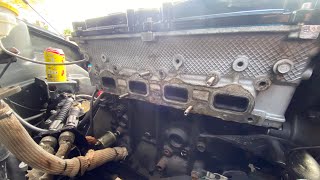
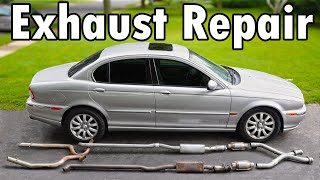
Typical fix: Replace the leaking gasket or tighten the loose connection. In some cases, a cracked downpipe or manifold may need to be welded or replaced. 🎬 Watch: How to repair an exhaust leak yourself
Est. part cost: $10-$50 for gaskets - Damaged or Melted Wiring/Connector 🟡 Medium Probability The downstream O2 sensor harness runs under the car near the hot exhaust. It is common for the harness retaining clips to fail, allowing the wires to sag and melt on the exhaust pipe, causing a short, open circuit, or increased resistance.
How to confirm: Visually trace the wiring from the downstream O2 sensor up towards the engine bay. Look for any signs of melted plastic sheathing, exposed copper wires, or corrosion/damage to the connector plug. A multimeter can be used to check for continuity and resistance between the sensor connector and the PCM connector.
Typical fix: Repair the damaged section of wire using solder and heat shrink, or replace the connector pigtail. Secure the harness away from the exhaust using high-temperature zip ties or by replacing the original clips.
Est. part cost: $5-$25 for repair materials
Rare But Worth Checking
- Powertrain Control Module (PCM) Issue: → Shop Engine Control Module (ECM) While very uncommon, a software glitch or internal failure in the engine computer can cause it to misinterpret the O2 sensor's signal. This should only be considered after all other possibilities, including wiring, have been exhaustively tested and ruled out.
Diagnosis Steps
- Read the trouble codes with an OBD-II scanner to confirm P0139 is the primary code. Check for any other codes like P0141 (heater circuit) or P0300 (misfire) that must be addressed first.
- With the engine cold, start the car and listen for any exhaust leak 'ticks' or 'hisses' coming from the engine bay or under the car. The sound is often most noticeable near the turbo/downpipe area.
- Safely raise the vehicle and secure it on jack stands. Visually inspect the entire exhaust system from the turbo downpipe to the rear O2 sensor. Look for black soot at flanges that would indicate a leak.
- While under the vehicle, carefully inspect the wiring harness for the downstream O2 sensor. Follow it from the sensor and check for any signs of melting, chafing, or corrosion on the connector. Ensure it is properly secured away from the exhaust pipe.
- If a scan tool with live data is available, graph the 'O2S B1S2' voltage. At a steady cruise, it should hold a relatively stable voltage (typically 0.5V - 0.8V). During forced deceleration (fuel cut), it should drop quickly towards 0.1V. If it's stuck or moves very slowly, the sensor is bad.
- (Advanced) To definitively test sensor response, use a scan tool to monitor B1S2 voltage while creating a rich condition (a brief spray of propane into the intake) and then a lean condition (creating a small vacuum leak). The voltage should spike and drop almost instantly. A delay confirms a slow sensor.
- If no exhaust leaks or wiring damage are found, and the live data shows a lazy response, the most likely cause is a faulty oxygen sensor.
Parts You'll Likely Need
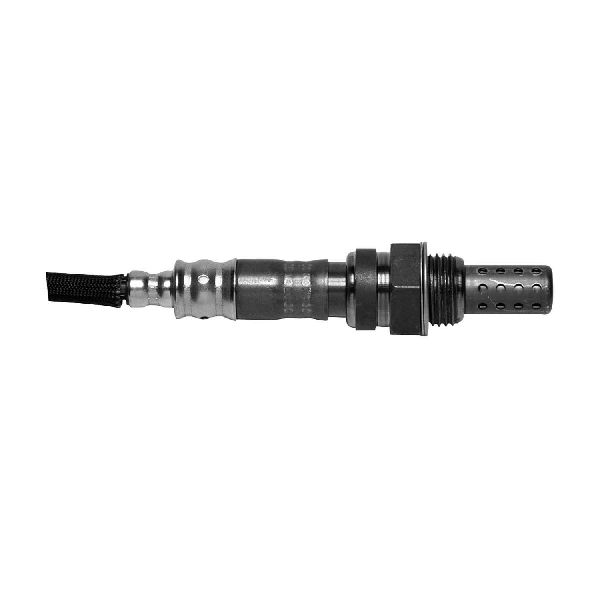
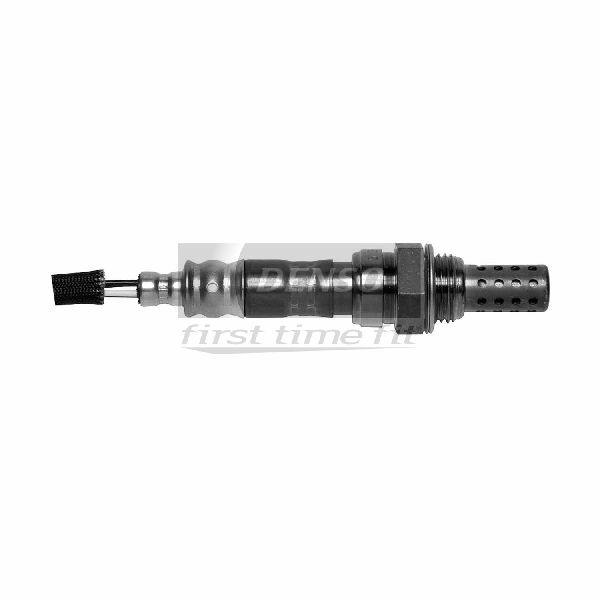
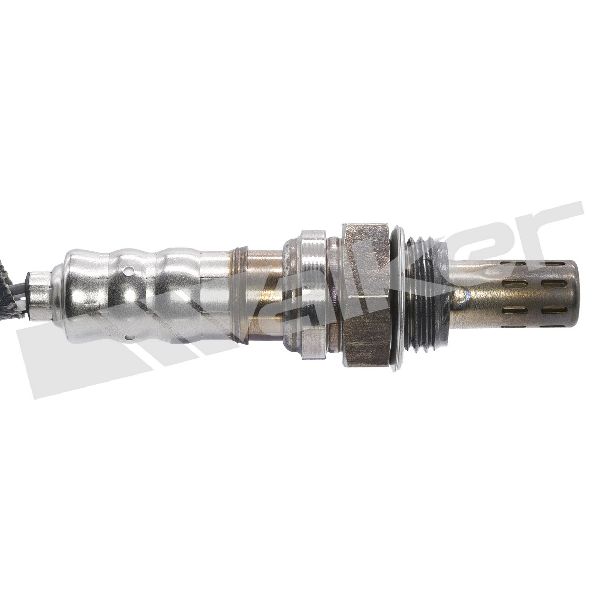
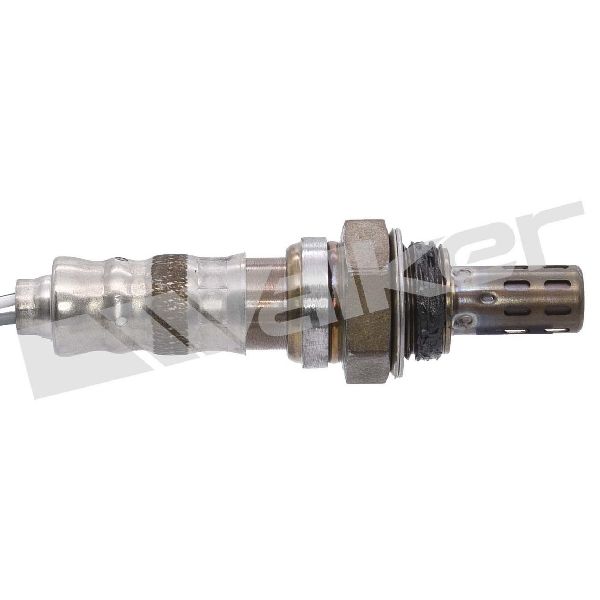
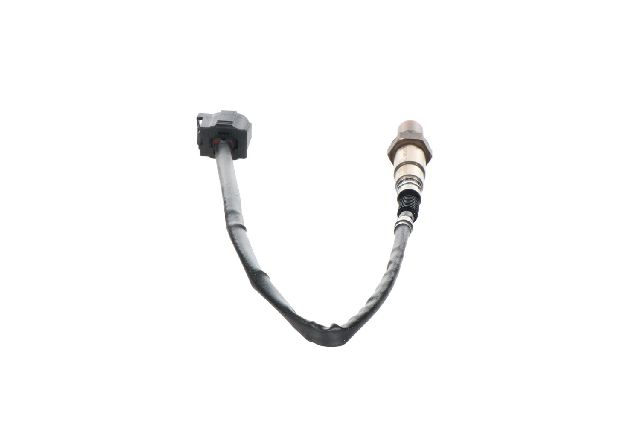
- Downstream Oxygen Sensor
(OEM #56029049AA)— This is the component that has become 'slow' and is identified by the code. It is a wear item and the most frequent fix.
Trusted brands: Mopar (OEM Part: 56029049AA), NGK/NTK (Part: 23125), Denso (Part: 234-4212), Bosch (Part: 15510)
OEM price range: $90-$120
Aftermarket price range: $40-$80
Related Codes That Often Appear With This One
- P0141 — P0141 indicates a failure in the heater circuit of the same O2 sensor (Bank 1, Sensor 2). The heater helps the sensor get to operating temperature quickly. A bad heater can cause the sensor to respond slowly, triggering P0139. If both are present, the root cause is almost certainly a faulty sensor assembly.
Platform-Specific Known Issues
- The wiring harness for the downstream O2 sensor is known to be susceptible to melting if it comes into contact with the exhaust pipe, which is a common point of failure leading to O2 sensor codes.
- Forum users on srtforums.com frequently cite replacing a worn-out downstream O2 sensor as the direct fix for P0139 after confirming no leaks or wiring damage. The consensus is that aftermarket sensors from NTK or Denso are reliable alternatives to the more expensive Mopar part.
Mechanic-Grade Diagnostic Values
- Downstream O2 Sensor (B1S2) Voltage - Live Data — expected: Should fluctuate, but generally hold a relatively steady voltage between 0.5V and 0.8V at a steady cruise.. Failure: A flat line, a very slow-to-react voltage trace when the throttle is snapped, or a signal that takes more than a few seconds to drop below 0.2V during deceleration fuel cut.
- O2 Sensor Heater Circuit Resistance — expected: Typically between 2-15 ohms, but can vary. The key is to not have an open circuit (infinite resistance) or a dead short (zero resistance).. Failure: A multimeter reading of 'O.L.' (over-limit/open) or a reading near 0 ohms indicates a failed heater element.
- Wiring Harness Resistance — expected: Near 0 ohms from the sensor connector to the PCM pin.. Failure: Resistance values above 5 ohms suggest corrosion or a damaged wire that can delay the signal.
Hidden / Shadow Codes Worth Checking
- Mode $06, TID $05-$08: These are not fault codes, but Test IDs within the generic OBD-II Mode $06 function that monitor O2 sensor performance. They track metrics like sensor response time, and minimum/maximum voltage reached during a test cycle. A failing value here can precede a P0139 code. (see via A professional scan tool or advanced OBD-II app that can display Mode $06 data. The raw data must be compared against manufacturer specifications to determine pass/fail status.)
Wiring & Ground Locations
- Downstream O2 Sensor Signal at PCM — The Powertrain Control Module (PCM) is located in the driver's side of the engine bay, below the air cleaner housing. The downstream O2 sensor signal wire is on Pin 29 of the C1 (Black) connector.. This is the termination point for the sensor's signal wire. Testing for voltage here or checking for continuity between this pin and the sensor connector can definitively rule out a wiring problem.
- Downstream O2 Sensor Connector (C106) — Located underneath the vehicle, on the exhaust downpipe after the catalytic converter.. This is the main connector for the sensor. It is exposed to heat and road debris, making it a common point for corrosion, melting, or physical damage that can cause P0139.
- G102 / G106 — These are primary engine compartment grounds located on the left (driver's) side of the engine compartment, near the battery and under the air cleaner housing.. The PCM and its sensor circuits rely on clean ground connections. A corroded or loose G102 or G106 ground can introduce electrical noise or resistance, potentially affecting sensor readings and causing intermittent codes like P0139.
- Downstream O2 Sensor Wiring — The 4-wire sensor has two white wires for the heater, a black wire for the signal, and a gray wire for the sensor ground.. Knowing the wire colors is critical for correctly testing resistance and voltage with a multimeter at the sensor connector.
Real Owner Repair Stories
- Paraphrased from srtforums.com user experiences (2004 Dodge Neon SRT-4, mileage varies) — Check Engine Light with code P0139, sometimes accompanied by P0141.
❌ Tried (didn't work) Clearing the code (it would return), Checking for obvious exhaust leaks and finding none
✅ What actually fixed it Replacing the downstream (post-cat) oxygen sensor with a new NTK or Denso unit resolved the code. This is the most common resolution path reported by owners on a stock vehicle. - Paraphrased from multiple forum reports (2003-2005 Dodge Neon SRT-4 with aftermarket 3" downpipe) — P0139 code appeared immediately or shortly after installing an aftermarket downpipe (catted or catless).
❌ Tried (didn't work) Replacing the O2 sensor with a new one sometimes did not fix the issue.
✅ What actually fixed it The issue was often a small exhaust leak at the downpipe-to-turbo flange or the downpipe-to-catback flange. Re-torquing the bolts and/or replacing the gasket to seal the leak resolved the P0139 code. In some cases, the change in exhaust flow from the new pipe made an old, weak sensor finally fail, requiring its replacement.
OEM Part Supersession History
56029049AA→56029049AA (no supersession found)— N/A
Heads up: This part number is used across a wide variety of Chrysler/Dodge/Jeep vehicles for different positions (upstream/downstream). It is critical to verify the application specifically for the 2003-2005 Neon SRT-4 downstream position. The correct aftermarket cross-references are NTK 23125 and Denso 234-4212.
Model Year Variations Within This Range
- 2003 vs 2004-2005: The 2003 models used a different Powertrain Control Module (PCM) than the 2004-2005 models. While the diagnostic logic for P0139 is expected to be the same, a 2003 PCM can only be used in a 2003 vehicle, whereas a 2004-2005 PCM can be retrofitted to a 2003. This is a critical detail if the PCM is suspected to be the cause of the fault.
Diagnostic Flowchart
Other Known Issues on This Vehicle
Issues unrelated to this code that are worth knowing about as an owner of this generation:
- Worn/Broken Clutch Pivot Fork 🔴 High — Very common, especially on cars over 50,000 miles or with aftermarket clutches. Leads to difficulty shifting, low clutch engagement point, and eventual inability to disengage the clutch.
- 3rd Gear Synchro Failure / Pop-out 🔴 High — A notorious issue with the T-850 transmission, often caused by hard shifting or improper clutch adjustment. Symptoms start with grinding when shifting into 3rd, progressing to the gear popping out under load.
- Weak Factory Motor Mounts 🟠 Medium — The stock rubber engine and transmission mounts are soft and prone to failure, causing excessive engine movement ('wheel hop') and putting stress on other components like axles.
- TPS Wiring Failure 🟡 Low — The wiring for the Throttle Position Sensor (TPS) has a sharp bend from the factory, which can lead to internal wire breakage over time, causing erratic idle and throttle response.
- Cooling Fan Malfunction 🟠 Medium — The cooling fan assembly can fail, leading to the engine overheating, especially in traffic. This was a common issue across the entire Neon line, not just the SRT-4.
Used vs. New Parts: Buying Guide for This Vehicle
When a used part is the smart pick: For this repair, a used part only makes sense for the wiring harness connector (pigtail). If your connector is melted or damaged, sourcing a used pigtail from a junkyard is a cost-effective and reliable fix. A used O2 sensor should never be installed.
Donor-vehicle mileage cap: roughly under 150000 miles for the part to have meaningful remaining life.
What to inspect on the donor part:
- For a wiring pigtail, inspect for any signs of melting on the plastic connector body.
- Check that the wire insulation is still flexible and not brittle or cracked.
- Ensure the locking tab on the connector is intact and clicks securely.
- Cut the pigtail with at least 6 inches of wire to give yourself plenty of room to splice.
Aftermarket brands forum-validated for this vehicle:
- NTK (often the OEM supplier)
- Denso
Brands owners have reported issues with on this vehicle:
- Generic, unbranded 'universal' sensors that require splicing. These often have incorrect heater resistance or response rates that can cause codes.
Real Owner Stories
Aggregated from forums and TSBs cited above. Mileages and costs reflect what owners reported in those sources.
2003-2005 Dodge Neon SRT-4 2.4L Turbo
Symptoms: The owner checked for exhaust leaks and melted wires but found none; the Check Engine Light remained on for P0139.
What fixed it: Replacing the downstream O2 sensor with an NTK or Denso unit.
Source hint: srtforums.com: Multiple threads discussing P0139
2003-2005 Dodge Neon SRT-4 2.4L Turbo
Symptoms: The code appeared specifically after the installation of an aftermarket downpipe.
What fixed it: Fixing a small leak at the flange of the aftermarket downpipe.
Source hint: srtforums.com: Multiple threads discussing P0139
2003-2005 Dodge Neon SRT-4 2.4L Turbo
Symptoms: The code would trigger intermittently, specifically during certain turns.
What fixed it: Repairing the O2 sensor wire that had been rubbing against the driveshaft, causing a short.
Source hint: neons.org: Discussions echo the srtforums.com consensus
Related OBD-II Codes
Frequently Asked Questions
Which aftermarket oxygen sensors are recommended for the SRT-4 to fix a P0139?
Can installing an aftermarket downpipe on my 2003-2005 Neon SRT-4 cause this code?
Is there a specific wiring issue on the SRT-4 that causes P0139?
Where are the most common exhaust leak points on the 2.4L Turbo engine?
Does the 2008-2009 Caliber SRT-4 share the same P0139 causes as the Neon SRT-4?
Should I check for other codes before replacing the sensor for P0139?
Helpful Videos
We Have This Part in Stock


The information in this article is provided for general reference and educational purposes only. Vehicle specifications, procedures, and part compatibility can vary by production date, trim level, and region. Always consult your vehicle's factory service manual and verify part numbers before purchasing or performing repairs. Safety-critical components such as airbags, seat belts, and braking systems should be installed by a qualified professional.
- Dodge Neon SRT-4:
- 🧭 Diagnostic Flowchart
- 🎬 Helpful Videos
- 🛍️ Shop This Part
- What's Unique About the 2003-2005 Dodge Neon SRT-4
- Symptoms You May Notice
- Most Likely Causes
- Rare But Worth Checking
- Diagnosis Steps
- Parts You'll Likely Need
- Related Codes That Often Appear With This One
- Platform-Specific Known Issues
- Mechanic-Grade Diagnostic Values
- Hidden / Shadow Codes Worth Checking
- Wiring & Ground Locations
- Real Owner Repair Stories
- OEM Part Supersession History
- Model Year Variations Within This Range
- Other Known Issues on This Vehicle
- Used vs. New Parts: Buying Guide for This Vehicle
- Real Owner Stories
- 2003-2005 Dodge Neon SRT-4 2.4L Turbo
- 2003-2005 Dodge Neon SRT-4 2.4L Turbo
- 2003-2005 Dodge Neon SRT-4 2.4L Turbo
- Related OBD-II Codes
- Frequently Asked Questions
- 🎟️ Get 5% Off