

P0139 on 2012-2017 Hyundai Veloster: Causes, Fixes, and Downstream O2 Sensor Guide
P0139 on a 2012-2017 Hyundai Veloster indicates a slow response from the downstream oxygen sensor (Bank 1, Sensor 2). The most common fix is replacing the sensor itself. Before replacing, always check for exhaust leaks and damaged wiring. Expect to pay $80-$130 for an aftermarket sensor. For 2013-2015 Turbo models, a related TSB also requires a software update.
- P0139 means the downstream O2 sensor (Bank 1, Sensor 2) is responding too slowly.
- The most likely fix is replacing the downstream O2 sensor, but always check for exhaust leaks and wiring damage first.
- If you own a 2013-2015 Veloster Turbo, be aware of TSB 16-FL-002, which may require a dealer visit for a software update along with the sensor replacement.
- This is a DIY-friendly repair for those comfortable working under their car; an O2 sensor socket is highly recommended.
- Ignoring this code will cause you to fail an emissions test and may lead to slightly worse fuel economy.
What's Unique About the 2012-2017 Hyundai Veloster
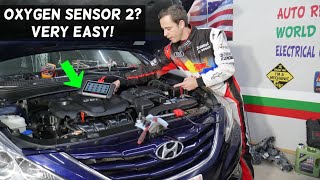
For the first-generation Veloster, P0139 is a straightforward code 🎬 Watch: A quick overview of fixing the P0139 code. that almost always points to a handful of issues. While the base 1.6L GDI and Turbo models can both experience this, Hyundai issued a Technical Service Bulletin (TSB 16-FL-002) for 2013-2015 Turbo models specifically for a faulty oxygen sensor that also required an engine software update. This suggests that on those specific models, the sensor issue was common enough to warrant official action, and a simple sensor swap might not be the complete fix without the corresponding software update. The TSB was created to address instances where the check engine light would illuminate due to the faulty sensor.
Symptoms You May Notice
- Check Engine Light is on
- Failed emissions test
- Slightly reduced fuel economy
- Engine may hesitate or run rough, especially after decelerating
- Sluggish acceleration
- Replacing the upstream (Sensor 1) oxygen sensor. P0139 specifically refers to Sensor 2, which is the downstream sensor after the catalytic converter.
- Replacing the catalytic converter immediately. P0139 indicates a problem with the sensor's response time, not necessarily the converter's efficiency (which would typically set a P0420 code). Always diagnose the sensor, wiring, and check for exhaust leaks first.
Most Likely Causes
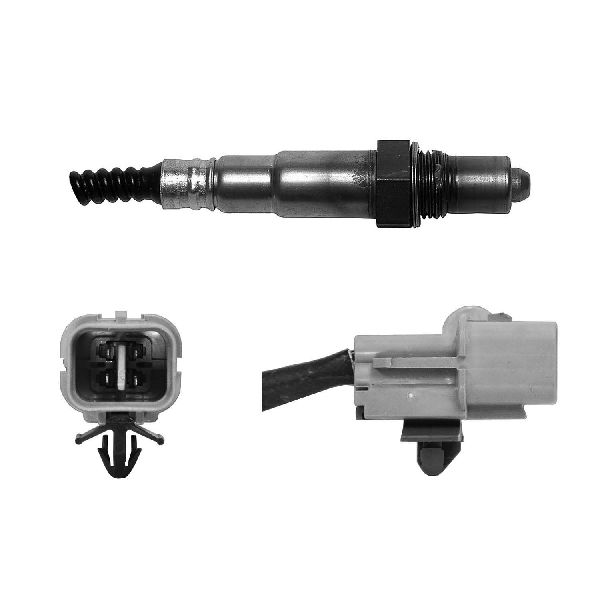
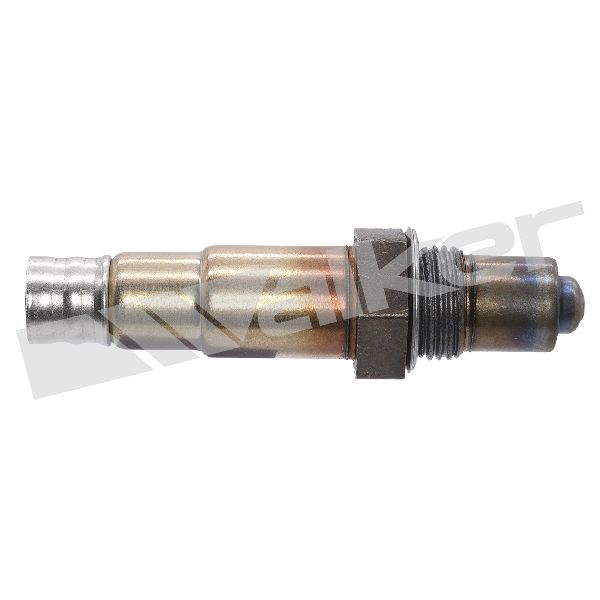
- Failing Downstream Oxygen Sensor (Bank 1, Sensor 2) 🔴 High Probability → Shop Oxygen Sensor Oxygen sensors are wear-and-tear items that degrade over time, typically after 60,000-100,000 miles. Contamination from engine byproducts and constant heat cycles cause them to become less responsive, triggering a 'slow response' code.
How to confirm: Use an OBD-II scanner to graph the voltage of the downstream O2 sensor (Bank 1, Sensor 2). A healthy sensor will show slow, steady fluctuations. A sensor that is flat-lined, has a very lazy waveform, or responds very slowly to changes in engine RPM (e.g., snapping the throttle) is likely bad. Specifically during deceleration (fuel cut-off), the voltage should drop below 0.2V; if it stays higher, the sensor is slow.
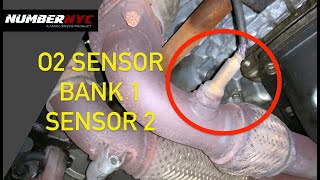
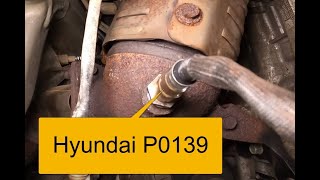
Typical fix: Replace the Bank 1, Sensor 2 oxygen sensor. This sensor is located on the exhaust pipe after the catalytic converter, accessible from under the vehicle. 🎬 See this walkthrough for locating and replacing the sensor. An oxygen sensor socket is often required to remove and install the sensor without damaging the wiring. The specified torque for the sensor is 39.2 ~ 49.1 Nm (28.9 ~ 36.2 lb-ft).
Est. part cost: $80-$180 - Exhaust Leak 🟡 Medium Probability Exhaust components can develop leaks at gaskets or flex pipes due to rust and vibration. An exhaust leak anywhere between the upstream and downstream O2 sensors can introduce outside air, skewing the downstream sensor's readings and making it appear slow to respond.
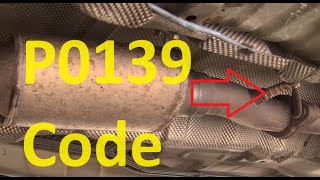
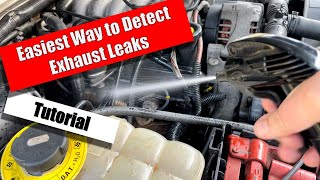
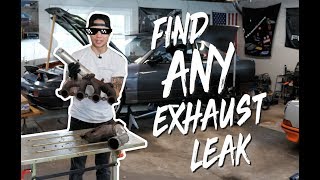
How to confirm: Visually inspect the exhaust system from the engine to the rear of the car for black soot marks, cracks, or holes. Listen for ticking or hissing sounds from the exhaust, especially when the engine is cold. A smoke test is the most definitive way to find small leaks. 🎬 Watch: How to find any exhaust leak in minutes.
Typical fix: Repair the leak by replacing the faulty gasket, flex pipe, or section of exhaust pipe.
Est. part cost: $20-$250 - Damaged Wiring or Connector ⚪ Low Probability The sensor wiring is located under the vehicle and is exposed to road debris, moisture, and extreme heat from the exhaust. This can cause wires to break, fray, melt, or corrode at the connector pins, adding resistance to the circuit and delaying the signal. Wires can pop out of retaining brackets and make direct contact with the hot exhaust, melting the insulation.
How to confirm: Visually inspect the entire wiring harness for the downstream O2 sensor, from the sensor itself to where it connects to the main vehicle harness. Check for melted sections, chafing, or corrosion on the connector pins. Check for a blown fuse, which is often labeled 'SENSOR' or similar in the under-hood fuse box.
Typical fix: Repair the damaged section of wire or replace the connector pigtail. If a fuse is blown, it must be replaced, and the underlying short circuit must be found and fixed.
Est. part cost: $15-$50
Rare But Worth Checking
- PCM Software Update Needed: For 2013-2015 Veloster Turbo models, TSB 16-FL-002 indicates that a software update for the engine control module is required along with replacing a faulty oxygen sensor. This could be a cause on its own if the software has overly sensitive parameters for detecting a slow response.
- Leaking Fuel Injectors: If a fuel injector is leaking, it can cause an overly rich condition that the O2 sensor may struggle to read correctly, potentially mimicking a slow response. This is less common and would likely be accompanied by other symptoms like a smell of gas, poor engine performance, or other fuel trim codes.
- Failing Catalytic Converter: While P0139 is a sensor response code, not a catalyst efficiency code (like P0420), a partially clogged or failing converter can sometimes cause erratic exhaust flow that affects the downstream sensor's readings, making it appear sluggish.
- Powertrain Control Module (PCM) Fault: → Shop Engine Control Module (ECM) In very rare cases, the PCM itself may have a fault in its internal circuitry or software that causes a delay in processing the O2 sensor's signal, leading to a P0139 code even with a good sensor and wiring.
Diagnosis Steps
- Read the code with an OBD-II scanner to confirm P0139 is present and check for any other related codes.
- Inspect the exhaust system visually and audibly for any leaks between the engine and the downstream O2 sensor. Pay close attention to gaskets and the flex pipe.
- Inspect the O2 sensor's wiring harness and connector for any signs of damage, melting, chafing, or corrosion. Ensure the harness is properly secured and not touching the hot exhaust pipe.
- Use a scanner with live data capabilities to monitor the voltage of Bank 1 Sensor 2. The voltage should fluctuate slowly. If it's stuck at a specific voltage or doesn't respond when you snap the throttle, the sensor is likely faulty. A key test is to watch the voltage during fuel cut on deceleration; a healthy sensor will drop below 0.2V, while a slow one may remain higher.
- If you have a 2013-2015 Veloster Turbo, check with a Hyundai dealer if TSB 16-FL-002 applies to your vehicle's VIN. The fix requires both a new sensor and an ECM update.
- If the sensor and wiring appear good and there are no exhaust leaks, consider testing for leaking fuel injectors or a failing catalytic converter, though these are less likely causes.
- If all else fails, the issue could be with the Powertrain Control Module (PCM), but this is extremely rare and should be the last diagnostic step.
Parts You'll Likely Need
- Downstream Oxygen Sensor (Bank 1, Sensor 2)
(OEM #39210-2B360 (For 2015-2017 Turbo models, verify for specific VIN))— This is the most common component to fail and cause a P0139 code due to age and wear.
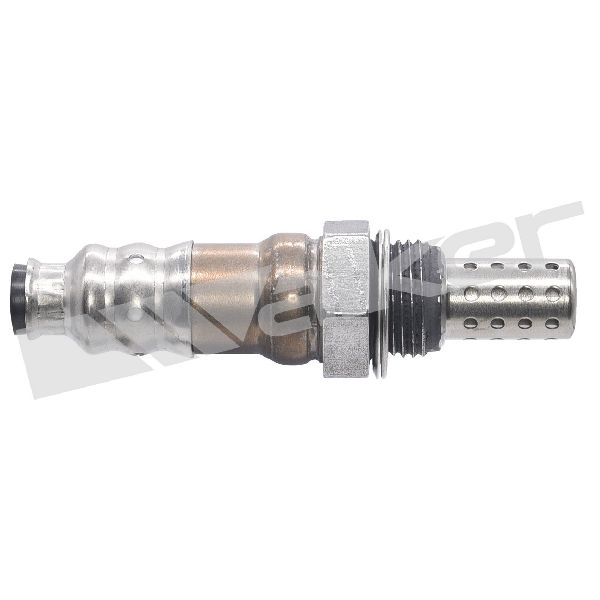
Trusted brands: Denso (e.g., 234-4568), Bosch (e.g., 16754), NGK/NTK (e.g., 25739), Walker Products (e.g., 250-241148)
OEM price range: $150-$250
Aftermarket price range: $80-$130
Related Codes That Often Appear With This One
- P0136 — P0136 indicates a general malfunction in the same Bank 1 Sensor 2 circuit, and the two codes can appear together if the sensor is failing.
- P0140 — P0140 indicates no activity from the same sensor, which is a more severe failure state of the same component.
- P0141 — P0141 points to a fault in the heater circuit of the downstream O2 sensor. A faulty heater can cause the sensor to warm up too slowly, leading to a slow response and a P0139 code.
- P0420 — If seen with P0139, it could mean the slow-responding sensor is now unable to properly monitor the catalytic converter, or that a failing converter is causing erratic readings that trigger both codes.
Technical Service Bulletins (TSBs) & Recalls
- 16-FL-002: Affects 2013-2015 Veloster Turbo models. Corrective action is to replace the faulty oxygen sensor and update the engine management software.
Platform-Specific Known Issues
- TSB 16-FL-002 was issued for 2013-2015 Hyundai Velosters with the 1.6L turbo engine for a faulty oxygen sensor and requires an ECM software update. Owners of these specific models should investigate this TSB, as simply replacing the sensor may not resolve the issue permanently.
- A separate TSB (related to recall 19V204000) for 2013 Turbo models addressed engine management software that could cause pre-ignition, leading to excessive cylinder pressure and potential engine damage. While not directly for P0139, it highlights the importance of correct software on these engines.
Mechanic-Grade Diagnostic Values
- Downstream O2 Sensor (B1S2) Voltage during Deceleration Fuel Cut-Off — expected: Should drop below 0.2 volts.. Failure: Voltage stays above 0.2 volts for an extended period (e.g., 7 seconds), indicating a slow response.
- Downstream O2 Sensor (B1S2) Voltage at Idle/Cruise — expected: Slow, lazy fluctuations, generally between 0.1V and 0.9V.. Failure: Voltage is stuck, flat-lined (e.g., fixed at 0.3V), or does not respond to throttle changes.
- O2 Sensor Heater Circuit Resistance — expected: Typically between 1 and 30 ohms, depending on the sensor. Check manufacturer specs.. Failure: An open circuit (infinite resistance) or a short (zero resistance) indicates a failed heater, which can cause slow sensor warm-up and trigger P0139.
Scan Tool Commands That Help
- Hyundai GDS (Global Diagnostic System): Flight Record Function — To review historical diagnostic data and freeze frames for intermittent faults that are not currently active. This is crucial if the P0139 code appears and disappears.
- Hyundai GDS (Global Diagnostic System): Actuation Test — To test related components that could cause a P0139, such as commanding fuel injectors off one by one to check for leaks or activating the fuel pump relay. This helps rule out non-sensor causes.
- Professional Scan Tool: Live Data Graphing — Essential for diagnosing P0139. Graphing the B1S2 voltage allows you to visually assess the sensor's response time, comparing it to the upstream sensor and checking its behavior during throttle snaps and deceleration.
Wiring & Ground Locations
- O2 Sensor Fuse — In the under-hood fuse & relay box.. The O2 sensor heater circuit is powered by a fuse, often labeled 'SENSOR 1' or similar. A blown fuse will prevent the heater from working, causing the sensor to warm up too slowly and trigger a P0139.
- GGGT01 / Gggt07 — Left side of the engine compartment.. These are primary ground points for the engine control system. A corroded or loose ground here can introduce electrical noise or voltage drops, affecting the PCM's ability to accurately read the O2 sensor signal.
- Gf05 / Gf07 — Under the center console.. These are interior ground points. While less likely to be the cause, they are part of the vehicle's overall ground distribution, and a fault could potentially affect modules that communicate with the PCM.
- Downstream O2 Sensor Connector — On the exhaust pipe, after the catalytic converter, accessible from under the vehicle.. This connector and its wiring are exposed to heat and road debris. It's a common failure point for melted wires, corrosion, or physical damage that can directly cause the P0139 code.
Real Owner Repair Stories
- Reddit user in r/MechanicAdvice (2003 VW Golf 2.0L (Note: Different vehicle, but identical code principle and diagnosis)) — Check Engine Light with code P0139. Code would return after being cleared.
❌ Tried (didn't work) Clearing the code multiple times.
✅ What actually fixed it The user confirmed the sensor was bad by observing a steady 0.3V reading on a scan tool. The final fix was replacing the faulty sensor with a universal Bosch O2 sensor. The new sensor showed proper voltage fluctuation between 0.2V and 0.7V, resolving the code.
OEM Part Supersession History
39210-2B250→Unknown, but a different part is used on later models.— This part number is specified for the rear (downstream) sensor on 2013-2015 Turbo models.
Heads up: This part is associated with TSB 16-FL-002, which also requires a software update. Using a different part may not resolve the issue if the TSB applies.39210-2B360→39210-2B365 (for later generations)— This part number is specified for the rear (downstream) sensor on 2015-2017 Turbo models.
Heads up: It is critical to use the correct part number for the specific model year range, as the Turbo models have different sensors for early (pre-facelift) and late (facelift) first-generation cars.
Model Year Variations Within This Range
- 2013-2015 (Turbo models): These models are subject to TSB 16-FL-002, which requires both a specific replacement oxygen sensor (P/N 39210-2B250) and an ECM software update to correct the P0139 logic. A simple sensor swap may not be a permanent fix.
- 2015-2017 (Turbo models): These later first-generation turbo models use a different downstream oxygen sensor part number (P/N 39210-2B360) than the earlier turbo models.
Diagnostic Flowchart
Other Known Issues on This Vehicle
Issues unrelated to this code that are worth knowing about as an owner of this generation:
- Connecting Rod / Engine Bearing Failure 🔴 High — Common enough to trigger recalls (e.g., NHTSA 20V746000 for 2015-2016 models) and numerous owner complaints, often occurring between 30k-80k miles. (Ref: Recalls issued for certain model years (e.g., 2015-2016) and a knock sensor software update was deployed for others to detect failure.)
- Dual-Clutch Transmission (DCT) Failure/Hesitation 🟠 Medium — Widespread complaints of shuddering, hesitation from a stop, and premature clutch wear, especially on Turbo models. Problems can appear before 60,000 miles. (Ref: Hyundai extended the DCT warranty (10yr/100k miles) and issued software updates, but mechanical failures often require clutch pack replacement.)
- Excessive Oil Consumption 🟠 Medium — Many owners report engines, particularly the Turbo variant, begin to consume significant amounts of oil between changes, often after 60,000 miles. This can be a precursor to more serious engine failure. (Ref: No specific recall for oil consumption itself, but it is a known symptom related to recalled engine issues like piston ring problems on later models.)
- Peeling Paint (Especially White) 🟡 Low — Very common on white and some other light-colored vehicles. Paint delaminates in large sheets from the hood, roof, and fenders. (Ref: Hyundai extended the paint warranty for this issue to 10 years/unlimited miles for certain models after public pressure and investigations.)
- Panoramic Sunroof Spontaneously Shattering 🟠 Medium — A recall was issued for early models due to the sunroof assembly being weakened during factory installation, causing it to break unexpectedly. (Ref: NHTSA Recall 12V568000 and 13V051000 for 2012 models.)
Used vs. New Parts: Buying Guide for This Vehicle
When a used part is the smart pick: Buying a used oxygen sensor is never recommended as it is a wear-and-tear item with a finite lifespan. However, obtaining a used section of exhaust pipe or a catalytic converter from a low-mileage, rust-free donor vehicle can be a cost-effective option if an exhaust leak is the diagnosed problem.
Donor-vehicle mileage cap: roughly under 50000 miles for the part to have meaningful remaining life.
What to inspect on the donor part:
- For exhaust components, inspect for heavy rust, especially at welds and flanges.
- Check for any visible cracks or pinholes.
- Ensure mounting flanges are flat and not warped.
- If possible, verify the donor vehicle did not have catalyst efficiency codes (like P0420).
OEM-only on this vehicle (don't cheap out):
- For 2013-2015 Turbo models affected by TSB 16-FL-002, using the specified OEM oxygen sensor is critical, as the required software update is calibrated to it.
Aftermarket brands forum-validated for this vehicle:
- NTK (NGK)
- Denso
Brands owners have reported issues with on this vehicle:
- Generic 'economy' or unbranded sensors (e.g., 'Ultra Power') are frequently reported to have short lifespans or incorrect calibration, causing codes to return.
Real Owner Stories
Aggregated from forums and TSBs cited above. Mileages and costs reflect what owners reported in those sources.
Hyundai Veloster (Model Year Unspecified)
Symptoms: Check engine light on with P0139 and P0140 occurring at the same time.
What fixed it: Replacing the downstream O2 sensor.
Source hint: Veloster.org thread titled 'p0139-and-p0140-at-the-same-time.72993/'
2013-2015 Veloster Turbo 1.6L
Symptoms: Faulty oxygen sensor readings triggering a slow response code.
What fixed it: Replacement of the oxygen sensor and an ECM software update per TSB 16-FL-002.
Source hint: TSB 16-FL-002
Related OBD-II Codes
Frequently Asked Questions
I have a 2014 Veloster Turbo with code P0139. Is there a specific repair bulletin for this?
Can I just replace the sensor on my 2013 Turbo to fix P0139?
Where is the Bank 1 Sensor 2 located on my Veloster?
What is the correct torque specification for the O2 sensor on this vehicle?
Could a blown fuse cause my P0139 code?
Is P0139 related to the engine recalls on 2015-2016 Velosters?
Helpful Videos


We Have This Part in Stock



The information in this article is provided for general reference and educational purposes only. Vehicle specifications, procedures, and part compatibility can vary by production date, trim level, and region. Always consult your vehicle's factory service manual and verify part numbers before purchasing or performing repairs. Safety-critical components such as airbags, seat belts, and braking systems should be installed by a qualified professional.
- Hyundai Veloster:
- 🧭 Diagnostic Flowchart
- 🎬 Helpful Videos
- 🛍️ Shop This Part
- What's Unique About the 2012-2017 Hyundai Veloster
- Symptoms You May Notice
- Most Likely Causes
- Rare But Worth Checking
- Diagnosis Steps
- Parts You'll Likely Need
- Related Codes That Often Appear With This One
- Technical Service Bulletins (TSBs) & Recalls
- Platform-Specific Known Issues
- Mechanic-Grade Diagnostic Values
- Scan Tool Commands That Help
- Wiring & Ground Locations
- Real Owner Repair Stories
- OEM Part Supersession History
- Model Year Variations Within This Range
- Other Known Issues on This Vehicle
- Used vs. New Parts: Buying Guide for This Vehicle
- Real Owner Stories
- Hyundai Veloster (Model Year Unspecified)
- 2013-2015 Veloster Turbo 1.6L
- Related OBD-II Codes
- Frequently Asked Questions
- 🎟️ Get 5% Off