

P0139 on 2014-2018 Kia Forte: O2 Sensor Slow Response Causes and Fixes
On a 2014-2018 Kia Forte, code P0139 almost always means the downstream oxygen sensor (Bank 1, Sensor 2) is failing. Replacing this sensor is the most common fix. Expect to pay $40-$90 for a quality aftermarket sensor (Denso, NGK/NTK, Bosch) and $150-$220 for an OEM part, such as Kia part number 39210-2E510. It is a DIY-friendly repair for those with the right tools, primarily a 22mm or 7/8" O2 sensor socket.
- P0139 on your Forte almost certainly points to a problem with the downstream (post-catalytic converter) oxygen sensor.
- The most probable fix is to replace the Bank 1, Sensor 2 O2 sensor. This is a manageable DIY job with the correct O2 sensor socket.
- Before replacing the sensor, always perform a quick visual inspection of the exhaust for leaks (especially the flex pipe) and check the sensor's wiring and fuse for any visible damage.
- Do not replace the catalytic converter to fix this code; that is a common and expensive misdiagnosis. A lazy sensor can even cause a false P0420 code.
- Given the known engine issues with this platform, monitor your oil level. Excessive oil consumption can be the root cause of premature O2 sensor failure.
What's Unique About the 2014-2018 Kia Forte
The 2014-2018 Kia Forte uses engines shared across the Hyundai/Kia family, primarily the 1.8L and 2.0L 'Nu' engines. Some of these engines have a documented history of higher-than-average oil consumption and piston scuffing issues, which led to class-action lawsuits. This is relevant to code P0139 because burning oil can contaminate the exhaust and foul oxygen sensors with deposits, causing them to fail prematurely. Therefore, while the sensor itself is the most likely failure point, it's worth monitoring the engine's oil level closely, as a lazy O2 sensor can be a secondary symptom of a more significant engine problem.
Symptoms You May Notice
- Check Engine Light is illuminated.
- Failing a state emissions/smog test.
- Reduced fuel economy.
- Engine may hesitate or run slightly rough, especially during or after deceleration.
- In some cases, no noticeable symptoms other than the Check Engine Light. 🎬 Watch: A detailed explanation of the P0139 slow response code.
- Replacing the catalytic converter. A P0139 code points to the sensor that *monitors* the converter, not the converter itself. A failing converter typically triggers a P0420 code. Always address P0139 first, as a lazy sensor can sometimes cause a false P0420 code.
- Replacing the upstream (Bank 1, Sensor 1) oxygen sensor. This code is specific to the downstream (Sensor 2) sensor.
Most Likely Causes
- Failing Downstream Oxygen Sensor (Bank 1, Sensor 2) 🔴 High Probability → Shop Oxygen Sensor O2 sensors are a standard wear-and-tear item with a lifespan of 60,000-100,000 miles. On the Forte, this is exacerbated by potential oil consumption issues on the Nu engines, which can foul the sensor with oil ash and carbon, causing it to become 'lazy' and slow to respond.
How to confirm: Use a scan tool to graph the voltage of Bank 1 Sensor 2. On a fully warmed-up engine, a healthy downstream sensor should hold a relatively steady voltage (typically above 0.5V). If you create a rich condition (briefly snapping the throttle) and then a lean condition (deceleration), the sensor's voltage should change. A sensor triggering P0139 will show very slow, lazy voltage changes or be stuck at a certain voltage.
Typical fix: Replace the Bank 1, Sensor 2 oxygen sensor. This sensor is located on the exhaust pipe after the catalytic converter. 🎬 See this walkthrough for locating and replacing the downstream sensor. Use penetrating oil on the threads before attempting removal, as it can be seized. A 22mm (or 7/8") slotted O2 sensor socket is highly recommended.
Est. part cost: $40-$90 - Exhaust System Leak 🟡 Medium Probability Exhaust components, especially the flex pipe located before the downstream sensor, are susceptible to corrosion and cracking. A leak introduces outside oxygen into the exhaust stream, which can confuse the O2 sensor and cause it to generate slow or unusual readings, triggering a P0139 code.
How to confirm: Visually inspect the exhaust system from the engine to the tailpipe for any cracks, holes, or black soot marks indicating a leak. Listen for an audible ticking or hissing sound from the exhaust when the engine is running, which may diminish as the metal heats up and expands. A common method is to have a helper briefly block the tailpipe with a rag while the engine is running; this will increase pressure and make leaks more audible.
Typical fix: Repair or replace the leaking section of the exhaust pipe or gasket. Flex pipe replacement is a common repair.
Est. part cost: $20-$300 - Damaged Wiring or Corroded Connector ⚪ Low Probability The sensor's wiring runs underneath the vehicle and is exposed to the elements, making it susceptible to damage from road debris, heat, and moisture, which can lead to corrosion in the connector pins.
How to confirm: Visually inspect the wiring harness and connector for the downstream O2 sensor. Look for any frayed or broken wires, melted insulation near the exhaust pipe, or green/white corrosion on the connector pins. Check for a blown fuse, often labeled 'SENSOR 1' in the engine bay fuse box.
Typical fix: Repair the damaged section of wiring or clean the connector with electrical contact cleaner. If the connector is badly damaged, it may need to be replaced.
Est. part cost: $10-$50
Rare But Worth Checking
- PCM Software Update Needed: Manufacturers sometimes release software updates (TSBs) that adjust the sensitivity and parameters for fault codes. In some cases, a PCM reflash can resolve a persistent P0139 code if the sensor and wiring are confirmed to be good. Check with a Kia dealer for any available updates for your VIN.
- Leaking Fuel Injectors: A leaking or dripping fuel injector can create a persistent rich exhaust condition. This can foul the O2 sensor over time, causing it to respond slowly and eventually trigger P0139. This is less common and would likely be accompanied by other symptoms like rough idle, poor fuel economy, and possibly other codes.
Diagnosis Steps
- Read the code with an OBD-II scanner to confirm P0139 is the primary code present. Note any other codes, like P0141 or P0420.
- Visually inspect the entire exhaust system for any obvious leaks, cracks, or damage, paying close attention to the flex pipe section before the downstream sensor.
- Inspect the wiring and electrical connector for the downstream O2 sensor (Bank 1, Sensor 2). Look for signs of corrosion, melting, or physical damage. Check for a blown 'SENSOR' fuse in the engine compartment fuse box.
- Use a scan tool with live data capabilities to monitor the voltage of the Bank 1 Sensor 2. On a fully warmed-up engine, the voltage should be relatively stable. A healthy sensor will react quickly to forced rich/lean conditions (e.g., snapping the throttle). A slow or flat-lined reading points to a bad sensor. 🎬 Watch: A professional mechanic's guide to diagnosing a tricky P0139.
- If the wiring, fuse, and exhaust are in good condition and the live data points to a lazy sensor, the most likely cause is the sensor itself.
- Replace the Bank 1, Sensor 2 oxygen sensor. A 22mm (7/8") O2 sensor socket is highly recommended for removal. Apply anti-seize compound to the threads of the new sensor if not already present.
- After replacement, clear the trouble code with the scanner and perform a drive cycle to ensure the code does not return.
Parts You'll Likely Need
- Downstream Oxygen Sensor (Bank 1, Sensor 2)
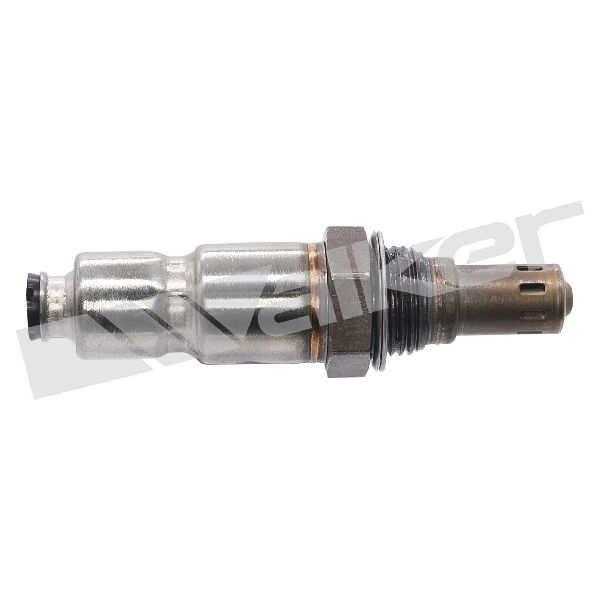
(OEM #39210-2E510 (for 2.0L, verify with VIN))— This is the most common cause of a P0139 code. The sensor becomes contaminated and worn over time, slowing its response.
Trusted brands: Denso (e.g., 234-4550), NGK/NTK (e.g., 25733), Bosch (e.g., 15733)
OEM price range: $150-$220
Aftermarket price range: $40-$90
Related Codes That Often Appear With This One
- P0141: O2 Sensor Heater Circuit (Bank 1, Sensor 2) - A faulty heater will prevent the sensor from warming up quickly, causing a slow response.
- P0420: Catalyst System Efficiency Below Threshold (Bank 1) - A lazy P0139 sensor can fail to accurately report converter function, leading the PCM to incorrectly flag the converter. Fix P0139 first.
Technical Service Bulletins (TSBs) & Recalls
- Kia has issued numerous TSBs and recalls related to the Nu engines, including SC200 and a Knock Sensor Detection System (KSDS) software update, which extends the engine warranty if completed. While not directly for P0139, these address underlying engine issues that can cause O2 sensor failure.
Platform-Specific Known Issues
- Owner experience with P0139: A user on the Car Talk Community forum with a Hyundai Elantra (a platform mate) reported a P0139 code. A mechanic quoted $820, claiming an exhaust manifold leak. Other users advised that the downstream O2 sensor is a very common failure on these cars and to get a second opinion from an independent shop, as the sensor itself was the more likely culprit.
- DIY perspective on Reddit: A Reddit user with a P0139 code on a similar vehicle confirmed through testing that the old sensor's response to temperature changes was very slow. They fixed the issue by splicing in a universal Bosch O2 sensor, after which live data showed proper voltage fluctuation between 0.2V and 0.7V.
Mechanic-Grade Diagnostic Values
- Downstream O2 Sensor (B1S2) Voltage - Live Data — expected: Relatively stable, slow fluctuation between 0.5V and 0.8V at steady RPM on a warm engine.. Failure: Voltage is stuck (e.g., at 0.3V), very choppy, or takes several seconds to change after a throttle snap. During deceleration fuel cut-off, the voltage should drop below 0.2V; failure to do so within ~7 seconds can trigger the code.
- Downstream O2 Sensor Heater Element Resistance — expected: Approximately 2.5 - 10 Ohms at room temperature, measured across the two heater pins on the sensor connector.. Failure: An open circuit (infinite resistance) or a reading far outside the specified range indicates a failed internal heater, which will cause slow sensor warm-up and trigger codes.
- O2 Sensor Installation Torque — expected: 30 ~ 35 lb-ft (45 ~ 49 N.m). Failure: Under-tightening can cause exhaust leaks; over-tightening can damage the sensor threads or the exhaust pipe bung.
Scan Tool Commands That Help
- Kia GDS (Global Diagnostic System): Actuation Test: Fuel Pump Relay / Injector Disable — If a leaking fuel injector is suspected as a rare cause of P0139, the GDS can be used to disable individual injectors to see if it affects the O2 sensor readings. It can also activate the fuel pump relay to check for pressure drop, indicating a leak.
- Professional OBD-II Scanner with Graphing: Live Data Graphing for B1S2 Voltage — This is the primary diagnostic method. Graphing the sensor's voltage allows a technician to visually confirm if the response is 'lazy' or slow compared to expected behavior, which is more effective than looking at raw numbers.
Wiring & Ground Locations
- Engine Ground Strap — Connects from the engine block/timing cover area to the chassis frame rail on the driver's side.. A corroded or loose main engine ground can create electrical noise or a voltage offset, potentially affecting the PCM's ability to accurately interpret the low-voltage signal from the O2 sensor, leading to false codes. The OEM part number for the assembly is around 91860-A7130 or 91860-A7140.
- O2 Sensor Connector (Downstream) — Typically found clipped to the vehicle's underbody, several inches to a foot away from the sensor itself, following the harness path.. This connector is a common point for corrosion or damage due to its exposed location. Checking for clean, tight pin connections is crucial before condemning the sensor. The downstream sensor uses a 4-pin connector.
Real Owner Repair Stories
- Reddit user in r/MechanicAdvice (2003 VW Golf 2.0L (similar diagnostic principle)) — Check Engine Light with code P0139, which kept returning after being cleared. Live data showed the downstream O2 sensor was stuck at 0.3 Volts.
❌ Tried (didn't work) Clearing the code multiple times.
✅ What actually fixed it Spliced in a universal Bosch O2 sensor. After replacement, live data showed proper voltage fluctuation between 0.2V and 0.7V, and the code was resolved. The user noted the old sensor was very slow to react when tested with a torch, confirming it was 'lazy'.
OEM Part Supersession History
39210-2E510→This part number appears to be stable for the specified model years.— N/A
Heads up: Part number 39210-2E510 is specified for the 1.8L and 2.0L engines in the 2014-2016 Forte. The 2017-2018 models may use a different part number (e.g., 39210-2ECC2) due to the mid-generation refresh, so always verify with VIN.
Model Year Variations Within This Range
- 2017-2018: The Kia Forte received a facelift for the 2017 model year. This included a new front bumper, grille, and headlights, as well as a new standard 2.0L Atkinson cycle engine for LX and S trims, replacing the previous 1.8L base engine. While the P0139 code's cause is generally the same, the downstream O2 sensor part number may differ between the pre-facelift (2014-2016) and post-facelift (2017-2018) models. Always confirm the part number with the vehicle's VIN.
Diagnostic Flowchart
Other Known Issues on This Vehicle
Issues unrelated to this code that are worth knowing about as an owner of this generation:
- Engine Failure (Nu 1.8L & 2.0L) 🔴 High — Widespread issue leading to multiple recalls and class-action lawsuits. Can occur at any mileage, but often noted between 60,000-100,000 miles. Caused by connecting rod bearing failure and/or piston scuffing from manufacturing defects. (Ref: Multiple recalls including SC200; requires a Knock Sensor Detection System (KSDS) software update to be eligible for an extended engine warranty (15 years/150,000 miles).)
- MDPS Steering Coupler Failure 🟠 Medium — Extremely common failure. A flexible rubber coupler in the electronic power steering motor disintegrates, causing a clicking or knocking noise in the steering column, especially on low-speed turns. Typically occurs after 40,000 miles. (Ref: Kia issued a warranty extension for this part on other models (Soul, Optima) but not officially for the Forte, despite using the same part. Hyundai did cover the sister car, the Elantra. It is a well-known issue among dealers and independent shops.)
- Engine Compartment Fire Risk 🔴 High — Several recalls were issued for various fire risks, including from overheating cooling fan resistors and potential fuel/oil leaks. (Ref: Recalls SC113, SC200.)
- Faulty Brake Pedal Stopper Pad 🟡 Low — A small plastic pad on the brake pedal arm deteriorates, causing the brake lights to stay on and allowing the vehicle to be shifted out of park without depressing the brake. (Ref: Recall SC158.)
Used vs. New Parts: Buying Guide for This Vehicle
When a used part is the smart pick: For this repair, a used part is generally not recommended for the sensor itself. However, if the cause is a damaged connector pigtail or a section of exhaust pipe (like the flex pipe), a used component from a reputable auto recycler can be a cost-effective solution.
Donor-vehicle mileage cap: roughly under 70000 miles for the part to have meaningful remaining life.
What to inspect on the donor part:
- For exhaust components: Check for excessive rust, cracks (especially at welds and bends), and ensure flanges are not bent or heavily corroded.
- For wiring/connectors: Inspect for any signs of melting, brittleness, or corrosion on the pins. Ensure the locking tab is intact.
OEM-only on this vehicle (don't cheap out):
- While not strictly required, many professional mechanics and forum users report higher success rates and fewer compatibility issues with OEM oxygen sensors compared to some aftermarket brands for this specific code.
Aftermarket brands forum-validated for this vehicle:
- NGK/NTK
- Denso
- Bosch
Brands owners have reported issues with on this vehicle:
- Avoid unbranded, 'no-name' sensors from online marketplaces, as they are frequently cited as having incorrect response curves or premature failures, leading to the code returning.
Real Owner Stories
Aggregated from forums and TSBs cited above. Mileages and costs reflect what owners reported in those sources.
2011-2016 Hyundai Elantra (1.8L Nu)
Symptoms: The owner was quoted $820 by a mechanic who claimed the code was caused by an exhaust manifold leak.
What fixed it: Other community members advised that the downstream O2 sensor is a very common failure on these platform-mate cars and suggested replacing the sensor first.
Cost: $820-$820
Source hint: Car Talk Community forum mentioned in vehicle_specific_issues
2014-2018 Kia Forte (Nu Engine)
Symptoms: The user confirmed through testing that the old sensor's response to temperature changes was very slow.
What fixed it: Splicing in a universal Bosch O2 sensor, which restored proper voltage fluctuation between 0.2V and 0.7V.
Source hint: Reddit user with a P0139 code on a similar vehicle in vehicle_specific_issues
Related OBD-II Codes
Frequently Asked Questions
Could my P0139 code be related to the Nu engine recalls like SC200?
I was quoted over $800 for an exhaust manifold leak; is this common for a P0139 on a Forte or Elantra?
What specific tool do I need to replace the Bank 1 Sensor 2 on my 2014-2018 Forte?
Is there a specific fuse I should check for O2 sensor issues on this vehicle?
Does the flex pipe on the Forte cause this code?
Helpful Videos
We Have This Part in Stock


The information in this article is provided for general reference and educational purposes only. Vehicle specifications, procedures, and part compatibility can vary by production date, trim level, and region. Always consult your vehicle's factory service manual and verify part numbers before purchasing or performing repairs. Safety-critical components such as airbags, seat belts, and braking systems should be installed by a qualified professional.
- Kia Forte:
- 🧭 Diagnostic Flowchart
- 🎬 Helpful Videos
- 🛍️ Shop This Part
- What's Unique About the 2014-2018 Kia Forte
- Symptoms You May Notice
- Most Likely Causes
- Rare But Worth Checking
- Diagnosis Steps
- Parts You'll Likely Need
- Related Codes That Often Appear With This One
- Technical Service Bulletins (TSBs) & Recalls
- Platform-Specific Known Issues
- Mechanic-Grade Diagnostic Values
- Scan Tool Commands That Help
- Wiring & Ground Locations
- Real Owner Repair Stories
- OEM Part Supersession History
- Model Year Variations Within This Range
- Other Known Issues on This Vehicle
- Used vs. New Parts: Buying Guide for This Vehicle
- Real Owner Stories
- 2011-2016 Hyundai Elantra (1.8L Nu)
- 2014-2018 Kia Forte (Nu Engine)
- Related OBD-II Codes
- Frequently Asked Questions
- 🎟️ Get 5% Off