

P0139 on 2007-2013 Mazda Mazdaspeed3: Slow O2 Sensor Response Causes and Fixes
On a 2007-2013 Mazdaspeed3, code P0139 almost always points to a failing downstream O2 sensor (Bank 1, Sensor 2). Other likely causes include an exhaust leak or an issue related to an aftermarket downpipe, often involving an O2 sensor extender. Expect to pay around $60-$120 for a quality aftermarket sensor (like NTK or Denso) and $150-$250 for an OEM part.
- P0139 specifically refers to the downstream (post-catalytic converter) O2 sensor.
- The most likely fix is replacing the downstream O2 sensor, especially if the car has over 60,000 miles.
- On modified Mazdaspeed3s, this code is often a direct result of an aftermarket downpipe with an O2 sensor extender.
- Check for exhaust leaks and wiring damage before replacing parts.
- Using a high-quality replacement sensor from NTK or Denso is recommended over cheaper alternatives.
What's Unique About the 2007-2013 Mazda Mazdaspeed3
The Mazdaspeed3's 2.3L DISI Turbo engine and its popularity in the tuning community are key factors for this code. Many owners install aftermarket downpipes with high-flow catalytic converters or no catalytic converter to improve performance. To avoid a P0420 catalyst efficiency code, they often use an O2 sensor extender (defouler), which pulls the sensor out of the direct exhaust stream. This can cause the sensor to respond too slowly, triggering a P0139 code instead. Therefore, on a modified Mazdaspeed3, this code can often be a side effect of other performance parts intended to trick the ECU.
Generation note: This guide covers the first generation (2007-2009, BK) and second generation (2010-2013, BL) Mazdaspeed3. The causes and fixes for P0139 are consistent across both generations as they share the 2.3L MZR DISI Turbo engine and a similar exhaust layout.
Symptoms You May Notice
- Check Engine Light illuminated
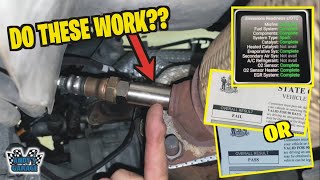
- Failure to pass an emissions inspection
- In rare cases, rough idle or the engine dying unexpectedly (more common if the root cause is fuel-related rather than the sensor itself).
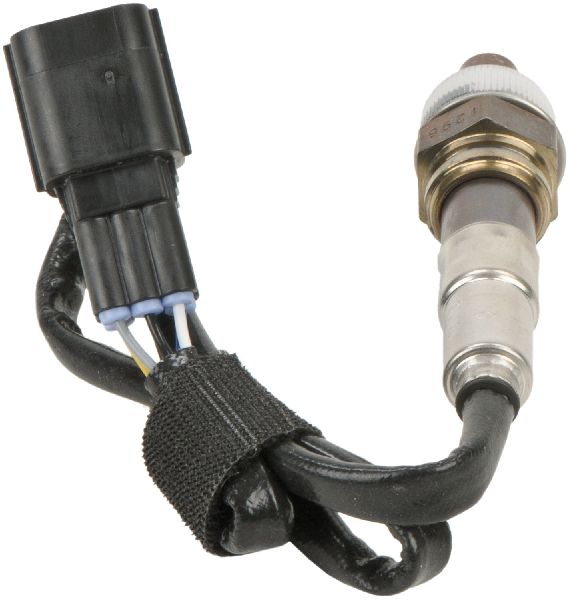
- Replacing the upstream O2 sensor (Bank 1, Sensor 1), which is the incorrect sensor for this code. The upstream sensor has a dual-plug connector, while the downstream has a single plug.
- Replacing the catalytic converter when the issue is just the monitoring sensor.
- Assuming a cheap aftermarket sensor will work. Some users report persistent codes until an OEM or high-quality NTK/Denso sensor is installed.
Most Likely Causes
- Failing or Aged Downstream O2 Sensor 🔴 High Probability → Shop Oxygen Sensor Oxygen sensors are wear items that degrade over time from heat and contaminants, typically between 60,000 and 100,000 miles. The turbocharged engine produces high exhaust temperatures which can shorten the sensor's lifespan. It's common for the sensor to fail even on cars with aftermarket exhausts that have been fine for tens of thousands of miles.
How to confirm: After ruling out exhaust leaks and wiring issues, a lazy sensor is the most likely cause. A mechanic can use a scan tool to graph the sensor's voltage; a slow or flat-lining signal confirms failure. Given the relatively low cost, many owners opt to replace it as the primary diagnostic step, often with an NTK or Denso branded sensor which are considered OEM-quality.
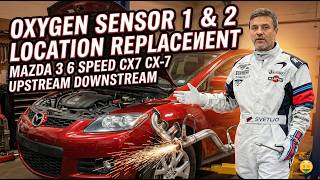
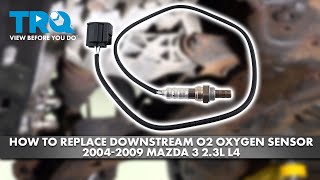
Typical fix: Replace the Bank 1, Sensor 2 oxygen sensor. A 22mm or specialized O2 sensor socket is required. 🎬 Watch: How to replace both O2 sensors on your Mazda. Soaking the old sensor in penetrating oil like PB Blaster is recommended as they are often seized.
Est. part cost: $60-$250 - Exhaust Leak 🟡 Medium Probability Leaks can develop at gasket points (e.g., turbo-to-downpipe, downpipe-to-cat-back) or flex pipes over time due to vibration and heat cycles. Aftermarket exhaust installations increase the risk of small leaks if not sealed perfectly.
How to confirm: Perform a visual inspection of the exhaust system from the turbocharger back to the second O2 sensor. Look for black soot marks around flanges. A smoke test is the most definitive way to find small leaks. You can also listen for whistling sounds while the engine is running.
Typical fix: Replace the leaking gasket or repair the leaking section of the exhaust.
Est. part cost: $10-$50 - Aftermarket Downpipe with O2 Sensor Extender 🟡 Medium Probability → Shop Oxygen Sensor Very common on modified Mazdaspeed3s. Extenders (also called 'defoulers' or 'non-foulers') are used to prevent a P0420 code with a high-flow or catless downpipe, but they can pull the sensor too far from the exhaust stream, slowing its response.
How to confirm: Visually inspect the downstream O2 sensor bung on the downpipe. If there is a metal spacer between the pipe and the sensor, 🎬 See how O2 sensor extenders work and their potential issues. an extender is installed.
Typical fix: Remove the extender and screw the O2 sensor directly into the downpipe bung. This may, however, cause a P0420 code to appear, which would then need to be addressed via ECU tuning (e.g., with a Cobb Accessport) to disable the rear O2 sensor check.
Est. part cost: $0 - Damaged Wiring or Connector ⚪ Low Probability
How to confirm: Visually inspect the O2 sensor's wiring harness from the sensor to the main connector. The connector for the downstream sensor is a single-plug connector located on top of the transmission, and accessing it may require removing the battery and battery box. Look for signs of melting, chafing against the chassis, or corrosion on the connector pins.
Typical fix: Repair the damaged section of wire or clean/replace the connector. Ensure the wiring is properly secured away from hot exhaust components.
Est. part cost: $5-$30
Technical Service Bulletins (TSBs) & Recalls
While specific to the same manufacturer, TSB Bulletin #01-025-13-2822 notes that some vehicles may experience a MIL on with DTC P0139 (HO2S Circuit Malfunction) stored in the PCM memory. This bulletin explains that the PCM monitors for a time-out malfunction when the HO2S remains above 0.2V for longer than a specified duration, indicating a slow response.
Rare But Worth Checking
- Leaking Fuel Injectors: In one documented case on a Mazda5, a user reported that replacing leaking fuel injectors resolved a persistent P0139 code after a new O2 sensor did not. This is highly unusual and would likely be accompanied by other symptoms like rough idle, stalling, or other codes related to fuel trim or misfires.
- Contaminated Fuel or Biofuel Use: Using fuels with high ethanol content (like E10) can sometimes accelerate sensor fouling due to moisture and acids, leading to slower response times. If the issue persists, switching to standard gasoline could be a diagnostic step.
Diagnosis Steps
- Read the codes with an OBD-II scanner and confirm P0139 is present. Note any other codes, like P2096.
- Visually inspect the full exhaust path from the turbo to the second O2 sensor. Look for soot trails indicating a leak, especially at gaskets and flex sections.
- If the car is modified, check if an aftermarket downpipe and/or an O2 sensor extender is installed. The extender is a strong suspect if present.
- Inspect the wiring harness for the downstream O2 sensor. Follow it from the sensor up to the connector on top of the transmission. Check for any signs of melting, chafing against the chassis, or corrosion in the connector. Access may require removing the battery box.
- If no external issues are found, the O2 sensor itself is the most likely culprit, especially if the vehicle has over 60,000 miles.
- For advanced diagnosis, use a scan tool to graph the voltage of Bank 1 Sensor 2. During steady driving, it should hold a relatively stable voltage. If it is stuck or responds very slowly to changes in engine load (deceleration), it needs replacement.
- If replacing the sensor, use a 22mm wrench or a specialized O2 sensor socket. Be prepared for the old sensor to be seized and require significant force or penetrating oil to remove.
- After repair, clear the codes and perform a drive cycle to ensure the code does not return.
Parts You'll Likely Need
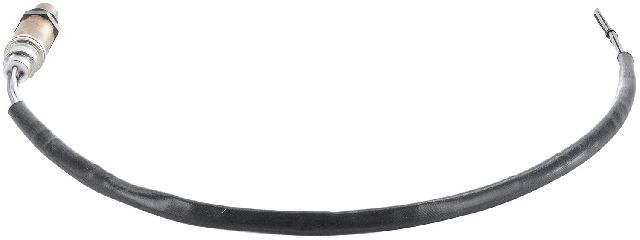
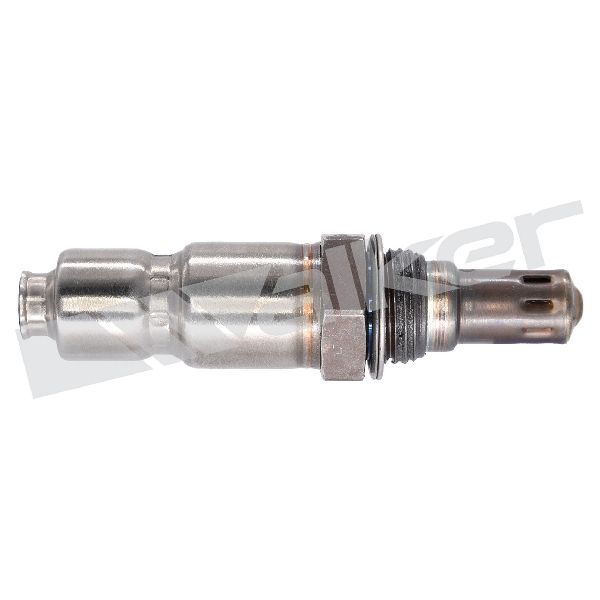
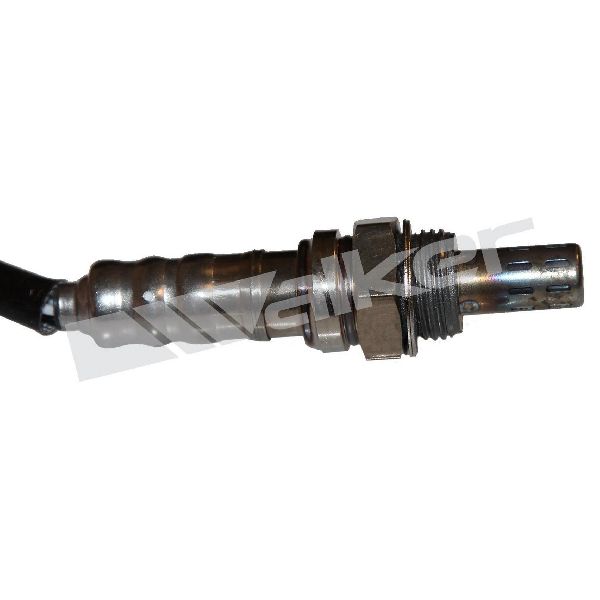
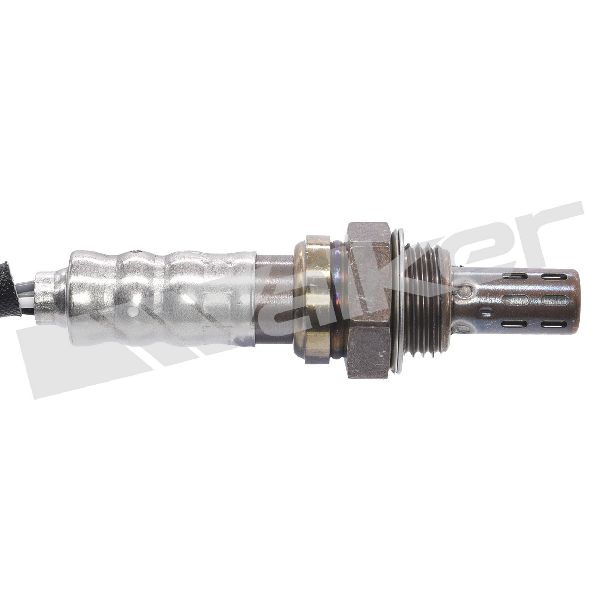
- Downstream Oxygen Sensor
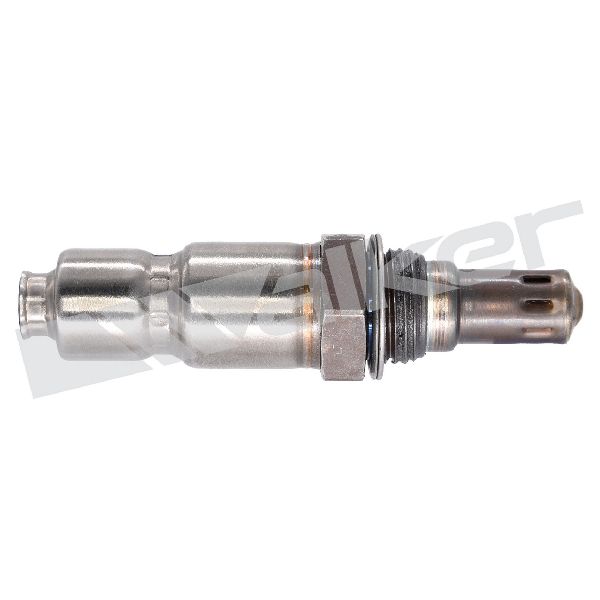
(OEM #L33L-18-861C9U)— This is the sensor (Bank 1, Sensor 2) that generates the P0139 code. It is a common wear-and-tear item and the most frequent cause of the fault.
Trusted brands: Mazda (OEM), NTK (Often the original equipment manufacturer), Denso (High-quality OEM equivalent)
OEM price range: $150-$250
Aftermarket price range: $60-$120
Related Codes That Often Appear With This One
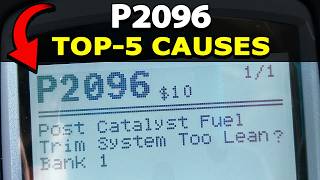
- P2096 — P2096 (Post Catalyst Fuel Trim System Too Lean Bank 1) can appear with P0139 because both codes relate to abnormal readings from the same downstream O2 sensor. A slow, failing, or improperly spaced sensor can provide the incorrect data that triggers both codes. An exhaust leak can also cause both codes to appear simultaneously. 🎬 Watch this guide on diagnosing and fixing the P2096 code.
Platform-Specific Known Issues
- The use of O2 sensor extenders/defoulers on aftermarket downpipes is a frequent cause of P0139 on this platform, as it pulls the sensor too far from the exhaust stream to get an accurate and timely reading.
- The downstream O2 sensor's electrical connector is located on top of the transmission, under the battery box, making it somewhat difficult to access compared to the sensor itself.
- When removing the original O2 sensor from the stock downpipe, it is very common for the sensor to seize and be damaged during removal, requiring a replacement sensor anyway.
Mechanic-Grade Diagnostic Values
- Downstream O2 Sensor (HO2S) Voltage at Idle — expected: Relatively stable voltage between 0.4V and 0.6V after the engine is warm and the catalytic converter is at operating temperature.. Failure: A voltage that is flat, stuck, or switches very slowly between high (rich) and low (lean) indicates a slow or failed sensor.
- Downstream O2 Sensor (HO2S) Heater Circuit Resistance — expected: Typically between 1 and 4 ohms when measured across the two heater wires of the sensor (often the two wires of the same color).. Failure: A reading outside this range (open circuit/infinite resistance or shorted/zero resistance) indicates a failed heater element within the sensor.
- Mazda M-MDS Live Data PID for Downstream O2 Sensor — expected: The specific PID to monitor is 'O2S12' (HO2S output voltage).. Failure: During deceleration from 3,000+ RPM, the O2S12 voltage should drop to 0.3V or less. A failure to do so quickly indicates a slow response.
Scan Tool Commands That Help
- Mazda M-MDS (or equivalent professional scanner): HO2S Monitor Drive Cycle — After replacing the O2 sensor or making repairs, a specific drive cycle must be performed to allow the ECU to run its internal test on the new sensor and clear the P1000 'monitors not ready' code, which is crucial for passing an emissions inspection.
Wiring & Ground Locations
- Downstream O2 Sensor Connector — A single-plug connector located on top of the transmission, clipped to the shifter cable mount. Access requires removing the battery and battery box.. This connector is a common point of failure due to its location. It can accumulate dirt and moisture, or the pins can become corroded, leading to poor signal quality and triggering a P0139. It's also difficult to access, making it an often-overlooked check.
- Engine Ground Points — Key grounds for the engine harness are located on the transmission (one on top, two on the front), on the passenger side motor mount, and from the driver's side fender area to the negative battery terminal.. A poor engine or transmission ground can introduce electrical noise and voltage offsets into sensor readings. The ECU relies on a stable ground reference; if it's compromised, the sensitive low-voltage signal from the O2 sensor can be misinterpreted, leading to a slow response code.
- PCM/ECU Pins for Rear O2 Sensor — On the Mazda 3 ECU, the rear O2 sensor signals are typically on pins 2Q, 2BE, and 2BH.. For advanced diagnostics, a technician can test for continuity and voltage directly at the ECU pins to definitively rule out any wiring issues between the sensor connector and the ECU itself. A resistance reading above 5 ohms on the signal wire can indicate a problem.
Real Owner Repair Stories
- Reddit user doggytiger in r/mazdaspeed3 (Mazdaspeed3 (year not specified)) — P0139 Check Engine Light.
✅ What actually fixed it Replaced the downstream O2 sensor (NTK 24442). The user provided a detailed walkthrough, confirming the need to remove the battery and battery box to access the connector on top of the transmission. They also noted the sensor needed a 22mm socket and that using PB Blaster on the old sensor was helpful. - Mazdaspeeds.org user Everton992000 (Mazdaspeed3 with aftermarket UR TBE (Turbo-back exhaust)) — Persistent P0139 code appearing after 60,000 miles with the aftermarket exhaust installed.
❌ Tried (didn't work) The user confirmed their Air/Fuel Ratio (AFR) looked fine in logs, suggesting the primary (upstream) sensor was working correctly.
✅ What actually fixed it The thread concluded with the strong suggestion that after many miles, the downstream O2 sensor itself had simply failed due to age and heat, a common wear item, even on a modified car that had been running fine for years.
OEM Part Supersession History
L33L-18-861C9U→L34B-18-861B— Part update/revision by Mazda.
Heads up: The part number L33L-18-861C9U listed in Pass 2 is for a standard Mazda 3. The correct part number for the Mazdaspeed3 is L34B-18-861B. Using the incorrect part may result in fitment or electrical compatibility issues.
Diagnostic Flowchart
Used vs. New Parts: Buying Guide for This Vehicle
When a used part is the smart pick: For this repair, buying a used part is almost never a good idea. The primary cause of P0139 is the O2 sensor itself, which is a wear-and-tear item with a finite lifespan. A used sensor from a junkyard has an unknown history and is likely to fail soon, if it doesn't arrive already faulty.
Donor-vehicle mileage cap: roughly under 30000 miles for the part to have meaningful remaining life.
What to inspect on the donor part:
- If forced to buy used, source from a very low-mileage wreck.
- Inspect the sensor tip for heavy carbon deposits (black, sooty) or contamination (white, chalky), which indicate a hard life.
- Ensure the wiring harness and connector are completely intact with no cuts, melting, or corrosion on the pins.
OEM-only on this vehicle (don't cheap out):
- Oxygen Sensor
Aftermarket brands forum-validated for this vehicle:
- NTK (often the OEM supplier, part #24442 is frequently cited)
- Denso (high-quality OEM equivalent)
Brands owners have reported issues with on this vehicle:
- Generic, unbranded, or 'universal' O2 sensors that require splicing wires. Forum users consistently report that these cheap sensors often fail quickly or don't work correctly on the Mazdaspeed3, causing the code to return.
Real Owner Stories
Aggregated from forums and TSBs cited above. Mileages and costs reflect what owners reported in those sources.
2007-2013 Mazdaspeed3 2.3L MZR DISI Turbo — ~70000 miles
Symptoms: The P0139 code appeared after 60k miles with an aftermarket exhaust, but drivability was not affected.
What fixed it: The eventual failure of the aged oxygen sensor was the root cause, requiring replacement of the sensor.
Source hint: mazdaspeeds.org: Multiple threads corroborate that P0139 is common, often caused by a bad sensor or issues related to aftermarket downpipes.
2007-2013 Mazdaspeed3 2.3L MZR DISI Turbo
Symptoms: Check Engine Light with code P0139 was present.
What fixed it: The owner resolved the code by removing an O2 sensor extender and replacing the downstream sensor with an NTK 24442 part.
Source hint: reddit.com/r/mazdaspeed3: A user confirmed that removing an O2 sensor extender and replacing the downstream sensor (specifically with NTK 24442) resolved their P0139 code.
2007-2013 Mazdaspeed3 2.3L MZR DISI Turbo
Symptoms: Owner was chasing both P0139 and P2096 codes after installing a catless downpipe.
What fixed it: Replacing the sensor with a quality NTK part did not fix the issue. The codes persisted, pointing towards a wiring issue or the need for an ECU tune to ignore the rear O2 sensor.
Source hint: reddit.com/r/mazdaspeed3: A user chasing both P0139 and P2096 confirmed they had gone catless and that even after replacing the sensor with a quality NTK part, the codes persisted...
Related OBD-II Codes
Frequently Asked Questions
I have an aftermarket downpipe on my Mazdaspeed3. Could that be causing my P0139 code?
Where is the downstream O2 sensor's electrical connector located on a 2007-2013 Mazdaspeed3?
What brand of O2 sensor should I buy to replace the old one?
My car has over 60,000 miles. Is it normal for the O2 sensor to fail?
Should I remove the O2 sensor extender to fix the P0139 code?
I'm trying to remove the old O2 sensor and it's completely seized. Is this a common problem?
Helpful Videos


We Have This Part in Stock

The information in this article is provided for general reference and educational purposes only. Vehicle specifications, procedures, and part compatibility can vary by production date, trim level, and region. Always consult your vehicle's factory service manual and verify part numbers before purchasing or performing repairs. Safety-critical components such as airbags, seat belts, and braking systems should be installed by a qualified professional.
- Mazda Mazdaspeed3:
- 🧭 Diagnostic Flowchart
- 🎬 Helpful Videos
- 🛍️ Shop This Part
- What's Unique About the 2007-2013 Mazda Mazdaspeed3
- Symptoms You May Notice
- Most Likely Causes
- Technical Service Bulletins (TSBs) & Recalls
- Rare But Worth Checking
- Diagnosis Steps
- Parts You'll Likely Need
- Related Codes That Often Appear With This One
- Platform-Specific Known Issues
- Mechanic-Grade Diagnostic Values
- Scan Tool Commands That Help
- Wiring & Ground Locations
- Real Owner Repair Stories
- OEM Part Supersession History
- Used vs. New Parts: Buying Guide for This Vehicle
- Real Owner Stories
- 2007-2013 Mazdaspeed3 2.3L MZR DISI Turbo — ~70000 miles
- 2007-2013 Mazdaspeed3 2.3L MZR DISI Turbo
- 2007-2013 Mazdaspeed3 2.3L MZR DISI Turbo
- Related OBD-II Codes
- Frequently Asked Questions
- 🎟️ Get 5% Off