

P0139 on 2004-2011 Mazda RX-8: Slow Rear O2 Sensor Causes and Fixes
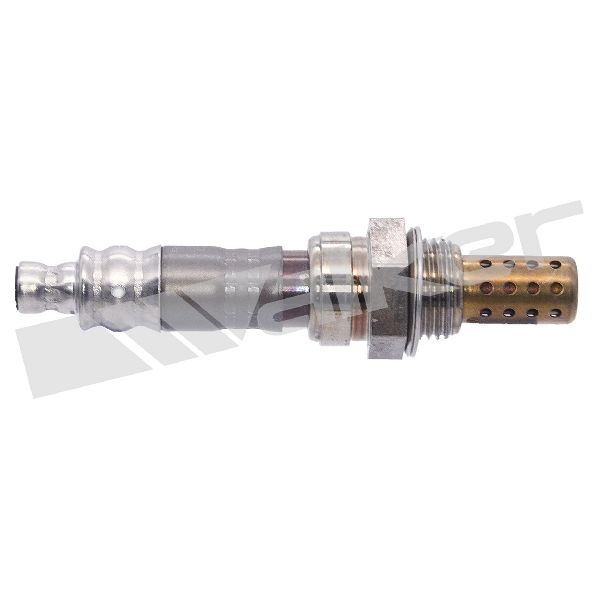
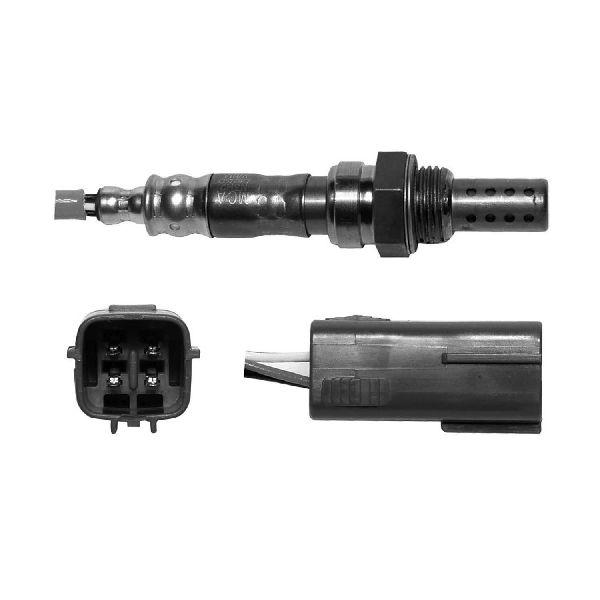
This code means the rear oxygen sensor is responding too slowly, which is almost always caused by an aging or fouled sensor. On an RX-8, this is a very common failure. Replacing the rear O2 sensor (Sensor 2) with a quality part like a Denso 234-4349 is the most likely fix, costing around $60-$130 for the part and is a simple DIY job with a 22mm O2 sensor socket.
- P0139 on a Mazda RX-8 almost always points to a bad rear oxygen sensor (Sensor 2).
- The unique nature of the Renesis rotary engine makes it prone to fouling O2 sensors.
- Do not immediately assume the catalytic converter is bad; diagnose the sensor, wiring, and for exhaust leaks first.
- The repair is straightforward for a DIYer and involves replacing the sensor located after the catalytic converter.
- Driving with this code is safe, but it will cause an automatic failure on an emissions test.
What's Unique About the 2004-2011 Mazda RX-8
The 13B-MSP Renesis rotary engine in the RX-8 has unique characteristics that make P0139 a common code. Rotary engines naturally consume oil as part of their lubrication process and tend to have higher exhaust gas temperatures than piston engines. Both of these factors can shorten the life of an oxygen sensor. The oil consumption leads to carbon and oil fouling on the sensor element, insulating it from the exhaust gas and 'blinding' it. This contamination, combined with heat degradation, causes the sensor to become 'lazy' and slow to respond. As a result, premature failure of the rear O2 sensor is a frequent occurrence for RX-8 owners.
Generation note: The 2004-2011 RX-8 spans two series: Series 1 (2004-2008) and the facelifted Series 2 (2009-2011). While there were engine and ECU updates for Series 2, the cause, diagnosis, and fix for P0139 are fundamentally the same for both. The rear oxygen sensor serves the same function on all model years and is a common failure on both series. However, the specific part numbers for the rear O2 sensor differ between S1 and S2 manual transmission models.
Symptoms You May Notice
- Check Engine Light (CEL) is on.
- Vehicle will fail an emissions test.
- In some cases, a slight decrease in fuel economy may be noticed.
- Rarely, a rotten egg or sulfur smell from the exhaust if the condition is related to a failing catalytic converter.
- Replacing the catalytic converter first. A P0139 code points to the sensor's *response time*, not necessarily the converter's efficiency. A P0420 code is the primary indicator for a bad catalytic converter. Always diagnose the sensor and exhaust leaks before suspecting the cat.
- Replacing the front oxygen sensor (Air/Fuel Ratio Sensor). The code specifically identifies Sensor 2, which is the rear sensor. The front sensor is responsible for fuel trims and will set different codes if it fails.
Most Likely Causes
- Failing or Aged Rear Oxygen Sensor 🔴 High Probability → Shop Oxygen Sensor The Renesis engine's oil consumption and high exhaust temperatures can lead to carbon and oil fouling, degrading the sensor's ability to respond quickly. This is the most common reason for P0139 on an RX-8.
How to confirm: Use an OBD-II scanner with live data graphing. Observe the voltage for 'O2S12' (Bank 1, Sensor 2). A healthy sensor will show slow, steady fluctuations between roughly 0.2V and 0.8V. A lazy sensor will often be stuck at a specific voltage (e.g., ~0.45V) or take several seconds to change its reading after you snap the throttle or during deceleration. A healthy sensor should respond in well under a second.
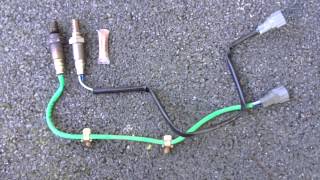
Typical fix: Replace the rear (downstream) oxygen sensor. A 22mm or 7/8" O2 sensor socket is requ 🎬 Watch: This walkthrough shows how to replace the downstream sensor.ired. Soaking the old sensor's threads in penetrating oil is highly recommended.
Est. part cost: $60 - $180 - Exhaust Leak 🟡 Medium Probability Exhaust components can develop leaks at gaskets or welds due to age and heat cycles. A common leak point on the RX-8 is the donut gasket between the catalytic converter and the mid-pipe. A leak near the rear O2 sensor can introduce outside air, which cools the exhaust stream and skews the readings, causing a slow response code.
How to confirm: Visually inspect the exhaust system from the manifold to the muffler for any signs of black soot, cracks, or holes. Listen for ticking or hissing sounds that change with engine RPM. A smoke test is the most definitive way to find small leaks. One owner found a persistent P0139 was caused by a hairline crack in the pipe near the O2 sensor bung, which required welding.
Typical fix: Replace the leaking gasket or repair the cracked pipe section.
Est. part cost: $10 - $50 - Damaged Wiring or Corroded Connector ⚪ Low Probability
How to confirm: Visually inspect the oxygen sensor's wiring harness for any signs of melting, chafing, or physical damage, as it is routed near hot exhaust components. Unplug the connector (mounted on the side of the transmission) and check for corrosion, moisture, or bent pins. Use a multimeter to check for continuity and proper voltage at the connector.
Typical fix: Repair the damaged section of the harness or clean/replace the connector.
Est. part cost: $5 - $50
Rare But Worth Checking
- Failing Catalytic Converter: While a failing catalytic converter more commonly triggers a P0420 (Catalyst Efficiency) code, a marginally performing or partially clogged cat can sometimes alter exhaust flow in a way that causes a P0139. If the O2 sensor has been replaced and the code returns, the cat's health should be investigated by checking for rattling or a glowing red appearance after a hard drive.
- Leaking Fuel Injectors: A leaking fuel injector can cause a rich condition, which can sometimes lead to this code if the PCM detects an abnormal response 🎬 See three different methods for fixing the P0139 engine code. from the O2 sensor during deceleration fuel cut-off. This is less common but has been reported by owners and is usually accompanied by other symptoms like rough idle or poor fuel economy.
Diagnosis Steps
- Read the code with an OBD-II scanner to confirm P0139 is present.
- Inspect the exhaust system visually and audibly for any leaks between the catalytic converter and the rear O2 sensor. Pay close attention to the donut gasket between the cat and the mid-pipe.
- Inspect the rear O2 sensor's wiring harness and connector for any signs of damage, melting from the exhaust, or corrosion. The connector is located on the side of the transmission.
- Use a scanner with live data capabilities to monitor the voltage of 'O2S12' (Bank 1, Sensor 2). The voltage should fluctuate slowly between about 0.2V and 0.8V. If it is stuck at a specific voltage (like 0.45V) or responds very sluggishly (takes more than a second) when you rev 🎬 Watch: How to diagnose and fix a slow response sensor. the engine and let it fall, the sensor is faulty.
- If wiring is good, there are no exhaust leaks, and the sensor signal is lazy, replace the rear oxygen sensor. Use a 22mm (7/8") O2 sensor socket and penetrating oil for easier removal.
- If the code returns after replacing the sensor, consider a more in-depth diagnosis for a failing catalytic converter (check for rattles or glowing) or potential fuel system issues like leaking injectors.
Parts You'll Likely Need
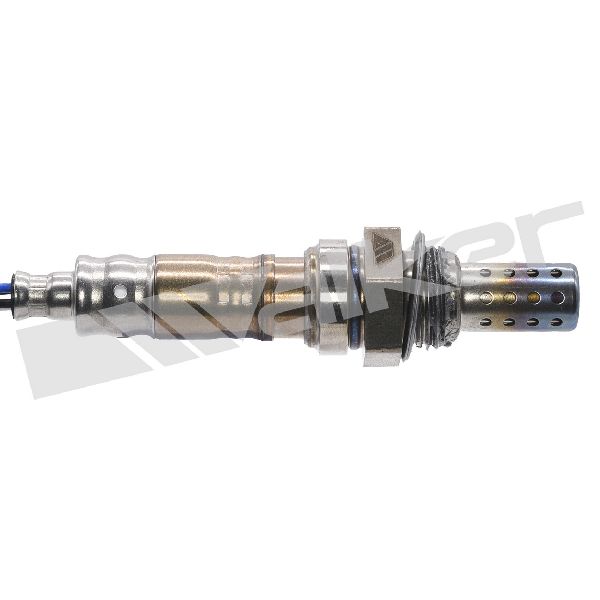
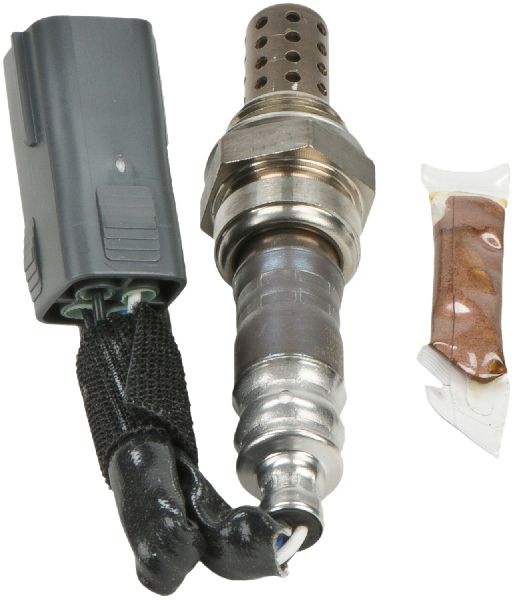
- Rear Oxygen Sensor (Bank 1, Sensor 2)
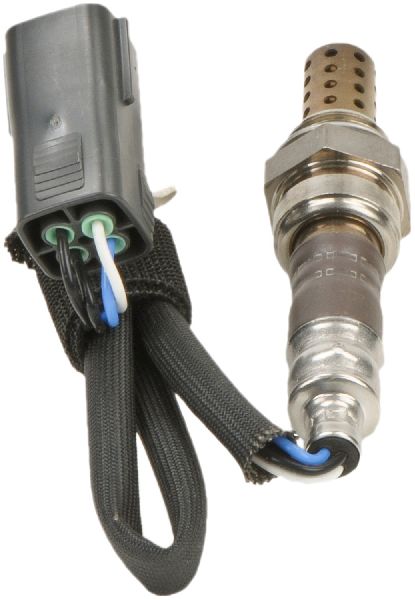
(OEM #N3H3-18-861B, superseded by N3H3-18-861C)— This sensor is the most frequent point of failure for a P0139 code due to age and contamination from the rotary engine's unique exhaust characteristics.
Trusted brands: Denso (often OEM supplier), NGK/NTK, Bosch
OEM price range: $150-$240
Aftermarket price range: $60-$130
Related Codes That Often Appear With This One
- P0420 — If the catalytic converter is failing, it can cause both a P0420 (Catalyst System Efficiency Below Threshold) and a P0139, as the exhaust gas composition will be abnormal, affecting the rear O2 sensor's readings. This is especially common if the catalyst substrate has broken apart.
- P0037 — This code indicates a fault in the rear O2 sensor's heater circuit. Since a bad heater can prevent the sensor from reaching operating temperature, it can also cause a slow response, leading to both codes appearing together. A sensor with a bad heater must be replaced.
- P2270 — This code for 'O2 Sensor Signal Stuck Lean' can appear alongside P0139, especially on cars with aftermarket catless mid-pipes and O2 sensor spacers/foulers. The spacer pulls the sensor out of the direct exhaust stream, causing both a slow response and a lean reading.
Technical Service Bulletins (TSBs) & Recalls
- No specific Technical Service Bulletins (TSBs) for P0139 on the Mazda RX-8 were found during research. The issue is typically addressed as a standard component replacement.
- A manufacturer service bulletin for another Mazda model, TSB Bulletin #01-025-13-2822, notes that vehicles may experience a MIL on with DTC P0139 stored in the PCM memory because the PCM monitors for a time-out malfunction when the HO2S remains above 0.2V for longer than a specified time.
Platform-Specific Known Issues
- This code is very common on RX-8s with aftermarket catless midpipes. The absence of a catalytic converter changes the exhaust gas composition so drastically that the rear O2 sensor often cannot respond as the PCM expects, triggering P0139 along with P0420.
- Using an O2 sensor 'fouler' or spacer to try and trick the sensor on a car with a midpipe can also cause a P0139 code by slowing the sensor's exposure to the exhaust stream too much.
- For owners with catless midpipes, the most effective permanent solution to eliminate both P0420 and P0139 is to use tuning software (like VersaTuner or MazdaEdit) to disable the rear O2 sensor monitoring in the ECU.
Mechanic-Grade Diagnostic Values
- Rear O2 Sensor Heater Circuit Resistance — expected: Typically 2-4 Ω, but some sources suggest a wider range of 1-4 Ω is acceptable.. Failure: An open circuit (infinite resistance) or a short (zero resistance) indicates a failed heater element requiring sensor replacement.
- Rear O2 Sensor Voltage during Deceleration Fuel Cut-Off — expected: Voltage should drop below 0.2 volts.. Failure: If the voltage fails to drop below 0.2 volts for 7 seconds or more during deceleration fuel cut-off, the PCM will flag the sensor as slow and set code P0139.
Wiring & Ground Locations
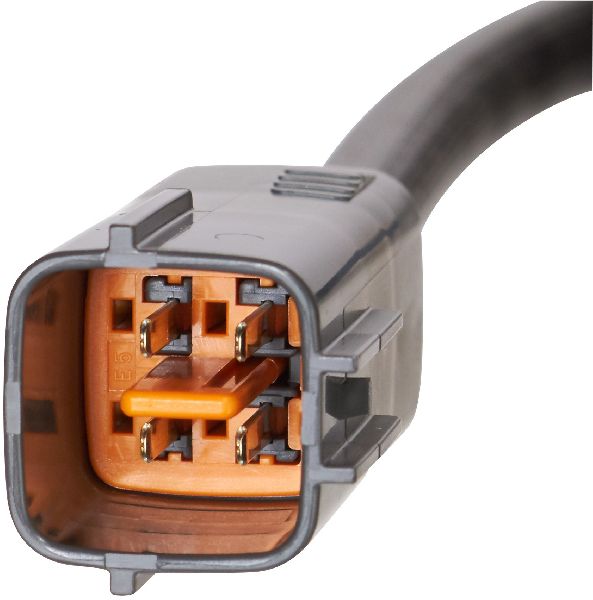
- Rear O2 Sensor Connector — Mounted on the side of the transmission housing.. This connector is a common point for corrosion or damage. Inspecting it is a key step before replacing the sensor itself.
- PCM Pin 2A — At the Powertrain Control Module (PCM) connector.. This pin is the ground (PGND) for the rear O2 sensor. A bad ground connection here can cause incorrect readings.
- PCM Pin 2Q — At the Powertrain Control Module (PCM) connector.. This pin receives the analog voltage (AV) signal from the rear O2 sensor. It's the terminal to test when checking for signal continuity from the sensor.
- Vehicle Harness Wire Colors — At the rear O2 sensor connector.. A forum user identified the likely wire functions: Yellow (Y) is Signal +, Brown (BR) is Signal -, White/Red (WR) is Heater +, and Red (R) is Heater -. The WR wire should have +12V when the ignition is on.
Real Owner Repair Stories
- Reddit user Downbeatbach (2009 Mazda RX-8 GT 6MT, 87k miles) — P0139 code appeared around the same time the catalytic converter failed.
❌ Tried (didn't work) Replacing the failed catalytic converter with a catless midpipe. The P0139 code persisted, along with the expected P0420 code for catalyst efficiency.
✅ What actually fixed it The user was advised by others that the original O2 sensor was likely failing due to its hard life in the catalytic converter and still needed to be replaced, even with the catless pipe. Another user with a similar setup (BHR midpipe) noted they get the P0139 intermittently and just ignore it or plan to disable it via ECU tuning.
OEM Part Supersession History
N3H3-18-861B→N3H3-18-861C— Standard part revision by Mazda.
Heads up: N3H3-18-861B is for the Series 1 (04-08) Manual Transmission. The superseding part N3H3-18-861C is often listed for Automatic models, while Series 2 Manual models use a different part number entirely (N3R1-18-861). It is critical to order the correct part for the specific year and transmission type.
Model Year Variations Within This Range
- 2004-2008 (Series 1) vs 2009-2011 (Series 2): The rear oxygen sensor part number is different for manual transmission cars. S1 MT uses N3H3-18-861B. S2 MT uses N3R1-18-861. However, automatic transmission models from 2004-2011 appear to share the same rear sensor (N3H2-18-861C).
Diagnostic Flowchart
Used vs. New Parts: Buying Guide for This Vehicle
When a used part is the smart pick: A used part is generally not recommended for this repair. Oxygen sensors are wear items with a finite lifespan, and the RX-8's high exhaust temperatures and oil consumption shorten that life further. A used sensor from a junkyard is likely to have significant wear and may fail soon after installation, if it works at all.
Donor-vehicle mileage cap: roughly under 40000 miles for the part to have meaningful remaining life.
What to inspect on the donor part:
- If buying used is unavoidable, source from a very low-mileage wreck.
- Visually inspect the sensor tip for heavy carbon fouling or white, ashy deposits, which indicate a hard life.
- Test the heater circuit resistance with a multimeter before purchase; it should be within spec (e.g., 2-4 ohms).
OEM-only on this vehicle (don't cheap out):
- While not strictly OEM-only, using a genuine Mazda sensor or a direct-fit sensor from the OEM supplier (like Denso or NTK) is highly recommended. Universal sensors that require splicing wires can introduce points of failure and are best avoided.
Aftermarket brands forum-validated for this vehicle:
- Denso (often the OEM supplier)
- NTK / NGK
- Bosch
Brands owners have reported issues with on this vehicle:
- Generic 'universal' sensors that require splicing the connector.
- Unbranded, low-cost sensors from online marketplaces, which have a high failure rate.
Real Owner Stories
Aggregated from forums and TSBs cited above. Mileages and costs reflect what owners reported in those sources.
2009 RX-8 GT 6MT — 87000 miles
Symptoms: Check Engine Light with code P0139, which occurred around the same time the catalytic converter failed.
What fixed it: The owner replaced the catalytic converter with a catless midpipe, but the P0139 code remained. Another user advised that the code was for a failing rear O2 sensor and that the sensor itself should be replaced.
Source hint: Reddit r/RX8
2009 RX-8 GT 6M
Symptoms: A burnt oil smell followed by the Check Engine Light.
What fixed it: Another owner suggested the catalytic converter was the likely issue, advising the original poster to check if the cat was glowing under the car. The poster also noted a rattling from the rear, which the other user confirmed was a symptom of a failing cat.
Source hint: Reddit r/RX8
2009 RX-8 Touring
Symptoms: Check Engine Light with code P0139.
What fixed it: The owner planned to first replace the O2 sensor. If the code returned, the next step was to have the catalytic converter replaced under warranty. Another forum member suggested checking the cat first by shaking it (when cold) to listen for a rattle.
Source hint: RX8Club.com
Related OBD-II Codes
Frequently Asked Questions
I just installed a catless midpipe on my RX-8 and immediately got a P0139 code. Is this normal?
Will using an O2 sensor spacer or 'fouler' fix the P0139 code on my RX-8 with a catless midpipe?
What is the most effective way to permanently fix P0139 on an RX-8 with a catless midpipe?
What is the most common cause of P0139 on a stock Mazda RX-8?
Could an exhaust leak cause the P0139 code on my RX-8?
How can I tell if my P0139 code is from a bad O2 sensor or a failing catalytic converter?
Are there any official Mazda TSBs for code P0139 on the RX-8?
Helpful Videos
We Have This Part in Stock

The information in this article is provided for general reference and educational purposes only. Vehicle specifications, procedures, and part compatibility can vary by production date, trim level, and region. Always consult your vehicle's factory service manual and verify part numbers before purchasing or performing repairs. Safety-critical components such as airbags, seat belts, and braking systems should be installed by a qualified professional.
- Mazda RX-8:
- 🧭 Diagnostic Flowchart
- 🎬 Helpful Videos
- 🛍️ Shop This Part
- What's Unique About the 2004-2011 Mazda RX-8
- Symptoms You May Notice
- Most Likely Causes
- Rare But Worth Checking
- Diagnosis Steps
- Parts You'll Likely Need
- Related Codes That Often Appear With This One
- Technical Service Bulletins (TSBs) & Recalls
- Platform-Specific Known Issues
- Mechanic-Grade Diagnostic Values
- Wiring & Ground Locations
- Real Owner Repair Stories
- OEM Part Supersession History
- Model Year Variations Within This Range
- Used vs. New Parts: Buying Guide for This Vehicle
- Real Owner Stories
- 2009 RX-8 GT 6MT — 87000 miles
- 2009 RX-8 GT 6M
- 2009 RX-8 Touring
- Related OBD-II Codes
- Frequently Asked Questions
- 🎟️ Get 5% Off