

P0139 on 2002-2007 Subaru Impreza 2.5L: Slow Rear O2 Sensor Causes and Fixes
On a 2002-2007 Impreza 2.5L, P0139 is almost always a tired rear (downstream) oxygen sensor. Before replacing it for ~$60-$100, check for exhaust leaks, a very common Subaru issue that also triggers this code. DIY difficulty is 2/5.
- P0139 on your Impreza points directly to a slow or 'lazy' rear oxygen sensor.
- Before you buy a new sensor, always check for exhaust leaks, a very common problem on these cars that can mimic a bad sensor. Listen for a 'ticking' noise when the engine is cold.
- Driving with this code is generally safe, but you won't be able to pass an emissions test until it's fixed.
- Replacement is a DIY-friendly job for most, requiring a special 22mm (7/8") O2 sensor socket and some penetrating oil for the old, likely rusted, sensor.
- Use a quality replacement sensor from a brand like Denso or NGK/NTK to ensure compatibility and avoid future issues. Cheaper sensors are known to fail quickly or not work correctly on this platform.
What's Unique About the 2002-2007 Subaru Impreza
For this generation of Impreza, the P0139 code is a very common and straightforward issue. The primary cause is simply the original rear O2 sensor wearing out after years of service. However, a crucial point for Subaru owners is the high likelihood of exhaust leaks, especially at the flange gaskets. These leaks can introduce outside air into the exhaust stream, fooling the sensor and causing a P0139 code even if the sensor itself is fine. Always check for leaks before replacing parts. Forum users consistently recommend using an OEM-quality Denso or NTK sensor, as these cars can be sensitive to cheaper aftermarket brands. A frequently overlooked issue on these Subarus is the quality of the ECU's ground connection on the intake manifold, which can cause erratic sensor behavior if corroded or loose.
Generation note: The 2002-2007 year range covers the entire second generation (GD/GG) of the Subaru Impreza, which includes the 'Bugeye' (2002-2003), 'Blobeye' (2004-2005), and 'Hawkeye' (2006-2007) facelift models. The causes and fixes for P0139 on the 2.5L non-turbo engine are consistent across these facelifts, though the exact OEM part number for the sensor may vary slightly by year.
Symptoms You May Notice
- Check Engine Light is on
- Failing an emissions or smog test
- Slightly reduced fuel economy over time
- Occasional engine hesitation, particularly after deceleration (rare)
- Replacing the front oxygen (Air/Fuel Ratio) sensor instead of the rear one.
- Replacing the oxygen sensor when the true cause is an exhaust leak. Always check for leaks first to avoid buying unnecessary parts.
Most Likely Causes
- Failing or Aged Rear Oxygen Sensor 🔴 High Probability → Shop Oxygen Sensor Oxygen sensors are wear items. After 100,000+ miles, the sensor's internal element becomes contaminated with carbon and exhaust byproducts, slowing its reaction time.
How to confirm: Use a scan tool with live data graphing. A healthy downstream O2 sensor on a fully warm engine should show a relatively stable voltage, typically between 0.6V and 0.8V. A failing sensor will have a slow, lazy voltage swing, take several seconds to respond to throttle changes, or show a choppy, erratic signal. You can also test the sensor's internal heater resistance with a multimeter; a healthy sensor should read between 5-15 Ohms. A reading over 50 Ohms or an open circuit indicates a failed heater element.
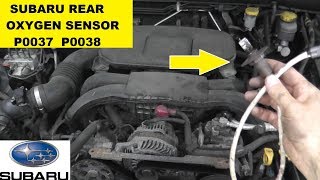
Typical fix: Replace the rear (downstream) oxygen sensor. It is threaded into the exhaust pipe after the catalytic converter. Using a 22mm (or 7/8") oxygen sensor socket is highly recommended. Penetrating oil will likely be needed to remove the old sensor.
Est. part cost: $60-$150 - Exhaust System Leak 🟡 Medium Probability Subaru exhaust systems of this era are known for developing leaks at the flange gaskets, especially the 'donut' gasket between the catalytic converter and the mid-pipe. Rust can also cause pinholes in the pipes.
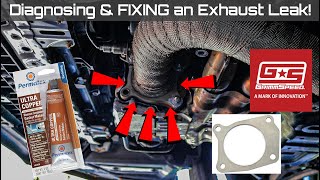
How to confirm: Listen for a 'ticking' or 'puffing' sound from the exhaust, especially when the engine is cold, which may disappear as the metal expands. You can also have a helper temporarily block the tailpipe with a rag while you feel for air escaping around the exhaust flanges and pipes. A professional smoke test is the most definitive method. 🎬 Watch this guide on diagnosing and fixing exhaust leaks
Typical fix: Replace the leaking gasket or repair the leaking section of the exhaust pipe. Common gaskets include Walker #31388 or Fel-Pro #61106.
Est. part cost: $10-$50 - Damaged Sensor Wiring or Connector ⚪ Low Probability The sensor wiring runs underneath the car and is exposed to road debris, water, and heat from the exhaust, which can lead to corrosion, chafing, or melting over time. This was the root cause for one owner who modified their exhaust and had to extend the wiring harness.
How to confirm: Visually inspect the entire length of the oxygen sensor's wiring harness from the sensor to its connection point. Look for melted plastic, frayed wires, or corrosion in the connector pins. Check for a blown fuse related to the O2 sensor heater circuit, often labeled 'A/F Heater'.
Typical fix: Repair the damaged section of wire or clean/replace the connector. Aftermarket pigtail connectors are available.
Est. part cost: $5-$25
Rare But Worth Checking
- PCM (Powertrain Control Module) Issue: This is extremely rare. Before suspecting the PCM, all other possibilities like the sensor, wiring, and exhaust leaks must be definitively ruled out by a professional. A poor ground connection can also mimic a PCM fault.
Diagnosis Steps
- Read the code with an OBD-II scanner to confirm P0139 is the only code present. If other codes exist, address them first.
- With the engine cold, start the car and listen carefully underneath for any ticking or puffing sounds that would indicate an exhaust leak. Pay close attention to the flange areas.
- Visually inspect the rear oxygen sensor's wiring harness and connector for any signs of melting, chafing, or corrosion. The harness runs under the car and is exposed to the elements.
- Use a scan tool to view the live data for 'Bank 1, Sensor 2'. On a warm, idling engine, a healthy sensor should hold a relatively steady voltage (typically between 0.6V and 0.8V). Force a lean condition (e.g., by creating a small vacuum leak) and then a rich condition (e.g., by feeding propane into the intake). The sensor voltage should respond within 100ms. If the voltage is stuck, responds very slowly, or is erratic, the sensor is likely faulty.
- If no exhaust leaks are found and the wiring appears intact, the most likely cause is the sensor itself. Ensure the ground connections for the ECU on the intake manifold are clean and tight, as this has been a rare but documented fix.
Parts You'll Likely Need
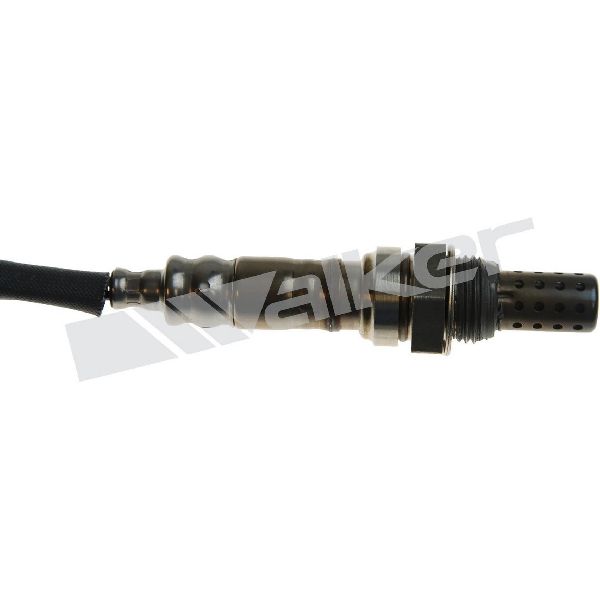
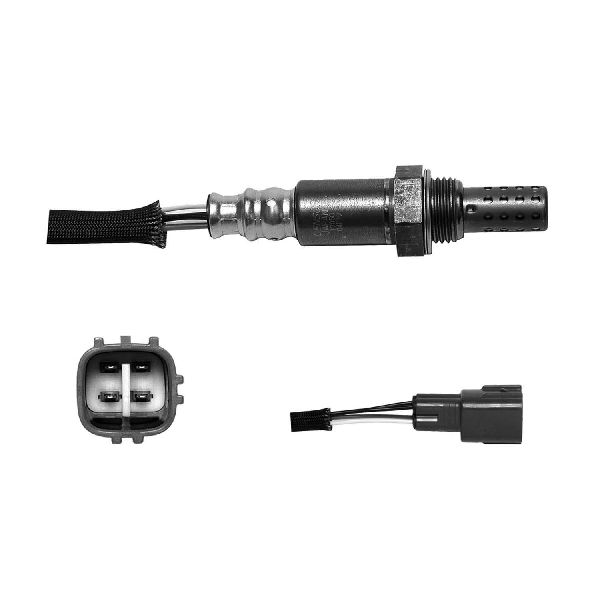
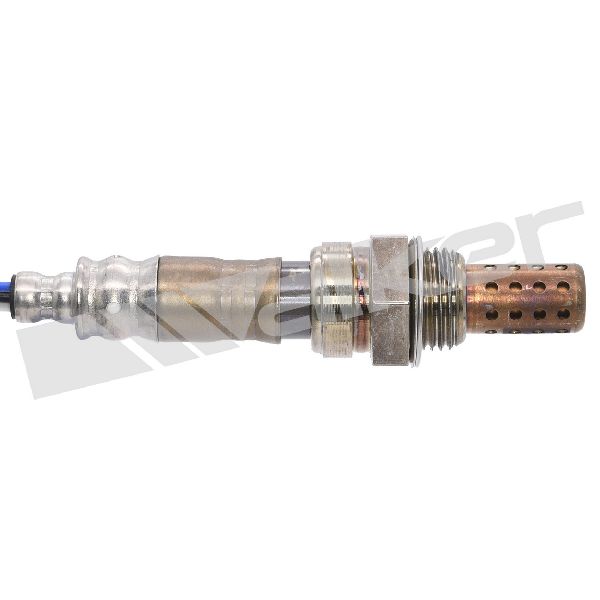
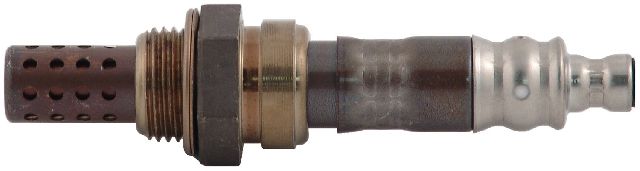
- Rear Oxygen Sensor
(OEM #22690AA810 (2005-07), 22690AA520 (2005), 22690AA350 (2002))— This is the sensor that the code directly identifies as having a slow response time. It is the most common failure point for this code.
Trusted brands: Denso (e.g., 234-4732 for Forester, check specific Impreza application), NGK/NTK, Bosch
OEM price range: $140-$200
Aftermarket price range: $60-$110 - Exhaust Flange Gasket (Donut Gasket)
(OEM #44616AA030)— If an exhaust leak is found at a flange connection, the gasket will need to be replaced. These are a very common leak point on Subarus.
Trusted brands: Walker Exhaust (e.g., 31388), Fel-Pro (e.g., 61106)
OEM price range: $20-$40
Aftermarket price range: $10-$25
Related Codes That Often Appear With This One
- P0420 — A P0420 code (Catalyst Efficiency Below Threshold) can be caused by an exhaust leak or a failing rear O2 sensor, which are the same primary causes for P0139. A lazy sensor may not be able to accurately report catalyst function, triggering P0420.
- P2096 — This code ('Post Catalyst Fuel Trim System Too Lean') also relies on the rear O2 sensor's reading. The combination of P2096 and P0139 often points strongly to an exhaust leak between the front and rear sensors, as outside air is being introduced and detected as a lean condition.
- P0141 — This code ('O2 Sensor Heater Circuit Malfunction') points to a failure of the internal heating element of the same sensor. If you have both P0139 and P0141, the sensor has an electrical failure and must be replaced.
Platform-Specific Known Issues
- Owner Experience: Exhaust Modification Induced P0139: A user on YouTube with a modified Impreza triggered a P0139 code after installing an aftermarket header and relocating the rear O2 sensor. The initial attempt to fix it involved a poorly soldered wiring extension that failed. The final fix was a proper pre-made wiring harness extension, which resolved the code. 🎬 Watch this owner's video on fixing code P0139 This highlights the system's sensitivity to wiring integrity.
- Owner Experience: The Grounding Gremlin: A user on LegacyGT.com with a 2.5i engine chased P0139 and P2096 codes, even after replacing the rear O2 sensor. The fix was not the sensor or an exhaust leak, but cleaning all the engine block and chassis-to-battery ground points. This is a rare but important step to check if a new sensor doesn't solve the problem.
Mechanic-Grade Diagnostic Values
- Rear O2 Sensor Heater Circuit Resistance — expected: 5 - 15 Ohms. Failure: A reading of 'OL' (infinite resistance) or over 50 Ohms indicates a failed heater element.
- Rear O2 Sensor (B1S2) Live Data Voltage at Idle (Warm Engine) — expected: Relatively stable voltage between 0.6V and 0.8V.. Failure: Voltage is stuck low (below 0.2V), choppy, or responds very slowly ( > 100ms) to throttle input.
- Rear O2 Sensor Signal Wire at ECU — expected: Varies, but should match scan tool readings.. Failure: No signal or a signal that differs significantly from the scan tool could indicate a wiring issue between the sensor and ECU.
Hidden / Shadow Codes Worth Checking
- Mode $06, Test ID $41: This test monitors the O2 Sensor Circuit for Bank 1, Sensor 2. The ECM checks for minimum and maximum output voltage against preset thresholds to evaluate its response. (see via A professional scan tool capable of viewing Mode $06 data.)
Scan Tool Commands That Help
- Subaru Select Monitor (SSM) or equivalent: Current Data Display / OBD System Data Display — This is the OEM dealer tool function used to view the most accurate live data streams for the 'Rear O2 Rich Signal' and 'Oxygen sensor' monitor status. It is the best way to diagnose a slow response by comparing sensor data directly to other engine parameters in real-time.
Wiring & Ground Locations
- ECU Main Ground — On top of the intake manifold.. The Subaru ECU gets its primary ground reference from bolts on the intake manifold. If this connection is corroded or loose, it can cause a host of strange electrical issues, including erratic or false readings from sensors like the O2 sensor, potentially triggering a P0139 code even if the sensor and wiring are good.
- Rear O2 Sensor Connector — The sensor is in the exhaust pipe after the catalytic converter. The connector is typically found inside the cabin, requiring pulling back the passenger-side carpet near the center console to access.. This is the primary connection point to test the sensor's heater resistance and check for voltage from the ECU harness side. Corrosion here is a common point of failure.
- ECU Pin B17 (for 2002-2004 WRX) — On connector B at the Engine Control Unit (ECU).. This is the specific pin for the 'O2 Sensor Signal (Rear)'. A technician can back-probe this pin to verify if the signal from the sensor is reaching the ECU correctly, helping to isolate a wiring problem from a sensor or ECU problem.
Real Owner Repair Stories
- YouTube video 'Fix Code P0139 On a Subaru Impreza' (Subaru Impreza (year not specified, but within GD/GG generation) with aftermarket unequal length headers.) — Persistent P0139 check engine light for two years after modifying the exhaust.
❌ Tried (didn't work) Clearing the code., A DIY soldered extension for the O2 sensor wiring, which worked for a short time and then failed.
✅ What actually fixed it Replacing the failed, self-made wiring extension with a proper, pre-made O2 sensor harness extension purchased online. This restored a solid connection and resolved the code. - Reddit user on r/MechanicAdvice (2008 Subaru Impreza 2.5L (non-turbo)) — P0420 code, followed by O2 sensor heater circuit codes after replacing sensors.
❌ Tried (didn't work) Replacing both O2 sensors with cheap aftermarket parts., Replacing the aftermarket sensors with OEM sensors., Performing an idle relearn., Checking the 'A/F Heater' fuse.
✅ What actually fixed it The community consensus pointed towards either a hidden exhaust leak that was missed or an electrical wiring issue between the sensor and the ECU, as replacing the sensors (even with OEM) did not fix the problem. The user was advised to perform a smoke test and check for wiring continuity.
OEM Part Supersession History
22690AA491, 22690AA501, 22690AA590, 22690AA650, 22690AA700→22690AA520, 22690AA850— Part consolidation and minor revisions by Subaru over the years for various EJ-series engines.
Heads up: While many of these part numbers are physically interchangeable, using the wrong one for your specific year and emissions type (Federal vs. California) can cause the code to persist. Always verify the correct part number for your vehicle's VIN. 22690AA520 is listed for the 2005 Impreza.
Model Year Variations Within This Range
- 2002-2004: ECU pinouts and some connector types may differ slightly from the 2005-2007 models. For example, a 2002-2004 WRX ECU shows the rear O2 signal on pin B17. Always use a wiring diagram specific to the vehicle year you are working on.
- 2005-2007: These 'Blobeye' and 'Hawkeye' models had slightly different OEM part numbers for the rear O2 sensor compared to the earlier 'Bugeye' models, reflecting minor changes in the exhaust system or ECU calibration. For example, 22690AA810 is cited for 2005-2007 models.
Diagnostic Flowchart
Other Known Issues on This Vehicle
Issues unrelated to this code that are worth knowing about as an owner of this generation:
- Head Gasket Failure (External Leak) 🔴 High — Very common between 90,000 and 150,000 miles. The SOHC EJ25 engines in this era typically develop external oil and coolant leaks from the head gaskets, rather than internal failure. Symptoms include a coolant smell after a hot drive and a greasy film on the subframe.
- Rear Quarter Panel / Wheel Arch Rust 🟠 Medium — Extremely common, especially in regions that use road salt. A rubber trim piece on the wheel arch traps moisture and dirt, causing rust to form from the inside out. Proactive removal and cleaning can prevent it.
- Timing Belt Replacement 🔴 High — This is a critical maintenance item. The EJ25 is an interference engine, and the timing belt must be replaced at or before the 105,000-mile interval. Failure to do so will result in catastrophic engine damage.
- Front Lower Control Arm Rust 🔴 High — Affects vehicles in 'salt belt' states, can lead to structural failure of the control arm. (Ref: NHTSA Campaign ID: 11V464000 / Subaru Recall WVX-34)
Used vs. New Parts: Buying Guide for This Vehicle
When a used part is the smart pick: For this repair, buying used parts is generally not recommended. The primary failure component is the oxygen sensor itself, which is a wear item. A used sensor from a junkyard has unknown life remaining and is very likely to fail soon, if it's not already the reason the donor car was scrapped. The only exception might be a section of exhaust pipe if yours is physically damaged, but the gaskets should always be new.
Donor-vehicle mileage cap: roughly under 50000 miles for the part to have meaningful remaining life.
What to inspect on the donor part:
- For an exhaust pipe section: check for heavy rust, thin spots, or previous repairs.
- For a wiring connector pigtail: ensure the plastic is not brittle, the locking tab is intact, and there is no visible corrosion on the pins.
Aftermarket brands forum-validated for this vehicle:
- Denso (OEM supplier for many Subaru parts)
- NTK (also known as NGK)
- Bosch
Brands owners have reported issues with on this vehicle:
- Unnamed or generic 'white box' sensors from online marketplaces. Forum and Reddit users frequently report that these cheaper sensors are not calibrated correctly for the Subaru ECU and cause the P0139 code to return shortly after installation.
Real Owner Stories
Aggregated from forums and TSBs cited above. Mileages and costs reflect what owners reported in those sources.
2004 Subaru Impreza WRX
Symptoms: I've been chasing a check engine light on my 04 WRX for a while, it's a p0139 code
What fixed it: The owner report in the context does not specify the final fix, but a similar case with a modified Impreza was fixed by replacing a poorly soldered wiring extension with a proper pre-made wiring harness extension.
Source hint: reddit r/subaruimpreza
2005-2009 Subaru Legacy 2.5i
Symptoms: Chased P0139 and P2096 codes even after replacing the rear O2 sensor.
What fixed it: Cleaning all the engine block and chassis-to-battery ground points.
Source hint: LegacyGT.com - Thread Title: 'Persistent P0139 and P2096'
2002-2007 Subaru Impreza (Modified)
Symptoms: Triggered a P0139 code after installing an aftermarket header and relocating the rear O2 sensor; initial repair attempt with soldered wiring failed.
What fixed it: Installing a proper pre-made wiring harness extension.
Source hint: YouTube - Video Title: 'How To: Fix Code P0139 On a Subaru Impreza'
Related OBD-II Codes
Frequently Asked Questions
Is there a specific recall for the exhaust or suspension on my 2002-2007 Subaru Impreza that might be related to this area of the car?
Which replacement oxygen sensor brand is recommended for the EJ25 engine to avoid P0139 returning?
I replaced my rear O2 sensor but the P0139 code is still there. What else should I check on my Impreza?
Can a modified exhaust cause this code on my 2004 WRX?
What specific exhaust parts are known to leak and cause this code?
Is there a fuse I should check if I suspect a wiring issue with the sensor?
Helpful Videos
We Have This Part in Stock


The information in this article is provided for general reference and educational purposes only. Vehicle specifications, procedures, and part compatibility can vary by production date, trim level, and region. Always consult your vehicle's factory service manual and verify part numbers before purchasing or performing repairs. Safety-critical components such as airbags, seat belts, and braking systems should be installed by a qualified professional.
- Subaru Impreza:
- 🧭 Diagnostic Flowchart
- 🎬 Helpful Videos
- 🛍️ Shop This Part
- What's Unique About the 2002-2007 Subaru Impreza
- Symptoms You May Notice
- Most Likely Causes
- Rare But Worth Checking
- Diagnosis Steps
- Parts You'll Likely Need
- Related Codes That Often Appear With This One
- Platform-Specific Known Issues
- Mechanic-Grade Diagnostic Values
- Hidden / Shadow Codes Worth Checking
- Scan Tool Commands That Help
- Wiring & Ground Locations
- Real Owner Repair Stories
- OEM Part Supersession History
- Model Year Variations Within This Range
- Other Known Issues on This Vehicle
- Used vs. New Parts: Buying Guide for This Vehicle
- Real Owner Stories
- 2004 Subaru Impreza WRX
- 2005-2009 Subaru Legacy 2.5i
- 2002-2007 Subaru Impreza (Modified)
- Related OBD-II Codes
- Frequently Asked Questions
- 🎟️ Get 5% Off