

P0139 on 2005-2009 Subaru Outback 2.5L: Slow Rear O2 Sensor Causes and Fixes
For a 2005-2009 Outback with the 2.5L engine, code P0139 almost always means the rear (downstream) oxygen sensor has failed due to age and contamination. Before replacing it, check for exhaust leaks between the engine and the sensor, as this is a common secondary cause on Subarus. An OEM-quality Denso sensor (part #234-4445) costs around $75 and is the recommended fix.
- P0139 on your Outback points to the rear oxygen sensor (Bank 1, Sensor 2).
- The most likely fix is replacing the rear O2 sensor. Use an OEM brand like Denso for best results (part #234-4445).
- Before buying a new sensor, always check for exhaust leaks between the engine and the sensor, as this is a common issue on Subarus that can also cause this code.
- This is a DIY-friendly repair. The sensor can be accessed from under the car, but you will need a special 22mm O2 sensor socket and the old sensor may be rusted in place, requiring penetrating oil.
What's Unique About the 2005-2009 Subaru Outback
On this generation of Subaru Outback, the P0139 code is a straightforward issue without many platform-specific quirks. The most common failure is simply the rear oxygen sensor wearing out over time. However, Subaru's boxer engines are known for developing exhaust leaks, particularly at the manifold and flange gaskets. These leaks can introduce outside air that fools the sensor, triggering this code. Owners should always investigate for leaks, often heard as a 'ticking' noise on a cold start, before replacing the sensor itself. A critical, often-overlooked issue on Subarus is the ECU's primary ground location on the intake manifold. Poor grounding at this spot can cause a host of strange electrical issues, including erratic sensor behavior that could be misinterpreted as a slow response.
Symptoms You May Notice
- Check Engine Light is on.
- Failing a state emissions/smog test.
- Slightly decreased fuel economy (though often not noticeable).
- Engine hesitation or stumbling, particularly upon acceleration after a period of deceleration (rare).
- Rough transition when cruising at a steady speed.
- Replacing the front (upstream) Air/Fuel Ratio sensor instead of the rear (downstream) Oxygen sensor.
- Replacing the oxygen sensor when the actual root cause is an undiagnosed exhaust leak.
- Assuming the new sensor is faulty when the code returns, without clearing the original code from the ECM or checking for other underlying issues like wiring or leaks.
Most Likely Causes
- Failing Rear (Downstream) Oxygen Sensor 🔴 High Probability → Shop Oxygen Sensor Oxygen sensors are wear items with a lifespan of 60,000-100,000 miles. Over time, the internal ceramic sensing element becomes contaminated with carbon, soot, and other deposits, which insulates it and slows down its reaction time. Denso, the OEM supplier, notes their sensors have a protective aluminum-oxide layer to prevent poisoning, but they still wear out.
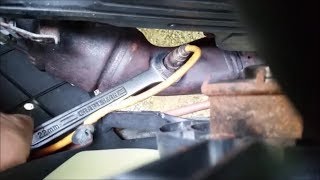
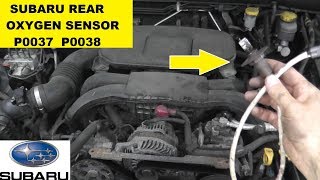
How to confirm: Using a scan tool, observe the live data graph for 'Bank 1 Sensor 2' voltage. A healthy downstream sensor's voltage should hold relatively steady (e.g., 0.6V-0.8V) after the engine warms up. A bad sensor will show a very slow, lazy voltage change when you rev the engine, or the line may be choppy or stuck. A good sensor should respond in under 100 milliseconds. You can also test the internal heater resistance with a multimeter; a healthy sensor is typically 5-8 ohms. A reading over 50 ohms indicates a failed heater element. 🎬 See how to test and swap the rear oxygen sensor.
Typical fix: Replace the rear oxygen sensor. The OEM manufacturer is Denso. 🎬 Watch: A step-by-step guide to replacing both Subaru oxygen sensors. Soaking the old sensor threads with penetrating oil before removal is highly recommended as they are often seized by rust.
Est. part cost: $65-$90 - Exhaust Leak 🟡 Medium Probability Exhaust system gaskets, especially the donut gaskets at flange connections and the exhaust manifold gaskets, can degrade from heat cycles and rust. This allows unmetered outside air to enter the exhaust stream before the O2 sensor, which dilutes the exhaust gas and slows the sensor's perceived response time.
How to confirm: Listen for a 'ticking' or 'puffing' noise from the engine bay or under the car, which is often more pronounced when the engine is cold and the metal has contracted. You can also perform a visual inspection for black soot marks around exhaust flanges and gaskets. A professional smoke test is the most definitive way to find a small leak.
Typical fix: Locate the leak and replace the failed gasket or component. Common leak points are the exhaust manifold gaskets or the donut gasket at the flange connections.
Est. part cost: $10-$50 for gaskets - Damaged Wiring or Corroded Connector ⚪ Low Probability The sensor and its wiring are located under the vehicle, exposed to road salt, water, and debris. The connector itself can get water inside, causing corrosion on the pins and increasing resistance, which delays the signal. Physical damage from road debris can also break or chafe wires.
How to confirm: Visually inspect the wiring harness from the sensor to where it enters the cabin. Unplug the connector and check for any signs of green or white corrosion, moisture, or bent/broken pins. A multimeter can be used to check for resistance above 5 ohms in the circuit, which indicates a wiring problem.
Typical fix: Repair the damaged section of wiring or clean the connector terminals with electrical contact cleaner. If the connector itself is damaged, it may need to be replaced.
Est. part cost: $5-$30 for wiring repair supplies
Rare But Worth Checking
- PCM (Powertrain Control Module) Fault: This is very rare. Before suspecting the PCM, all other possibilities, including the sensor, wiring, and exhaust leaks, must be thoroughly ruled out. In some cases, an ECM firmware update may be available from Subaru to enhance O2 sensor signal detection logic, though this is more common on newer models.
- Leaking Fuel Injector: A leaking fuel injector can cause a rich condition that fouls the O2 sensor, leading to a slow response. This is uncommon and would typically be accompanied by other symptoms and codes.
Diagnosis Steps
- Read the code with an OBD-II scanner to confirm P0139 is the primary code. If other codes like P0171 or P0420 are present, they can provide clues. Address heater circuit codes (P0141) or voltage codes (P0137, P0138) first, as they often point directly to the sensor or its wiring.
- Perform a cold start and listen carefully for any exhaust 'ticking' or 'puffing' sounds that may indicate a leak from a gasket or flange before it seals up with heat.
- Visually inspect the exhaust system from the engine back to the rear O2 sensor. Look for black soot stains around flanges and gaskets, which are tell-tale signs of a leak.
- Inspect the wiring and connector for the rear O2 sensor (Bank 1, Sensor 2). The connector is located inside the cabin, under the passenger side carpet/center console area. Check for any signs of damage, melting, or corrosion on the pins.
- With a scan tool, graph the live data for the Bank 1 Sensor 2 voltage. At a steady 2,500 RPM, the voltage should be relatively stable (typically above 0.5V) once the engine is warm. A sensor that is slow to respond to throttle changes, or has a voltage that is stuck, flat, or fluctuating wildly, is faulty.
- If an exhaust leak is suspected but not obvious, a professional smoke test can be used to pinpoint the exact location of the leak.
- If no exhaust leaks are found and the wiring/connector is intact, the most likely cause is the sensor itself.
Parts You'll Likely Need
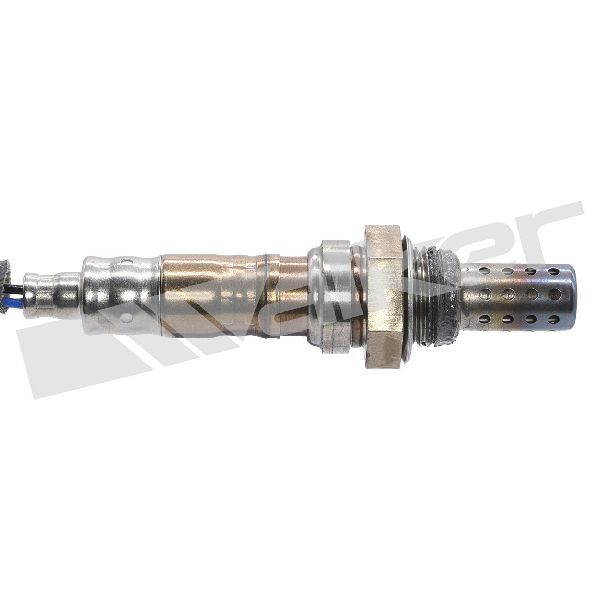
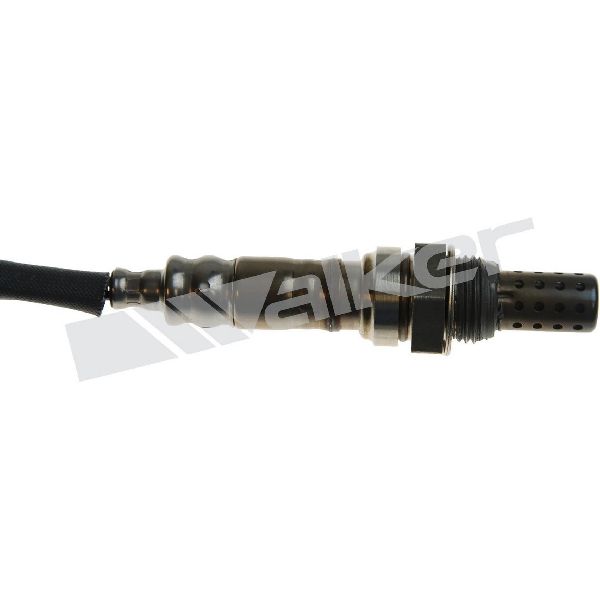
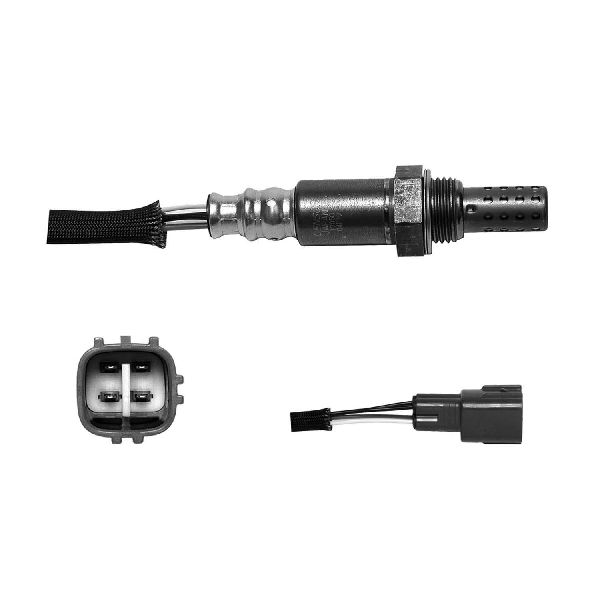
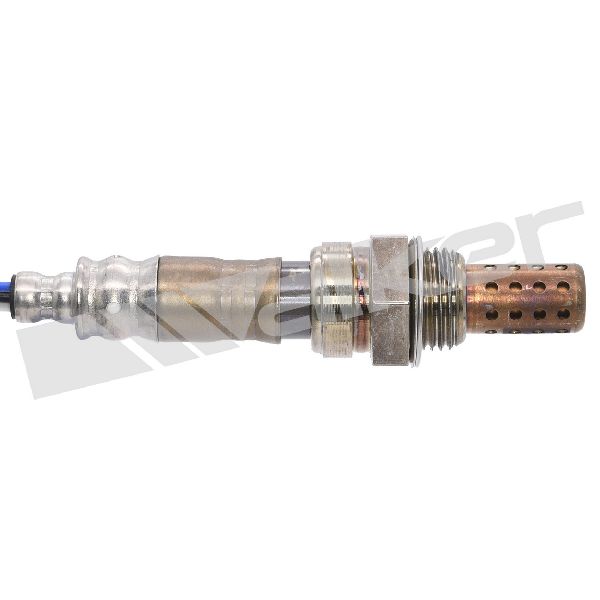
- Rear (Downstream) Oxygen Sensor
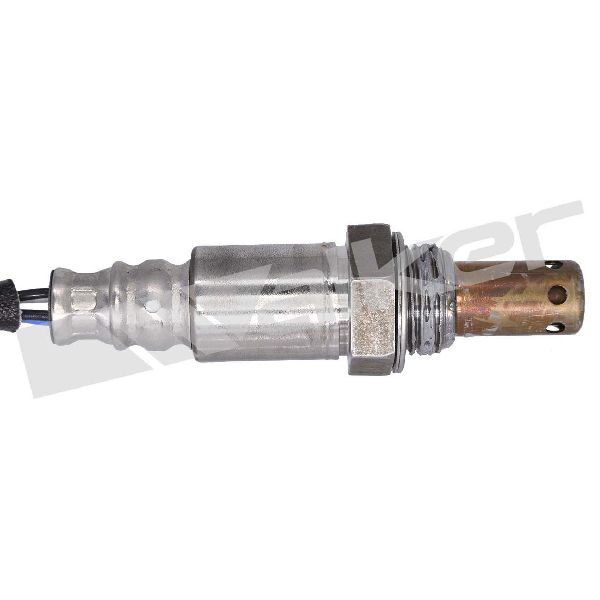
(OEM #22690AA810, superseded by 22690AA81A and 22690AA93A)— This is the most common part to fail and trigger a P0139 code. The internal components degrade over time, causing a slow response.
Trusted brands: Denso (OEM) #234-4445, NTK #24642
OEM price range: $100-$130
Aftermarket price range: $75-$95
Related Codes That Often Appear With This One
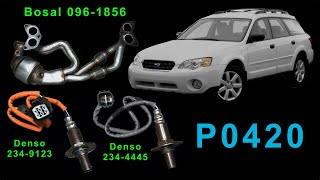
- P0420 — P0420 (Catalyst System Efficiency Below Threshold) can sometimes appear with P0139. A slow sensor can't properly monitor the catalyst. 🎬 Watch: Replacing the catalytic converter and sensor to fix P0420. Conversely, a failing catalytic converter can sometimes cause erratic sensor readings that might be interpreted as a slow response.
- P0171 — P0171 (System Too Lean) can be caused by a significant vacuum or exhaust leak. If the exhaust leak is bad enough to trigger P0139, it is definitely large enough to cause a lean condition code as well.
- P2096 — P2096 (Post Catalyst Fuel Trim System Too Lean Bank 1) can appear alongside P0139. A user on LegacyGT.com reported this combination, which can point towards an exhaust leak or, in some cases, a failing front A/F sensor affecting the entire fuel trim system.
Platform-Specific Known Issues
- Owner Experience: Code Persists After Sensor Replacement: In some forum discussions, owners report replacing the rear O2 sensor only for the P0139 code to return. This is almost always due to an underlying, unfixed issue. The most common is a small, hard-to-find exhaust leak. The second is using a cheap, off-brand sensor that is not calibrated correctly for the Subaru ECU. Using a Denso or NTK sensor and performing a smoke test to rule out leaks is critical.
- DIY Tip: Sensor Removal: The original sensor can be extremely difficult to remove after years of heat cycles and rust. It is highly recommended to liberally apply a quality penetrating oil (like PB Blaster) to the threads and let it soak, ideally overnight. A specialized 22mm (7/8") slotted O2 sensor socket is required for removal and provides the necessary leverage without damaging the wire.
Mechanic-Grade Diagnostic Values
- Rear O2 Sensor Heater Circuit Resistance — expected: 5-8 Ohms. Failure: A reading over 50 Ohms, or an open/infinite resistance reading, indicates a failed internal heater element.
- Rear O2 Sensor (B1S2) Live Data Voltage at Idle (Warm Engine) — expected: Relatively stable voltage between 0.6V and 0.8V.. Failure: Voltage is stuck low (below 0.2V), choppy, or responds very slowly to throttle input.
- Mode $06, Test ID $41 — expected: This test monitors the O2 Sensor Circuit for Bank 1, Sensor 2. The ECM checks for minimum and maximum output voltage against preset thresholds.. Failure: A failure in this monitor, viewable on advanced scan tools, points directly to the sensor's electrical performance and can confirm a slow response issue before it becomes a constant hard fault.
Scan Tool Commands That Help
- Subaru Select Monitor (SSM): Current Data Display & Save / OBD System Data Display — This is the OEM dealer tool used to view live data streams, including 'Rear O2 Rich Signal' and 'Oxygen sensor' monitor status. It provides the most reliable data for diagnosing sensor response time by comparing it directly to the upstream sensor and other engine parameters.
- Subaru Select Monitor (SSM): All Systems Diagnosis — Before focusing on just the O2 sensor, this function performs a comprehensive circuitry test of all vehicle systems. It can uncover related issues or communication faults that might be contributing to the P0139 code, preventing misdiagnosis.
Wiring & Ground Locations
- Rear O2 Sensor Connectors — In the engine bay, on the passenger side, near the power steering pump and radiator hose. The rear O2 sensor uses the all-grey plug, while the front A/F sensor uses a black and grey plug.. Technicians often confuse the front and rear sensor connectors. Knowing the rear sensor uses the solid grey connector prevents replacing the wrong part. This area is also prone to fluid contamination from power steering or coolant leaks, which can damage the connector pins.
- Main ECU Ground — On the top of the intake manifold, typically a bolt where several ground wires converge. On the EJ25, this is often to the left of the throttle body (when viewed from the front).. This is a notoriously problematic ground location for Subarus. The ECU and all its sensors reference this ground. Corrosion or looseness here can add resistance, causing erratic sensor readings that the ECU may interpret as a slow response. Technicians should always check, clean, and tighten this ground when diagnosing any sensor-related code on a Subaru.
Real Owner Repair Stories
- legacycentral bbs forum user (Subaru Legacy (similar EJ engine and grounding scheme)) — Persistent, difficult-to-diagnose running issues and codes.
❌ Tried (didn't work) Replacing sensors, Standard diagnostic procedures
✅ What actually fixed it The user discovered that poor grounding was the root cause. They ran a dedicated 14-gauge ground wire from the battery to the alternator pivot bolt, and another from that bolt to the intake manifold ground point. This resulted in a steadier charging system and smoother engine operation, resolving the electrical gremlins. - YouTube channel 'The DIY Guy' (2007 Subaru Outback, 213,294 miles) — Check Engine Light with code P2096 (Post Catalyst Fuel Trim System Too Rich), which is often related to P0139.
❌ Tried (didn't work) A previous attempt by the owner to replace the sensor with a cheap aftermarket part resulted in more codes and stalling issues.
✅ What actually fixed it The technician replaced both the front and rear O2 sensors with OEM Denso parts due to the high mileage and recent head gasket work that could have contaminated the old sensors with coolant. This resolved the codes. The video emphasizes using OEM Denso sensors (rear is Denso #234-4445) to avoid compatibility issues.
OEM Part Supersession History
22690AA810→22690AA81A, 22690AA93A— Standard part revisions and supplier changes over the production run.
Heads up: The listed part numbers are generally interchangeable for the 2005-2009 2.5L non-turbo models. However, always verify with VIN as PZEV and non-PZEV vehicles can sometimes have different sensor requirements. The most reliable replacement is an OEM-branded Denso (#234-4445) or NTK sensor.
Model Year Variations Within This Range
- 2005-2009: Some vehicles within this range, particularly those sold in California and other CARB states, are PZEV (Partial Zero Emissions Vehicle) models. While the P0139 code applies to both, PZEV vehicles have more complex catalytic converters and sometimes more sensitive ECU monitoring logic. This can make them slightly more prone to catalyst efficiency codes (like P0420) appearing alongside a P0139 if the sensor issue is not addressed promptly.
Diagnostic Flowchart
Real Owner Stories
Aggregated from forums and TSBs cited above. Mileages and costs reflect what owners reported in those sources.
2005-2009 Subaru Outback 2.5L
Symptoms: Replaced the rear O2 sensor but the P0139 code returned shortly after.
What fixed it: Swapped out the cheap aftermarket sensor for an OEM Denso/NTK sensor and performed a smoke test to fix a small exhaust leak.
Source hint: subaruoutback.org forum discussions / Vehicle Specific Issues
2005-2009 Subaru Outback 2.5L
Symptoms: Original sensor was extremely difficult to remove due to years of heat cycles and rust.
What fixed it: Liberally applied PB Blaster penetrating oil to the threads, let it soak overnight, and used a specialized 22mm (7/8") slotted O2 sensor socket for removal.
Source hint: DIY Tip: Sensor Removal (Vehicle Specific Issues)
Related OBD-II Codes
Frequently Asked Questions
Why did the P0139 code come back on my 2005-2009 Outback after I just replaced the rear O2 sensor?
What brand of oxygen sensor should I use for my EJ25 Subaru?
Where is the connector for the rear O2 sensor located on this Outback?
How do I remove a stuck rear O2 sensor on my Subaru?
Can an exhaust leak cause the P0139 code on my 2.5L engine?
Helpful Videos
We Have This Part in Stock


The information in this article is provided for general reference and educational purposes only. Vehicle specifications, procedures, and part compatibility can vary by production date, trim level, and region. Always consult your vehicle's factory service manual and verify part numbers before purchasing or performing repairs. Safety-critical components such as airbags, seat belts, and braking systems should be installed by a qualified professional.
- Subaru Outback:
- 🧭 Diagnostic Flowchart
- 🎬 Helpful Videos
- 🛍️ Shop This Part
- What's Unique About the 2005-2009 Subaru Outback
- Symptoms You May Notice
- Most Likely Causes
- Rare But Worth Checking
- Diagnosis Steps
- Parts You'll Likely Need
- Related Codes That Often Appear With This One
- Platform-Specific Known Issues
- Mechanic-Grade Diagnostic Values
- Scan Tool Commands That Help
- Wiring & Ground Locations
- Real Owner Repair Stories
- OEM Part Supersession History
- Model Year Variations Within This Range
- Real Owner Stories
- 2005-2009 Subaru Outback 2.5L
- 2005-2009 Subaru Outback 2.5L
- Related OBD-II Codes
- Frequently Asked Questions
- 🎟️ Get 5% Off