

P0139 on 2005-2015 Toyota Tacoma: Slow O2 Sensor Response Causes and Fixes
On a 2005-2015 Tacoma, code P0139 almost always means the downstream (post-catalytic converter) oxygen sensor on Bank 1 has failed. Bank 1 is the passenger side on the V6. Replacing it with a specific Denso sensor is the most common and recommended fix. Expect to pay $50-$80 for the part, with a DIY difficulty of 2/5.
- P0139 on a 2nd Gen Tacoma points directly to a slow downstream O2 sensor on the passenger side (V6) or the only bank (I4).
- The most probable fix is replacing the sensor. Before you do, perform a quick visual check of the wiring and listen for exhaust leaks when the engine is cold.
- Only use a Denso brand replacement sensor, such as p/n 234-4624 for many models. Many owners report that other brands do not work correctly or fail quickly on these trucks.
- This is a DIY-friendly repair for most owners. You will need a 22mm (7/8") O2 sensor-specific socket, and some penetrating oil for the old sensor threads is recommended.
What's Unique About the 2005-2015 Toyota Tacoma
For the second-generation Tacoma, this code is a straightforward issue, typically pointing to a component reaching the end of its service life rather than a complex system fault. The key for this platform is using the correct OEM-brand (Denso) replacement sensor. Owners on forums like Tacoma World and Car Talk frequently report that aftermarket sensors, especially Bosch, may not resolve the code or can fail prematurely. One user on TacomaWorld shared an experience of replacing the sensor with an aftermarket part, only for the code to return, which was then resolved by using a dealer-sourced sensor.
Symptoms You May Notice
- Check Engine Light is on.
- Vehicle may fail an emissions test.
- Slight decrease in fuel economy, potentially 5-10%.
- In some cases, the engine may hesitate or run rough during deceleration or right after a cold start.
- Loud whining or vacuum cleaner-like noise on cold start if the issue is related to a failing secondary air injection pump, which can sometimes be associated with O2 sensor codes.
- Replacing the wrong O2 sensor (e.g., the upstream Air/Fuel Ratio sensor or the sensor on Bank 2, which is the driver's side on a V6).
- Replacing the O2 sensor without first checking for exhaust leaks, leading to the code returning.
- Using cheap, non-Denso aftermarket sensors (like Bosch), which are known to cause persistent issues or fail quickly on Toyota vehicles.
- Mistaking a slow sensor response for a bad catalytic converter. A P0139 code by itself rarely means the converter is bad; a failing converter would typically trigger a P0420 code.
Most Likely Causes
- Failing Bank 1, Sensor 2 Oxygen Sensor 🔴 High Probability → Shop Oxygen Sensor Oxygen sensors are wear items. After 60,000-100,000 miles, contamination from carbon and exhaust byproducts degrades the sensor's internal chemical ability to react quickly.
How to confirm: After confirming no exhaust leaks or wiring issues, the most practical step is replacement. A lazy voltage reading on a scan tool that doesn't switch smoothly or stays within a narrow range is a strong indicator. A healthy downstream sensor should have a relatively stable voltage, while a slow one will fail to respond quickly during tests like a forced rich/lean condition or deceleration fuel cut.
Typical fix: Replace the Bank 1, Sensor 2 oxygen sensor. It is strongly recommended to use a Denso brand sensor to ensure compatibility and longevity.
Est. part cost: $50-$80 - Exhaust System Leak 🟡 Medium Probability Gaskets and exhaust pipe flanges, particularly the spring bolts off the manifold, can develop leaks over time due to rust and heat cycles in salt-belt states. A leak upstream of the O2 sensor can introduce outside air, causing incorrect readings and slowing the sensor's perceived response.
How to confirm: Listen for a 'ticking' or hissing sound from the exhaust, especially when the engine is cold, which may disappear as the metal expands. A visual inspection may reveal black soot trails near flanges or gaskets. A smoke test is the most definitive way to find a small leak. 🎬 See how to detect exhaust leaks before buying new parts
Typical fix: Replace the leaking gasket (e.g., donut gasket) or repair the cracked section of the exhaust pipe. This must be done before replacing the sensor, or the code will likely return.
Est. part cost: $10-$50 for gaskets - Damaged Wiring or Connector ⚪ Low Probability The sensor wiring runs underneath the truck and is exposed to road debris, water, and extreme heat from the exhaust, which can cause corrosion, melting, or physical breaks over time. The harness can get chafed or melt if it comes into contact with the hot exhaust pipe.
How to confirm: Visually inspect the entire wiring harness from the O2 sensor to its connection point inside the cabin (often located under the passenger-side carpet/floor grommet). Check for frayed wires, melted insulation, or corroded connector pins. Use a multimeter to check for continuity and resistance in the circuit.
Typical fix: Repair the damaged section of the wire or clean/replace the connector. Ensure the harness is properly secured away from heat sources.
Est. part cost: $5-$25 for wiring repair supplies
Rare But Worth Checking
- Leaking Fuel Injector: A fuel injector on Bank 1 that is stuck open or leaking can create a rich exhaust condition that fouls the O2 sensor, causing it to respond slowly. This would likely be accompanied by other codes (like P2196), a smell of raw fuel, or more severe running issues.
- PCM Fault: In very rare instances, the Powertrain Control Module (PCM) may have an internal fault, such as a degraded analog-to-digital converter or a software issue. This should only be considered after all other possibilities, including wiring and the sensor itself, have been exhaustively ruled out.
Diagnosis Steps
- Read the trouble codes with an OBD-II scanner to confirm P0139 and check for any other related codes.
- Determine your engine type. For the 4.0L V6 (1GR-FE), Bank 1 is the passenger side. For the 2.7L 4-cylinder (2TR-FE), there is only one bank.
- Visually inspect the Bank 1, Sensor 2 (downstream) oxygen sensor wiring for any signs of melting, chafing, or corrosion. The connector is often located under the passenger floorboard carpet, accessible after removing the door sill plate.
- Start the engine when it is cold and listen carefully for any ticking or hissing sounds from the exhaust manifold and pipe flanges, which would indicate an exhaust leak.
- Using a scan tool with live data capabilities, graph the voltage for Bank 1, Sensor 2. A healthy downstream sensor should show a relatively steady voltage (typically above 0.5V) when the engine is warm and at a steady RPM. During deceleration (fuel cut-off), the voltage should drop quickly below 0.2V. If the voltage is stuck or switches very slowly, it confirms a lazy sensor.
- If the wiring is intact and there are no exhaust leaks, the oxygen sensor itself is the most likely culprit and should be replaced using a 22mm (or 7/8") oxygen sensor so 🎬 Watch this quick walkthrough on how to fix the P0139 codecket.
- Before installing the new sensor, apply anti-seize compound to the threads (most new Denso sensors come with it pre-applied).
Parts You'll Likely Need
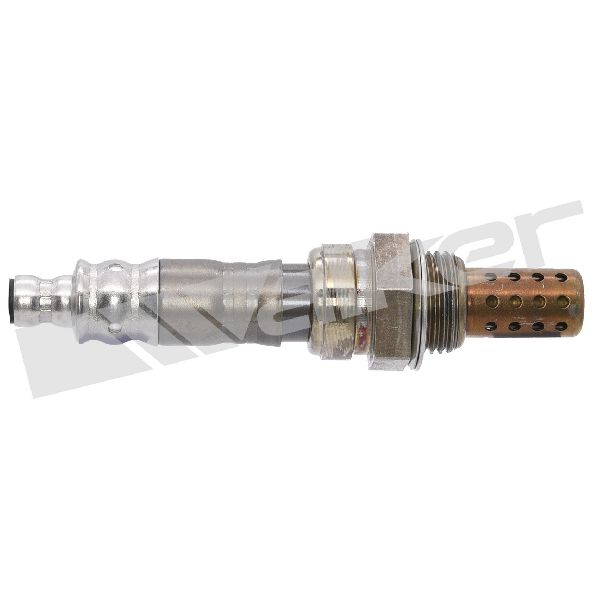
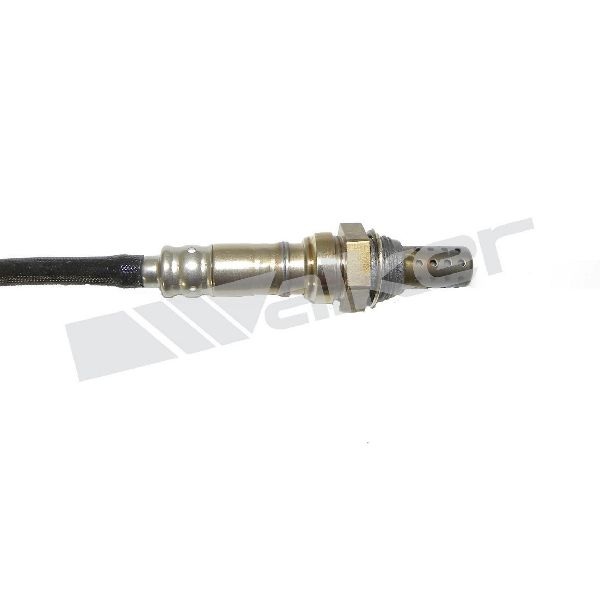
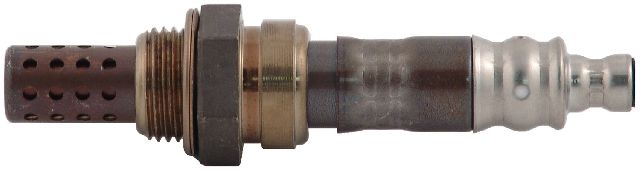
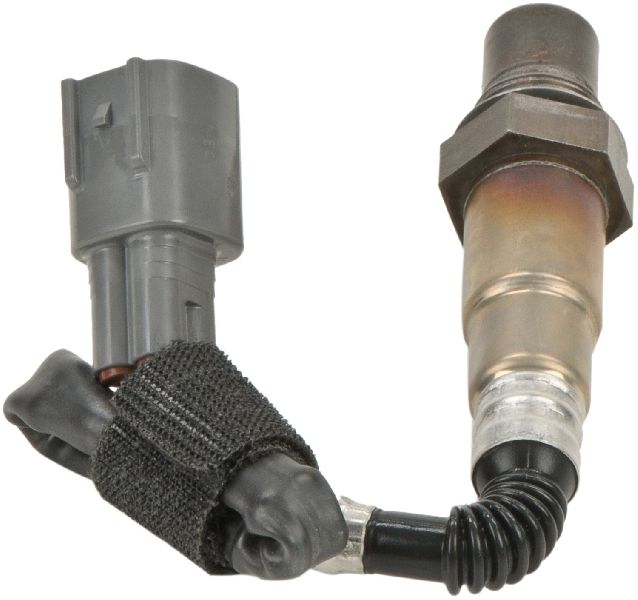
- Oxygen Sensor (Bank 1, Sensor 2)
(OEM #Varies. Common OEM numbers include 89465-04280 and 89465-04360. The equivalent and highly recommended Denso part is typically 234-4624 for many 2005-2012 models or 234-4261 for some 2005-2006 models. Always verify fitment with VIN.)— This is the component that has become slow to respond, directly causing the P0139 code. It is a standard wear-and-tear part that degrades over time.
Trusted brands: Denso
OEM price range: $100-$180
Aftermarket price range: $50-$80 (Denso)
Related Codes That Often Appear With This One
- P0420 — P0420 indicates 'Catalyst System Efficiency Below Threshold'. A slow or failing Sensor 2 can sometimes trigger a false P0420 code because the ECM relies on this sensor's readings to judge the catalytic converter's health. Conversely, a failing cat can sometimes contribute to O2 sensor codes.
- P0138 — P0138 is 'O2 Sensor Circuit High Voltage (Bank 1 Sensor 2)'. This code can appear alongside P0139 if the sensor is failing electrically and sending erratic signals, as documented by some owners on TacomaWorld.
Platform-Specific Known Issues
- Owner experiences on TacomaWorld.com consistently show that this code appears at higher mileage, typically over 100,000 miles, and is resolved with a Denso sensor replacement.
- One user on TacomaWorld documented chasing P0138 and P0139 codes, replacing sensors multiple times with aftermarket and even dealer parts, before realizing they were working on the wrong bank (Bank 2/driver side instead of Bank 1/passenger side). This highlights the importance of correctly identifying Bank 1. 🎬 Watch: How to locate and identify all Tacoma O2 sensors
Mechanic-Grade Diagnostic Values
- O2 Sensor Heater Circuit Resistance — expected: 11 - 16 Ohms at 68°F (20°C). Failure: A reading of 'OL' (Over Limit) or infinite resistance indicates a broken heater element. A reading outside the specified range also indicates a fault.
- O2 Sensor Installation Torque — expected: 30-33 ft-lbs (aftermarket spec) or 14 ft-lbs (Toyota spec). Failure: Under-tightening can cause exhaust leaks; over-tightening can damage the sensor or exhaust threads.
- Live Data: Deceleration Fuel Cut-Off — expected: Voltage for Bank 1 Sensor 2 should drop below 0.2V.. Failure: Failure to drop below 0.2V within approximately 7 seconds triggers the P0139 code.
Scan Tool Commands That Help
- Toyota Techstream: Active Test: Control the Injection Volume — This function allows the technician to manually increase or decrease fuel injection volume by up to 12% and observe the voltage response of the downstream O2 sensor (O2S B1S2) on the live data screen. A healthy sensor will show a corresponding voltage change, while a slow sensor will not react quickly. This helps isolate a lazy sensor from other system faults.
Wiring & Ground Locations
- H3 (Heated Oxygen Sensor) — On the exhaust pipe after the catalytic converter on Bank 1 (passenger side for V6).. This is the component designation in Toyota wiring diagrams for Bank 1, Sensor 2.
- Sensor Connector — Typically found inside the cabin, under the passenger-side carpet near the floor grommet.. This connector is a common point for corrosion or damage if the cabin floor gets wet, leading to signal issues.
- Harness Wires (2TR-FE 4-Cyl) — On the vehicle harness side of the B1S2 connector.. For manual wire repair: White is O2 Signal, Green is Heater, Brown is Ground, and Lavender w/White Stripe is Power. Knowing this pinout is critical if the connector is melted or damaged.
- Chassis Ground — A common ground point is located under the driver-side kick panel. Other grounds exist behind the passenger kick panel and on the frame rail near the left rear shock mount.. A poor ground connection for the sensor circuit can add resistance and cause a slow response signal, mimicking a failed sensor.
Real Owner Repair Stories
- TacomaWorld Forum User 'Fad9567' (2011 Toyota Tacoma TRD Pro, 85k miles) — Persistent P0136 and P0138 codes (related to Bank 1, Sensor 2). Check Engine Light would sometimes go off and come back on.
❌ Tried (didn't work) Replaced the rear O2 sensor with an Autozone part., Replaced the sensor again with another Autozone part., Replaced the sensor a third time with a genuine Toyota dealer part., Replaced the front Air/Fuel sensor on the same bank., Visually inspected and tested wiring harness for continuity.
✅ What actually fixed it The user had misidentified the engine banks. They were replacing sensors on the driver's side (Bank 2), but the code was for Bank 1. The fix was to correctly identify Bank 1 as the passenger side and address the sensor on that side.
OEM Part Supersession History
Denso 234-4261→Denso 234-4624 (for many applications)— Model year updates and consolidation.
Heads up: Denso 234-4261 is often specified for early 2005-2006 V6 models. While 234-4624 may fit, it's crucial to verify the correct part for your specific VIN, as wire harness length or connector details can differ slightly between part numbers and model years.
Model Year Variations Within This Range
- 2005-2006: These early second-generation models are more likely to require the specific Denso part number 234-4261 for the downstream sensor, whereas later models more commonly use 234-4624. Always confirm with VIN before purchasing.
Diagnostic Flowchart
Other Known Issues on This Vehicle
Issues unrelated to this code that are worth knowing about as an owner of this generation:
- Frame Rust Perforation 🔴 High — Very common, especially in cold climates with road salt. Can lead to structural failure. (Ref: Multiple Customer Support Programs (CSP) and Warranty Enhancements were issued, including ZKA, K0D, and ZH6, which involved frame inspection, CRC application, or full frame replacement for eligible vehicles.)
- Secondary Air Injection Pump Failure 🟠 Medium — Common on 2012 models, but can affect others. The internal foam filter disintegrates, destroying the pump and sometimes the switching valves, putting the truck in 'limp mode'. (Ref: A warranty extension was offered for 2012 models, but has since expired for most owners.)
- Weak/Broken Rear Leaf Springs 🟠 Medium — Common across 2005-2011 models. Springs can flatten, crack, or break, affecting ride height, load capacity, and potentially puncturing the gas tank. (Ref: Toyota issued a recall in 2014 for approximately 690,000 trucks to replace the leaf spring assemblies.)
- Head Gasket Failure (2005-2006 V6) 🔴 High — Reported on early 2nd Gen V6 models, though not as widespread as other issues. Often occurs at higher mileage (around 175k miles).
- Driveshaft Vibration / Shimmy 🟡 Low — A common complaint of a vibration or 'shimmy' upon acceleration, often attributed to driveshaft angles or a worn carrier bearing.
Used vs. New Parts: Buying Guide for This Vehicle
When a used part is the smart pick: It is never recommended to buy a used oxygen sensor. They are a wear-and-tear component with a finite lifespan determined by mileage and exposure to exhaust gases. The cost savings are minimal and not worth the risk of premature failure.
What to inspect on the donor part:
- Not applicable. Do not purchase a used oxygen sensor.
OEM-only on this vehicle (don't cheap out):
- Oxygen Sensor
Aftermarket brands forum-validated for this vehicle:
- Denso (OEM supplier)
- NTK
Brands owners have reported issues with on this vehicle:
- Bosch (frequently reported issues on Toyota platforms)
- Generic, unbranded 'white box' parts
Real Owner Stories
Aggregated from forums and TSBs cited above. Mileages and costs reflect what owners reported in those sources.
2005-2015 Toyota Tacoma V6 — ~100000 miles
Symptoms: The Check Engine Light appeared at higher mileage; the owner was dealing with P0138 and P0139 codes.
What fixed it: Replacing the sensor on the correct bank (Bank 1/passenger side) with a Denso sensor. The owner had previously misdiagnosed the issue by replacing sensors on the wrong bank (Bank 2/driver side).
Source hint: TacomaWorld.com Thread: 'Very Annoying p1038 and p0139 CEL'
Related OBD-II Codes
Frequently Asked Questions
Which side of my 4.0L V6 Tacoma is Bank 1 for the P0139 code?
Is there a specific brand of oxygen sensor I should use for my Tacoma to fix P0139?
Where is the connector for the Bank 1, Sensor 2 oxygen sensor located on this vehicle?
Could a loud whining noise on cold start be related to my P0139 code?
Can an exhaust leak cause a P0139 code on my Tacoma?
Does a P0139 code mean I need a new catalytic converter?
Helpful Videos
![How to Fix P0139 Engine Code in 3 Minutes [2 DIY Methods / Only $8.24]](https://img.youtube.com/vi/g77Y54ne4u4/mqdefault.jpg)
We Have This Part in Stock


The information in this article is provided for general reference and educational purposes only. Vehicle specifications, procedures, and part compatibility can vary by production date, trim level, and region. Always consult your vehicle's factory service manual and verify part numbers before purchasing or performing repairs. Safety-critical components such as airbags, seat belts, and braking systems should be installed by a qualified professional.
- Toyota Tacoma:
- 🧭 Diagnostic Flowchart
- 🎬 Helpful Videos
- 🛍️ Shop This Part
- What's Unique About the 2005-2015 Toyota Tacoma
- Symptoms You May Notice
- Most Likely Causes
- Rare But Worth Checking
- Diagnosis Steps
- Parts You'll Likely Need
- Related Codes That Often Appear With This One
- Platform-Specific Known Issues
- Mechanic-Grade Diagnostic Values
- Scan Tool Commands That Help
- Wiring & Ground Locations
- Real Owner Repair Stories
- OEM Part Supersession History
- Model Year Variations Within This Range
- Other Known Issues on This Vehicle
- Used vs. New Parts: Buying Guide for This Vehicle
- Real Owner Stories
- 2005-2015 Toyota Tacoma V6 — ~100000 miles
- Related OBD-II Codes
- Frequently Asked Questions
- 🎟️ Get 5% Off