

P0140 on 2009-2012 Audi Q5 3.2L: O2 Sensor No Activity Causes and Fixes
This code means the post-catalytic converter oxygen sensor on Bank 1 is not sending a signal. The most common cause is a failed O2 sensor itself. Replacing it is the typical fix, costing around $70-$150 for the part.
- P0140 on your Audi Q5 means the rear oxygen sensor on the passenger side is not working.
- The most likely cause is a failed sensor, which is a common repair.
- You can continue to drive the car, but you will not pass an emissions test until it is fixed.
- Before buying a new sensor, inspect the wiring and connector for any visible damage, as this is a common and cheaper fix.
- The correct OEM part number for the rear O2 sensor is 06E906265Q.
What's Unique About the 2009-2012 Audi Q5
For the Audi Q5 with the 3.2L V6 (CALB) engine, the P0140 code is a straightforward emissions fault. While the code itself is standard, owner experiences suggest that accessing and replacing the Bank 1 Sensor 2 O2 sensor can be challenging due to its location, potentially leading to higher labor costs at repair shops. However, the issue is almost always electrical (the sensor or its wiring) rather than a more complex mechanical problem. This engine is also known for other, more serious issues like carbon buildup and timing chain tensioner wear, which should not be confused with this specific sensor code.
Symptoms You May Notice
- Check Engine Light is on
- Vehicle will fail an emissions/smog test
- Potential for slightly increased fuel consumption
- In some rare cases, a rough idle may be noticeable.
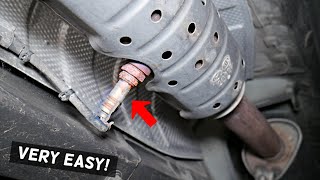
- Replacing the wrong oxygen sensor (e.g., Bank 2 or Sensor 1). Always verify the sensor location before replacement. Bank 1 is the passenger side on the Q5. 🎬 Watch: How to quickly find the Bank 1 Sensor 2 location.
- Replacing the catalytic converter. A P0140 code indicates an issue with the sensor circuit, not necessarily the converter itself.
Most Likely Causes
- Failed Bank 1, Sensor 2 Oxygen Sensor 🔴 High Probability → Shop Oxygen Sensor Oxygen sensors are wear-and-tear items that have a finite lifespan and are exposed to extreme heat and exhaust gases. This is the most frequent cause of a 'no activity' code.
How to confirm: Use an OBD-II scanner to monitor the live voltage data for the B1S2 sensor. If the voltage is flat and does not fluctuate (stuck around 0.45V), the sensor is likely dead. You can also test the sensor's internal resistance with a multimeter.
Typical fix: Replace the Bank 1, Sensor 2 oxygen sensor.
Est. part cost: $70-$180 - Damaged Wiring or Connector 🟡 Medium Probability The wiring is located under the vehicle and is exposed to road debris, heat, and moisture, which can cause corrosion, breaks, or shorts in the circuit.
How to confirm: Visually inspect the wiring harness and connector for the B1S2 sensor. Look for any signs of melting, chafing, corrosion, or broken wires. Perform a continuity test on the wiring between the sensor connector and the ECM.
Typical fix: Repair the damaged section of wiring or replace the connector pigtail.
Est. part cost: $15-$50 - Blown Fuse for O2 Sensor Heater Circuit ⚪ Low Probability → Shop Oxygen Sensor An electrical short in the heater circuit can cause the corresponding fuse to blow, preventing the sensor from reaching its operating temperature and thus showing 'no activity'. This often throws a P0141 code as well.
How to confirm: Locate the fuse for the O2 sensor heater circuits in the vehicle's fuse box and check for continuity. A blown fuse will show an open circuit.
Typical fix: Replace the blown fuse. If the fuse blows again immediately, investigate for a short circuit in the heater wiring.
Est. part cost: $1-$5 - Exhaust Leak ⚪ Low Probability Corrosion can cause leaks at exhaust pipe flanges or cracks in the pipe itself, particularly in regions that use road salt. An upstream leak can introduce oxygen and affect sensor readings.
How to confirm: Visually inspect the exhaust system for soot trails or cracks, especially upstream of the B1S2 sensor. Listen for hissing or ticking sounds from the exhaust when the engine is running.
Typical fix: Repair the leak by replacing the gasket or welding the cracked component.
Est. part cost: $20-$200
Rare But Worth Checking
- Faulty Engine Control Module (ECM): → Shop Engine Control Module (ECM) This is extremely rare. All other possibilities, especially the sensor and wiring, should be exhaustively tested before considering ECM replacement.
Diagnosis Steps
- Connect an OBD-II scanner and confirm that P0140 is the only code present. If other codes exist, address them first, especially heater circuit codes like P0141.
- Use the scanner's live data function to observe the voltage for 'O2S12' (Bank 1, Sensor 2). With the engine warm, the voltage should fluctuate slowly. If it is stuck at a constant value (e.g., 0.45V) or shows 0V, this points to an inactive circuit.
- Perform a thorough visual inspection of the Bank 1, Sensor 2 oxygen sensor and its wiring harness. It is located on the passenger side exhaust pipe, after the catalytic converter. Look for any signs of melted plastic, frayed wires, or corrosion on the connector pins.
- Check for exhaust leaks between the engine and the sensor. Listen for unusual noises and look for black soot marks around exhaust joints.
- If the wiring looks good, use a multimeter to test the sensor's heater circuit for resistance. A reading outside the manufacturer's specification (Audi specifies 810 - 4560 Ω) indicates a failed heater, which requires sensor replacement.
- Test for power and ground at the sensor's connector. With the key on, you should have battery voltage at the heater power wire. If not, check the fuse and wiring leading to the connector.
- If all wiring, fuses, and connections are good, the oxygen sensor itself is the most likely culprit and should be replaced.
Parts You'll Likely Need
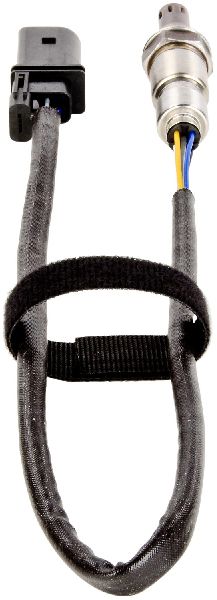
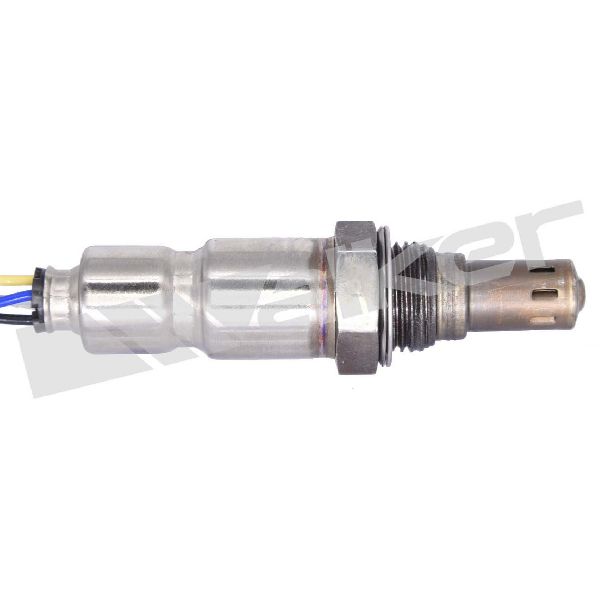
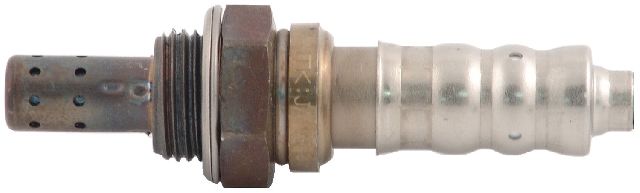
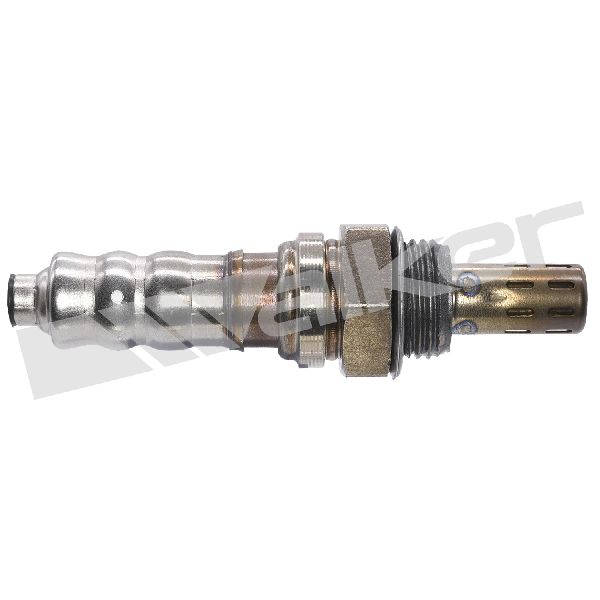
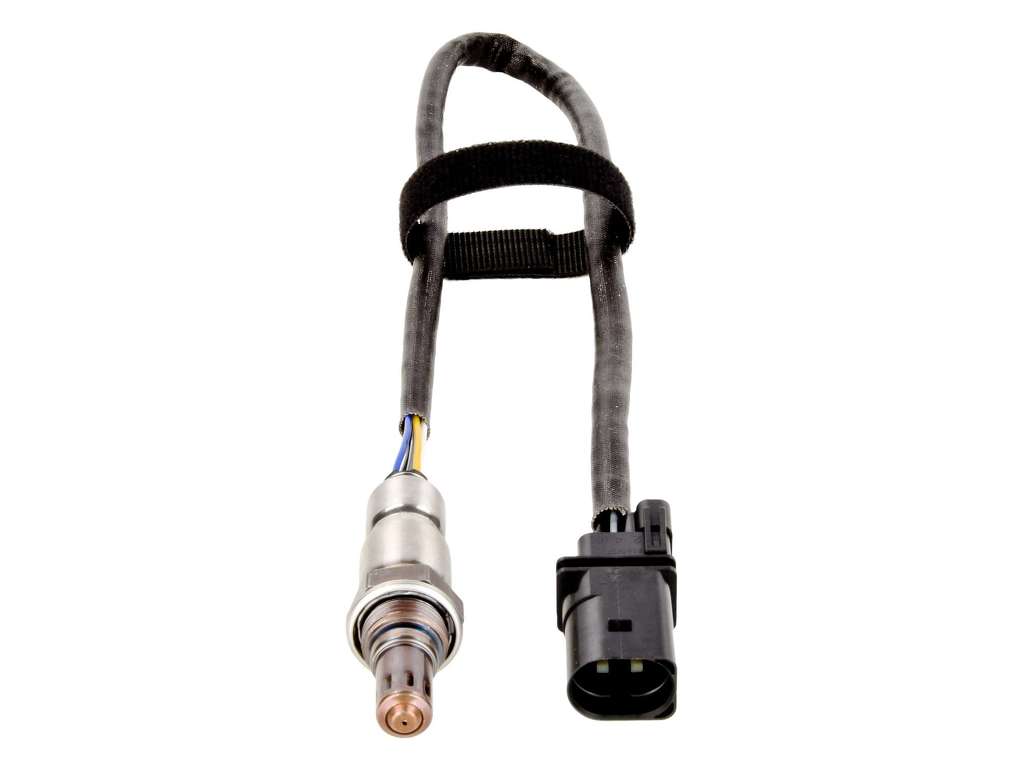
- Oxygen Sensor (Bank 1, Sensor 2)
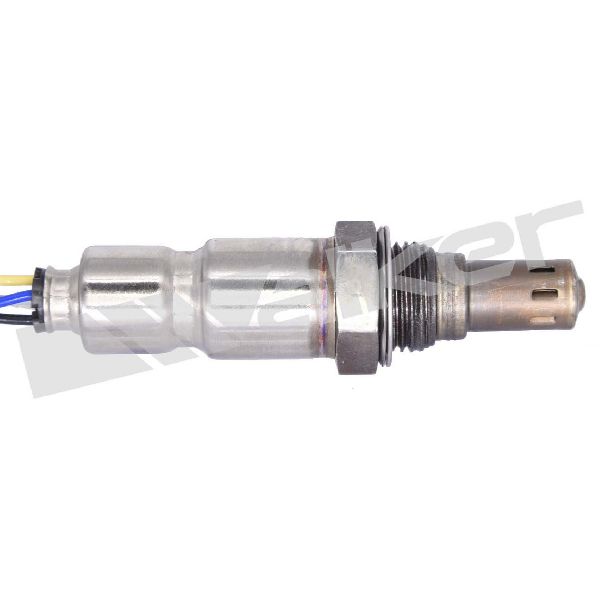
(OEM #06E906265Q)— This is the component that is directly monitored by the ECM and is a common wear item. Its failure is the most frequent cause of a 'no activity' code.
Trusted brands: Bosch (OEM supplier, part #17301 is a common equivalent), NTK, Denso
OEM price range: $150-$220
Aftermarket price range: $70-$150
Related Codes That Often Appear With This One
- P0141 — P0141 indicates a malfunction in the heater circuit for the same sensor (Bank 1, Sensor 2). A failed heater can prevent the sensor from becoming active, directly causing P0140.
- P0136 — P0136 indicates a general malfunction in the Bank 1, Sensor 2 circuit. It can appear alongside P0140 as the ECM tries to diagnose the unresponsive sensor.
- P0420 — While P0140 means 'no activity', it can sometimes be triggered alongside P0420 ('Catalyst System Efficiency Below Threshold') if the sensor is failing intermittently before it dies completely.
Platform-Specific Known Issues
- Access to the Bank 1 Sensor 2 can be tight, sometimes requiring removal of other components for better leverage with an O2 sensor socket. 🎬 Watch: A pro walkthrough for removing downstream Audi O2 sensors.
- Some owners on forums have noted that using a cheap aftermarket sensor can lead to premature failure or other related codes like P0420 appearing shortly after replacement. It is often recommended to use an OEM or high-quality equivalent like Bosch.
Mechanic-Grade Diagnostic Values
- Post-Catalyst O2 Sensor (B1S2) Voltage — expected: A stable voltage of approximately 0.4-0.5V when the engine is hot and at a steady RPM. Unlike the pre-cat sensor, it should not switch rapidly.. Failure: A reading of 0V or a voltage that is stuck and unresponsive indicates no activity, triggering P0140.
- Wiring Harness Continuity to ECM — expected: Less than 1.5 Ohms of resistance on the signal and heater wires between the sensor connector and the ECM.. Failure: High resistance (above 1.5 Ohms) or an open circuit (infinite resistance) indicates a break or corrosion in the wiring.
- Heater Circuit Voltage Supply — expected: Battery voltage (approx. 12V) should be present at the heater power pin on the vehicle's harness connector with the ignition on.. Failure: No voltage points to a blown fuse, faulty relay, or a break in the power supply wire.
Scan Tool Commands That Help
- VCDS (VAG-COM): Measuring Value Blocks (MVB) — Use groups 030-049 to monitor O2 sensor activity. Specifically, check the B1S2 voltage in real-time to see if it is stuck or showing 0V, which confirms the 'No Activity' fault.
- VCDS (VAG-COM): Basic Settings - O2 Sensor Tests — VCDS has guided tests that can be run to check the function of the O2 sensors and their heaters. This can help differentiate between a sensor failure and a wiring issue.
- OBD-II Scanner: Clear/Erase Fault Codes — After replacing the sensor, the fault code must be cleared. While some sources suggest the light will go off on its own after several drive cycles, it is best practice to clear the code and any learned fuel trim adaptations to allow the ECU to adapt to the new sensor immediately.
Wiring & Ground Locations
- Ground Connection (12) — In the engine compartment, on the left side. This is a primary ground point for the engine harness.. A poor ground at this location can cause a variety of sensor reading issues, including incorrect or missing signals from the oxygen sensors.
- Ground Connection (615) — On the left suspension strut tower.. This is another critical chassis ground point for the engine compartment wiring. Verifying it is clean and tight is a key step in diagnosing elusive electrical faults.
- Ground Connection (600) — On the right cylinder head.. A direct engine ground that is crucial for the proper operation of sensors mounted to the engine and exhaust, including O2 sensors.
- J623 - Engine Control Module — Located in the plenum chamber (the area under the windshield wipers) on the driver's side.. This is the destination for the O2 sensor wiring. Any continuity checks must be performed between the sensor connector and the appropriate pins on the ECM's 94-pin connector (T94).
Real Owner Repair Stories
- AudiForums.com user (Audi B5 (similar principle)) — P0140 code appeared after installing a test pipe.
❌ Tried (didn't work) Initially assumed the sensor was bad.
✅ What actually fixed it The user had installed a test pipe (catalytic converter delete) and used a spark plug non-fouler to space the O2 sensor out of the direct exhaust stream. While this is a common trick to prevent a P0420 code, in this case, it resulted in a P0140 because the sensor was so far removed from the exhaust stream that it registered no activity at all. The underlying issue was the modification, not a failed part on a stock system.
OEM Part Supersession History
06E906265Q→This part number appears to be the latest revision for this application and is listed by multiple OEM and aftermarket suppliers.— N/A
Model Year Variations Within This Range
- 2009-2012: The 3.2L V6 CALB engine was only offered in the North American Q5 from 2009 to 2012. A significant facelift occurred for the 2013 model year, which also saw the replacement of the 3.2L engine with a 3.0L supercharged V6. Therefore, parts and procedures for the 3.2L are distinct from 2013+ models.
- 2009: Some wiring diagrams for the 2011 model year show a distinction for vehicles built 'through April 2009' versus 'from May 2009', suggesting minor wiring harness or component changes occurred early in the first model year. This is unlikely to affect the O2 sensor circuit but is worth noting for complex electrical diagnosis.
Diagnostic Flowchart
Other Known Issues on This Vehicle
Issues unrelated to this code that are worth knowing about as an owner of this generation:
- Intake Valve Carbon Buildup 🔴 High — Extremely common on the 3.2L FSI direct injection engine. Typically requires cleaning every 60,000-80,000 miles to prevent misfires, rough idle, and performance loss. (Ref: Audi issued an extended warranty for this issue on some models, but it may have expired.)
- Upper Timing Chain Tensioner Wear/Failure 🔴 High — A well-documented issue. Owners report a 'rattle' noise for a few seconds on cold starts. Failure to address this can lead to jumped timing and catastrophic engine damage. Less common than on the 2.0T engine but still a significant concern.
- Water Pump and Thermostat Failure 🟠 Medium — Coolant leaks from a failing water pump or thermostat are a common problem. While some recalls existed for other engines/years, the 3.2L is also known for these issues. (Ref: Recalls (e.g., 19N3/19N4) were issued for other engines like the 2.0T, but the issue is also prevalent on the 3.2L.)
- PCV Valve (Oil Separator) Failure 🟠 Medium — The PCV valve diaphragm can tear, creating a large vacuum leak, often resulting in lean codes (P0171/P0174) and a distinct whistling noise.
- Cracked Fuel Pump Flange 🟠 Medium — A recall was issued for potential cracks in the fuel pump flange which could lead to fuel leaks. (Ref: Recall 69O1.)
Used vs. New Parts: Buying Guide for This Vehicle
When a used part is the smart pick: For this repair, obtaining a used part is generally not recommended. The only exception might be sourcing a small section of the wiring harness pigtail from a junkyard vehicle if the connector is damaged and a new pigtail is unavailable. The oxygen sensor itself should always be purchased new.
Donor-vehicle mileage cap: roughly under 80000 miles for the part to have meaningful remaining life.
What to inspect on the donor part:
- If sourcing a connector pigtail, inspect for any signs of melting, brittleness, or corrosion on the pins.
- Ensure the donor vehicle was not involved in a fire or flood.
Aftermarket brands forum-validated for this vehicle:
- Bosch (often the original OEM supplier without the Audi logo)
- NTK/NGK
- Denso
Brands owners have reported issues with on this vehicle:
- Unnamed or 'white-box' generic sensors from online marketplaces are frequently reported to fail prematurely or provide inaccurate readings, leading to other codes or a repeat of P0140.
Real Owner Stories
Aggregated from forums and TSBs cited above. Mileages and costs reflect what owners reported in those sources.
2009-2012 Audi Q5 3.2L V6
Symptoms: The check engine light was on and the owner was looking for the correct part numbers for the rear O2 sensor. They noted that dealer replacement is expensive due to the labor required for access.
What fixed it: Replacement of the rear O2 sensor using OEM or high-quality Bosch parts.
Source hint: AudiWorld Forums - A thread corroborated the OEM and aftermarket part numbers for the rear O2 sensor on a 3.2L Q5
2009-2012 Audi Q5 3.2L V6
Symptoms: Check engine light with code P0140 appearing alongside a heater circuit fault code P0141.
What fixed it: Confirmed a dead sensor by checking voltage with a VAG-COM or multimeter.
Source hint: AudiForums.com - Discussion in thread 'p0140 check engine code'
2009-2012 Audi Q5 3.2L V6
Symptoms: P0140 code triggered after installing a catless downpipe and a tune.
What fixed it: This was identified as a modification-related trigger rather than a standard component failure.
Source hint: Reddit r/Audi
Related OBD-II Codes
Frequently Asked Questions
Where is the Bank 1 Sensor 2 located on my 3.2L V6 Audi Q5?
Can I use an aftermarket O2 sensor to fix the P0140 code on my Q5?
Does the 3.2L CALB engine have any recalls related to fuel systems that I should check while fixing this?
My Q5 has a P0140 and a P0141 code; which one should I address first?
What is the specific resistance range for the O2 sensor heater on the Audi CALB engine?
Is the P0140 code common on other Audi models with the 3.2L engine?
Helpful Videos



We Have This Part in Stock

The information in this article is provided for general reference and educational purposes only. Vehicle specifications, procedures, and part compatibility can vary by production date, trim level, and region. Always consult your vehicle's factory service manual and verify part numbers before purchasing or performing repairs. Safety-critical components such as airbags, seat belts, and braking systems should be installed by a qualified professional.
- Audi Q5:
- 🧭 Diagnostic Flowchart
- 🎬 Helpful Videos
- 🛍️ Shop This Part
- What's Unique About the 2009-2012 Audi Q5
- Symptoms You May Notice
- Most Likely Causes
- Rare But Worth Checking
- Diagnosis Steps
- Parts You'll Likely Need
- Related Codes That Often Appear With This One
- Platform-Specific Known Issues
- Mechanic-Grade Diagnostic Values
- Scan Tool Commands That Help
- Wiring & Ground Locations
- Real Owner Repair Stories
- OEM Part Supersession History
- Model Year Variations Within This Range
- Other Known Issues on This Vehicle
- Used vs. New Parts: Buying Guide for This Vehicle
- Real Owner Stories
- 2009-2012 Audi Q5 3.2L V6
- 2009-2012 Audi Q5 3.2L V6
- 2009-2012 Audi Q5 3.2L V6
- Related OBD-II Codes
- Frequently Asked Questions
- 🎟️ Get 5% Off