

P0140 on 2007-2013 BMW X5: O2 Sensor No Activity Causes and Fixes
For a 2007-2013 BMW X5 (E70), code P0140 almost always means the post-catalytic oxygen sensor (Bank 1, Sensor 2) has failed. Other likely causes include damaged wiring or a blown fuse for the sensor's heater circuit, often found in the engine bay fuse box. Expect to pay $100-$200 for a quality Bosch or NTK replacement sensor to ensure compatibility.
- P0140 means the downstream oxygen sensor on Bank 1 is not sending a signal.
- The most likely cause is a failed oxygen sensor, which is a common wear item.
- Before replacing the sensor, check its wiring, connector, and the associated fuse for any damage or faults.
- The vehicle is safe to drive with this code, but it will not pass an emissions test.
- Ensure you are diagnosing and replacing the correct sensor: Bank 1, Sensor 2 (post-catalytic converter).
What's Unique About the 2007-2013 BMW X5
On the E70 generation X5, this code is a straightforward emissions system fault that applies to the gasoline engines (N52, N55, N62, N63). There are no unique design flaws that make this vehicle particularly prone to P0140 beyond the normal lifespan of components. The issue is almost always electrical, either the sensor itself has died or the wiring connecting it to the DME has been compromised. The DME is sensitive and will set this code quickly if the sensor's signal is absent for a specified period. It's crucial to use a high-quality OEM (Bosch) or OE-equivalent (NTK, Denso) sensor, as these vehicles are known to reject cheaper aftermarket sensors, causing the code to return.
Symptoms You May Notice
- Check Engine Light illuminated on the dashboard.
- Inability to pass a vehicle emissions test.
- Slightly increased fuel consumption.
- Potential for increased harmful emissions.
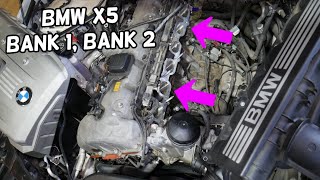
- Replacing the wrong oxygen sensor. The code P0140 specifically refers to Bank 1, Sensor 2. Bank 1 is the side of the engine with cylinder #1, and Sensor 2 is the one located *after* the catalytic converter. Always confirm the sensor location before replacement. 🎬 Watch: How to locate Bank 1 and Bank 2 on your BMW
- Replacing the catalytic converter. A 'no activity' code points to an electrical problem with the sensor circuit, not the performance of the converter itself.
- Using a cheap, unbranded oxygen sensor. The DME in BMWs is often incompatible with generic sensors, which can lead to the code returning immediately after replacement.
Most Likely Causes
- Failed Post-Catalytic Oxygen Sensor (Bank 1, Sensor 2) 🔴 High Probability → Shop Oxygen Sensor Oxygen sensors are wear-and-tear items exposed to extreme exhaust temperatures. Their internal heating element, which is critical for proper function, is a common failure point, leading to 'no activity' codes. Lifespan is typically over 60,000 miles.
How to confirm: Use a scan tool to monitor live data for the Bank 1 Sensor 2 voltage. If the voltage is static (often around 0.45V) and does not change with engine RPM, the sensor has likely failed. You can also test the sensor's internal heater resistance with a multimeter; an open circuit (infinite resistance) indicates a failed heater. BMW-specific scanners may show a shadow code like '12B701' which directly points to an internal resistance issue with the heater.
Typical fix: Replace the Bank 1, Sensor 2 oxygen sensor. An O2 sensor socket is required for removal and installation.
Est. part cost: $100-$200 - Wiring or Connector Issue 🟡 Medium Probability The wiring for the downstream O2 sensor runs underneath the vehicle, where it is exposed to road debris, moisture, and heat from the exhaust. This can lead to chafed, melted, or corroded wires and connector pins over time.
How to confirm: Visually inspect the wiring harness leading to the sensor for any signs of melting, chafing, or corrosion. Check the connector for bent or corroded pins. Use a multimeter to check for continuity between the DME and the sensor connector and verify voltage and ground at the connector for the heater circuit.
Typical fix: Repair the damaged section of wiring or clean/replace the connector.
Est. part cost: $5-$50 - Blown Fuse for O2 Sensor Heater ⚪ Low Probability → Shop Oxygen Sensor An electrical short in the sensor's heater element or its wiring can cause the corresponding fuse to blow. This is a known issue across many BMW models.
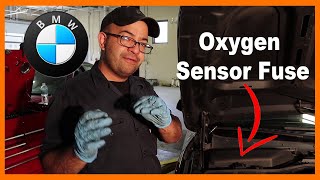
How to confirm: Check the fuse for the oxygen sensor heaters. On many E70 models, this is a 30A fuse located in the engine bay electronics box (E-box), which is under the passenger-side cabin air filter housing. 🎬 See how to access the engine bay fuse box A forum user on Xoutpost.com also investigated this, pointing to the E-box as the likely location. If the fuse is blown, it's a strong indicator of the problem.
Typical fix: Replace the blown fuse. If the new fuse blows immediately, there is an underlying short circuit in the wiring or one of the O2 sensors that must be diagnosed and repaired.
Est. part cost: $1-$5
Rare But Worth Checking
- Exhaust Leak: An exhaust leak before the sensor can allow outside air into the exhaust stream. While this usually causes performance codes (P0171/P0174), a significant leak near the sensor could potentially affect its readings, though it's less likely to cause a 'no activity' code.
- Faulty Digital Motor Electronics (DME/ECM): In very rare instances, the fault can be internal to the engine computer itself, specifically the driver circuit for the O2 sensor. This should only be considered after all other possibilities (sensor, wiring, fuses) have been exhaustively ruled out.
Diagnosis Steps
- Connect an OBD-II scanner to the vehicle and confirm that P0140 is the primary code. Check for any BMW-specific shadow codes like 12B701 or 2C6B. Document the freeze frame data.
- Visually inspect the Bank 1, Sensor 2 oxygen sensor and its wiring harness. Look for any obvious signs of damage, such as melted wires, corrosion, or loose connections.
- Locate and check the fuse for the oxygen sensor heater circuit. This is often a 30A fuse in the engine bay E-box, under the passenger side cabin air filter housing. Replace if blown.
- Use the OBD-II scanner to view live data from the Bank 1, Sensor 2 O2 sensor. With the engine running and warmed up, the voltage should fluctuate slowly. If it is stuck at a fixed value (e.g., 0.45V) or shows 0V, it indicates no activity.
- If the sensor shows no activity, test the heater circuit. Disconnect the sensor and measure the resistance across the two heater wires on the sensor side (usually the same color, e.g., white). It should typically be between 2 and 10 ohms. An infinite reading (OL) means the heater is broken.
- With the key on and engine off, check for battery voltage at the heater circuit power wire in the harness connector.
- If the fuse, wiring, and power supply are good, the sensor itself has failed. Replace it with a high-quality OEM or OE-equivalent part. If a new, quality sensor does not resolve the issue, a more in-depth diagnosis of the signal wire to the DME is required.
Parts You'll Likely Need
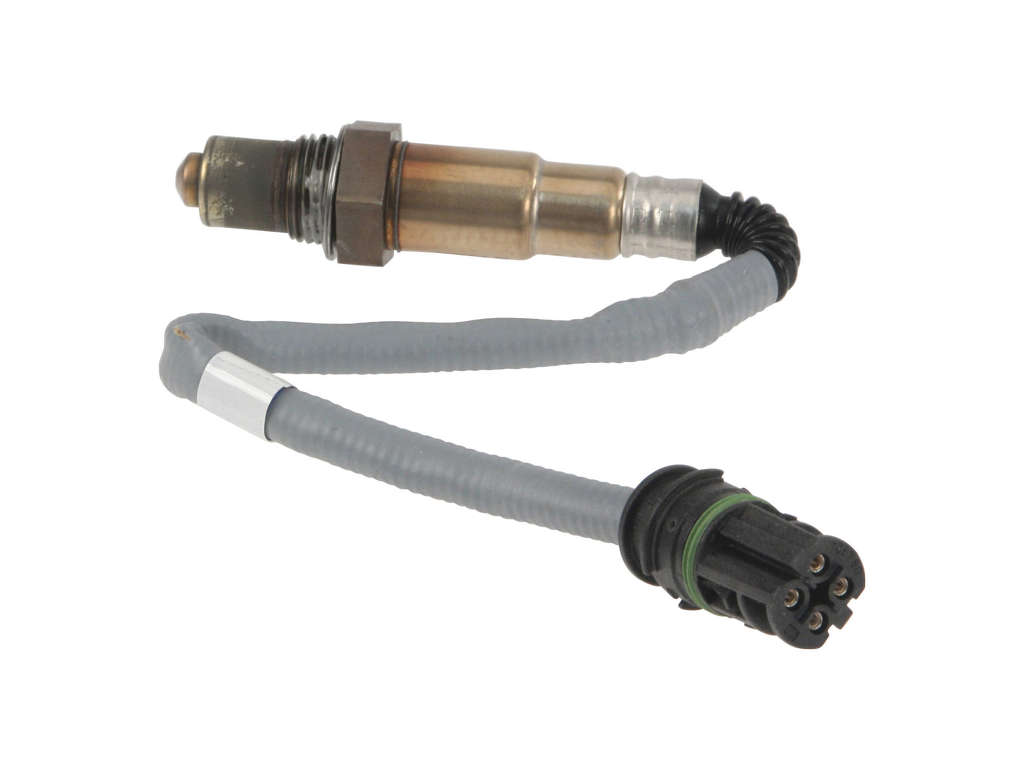
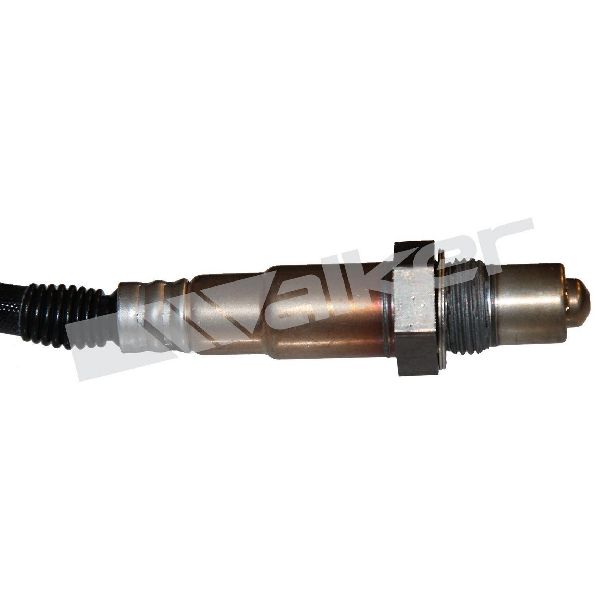
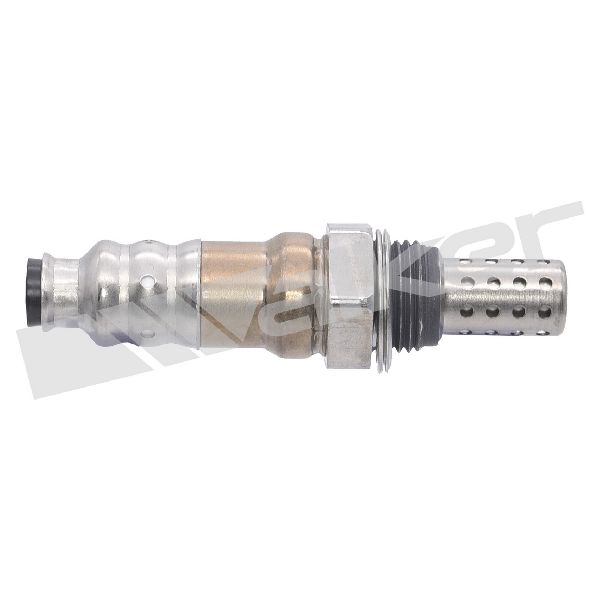
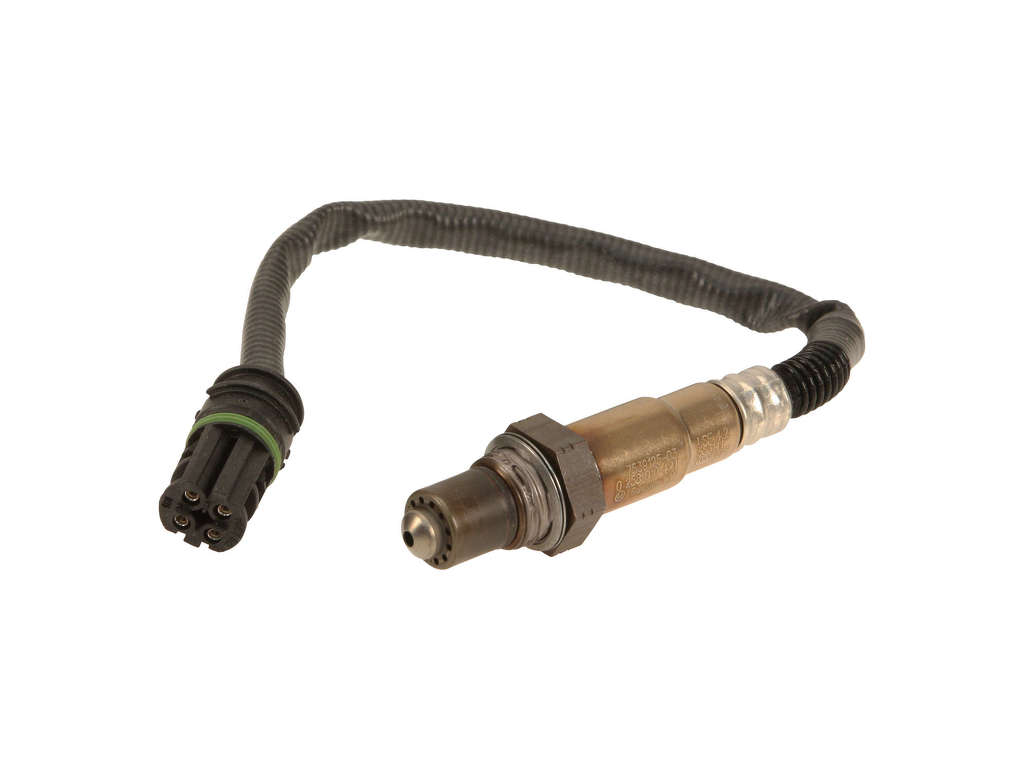
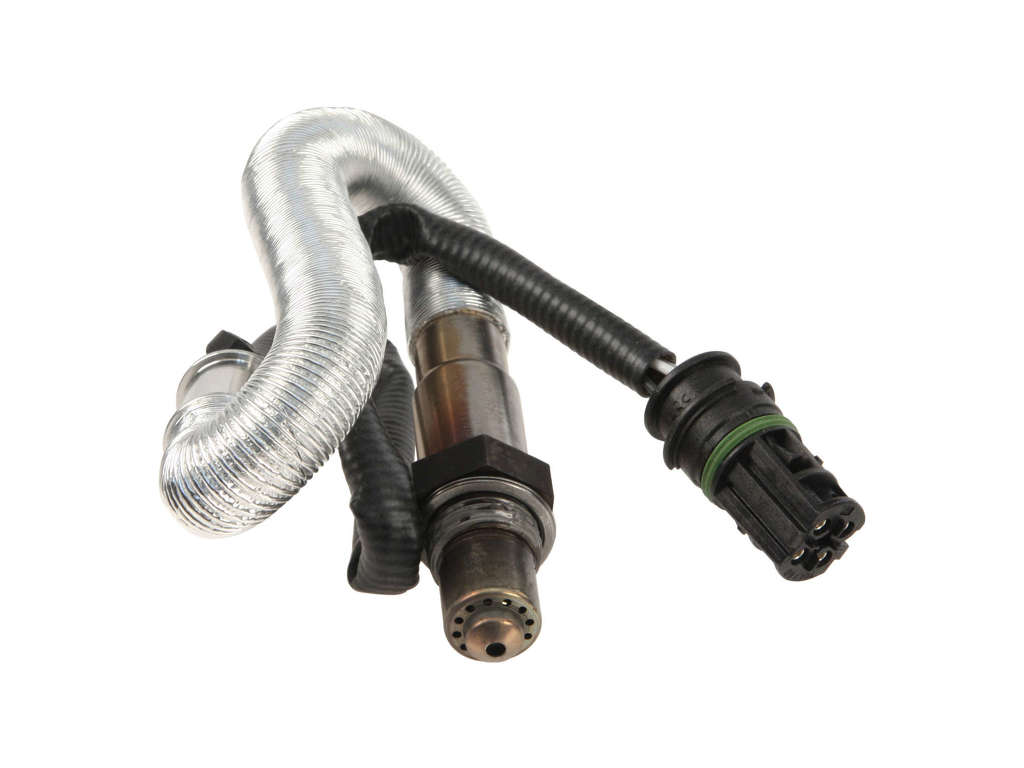
- Oxygen Sensor (Bank 1, Sensor 2)
(OEM #Varies by engine. N55: 11787589475. N62/N52: 11787545075. N63: 11787614322. Always verify with VIN.)— This is the most common failure point for code P0140, as the sensor's internal heater element fails over time.
Trusted brands: Bosch, NTK, Denso
OEM price range: $180-$250
Aftermarket price range: $100-$180
Related Codes That Often Appear With This One
- 12B701 (BMW Specific): Often found as a shadow fault, this code indicates 'Oxygen sensor heating after catalytic converter, function: Internal resistance too high', directly pointing to a failed heater element in the sensor.
- 2C6B (BMW Specific): An accompanying system check code for the post-cat O2 sensor, indicating the DME has found the signal to be unresponsive.
Platform-Specific Known Issues
- Fuse Location: The fuse for the O2 sensor heaters is not in the main glove box or rear fuse panels, but typically in the engine bay E-box, which requires removing the passenger-side cabin air filter and housing to access. This can be confusing for DIYers.
- Sensor Compatibility: The E70's DME is sensitive and often will not work correctly with generic, low-cost oxygen sensors. Owners report persistent codes after using non-OEM/OE brands. It is highly recommended to use Bosch (the original supplier) or an equivalent top-tier brand like NTK.
Mechanic-Grade Diagnostic Values
- O2 Sensor Heater Circuit Resistance — expected: 2-15 Ohms when measured across the two heater pins on the sensor (often same-colored wires).. Failure: Infinite resistance (Open Loop) indicates a broken heater element.
- Post-Catalyst (B1S2) O2 Sensor Live Data Voltage (Engine Warm, Idle) — expected: A steady voltage, typically between 0.6V and 0.9V.. Failure: Voltage is stuck at 0V, a fixed median value like 0.45V, or does not respond to changes in engine state.
- Voltage at Heater Circuit Power Pin (Harness Side) — expected: Battery voltage (~12V) with Key On, Engine Off.. Failure: 0V or significantly less than battery voltage, indicating a problem with the fuse or power supply from the DME relay.
- Voltage at Heater Circuit Ground Pin (Harness Side) — expected: The DME provides a pulse-width modulated (PWM) ground. Testing with a voltmeter may be misleading; a test light connected to battery positive should light up, possibly pulsing, when the DME commands the heater on.. Failure: No ground signal from the DME when the heater should be active.
Hidden / Shadow Codes Worth Checking
- 12B701: Oxygen sensor heating after catalytic converter, function: Internal resistance too high. This code directly points to a failed heater element inside the O2 sensor. (see via BMW-specific diagnostic software like ISTA, INPA, or high-end scanners (Foxwell, Autel, etc.) capable of reading manufacturer codes.)
- 2C6B: Oxygen sensor after catalytic converter - System check. This is a plausibility fault, often set alongside P0140, indicating the DME has tested the sensor's signal and found it unresponsive or out of the expected range. (see via BMW-specific diagnostic software like ISTA, INPA, or high-end scanners.)
- 2C9D / 2C9F: Oxygen sensor heater (before/after) catalytic converter, activation. These codes indicate a problem with the activation of the heater circuit, pointing towards a wiring issue, fuse, or DME driver fault, rather than just the sensor's internal resistance. (see via BMW-specific diagnostic software like ISTA, INPA, or high-end scanners.)
Scan Tool Commands That Help
- ISTA (Rheingold): Vehicle Test / Guided Troubleshooting — When P0140 or a related BMW fault is present, ISTA will generate a specific test plan. It guides the technician through checking voltages, resistances, and wiring integrity to pinpoint the fault, minimizing guesswork.
- ISTA/INPA: Delete Engine Adaptation Values — After replacing an O2 sensor, it is best practice to reset engine adaptations. While the DME will eventually re-learn, resetting forces it to use the new sensor's data immediately, which can resolve rough running or persistent codes after a repair. The procedure involves clearing the values, letting the vehicle 'sleep', and then performing a specific drive cycle.
Wiring & Ground Locations
- F02 or F04 (30A Fuse) — In the engine bay electronics box (E-box), located under the passenger side cabin air filter housing. Access requires removing the filter and its housing.. This 30-amp fuse provides power to the heaters for multiple oxygen sensors. If it blows due to a short in one sensor, others will lose power and may set heater circuit codes. It is a critical first check if multiple O2 sensor heater codes are present.
- DME Ground Path — The ground for the O2 sensor heater is not a direct chassis ground. It is a controlled ground provided by a driver circuit within the Digital Motor Electronics (DME) itself.. This means testing for ground at the sensor connector requires a specific procedure (e.g., using a test light connected to B+). A simple continuity-to-chassis test will not work and can lead to misdiagnosis. The DME pulses this ground to regulate heater temperature.
- Main Engine Ground Strap — On the N55 engine, a primary ground strap is located on the driver's side, accessible through the wheel well near the engine mount. Other grounds exist at the rear of the cylinder head and from the starter to the chassis.. While not a direct cause of a single sensor code, a corroded or loose main engine ground can cause a myriad of bizarre electrical issues, including erratic sensor readings and DME communication problems. It's a worthwhile check on higher-mileage vehicles, especially in salt-belt regions.
Real Owner Repair Stories
- Bimmerpost user bmwe90320i-N46 (BMW E90 (similar DME/sensor logic to E70)) — After replacing all 4 O2 sensors and the catalytic converter, one downstream sensor (O2B1S2) still showed 0.000V on a scan tool, causing rough starting every second time.
❌ Tried (didn't work) Replacing the sensor again., Testing wiring continuity between the sensor connector and the DME, which checked out fine.
✅ What actually fixed it Using INPA (BMW diagnostic software) to reset all codes and, crucially, all engine adaptations. After the reset, the sensor voltage began reading correctly in INPA, and the lumpy idle resolved after a short period of driving. This indicates the DME was stuck on old, faulty adaptation values. - Reddit user on r/BmwTech (BMW E92 N52 (similar DME/sensor logic to E70)) — Persistent heater circuit codes for all four O2 sensors (e.g., 2C9F) after getting a PCV heater recall performed.
❌ Tried (didn't work) Waiting for the recall work to fix it., Checking fuses in the glovebox.
✅ What actually fixed it The underlying issue for multiple heater codes is almost always the shared 30A fuse. The user was advised to locate the fuse in the under-hood DME box (E-box), as this is the common power source for all O2 sensor heaters. A single shorted sensor can blow this fuse, disabling all heaters.
OEM Part Supersession History
11787545075→This part number remains active for many N52 and N62 engine applications.— N/A
Heads up: This part is for the naturally aspirated engines. It is not compatible with the later turbocharged N55 and N63 engines, which use different part numbers (e.g., 11787589475 for N55). Always verify by VIN.
Model Year Variations Within This Range
- 2007-2010 (Pre-LCI): These models primarily used the naturally aspirated N52 (I6) and N62 (V8) engines. O2 sensor part numbers, like 11787545075, are specific to these engines.
- 2011-2013 (LCI): The Life Cycle Impulse (LCI) models introduced the turbocharged N55 (I6) and N63 (V8) engines. These use different O2 sensors and have more complex engine management systems. Part numbers are not interchangeable with pre-LCI models.
Diagnostic Flowchart
Other Known Issues on This Vehicle
Issues unrelated to this code that are worth knowing about as an owner of this generation:
- V8 Engine (N62/N63) Valve Stem Seal Failure 🔴 High — Very common on V8 models, often noticeable after 60,000-80,000 miles. Presents as blue/white smoke from the exhaust after idling (e.g., at a stoplight).
- I6 Engine (N52/N55) Electric Water Pump & Thermostat Failure 🔴 High — The electric water pump can fail suddenly without warning, typically between 60,000 and 100,000 miles, causing rapid overheating. It is best practice to replace the thermostat at the same time.
- Oil Leaks from Gaskets (All Engines) 🟠 Medium — Oil filter housing gasket and valve cover gasket leaks are extremely common across all engine variants (N52, N55, N63). Gaskets harden over time and typically begin to leak around 50,000-80,000 miles.
- N63 Engine (Early Models) Timing Chain Stretch 🔴 High — Pre-2013 N63 engines are known for premature timing chain stretching, which can lead to catastrophic engine failure if not addressed. Symptoms include engine rattle. BMW issued a 'Customer Care Package' to address this and other N63 issues. (Ref: BMW Customer Care Package (N63))
- Front Suspension Thrust Arm Bushing Wear 🟠 Medium — The front thrust arm (or control arm) bushings wear out, causing a distinct wheel wobble or shimmy when braking from highway speeds. This is a common wear item, often needing replacement around 70,000-100,000 miles.
- Panoramic Sunroof Water Leaks/Drain Clogs 🟠 Medium — The drains for the large panoramic sunroof are prone to clogging with debris. This causes water to overflow and leak into the cabin, potentially damaging sensitive electronic modules located in the trunk floor and under the seats.
Used vs. New Parts: Buying Guide for This Vehicle
When a used part is the smart pick: For this repair, a used part is almost never a smart choice. The only exception is sourcing a connector pigtail with a few inches of wire from a junkyard harness if your vehicle's connector is physically damaged or melted.
Donor-vehicle mileage cap: roughly under 10000 miles for the part to have meaningful remaining life.
What to inspect on the donor part:
- For a connector pigtail, ensure the plastic is not brittle or cracked.
- Check that the locking tabs are intact.
- Inspect the wires for any signs of insulation damage or corrosion.
OEM-only on this vehicle (don't cheap out):
- Oxygen Sensor: While not strictly 'OEM-only', using a cheap, unbranded sensor is a very common cause for the code to return immediately. The DME is highly sensitive to the sensor's specific resistance and voltage characteristics.
Aftermarket brands forum-validated for this vehicle:
- Bosch (often the Original Equipment Manufacturer)
- NTK
- Denso
Brands owners have reported issues with on this vehicle:
- Generic, unbranded 'eBay' or 'Amazon' sensors with no reputable brand name attached. Forum consensus is overwhelmingly against using these parts on E70s.
Real Owner Stories
Aggregated from forums and TSBs cited above. Mileages and costs reflect what owners reported in those sources.
2007-2013 BMW X5 (E70) 3.0si N52
Symptoms: Owner was trying to locate the specific fuse for the O2 sensor heaters but found a lack of clear documentation in the standard fuse panels.
What fixed it: Investigated the engine bay electronics box (E-box) under the passenger-side cabin air filter housing to locate the 30A heater fuse.
Source hint: https://www.xoutpost.com/bmw-sav-forums/x5-e70-forum/99801-e70-3-0si-n52-oxygen-sensor-fuse-relay-location.html
Related OBD-II Codes
Frequently Asked Questions
Where is the oxygen sensor heater fuse located on my E70 X5? I can't find it in the glove box.
Can I use a generic O2 sensor to fix the P0140 code on my BMW X5?
My scanner shows a BMW-specific code 12B701 alongside P0140. What does this mean?
Is there a specific BMW Customer Care Package that covers emissions issues for the V8 models?
How can I confirm if the Bank 1 Sensor 2 has actually failed on my X5?
Helpful Videos
We Have This Part in Stock


The information in this article is provided for general reference and educational purposes only. Vehicle specifications, procedures, and part compatibility can vary by production date, trim level, and region. Always consult your vehicle's factory service manual and verify part numbers before purchasing or performing repairs. Safety-critical components such as airbags, seat belts, and braking systems should be installed by a qualified professional.
- BMW X5:
- 🧭 Diagnostic Flowchart
- 🎬 Helpful Videos
- 🛍️ Shop This Part
- What's Unique About the 2007-2013 BMW X5
- Symptoms You May Notice
- Most Likely Causes
- Rare But Worth Checking
- Diagnosis Steps
- Parts You'll Likely Need
- Related Codes That Often Appear With This One
- Platform-Specific Known Issues
- Mechanic-Grade Diagnostic Values
- Hidden / Shadow Codes Worth Checking
- Scan Tool Commands That Help
- Wiring & Ground Locations
- Real Owner Repair Stories
- OEM Part Supersession History
- Model Year Variations Within This Range
- Other Known Issues on This Vehicle
- Used vs. New Parts: Buying Guide for This Vehicle
- Real Owner Stories
- 2007-2013 BMW X5 (E70) 3.0si N52
- Related OBD-II Codes
- Frequently Asked Questions
- 🎟️ Get 5% Off