

P0140 on 2012-2016 Chevrolet Impala 3.6L: Causes and Fixes for O2 Sensor Inactivity
This code means the rear oxygen sensor on the firewall side (Bank 1, Sensor 2) is not sending a signal. The most common fix is to replace the sensor itself. Before replacing, check the 'O2 HTR' or 'EMISSIONS' fuse. Expect to pay $40-$80 for an aftermarket sensor or $70-$120 for an OEM part.
- P0140 means the downstream oxygen sensor on the firewall side of the engine has stopped working.
- The most likely fix is replacing the oxygen sensor itself, which is a common wear-and-tear part.
- Before buying any parts, always check the O2 sensor fuse in the under-hood fuse box first.
- This code will not affect how the car drives but will cause it to fail an emissions inspection.
- Ensure you are replacing the correct sensor: Bank 1 is the rear bank (firewall side), and Sensor 2 is after the catalytic converter.
What's Unique About the 2012-2016 Chevrolet Impala
The 2012-2016 Impala range spans two different generations, but both used the 3.6L LFX V6. For this transverse engine, 'Bank 1' is the rear bank near the firewall, which can make accessing its O2 sensors more difficult than the front 'Bank 2' sensors. While the code's cause is usually straightforward, a known issue on some LFX engines is a cracked catalytic converter flange (GM TSB 17-NA-321), which can create an exhaust leak and affect sensor readings, though this more commonly triggers a P0420 code. Some owners have reported dealers refusing to cover this crack under the federal emissions warranty, leading to disputes.
Generation note: The specified years cover the end of the 9th generation (2012-2013, plus the 'Limited' fleet model through 2016) and the start of the 10th generation (2014-2016). Both generations used the 3.6L LFX V6 engine. The causes and diagnostic steps are the same, but the exact routing of the exhaust and wiring harnesses may differ slightly between the two body styles.
Symptoms You May Notice
- Check Engine Light is on 🎬 Watch: A breakdown of P0140 causes and symptoms
- Vehicle will fail an emissions test
- Replacing the catalytic converter. P0140 indicates a problem with the sensor circuit, not necessarily the converter itself. A failing converter typically sets a P0420 code.
- Replacing the wrong oxygen sensor. This code is specific to Bank 1 (firewall side) and Sensor 2 (post-catalytic converter). Make sure to identify the correct sensor before replacement.
- Assuming a new sensor will fix it without checking wiring. As one owner of a 2005 Impala found, replacing the sensor multiple times didn't fix the P0140/P0141 codes because the underlying issue was likely in the wiring. 🎬 See why O2 codes return and how to fix them
Most Likely Causes
- Failed Bank 1, Sensor 2 Oxygen Sensor 🔴 High Probability → Shop Oxygen Sensor Oxygen sensors are wear items and fail over time due to constant exposure to high heat and exhaust gases. The internal heater element, which is necessary for the sensor to become active quickly, is a frequent point of failure. Contamination from minor oil or coolant leaks can also shorten their lifespan.
How to confirm: After checking the fuse and wiring, test the sensor's signal with a scan tool. A sensor with no activity will show a flat-line voltage (e.g., stuck at 450mV) or zero volts, instead of a slowly fluctuating signal. You can also test the internal heater circuit with a multimeter; an open circuit ('OL' reading) or a resistance value outside the manufacturer's specification of 4.1 to 10.8 ohms confirms failure. A common diagnostic trick is to swap the rear O2 sensors (if accessible) and see if the code changes to P0160 (Bank 2, Sensor 2), which would confirm the sensor itself is faulty.
Typical fix: Replace the Bank 1, Sensor 2 oxygen sensor. This is the downstream sensor on the firewall side of the engine. Using an O2 sensor socket is highly recommended 🎬 Watch: Step-by-step 2014 Impala O2 sensor replacement walkthrough for removal and installation.
Est. part cost: $40-$120 - Damaged Wiring or Connector 🟡 Medium Probability The wiring harness for the downstream O2 sensor runs underneath the vehicle and is exposed to road debris, moisture, and extreme heat from the exhaust, which can cause wires to break, melt, or corrode. A real-world case on a 2012 Chevy Traverse with the same engine family showed multiple O2 codes, including P0140, were caused by damaged wires right at the main harness connector. Manufacturer service bulletin TSB Bulletin #PIP5123B also notes that a bent terminal on the X131 connector can lead to a P0140 code.
How to confirm: Visually inspect the entire wiring harness from the O2 sensor to its connection point. Look for any signs of melting, chafing, corrosion in the connector pins, or breaks in the wires. Pay close attention to the connector itself, as this is a common failure point.
Typical fix: Repair the damaged section of wiring or replace the connector pigtail. Ensure the harness is properly secured away from hot exhaust components.
Est. part cost: $15-$40 - Blown O2 Sensor Heater Fuse ⚪ Low Probability → Shop Oxygen Sensor The sensor's internal heater has a dedicated fuse that can blow if there's a short in the circuit, preventing the sensor from warming up and becoming active. This is often a shared fuse for multiple emissions components. Manufacturer documentation in TSB Bulletin #PIT5336 notes that technicians may find the "Emission 1 Fuse" open when diagnosing P0140 and related oxygen sensor codes.
How to confirm: Check the under-hood fuse box for a fuse labeled 'O2 HTR', 'HO2S', or 'EMISSIONS'. On many GM vehicles, this is a 15A fuse. Pull the fuse and visually inspect if the filament is broken.
Typical fix: Replace the blown fuse with a new one of the exact same amperage. If the new fuse blows immediately, it indicates a short circuit in the wiring or within the O2 sensor's heater element that must be diagnosed and repaired.
Est. part cost: $1-$5
Rare But Worth Checking
- Exhaust Leak: An exhaust leak before the O2 sensor can allow outside oxygen into the exhaust stream, potentially causing the sensor to read incorrectly. This usually sets other codes like P0420, but a significant leak could contribute to a P0140. Check for cracks near the catalytic converter flange, a known issue on the LFX engine per TSB 17-NA-321.
- Faulty Powertrain Control Module (PCM): → Shop Engine Control Module (ECM) In very rare cases, the internal driver circuit for the O2 sensor within the PCM can fail. This should only be considered after all other possibilities (sensor, wiring, fuses) have been exhaustively ruled out.
Diagnosis Steps
- Scan for Codes: Use an OBD-II scanner to confirm P0140 is present. Note any other codes, like P0141, as they provide crucial clues (e.g., a heater circuit fault). Address heater codes first.
- Check the Fuse: Locate and inspect the fuse for the oxygen sensor heater circuit in the under-hood fuse box. This is often labeled 'EMISSIONS' or 'O2 HTR' and is typically a 15A fuse. Replace if blown.
- Inspect Wiring: Get under the vehicle and perform a thorough visual inspection of the wiring harness and connector for the Bank 1, Sensor 2 O2 sensor. Look for melting from exhaust contact, chafing, and corrosion in the connector pins.
- Analyze Live Data: Use a scan tool to monitor the live voltage from the B1S2 O2 sensor with the engine running and warmed up. A healthy downstream sensor should show a relatively stable voltage. A reading that is stuck in the 410-490 mV range for more than 74 seconds, flat-lined near 0V, or completely absent indicates a problem.
- Test the Circuit: Disconnect the sensor. Use a multimeter to check for ~12V (battery voltage) at the two heater circuit wires in the harness connector with the key on. Check for a reference voltage (around 450mV) on the signal wire from the PCM. Check for good ground on the ground wire.
- Test the Sensor: If the circuit tests are good, the sensor itself is the most likely culprit. Test the resistance of the heater element within the sensor. A good sensor should read between 4.1 and 10.8 ohms when cool. An open circuit ('OL') or a reading outside this range means the heater has failed.
- Replace the Component: Based on your findings, replace the faulty oxygen sensor, repair the wiring, or replace the fuse.
Parts You'll Likely Need
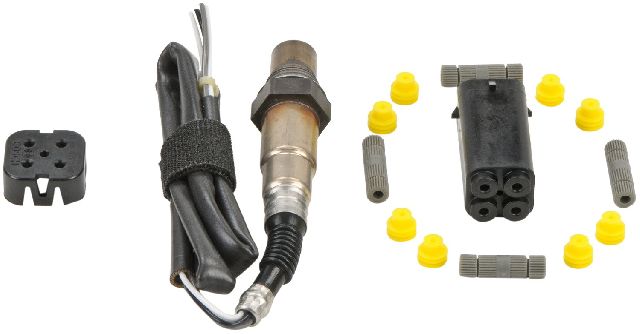
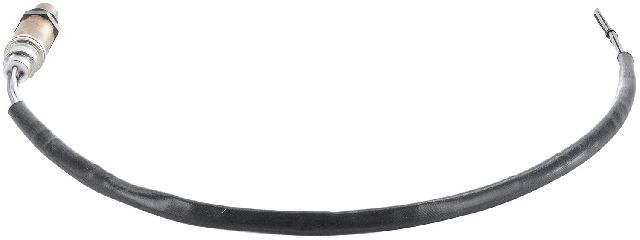
- Bank 1 Sensor 2 Oxygen Sensor
(OEM #12634061 (Supersedes: 12607333))— This is the most common failure point for a P0140 code. It is the downstream sensor on the firewall side of the engine. The original part number 12607333 has been superseded by 12634061.
Trusted brands: ACDelco, Denso, Bosch, NGK/NTK
OEM price range: $70-$120
Aftermarket price range: $40-$80
Related Codes That Often Appear With This One
- P0141 (O2 Sensor Heater Circuit Bank 1 Sensor 2): This code is very common to see with P0140, as a failure in the heater circuit will prevent the sensor from reaching operating temperature and thus cause it to show 'no activity'.
- P0137 / P0138 (O2 Circuit Low/High Voltage Bank 1 Sensor 2): These codes can appear alongside P0140 if the wiring is shorted or damaged, causing erratic voltage readings before the circuit fails completely.
Technical Service Bulletins (TSBs) & Recalls
- 17-NA-321: Exhaust Smell or Leak with Possible P0420/P0430 Codes due to a crack around the catalytic converter mounting flange on 3.6L LFX engines. The fix is to replace the entire converter assembly.
- TSB Bulletin #PIT5336: Notes that P0140 can be associated with an open Emission 1 Fuse and requires inspection of the wiring harness.
- TSB Bulletin #PIP5123B: Provides information regarding P0140 occurring alongside P2270, often caused by a bent terminal on the X131 connector.
Platform-Specific Known Issues
- A technical service bulletin (TSB 17-NA-321) exists for the 3.6L LFX engine regarding potential cracks forming at the catalytic converter's mounting flange, causing an exhaust leak. While primarily associated with P0420/P0430 codes, such a leak could potentially affect O2 sensor readings and contribute to a P0140.
Mechanic-Grade Diagnostic Values
- B1S2 O2 Sensor Heater Resistance — expected: 4.1 - 10.8 Ohms (when cool). Failure: A reading of 'OL' (open circuit) or a value outside the specified range indicates a failed heater element.
- B1S2 O2 Sensor Live Data Voltage (Scan Tool) — expected: A relatively steady voltage that fluctuates slowly (e.g., between 0.6V and 0.8V) on a warm engine with a healthy catalytic converter.. Failure: Voltage is stuck flat between 410-490 mV for over 74 seconds, or is stuck at 0V. Unlike the upstream sensor, it should not fluctuate rapidly between 0.1V and 0.9V.
- O2 Sensor Heater Circuit Voltage Supply (at harness connector) — expected: Approximately 12V (battery voltage) with ignition on, engine off.. Failure: No voltage indicates a problem with the fuse or the power supply wire from the fuse block.
- O2 Sensor Signal Circuit Reference Voltage (at harness connector) — expected: ~450 mV (0.45V) with sensor disconnected, key on.. Failure: 0V or battery voltage suggests a short or open in the signal wire to the ECM, or a faulty ECM driver.
Hidden / Shadow Codes Worth Checking
- Mode 6, Test ID $87: While not a 'shadow code,' advanced scan tools can access Mode 6 data. Test ID $87 monitors the Bank 1 Sensor 2 switching frequency. A failing test here can point to a lazy or inactive sensor before the P0140 code sets, providing an early warning. (see via An advanced OBD-II scan tool capable of displaying Mode 6 diagnostic monitor test results.)
Scan Tool Commands That Help
- GDS2 (GM Global Diagnostic System 2) or equivalent professional scan tool: Output Control -> O2 Sensor Heater Test — This bidirectional command allows a technician to manually turn the B1S2 heater circuit on and off. It's used to verify the integrity of the entire circuit. You can command the heater 'On' and check for current draw with an amp clamp or verify voltage at the heater connector, confirming the wiring and PCM driver are functional.
Wiring & Ground Locations
- ECM Connector X1 / X2 / X3 — The Engine Control Module (ECM) is located in the engine bay. On the LFX engine, it has three main connectors: X1 (Blue), X2 (Black), and X3 (Gray).. The signal, ground, and heater control wires for the B1S2 O2 sensor terminate at one of these ECM connectors. Probing for continuity or voltage at the correct pin on the correct connector is essential for diagnosing a circuit fault vs. a component fault.
- G111 — On or above the starter motor on the engine block.. This is a primary engine ground point. A loose or corroded G111 can cause a variety of sensor issues, including erratic or missing O2 sensor signals, due to an unstable ground reference for the sensor circuits.
- B1S2 Harness Routing — The harness for the rear bank downstream sensor runs from the exhaust pipe, up over the subframe/transmission area, to a connector often located on a bracket on the firewall or subframe.. This area is a common chafe point. The harness can rub against the transmission case, crossmembers, or heat shields, eventually wearing through the insulation and causing a short or open circuit, which directly causes a P0140.
Real Owner Repair Stories
- YouTube channel 'MrHall' (2012 Chevrolet Impala) — Check engine light with multiple O2 sensor and PCM communication loss codes (including P062F). Vehicle would stall intermittently.
❌ Tried (didn't work) Initial diagnosis pointed towards a faulty PCM or a repeat failure of a previously repaired harness section.
✅ What actually fixed it The root cause was discovered to be butchered wiring near the firewall from a previously installed and improperly removed vehicle disabler/tracking device. Multiple wires were left bare and shorting. The final fix was properly repairing these damaged harness sections. This highlights the need for a thorough wiring inspection on used vehicles, especially if other electrical gremlins are present.
Documented NHTSA Reports
- An owner reported a P0140 DTC in NHTSA ODI #10110369, where the secondary air pump was found to be corroded and the shaft would not turn, causing the maxifuse to blow.
OEM Part Supersession History
12607333→12634061— Standard part evolution, likely for improved durability, materials, or manufacturing process.
Heads up: The replacement part 12634061 may require a programming or special setup procedure after installation, according to GM documentation. Failure to perform this may result in continued incorrect operation even with a new part.
Model Year Variations Within This Range
- 2012-2016: The vehicle platform changed from the 9th generation (ending 2013, with the 'Limited' fleet model continuing to 2016) to the 10th generation (starting 2014). While the LFX engine and the P0140 code's meaning are identical, the physical routing of the exhaust and wiring harnesses, as well as the specific location of connectors and ground points, may vary slightly between the two distinct body styles.
Diagnostic Flowchart
Other Known Issues on This Vehicle
Issues unrelated to this code that are worth knowing about as an owner of this generation:
- Premature Timing Chain Stretch 🔴 High — Common between 70,000 and 120,000 miles, often accelerated by extended oil change intervals. Triggers codes like P0008, P0016, P0017. (Ref: TSB #12-06-01-009F)
- Intake Valve Carbon Buildup 🟠 Medium — A systemic issue for all direct-injection (GDI) engines, including the LFX. Becomes problematic after 60,000+ miles, causing rough idle, misfires (P0300), and reduced performance. Requires manual cleaning (e.g., walnut blasting).
- Clogged/Sticking PCV System 🟠 Medium — The small orifices in the PCV valve can clog with sludge, leading to increased crankcase pressure, oil consumption, and potential seal leaks. Some owners modify the valve by drilling the holes to a larger diameter.
- Cracked Catalytic Converter Flange 🟠 Medium — A crack can form on the converter's mounting flange, causing an exhaust leak, noise, and codes P0420/P0430. This is a known failure mode for the part. (Ref: TSB #17-NA-321)
- Chafed Fuel Injector Wiring Harness 🟡 Low — The wiring harness on the rear bank (firewall side) is known to rub against engine components, which can cause an open/short and trigger injector-specific codes like P0206. (Ref: TSB #PIP4924D)
Used vs. New Parts: Buying Guide for This Vehicle
When a used part is the smart pick: For this repair, obtaining a used part is NOT recommended for the oxygen sensor itself. However, if the issue is a damaged connector, sourcing a used connector pigtail from a junkyard harness is a cost-effective and reliable repair method.
Donor-vehicle mileage cap: roughly under 100000 miles for the part to have meaningful remaining life.
What to inspect on the donor part:
- For a connector pigtail: ensure the plastic is not brittle or cracked.
- Check that the locking tab is intact and functional.
- Inspect the pins inside the connector for any signs of green or white corrosion.
- Ensure you get at least 6-8 inches of wire to make splicing easy.
OEM-only on this vehicle (don't cheap out):
- While not strictly 'OEM-only', sticking to the OEM ACDelco brand for the oxygen sensor is highly recommended to avoid compatibility and premature failure issues common with some aftermarket brands.
Aftermarket brands forum-validated for this vehicle:
- Denso: Widely reported in forums to be the original equipment manufacturer for ACDelco sensors and is considered a top-tier alternative.
- NGK/NTK: Also a well-regarded Japanese manufacturer with a strong reputation for sensor quality.
Brands owners have reported issues with on this vehicle:
- Bosch: While a major brand, many professional mechanics and forum users report issues with their universal and even some direct-fit narrowband oxygen sensors having a high premature failure rate or causing performance issues on GM vehicles.
Real Owner Stories
Aggregated from forums and TSBs cited above. Mileages and costs reflect what owners reported in those sources.
2012 Chevrolet Traverse 3.6L (LFX Engine Family)
Symptoms: The vehicle was throwing multiple O2 codes, including P0140, indicating a lack of sensor activity.
What fixed it: The issue was traced to damaged wires right at the main harness connector rather than the sensor itself.
Source hint: common_causes section referencing a real-world case on a 2012 Chevy Traverse with the same engine family
2005 Chevrolet Impala
Symptoms: Recurring P0140 and P0141 codes even after the owner replaced the oxygen sensor multiple times.
What fixed it: The owner was advised to stop swapping parts and perform a deep check of the wiring harness, as the sensor replacement alone did not resolve the circuit fault.
Source hint: Car Talk Community - 'Oxygen sensor problems I would appreciate some help with' (2011)
2014 Chevrolet Suburban
Symptoms: DTC P0140 HO2S Insufficient Activity Bank 1 Sensor 2.
What fixed it: The owner used a diagnostic trick of swapping the rear O2 sensors to see if the code moved to the other bank (P0160), confirming the sensor was the faulty component.
Source hint: chevroletforum.com - 'DTC P0140 HO2S Insufficient Activity Bank 1 Sensor 2' (2014)
Related OBD-II Codes
Frequently Asked Questions
Where is the Bank 1, Sensor 2 oxygen sensor located on my 2012-2016 Impala with the 3.6L LFX?
Could an exhaust leak cause my P0140 code on this specific engine?
What should the resistance be for a healthy O2 sensor heater on my Impala?
Is there a specific fuse I should check for the O2 sensor heater circuit?
My scanner shows a flat-line voltage of 450mV for Bank 1, Sensor 2. Does this confirm a bad sensor?
Helpful Videos

We Have This Part in Stock

The information in this article is provided for general reference and educational purposes only. Vehicle specifications, procedures, and part compatibility can vary by production date, trim level, and region. Always consult your vehicle's factory service manual and verify part numbers before purchasing or performing repairs. Safety-critical components such as airbags, seat belts, and braking systems should be installed by a qualified professional.
- Chevrolet Impala:
- 🧭 Diagnostic Flowchart
- 🎬 Helpful Videos
- 🛍️ Shop This Part
- What's Unique About the 2012-2016 Chevrolet Impala
- Symptoms You May Notice
- Most Likely Causes
- Rare But Worth Checking
- Diagnosis Steps
- Parts You'll Likely Need
- Related Codes That Often Appear With This One
- Technical Service Bulletins (TSBs) & Recalls
- Platform-Specific Known Issues
- Mechanic-Grade Diagnostic Values
- Hidden / Shadow Codes Worth Checking
- Scan Tool Commands That Help
- Wiring & Ground Locations
- Real Owner Repair Stories
- Documented NHTSA Reports
- OEM Part Supersession History
- Model Year Variations Within This Range
- Other Known Issues on This Vehicle
- Used vs. New Parts: Buying Guide for This Vehicle
- Real Owner Stories
- 2012 Chevrolet Traverse 3.6L (LFX Engine Family)
- 2005 Chevrolet Impala
- 2014 Chevrolet Suburban
- Related OBD-II Codes
- Frequently Asked Questions
- 🎟️ Get 5% Off