

P0140 on 1995-2005 Dodge Neon 2.0L: Causes and Fixes for O2 Sensor Inactivity
This code means the downstream oxygen sensor (after the catalytic converter) is not sending a signal. The most common fix is replacing the Bank 1, Sensor 2 oxygen sensor itself. Expect to pay $40-$80 for an aftermarket sensor and spend about an hour on the replacement. Before replacing, check the wiring harness under the car for any obvious damage, as this is also a common failure point.
- P0140 on a Dodge Neon points to the downstream O2 sensor (after the catalytic converter) being inactive.
- The most probable cause is a failed O2 sensor, which is a standard wear-and-tear part.
- Before replacing the sensor, always perform a quick visual inspection of the wiring underneath the car for obvious damage like melting or corrosion.
- Driving with this code is safe, but it will cause an automatic failure on an emissions test.
- The repair is straightforward for a DIYer and typically involves replacing the sensor with a 22mm (or 7/8") oxygen sensor socket.
What's Unique About the 1995-2005 Dodge Neon
The Dodge Neon, spanning two generations (1995-1999 and 2000-2005), uses a straightforward emissions system where this code almost always points to a simple component failure. Unlike more complex engines, there are few platform-specific quirks that cause a P0140. The issue is typically a failed sensor due to age or a problem with the exposed wiring underneath the car. The key difference between generations will be the specific part number for the sensor and potentially the connector style. The downstream sensor is located underneath the car, screwed into the side of the catalytic converter.
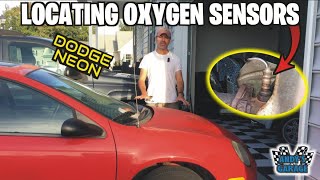
🎬 Watch: How to locate the oxygen sensors on your NeonGeneration note: This guide covers the first generation (1995-1999) and second generation (2000-2005) Dodge Neon. While the causes and diagnostic steps are virtually identical, the exact oxygen sensor part number and connector may differ between the two generations. Always verify the part for your specific model year before purchasing. For example, some 1997-2000 models use a Denso 234-4614, while 2000-2002 models may use a Denso 234-4078.
Symptoms You May Notice
- Check Engine Light is on.
- Vehicle will fail an emissions test.
- In rare cases, a slight decrease in fuel economy may be noticed.
- No noticeable drivability symptoms in most cases.
- Replacing the upstream (pre-catalytic converter) oxygen sensor. This code is specific to the downstream sensor (Sensor 2), which is located after the catalytic converter.
- Replacing the catalytic converter. A P0140 indicates a problem with the sensor circuit, not the converter's performance. A failing converter would typically set a P0420 code.
Most Likely Causes
- Failed Downstream Oxygen Sensor (Bank 1, Sensor 2) 🔴 High Probability → Shop Oxygen Sensor Oxygen sensors are wear items with a finite lifespan of 50,000 to 100,000 miles. After many years and miles on a Neon, the internal sensing element simply fails from heat and contamination.
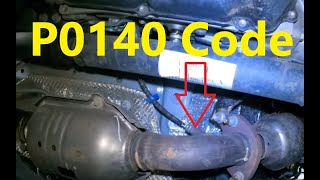
How to confirm: Using a scan tool, observe the live data for the B1S2 O2 sensor. If the voltage is stuck (often around 0.45V) and does not change when the engine is warm, and the wiring is confirmed to be good, the sensor has failed. A healthy downstream sensor should show a relatively steady, but not completely flat, voltage. 🎬 See a breakdown of P0140 causes and diagnostic fixes A resistance test of the sensor's internal heater should read between 2-3 Ω.
Typical fix: Replace the downstream oxygen sensor. Apply anti-seize compound to the threads of the new sensor before installation and torque to manufacturer specifications.
Est. part cost: $40-$100 - Damaged Wiring or Connector 🟡 Medium Probability The wiring for the downstream O2 sensor runs underneath the vehicle and is exposed to road debris, water, and exhaust heat, which can cause wires to break, chafe, or melt over time. The connector itself can also become corroded or filled with water.
How to confirm: Visually inspect the entire wiring harness from the sensor to where it enters the cabin. Check the connector for corrosion, backed-out pins, or physical damage. Use a multimeter to check for continuity on the signal and ground wires between the sensor connector and the PCM. A "wiggle test" on the harness while monitoring live data can also reveal intermittent connections.
Typical fix: Repair the broken or shorted section of wire. Clean or replace the connector if it is corroded or damaged. Ensure the harness is properly secured away from the hot exhaust pipe.
Est. part cost: $5-$25
Rare But Worth Checking
- Blown Fuse for O2 Sensor Heater: → Shop Oxygen Sensor Although a heater circuit failure typically sets a P0141 code, a blown fuse can sometimes lead to the sensor being completely inactive, triggering a P0140. The heater circuit is essential for getting the sensor to operating temperature quickly. Check the fuse box for any fuses related to the O2 sensors or emissions components.
- Exhaust Leak: A significant exhaust leak between the catalytic converter and the downstream O2 sensor can introduce outside oxygen into the exhaust stream. This can cause the sensor to give a flat, lean reading, which the PCM may interpret as inactivity. This is less common and is usually audible.
- Faulty Powertrain Control Module (PCM): → Shop Engine Control Module (ECM) This is extremely rare. The internal driver circuit for the O2 sensor in the PCM can fail. This should only be considered after all other possibilities, including the sensor and wiring, have been definitively ruled out through thorough testing.
Diagnosis Steps
- Read the code with an OBD-II scanner to confirm P0140 is present and note any other codes.
- Perform a thorough visual inspection of the downstream O2 sensor (located after the catalytic converter), its connector, and the wiring harness leading to it. Look for any signs of melting, chafing, corrosion, or breaks. Ensure the connector is securely plugged in. 🎬 Watch: Step-by-step walkthrough for replacing the downstream O2 sensor
- Use a scan tool to monitor live data for 'O2 Bank 1 Sensor 2'. With the engine fully warmed up, the voltage should be relatively stable, typically above 0.5V. If it's stuck at a fixed value (like 0V, 0.45V, or 1V) and doesn't respond to changes in engine RPM, there is a fault.
- If the voltage is stuck, disconnect the sensor. Check the harness-side connector for a reference voltage (often around 450mV) and a good ground using a multimeter. Also check for 12V power to the heater circuit wires with the key on.
- If power, ground, and reference voltage are present at the harness, the wiring is likely okay, and the oxygen sensor itself is the primary suspect.
- If power, ground, or reference voltage is missing, trace the corresponding wire back toward the PCM/fuse box to find the break or short. Consult a vehicle-specific wiring diagram.
- If the wiring and sensor are confirmed to be good, the final, though very unlikely, possibility is a fault within the PCM.
Parts You'll Likely Need
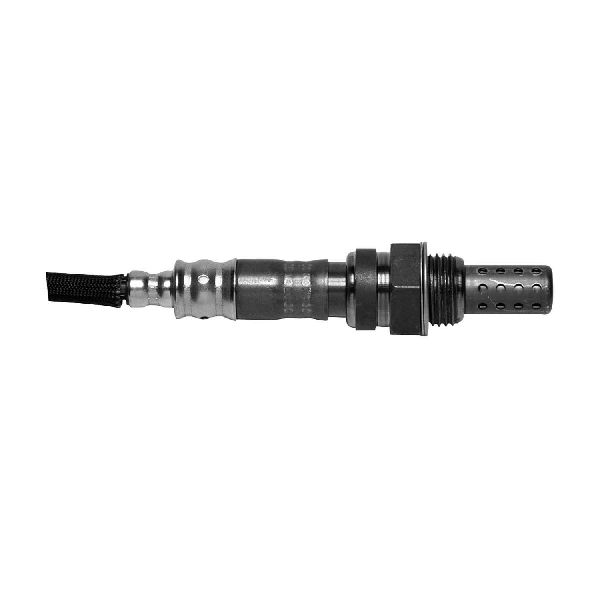
- Downstream Oxygen Sensor (Bank 1, Sensor 2)
(OEM #Varies by year. Examples: 5293037AD (2000-2005), 5269707 (1995-1996). Always verify with VIN.)— This is the most common failure point for a P0140 code, as the sensor itself wears out over time.
Trusted brands: Denso, Bosch, NGK/NTK, Mopar
OEM price range: $80-$150
Aftermarket price range: $40-$80
Related Codes That Often Appear With This One
- P0141 — P0141 indicates a malfunction in the heater circuit of the same oxygen sensor. It's common for both codes to appear if the sensor has failed internally or if there's a wiring issue affecting multiple circuits within the sensor's harness.
Platform-Specific Known Issues
- On some Neons, the O2 sensor wiring can be routed very close to the exhaust, leading to melted wires. When replacing, ensure the new harness is secured away from heat sources.
Mechanic-Grade Diagnostic Values
- Downstream O2 Sensor Heater Resistance — expected: 2-3 Ω. Failure: An open circuit (infinite resistance) or a direct short (near zero resistance) indicates a failed heater element within the sensor.
- Downstream O2 Sensor Signal Wire (1996 Model) — expected: TAN/WHT wire at Pin 51 of the white PCM connector.. Failure: This is a location reference for testing continuity or voltage between the sensor and the PCM.
- Downstream O2 Sensor Connector Pinout (2000-2005 Models) — expected: 4-pin connector: Pin 1 (DG/OR) is Heater Control, Pin 2 (OR/RD) is Heater Power, Pin 3 (BK/OR) is Sensor Ground, Pin 4 (BK/DG) is Sensor Signal to PCM.. Failure: This pinout is used to test for 12V at Pin 2, good ground at Pin 3, and the signal at Pin 4.
Wiring & Ground Locations
- G102 — General location is on the fender side shields.. A wiring diagram indicates the O2 sensor ground circuit terminates at ground point G102. A corroded or loose connection here can cause a floating ground and incorrect sensor readings, potentially leading to a P0140.
- Downstream O2 Sensor Connector (C115) — Underneath the vehicle, on the driver's side, connecting to the O2 sensor screwed into the catalytic converter.. This is the primary connector to test for power, ground, and signal. It is highly exposed to heat and road debris, making it a common failure point for corrosion or melted plastic.
- PCM Connector (1996) — Engine bay, typically on the firewall.. The downstream O2 sensor signal wire (TAN/WHT) is located at Pin 51 of the white connector. This is the termination point for checking signal wire continuity from the sensor.
- PCM Connector C2 (2003+) — Engine bay, part of the Next Generation Controller (NGC).. On later models, the downstream O2 sensor signal (O2 1/2 signal) is at Pin 33 of the orange C2 connector. The sensor ground (O2 return) is at Pin 32. This is the final test point before condemning the PCM.
Real Owner Repair Stories
- YouTube channel 'Mr. Fix It' (Chrysler PT Cruiser (shares platform/engine with Neon)) — Persistent O2 sensor heater circuit codes (P0031, P0037), which are related to sensor inactivity (P0140).
❌ Tried (didn't work) Replacing both upstream and downstream O2 sensors., Replacing the Powertrain Control Module (PCM).
✅ What actually fixed it The oil pressure sensor was leaking oil directly into its electrical connector. The oil then wicked its way up the entire wiring harness and contaminated the pins inside the main PCM connectors, causing a short in the O2 sensor circuits. The final fix was to replace the leaking oil pressure sensor, its pigtail connector, and thoroughly clean all oil out of the main PCM connectors with electrical contact cleaner.
OEM Part Supersession History
5293036AB→5293037AD— Standard part revision by manufacturer.
Model Year Variations Within This Range
- 1995-1999 (1st Gen): Uses an earlier style PCM with two 40-pin connectors (black and white). The downstream O2 signal is on Pin 51 of the white connector. Grounding points and harness routing may differ from the second generation.
- 2000-2005 (2nd Gen): Uses the Next Generation Controller (NGC) PCM with four 38-pin connectors. The downstream O2 signal is on Pin 33 of the orange C2 connector. The 4-pin O2 sensor connector has a known pinout with specific wire colors for this generation.
Diagnostic Flowchart
Other Known Issues on This Vehicle
Issues unrelated to this code that are worth knowing about as an owner of this generation:
- Premature Head Gasket Failure 🔴 High — Very common on first-generation (1995-1999) models, often between 30,000-60,000 miles. An updated Multi-Layer Steel (MLS) gasket was introduced in late 1998 to address the issue. The most common symptom is an external oil leak at the driver's side rear of the engine. (Ref: TSB 09-05-98 describes the revised gasket part.)
- Oil in Spark Plug Tubes 🟠 Medium — Extremely common across all years. The valve cover gasket's integrated spark plug tube seals become hard and brittle, allowing oil to fill the spark plug wells, causing engine misfires (P0300-P0304).
- Automatic Transmission Problems 🔴 High — Common issues include harsh shifting, delayed engagement from reverse to drive, or being stuck in 'limp mode' (2nd gear). Failures are often attributed to the transmission solenoid pack, speed sensors, or using incorrect ATF+4 fluid.
- Paint Delamination / Peeling 🟡 Low — Widespread on 1990s and early 2000s Chrysler products, including the Neon. The clear coat and paint, particularly white and blue, would peel in large sheets, often starting on the roof and hood. This was attributed to a factory primer/sealer issue. (Ref: No recall, but many anecdotal reports of dealers offering partial or full repaint assistance under warranty or goodwill.)
- Failing Camshaft Position Sensor 🟠 Medium → Shop Engine Camshaft — A common cause for a crank-no-start condition, intermittent stalling, or a rough idle, often setting a P0340 code. It is recommended to replace the magnet on the end of the camshaft at the same time as the sensor.
Used vs. New Parts: Buying Guide for This Vehicle
When a used part is the smart pick: For this repair, a used part is almost never a smart choice. The primary failure is the O2 sensor itself, which is a wear-and-tear item. A used sensor has an unknown amount of life left and may fail shortly after installation. A used wiring harness pigtail from a junkyard can be a good choice if only the connector is damaged.
Donor-vehicle mileage cap: roughly under 30000 miles for the part to have meaningful remaining life.
What to inspect on the donor part:
- If sourcing a connector pigtail, inspect for brittle plastic, corrosion on pins, or any signs of melting.
- Ensure the donor car does not show signs of oil leaks near engine sensors, to avoid the oil-wicking issue.
Aftermarket brands forum-validated for this vehicle:
- NTK (often the OEM supplier for Chrysler/Dodge)
- Denso
- Bosch (ensure it is a direct-fit model, not universal)
Brands owners have reported issues with on this vehicle:
- Unnamed or generic 'white-box' brands have a high failure rate and may not have the correct response characteristics, causing codes to return.
Real Owner Stories
Aggregated from forums and TSBs cited above. Mileages and costs reflect what owners reported in those sources.
2007 Dodge Neon 2.0L
Symptoms: The owner was seeking to confirm the definition of the code and if it specifically pointed to the downstream sensor.
What fixed it: Confirmed as the downstream O2 sensor, described as 'Downstream O2 Sensor Stays On At Center', indicating no activity.
Source hint: DodgeForum.com - 'p0140' thread
2000-2005 Dodge Neon 2.0L
Symptoms: The owner experienced a P0140 code immediately after replacing a sensor to address a previous P0141 code.
What fixed it: The owner was advised to check the wiring and reference voltage (typically around 450mV) at the harness connector.
Source hint: reddit.com/r/MechanicAdvice
Related OBD-II Codes
Frequently Asked Questions
Which oxygen sensor is causing the P0140 code on my Dodge Neon?
Is there a specific TSB for the P0140 code on my 1995-2005 Neon?
Can I use a universal Bosch sensor to fix this code?
Why does my Neon keep melting the O2 sensor wires?
What should the resistance be for the downstream O2 sensor heater on my Neon?
My Neon has a P0140 and a P0300; are they related?
Helpful Videos

We Have This Part in Stock

The information in this article is provided for general reference and educational purposes only. Vehicle specifications, procedures, and part compatibility can vary by production date, trim level, and region. Always consult your vehicle's factory service manual and verify part numbers before purchasing or performing repairs. Safety-critical components such as airbags, seat belts, and braking systems should be installed by a qualified professional.
- Dodge Neon:
- 🧭 Diagnostic Flowchart
- 🎬 Helpful Videos
- 🛍️ Shop This Part
- What's Unique About the 1995-2005 Dodge Neon
- Symptoms You May Notice
- Most Likely Causes
- Rare But Worth Checking
- Diagnosis Steps
- Parts You'll Likely Need
- Related Codes That Often Appear With This One
- Platform-Specific Known Issues
- Mechanic-Grade Diagnostic Values
- Wiring & Ground Locations
- Real Owner Repair Stories
- OEM Part Supersession History
- Model Year Variations Within This Range
- Other Known Issues on This Vehicle
- Used vs. New Parts: Buying Guide for This Vehicle
- Real Owner Stories
- 2007 Dodge Neon 2.0L
- 2000-2005 Dodge Neon 2.0L
- Related OBD-II Codes
- Frequently Asked Questions
- 🎟️ Get 5% Off