

P0140 on 2008-2012 Ford Escape: Causes and Fixes for O2 Sensor Circuit Failure
This code means the downstream oxygen sensor (Bank 1, Sensor 2) is not sending a signal. The most common fix is replacing the sensor itself, which costs about $50-$120 for the part. Before replacing, check the sensor's fuse and inspect the wiring for damage, as corrosion or breaks are common on these SUVs.
- P0140 on a 2008-2012 Escape almost always points to a problem with the downstream oxygen sensor on Bank 1 or its electrical circuit.
- The most likely fix is replacing the sensor itself, which is a manageable DIY job for many home mechanics.
- Before buying a new sensor, always check the fuse for the O2 heater and visually inspect the wiring harness for obvious damage, as this can save you time and money.
- This code will cause an automatic failure on an emissions test, so it should be addressed before your next inspection is due.
What's Unique About the 2008-2012 Ford Escape
For the second-generation Ford Escape (2008-2012), the P0140 code is a straightforward component or circuit failure. There are no widespread, model-specific design flaws, recalls, or technical service bulletins (TSBs) that point to a unique problem with this system. The causes and diagnostic steps are typical for any Ford vehicle from this era, focusing on the sensor, its wiring, and its fuse. The vehicle's SUV body style does make the underbody wiring slightly more susceptible to road debris and moisture damage over time.
Generation note: The 2008-2012 model years all belong to the second generation of the Ford Escape. The 2.5L I4 engine replaced the 2.3L I4 starting in the 2009 model year, but the diagnosis for code P0140 remains consistent across these engines and years.
Symptoms You May Notice
- Check Engine Light is on.
- Vehicle will not pass an emissions inspection.
- Slight decrease in fuel economy (possible, but not always noticeable).
- Exhaust may have higher levels of harmful pollutants.
- Replacing the catalytic converter. This code points to a sensor circuit failure, not a converter efficiency problem (which would be a P0420 code).
- Replacing the wrong oxygen sensor. Always confirm you are working on Bank 1 and that it is Sensor 2 (the downstream sensor, after the catalytic converter).
Most Likely Causes
- Failed Bank 1, Sensor 2 Oxygen Sensor 🔴 High Probability → Shop Oxygen Sensor Oxygen sensors are wear-and-tear items exposed to extreme heat and exhaust gases, with a typical lifespan of 60,000 to 100,000 miles. Failure due to age is common. They can also be rendered inactive by contamination from internal engine leaks (coolant, oil).
How to confirm: After confirming the wiring and fuse are good, use a scan tool to watch the live data for the B1S2 sensor. If the voltage is flat, stuck (often near 0.45V), or at 0V, the sensor has failed. A healthy downstream sensor should show a relatively steady, slow-to-change voltage.
Typical fix: Replace the Bank 1, Sensor 2 (downstream) oxygen sensor.
Est. part cost: $50-$120 - Damaged Wiring or Corroded Connector 🟡 Medium Probability The sensor's wiring harness runs under the vehicle and is exposed to road debris, moisture, and heat from the exhaust, which can cause wires to break or the connector pins to corrode. This is a common point of failure on SUVs that see varied weather conditions.
How to confirm: Visually inspect the entire wiring harness from the sensor to where it enters the main loom. Check the connector for bent, corroded, or broken pins. Perform a 'wiggle test' on the harness with the engine running and live data on screen to see if the signal appears intermittently.
Typical fix: Repair the damaged section of wire or clean/replace the connector.
Est. part cost: $5-$30 - Blown Fuse for O2 Sensor Heater Circuit ⚪ Low Probability → Shop Oxygen Sensor The O2 sensor has an internal heater to get it to operating temperature quickly. This heater circuit is protected by a fuse. A short in the wiring or in the sensor's heater element itself can cause this fuse to blow.
How to confirm: Locate the fuse for the 'HEGO' (Heated Exhaust Gas Oxygen) sensor in your owner's manual and visually inspect it. Test for 12V power at the heater circuit wires in the sensor's connector with the key on.
Typical fix: Replace the blown fuse. 🎬 See how a blown O2 sensor heater fuse is diagnosed. If it blows again, diagnose the short circuit in the wiring or replace the shorted O2 sensor.
Est. part cost: $1-$5
Rare But Worth Checking
- Exhaust Leak: An exhaust leak near the sensor can allow outside air to reach it, which can sometimes cause a 'no activity' code, though it more commonly causes performance-related codes. Check for audible hissing or black soot around exhaust pipe connections.
- Faulty Powertrain Control Module (PCM): → Shop Engine Control Module (ECM) This is extremely rare. The internal driver circuit for the O2 sensor in the PCM can fail. This should only be considered after all other possibilities (sensor, wiring, fuses) have been definitively ruled out.
Diagnosis Steps
- Read the code with an OBD-II scanner to confirm P0140 is present.
- Visually inspect the Bank 1, Sensor 2 oxygen sensor, its connector, and its wiring harness for any signs of melting, chafing, or corrosion.
- Check the vehicle's fuse box for a blown fuse related to the O2 sensor heater circuit (often labeled 'HEGO' or 'O2 HTR').
- Use a scan tool to observe live data for 'O2S12' (Oxygen Sensor Bank 1 Sensor 2). The voltage should fluctuate slightly when driving. If it is stuck at a steady value or 0V, this confirms a lack of activity.
- If the fuse and wiring appear intact, use a multimeter to test for 12V power and a good ground at the sensor's connector (on the harness side) with the key on.
- Perform a 'wiggle test' by gently moving the wiring harness while watching the live data on the scan tool to check for intermittent connections.
- If power and ground are present and the wiring is good, the oxygen sensor itself is faulty and should be replaced.
Parts You'll Likely Need
- Downstream Oxygen Sensor (Bank 1, Sensor 2)
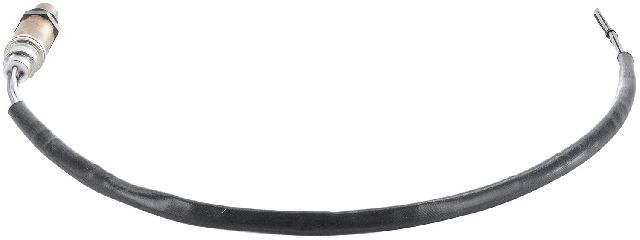
(OEM #Motorcraft DY-1176 (2.5L, 2011-2012); Motorcraft DY-1119 (2.5L, 2009-2010); Motorcraft DY-1173 (3.0L, 2011-2012); Motorcraft DY-1048 (3.0L, 2008-2010))— This is the most common point of failure for a P0140 code, as the sensor itself wears out over time.
Trusted brands: Motorcraft, Bosch, Denso, NTK
OEM price range: $90-$150
Aftermarket price range: $50-$120
Related Codes That Often Appear With This One
- P0141 — P0141 indicates a failure in the heater circuit of the same O2 sensor. A failed heater can prevent the sensor from becoming active, which can lead to P0140 being set as well.
Technical Service Bulletins (TSBs) & Recalls
- No TSBs directly address the P0140 code for this platform, which indicates it is not a pattern failure requiring a special procedure and should be diagnosed using standard methods.
Mechanic-Grade Diagnostic Values
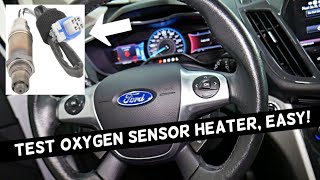
- O2 Sensor Heater Element Resistance — expected: 3 to 30 Ohms when measured across the two same-colored heater wires 🎬 Watch: A guide to testing the oxygen sensor heater circuit. on the sensor.. Failure: An infinite resistance (Open Loop/OL) or 0 Ohms (short circuit) reading indicates a failed heater element.
- O2 Sensor Heater Power Supply (at harness connector) — expected: ~12 Volts with Key On, Engine Off (KOEO).. Failure: 0 Volts indicates a blown fuse or an open in the power supply wire.
- Live Data B1S2 Voltage (on scan tool) — expected: A relatively steady, slow-fluctuating voltage after the engine is warm.. Failure: A flat line at 0V or a voltage stuck in a narrow range (e.g., 410-490 mV) for over a minute indicates no activity.
- O2 Sensor Signal Circuit (unplugged) — expected: 0 Volts on the scan tool data PID for O2S12.. Failure: On Ford systems without a bias voltage, this is expected. If a bias voltage was expected (~0.45V) and is missing, it could point to a PCM or wiring issue. This test confirms the lack of a bias voltage on the circuit.
Hidden / Shadow Codes Worth Checking
- Mode $06, TID $81, CID $12 (example): Ford utilizes Mode $06 data which shows results from non-continuous monitor tests. While not a 'shadow code,' a failure in a test related to the downstream O2 sensor (e.g., O2 sensor response rate or heater performance) can be seen here before it sets a hard code like P0140. The specific Test ID (TID) and Component ID (CID) will vary by year and engine. (see via A professional scan tool with Mode $06 capability, such as the Ford IDS.)
- Continuous Memory DTCs: Using a tool like the Ford IDS, a technician can retrieve 'Continuous Memory DTCs'. These are codes that were set in the past but may not be currently active. A P0140 or related heater code (P0141) may be stored here, providing diagnostic history. (see via Ford Integrated Diagnostic System (IDS) or equivalent advanced scan tool.)
Scan Tool Commands That Help
- Ford IDS (or equivalent): Retrieve Continuous Memory DTCs — Use at the beginning of diagnosis to see if P0140 or other related codes have been stored previously, which can provide clues about the fault's history.
- Ford IDS (or equivalent): KOEO/KOER Self-Tests — The Key On, Engine Off and Key On, Engine Running tests command the PCM to check all its inputs and outputs. This can help quickly identify circuit faults without a test drive.
- Ford IDS (or equivalent): Reset Keep Alive Memory (KAM) — After replacing the O2 sensor or repairing the wiring, the KAM should be reset. This clears the long-term fuel trim adaptations and other learned values, forcing the PCM to relearn with the new, functional sensor.
Wiring & Ground Locations
- O2 Sensor Connector — The connector for the B1S2 sensor is typically located on the firewall or upper transmission area, where the sensor pigtail connects to the main engine harness.. This connector is a common failure point due to corrosion. Importantly, some sensors draw their reference air through the wiring. Applying contact cleaner or packing the connector with dielectric grease can block this path and permanently damage the sensor.
- G104 — For 2008 models, this ground is located at the left front corner of the engine compartment, near the Battery Junction Box (BJB).. A poor engine or chassis ground can cause erratic sensor readings or a complete loss of signal. While not the primary cause, it should be checked if direct circuit tests are inconclusive.
- G109 — For 2008 models, this ground is located on the rear of the engine compartment, on the firewall.. This is a key grounding point for various engine sensors. Corrosion or a loose connection here can affect multiple systems, including the O2 sensor circuits.
- Heater Circuit Wires — Within the 4-wire O2 sensor connector.. The two same-colored wires (often white) are for the heater circuit. Testing for 12V and ground across these wires on the harness side, and for resistance on the sensor side, is a primary diagnostic step.
Real Owner Repair Stories
- YouTube video demonstrating a wiring fault (Generic vehicle, but principle applies directly to Escape) — Check Engine Light with O2 sensor code and 0V reading on scan tool.
❌ Tried (didn't work) Replacing the oxygen sensor would not have fixed this issue.
✅ What actually fixed it The insulation on the sensor's own pigtail had rubbed through on a metal bracket, causing the signal wire to short to ground. The fix was to repair and insulate the damaged wires, not replace the sensor. - Carly forum user (2011 Ford Edge (similar Ford platform and electronics)) — Check Engine Light with O2 sensor heater code, poor fuel economy.
❌ Tried (didn't work) Initial visual inspection and wiggling the connector did not reveal the problem.
✅ What actually fixed it The pins inside the upstream O2 sensor connector were corroded. The final fix was cleaning the corrosion, replacing the connector, and installing a new sensor. A similar repair focusing on cleaning the connector pins could resolve a P0140.
Model Year Variations Within This Range
- 2009-2010 (2.5L) vs 2011-2012 (2.5L): The downstream oxygen sensor part number is different. 2009-2010 models use Motorcraft DY-1119, while 2011-2012 models use Motorcraft DY-1176. This indicates a change in the sensor or its connector.
- 2008-2010 (3.0L) vs 2011-2012 (3.0L): The downstream oxygen sensor part number is different. 2008-2010 models use Motorcraft DY-1048, while 2011-2012 models use Motorcraft DY-1173. This indicates a change in the sensor or its connector.
Diagnostic Flowchart
Other Known Issues on This Vehicle
Issues unrelated to this code that are worth knowing about as an owner of this generation:
- Electronic Power Steering (EPS) Failure 🔴 High — Widespread enough to trigger a major recall. A torque sensor fault could lead to a sudden loss of power assist, making steering difficult at low speeds. (Ref: Recall 14S05)
- 6F35 Transmission Failure / Leaks 🔴 High — Particularly noted in 2008-2009 models, but can affect the whole generation. Issues range from fluid leaks at the axle shaft seal to complete transmission failure. (Ref: TSB 16-0043 (addresses fluid leak at left side halfshaft seal))
- Rear Wheel Well and Shock Tower Rust 🟠 Medium — Very common, especially in the Rust Belt. Foam used for sound deadening can trap moisture, causing rust from the inside out. It often starts as bubbling paint and can progress to structural failure of the shock tower.
- Electronic Throttle Body (ETB) Failure 🟠 Medium — Not uncommon. Can cause the vehicle to enter 'limp mode' with reduced power, or cause stalling and rough running. (Ref: Covered under a warranty extension for many vehicles (Customer Satisfaction Program 13N03).)
- 3.0L V6 Camshaft Cap Bolt Failure 🔴 High → Shop Engine Camshaft — This is a rare but catastrophic failure. Bolts holding the camshaft caps can loosen or break, leading to severe engine damage. Early warning signs can include engine misfires.
Used vs. New Parts: Buying Guide for This Vehicle
When a used part is the smart pick: A used wiring harness pigtail from a junkyard is a smart choice if your vehicle's original connector is physically broken, melted, or has terminal pins that are corroded beyond cleaning.
Donor-vehicle mileage cap: roughly under 150000 miles for the part to have meaningful remaining life.
What to inspect on the donor part:
- Check that the connector's locking tab is intact and not brittle.
- Inspect the pins to ensure they are straight and free of green or white corrosion.
- Ensure the wires have at least 6-8 inches of flexible, uncracked insulation to work with.
OEM-only on this vehicle (don't cheap out):
- Powertrain Control Module (PCM) - Aftermarket or improperly programmed used modules are a common source of persistent, hard-to-diagnose electrical issues.
Aftermarket brands forum-validated for this vehicle:
- NTK
- Denso
- Bosch
Brands owners have reported issues with on this vehicle:
- Unbranded, 'white-box' sensors from online marketplaces often have high rates of out-of-box failure or short lifespans.
Real Owner Stories
Aggregated from forums and TSBs cited above. Mileages and costs reflect what owners reported in those sources.
2012 Ford Escape
Symptoms: The owner noticed rusty bubbling paint on the rear wheel arches while the vehicle was still under the 3 year 36k mile warranty.
What fixed it: Ford repainted the affected areas, though the rust continued a year later due to moisture trapped by sound deadening foam.
Source hint: Reddit - r/FordEscape
2009 Ford Escape
Symptoms: Owner noted a design flaw where sound deadening foam sprayed behind the wheel well captured moisture.
What fixed it: The source identifies the cause as moisture trapped by foam causing rust from the back side, though a specific mechanical fix for P0140 is not detailed in this specific rust report.
Source hint: CarComplaints.com
2005 Ford Escape
Symptoms: The rear wheel well and shock mount were completely rusted out, which was only visible after removing the undercoating.
What fixed it: The owner discovered the structural failure after removing undercoating; this platform issue carried into the 2008-2012 generation.
Source hint: Blue Oval Forums
Related OBD-II Codes
Frequently Asked Questions
Is there a TSB for P0140 on my 2008-2012 Ford Escape?
Can I use a used wiring connector from a junkyard to fix my P0140 code?
Which aftermarket brands are recommended for replacing the Bank 1, Sensor 2 oxygen sensor?
Could a blown fuse be causing the P0140 code on my Escape?
Is the P0140 code related to the common rust issues on the 2008-2012 Escape?
Does the Mercury Mariner share this same O2 sensor issue?
Helpful Videos
We Have This Part in Stock


The information in this article is provided for general reference and educational purposes only. Vehicle specifications, procedures, and part compatibility can vary by production date, trim level, and region. Always consult your vehicle's factory service manual and verify part numbers before purchasing or performing repairs. Safety-critical components such as airbags, seat belts, and braking systems should be installed by a qualified professional.
- Ford Escape:
- 🧭 Diagnostic Flowchart
- 🎬 Helpful Videos
- 🛍️ Shop This Part
- What's Unique About the 2008-2012 Ford Escape
- Symptoms You May Notice
- Most Likely Causes
- Rare But Worth Checking
- Diagnosis Steps
- Parts You'll Likely Need
- Related Codes That Often Appear With This One
- Technical Service Bulletins (TSBs) & Recalls
- Mechanic-Grade Diagnostic Values
- Hidden / Shadow Codes Worth Checking
- Scan Tool Commands That Help
- Wiring & Ground Locations
- Real Owner Repair Stories
- Model Year Variations Within This Range
- Other Known Issues on This Vehicle
- Used vs. New Parts: Buying Guide for This Vehicle
- Real Owner Stories
- 2012 Ford Escape
- 2009 Ford Escape
- 2005 Ford Escape
- Related OBD-II Codes
- Frequently Asked Questions
- 🎟️ Get 5% Off