

P0140 on 2005-2007 Ford Five Hundred: Causes and Fixes for O2 Sensor Circuit
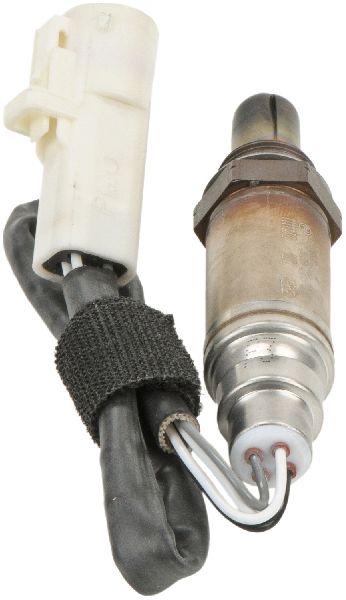
This code means the rear oxygen sensor on the firewall side (Bank 1, Sensor 2) is not sending a signal. The most common fix is to replace the sensor itself. Expect to pay $50-$90 for an aftermarket sensor or $120-$160 for an OEM Motorcraft part. It's a manageable DIY job if you can safely access the sensor in the exhaust.
- P0140 points to an electrical fault with the O2 sensor after the catalytic converter on the firewall side of the engine.
- The most probable cause is a failed oxygen sensor, which is a standard maintenance item.
- Before replacing the sensor, always check the fuse for the O2 heater circuit and visually inspect the wiring for damage.
- This issue will not cause serious driving problems but needs to be fixed to pass an emissions test and ensure the emissions system is monitored correctly.
- Accessing the Bank 1 sensors on this vehicle can be tight, so be prepared to work in a confined space or remove the upper strut tower brace for better access from above.
What's Unique About the 2005-2007 Ford Five Hundred
The Ford Five Hundred with the 3.0L Duratec V6 uses a standard four-sensor oxygen sensor setup, so its behavior with a P0140 code is not highly unusual. The main challenge on this specific platform is physical access. Bank 1 is located at the rear of the engine bay against the firewall, making the associated wiring and the Sensor 2 (downstream) exhaust location somewhat difficult to reach without removing other components from above or working from underneath the vehicle. While no specific TSBs link directly to P0140, it's worth noting this engine can be prone to vacuum and exhaust leaks which can, in some cases, affect O2 sensor readings, though P0140 is primarily an electrical circuit fault. A known issue on this platform is wiring harness chafing against the A/C lines near the firewall, which can cause shorts and various electrical faults, including potential O2 sensor circuit issues.
Symptoms You May Notice
- Check Engine Light is on.
- Failing a vehicle emissions test.
- Slightly reduced fuel economy (5-10% decrease possible).
- Potential for a strong fuel smell from the exhaust in some cases.
- Replacing the catalytic converter. P0140 is an electrical circuit code for the sensor, not a code for converter efficiency (like P0420 or P0430). A bad sensor cannot tell you if the converter is good or bad.
- Replacing the wrong oxygen sensor. This vehicle has four sensors. It is critical to identify and replace Bank 1, Sensor 2 specifically. Bank 1 is the rear bank (firewall side).
Most Likely Causes
- Failed Bank 1, Sensor 2 Oxygen Sensor 🔴 High Probability → Shop Oxygen Sensor Oxygen sensors are wear-and-tear items that fail over time due to constant exposure to high heat and exhaust gases. They are a common failure point on most vehicles after 100,000 miles.
How to confirm: Using a scan tool, observe the live data for the B1S2 sensor. If the voltage is flat, stuck at 0V, or does not change, the sensor has likely failed. You can also test the sensor's internal heater circuit with a multimeter; it should show some resistance (typically between 3-30 ohms for Ford applications). An open circuit (infinite resistance) indicates a failed heater, which will trigger this code.
Typical fix: Replace the Bank 1, Sensor 2 oxygen sensor. This sensor is located on the rear exhaust pipe, after the catalytic converter.
Est. part cost: $50-$160 - Damaged Wiring or Corroded Connector 🟡 Medium Probability The wiring harness runs underneath the vehicle and is exposed to road debris, moisture, and heat, which can cause corrosion, breaks, or shorts over time. A specific chafe point exists on some Five Hundreds where the engine harness can rub against an A/C line near the firewall, potentially damaging O2 sensor wires.
How to confirm: Visually inspect the wiring harness and connector leading to the B1S2 sensor. Look for any signs of melting, chafing, corrosion on the pins, or broken wires. Pay close attention to the harness routing near the firewall. Perform a wiggle test on the harness while monitoring sensor voltage to see if the signal returns.
Typical fix: Repair the damaged section of the wiring harness or clean/replace the electrical connector. Ensure the harness is properly secured away from hot exhaust components and sharp edges.
Est. part cost: $10-$50 - Blown Fuse for O2 Sensor Heater Circuit ⚪ Low Probability → Shop Oxygen Sensor An electrical short in the heater circuit of any O2 sensor can blow the shared fuse, causing the B1S2 sensor to stop working.
How to confirm: Consult the owner's manual or a fuse diagram for the location of the O2 sensor/heater fuse. In the engine compartment fuse box, this is typically fuse F48 (15A), which powers the oxygen heaters and A/C clutch. Visually inspect the fuse to see if it is blown.
Typical fix: Replace the blown fuse. If the new fuse blows immediately, it indicates a short circuit in the wiring or one of the O2 sensors that must be diagnosed and repaired.
Est. part cost: $1-$5
Rare But Worth Checking
- Exhaust Leak: An exhaust leak near the sensor can introduce outside air, causing incorrect readings that the PCM might interpret as 'no activity'. This is less common for a circuit code but worth checking. The 3.0L Duratec can have issues with exhaust manifold gaskets.
- Faulty Powertrain Control Module (PCM): → Shop Engine Control Module (ECM) In very rare cases, the internal driver circuit for the O2 sensor within the PCM can fail. This should only be considered after all other possibilities (sensor, wiring, fuses) have been exhaustively ruled out.
Diagnosis Steps
- Scan for Codes: Use an OBD-II scanner to confirm P0140 is the only code present. Note any other codes, especially P0141.
- Inspect the Fuse: Locate and check fuse F48 (15A) in the engine compartment fuse box. Replace if blown.
- Visually Inspect Sensor and Wiring: Safely raise the vehicle. Locate the Bank 1, Sensor 2 O2 sensor on the rear exhaust pipe (after the catalytic converter). Inspect the sensor, its connector, and the wiring harness for any obvious damage, melting, or corrosion. Pay special attention to the harness routing near the firewall for potential chafing against A/C lines.
- Check Live Data: With the engine running, use a scan tool to monitor the live voltage data for 'O2S12' (Bank 1, Sensor 2). A healthy downstream sensor should show a relatively steady voltage (typically above 0.5V) on a warm engine. If the reading is flat at 0V or stuck at a specific value like 0.45V, it confirms 'no activity'.
- Test the Heater Circuit: Disconnect the sensor. With the key on and engine off, use a multimeter to check for ~12V power at the two heater circuit pins on the harness-side connector.
- Test the Sensor: With the sensor disconnected, measure the resistance across the two heater pins on the sensor itself. A reading outside of the typical 3-30 ohm range (especially an open circuit) indicates a failed sensor.
- Test Signal and Ground Wires: If the sensor and heater circuit test good, check the signal and ground wires between the PCM and the sensor connector for continuity and to ensure there are no shorts to ground.
- Replace the Sensor: If the sensor is confirmed to be faulty, replace it. Apply anti-seize compound to the threads of the new sensor before installation. An O2 sensor socket will be required.
Parts You'll Likely Need
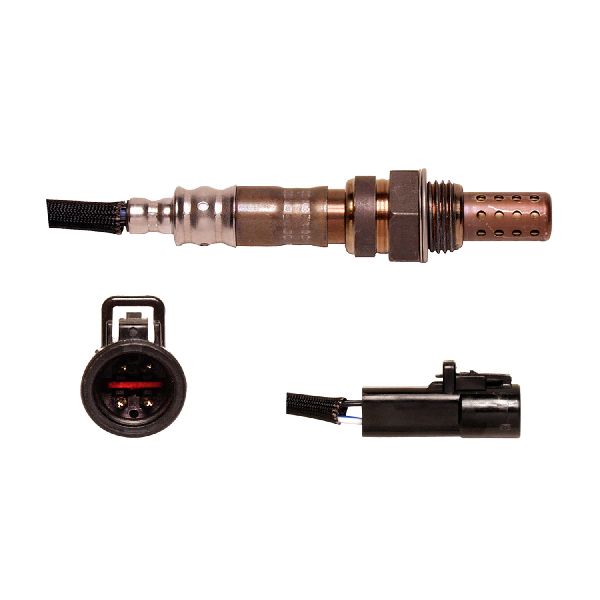
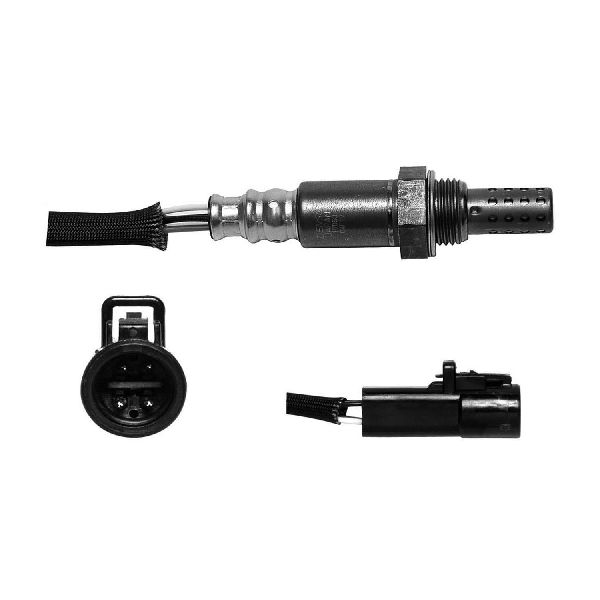
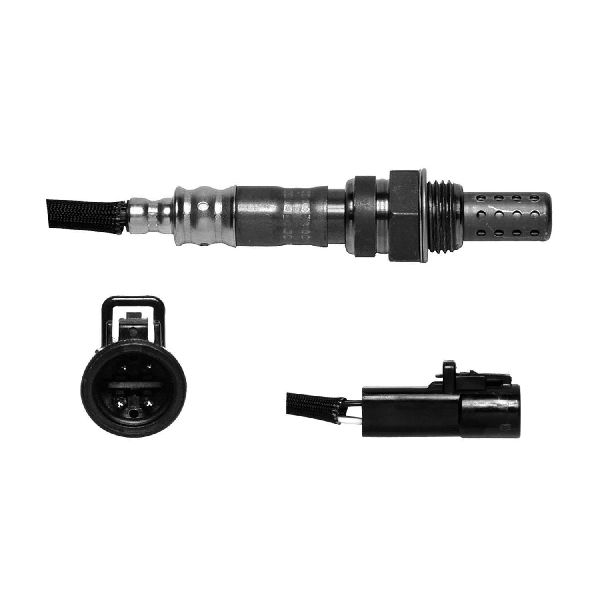
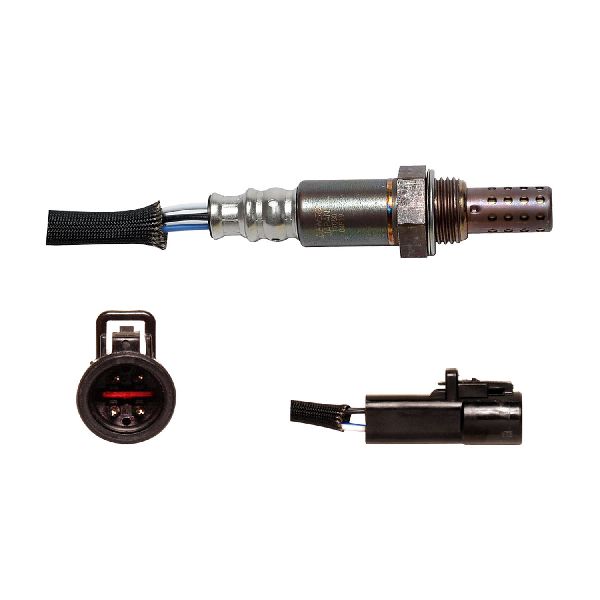
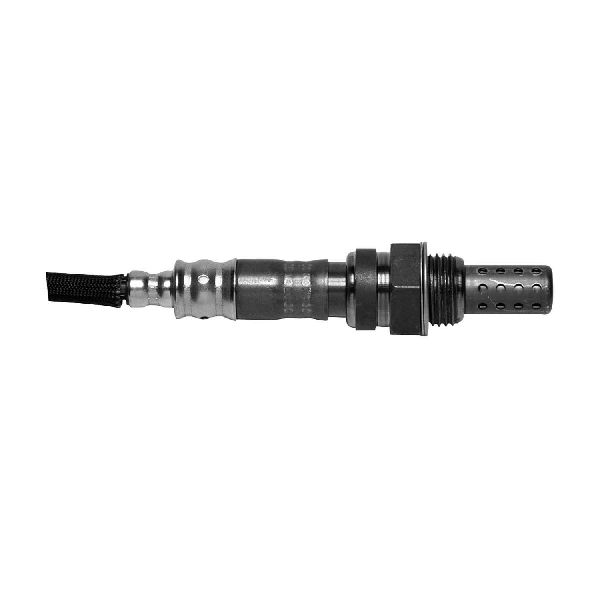
- Oxygen Sensor (Bank 1, Sensor 2)
(OEM #5F9Z-9G442-BA or DY-1056)— This is the most common failure point for a P0140 code. The sensor's internal components wear out over time.
Trusted brands: Motorcraft, Denso (234-4610), Bosch (15510), NTK, Walker
OEM price range: $120-$160
Aftermarket price range: $50-$90 - Oxygen Sensor Socket — A specialized socket with a cutout for the sensor's wire is required for removal and installation.
Trusted brands: Lisle, OEMTools, GearWrench
Aftermarket price range: $10-$25
Related Codes That Often Appear With This One
- P0141 — P0141 indicates a malfunction in the heater circuit for the same sensor (Bank 1, Sensor 2). These codes often appear together if the sensor's internal heater has failed or if there is a wiring/fuse issue affecting the heater.
- P0171 or P0174 — While not directly related to the P0140 circuit fault, these 'lean' codes are common on the Ford Five Hundred, often due to vacuum leaks or failing upstream O2 sensors. It's possible to have multiple unrelated issues present.
Platform-Specific Known Issues
- A user on fordforums.com with a 2007 Five Hundred experienced a misfire on cylinder #2, which required removing the intake manifold to access. During reassembly, they encountered further issues, including a cracked EGR tube and a subsequent O2 sensor failure code, highlighting the complexity of repairs in the firewall-side of the engine bay.
Mechanic-Grade Diagnostic Values
- O2 Sensor Heater Circuit Resistance — expected: 3 to 30 Ohms at ambient temperature. Failure: A reading of infinite resistance (open circuit) or 0 Ohms (short circuit).
- Downstream O2 Sensor (B1S2) Voltage - Healthy — expected: Relatively steady voltage, typically between 0.5V and 0.8V when the engine is warm and at a steady RPM.. Failure: Voltage is stuck at 0V, or a fixed value like 0.45V, and does not change.
- PCM Response Time to Inactivity — expected: The PCM expects a voltage change from the B1S2 sensor in response to fuel cut-off or enrichment events.. Failure: The P0140 code may be set if the sensor shows no voltage change for more than 74 seconds under specific conditions.
Scan Tool Commands That Help
- Ford IDS (or equivalent): KOER (Key On, Engine Running) Self-Test — To command a comprehensive system check while the engine is running. This can help force related, more specific codes (like a P0141 heater fault) to appear, which can help confirm if the failure is within the sensor itself or its heater circuit.
Wiring & Ground Locations
- G102 / G104 — Located on the right rear of the engine compartment, near the firewall.. These are primary ground points for the engine control system. A corroded or loose connection at these grounds can cause a variety of erratic sensor readings and codes, including O2 sensor faults.
- Harness Chafe Point — Engine wiring harness near the firewall, where it can rub against A/C lines.. Vibration can cause the A/C line to wear through the insulation of the wiring harness, potentially shorting or breaking the wires for the Bank 1 O2 sensors. This can directly cause a P0140 'no activity' code.
- PCM Connector C175b — This is one of the main connectors at the Powertrain Control Module (PCM), located at the right rear of the engine compartment.. The signal and ground return wires from the B1S2 O2 sensor terminate here. Testing for continuity and voltage at the specific pins in this connector is the final step to confirm if the wiring is intact or if the PCM itself is faulty.
OEM Part Supersession History
5F9Z-9G442-BA→DY-1056— Standard part number update and consolidation by Ford.
Model Year Variations Within This Range
- 2005-2007: The core powertrain, engine management, and emissions systems related to P0140 remained consistent across the 2005-2007 model years. The 3.0L V6 engine and associated O2 sensor configuration did not change until the vehicle was redesigned and renamed the Taurus for the 2008 model year.
Diagnostic Flowchart
Other Known Issues on This Vehicle
Issues unrelated to this code that are worth knowing about as an owner of this generation:
- CVT or 6-Speed Automatic Transmission Failure 🔴 High — Very common, especially on CVT-equipped AWD models. Problems can start before 100,000 miles, manifesting as harsh shifting, slipping, or complete failure. (Ref: Multiple software-related TSBs were issued, but many issues are mechanical.)
- Electronic Throttle Body (ETB) Failure 🔴 High — Extremely common. Causes sudden loss of power, wrench light, and limp mode. Cleaning can be a temporary fix, but replacement is often necessary. (Ref: Ford issued Customer Satisfaction Program 16B32 which extended warranty coverage for this part, but it has since expired. TSB SSM 46085 also relates to ETB diagnosis.)
- Prematurely Worn Engine Mounts 🟠 Medium — Commonly reported, sometimes as early as 50,000 miles. Causes a loud clunk or jerk when shifting into Drive or Reverse, and excessive vibration at idle.
- Lower Control Arm Ball Joint Failure 🔴 High — A significant safety concern where the ball joint can separate, causing a loss of steering control. (Ref: Multiple NHTSA complaints filed, but no formal recall was issued.)
Used vs. New Parts: Buying Guide for This Vehicle
When a used part is the smart pick: A used part is generally NOT recommended for the oxygen sensor itself. As a wear-and-tear item with a finite lifespan, a used sensor has unknown remaining life and may fail soon after installation. A used wiring harness pigtail or connector from a junkyard can be a cost-effective solution if only the connector is damaged and the wires are in good condition.
Donor-vehicle mileage cap: roughly under 80000 miles for the part to have meaningful remaining life.
What to inspect on the donor part:
- For a connector/pigtail, inspect for any signs of melting, cracking, or brittleness.
- Check the wire insulation for flexibility; avoid any that are hard or cracked.
- Ensure the connector pins are clean, straight, and free of corrosion (no green or white powder).
- Verify the donor vehicle is from a dry climate to minimize the risk of corrosion.
OEM-only on this vehicle (don't cheap out):
- Powertrain Control Module (PCM) - Aftermarket or improperly programmed used PCMs can cause a host of compatibility issues. If the PCM is condemned, an OEM unit programmed to the vehicle's VIN is the most reliable fix.
Aftermarket brands forum-validated for this vehicle:
- Denso
- NTK
- Bosch
Brands owners have reported issues with on this vehicle:
- No-name, unbranded 'universal' sensors that require splicing. These often have incorrect heater resistances or signal characteristics, leading to repeat failures or new codes.
Real Owner Stories
Aggregated from forums and TSBs cited above. Mileages and costs reflect what owners reported in those sources.
2007 Ford Five Hundred 3.0L V6
Symptoms: The vehicle experienced a misfire on cylinder #2. After removing the intake manifold to address the misfire, the owner encountered a cracked EGR tube and a subsequent O2 sensor failure code.
What fixed it: The repair involved addressing the misfire and replacing the O2 sensor, though the owner noted the extreme difficulty of working on the firewall-side of the engine bay.
Source hint: fordforums.com/threads/2007-ford-five-hundred-will-no-longer-start.202337/
Related OBD-II Codes
Frequently Asked Questions
Where is the Bank 1, Sensor 2 oxygen sensor located on my 2005-2007 Ford Five Hundred?
I found a blown 15A fuse in my engine compartment; could this cause the P0140 code?
Is there a specific wiring problem I should look for on the Five Hundred platform?
Can I use a used oxygen sensor from a salvage yard to fix this?
Does the Ford Five Hundred share this O2 sensor issue with any other vehicles?
What should the resistance be for the heater circuit on a Ford O2 sensor?
Helpful Videos

We Have This Part in Stock

The information in this article is provided for general reference and educational purposes only. Vehicle specifications, procedures, and part compatibility can vary by production date, trim level, and region. Always consult your vehicle's factory service manual and verify part numbers before purchasing or performing repairs. Safety-critical components such as airbags, seat belts, and braking systems should be installed by a qualified professional.
- Ford Five Hundred:
- 🧭 Diagnostic Flowchart
- 🎬 Helpful Videos
- 🛍️ Shop This Part
- What's Unique About the 2005-2007 Ford Five Hundred
- Symptoms You May Notice
- Most Likely Causes
- Rare But Worth Checking
- Diagnosis Steps
- Parts You'll Likely Need
- Related Codes That Often Appear With This One
- Platform-Specific Known Issues
- Mechanic-Grade Diagnostic Values
- Scan Tool Commands That Help
- Wiring & Ground Locations
- OEM Part Supersession History
- Model Year Variations Within This Range
- Other Known Issues on This Vehicle
- Used vs. New Parts: Buying Guide for This Vehicle
- Real Owner Stories
- 2007 Ford Five Hundred 3.0L V6
- Related OBD-II Codes
- Frequently Asked Questions
- 🎟️ Get 5% Off