

P0140 on 2012-2018 Ford Focus 2.0L EcoBoost: Causes and Fixes for O2 Sensor Inactivity
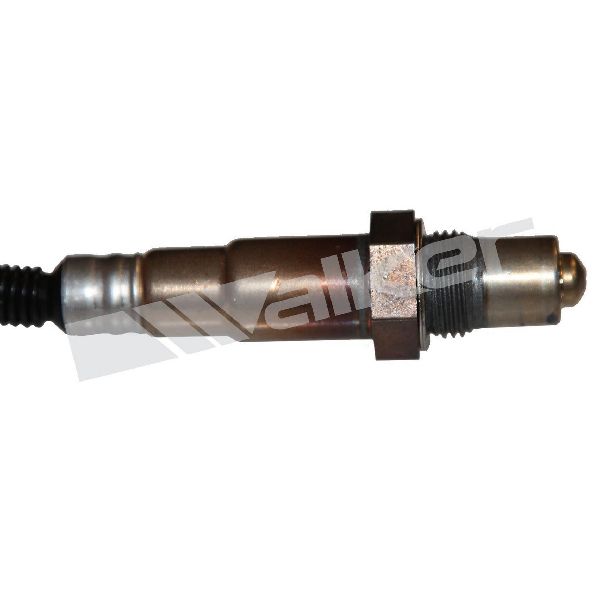
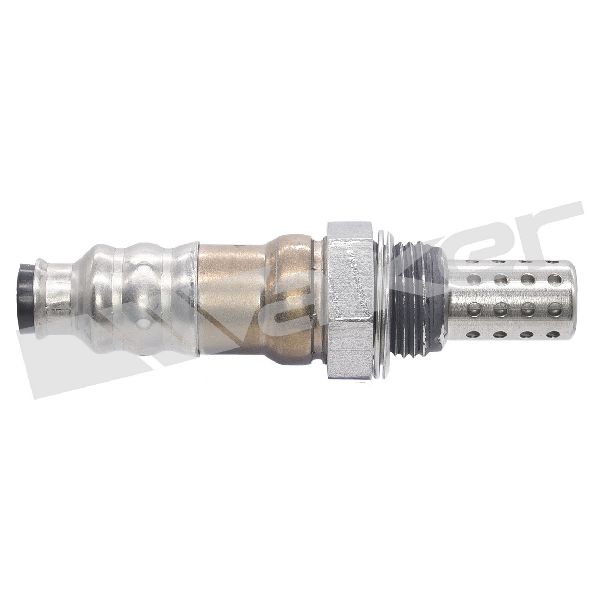
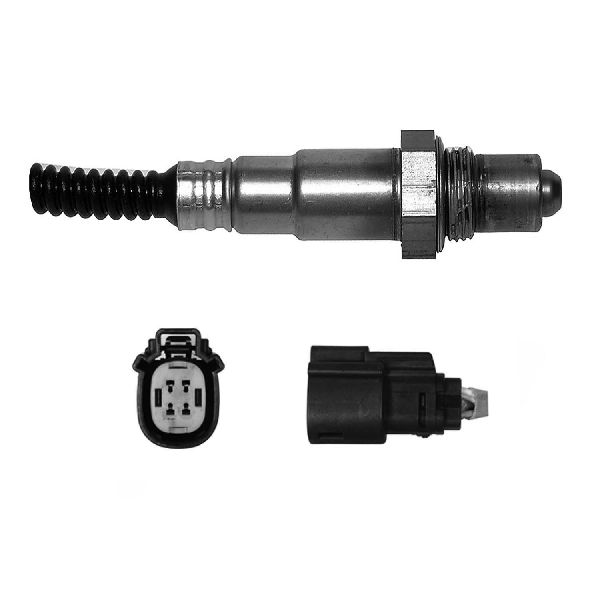
This code almost always means the downstream oxygen sensor (Bank 1, Sensor 2) has failed. On a 2.0L EcoBoost Focus, this is a straightforward DIY replacement. Expect to pay $60-$90 for an aftermarket sensor or $100-$150 for an OEM Motorcraft part. Owners strongly recommend using the OEM part for longevity.
- P0140 on your Focus ST almost certainly points to a bad downstream O2 sensor (Bank 1, Sensor 2).
- This is a safe code to drive with in the short term, but you will fail an emissions test and should fix it to restore proper emissions monitoring.
- Before replacing the sensor, perform the 2-minute check of fuse F32 (10A) in the under-hood fuse box.
- Owners strongly recommend spending slightly more for the OEM Motorcraft (DY-1244) sensor to avoid premature failure common with cheaper aftermarket parts.
What's Unique About the 2012-2018 Ford Focus
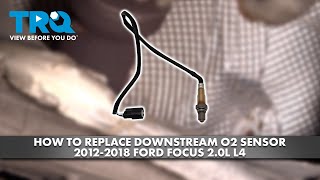
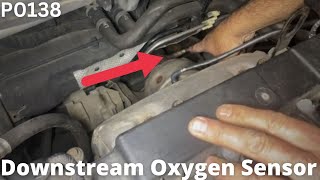
The 2012-2018 Ford Focus (Mk3) with the 2.0L EcoBoost engine (found in the ST model) 🎬 See this walkthrough for replacing the downstream sensor on ST models. has a relatively simple exhaust layout with two easy-to-identify oxygen sensors. The downstream sensor (Sensor 2) that triggers this code is located after the catalytic converter and is accessible from under the vehicle. 🎬 Watch: Locate and replace both oxygen sensors on your Focus. While the code itself is generic, the most common failure is simply the sensor itself reaching the end of its service life. Wiring issues are the next most likely culprit, and while no TSB specifically lists P0140, early Mk3 Focus models had known issues with engine harness chafing that can cause various electrical faults.
Symptoms You May Notice
- Check Engine Light is on
- Vehicle will fail an emissions test
- Slightly reduced fuel economy
- Possible rough idle or hesitation, though this is uncommon
- Replacing the catalytic converter. P0140 is an electrical circuit code, not a catalyst efficiency code (like P0420). A bad sensor can hide a bad converter, but you must fix the P0140 first.
- Replacing the upstream (Bank 1, Sensor 1) oxygen sensor. This code specifically points to the downstream sensor (Sensor 2).
Most Likely Causes
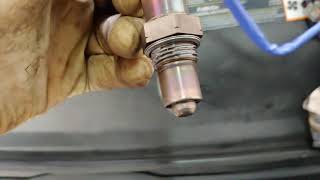
- Failed Downstream Oxygen Sensor 🔴 High Probability → Shop Oxygen Sensor Oxygen sensors are wear items that fail over time due to heat, contamination, and age. This is the most frequent cause for a 'no activity' code. Owner experiences indicate that non-OEM, aftermarket sensors can fail prematurely, sometimes in less than a year, making the OEM Motorcraft sensor a recommended replacement.
How to confirm: Use an OBD-II scanner to watch the live data for the B1S2 O2 sensor. If the voltage is flat and unresponsive (stuck around 0.45V or at 0V), the sensor is likely dead. A healthy downstream sensor will show a relatively stable, slowly changing voltage.
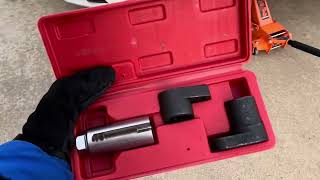
Typical fix: Replace the Bank 1, Sensor 2 oxygen sensor. Using an O2 sensor socket (22mm or 7/8") is highly recomme 🎬 Watch: Step-by-step guide to replacing the downstream O2 sensor.nded.
Est. part cost: $60-$150 - Damaged Wiring or Corroded Connector 🟡 Medium Probability The sensor wiring runs underneath the car and is exposed to road debris, moisture, and heat, which can cause breaks, shorts, or corrosion in the connector pins. Road debris can also physically strike and damage the connector or wiring.
How to confirm: Visually inspect the entire wiring harness from the O2 sensor to its connection point. Look for melted sections, frayed wires, or green/white corrosion on the connector pins. Perform a 'wiggle test' on the harness while monitoring live data to see if the signal changes. Use a multimeter to check for continuity and proper voltage at the connector.
Typical fix: Repair the damaged section of wire or clean/replace the electrical connector.
Est. part cost: $5-$50 - Blown Fuse for O2 Sensor Heater ⚪ Low Probability → Shop Oxygen Sensor The O2 sensor has an internal heater to bring it to operating temperature quickly. This heater circuit is protected by a fuse. A short in the sensor's heater element or its wiring can blow the fuse, preventing the sensor from heating up and sending a signal.
How to confirm: Check fuse F32 (a 10A fuse) in the under-hood fuse box. Visually inspect the fuse to see if it is blown. Use a multimeter set to continuity to be certain.
Typical fix: Replace the blown fuse. If the new fuse blows immediately, diagnose the short circuit in the heater wiring or the sensor itself.
Est. part cost: $1-$5
Rare But Worth Checking
- Exhaust Leak: An exhaust leak before or near the O2 sensor can introduce outside air, which the sensor reads as a constant lean condition. The PCM may interpret this flat, lean signal as inactivity. This is usually accompanied by a louder exhaust noise.
- Powertrain Control Module (PCM) Fault: → Shop Engine Control Module (ECM) In very rare cases, the internal circuitry of the PCM that reads the O2 sensor can fail. This should only be considered after all other possibilities, especially the sensor and wiring, have been exhaustively ruled out.
Diagnosis Steps
- Read the code with an OBD-II scanner to confirm P0140 is present. Check for other codes like P0141, which points to the heater circuit.
- Check the fuse for the O2 sensor heater circuit. On the Focus Mk3, this is fuse F32 (10A) in the fuse box located under the hood.
- Use the scanner's live data function to monitor the voltage of 'O2S12' (Oxygen Sensor, Bank 1, Sensor 2). A healthy downstream sensor on a warm engine will show a relatively steady voltage that changes slowly. A flat, unchanging voltage reading (e.g., 0V, 0.45V) indicates no activity.
- Visually inspect the downstream O2 sensor, which is located on the exhaust pipe after the catalytic converter. Check for obvious damage to the sensor or its wiring.
- Follow the sensor's wire to its electrical connector. Disconnect it and inspect for corrosion, moisture, or bent/damaged pins.
- Inspect the wiring harness for any signs of melting, chafing, or breaks, especially where it runs close to hot exhaust components or the engine block.
- If wiring and fuses are good, test the sensor itself. With a multimeter, check the resistance of the heater circuit (usually between two same-colored wires on the sensor connector). A good heater should have a low resistance, typically between 1 and 10 ohms. An open circuit (infinite resistance) indicates a failed heater.
- If all wiring, fuses, and tests point to a bad sensor, proceed with replacement. It is the most likely culprit.
- After repair, clear the codes with the scanner and perform a drive cycle to ensure the code does not return.
Parts You'll Likely Need
- Downstream Oxygen Sensor (Bank 1, Sensor 2)
(OEM #Motorcraft DY-1244)— This is the component that has failed in the vast majority of P0140 cases. Owners strongly recommend using the OEM Motorcraft part for reliability and to avoid premature failure seen with some aftermarket brands.
Trusted brands: Motorcraft (OEM), Bosch, Denso, NTK
OEM price range: $100-$150
Aftermarket price range: $60-$90
Related Codes That Often Appear With This One
- P0141 (O2 Sensor Heater Circuit Malfunction Bank 1, Sensor 2): This code is very common to see with P0140, as a failure of the sensor's internal heater will prevent it from becoming active.
- P0054 (HO2S Heater Resistance Bank 1, Sensor 2): This is a more specific version of a heater circuit fault. If you see this code alongside P0140, it strongly indicates the sensor's internal heater has failed its resistance check, making the sensor itself the definitive problem.
Technical Service Bulletins (TSBs) & Recalls
- TSB 18-2062: Does not directly list P0140, but describes a known issue with wiring harness chafing on early Mk3 Focus models (2.0L GDI) that could cause various electrical circuit faults. This makes a wiring inspection particularly important on 2012-2014 models.
Platform-Specific Known Issues
- TSB 18-2062 was issued for 2012-2014 Focus models with the 2.0L GDI engine for wiring harnesses chafing against the engine, causing various electrical faults. While P0140 is not explicitly listed, and the TSB is not for the EcoBoost ST engine specifically, it highlights a known weakness in the platform's engine wiring harness that could be a root cause for this electrical code.
Mechanic-Grade Diagnostic Values
- Downstream O2 Sensor (HO2S12) Heater Circuit Resistance — expected: 2 to 10 Ohms. Failure: An open circuit (infinite resistance) or a short (near zero Ohms) indicates a failed heater element within the sensor.
- O2 Sensor Signal Circuit Voltage Test (at the harness connector with sensor unplugged) — expected: Approx. 1.2V - 1.6V on scan tool. Failure: If applying 12V from a test light to the signal pin does NOT cause the voltage to jump on the scan tool, the signal wire is open or shorted to ground between the connector and the PCM.
- O2 Sensor Signal Voltage (KOEO, sensor unplugged) — expected: 0 Volts. Failure: This Ford system does not use a bias voltage on the O2 signal circuit. Seeing 0V with the sensor unplugged is normal and does not indicate a fault.
Hidden / Shadow Codes Worth Checking
- P0054: HO2S Heater Resistance (Bank 1, Sensor 2). This is not a shadow code but a more specific diagnostic code. If P0140 indicates 'no activity', P0054 specifies that the PCM has measured the resistance of the heater circuit and found it to be out of the expected range. Seeing this code makes diagnosing a faulty sensor almost certain. (see via Standard OBD-II scanner.)
Scan Tool Commands That Help
- Ford IDS / FORScan: HO2S Heater Test — Use this bidirectional command to manually activate the O2 sensor's heater. This allows a technician to verify the integrity of the entire heater circuit (fuse, power wire, heater element, ground wire, and PCM driver) without removing parts. When commanded on, you can check for 12V at the heater power pin and confirm the heater element is drawing current.
Wiring & Ground Locations
- Main Engine Bay Grounds — Underneath the airbox assembly. There are typically two ground lugs bolted directly to the painted chassis surface in this area.. The entire Focus Mk3 platform is known for having marginal grounding from the factory due to being bolted to painted surfaces. Poor grounds can cause a host of floating voltages and sensor errors. Technicians often recommend removing the bolts, grinding the paint off the chassis to expose bare metal, and re-securing the ground lugs to fix intermittent electrical issues.
- Engine/Transmission Ground Strap — A key ground strap often runs from the chassis (near the battery/airbox) to a bolt on the transmission bell housing.. While often implicated in no-start or transmission control module (TCM) faults, this ground is critical for ensuring the entire powertrain has a solid connection to the chassis ground. A loose or corroded connection here can affect all engine sensors, including the O2 sensors.
Real Owner Repair Stories
- Go-Parts analysis of forum data (2013-2014 Ford Focus ST 2.0L EcoBoost) — P0133 (Slow Response) and other sensor-related codes.
❌ Tried (didn't work) Replacing sensors.
✅ What actually fixed it The root cause was found to be an improperly crimped engine wiring harness splice, designated 'S133', which was subject to Ford recall 14S17. This highlights that wiring issues deep within the harness, not just at the sensor connector, can be the cause.
OEM Part Supersession History
CM5Z-9G444-A (Ford Engineering Number)→Motorcraft DY-1244 (Service Part Number)— This is not a supersession, but a cross-reference. CM5Z-9G444-A is the number stamped on the part during vehicle assembly, while DY-1244 is the part number sold by Ford/Motorcraft for service replacement.
Model Year Variations Within This Range
- 2012-2018: The Ford Focus ST received a significant facelift for the 2015 model year, which included revised exterior styling, a new interior center stack, and retuned suspension and steering. However, the 2.0L EcoBoost engine, transmission, and exhaust system layout remained unchanged. The P0140 code causes, diagnostics, and the O2 sensor part number (DY-1244) are the same for both pre-facelift (2012-2014) and facelift (2015-2018) models.
Diagnostic Flowchart
Other Known Issues on This Vehicle
Issues unrelated to this code that are worth knowing about as an owner of this generation:
- Purge Valve Failure 🟠 Medium — Very common across all model years. Often causes rough idle, stalling after refueling, and can deform the fuel tank. A recall was issued for this problem. (Ref: NHTSA Campaign Number: 18V735000)
- Engine Wiring Harness Chafing 🔴 High — More common on pre-facelift (2012-2014) models. Can cause intermittent stalling, fluctuating RPMs, and a host of electrical DTCs. (Ref: TSB 18-2062)
- Carbon Buildup on Intake Valves 🟠 Medium — A common long-term issue for all direct-injected engines, including the 2.0L EcoBoost. Typically requires cleaning (walnut blasting) every 60,000-100,000 miles to prevent misfires and performance loss.
- Cracked Cylinder Head ('Headifold') 🔴 High — A less common but severe failure where the integrated exhaust manifold within the cylinder head cracks, often near the turbocharger flange, leading to coolant loss and overheating.
- Coolant Loss and Overheating 🟠 Medium — Owners report unexplained coolant loss from various sources including hoses, the radiator, or in more severe cases, a cracked cylinder head. More common on higher mileage or aggressively driven vehicles.
Used vs. New Parts: Buying Guide for This Vehicle
When a used part is the smart pick: For this repair, a used part is NEVER a smart choice. An oxygen sensor is a wear item with a finite lifespan. The cost savings of a used sensor are minimal and not worth the risk of premature failure and the labor to replace it again.
What to inspect on the donor part:
- Do not purchase a used oxygen sensor.
OEM-only on this vehicle (don't cheap out):
- Oxygen Sensor: While not strictly 'OEM-only', forum consensus strongly advises using the OEM Motorcraft sensor (DY-1244) to prevent premature failure and avoid having the code return. The price difference between OEM and a quality aftermarket part is often small enough to justify the OEM choice for peace of mind.
Aftermarket brands forum-validated for this vehicle:
- NTK
- Denso
- Bosch
Brands owners have reported issues with on this vehicle:
- Unbranded, 'generic' sensors from online marketplaces are frequently reported to fail within a year.
Real Owner Stories
Aggregated from forums and TSBs cited above. Mileages and costs reflect what owners reported in those sources.
2012-2018 Ford Focus 2.0L EcoBoost
Symptoms: Check engine light with P0139 and P0140 codes.
What fixed it: Replacement of the downstream O2 sensor. However, after the sensor was replaced, a P0420 (Catalyst System Efficiency Below Threshold) code appeared, indicating the failed sensor had masked a catalytic converter issue.
Source hint: Reddit r/autorepair: P0140 fixed, then P0420 appeared
2012-2018 Ford Focus 2.0L EcoBoost
Symptoms: Oxygen sensor failure shortly after installing a non-OEM part.
What fixed it: Replacing the generic eBay-purchased sensor with an OEM Motorcraft O2 sensor.
Source hint: YouTube Owner Tip: Avoid Generic eBay Sensors
Related OBD-II Codes
Frequently Asked Questions
Does TSB 18-2062 apply to my 2012-2018 Ford Focus ST with the 2.0L EcoBoost?
Which fuse should I check for the O2 sensor on my Focus Mk3?
Can I use a generic aftermarket oxygen sensor to fix P0140 on my Focus?
Where is the Bank 1, Sensor 2 oxygen sensor located on the 2.0L EcoBoost?
What tool do I need to replace the O2 sensor on this vehicle?
Could a rough idle after refueling be related to my O2 sensor code?
Helpful Videos
We Have This Part in Stock



The information in this article is provided for general reference and educational purposes only. Vehicle specifications, procedures, and part compatibility can vary by production date, trim level, and region. Always consult your vehicle's factory service manual and verify part numbers before purchasing or performing repairs. Safety-critical components such as airbags, seat belts, and braking systems should be installed by a qualified professional.
- Ford Focus:
- 🧭 Diagnostic Flowchart
- 🎬 Helpful Videos
- 🛍️ Shop This Part
- What's Unique About the 2012-2018 Ford Focus
- Symptoms You May Notice
- Most Likely Causes
- Rare But Worth Checking
- Diagnosis Steps
- Parts You'll Likely Need
- Related Codes That Often Appear With This One
- Technical Service Bulletins (TSBs) & Recalls
- Platform-Specific Known Issues
- Mechanic-Grade Diagnostic Values
- Hidden / Shadow Codes Worth Checking
- Scan Tool Commands That Help
- Wiring & Ground Locations
- Real Owner Repair Stories
- OEM Part Supersession History
- Model Year Variations Within This Range
- Other Known Issues on This Vehicle
- Used vs. New Parts: Buying Guide for This Vehicle
- Real Owner Stories
- 2012-2018 Ford Focus 2.0L EcoBoost
- 2012-2018 Ford Focus 2.0L EcoBoost
- Related OBD-II Codes
- Frequently Asked Questions
- 🎟️ Get 5% Off