

P0140 on 2007-2010 Hyundai Elantra: Causes and Fixes for O2 Sensor Inactivity
On a 2007-2010 Elantra, P0140 almost always means the downstream oxygen sensor (Bank 1, Sensor 2) has failed or has a wiring issue. The most common fix is replacing the sensor itself. Expect to pay ~$40-$80 for an aftermarket part and ~$120-$180 for an OEM sensor. DIY difficulty is 2/5.
- P0140 on a 2007-2010 Elantra means the rear (downstream) oxygen sensor is not sending a signal.
- The car is safe to drive, but you will fail an emissions test.
- The most likely cause is a failed oxygen sensor, which is a common DIY repair.
- Before buying a new sensor, always perform a quick visual inspection of the wiring and check the 'SENSOR 1' fuse in the engine bay fuse box.
What's Unique About the 2007-2010 Hyundai Elantra
The 2007-2010 Elantra (HD generation) with the Beta II engine uses a straightforward emissions system. For this specific vehicle, the ECM sets code P0140 if the downstream O2 sensor signal is too high (doesn't drop near 0V) during fuel cut-off on deceleration, or if it fails to respond (remains below 0.6V) after deceleration ends. Unlike some complex systems, the diagnosis is typically direct, focusing on the sensor, its wiring, and its dedicated fuse. The Beta II engine itself is considered quite reliable, with most issues arising from lack of maintenance (like timing belts) rather than inherent design flaws.
Symptoms You May Notice
- Check Engine Light is on.
- Vehicle will fail an emissions test.
- In some rare cases, a slight decrease in fuel economy may be noticed, though this is not a primary symptom for a downstream sensor failure.
- Replacing the upstream (Bank 1, Sensor 1) oxygen sensor. This code specifically points to the downstream sensor (Sensor 2).
- Immediately replacing the catalytic converter. While a P0420 code often follows a sensor replacement if the converter is truly bad, P0140 itself points to a sensor circuit issue, not converter efficiency.
Most Likely Causes
- Failed Downstream Oxygen Sensor (Bank 1, Sensor 2) 🔴 High Probability → Shop Oxygen Sensor Oxygen sensors are wear-and-tear items that degrade over time from heat and exhaust contaminants. It is the most common point of failure for this code.
How to confirm: Use a scan tool to monitor the live data for 'O2S B1S2'. If the voltage is a flat line (often stuck between 0.4V and 0.5V) and does not change with engine RPM or during deceleration, the sensor is likely dead. A healthy downstream sensor should show a relatively stable voltage, unlike the rapidly fluctuating upstream sensor.
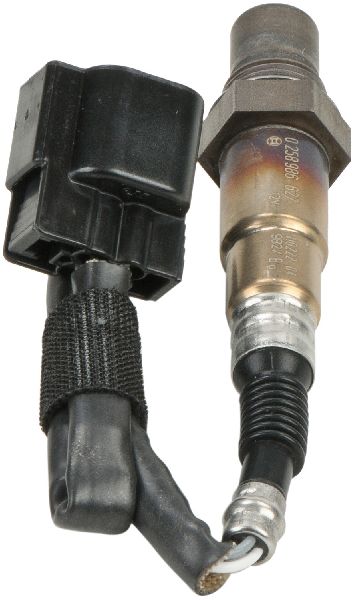
Typical fix: Replace the downstream oxygen sensor. This sensor is located on the exhaust pipe after the catalytic converter. An O2 sensor socket is recommended for removal as they can be seized.
Est. part cost: $40-$80 - Damaged Wiring or Connector 🟡 Medium Probability The sensor wiring runs under the vehicle and is exposed to road debris, heat, and moisture, which can cause breaks, shorts, or corrosion in the harness or connector pins. Sometimes the connector is simply not plugged in securely after previous work.
How to confirm: Visually inspect the entire wiring harness from the O2 sensor to where it enters the cabin. Look for melted sections, chafing, corrosion in the connector, or loose pins. A user on Hyundai-Forums reported finding internal corrosion a foot away from the connector, which was not externally visible.
Typical fix: Repair the damaged section of the wire or replace the connector pigtail. Ensure the connection is secure and protected from the elements.
Est. part cost: $10-$30 - Blown O2 Sensor Heater Fuse ⚪ Low Probability → Shop Oxygen Sensor The oxygen sensor has an internal heater to bring it to operating temperature quickly. This heater circuit is protected by a fuse that can blow, often due to a short in the sensor itself or its wiring.
How to confirm: Locate the fuse box in the engine bay. Check the fuse labeled 'SENSOR 1'. If it is blown, this is the likely cause of the inactivity.
Typical fix: Replace the blown fuse. If the new fuse blows immediately, it indicates a short circuit in the heater element of the O2 sensor or its wiring that must be diagnosed.
Est. part cost: $1-$5
Rare But Worth Checking
- Exhaust Leak: An exhaust leak before the O2 sensor can introduce outside air, preventing the sensor from reading correctly. This is usually accompanied by a louder exhaust noise.
- Powertrain Control Module (PCM) Fault: → Shop Engine Control Module (ECM) In very rare cases, the fault can be with the PCM itself. This should only be considered after all other possibilities (sensor, wiring, fuses) have been exhaustively ruled out.
Diagnosis Steps
- Connect an OBD-II scanner to confirm P0140 is the only code present. Note any freeze-frame data.
- Visually inspect the downstream O2 sensor (after the catalytic converter) and its wiring harness for any obvious signs of damage, such as melting, corrosion, or disconnected plugs.
- Check the fuse for the O2 sensor heater circuit. In the 2007-2010 Elantra, this is typically in the engine bay fuse box and may be labeled 'SENSOR 1'.
- Use the scanner's live data function to view the voltage for 'O2S B1S2'. At a steady idle or cruise, a dead sensor will often show a flat, unchanging voltage. During fuel cut-off (deceleration), the voltage should drop close to 0V. If it stays high, the sensor is faulty.
- If the fuse and wiring appear intact but the sensor shows no activity, the sensor itself has most likely failed.
- If you replace the sensor and the code returns, or if the fuse blows again, perform a continuity test on the wiring harness between the sensor connector and the PCM to check for a short or open circuit.
Parts You'll Likely Need
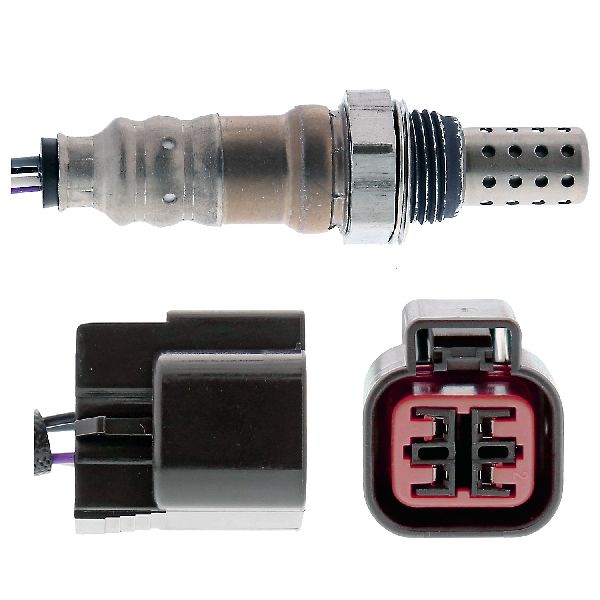
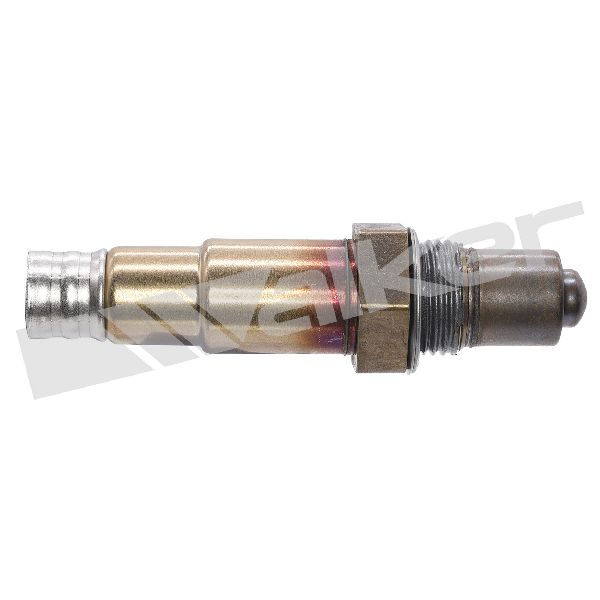
- Downstream Oxygen Sensor
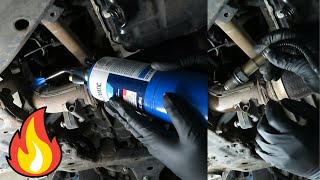
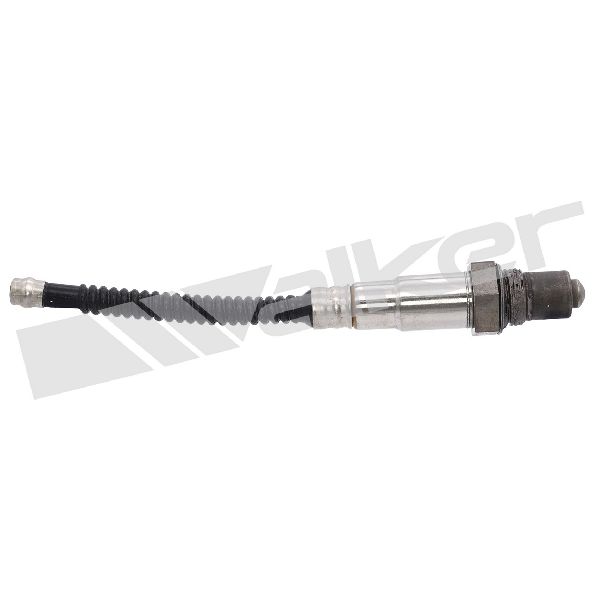
(OEM #39210-23950)— This is the sensor that the code directly identifies as inactive. It is a common wear item and the most frequent cause of a P0140 code. 🎬 See this walkthrough on fixing the P0140 code. CRITICAL: The OEM part number for the downstream sensor is 39210-23950. Many parts catalogs incorrectly list the upstream sensor part number (39210-23700) for this position; using the wrong sensor will not fix the code.
Trusted brands: Denso (OEM supplier), Bosch, Walker Products, NGK/NTK
OEM price range: $120-$180
Aftermarket price range: $40-$80
Platform-Specific Known Issues
- Owner Experience: Wiring Corrosion: A user on Hyundai-Forums with a 2007 Elantra reported a persistent P0136 code (related O2 circuit malfunction) even after replacing the sensor. The fix was a corroded wire found about a foot away from the sensor connector, hidden inside the loom. This highlights the importance of checking the full length of the harness for non-obvious damage.
Mechanic-Grade Diagnostic Values
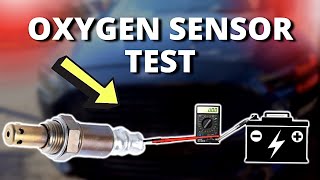
- Downstream O2 Sensor Heater Resistance — expected: 2.4 - 4.0 Ω at 68°F (20°C). A more general acceptable range is 2-25 ohms.. Failure: An open circuit (infinite resistance) or a dead short (near zero ohms) indicates the internal heater has failed.
- Downstream O2 Sensor (B1S2) Live Data Voltage — expected: A relatively stable voltage between 0.5V and 0.8V on a warm engine at steady speed.. Failure: A flat, unchanging voltage (often stuck around 0.45V) that does not respond to changes in engine speed or deceleration indicates an inactive sensor.
- ECM Fault Trigger Condition — expected: The sensor signal voltage should change in response to fuel cut-off events (deceleration).. Failure: The ECM will set code P0140 if the sensor signal does not show activity (voltage change) for more than 74 seconds.
Scan Tool Commands That Help
- Hyundai GDS (Global Diagnostic System): Actuation Test & Special Functions (Resetting Adaptive Values) — The GDS is the OEM tool used for in-depth diagnostics. While no specific bidirectional test for the O2 heater is commonly cited, the general 'Actuation Test' function can be used to command various components. The 'Resetting Adaptive Values' function is useful after a repair to clear learned fuel trims and force the ECM to re-learn with the new sensor data.
Wiring & Ground Locations
- Downstream O2 Sensor Connector — The wiring harness for the downstream sensor passes through the vehicle floor and the electrical connector is located inside the cabin, on the passenger side, under the carpet/trim near the front seat area.. This connector is a common point for corrosion or loose connections. Since it's inside the cabin, it's protected from road debris but can be damaged by moisture from wet shoes or spills.
- Heater Circuit Test Pins — On the 4-pin connector of the oxygen sensor itself (not the vehicle harness side).. To test the internal heater resistance, an ohmmeter should be connected between terminals 3 and 4 of the sensor's connector. This directly verifies the integrity of the heater element, which is a common failure point.
- Main Engine Grounds — Key ground points for the engine harness are typically found on the driver's side inner fender near the battery tray and on the transmission housing.. A poor ground connection can cause a variety of electrical issues, including incorrect sensor readings. While not a primary cause for P0140, it's a valid check if direct wiring and sensor tests are inconclusive.
Real Owner Repair Stories
- Reddit r/autorepair user (2005 Hyundai Tucson V6 (similar Hyundai platform)) — Check Engine Light with code P0139 (O2 Sensor Slow Response).
❌ Tried (didn't work) Replacing the downstream O2 sensor with a cheap aftermarket part.
✅ What actually fixed it The initial P0139 code was resolved by replacing the cheap sensor with a proper OEM oxygen sensor. However, this immediately triggered a new P0420 (Catalyst System Efficiency Below Threshold) code. This is a classic case where the old, faulty sensor was too slow or dead to report the inefficiency of a failing catalytic converter. The new, functioning sensor worked correctly and immediately detected the underlying converter problem.
When the Usual Fixes Don't Work
- While a failed sensor is the most common cause, do not assume it is the only cause. A forum member with a similar code (P0136) on a 2007 Elantra replaced the sensor, but the code persisted. The actual cause was a corroded wire hidden inside the wiring loom, about a foot away from the connector. This demonstrates that a thorough wiring inspection, potentially involving unwrapping the harness tape, is necessary if a new sensor doesn't fix the issue.
OEM Part Supersession History
39210-23700 (Incorrectly listed for this position)→39210-23950 (Correct part for downstream)— Part cataloging errors are common.
Heads up: Part number 39210-23700 is the UPSTREAM (Sensor 1) oxygen sensor for the 2.0L Beta II engine. It will physically fit in the downstream port, but its electrical characteristics are different. Using it will not fix a P0140 code and may cause other issues. You must use the part specified for the downstream (Sensor 2) position, which is 39210-23950.
Model Year Variations Within This Range
- 2009-2010: A minor facelift for the 2009 model year introduced a new instrument cluster, an updated audio system with USB/iPod support, and revised suspension tuning. However, there were no documented changes to the 2.0L Beta II engine or its emissions control system that would alter the diagnosis or repair of a P0140 code.
Diagnostic Flowchart
Other Known Issues on This Vehicle
Issues unrelated to this code that are worth knowing about as an owner of this generation:
- Electronic Power Steering (EPS) Failure 🔴 High — Common enough to trigger a recall campaign. Can cause a sudden loss of power assist, making steering very difficult at low speeds. (Ref: Recall Campaign 127 (NHTSA 15V100000); TSB 15-01-018-1. Involves a software update or replacement of the EPS unit.)
- Failing Stop Lamp Switch 🟠 Medium — Widespread issue across many Hyundai models of this era. Can cause brake lights to not work, ESC light to come on, or inability to shift out of Park. (Ref: Recall Campaign 110 (NHTSA 13V113000). Involves replacing the switch.)
- Anti-Lock Brake (ABS) Module Short Circuit 🔴 High — A significant fire risk due to potential for moisture intrusion into the ABS module, which can cause a short circuit even when the car is off. (Ref: Recall Campaign 194 (NHTSA 20V061000). The fix is to install a relay in the main junction box.)
- Sagging/Drooping Sun Visors 🟡 Low — Extremely common. The internal pivot mechanism breaks, causing the visor to hang down and obstruct vision. While not a mechanical issue, it is a frequent annoyance and potential safety hazard. (Ref: A service campaign (TN1) and TSB (13-01-011) were issued for later models, but the issue is prevalent on the 2007-2010 generation as well.)
- Worn MDPS Steering Coupling 🟡 Low — A flexible rubber coupling in the Motor Driven Power Steering (MDPS) wears out, causing a clicking or thudding noise when turning the wheel. Does not affect steering control. (Ref: Warranty Extension TXX7 (TSB 17-ST-002) extended coverage to 10 years/100,000 miles for this part.)
Used vs. New Parts: Buying Guide for This Vehicle
When a used part is the smart pick: A used oxygen sensor is almost never a smart choice. They are wear-and-tear items with a finite lifespan. A used sensor from a junkyard is only justifiable for a temporary test to see if the code clears, but it should not be considered a permanent repair.
Donor-vehicle mileage cap: roughly under 50000 miles for the part to have meaningful remaining life.
What to inspect on the donor part:
- Ensure the donor vehicle was in a front-end collision, suggesting the exhaust system was not the cause of its demise.
- Inspect the sensor tip; it should be light gray, not coated in black soot or white deposits.
- Check that the connector pins are clean, straight, and free of corrosion.
- Verify the wiring is not brittle, melted, or chafed.
OEM-only on this vehicle (don't cheap out):
- Catalytic Converter: If a P0140 fix reveals a subsequent P0420 code, do not use an aftermarket catalytic converter. Many aftermarket converters lack the precious metal loading required by Hyundai's specific ECU logic and will fail to clear the P0420 code, wasting significant time and money.
Aftermarket brands forum-validated for this vehicle:
- Denso
- NGK/NTK
- Bosch
Brands owners have reported issues with on this vehicle:
- Unbranded, 'white-box' sensors from online marketplaces. These are often poorly calibrated and have a high failure rate, as evidenced by owner stories where a cheap replacement failed quickly or did not work at all.
Real Owner Stories
Aggregated from forums and TSBs cited above. Mileages and costs reflect what owners reported in those sources.
2007 Hyundai Elantra
Symptoms: Persistent P0136 code (related O2 circuit malfunction) that remained even after the sensor was replaced.
What fixed it: Repairing a corroded wire found about a foot away from the sensor connector, hidden inside the wiring loom.
Source hint: Hyundai-Forums: P0136 and O2 Sensor Question
2007-2010 Hyundai Elantra
Symptoms: The user replaced a downstream O2 sensor to fix a P0139 code, but then immediately received a P0420 (Catalyst Efficiency) code.
What fixed it: The new sensor was working correctly, but it revealed an underlying catalytic converter issue that the old, dead sensor was masking.
Source hint: Reddit r/autorepair: Got code P0140 after replacing downstream O2 sensor?
Hyundai Owner Report
Symptoms: An owner of a similar Hyundai model reported the check engine light was continuously on and blinking, with diagnostic codes including P0140 (O2 Circuit), P0172 (System Too Rich), and P0126.
What fixed it: NHTSA ODI #11618243 notes these symptoms were reported as signaling the vehicle was unsafe to drive, requiring a comprehensive diagnostic of the O2 circuit and fuel system.
Source hint: NHTSA ODI #11618243
Related OBD-II Codes
Frequently Asked Questions
Where is the fuse for the O2 sensor heater circuit located on my 2007-2010 Elantra?
I replaced my downstream sensor but now I have a P0420 code. Did I use the wrong part?
Is there a specific tool I should use to remove the sensor on my Elantra?
Could my Elantra's steering issues be related to the P0140 code?
My brake lights aren't working and I can't shift out of Park; is this linked to the O2 sensor?
Helpful Videos

We Have This Part in Stock



The information in this article is provided for general reference and educational purposes only. Vehicle specifications, procedures, and part compatibility can vary by production date, trim level, and region. Always consult your vehicle's factory service manual and verify part numbers before purchasing or performing repairs. Safety-critical components such as airbags, seat belts, and braking systems should be installed by a qualified professional.
- Hyundai Elantra:
- 🧭 Diagnostic Flowchart
- 🎬 Helpful Videos
- 🛍️ Shop This Part
- What's Unique About the 2007-2010 Hyundai Elantra
- Symptoms You May Notice
- Most Likely Causes
- Rare But Worth Checking
- Diagnosis Steps
- Parts You'll Likely Need
- Platform-Specific Known Issues
- Mechanic-Grade Diagnostic Values
- Scan Tool Commands That Help
- Wiring & Ground Locations
- Real Owner Repair Stories
- When the Usual Fixes Don't Work
- OEM Part Supersession History
- Model Year Variations Within This Range
- Other Known Issues on This Vehicle
- Used vs. New Parts: Buying Guide for This Vehicle
- Real Owner Stories
- 2007 Hyundai Elantra
- 2007-2010 Hyundai Elantra
- Hyundai Owner Report
- Related OBD-II Codes
- Frequently Asked Questions
- 🎟️ Get 5% Off