

P0140 on 2007-2011 Lexus GS 350: O2 Sensor Circuit Fixes and Part Guide
This code means the downstream oxygen sensor on the passenger side (Bank 1, Sensor 2) has failed. The most common fix is to replace the sensor itself. Expect to pay around $70-$100 for an aftermarket Denso sensor and tackle it yourself in about an hour.
- P0140 on your GS 350 points directly to the downstream O2 sensor on the passenger side.
- This issue will not leave you stranded, but it will cause you to fail an emissions test.
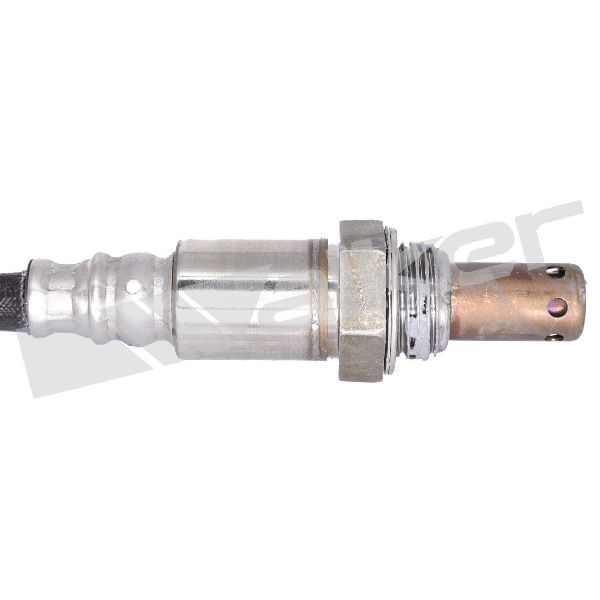
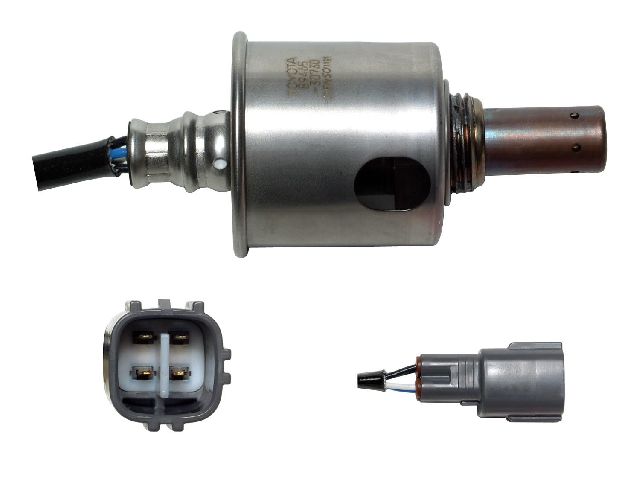
- The most likely fix is replacing the sensor. Use a quality brand like Denso (part 234-4521), which is the original equipment manufacturer, or the Lexus OEM part (89465-30730).
- To replace it yourself, be prepared to access the electrical connector from inside the car by pulling back the passenger-side carpet.
What's Unique About the 2007-2011 Lexus GS 350
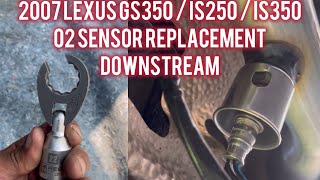
On the 2007-2011 Lexus GS 350, this code is a straightforward component failure 99% of the time. There are no widespread design flaws or complex issues that cause P0140. The most notable platform-specific detail for a DIY repair is that the electrical connector for the downstream O2 sensor is not under the car; it is located inside the cabin, requiring you to pull back the carpet on the corresponding side of the transmission tunnel to access it. A YouTube video by 'Hector with Me Explain' for a 2007 GS 350 clearly shows removing the side kick panel and pulling back the carpet near the gas pedal to access the grommet and connector.
🎬 Watch this walkthrough of the cabin-access sensor replacement.Symptoms You May Notice
- Check Engine Light is on.
- Vehicle will fail an emissions test.
- Slight potential decrease in fuel economy.
- Potentially elevated harmful emissions.
- Replacing the wrong sensor (e.g., the upstream Air/Fuel ratio sensor or the sensor on the driver's side, Bank 2).
Most Likely Causes
- Failed Bank 1, Sensor 2 Oxygen Sensor 🔴 High Probability → Shop Oxygen Sensor Oxygen sensors are wear-and-tear items that degrade over time and with mileage. Contamination from small oil or coolant leaks can also shorten their lifespan.
How to confirm: Using a scan tool with live data, observe the voltage for B1S2. If it is flat, stuck at a specific voltage (e.g., 0.45V), or shows 0V, the sensor has likely failed. You can also test the internal resistance of the sensor's heater circuit; it should typically be between 5.1 and 6.3 ohms at 68°F (20°C).
Typical fix: Replace the Bank 1, Sensor 2 oxygen sensor. This is the downstream sensor on the passenger side. The OEM part number is 89465-30730. The direct-fit Denso equivalent is part number 234-4521.
Est. part cost: $70-$250 - Damaged Wiring or Connector 🟡 Medium Probability The wiring harness runs under the vehicle and is exposed to road debris, moisture, and heat, which can cause corrosion or physical damage over time. The connector itself is inside the cabin, protecting it, but the wire leading to it is vulnerable.
How to confirm: Visually inspect the wiring harness from the sensor to where it enters the cabin through the floor grommet. Check the connector pins (both on the sensor and the harness side) for corrosion, moisture, or damage. Use a multimeter to check for continuity between the harness connector and the ECM.
Typical fix: Repair the damaged section of wire or clean/replace the corroded connector.
Est. part cost: $5-$50 - Exhaust Leak ⚪ Low Probability
How to confirm: Visually inspect the exhaust system for cracks or holes, particularly in the manifold or pipes before the B1S2 sensor. You may also hear a ticking or hissing sound from the engine bay or under the car that gets louder with acceleration. A common method is to have an assistant temporarily block the tailpipe with a rag while the engine is running to make leaks more audible.
Typical fix: Repair the leak by replacing the gasket or welding the cracked component.
Est. part cost: $20-$300
Rare But Worth Checking
- Blown Heater Circuit Fuse: The O2 sensor has an internal heater to get it to operating temperature quickly. This heater is on a fused circuit. While not common, a blown fuse will prevent the sensor from working and can trigger a 'no activity' code.
- Faulty Engine Control Module (ECM): → Shop Engine Control Module (ECM) This is extremely rare. Before condemning the ECM, all other possibilities, including the sensor, wiring, and fuses, must be exhaustively ruled out.
Diagnosis Steps
- Connect an OBD-II scanner to confirm P0140 is the only code present.
- Use the scanner's live data feature to monitor the voltage of 'O2S B1S2' (Bank 1, Sensor 2). A healthy downstream sensor will show a relatively steady voltage, while a dead sensor will show a flat line, often near 0V or 0.45V.
- Perform a visual inspection of the Bank 1, Sensor 2 (passenger side, downstream) and its wiring harness. Look for any signs of physical damage, melting, or corrosion.
- Inspect the exhaust system for any leaks between the engine and the sensor.
- If the wiring looks good, disconnect the sensor. The connector is inside the car, under the passenger-side carpet near the transmission tunnel. You will need to remove the door sill plate and a side kick panel to pull the carpet back.
- Test the sensor's heater circuit with a multimeter. Measure the resistance between the two heater pins on the sensor side. A reading outside of the 5.1-6.3 ohm range (at room temp) suggests a failed heater.
- With the key on and engine off, check for battery voltage at the heater power pin on the vehicle's harness connector.
- If the sensor and wiring test good, the fault may be with the ECM, but this is highly unlikely and should be the last consideration.
Parts You'll Likely Need
- Oxygen Sensor (Bank 1, Sensor 2)
(OEM #89465-30730)— This is the most common failure point for code P0140. It is a standard maintenance item that fails with age and mileage.
Trusted brands: Denso (OEM), Bosch
OEM price range: $135-$180
Aftermarket price range: $70-$100
Technical Service Bulletins (TSBs) & Recalls
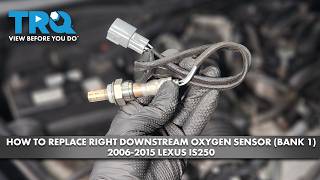
- EG015-07 / L-SB-0188-09: While not for a specific fault, these Lexus TSBs clarify the location of Bank 1 vs Bank 2 for service technicians, which is useful for diagnosis. Bank 1 contains cylinder #1, which on the 2GR-FSE is the passenger side in a RWD layout. 🎬 Watch: Step-by-step guide for replacing the Bank 1 downstream sensor.
Platform-Specific Known Issues
- Real-World Repair Story: A user on ClubLexus with an IS350 (same engine/sensors) reported getting codes for Bank 2 sensors. After confirming Bank 1 is the passenger side for the 2GR-FSE engine, they replaced all four O2 sensors as preventative maintenance. They confirmed the Denso part number for the downstream sensor on RWD models is 234-4521 for both banks. This cross-confirms the part and the fix.
Mechanic-Grade Diagnostic Values
- O2 Sensor Heater Circuit Resistance — expected: 5.1 to 6.3 Ohms at 68°F (20°C). Failure: A reading of OL (Open Loop/infinite resistance) or a value significantly outside the specified range indicates a failed heater element. 🎬 See how to test O2 sensor heater circuits with a multimeter.
- Downstream O2 Sensor (B1S2) Voltage at Idle (Warmed Up) — expected: A relatively stable voltage that fluctuates slowly, typically between 0.1V and 0.9V.. Failure: The voltage is stuck as a flat line (no activity), often near 0V, 0.45V, or another fixed value for an extended period.
Hidden / Shadow Codes Worth Checking
- Techstream O2 Sensor Health Check Failure: → Shop Oxygen Sensor Within the Techstream software, there are specific health checks for O2 sensors, such as the '0.45V MOR test' and 'Out Tilt test'. A sensor can fail these internal tests, indicating a performance issue, even before a formal DTC like P0140 is set and the Check Engine Light comes on. (see via Toyota/Lexus Techstream diagnostic software under the Engine ECU's utility or health check menu.)
- Mode $06, TID $05, CID $02: This specific monitor ID generally corresponds to the O2 Sensor Monitor for Bank 1, Sensor 2. A 'Fail' status on this test in a generic advanced scan tool can be a precursor to the P0140 code, indicating the sensor's response is becoming sluggish or falling out of its expected parameters. (see via Any advanced OBD-II scanner capable of displaying Mode $06 data.)
Scan Tool Commands That Help
- Techstream: Active Test: 'Control the Injection Volume for A/F Sensor' — This test is primarily for the upstream Air/Fuel sensor, but it can be useful if P0140 persists after sensor replacement. By commanding the fuel mixture rich (+12.5%) or lean (-12.5%), you can observe if the new downstream O2 sensor responds accordingly. If the upstream A/F sensor is lazy and not responding correctly to this test, it can sometimes cause confusing readings downstream. This helps verify the entire system is responding to commanded changes.
Wiring & Ground Locations
- Ground Point E1 / E2 — On the 2GR-FSE, key engine grounds are located on the rear of the engine compartment, near the firewall. Specifically, ground points E1 (left side) and E2 (right side) serve as grounds for the Engine Control Module and the shields for numerous sensors, including the Heated Oxygen Sensors.. A corroded or loose connection at this primary ground point can introduce electrical noise or a poor ground path for the O2 sensor circuit, potentially causing a 'no activity' code even if the sensor and its direct wiring are good.
Real Owner Repair Stories
- Reddit user on r/3rdGen4Runner (Toyota 4Runner 3.4L V6 (different vehicle, but same OEM supplier and principle)) — Check Engine Light for an O2 sensor.
❌ Tried (didn't work) Initially purchased a cheap, non-Denso aftermarket oxygen sensor from Amazon to save money.
✅ What actually fixed it The user was advised by others that for Toyota vehicles, only Denso (the OEM) sensors should be used for reliability. They returned the cheap sensor, purchased the correct Denso sensor, and the Check Engine Light was resolved. This highlights the risk of using no-name electrical parts.
OEM Part Supersession History
89465-30730→No known supersession. This part number remains current.— N/A
Heads up: While no supersession exists, it is critical to use either the OEM part or the Denso 234-4521 equivalent. Forum users strongly advise against using other aftermarket brands like Bosch for Toyota/Lexus O2 sensor applications due to frequent compatibility issues.
Diagnostic Flowchart
Other Known Issues on This Vehicle
Issues unrelated to this code that are worth knowing about as an owner of this generation:
- Sticky/Melting Dashboard and Interior Panels 🟠 Medium — Very common, especially in regions with high heat and humidity. Can occur at any mileage. (Ref: Lexus Customer Support Program ZLZ.)
- Water Pump Failure 🔴 High — A known weakness of the 2GR-FE/FSE engine family, often failing between 60k-120k miles. Failure can be gradual (weeping/noise) or sudden, leading to rapid overheating.
- Carbon Buildup on Intake Valves 🟠 Medium — Common to all early direct-injection (D-4S) engines like the 2GR-FSE. Symptoms like rough idle or misfires may appear after 80k-100k miles. (Ref: L-SB-0039-12 (Addresses misfire due to carbon, but not a preventative measure))
- Fuel Pulsation Damper Leak 🔴 High — Affects a range of 2GR-FSE engines, leading to a fuel smell or visible leak. (Ref: Recall JLF.)
Used vs. New Parts: Buying Guide for This Vehicle
When a used part is the smart pick: For this repair, a used part is NEVER recommended. Oxygen sensors are a wear-and-tear item with a finite lifespan, similar to spark plugs or brake pads. Installing a used sensor is likely to result in another failure in a short amount of time.
What to inspect on the donor part:
- Not applicable. Do not buy a used oxygen sensor.
OEM-only on this vehicle (don't cheap out):
- While not strictly 'OEM-only', the consensus among Lexus/Toyota enthusiasts is to only use the original equipment manufacturer, Denso, or a genuine Lexus part.
Aftermarket brands forum-validated for this vehicle:
- Denso (specifically part number 234-4521 for this application)
- NTK (also a highly regarded OEM supplier for many brands)
Brands owners have reported issues with on this vehicle:
- Bosch (while a major OEM for European cars, their sensors are frequently reported to cause issues in Toyota/Lexus vehicles)
- Generic, no-name brands from online marketplaces like Amazon or eBay.
Real Owner Stories
Aggregated from forums and TSBs cited above. Mileages and costs reflect what owners reported in those sources.
2006-2013 Lexus IS 350 (2GR-FSE 3.5L V6)
Symptoms: Owner reported getting codes for Bank 2 sensors and sought to confirm bank locations for the 2GR-FSE engine.
What fixed it: Replaced all four O2 sensors as preventative maintenance, using Denso part number 234-4521 for the downstream sensors.
Source hint: ClubLexus.com Thread 'Help Bank 2 Sensor 1 & Bank 2 Sensor 2'
Lexus GS (2GR-FSE 3.5L V6)
Symptoms: The owner incorrectly replaced the upstream sensor first due to a misdiagnosis of the P0140 code.
What fixed it: Correctly identified Bank 1 Sensor 2 as the downstream sensor on the front-most header bank and replaced it.
Source hint: ClubLexus.com Thread 'P0140 o2 sensor'
Related OBD-II Codes
Frequently Asked Questions
Where is the Bank 1, Sensor 2 oxygen sensor located on my Lexus GS 350?
Which specific Denso part number should I use for the downstream O2 sensor?
Do TSBs EG015-07 or L-SB-0188-09 provide a fix for the P0140 code?
Can I use a Bosch sensor as a cheaper alternative for my GS 350?
How can I confirm if the sensor heater has failed on my 2007-2011 GS 350?
Is the P0140 code related to the carbon buildup issues common on the 2GR-FSE?
Helpful Videos
We Have This Part in Stock



The information in this article is provided for general reference and educational purposes only. Vehicle specifications, procedures, and part compatibility can vary by production date, trim level, and region. Always consult your vehicle's factory service manual and verify part numbers before purchasing or performing repairs. Safety-critical components such as airbags, seat belts, and braking systems should be installed by a qualified professional.
- Lexus GS 350:
- 🧭 Diagnostic Flowchart
- 🎬 Helpful Videos
- 🛍️ Shop This Part
- What's Unique About the 2007-2011 Lexus GS 350
- Symptoms You May Notice
- Most Likely Causes
- Rare But Worth Checking
- Diagnosis Steps
- Parts You'll Likely Need
- Technical Service Bulletins (TSBs) & Recalls
- Platform-Specific Known Issues
- Mechanic-Grade Diagnostic Values
- Hidden / Shadow Codes Worth Checking
- Scan Tool Commands That Help
- Wiring & Ground Locations
- Real Owner Repair Stories
- OEM Part Supersession History
- Other Known Issues on This Vehicle
- Used vs. New Parts: Buying Guide for This Vehicle
- Real Owner Stories
- 2006-2013 Lexus IS 350 (2GR-FSE 3.5L V6)
- Lexus GS (2GR-FSE 3.5L V6)
- Related OBD-II Codes
- Frequently Asked Questions
- 🎟️ Get 5% Off