

P0140 on 2010-2013 Mazda 3: Diagnosing and Fixing O2 Sensor Circuit Inactivity
This code almost always points to a failed downstream oxygen sensor (Bank 1, Sensor 2). Expect to pay around $60-$120 for an aftermarket sensor or $150+ for an OEM part. It's a straightforward DIY replacement for those with basic tools, with a difficulty of 2/5. Before replacing, always check the wiring for damage and the relevant fuse.
- P0140 on a 2010-2013 Mazda 3 means the rear oxygen sensor (Bank 1, Sensor 2) is not sending a signal.
- The most likely cause is simply a failed oxygen sensor, which is a common wear item.
- Before buying parts, visually inspect the sensor's wiring and connector for any damage, and check the associated fuse in the engine bay fuse box.
- If P0140 appears with P2096, strongly suspect an exhaust leak between the two O2 sensors.
- Driving with this code is safe, but you will fail an emissions test and should get it repaired to ensure the emissions system is functioning correctly.
- This is a DIY-friendly repair with the right tool (an O2 sensor socket) and can save you significant labor costs.
What's Unique About the 2010-2013 Mazda 3
For the second-generation (BL) Mazda 3, the P0140 code is a very common and straightforward issue, typically leading directly to the rear O2 sensor. There are no widespread, unique design flaws that make this vehicle particularly prone to the code outside of normal wear and tear. However, owners on forums frequently see this code appear alongside P2096 (Post Catalyst Fuel Trim System Too Lean). This combination strongly suggests an issue where the sensor is pegged lean, which the PCM interprets as 'no activity'. This could be due to an exhaust leak between the two O2 sensors, a failing sensor providing a false lean reading, or in some cases, a wiring issue.
Symptoms You May Notice
- Check Engine Light is on.
- Vehicle will fail an emissions test.
- Potential for slightly reduced fuel economy.
- In rare cases, a slight hesitation during acceleration, particularly when the engine is cold.
- Replacing the catalytic converter. A P0140 code indicates a problem with the sensor circuit, not necessarily the converter itself. A bad converter would typically set a P0420 (Catalyst System Efficiency Below Threshold) code.
- Replacing the upstream O2 sensor (Bank 1, Sensor 1). This code specifically points to the downstream sensor (Sensor 2).
Most Likely Causes
- Failed Downstream Oxygen Sensor (Bank 1, Sensor 2) 🔴 High Probability → Shop Oxygen Sensor Oxygen sensors are wear-and-tear items that degrade over time, typically after 100,000 miles. The internal heating element can fail, or the sensing element can become contaminated, leading to a lack of signal or a signal that is stuck.
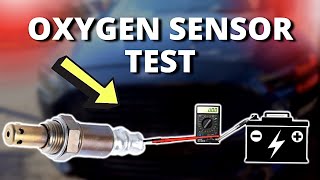
How to confirm: Use an OBD-II scanner to watch the live data for the 'B1S2' O2 sensor. The voltage should fluctuate slowly on a healthy sensor, averaging around 0.7V at idle. If it's stuck at a fixed voltage (e.g., ~0.45V) or shows 0V for an extended period, the sensor is likely dead. You can also test the internal resistance of the sensor's heater circuit with a multimeter; 🎬 Watch: A pro shows you how to test an oxygen sensor a reading between 4-20 Ohms is normal, while 'OL' (Open Loop) or a very high reading indicates a failed heater.
Typical fix: Replace the Bank 1, Sensor 2 oxygen sensor. This sensor is located on the exhaust pipe after the catalytic converter.
Est. part cost: $60-$220 - Damaged Wiring or Connector 🟡 Medium Probability The sensor and its wiring are located under the vehicle, exposed to road debris, moisture, and extreme heat from the exhaust. Wires can become frayed, melted, or corroded, and connector pins can lose contact. Sometimes a connector is simply forgotten to be plugged back in after other service.
How to confirm: Visually inspect the entire wiring harness from the O2 sensor to where it connects to the main vehicle harness. Look for any signs of melting, chafing, or corrosion inside the connector plug. A user on Mazdas247 reported fixing a P0140 code by cleaning the connector and applying dielectric grease after washing the engine bay.
Typical fix: Repair the damaged section of wire or clean/replace the connector.
Est. part cost: $5-$50 - Blown Fuse for O2 Sensor Heater Circuit ⚪ Low Probability → Shop Oxygen Sensor The O2 sensor has an internal heater to bring it to operating temperature quickly. This heater circuit is protected by a fuse. A short in the wiring or the sensor itself can cause this fuse to blow, preventing the sensor from warming up and thus showing 'no activity'.
How to confirm: Consult your owner's manual or the fuse box diagram on the underside of the fuse box lid. The fuse is typically located in the engine compartment fuse box. Mazda often labels it generically, such as 'Engine Control System', so you may need to check a few related fuses.
Typical fix: Replace the blown fuse. If it blows again immediately, there is an underlying short circuit in the wiring or the sensor itself that must be found and fixed.
Est. part cost: $1-$5
Rare But Worth Checking
- Exhaust Leak: An exhaust leak between the upstream and downstream sensors can introduce outside air, causing the sensor to read a constant lean condition (low voltage). The PCM might interpret this flat, low voltage as 'no activity'. This is a very common culprit when P0140 is paired with P2096.
- Faulty Powertrain Control Module (PCM): → Shop Engine Control Module (ECM) This is extremely rare. Before condemning the PCM, all other possibilities (sensor, wiring, fuses, exhaust leaks) must be exhaustively ruled out. A faulty PCM driver for the O2 sensor circuit can mimic a dead sensor.
Diagnosis Steps
- Read the code with an OBD-II scanner to confirm P0140 is present and check for any other codes like P2096.
- Visually inspect the Bank 1 Sensor 2 (downstream) O2 sensor's wiring harness and connector for any obvious damage, melting, or corrosion. Ensure the connector is securely plugged in.
- Check the fuse for the O2 sensor heater circuit in the engine bay fuse box. It may be labeled 'ENG' or similar.
- Use a scan tool with live data capability to monitor the voltage of 'O2S B1S2'. Start the engine and let it warm up. A healthy sensor will show a slowly fluctuating voltage, typically averaging around 0.6-0.8V. If the voltage is stuck at a fixed value (e.g., 0.45V), drops to 0V, or stays flat below 0.2V, the sensor or its circuit is inactive.
- If the wiring and fuse are good, the most probable cause is a failed O2 sensor.
- If a new sensor does not resolve the issue (especially if P2096 is also present), perform a more in-depth check of the wiring for continuity and shorts to ground using a multimeter.
- Thoroughly check for exhaust leaks between the engine and the downstream O2 sensor. A smoke test is the most effective method.
Parts You'll Likely Need
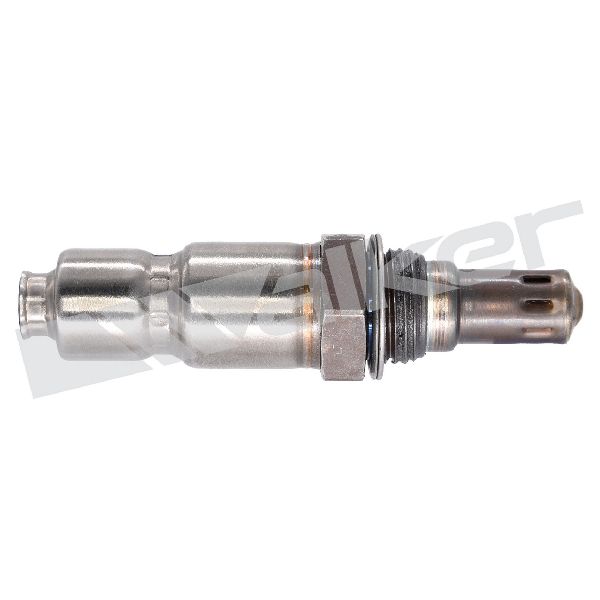
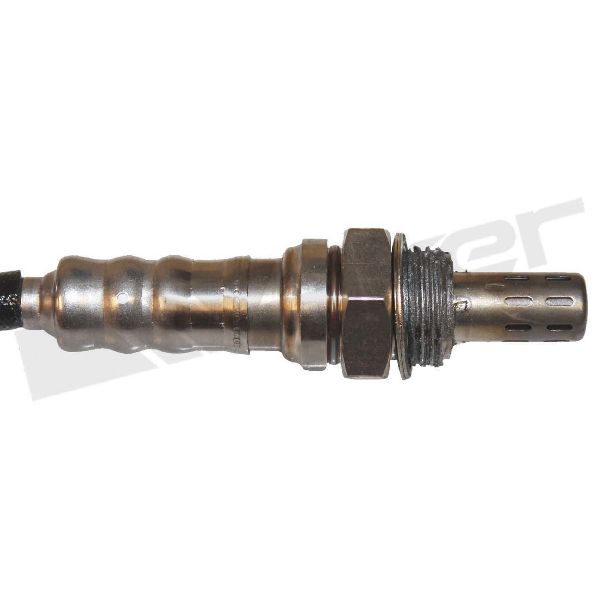
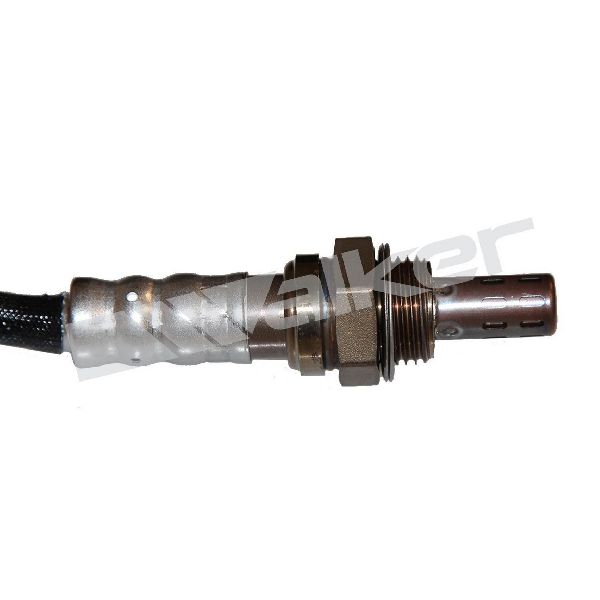
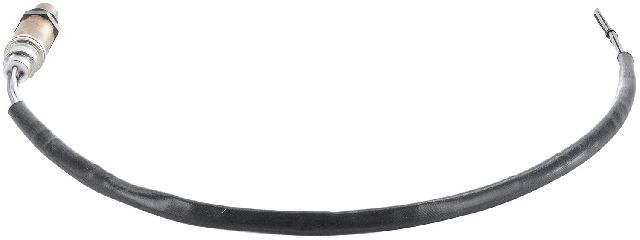
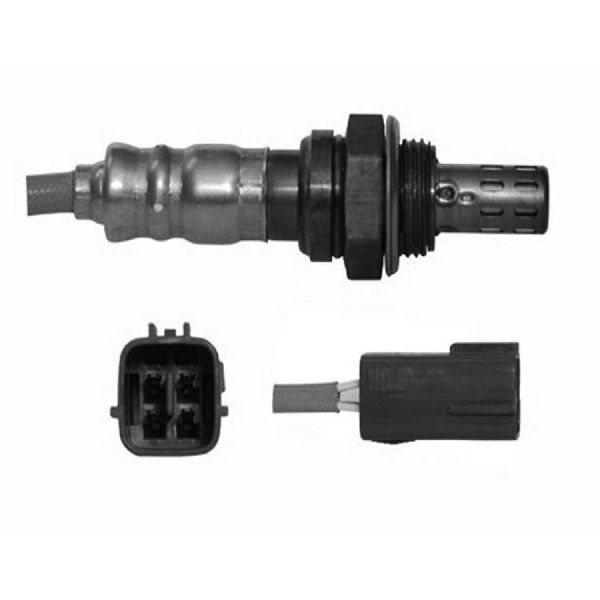
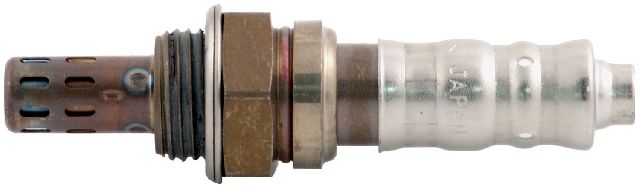
- Downstream Oxygen Sensor (Bank 1, Sensor 2)
(OEM #L541-18-861A)— This is the most common failure point for a P0140 code. The sensor's internal components wear out over time.
Trusted brands: NTK (OEM supplier), Denso (OEM supplier), Bosch, Walker
OEM price range: $150-$220
Aftermarket price range: $60-$120
Related Codes That Often Appear With This One
- P2096 — P2096 (Post Catalyst Fuel Trim System Too Lean Bank 1) is very frequently seen with P0140. It occurs when the sensor is failing in a way that it reads excessively lean, which the PCM can interpret as a lack of activity. This combination strongly points towards an exhaust leak between the sensors or a sensor that is failing by reading falsely lean. There is a Canadian TSB for some models that involves a PCM reprogram for recurring P2096 codes.
- P0139 — P0139 (O2 Sensor Circuit Slow Response Bank 1 Sensor 2) is a related code that may appear before P0140 as the sensor begins to fail and its response time degrades.
- P0171 — P0171 (System Too Lean Bank 1) can sometimes appear if there are issues with the MAF sensor or vacuum leaks that cause a lean condition throughout the system, although this is less common to see with P0140 than P2096.
Technical Service Bulletins (TSBs) & Recalls
- Canadian TSB 01-13-26: While not directly for P0140, this TSB addresses a PCM reprogramming for recurring P2096 codes on some models, which is often seen alongside P0140.
Platform-Specific Known Issues
- Recurring P0140 with P2096: A common report on forums for this Mazda 3 generation is getting both P0140 and P2096 codes. In one detailed case on Reddit, a user had the sensor replaced multiple times without fixing the issue. The underlying cause is often an exhaust leak that introduces air, causing a false lean reading that the PCM interprets as 'no activity'. Before repeatedly replacing the sensor, a thorough exhaust inspection is critical.
Mechanic-Grade Diagnostic Values
- Downstream O2 Sensor (B1S2) Heater Circuit Resistance — expected: 4 - 20 Ohms. Failure: Infinite resistance (OL) or a value significantly outside the expected range indicates a failed internal heater.
- Downstream O2 Sensor (B1S2) Voltage at Idle (Warm Engine) — expected: Slowly fluctuating, averaging around 0.6V - 0.8V.. Failure: Voltage is stuck (e.g., ~0.45V), flatlined near 0V, or pegged high (above 1.0V). A reading over 2.4V can indicate an open in the reference ground wire.
- Downstream O2 Sensor (B1S2) PCM Pin Voltage — expected: Varies based on operating conditions. See wiring diagrams for specific test procedures.. Failure: No voltage or incorrect voltage at the PCM pin when the sensor and wiring are known to be good can indicate a PCM fault.
Scan Tool Commands That Help
- High-end OBD-II Scanner (e.g., Mazda IDS, Autel, Snap-on): O2 Sensor Heater Circuit Bidirectional Test — Use this command to manually activate the B1S2 heater circuit. If the command is sent but the sensor does not heat up (as verified by live data or an amp clamp), it confirms a failure in the sensor's heater or its wiring, helping to isolate the fault without removing the part.
Wiring & Ground Locations
- Downstream O2 Sensor Connector — Under the vehicle, on the exhaust pipe after the catalytic converter. The connector is typically clipped to the vehicle's underbody a short distance from the sensor itself.. This connector is a common failure point due to exposure to moisture and road debris, which can cause corrosion on the pins and lead to a 'no activity' signal.
- PCM Pin 2AE (2.0L) / 2Z (2.5L) - HO2S Signal — At the Powertrain Control Module (PCM) main connector, located in the engine bay.. This is the specific pin where the PCM receives the voltage signal from the downstream O2 sensor. Testing for continuity and voltage here can confirm if the signal is reaching the PCM, ruling out wiring issues between the sensor and the computer. (Pin numbers based on available diagrams, always verify with a vehicle-specific manual).
- PCM Pin 2T (2.0L) / 2S (2.5L) - HO2S Heater Control — At the Powertrain Control Module (PCM) main connector.. This pin is where the PCM sends the command to activate the sensor's heater. A lack of signal here, or a short to ground on this circuit, can cause the heater to fail and trigger P0140. (Pin numbers based on available diagrams, always verify with a vehicle-specific manual).
- Engine/Chassis Ground Points — Key grounds are typically located from the negative battery terminal to the driver's side strut tower, on the engine block, and on the transmission housing.. A poor engine or chassis ground can create a floating voltage reference for various sensors, including the O2 sensor, leading to erratic or flatlined readings that the PCM interprets as a fault.
Real Owner Repair Stories
- Mazdas247.com forum user (Mazda (model year not specified, but code is relevant)) — Check Engine Light with code P0140 appeared after washing the engine bay.
❌ Tried (didn't work) Initially just read the code.
✅ What actually fixed it The owner disconnected the downstream O2 sensor's electrical connector, cleaned the contacts, applied dielectric grease, and reconnected it. This resolved the code immediately. - Reddit user in r/MechanicAdvice (2012 Mazda 3 Skyactiv (different engine but relevant repair process)) — Check Engine Light (P013a initially, related to O2 sensor), louder than normal engine/muffler sound.
❌ Tried (didn't work) Clearing the code., Patching a suspected exhaust leak (code returned).
✅ What actually fixed it The problem was ultimately the downstream O2 sensor itself. The owner had to apply rust penetrant (Liquid Wrench) over several days to loosen the seized sensor before successfully removing and replacing it with a 22mm box wrench.
When the Usual Fixes Don't Work
- In cases where P0140 is accompanied by P2096 (lean condition), simply replacing the O2 sensor often does not fix the issue. A Reddit user with a 2010 Mazda 3 reported having the sensor replaced multiple times by a shop to no avail. The actual cause in these scenarios is frequently an air leak in the exhaust system between the upstream and downstream sensors, which allows unmetered oxygen to hit the sensor, causing it to read lean and flatline. A thorough smoke test of the exhaust system is a more critical diagnostic step than immediately replacing the sensor when these two codes appear together.
OEM Part Supersession History
L541-18-861→L541-18-861A (current); also seen as L541-18-861A-9U— Standard part revision by the manufacturer, likely for improved durability or minor design changes.
Model Year Variations Within This Range
- 2012-2013: For the 2012 model year, Mazda introduced the 2.0L Skyactiv-G engine alongside the existing 2.0L and 2.5L MZR engines. While the function of the downstream O2 sensor is the same, part numbers and diagnostic specifics may differ. This guide primarily focuses on the MZR engines.
- 2010-2011 (early BL models): A known PCM software issue on early second-generation models could cause a false P2096 code, which is often paired with P0140. If both codes are present and a new sensor/exhaust check doesn't fix it, a PCM software update at a dealership may be required.
Diagnostic Flowchart
Used vs. New Parts: Buying Guide for This Vehicle
When a used part is the smart pick: A used O2 sensor is NOT recommended as it is a wear item with a limited lifespan. However, sourcing a used wiring harness pigtail/connector from a junkyard is a smart and cost-effective choice if only the connector is damaged.
Donor-vehicle mileage cap: roughly under 100000 miles for the part to have meaningful remaining life.
What to inspect on the donor part:
- For a used connector: ensure the locking tab is intact and clicks securely.
- Check for the absence of green or white corrosion on the electrical pins.
- Ensure the attached wires are flexible and the insulation is not cracked or brittle.
OEM-only on this vehicle (don't cheap out):
- No parts for this specific repair are considered 'OEM-only', as high-quality aftermarket alternatives are widely available and trusted.
Aftermarket brands forum-validated for this vehicle:
- NTK (often the original OEM supplier)
- Denso (often the original OEM supplier)
- Walker Products
Brands owners have reported issues with on this vehicle:
- Some owners report mixed results or reduced fuel economy with universal-fit sensors or certain budget brands like Bosch on Japanese vehicles, though experiences vary. Sticking to a direct-fit sensor from NTK or Denso is the safest bet.
Real Owner Stories
Aggregated from forums and TSBs cited above. Mileages and costs reflect what owners reported in those sources.
2010 Mazda 3 2.0L — 65499 miles
Symptoms: Check engine light with codes P0140 and P2096.
What fixed it: The issue was not resolved; the codes kept returning despite replacing the O2 sensor multiple times.
Source hint: Reddit r/autorepair
2013 Mazda 3 2.0L — ~50000 miles
Symptoms: Check engine light with code P0140.
What fixed it: A final resolution was not found as the owner sold the car. Cleaning the Mass Airflow Sensor provided only a temporary fix.
Source hint: Mazdas247
2010 Mazda 3
Symptoms: Constantly reoccurring P0140 and P2096 codes.
What fixed it: The owner had the B1S2 sensor replaced multiple times, but the codes kept returning. The discussion pointed towards needing to hunt for exhaust leaks, wiring issues, or a bad catalytic converter as the next steps.
Source hint: r/autorepair on Reddit
Symptoms: Check Engine Light with P0140 code appeared after washing the engine bay.
What fixed it: The owner fixed the issue by cleaning the O2 sensor electrical connector and using dielectric grease.
Source hint: Mazdas247.com
Related OBD-II Codes
Frequently Asked Questions
My Mazda 3 is showing both P0140 and P2096. Does this mean I have two separate problems?
Where is the Bank 1, Sensor 2 oxygen sensor located on my 2010-2013 Mazda 3?
What should the voltage for the downstream O2 sensor (B1S2) look like on a scan tool?
Could a blown fuse cause the P0140 code on my Mazda 3?
I washed my engine bay and now have a P0140 code. Could that be related?
Does TSB 01-13-26 apply to the P0140 code?
Helpful Videos
We Have This Part in Stock

The information in this article is provided for general reference and educational purposes only. Vehicle specifications, procedures, and part compatibility can vary by production date, trim level, and region. Always consult your vehicle's factory service manual and verify part numbers before purchasing or performing repairs. Safety-critical components such as airbags, seat belts, and braking systems should be installed by a qualified professional.
- Mazda 3:
- 🧭 Diagnostic Flowchart
- 🎬 Helpful Videos
- 🛍️ Shop This Part
- What's Unique About the 2010-2013 Mazda 3
- Symptoms You May Notice
- Most Likely Causes
- Rare But Worth Checking
- Diagnosis Steps
- Parts You'll Likely Need
- Related Codes That Often Appear With This One
- Technical Service Bulletins (TSBs) & Recalls
- Platform-Specific Known Issues
- Mechanic-Grade Diagnostic Values
- Scan Tool Commands That Help
- Wiring & Ground Locations
- Real Owner Repair Stories
- When the Usual Fixes Don't Work
- OEM Part Supersession History
- Model Year Variations Within This Range
- Used vs. New Parts: Buying Guide for This Vehicle
- Real Owner Stories
- 2010 Mazda 3 2.0L — 65499 miles
- 2013 Mazda 3 2.0L — ~50000 miles
- 2010 Mazda 3
- Related OBD-II Codes
- Frequently Asked Questions
- 🎟️ Get 5% Off