

P0140 on 2017-2024 Mazda CX-5 2.5T: Causes and Fixes for O2 Sensor Inactivity
On a 2019-2024 Mazda CX-5 with the 2.5T engine, code P0140 almost always means the downstream oxygen sensor (Bank 1, Sensor 2) has failed. The most reliable fix is to replace the sensor with a quality part from an OEM supplier like Denso or NTK. Expect to pay $70-$150 for the part, with a DIY difficulty of 2/5.
- P0140 on your CX-5 2.5T means the rear oxygen sensor has almost certainly failed.
- This is a simple fix that does not affect driving safety, but it will cause you to fail an emissions test.
- Do not use cheap or non-specified aftermarket oxygen sensors. Stick with OEM-supplier brands like Denso or NTK for a lasting repair.
- Before replacing the sensor, perform a quick visual check of the wiring underneath the car for any obvious melting or damage.
- Ensure you are buying the correct sensor for the 2.5T engine. The downstream (Sensor 2) is part number PE02-18-86ZA.
What's Unique About the 2017-2024 Mazda CX-5
For the 2019-2024 Mazda CX-5 with the Skyactiv-G 2.5T engine, P0140 is a straightforward component failure code. While this platform has some well-documented, serious issues like cracked cylinder heads (TSB 01-002/23) and excessive oil consumption on 2021 models (TSB 01-012/21), this specific O2 sensor code is not related to those larger systemic problems. Unlike some codes that point to known software glitches or wiring harness problems on other vehicles, P0140 on this Mazda typically follows a standard diagnostic path. The most common cause is simply the failure of the oxygen sensor itself, which is a normal wear-and-tear component.
Generation note: The 2017-2024 Mazda CX-5 is all part of the second generation (KF). However, the Skyactiv-G 2.5T engine was introduced for the 2019 model year. Therefore, this guide is most relevant for 2019-2024 models.
Symptoms You May Notice
- Check Engine Light is on
- Vehicle will fail an emissions inspection
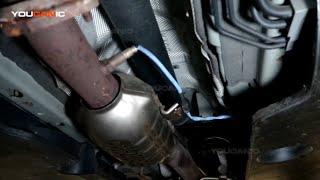
- Replacing the upstream (Bank 1, Sensor 1) oxygen sensor. This code specifically points to the downstream (Sensor 2) sensor, which has a different part number (PYFA-18-8G1A 🎬 Watch: This video helps you locate the Bank 1 Sensor 2. is upstream).
- Replacing the catalytic converter. A P0140 code indicates a problem with the sensor circuit, not the converter's efficiency. A bad converter would typically trigger a P0420 code.
- Using a cheap aftermarket sensor. Owners on forums frequently report that non-OEM brands like Bosch can cause persistent or immediate return of the code on Mazdas.
Most Likely Causes
- Failed Downstream Oxygen Sensor (Bank 1, Sensor 2) 🔴 High Probability → Shop Oxygen Sensor Oxygen sensors are wear items that degrade over time from heat and contaminants. The internal heating element is a common point of failure, which prevents the sensor from reaching the necessary operating temperature to generate a voltage signal.
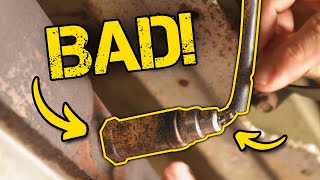
How to confirm: Using a scan tool, observe the live data for 'O2S12' voltage. If the voltage is a flat line (e.g., stuck at 0V, 0.45V, or 0.9V) and does not fluctuate after the engine 🎬 See how to test for a bad sensor using live data. is fully warmed up, the sensor has failed. A healthy downstream sensor should show slow fluctuations, typically staying above 0.6V.
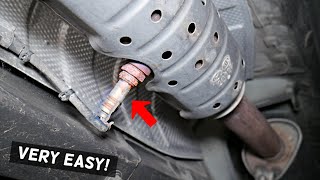
Typical fix: Replace the downstream oxygen sensor. It is located on the exhaust pipe after the catalytic converter. 🎬 Watch: This walkthrough shows how to replace the downstream sensor.
Est. part cost: $70-$180 - Damaged Wiring or Connector 🟡 Medium Probability The sensor and its wiring are located under the vehicle, exposed to road debris, water, and extreme heat from the exhaust. Wires can become frayed, melted, or corroded, and connector pins can lose contact.
How to confirm: Visually inspect the entire wiring harness from the O2 sensor to its connection point. Look for any signs of melting, chafing, or corrosion. Use a multimeter to check for continuity and proper voltage at the connector for the heater circuit.
Typical fix: Repair the damaged section of wiring or replace the connector pigtail.
Est. part cost: $15-$50 - Exhaust Leak ⚪ Low Probability A leak in the exhaust system between the engine and the downstream sensor can introduce outside air. This can cause an incorrect reading that the PCM might interpret as no activity, although it more commonly sets a lean code (P2096).
How to confirm: Listen for a ticking or hissing sound from the exhaust, especially on a cold start. A smoke test is the most effective way to pinpoint the location of a small leak.
Typical fix: Replace the leaking gasket or repair the cracked section of the exhaust pipe.
Est. part cost: $20-$100
Rare But Worth Checking
- Blown Fuse: The O2 sensor's heater circuit is protected by a fuse. While rare, a blown fuse will prevent the heater from working, leading to a 'no activity' code. Check the fuse box diagram for a fuse labeled 'O2' or 'HEATER'.
- Faulty Powertrain Control Module (PCM): → Shop Engine Control Module (ECM) This is extremely rare and should only be considered after all other possibilities (sensor, wiring, leaks, fuses) have been exhaustively ruled out. A faulty PCM driver for the sensor circuit is a last resort diagnosis.
Diagnosis Steps
- Read the code with an OBD-II scanner to confirm P0140 is the only code present. Check freeze frame data to see engine conditions when the code was set.
- Visually inspect the downstream O2 sensor's wiring harness and connector for any obvious signs of damage, such as melting on the exhaust pipe or frayed wires.
- With the engine running and fully warmed up, use a scan tool to monitor the live data stream for the Bank 1 Sensor 2 voltage ('O2S12 V'). It should fluctuate slowly. If it is a flat, unchanging number (e.g., stuck at 0.45V), this confirms the 'no activity' fault.
- If the signal is flat, the next step is to test the sensor's heater circuit. Check the fuse for the O2 sensor heater.
- If the fuse is good, disconnect the sensor and use a multimeter to check for 12V power and ground at the heater circuit pins on the harness connector side (with the key on, engine off).
- If power and ground are present at the harness, the sensor itself is faulty. Replace the downstream O2 sensor with an OEM or high-quality NTK/Denso part.
- If power or ground is missing, there is a break in the wiring between the fuse box/PCM and the sensor connector that must be traced and repaired.
Parts You'll Likely Need
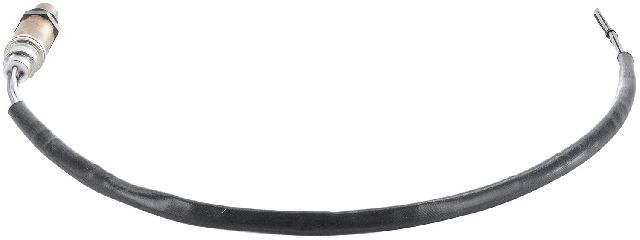
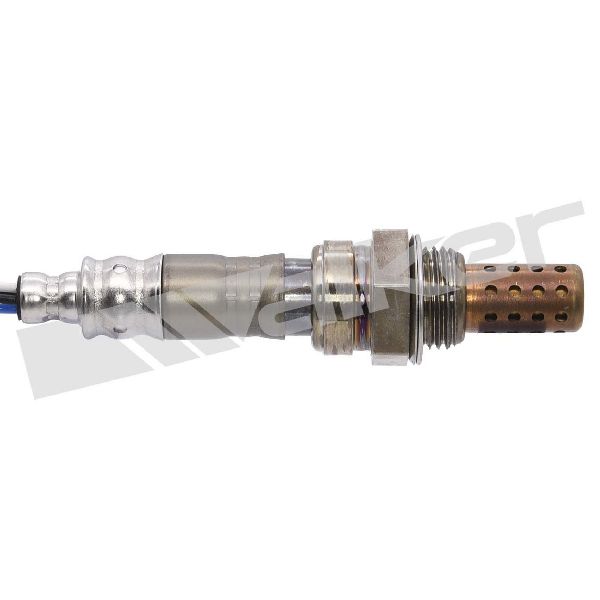
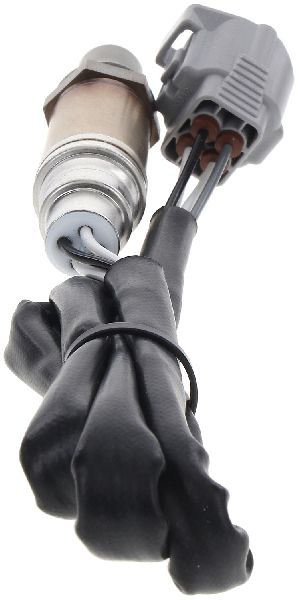
- Downstream Oxygen Sensor (Bank 1, Sensor 2)
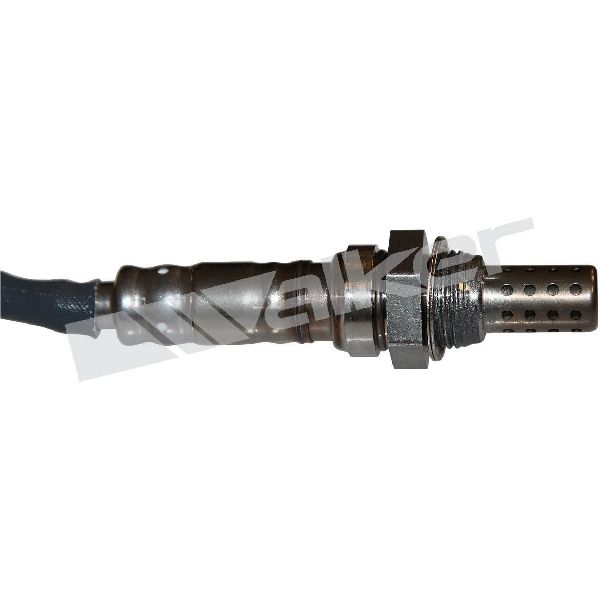
(OEM #PE02-18-86ZA (supersedes PE02-18-86Z))— This is the component that has failed in the vast majority of P0140 cases on the 2.5T engine. It is a wear item. NOTE: Part number PYFB-18-86Z is for the NON-TURBO engine and is incorrect for this application. The upstream sensor is PYFA-18-8G1A and is also incorrect for this code.
Trusted brands: Denso (OEM Supplier), NTK (OEM Supplier)
OEM price range: $150-$220
Aftermarket price range: $70-$150
Technical Service Bulletins (TSBs) & Recalls
- TSB 01-002/23: Addresses coolant leaks from a cracked cylinder head on some 2.5T engines. While unrelated to P0140, it's a critical issue for owners to be aware of.
- TSB 01-012/21: Details the excessive oil consumption issue on 2021 2.5T models due to faulty valve stem seals. Also unrelated to P0140 but a major platform issue.
Mechanic-Grade Diagnostic Values
- Downstream O2 Sensor (B1S2) Heater Circuit Resistance — expected: 5 to 15 Ohms at room temperature. A Denso OEM sensor should be tighter, around 5.6 Ω +/- 0.8 Ω.. Failure: A reading of OL (Open Loop / infinite resistance) or a value significantly outside the 5-15 Ohm range indicates a failed heater element.
- Downstream O2 Sensor (B1S2) Live Data Voltage — expected: On a fully warmed-up engine at steady RPM, a healthy downstream sensor will show a relatively stable voltage that fluctuates slowly, typically between 0.5V and 0.8V.. Failure: The voltage is a flat line, stuck at a fixed value like 0.0V, 0.45V, or 0.9V, and does not change for over 30-70 seconds.
- O2 Sensor Heater Circuit Power Supply at Harness — expected: Approximately 12V (battery voltage) with the key in the ON position, engine off.. Failure: A reading of 0V indicates a blown fuse or a break in the power supply wire to the sensor.
Hidden / Shadow Codes Worth Checking
- Mode $06, TID $05, CID $02: This is the On-Board Diagnostic Monitor ID for the O2 Sensor Monitor (Bank 1, Sensor 2). A 'Fail' status on this specific test can indicate an emerging problem with the sensor's response time or signal amplitude, even before the main P0140 DTC is set continuously. (see via An advanced scan tool capable of displaying Mode $06 data, such as FORScan, Autel, or Snap-on scanners.)
Scan Tool Commands That Help
- Mazda IDS, Autel, FORScan: O2 Sensor Heater Circuit Bidirectional Test — Use this command to manually force the B1S2 heater circuit on. If the command is sent but the sensor does not heat up (which can be verified by touching the sensor carefully or watching for a change in live data), it confirms a failure in the sensor's heater element or its wiring, isolating the fault from the PCM.
- FORScan, M-MDS: Run On-Board Diagnostic (OBD) System Readiness Test — After replacing the sensor and clearing the P0140 code, initiating this function forces the PCM to quickly re-run all emissions monitors. This allows for rapid verification that the repair was successful without having to complete a full, lengthy drive cycle.
Wiring & Ground Locations
- G03 — Located on the left front of the engine compartment, typically a ring terminal bolted to the chassis or strut tower area.. This is a primary engine and PCM ground point. While not exclusive to the O2 sensor, a poor or corroded connection here can cause erratic behavior in multiple sensors, including the O2 sensors, leading to false codes. Always check main grounds when diagnosing electrical faults.
- O2 Sensor Connector Pinout Diagnosis — At the downstream O2 sensor's electrical connector under the vehicle.. Instead of a diagram, a technician can identify the pins functionally. The two wires for the heater circuit are almost always the same color (e.g., two white or two black wires). With the key on, one of the other two wires will have ~12V power. The remaining wires are for the sensor signal and signal ground. Testing for power and resistance across the heater pins is a definitive diagnostic step.
Real Owner Repair Stories
- Reddit r/MechanicAdvice (2014 Mazda CX-5) — Check Engine Light with code P0140 after previously fixing a P013A.
❌ Tried (didn't work) Replacing the downstream oxygen sensor with a Bosch brand sensor.
✅ What actually fixed it The community consensus was that the Bosch sensor was the likely problem, as Mazdas are notoriously sensitive to non-OEM supplier sensors. The confirmed fix is to use a sensor from Denso or NTK.
OEM Part Supersession History
PE02-18-86Z→PE02-18-86ZA— Standard manufacturer part revision for the downstream O2 sensor.
Heads up: This part is specific to the 2.5L Turbo engine. Do not use part number PYFB-18-86Z, as it is for the 2.5L non-turbo engine and may cause persistent codes despite physically fitting.
Diagnostic Flowchart
Other Known Issues on This Vehicle
Issues unrelated to this code that are worth knowing about as an owner of this generation:
- Cracked Cylinder Head (Coolant Leak) 🔴 High — Affects 2019-2020 2.5T models with VINs lower than JM3KF******830243. Can occur between 50k-80k miles. Caused by stress from the exhaust manifold. (Ref: TSB 01-002/23. Mazda also issued a warranty extension (CSP11) to 10 years/120,000 miles for this specific issue.)
- Excessive Oil Consumption (Valve Stem Seals) 🟠 Medium — Primarily affects 2021 2.5T models. Owners report low oil lights illuminating between 3,000-5,000 miles, well before scheduled oil changes. (Ref: TSB 01-012/21 and subsequent revisions. A class action settlement was reached, extending warranty and outlining repair procedures.)
- Tapping Noise from Engine (Hydraulic Lash Adjuster) 🟡 Low — Reported on some non-turbo models, but the underlying HLA components can be similar. Noise is most noticeable at idle. (Ref: TSB 01-002/21 describes the issue, caused by air in the oil passages of the HLA.)
- Premature Brake Wear 🟡 Low — A common owner complaint across multiple model years, though not a catastrophic failure. Owners report replacing pads and rotors sooner than expected.
- Fuel Pump Failures 🟠 Medium — Both low-pressure (in-tank) and high-pressure (engine bay) fuel pumps have been noted as weak points, potentially causing stalling or CELs like P0192. (Ref: A safety recall was issued by the NHTSA for the low-pressure fuel pump on over 121,000 units.)
Used vs. New Parts: Buying Guide for This Vehicle
When a used part is the smart pick: Only for the wiring harness connector pigtail if the original is physically damaged (e.g., melted or hit by road debris). A used sensor is never recommended.
Donor-vehicle mileage cap: roughly under 100000 miles for the part to have meaningful remaining life.
What to inspect on the donor part:
- For a wiring pigtail, inspect for brittle plastic, cracked wire insulation, or any signs of corrosion on the connector pins.
- Avoid any harness that shows signs of previous, non-professional repairs (e.g., butt connectors, twisted wires with electrical tape).
OEM-only on this vehicle (don't cheap out):
- Oxygen Sensor
Aftermarket brands forum-validated for this vehicle:
- Denso (OEM Supplier)
- NTK (OEM Supplier)
Brands owners have reported issues with on this vehicle:
- Bosch (Forum users frequently report incompatibility issues and immediate or premature failure on Mazda vehicles)
Real Owner Stories
Aggregated from forums and TSBs cited above. Mileages and costs reflect what owners reported in those sources.
2014 Mazda CX-5
Symptoms: The owner replaced the rear O2 sensor with a Bosch part, but the P0140 code returned immediately.
What fixed it: The community advised replacing the Bosch sensor with a Denso or NTK brand sensor, as Mazdas are sensitive to non-OEM equivalent parts.
Source hint: Reddit r/autorepair - 'P0140 code after rear O2 replacement?'
2014 Mazda CX-5
Symptoms: The owner originally had a P013A code and replaced the sensor with a Bosch unit, which then triggered a P0140 code that could not be cleared.
What fixed it: The owner experienced frustration with non-OEM parts; the solution involves using OEM-spec sensors (Denso/NTK) to ensure compatibility with the PCM.
Source hint: Reddit r/MechanicAdvice - '2014 Mazda CX-5 can't clear p0140 code'
Related OBD-II Codes
Frequently Asked Questions
Does TSB 01-002/23 regarding cracked cylinder heads cause the P0140 code on my 2.5T?
I have a 2021 CX-5 2.5T with high oil consumption; could this be related to my P0140 code?
Which brand of oxygen sensor should I use for my Mazda CX-5 to fix P0140?
Can an exhaust leak cause a P0140 code on this vehicle?
Is there a warranty extension that covers engine issues on my 2019 CX-5 2.5T?
Where is the sensor located that I need to replace for P0140?
Helpful Videos
We Have This Part in Stock

The information in this article is provided for general reference and educational purposes only. Vehicle specifications, procedures, and part compatibility can vary by production date, trim level, and region. Always consult your vehicle's factory service manual and verify part numbers before purchasing or performing repairs. Safety-critical components such as airbags, seat belts, and braking systems should be installed by a qualified professional.
- Mazda CX-5:
- 🧭 Diagnostic Flowchart
- 🎬 Helpful Videos
- 🛍️ Shop This Part
- What's Unique About the 2017-2024 Mazda CX-5
- Symptoms You May Notice
- Most Likely Causes
- Rare But Worth Checking
- Diagnosis Steps
- Parts You'll Likely Need
- Technical Service Bulletins (TSBs) & Recalls
- Mechanic-Grade Diagnostic Values
- Hidden / Shadow Codes Worth Checking
- Scan Tool Commands That Help
- Wiring & Ground Locations
- Real Owner Repair Stories
- OEM Part Supersession History
- Other Known Issues on This Vehicle
- Used vs. New Parts: Buying Guide for This Vehicle
- Real Owner Stories
- 2014 Mazda CX-5
- 2014 Mazda CX-5
- Related OBD-II Codes
- Frequently Asked Questions
- 🎟️ Get 5% Off