

P0140 on 2003-2010 Porsche Cayenne: O2 Sensor Circuit Causes and Fixes
On a 2003-2010 Porsche Cayenne, code P0140 almost always means the rear (post-catalyst) oxygen sensor on Bank 1 has failed. It's a common wear-and-tear item. Expect to pay $70-$150 for a quality aftermarket sensor (like Bosch, the OEM supplier) and around $200 for an OEM part. It's a straightforward DIY replacement for those with basic tools, though access is tighter on V8 models.
- P0140 on your Cayenne points directly to the rear oxygen sensor on the passenger side (LHD vehicles).
- Driving with this code is generally safe, but you will fail an emissions test and should get it fixed to prevent potential long-term issues.
- The most likely fix is to replace the Bank 1, Sensor 2 O2 sensor. Bosch is the OEM supplier, so a Bosch-branded part is a reliable choice.
- Before buying parts, always perform a visual inspection of the sensor's wiring and connector for obvious damage like melting or corrosion.
- Do not mistake this code for a bad catalytic converter; it's a sensor circuit fault. A bad converter throws a P0420 code.
What's Unique About the 2003-2010 Porsche Cayenne
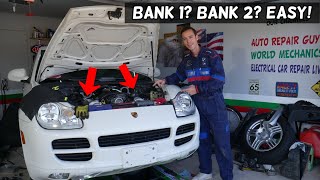
The 2003-2010 Porsche Cayenne (first generation, 9PA) is a robust vehicle, but like any car, its oxygen sensors have a finite lifespan. For this P0140 code, there are no major platform-specific issues that make the Cayenne uniquely prone to it; the causes are typical of most vehicles. However, it's important to correctly identify 'Bank 1'. On all Cayenne engines (V6 and V8), Bank 1 is the passenger side in left-hand drive vehicles (e.g., USA) and contains cylinders 1-4 (V8) or is the right side of the engine. The sensor in question, Sensor 2, is the one located downstream, after the catalytic converter. While the repair is feasible for DIYers, access to the sensors on V8 models is known to be significantly more difficult than on the VR6.
Symptoms You May Notice
- Check Engine Light is illuminated.
- Vehicle will not pass an emissions inspection.
- Slightly decreased fuel economy (often not noticeable).
- In some cases, a rough or erratic idle.
- Smell of unburnt fuel or a 'rotten egg' smell from the exhaust if the engine runs rich as a default strategy.
- Replacing the catalytic converter. A P0140 code indicates a problem with the sensor *monitoring* the converter, not necessarily the converter itself. A bad converter would typically set a different code, like P0420 (Catalyst System Efficiency Below Threshold).
- Replacing the O2 sensor without checking the wiring. Technicians may rush to replace the sensor when the actual fault is a simple broken wire or corroded connector.
Most Likely Causes
- Failed Oxygen Sensor (Bank 1, Sensor 2) 🔴 High Probability → Shop Oxygen Sensor Oxygen sensors are consumable parts that degrade over time due to heat cycles and exposure to exhaust gases. Bosch is the OEM supplier, and failure after 80,000-100,000 miles is common. The internal electrochemical cell can fail, leaving the circuit open and reporting no voltage.
How to confirm: Use an OBD-II scanner to view live data for 'O2S B1S2'. If the voltage is stuck at a constant value (e.g., 0.45V) and does not fluctuate at all, the sensor has likely failed. A healthy downstream sensor shows slow, lazy voltage swings. You can also test the sensor's internal heater element with a multimeter; resistance should typically be between 3 and 25 ohms when cold.
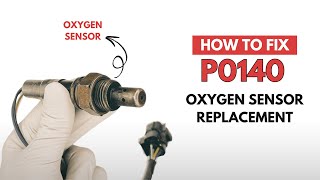
Typical fix: Replace the Bank 1, Sensor 2 oxygen sensor. 🎬 See this walkthrough for fixing the P0140 error code A Porsche forum member confirmed the part number for a 2003 Turbo model as 955 606 136 01. An equivalent and often identical part from the OEM supplier is Bosch 16136 or 17099, depending on the specific model year. Always verify the part number for your specific year and engine.
Est. part cost: $70-$200 - Damaged Wiring or Connector 🟡 Medium Probability The sensor wiring runs underneath the vehicle and is exposed to road debris, heat, and moisture, which can lead to corrosion, breaks, or melting over time. A user on Rennlist discovered a badly spliced and damaged wire harness on their 2004 Cayenne S causing O2 sensor codes.
How to confirm: Visually inspect the entire wiring harness from the O2 sensor to its connection point on the chassis. Look for frayed wires, melted insulation near the exhaust, or green corrosion inside the connector plug. Perform a 'wiggle test' on the harness while monitoring live data to see if the signal changes.
Typical fix: Repair the damaged section of the wire or replace the connector pigtail. If the damage is severe, a new sensor with its integrated harness is the best option.
Est. part cost: $10-$50 - Exhaust Leak ⚪ Low Probability Rust or failed gaskets can cause leaks in the exhaust system, particularly at the flex pipes on V6 models. A leak near the sensor can introduce outside air, causing incorrect readings that the ECU may interpret as 'no activity'.
How to confirm: Listen for ticking or hissing sounds from the exhaust, especially when the engine is cold. A mechanic can use a smoke machine to pressurize the exhaust and pinpoint the exact location of any leaks.
Typical fix: Replace the leaking gasket or repair the cracked section of the exhaust pipe. This may involve welding a new flex pipe section.
Est. part cost: $20-$300 - Blown Fuse for O2 Sensor Heater ⚪ Low Probability → Shop Oxygen Sensor The oxygen sensor has an internal heater to bring it to operating temperature quickly. This heater circuit is protected by a fuse. While not a common failure point, an electrical short can blow the fuse, preventing the sensor from heating up and thus showing no activity.
How to confirm: Consult the vehicle's owner's manual or a wiring diagram to locate the fuse for the O2 sensor heaters. On a 955/957 Cayenne, fuse #18 in the engine bay fuse box is for the downstream O2 sensors. Visually inspect the fuse to see if it is blown.
Typical fix: Replace the blown fuse. If the fuse blows again, there is an underlying short circuit in the wiring that must be diagnosed and repaired.
Est. part cost: $1-$10
Rare But Worth Checking
- Faulty Engine Control Module (ECM): → Shop Engine Control Module (ECM) This is extremely rare. The ECM should only be considered after all other possibilities, including the sensor, wiring, fuses, and exhaust system, have been thoroughly checked and ruled out.
Diagnosis Steps
- Connect an OBD-II scanner and confirm the presence of the P0140 code. Note any other codes.
- Access the live data stream on the scanner. Select the parameter for 'O2 Sensor Voltage Bank 1 Sensor 2'.
- Start the engine and let it warm up. Observe the voltage reading. A reading that is stuck and does not change (e.g., 0.4V - 0.5V) indicates a lack of activity.
- Turn off the vehicle and allow the exhaust to cool.
- Locate the Bank 1 Sensor 2 oxygen sensor. On a Cayenne, Bank 1 is the passenger side (LHD). Sensor 2 is the one after the catalytic converter.
- Visually inspect the sensor's wiring harness and connector for any signs of melting, corrosion, or physical damage.
- Check the fuse for the O2 sensor heater circuit. For the 955/957 Cayenne, this is fuse #18 in the engine bay fuse box.
- Inspect the exhaust system around the sensor for any signs of black soot, which would indicate an exhaust leak.
- If wiring, fuse, and exhaust appear intact, test the sensor's heater circuit resistance with a multimeter. Disconnect the sensor and measure across the two same-colored wires. A reading outside the 3-25 ohm range indicates a bad heater element.
- If all tests pass, the oxygen sensor itself is the most probable cause of the fault and should be replaced.
Parts You'll Likely Need
- Oxygen Sensor, Bank 1 Sensor 2 (Downstream/Post-Cat)
(OEM #95560613601)— This is the component that has failed internally, causing the 'no activity' fault. It is a standard wear item.
Trusted brands: Bosch (OEM Supplier), Denso, NTK
OEM price range: $180-$220
Aftermarket price range: $70-$150
Platform-Specific Known Issues
- Real Repair Story from Rennlist: A user on Rennlist with a 993 (which uses similar OBD-II logic) experienced code P0140 along with a rich running condition, erratic idle, and smoke from the exhaust. Another user advised, 'Caution driving the car if it's overly rich as it will kill the catalytic converter which are...expensive to replace.' The consensus was that a bad O2 sensor can indeed cause significant running issues as the computer tries to compensate. The fix was to replace the sensor promptly.
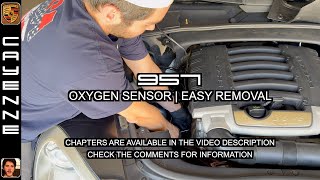
- V6 vs V8 Access: On the V6 base model Cayenne, the oxygen sensors are relatively easy to access, with some owners reporting replacement in under 15 minutes. 🎬 Watch: Easy O2 sensor removal on the VR6 base model However, on the V8 models (S and Turbo), the sensors are in much tighter spots, making the job significantly more difficult and time-consuming.
Mechanic-Grade Diagnostic Values
- O2 Sensor Heater Resistance — expected: 3 to 25 Ohms (when cold). Failure: An open circuit (OL) or a reading outside the specified range indicates a failed heater element.
- Downstream O2 Sensor Live Data Voltage (Healthy) — expected: Relatively stable voltage, typically between 0.2V and 0.8V, with slow fluctuations.. Failure: A flat-line voltage (e.g., stuck at 0.45V) or a voltage that rapidly mimics the upstream sensor's fluctuations.
- Downstream O2 Sensor Live Data Voltage (P0140 Fault) — expected: Stuck at a constant value (e.g., 0.45V) or showing 0V.. Failure: The complete lack of voltage fluctuation or signal is what triggers the 'No Activity Detected' code.
- Main Engine Ground Strap Resistance — expected: 0.0 - 0.2 Ohms. Failure: Any reading higher than 0.2 Ohms indicates excessive resistance from corrosion or a poor connection, which can cause various electrical faults.
Scan Tool Commands That Help
- Porsche PIWIS Tester: DME Control Unit Diagnostics & Programming — The PIWIS tester is the dealer-level tool used for in-depth diagnostics, guided fault finding, and control unit programming. While not strictly necessary for a simple P0140, it would be used if the fault was suspected to be in the DME itself or if a software update was required to address overly sensitive diagnostics, as seen in some later models.
Wiring & Ground Locations
- Fuse F18 (Engine Bay) — In the fuse box located in the engine bay plenum (under the cowl cover).. Fuse #18 is the specific fuse for the downstream (post-cat) oxygen sensor heaters on the 955/957 Cayenne. A blown fuse here will cut power to the heater circuit and directly cause a P0140 or related heater code.
- Main Engine-to-Chassis Ground Strap — One primary strap runs from the lower passenger side of the engine block to the chassis, often routed under the exhaust header. Another is located in the engine bay from the engine to the strut tower.. A corroded or loose main ground strap increases electrical resistance for the entire engine management system. This can cause erratic sensor readings, including from the O2 sensors, and lead to a variety of hard-to-diagnose electrical faults.
- Passenger Footwell Ground Point / Wiring — Under the passenger side carpet and kick panel area. A main ground point is located in the front passenger footwell under a small carpet flap on some models.. Water leaks from clogged cowl drains or sunroof drains are known to collect in the passenger footwell, submerging wiring harnesses and control modules located there. This can cause corrosion and short circuits for multiple systems, including potential O2 sensor faults if the wiring is affected.
Real Owner Repair Stories
- Rennlist Forum User (2004 Porsche Cayenne S) — P0155 (O2 Sensor Heater Circuit, Bank 2 Sensor 1) and other random computer-related codes.
❌ Tried (didn't work) Initial meter testing of the sensor was inconclusive.
✅ What actually fixed it The user discovered the sponge under the passenger footwell carpet was wet due to suspected clogged drains. This moisture was affecting the wiring and potentially control modules in that area. The immediate fix was to dry out the area thoroughly by propping up the carpet and using towels and a fan. While the story focuses on a different O2 code, the root cause (water ingress in the passenger footwell) is a critical diagnostic path for any unexplained electrical or sensor code on this platform.
OEM Part Supersession History
95560613601→N/A— This part number appears to be stable for the 2003-2006 V8 models.
Heads up: While the part number is stable, different model years and engines (V6 vs V8) use physically different sensors with different length wires and connectors. Always verify fitment by VIN. The OEM part is made by Bosch, and aftermarket Bosch parts are often identical except for the removed Porsche logo.
Model Year Variations Within This Range
- 2003-2006 (955): The 955 models are the primary subject of most forum discussions regarding this code. The part number 95560613601 is specifically for these earlier V8 models.
- 2008-2010 (957 Facelift): The 957 facelift models introduced Direct Fuel Injection (DFI) engines. While the principle of the O2 sensor is the same, part numbers and specific wiring may differ from the earlier 955 models. Diagnostic logic is similar, but part cross-compatibility should not be assumed without verification.
Diagnostic Flowchart
Real Owner Stories
Aggregated from forums and TSBs cited above. Mileages and costs reflect what owners reported in those sources.
2003 Porsche Cayenne Turbo
Symptoms: Received a P0140 error code (Oxygen Sensor After TWC, Bank 1 - Open Circuit) and noted there were two types of sensors with different sockets available.
What fixed it: Replaced the Bank 1 Sensor 2 oxygen sensor using Porsche part number 955 606 136 01.
Source hint: Rennlist (Owner Reports / P0140 Error Code thread)
2004 Porsche Cayenne S
Symptoms: Vehicle was throwing O2 sensor codes.
What fixed it: Discovered and repaired a badly spliced and damaged wire harness underneath the vehicle.
Source hint: Rennlist (Common Causes section)
Porsche 993 (Similar OBD-II Logic)
Symptoms: Experienced code P0140 along with a rich running condition, erratic idle, and smoke from the exhaust.
What fixed it: Replaced the oxygen sensor promptly to avoid killing the expensive catalytic converters.
Source hint: Rennlist (Vehicle Specific Issues - Real Repair Story)
Related OBD-II Codes
Frequently Asked Questions
Which side of my 2003-2010 Porsche Cayenne is Bank 1?
What is the correct part number for the Bank 1 Sensor 2 oxygen sensor on a 2003 Cayenne Turbo?
Is it difficult to replace the O2 sensor on a Cayenne V8 compared to the V6?
Which fuse controls the oxygen sensor heater on a 955/957 Cayenne?
Can driving with a P0140 code damage my Cayenne's catalytic converters?
Do other vehicles share this exact P0140 issue with the Cayenne?
Helpful Videos
We Have This Part in Stock


The information in this article is provided for general reference and educational purposes only. Vehicle specifications, procedures, and part compatibility can vary by production date, trim level, and region. Always consult your vehicle's factory service manual and verify part numbers before purchasing or performing repairs. Safety-critical components such as airbags, seat belts, and braking systems should be installed by a qualified professional.
- Porsche Cayenne:
- 🧭 Diagnostic Flowchart
- 🎬 Helpful Videos
- 🛍️ Shop This Part
- What's Unique About the 2003-2010 Porsche Cayenne
- Symptoms You May Notice
- Most Likely Causes
- Rare But Worth Checking
- Diagnosis Steps
- Parts You'll Likely Need
- Platform-Specific Known Issues
- Mechanic-Grade Diagnostic Values
- Scan Tool Commands That Help
- Wiring & Ground Locations
- Real Owner Repair Stories
- OEM Part Supersession History
- Model Year Variations Within This Range
- Real Owner Stories
- 2003 Porsche Cayenne Turbo
- 2004 Porsche Cayenne S
- Porsche 993 (Similar OBD-II Logic)
- Related OBD-II Codes
- Frequently Asked Questions
- 🎟️ Get 5% Off