

P0140 on 2015-2022 Ram ProMaster City: O2 Sensor No Activity Causes and Fixes
This code almost always means the downstream oxygen sensor (Bank 1, Sensor 2) has failed. It's a common issue caused by age or heat. Expect to pay $40-$80 for an aftermarket sensor or $120+ for OEM. It's a straightforward DIY replacement for those with basic tools. Before replacing, always check the wiring harness for melting, as this is another frequent failure point on this platform.
- P0140 on your ProMaster City points directly to the downstream oxygen sensor (Bank 1, Sensor 2).
- The most likely fix is replacing the sensor itself, which is a common wear item.
- Before buying a new sensor, always perform a quick visual inspection of the wiring harness for any obvious melting or damage, as this is also a known issue on the 2.4L MultiAir platform.
- You can safely drive the vehicle with this code, but you should get it fixed to ensure you can pass an emissions test and to turn off the Check Engine Light.
What's Unique About the 2015-2022 Ram ProMaster City
The 2.4L MultiAir engine in the ProMaster City is shared with other FCA (now Stellantis) vehicles like the Chrysler 200, Jeep Cherokee/Renegade/Compass, and Fiat 500X. For this platform, the P0140 code is a very common and straightforward fault. The primary culprits are either the sensor itself failing from age and heat, or the wiring harness that runs close to the hot exhaust components getting damaged or melted. Unlike some complex diagnostic codes, the troubleshooting path for P0140 on this vehicle is typically direct and leads to a clear resolution, most often pointing to the sensor or its immediate wiring.
Symptoms You May Notice
- Check Engine Light is on
- Vehicle will fail an emissions inspection
- In rare cases, slightly reduced fuel economy if the PCM defaults to a richer fuel mixture, though this is not a primary symptom.
- Replacing the upstream oxygen sensor (Sensor 1) instead of the downstream one (Sensor 2).
- Replacing the catalytic converter when the actual fault is just the sensor that monitors it.
- Replacing the sensor without first inspecting the wiring harness for obvious melting or damage.
Most Likely Causes
- Failed Downstream Oxygen Sensor 🔴 High Probability → Shop Oxygen Sensor Oxygen sensors are wear items that fail over time due to constant exposure to extreme heat and exhaust gases. Contamination from minor oil or coolant consumption can also shorten their lifespan. On the 2.4L MultiAir, their location makes them susceptible to heat degradation.
How to confirm: With a scan tool, observe the live data for 'O2 Bank 1 Sensor 2'. If the voltage is stuck at 0V, 0.45V, or any other fixed number and does not fluctuate at all on a fully warmed-up engine, the sensor has likely failed. A healthy downstream sensor should show a relatively stable voltage, typically above 0.5V, with slow fluctuations.
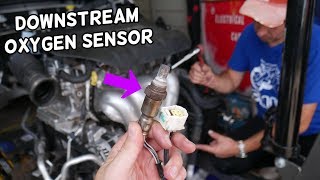
Typical fix: Replace the Bank 1 Sensor 2 oxygen sensor. 🎬 Watch: How to locate and replace the downstream sensor. This requires a special 22mm (or 7/8") oxygen sensor socket to remove and install. Applying penetrating oil before removal is recommended as the sensor can be seized in the exhaust pipe.
Est. part cost: $40-$185 - Damaged Wiring or Connector 🟡 Medium Probability The sensor's wiring harness is routed near the hot exhaust system and can become brittle, melted, or chafed over time, leading to a short or open circuit. This is a known issue across multiple platforms using this engine.
How to confirm: Visually inspect the entire wiring harness from the O2 sensor to its connection point. Look for melted plastic, frayed wires, or corrosion inside the connector pins. Pay close attention to where the harness may have come into contact with the exhaust manifold or pipe.
Typical fix: Repair the damaged section of the wiring harness using heat-shrink butt connectors or solder. If the connector itself is melted, a replacement pigtail harness will be needed. Ensure the repaired harness is secured away from heat sources using high-temperature zip ties or loom.
Est. part cost: $15-$40 for a pigtail connector. - Exhaust Leak ⚪ Low Probability
How to confirm: With the engine running, listen and feel for air leaks at the exhaust manifold gasket, flex pipe, or any flange before the downstream O2 sensor. A shop can perform a smoke test to pinpoint the leak's location. An exhaust leak allows outside oxygen into the exhaust stream, which can cause the sensor to send inaccurate (but not inactive) readings, though it's less likely to cause a 'no activity' code.
Typical fix: Replace the leaking gasket or repair the cracked exhaust component.
Est. part cost: $20-$200
Rare But Worth Checking
- Blown O2 Sensor Heater Circuit Fuse: → Shop Oxygen Sensor The O2 sensor has an internal heater to get it to operating temperature quickly. This heater is powered by a fuse. If the fuse blows, the sensor won't heat up and may not produce a signal, triggering a P0140 code. The fuse is typically located in the underhood fuse box, but its specific designation can be hard to find; it is often shared with other engine components like the ignition coil.
- Faulty Powertrain Control Module (PCM): → Shop Engine Control Module (ECM) In very rare cases, the internal driver circuit in the PCM that reads the O2 sensor signal can fail. This should only be considered after all other possibilities (sensor, wiring, fuses) have been exhaustively ruled out. A PCM software update may also be a potential fix, as outlined in TSBs for other codes on this engine.
Diagnosis Steps
- Connect an OBD-II scanner and confirm P0140 is the only code present. Document the freeze frame data. 🎬 Watch: Diagnostic steps for P0140 on the 2.4L engine.
- Visually inspect the downstream O2 sensor's wiring harness and connector. Follow the wire from the sensor as far as you can, looking for any signs of melting, chafing, or corrosion. This is a critical step on this platform.
- Using the scanner's live data function, monitor the voltage for 'O2S B1S2'. On a fully warmed-up engine, it should show a relatively stable voltage. A flat line at 0V, 0.45V, or any other fixed number indicates a problem.
- Test the sensor's heater circuit. Unplug the sensor and use a multimeter to check for 12V power and a good ground at the harness-side connector with the key on, engine off. Lack of power could indicate a blown fuse.
- If power and ground are present and the signal wire is intact, the oxygen sensor itself is the most likely culprit.
- If the sensor and wiring are confirmed to be good, check for exhaust leaks between the engine and the downstream sensor.
- As a final step, check for any available PCM software updates with a dealer or capable shop, as TSBs have been issued to fix various engine codes on this platform.
- If all other tests pass, the final, least likely possibility is a fault within the PCM.
Parts You'll Likely Need
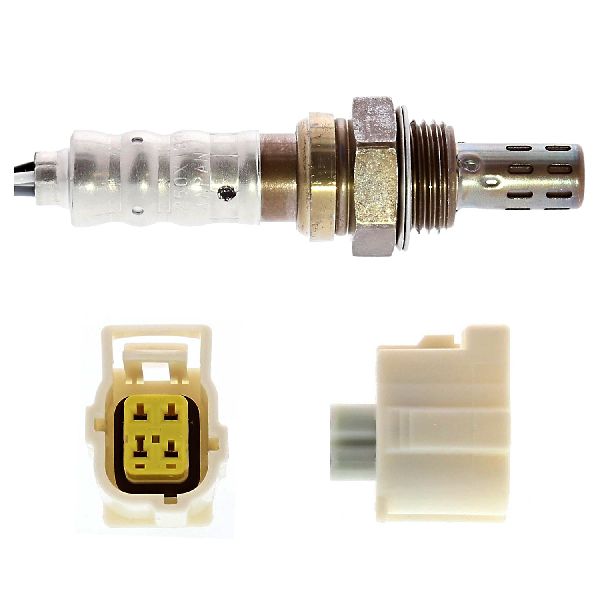
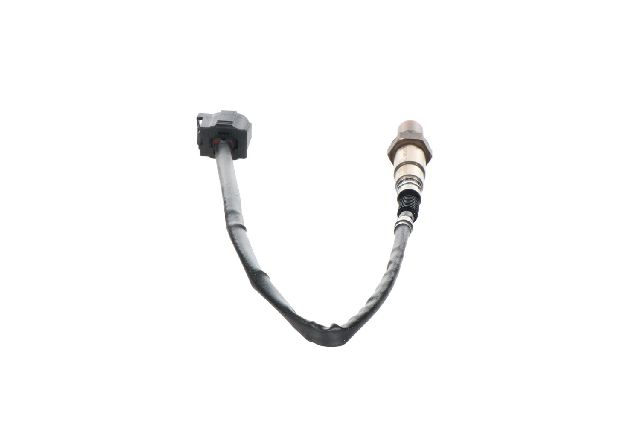
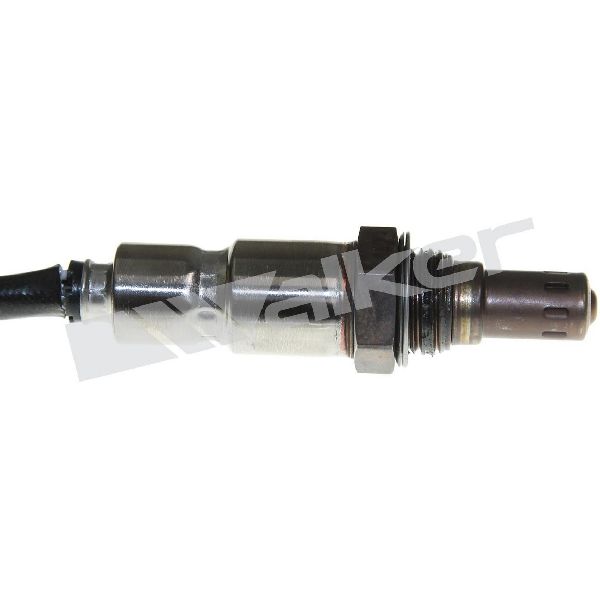
- Downstream Oxygen Sensor (Bank 1, Sensor 2)
(OEM #5149180AB)— This is the component that the P0140 code directly points to, and it is a common wear-and-tear item that fails most frequently.
Trusted brands: Mopar, NTK, Denso, Bosch
OEM price range: $120-$185
Aftermarket price range: $40-$80 - Oxygen Sensor Connector Pigtail — Needed if the vehicle-side of the connector or its wiring is found to be melted or damaged.
Trusted brands: Dorman, Mopar, Standard Motor Products
OEM price range: $25-$50
Aftermarket price range: $15-$30
Related Codes That Often Appear With This One
- P0141 — P0141 indicates a malfunction in the heater circuit for the same sensor (Bank 1, Sensor 2). These codes often appear together if the sensor has an internal failure affecting both its sensing element and its heater.
- P0137 — P0137 indicates low voltage from the same sensor. This can be a precursor to P0140 or appear if the sensor is failing intermittently before going completely inactive.
- P0138 — P0138 indicates high voltage from the same sensor. This can occur if the signal wire shorts to the heater power wire, a common result of a melted harness.
Technical Service Bulletins (TSBs) & Recalls
- TSB 18-063-17 REV. A: While not directly for P0140, this TSB involves a PCM software update to address a wide range of diagnostic trouble codes on 2015-2016 ProMaster City models, including one for the upstream O2 sensor (P0133 Slow Response). It shows that software updates can resolve sensor-related issues and is worth checking for applicability.
Platform-Specific Known Issues
- Melted Wiring Harness: A recurring theme in owner forums and mechanic videos for the 2.4L MultiAir engine is the downstream O2 sensor wiring harness melting due to its proximity to the exhaust. Before ordering a new sensor, it is crucial to trace the wiring from the sensor to the main harness, checking for any signs of heat damage. Sometimes only a wiring repair is needed. 🎬 See this guide for fixing common O2 sensor wiring issues.
Mechanic-Grade Diagnostic Values
- Downstream O2 Sensor (B1S2) Voltage - Live Data — expected: Relatively stable voltage, typically fluctuating slowly above 0.5V on a warm engine with a healthy catalytic converter.. Failure: Voltage is stuck at a flat 0V, 0.45V, or does not change for an extended period (e.g., over 74 seconds).
- O2 Sensor Heater Circuit Resistance — expected: Typically between 2 and 30 ohms when measured across the two heater pins on the disconnected sensor.. Failure: Infinite resistance (open circuit) or zero resistance (short circuit) indicates a failed heater element within the sensor.
- O2 Sensor Heater Circuit Voltage Supply — expected: Battery voltage (~12V) should be present at the vehicle-side harness connector for the heater circuit with the ignition on, engine off.. Failure: No voltage or low voltage points to a blown fuse, a bad relay, or a wiring issue between the fuse box and the sensor connector.
Scan Tool Commands That Help
- wiTECH or equivalent professional scan tool: O2 Sensor Heater Actuation Test — This bidirectional command allows a technician to manually force the O2 sensor's internal heater on and off. It is used to confirm the integrity of the heater power, ground, and control circuit from the PCM, isolating the wiring from the sensor itself. If the heater can be commanded on, the wiring is likely good.
Wiring & Ground Locations
- Downstream O2 Sensor Connector — The connector for the downstream sensor (B1S2) has a white-colored connector body and is located on the right side of the exhaust manifold as you face the engine.. This is the primary connection point to inspect for melting, corrosion, or damage. A bad connection here will cause a 'No Activity' code. The white color helps differentiate it from the upstream sensor's black connector.
- Primary Engine Ground Strap — On the similar full-size ProMaster, a primary braided ground strap runs from the transmission case to a bolt on the transmission mount, accessible after removing the driver's side headlight. The ProMaster City has a similar critical ground path from the engine/transmission assembly to the chassis.. A poor or corroded main engine ground can create electrical noise and unstable voltage references for all engine sensors, including the O2 sensors. This can lead to intermittent and hard-to-diagnose sensor codes like P0140, even if the sensor and its direct wiring are good.
Real Owner Repair Stories
- YouTube video from 'World Mechanics' (Covers 2015-2020 Ram ProMaster City, Fiat 500X, Fiat Toro with 2.4L MultiAir engine.) — Check Engine Light with codes P0137, P0138, P0139, P0140, or P0141.
❌ Tried (didn't work) The video implies that misdiagnosis is common, but focuses directly on the most likely cause.
✅ What actually fixed it The most common cause for this group of codes on the 2.4L MultiAir engine is a failed downstream oxygen sensor (Bank 1, Sensor 2). The video demonstrates the replacement of the sensor as the direct fix.
OEM Part Supersession History
5149180AA→5149180AB— Standard part revision by the manufacturer for improvements or supplier change.
Heads up: 5149180AB is the correct and current replacement for 5149180AA. Using the older part number, if found, is not recommended.
Model Year Variations Within This Range
- 2015-2016: Early model years of the ProMaster City with the 2.4L engine were subject to several PCM software updates (e.g., TSB 18-063-17 REV. A) to correct overly sensitive logic for various DTCs, including for the upstream O2 sensor. While not directly for P0140, it establishes a pattern of software issues on early builds. It is always prudent to check for the latest software calibration when diagnosing sensor codes on these earlier models.
Diagnostic Flowchart
Real Owner Stories
Aggregated from forums and TSBs cited above. Mileages and costs reflect what owners reported in those sources.
Ram ProMaster City 2.4L MultiAir
Symptoms: Experienced an O2 sensor issue where the root cause was not the sensor itself, but rather the wiring harness it connected to, which had melted.
What fixed it: Spliced in a new pigtail connector to replace the melted section of the harness.
Cost: $15-$40
Source hint: r/AskAMechanic - 'so I have an o2 sensor issue, its not the o2 sensors but the harness they are connceted to anyone know what they are called or a link to where I can buy these?'
Ram ProMaster City 2.4L MultiAir
Symptoms: Had trouble diagnosing a lack of power to the O2 sensor heater circuit due to difficulty locating the correct fuse.
What fixed it: Traced the circuit and found that the O2 sensor heater fuse is shared with other components like the ignition coil.
Source hint: DodgeForum.com - 'Fuse for O2 sensor/heater?'
2015-2016 Ram ProMaster City
Symptoms: Vehicle exhibited various diagnostic trouble codes, including P0133 for upstream O2 sensor slow response.
What fixed it: Performed a PCM software update at the dealership to resolve the sensor-related DTCs.
Source hint: TSB 18-063-17 REV. A
Related OBD-II Codes
Frequently Asked Questions
I have a P0140 code on my 2016 Ram ProMaster City 2.4L. Should I replace the oxygen sensor right away?
Does TSB 18-063-17 REV. A apply to the P0140 code on my ProMaster City?
I'm testing the O2 sensor heater circuit and have no power. Where is the fuse on the ProMaster City?
What tools do I need to replace the Bank 1 Sensor 2 oxygen sensor on the 2.4L MultiAir?
How can I confirm the downstream sensor is dead using a scan tool?
Are there other vehicles that share this exact P0140 wiring issue with the ProMaster City?
Helpful Videos
We Have This Part in Stock

The information in this article is provided for general reference and educational purposes only. Vehicle specifications, procedures, and part compatibility can vary by production date, trim level, and region. Always consult your vehicle's factory service manual and verify part numbers before purchasing or performing repairs. Safety-critical components such as airbags, seat belts, and braking systems should be installed by a qualified professional.
- Ram ProMaster City:
- 🧭 Diagnostic Flowchart
- 🎬 Helpful Videos
- 🛍️ Shop This Part
- What's Unique About the 2015-2022 Ram ProMaster City
- Symptoms You May Notice
- Most Likely Causes
- Rare But Worth Checking
- Diagnosis Steps
- Parts You'll Likely Need
- Related Codes That Often Appear With This One
- Technical Service Bulletins (TSBs) & Recalls
- Platform-Specific Known Issues
- Mechanic-Grade Diagnostic Values
- Scan Tool Commands That Help
- Wiring & Ground Locations
- Real Owner Repair Stories
- OEM Part Supersession History
- Model Year Variations Within This Range
- Real Owner Stories
- Ram ProMaster City 2.4L MultiAir
- Ram ProMaster City 2.4L MultiAir
- 2015-2016 Ram ProMaster City
- Related OBD-II Codes
- Frequently Asked Questions
- 🎟️ Get 5% Off