

P0140 on 2002-2007 Saturn Vue 2.2L: O2 Sensor Inactivity Causes and Fixes
On a 2002-2007 Saturn Vue with the 2.2L engine, P0140 is almost always caused by a failed downstream oxygen sensor. The fix is typically replacing the sensor, which costs $40-$80 for an aftermarket part and is a DIY-friendly job.
- P0140 on your 2.2L Vue almost always means the downstream oxygen sensor (after the catalytic converter) has failed.
- Before buying parts, check the 'EMISS' fuse in the under-hood fuse box and visually inspect the sensor's wiring for damage.
- This is a DIY-friendly repair. You'll need a special 22mm (or 7/8") O2 sensor socket, which can often be rented from auto parts stores.
- Do not replace the catalytic converter to fix this code; P0140 is an electrical fault, not a converter efficiency fault.
- Using a high-quality replacement sensor from brands like ACDelco (OEM P/N: 213-3138), Denso, or NTK is recommended for a reliable fix.
What's Unique About the 2002-2007 Saturn Vue
The first-generation Saturn Vue with the 2.2L Ecotec engine is straightforward regarding this code. There are no significant generation-specific variations for this issue. The most critical platform-specific detail is to check the 'EMISS' fuse in the under-hood fuse box, as a blown fuse for the heater circuit is a known cause of this code. Owners report that this engine can be sensitive to the brand of the replacement sensor, with recommendations to use OEM ACDelco or high-quality OE-spec brands like Denso or NTK to ensure a lasting repair.
Symptoms You May Notice
- Check Engine Light is illuminated.
- Vehicle will fail an emissions test.
- Slight potential for decreased fuel economy.
- No noticeable impact on drivability.
- Replacing the catalytic converter. P0140 is an electrical circuit code, not a catalyst efficiency code like P0420.
- Replacing the upstream (Bank 1, Sensor 1) oxygen sensor. This code specifically points to the downstream (Sensor 2) sensor. A user on a Saturn forum recounted being corrected by an auto parts store employee after initially looking at the wrong sensor.
Most Likely Causes
- Failed Downstream Oxygen Sensor (Bank 1, Sensor 2) 🔴 High Probability → Shop Oxygen Sensor Oxygen sensors are wear-and-tear items with a finite lifespan of around 100,000 miles. Contaminants from combustion and constant exposure to exhaust heat eventually cause the internal sensing element to fail.
How to confirm: After confirming the wiring and fuse are intact, use a scan tool to monitor live data for the B1S2 voltage. If it's stuck at a static value (e.g., ~450mV) and does not fluctuate after the engine is warm, the sensor has failed. A healthy downstream sensor should show a slow, steady voltage, while an inactive one will be flat.
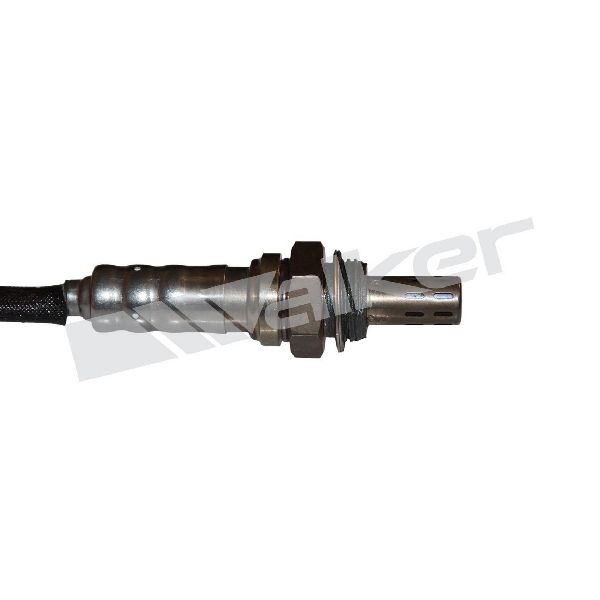
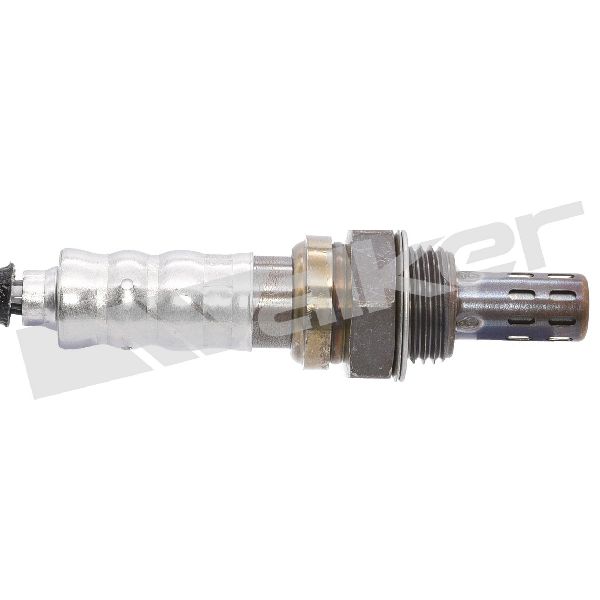
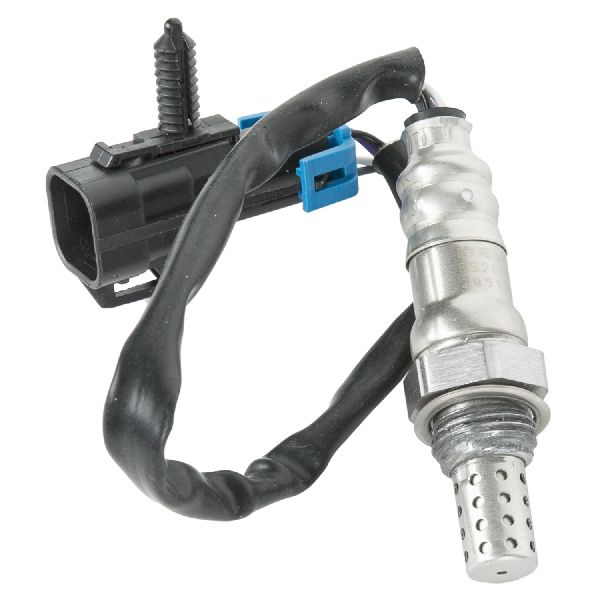
Typical fix: Replace the downstream (post-catalytic converter) oxygen sensor. Use an O2 sensor socket (22mm or 7/8") and apply anti-seize to the new sensor's threads.
Est. part cost: $40-$90 - Damaged Wiring or Connector 🟡 Medium Probability The sensor and its wiring are located under the vehicle, exposed to road debris, water, salt, and exhaust heat, which can cause corrosion, chafing, or melting over time. The harness can be damaged by road hazards or improper servicing.
How to confirm: Visually inspect the entire wiring harness from the O2 sensor to where it enters the main vehicle loom. Check for breaks, melted sections near the exhaust, or corrosion in the connector pins. A 'wiggle test' on the harness while monitoring live data can sometimes reveal an intermittent connection.
Typical fix: Repair the damaged section of wire or replace the connector pigtail. GM explicitly forbids soldering O2 sensor wires; use crimp-and-seal connectors instead.
Est. part cost: $10-$30 - Blown O2 Sensor Heater Fuse ⚪ Low Probability → Shop Oxygen Sensor A short circuit in the sensor's internal heater element or its wiring can cause the fuse to blow. The heater is required to get the sensor to operating temperature quickly.
How to confirm: Locate and inspect the fuse labeled 'EMISS' (a 15A fuse) in the under-hood fuse box. If the fuse is blown, test the O2 sensor heater circuit for a short to ground before replacing the fuse. A new sensor is often required to fix the short.
Typical fix: Replace the blown fuse after diagnosing the cause of the overcurrent condition (usually a failed sensor).
Est. part cost: $1-$5
Rare But Worth Checking
- Faulty Powertrain Control Module (PCM): → Shop Engine Control Module (ECM) This is extremely rare. The PCM should only be considered after all other possibilities, including the sensor, wiring, and fuses, have been thoroughly tested and ruled out.
- Exhaust Leak Before the Sensor: While less common for causing a 'no activity' code compared to a 'performance' code, a significant exhaust leak between the catalytic converter and the B1S2 sensor could potentially alter readings enough to confuse the PCM. This is a low-probability cause for P0140.
Diagnosis Steps
- Connect an OBD-II scanner to confirm P0140 is the active code and check if P0141 is also present.
- Check the 15A fuse labeled 'EMISS' in the under-hood fuse box. The fuse panel is on the driver's side of the engine bay. Replace if blown.
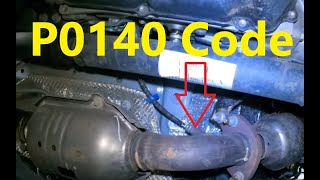
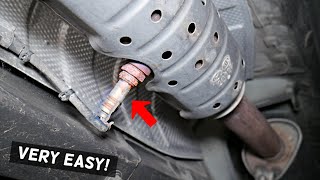
- Visually inspect the downstream O2 sensor's wiring harness and connector for any signs of physical damage, melting, chafing against the chassis, or corrosion. The sensor is located in the exhaust pipe after the catalytic converter.
- Use a scan tool's live data feature to monitor the voltage for 'O2S B1S2' (Bank 1 Sensor 2). With the engine running and warm, the voltage should fluctuate slowly. If it is stuck at a fixed value (typically around 0.45V) and does not respond to changes in engine RPM, it confirms the 'no activity' condition.
- If the fuse is good and the wiring appears intact, the oxygen sensor itself has most likely failed and should be replaced.
- As a final check, you can use a multimeter to test for 12V at the heater circuit pins on the vehicle-side of the sensor connector with the key on.
Parts You'll Likely Need
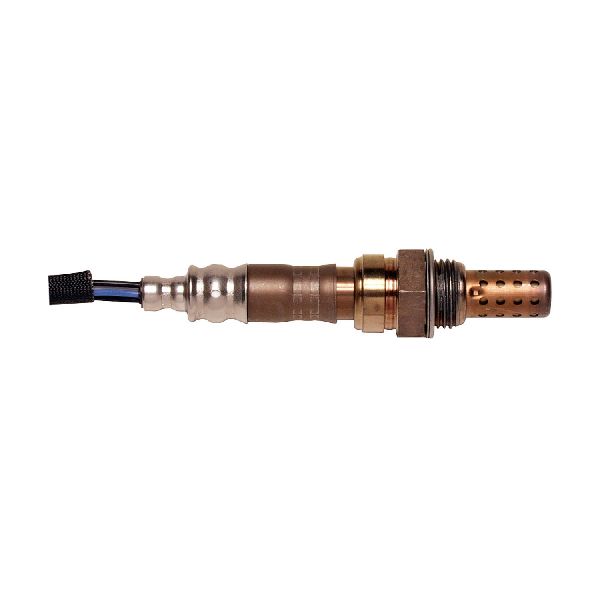
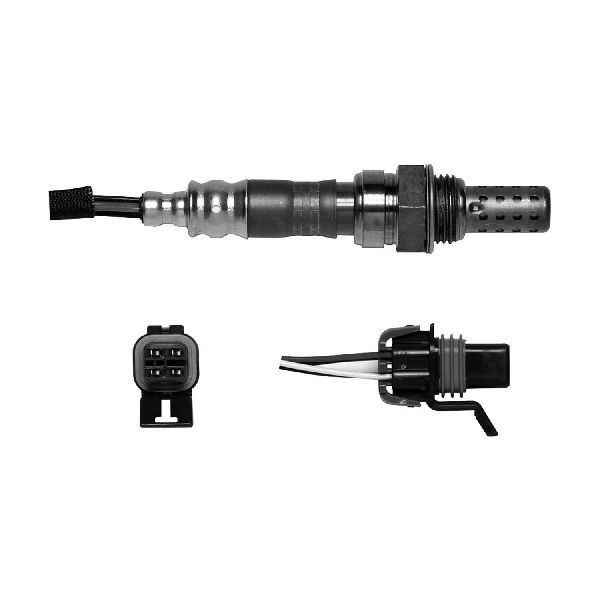
- Downstream Oxygen Sensor (Bank 1, Sensor 2)
(OEM #ACDelco 213-3138)— This is the most common cause of P0140, as the sensor is a consumable part that fails over time.
Trusted brands: ACDelco, Denso, NTK, Bosch
OEM price range: $100-$180
Aftermarket price range: $40-$80
Related Codes That Often Appear With This One
- P0141 - O2 Sensor Heater Circuit Malfunction (Bank 1, Sensor 2): If both codes are present, it strongly points to a problem with the sensor's internal heater or the associated wiring/fuse, as a bad heater will prevent the sensor from becoming active.
Technical Service Bulletins (TSBs) & Recalls
- TSB #03-06-01-017: While not for P0140 directly, this TSB is highly relevant for owners of 2002-2003 models. It addresses a faulty timing chain oiler nozzle design that can lead to premature timing chain wear, a critical issue for the L61 engine.
Mechanic-Grade Diagnostic Values
- Downstream O2 Sensor Heater Circuit Resistance — expected: 2 to 16 Ohms across the two heater circuit pins (often same-colored wires) on the sensor itself.. Failure: A reading of 'OL' (Open Loop) or infinite resistance indicates a broken internal heater element, requiring sensor replacement.
- Downstream O2 Sensor Heater Circuit Voltage — expected: Approximately 12V (battery voltage) at the harness-side connector between the power supply pin (typically Pink/Black) and a known good ground, with the key on.. Failure: 0V indicates a blown fuse (e.g., 'EMISS' fuse) or a break in the power supply wire.
- Scan Tool Live Data (B1S2) — expected: A relatively stable, lazy voltage typically between 0.4V and 0.6V at warm idle.. Failure: A flat, unchanging voltage, often stuck around 0.45V (450mV), indicates no activity.
Scan Tool Commands That Help
- GM Tech 2: O2 Sensor Diagnostic Test — This function, found in powertrain diagnostics, actively commands the engine rich or lean and measures the sensor's response. For P0140, the test will show that the B1S2 voltage does not change, definitively confirming the 'no activity' fault and ruling out intermittent issues.
- GM Tech 2: Snapshot - Engine Data — This is used to capture live data during a test drive when an intermittent fault is suspected. If wiggling the harness causes the B1S2 voltage to flicker or appear/disappear in the snapshot data, it points to a wiring problem rather than a completely dead sensor.
Wiring & Ground Locations
- G107 — At the rear of the engine block for the 2.2L L61 engine.. This is a primary engine ground point. A poor or corroded connection here can introduce electrical noise or high resistance into sensor circuits, potentially causing erratic readings or fault codes for various engine sensors, including the oxygen sensors.
- HO2S B1S2 Connector — The connector for the downstream O2 sensor is typically clipped to the chassis or a bracket near the transmission, with the harness running up from the sensor's location in the exhaust pipe.. This is the primary point of failure for wiring issues. Typical wire colors on similar GM Ecotec platforms are Tan (Low Reference), Purple (Signal), and two wires for the heater circuit (e.g., Pink/Black for power). Checking for voltage and continuity at these pins is a key diagnostic step.
- Engine Harness Ground (Block) — On the back of the engine block, above the starter and under the #4 intake runner, there is a 10mm bolt with two ring terminals securing multiple ground wires.. A forum user on SaturnFans.com noted this as a critical ground point for the engine harness. While not directly for the O2 sensor, a poor connection here can affect the entire engine management system and should be cleaned and inspected if electrical issues are suspected.
Real Owner Repair Stories
- Reddit user on r/Saturn_Cars (2008 Saturn Vue 3.6L V6 (Similar Theta platform, demonstrates a common wiring failure mode)) — Misfires on one bank (cylinders 1,3,5) and an open circuit code for the ignition coils.
❌ Tried (didn't work) Initial diagnosis pointed to bad ignition coils.
✅ What actually fixed it The user traced the ground wire for the affected ignition coils and found it had become brittle with age and broken near the power steering pump reservoir. Repairing the broken ground wire resolved the open circuit and misfire codes. This highlights the importance of checking grounds, as a single broken ground wire can disable multiple components.
OEM Part Supersession History
ACDelco 213-3138→ACDelco 213-3138 (current)— This part number has remained consistent for the 2.2L L61 engine across the 2002-2007 model years.
Heads up: While the part number is stable, be aware that for 2006-2007 models with the 2.4L engine (a different option), a different sensor is used. Always verify fitment by VIN.
Model Year Variations Within This Range
- 2006-2007: The Vue received a cosmetic facelift, including a new front/rear fascia and a redesigned interior. These changes did not affect the P0140 diagnosis for the 2.2L L61 engine.
- 2007 only: For the 2007 model year, the 2.2L L61 engine was revised to a 'Gen II' Ecotec design. A key change was the move from a single Ignition Control Module (ICM) to a Coil-on-Plug (COP) system. This does not directly impact the P0140 code but is a significant engine identifier for that year.
Diagnostic Flowchart
Other Known Issues on This Vehicle
Issues unrelated to this code that are worth knowing about as an owner of this generation:
- Timing Chain Guide and Tensioner Failure 🔴 High — Common, especially on earlier 2002-2003 models. Often signaled by a rattling noise from the engine on cold startups. Failure can occur from 80,000 miles onward. (Ref: TSB #03-06-01-017 was issued for 2002-2003 models, acknowledging a design flaw with the oiler nozzle that could lead to premature wear.)
- Ignition Switch Malfunction 🔴 High — Common on 2002-2004 models. Can cause the vehicle to stall while driving or allow the key to be removed while not in Park, creating a rollaway risk. (Ref: GM Recall #14113 (NHTSA 14V224000) was issued to inspect and replace the ignition cylinder and provide new keys.)
- Cracked Plastic Body Panels 🟡 Low — Very common across all years. The polymer door panels, fenders, and bumpers are prone to cracking from minor impacts, especially in cold weather.
- Faulty Body Control Module (BCM) 🟠 Medium — A known issue causing a wide range of strange electrical problems, such as issues with interior lights, power locks, turn signals, and instrument cluster warnings.
Used vs. New Parts: Buying Guide for This Vehicle
When a used part is the smart pick: A used part is generally not recommended for the oxygen sensor itself due to its nature as a wear item with a finite lifespan. However, obtaining a used connector pigtail from a junkyard is a smart choice if your vehicle's connector is damaged, as it provides an OEM-quality connector for splicing into your harness.
Donor-vehicle mileage cap: roughly under 100000 miles for the part to have meaningful remaining life.
What to inspect on the donor part:
- For a connector pigtail, inspect for any signs of melting, cracked plastic, or corrosion on the pins.
- Ensure there is at least 6-8 inches of wire attached to the connector to make splicing easy.
- Avoid connectors from vehicles with obvious signs of fire or major fluid leaks in the underbody area.
OEM-only on this vehicle (don't cheap out):
- While not strictly 'OEM-only', it is highly recommended to use either the OEM ACDelco sensor or a top-tier OE-equivalent brand. Cheaper, no-name sensors are a common cause of repeat failures.
Aftermarket brands forum-validated for this vehicle:
- NTK
- Denso
- ACDelco (OEM)
Brands owners have reported issues with on this vehicle:
- Some forum users have reported issues with Bosch sensors on certain GM applications, though others have used them without issue.
- Generic, unbranded 'economy' sensors from online marketplaces are frequently cited as failing quickly.
Real Owner Stories
Aggregated from forums and TSBs cited above. Mileages and costs reflect what owners reported in those sources.
2004 Saturn Ion 2.2L L61
Symptoms: The owner initially inspected the wrong (upstream) sensor before being informed that P0140 refers to the downstream sensor. The wiring was found to be clean.
What fixed it: The owner determined the issue was likely the sensor itself after confirming the wiring was intact.
Source hint: SaturnFans.com thread titled 'code p0140 help'
2008 Chevrolet Cobalt 2.2L L61
Symptoms: The owner reported a P0140 code and sought advice on accessing the sensor connector.
What fixed it: Replacing the sensor is the typical fix, with a tip provided to access the wiring connector through the driver's side wheel well.
Source hint: CobaltSS.net thread titled 'Code P0140'
Related OBD-II Codes
Frequently Asked Questions
Does TSB #03-06-01-017 apply to my 2002 Saturn Vue with the L61 engine?
Where is the fuse for the O2 sensor located on a 2002-2007 Saturn Vue?
Can I solder the wires if I find a break in the harness of my Saturn Vue?
Is there a recall for the electrical issues on my 2004 Saturn Vue?
Which oxygen sensor is causing the P0140 code on my 2.2L Vue?
Why are the body panels on my Saturn Vue cracking in the winter?
Helpful Videos

We Have This Part in Stock


The information in this article is provided for general reference and educational purposes only. Vehicle specifications, procedures, and part compatibility can vary by production date, trim level, and region. Always consult your vehicle's factory service manual and verify part numbers before purchasing or performing repairs. Safety-critical components such as airbags, seat belts, and braking systems should be installed by a qualified professional.
- Saturn Vue:
- 🧭 Diagnostic Flowchart
- 🎬 Helpful Videos
- 🛍️ Shop This Part
- What's Unique About the 2002-2007 Saturn Vue
- Symptoms You May Notice
- Most Likely Causes
- Rare But Worth Checking
- Diagnosis Steps
- Parts You'll Likely Need
- Related Codes That Often Appear With This One
- Technical Service Bulletins (TSBs) & Recalls
- Mechanic-Grade Diagnostic Values
- Scan Tool Commands That Help
- Wiring & Ground Locations
- Real Owner Repair Stories
- OEM Part Supersession History
- Model Year Variations Within This Range
- Other Known Issues on This Vehicle
- Used vs. New Parts: Buying Guide for This Vehicle
- Real Owner Stories
- 2004 Saturn Ion 2.2L L61
- 2008 Chevrolet Cobalt 2.2L L61
- Related OBD-II Codes
- Frequently Asked Questions
- 🎟️ Get 5% Off