

P0140 on 2019-2023 Subaru Forester: Causes and Fixes for O2 Sensor Inactivity
This code means the rear oxygen sensor (Bank 1, Sensor 2) has failed and is not sending a signal. This is a common issue, often addressed by replacing the sensor with a redesigned part mentioned in a Subaru TSB. Expect to pay $120-$200 for a quality OEM replacement part, with DIY difficulty being low to moderate, provided the sensor isn't seized by rust.
- P0140 on your Forester almost certainly means the rear oxygen sensor has failed, a known issue confirmed by a Subaru TSB.
- This is a minor issue that won't leave you stranded, but it will cause an automatic emissions test failure and disable features like EyeSight and cruise control.
- The most common fix is to replace the rear (downstream) oxygen sensor with the redesigned part, which is a DIY-friendly job for those with basic tools and an O2 sensor socket.
- Before buying a new sensor, always perform a quick visual check of the wiring underneath the car for any obvious damage.
What's Unique About the 2019-2023 Subaru FORESTER

For the fifth-generation (SK) Forester, the P0140 code is a straightforward and very common issue. Subaru has issued Technical Service Bulletin #09-115-24R which explicitly covers the 2019-2023 Forester and other models for this code, along with P0137, P0138, and P0141. The TSB announces a redesigned rear oxygen sensor with an 'optimized coating' to prevent internal cracks that cause open or short circuits. This bulletin strongly indicates the original sensor is prone to premature failure, making sensor replacement the most definitive fix. The fix is almost always a direct replacement of the sensor or, less commonly, a repair of its exposed wiring.
Diagnostic Flowchart

Tap your situation to follow the diagnostic path that matches what you're seeing on this vehicle.
Symptoms You May Notice
- Check Engine Light is on
- Vehicle will not pass an emissions test
- Disabling of other features like cruise control, EyeSight, and Reverse Automatic Braking (RAB) 🎬 Watch: Why EyeSight and safety features disable with a CEL (a common Subaru safety feature response to any Check Engine Light).
- Slight decrease in fuel economy in some cases, as the ECM may operate in a less efficient default mode.
- Replacing the front Air/Fuel Ratio Sensor (Sensor 1) instead of the rear Oxygen Sensor (Sensor 2). The P0140 code specifically refers to the rear, post-catalytic converter sensor.
- Assuming a catalytic converter is bad. While the rear O2 sensor monitors the converter, a P0140 code indicates a problem with the sensor circuit itself (no activity), not necessarily the performance of the converter.
Most Likely Causes

- Failed Rear Oxygen Sensor (Bank 1, Sensor 2) 🔴 High Probability → Shop Oxygen Sensor Oxygen sensors are wear-and-tear items. More specifically, Subaru TSB #09-115-24R acknowledges a design issue with the original sensors, which can develop internal cracks leading to failure. The redesigned part addresses this flaw.
How to confirm: Use an OBD-II scanner to monitor the live data for the B1S2 O2 sensor. If the voltage is flat (stuck around 0.45V or another fixed value) and does not fluctuate as the engine warms up and runs, the sensor is inactive and likely dead.
Typical fix: Replace the rear (downstream) oxygen sensor with the updated part. This involves unplugging the electrical connector from the frame rail, unscrewing the old sensor from the exhaust pipe (a 22mm or 7/8" O2 sensor socket is req 🎬 See this walkthrough for replacing the downstream sensoruired), and installing the new one. Applying anti-seize to the new sensor's threads is recommended.
Est. part cost: $90-$200 - Damaged Wiring or Connector 🟡 Medium Probability The sensor wiring runs underneath the vehicle and can be damaged by road debris, corrosion, or rodents. The connector, often mounted to the frame rail, can also become contaminated with water or dirt, causing a poor connection.
How to confirm: Visually inspect the entire length of the wiring harness from the O2 sensor to its connection point. Look for any breaks, chafing, melting, or corrosion on the pins of the connector. Unplug the connector and check for green or white corrosion.
Typical fix: Repair or replace the damaged section of the wiring harness. Clean the connector terminals with electrical contact cleaner. If the connector itself is damaged, a new pigtail may need to be spliced in.
Est. part cost: $10-$50 - Exhaust Leak ⚪ Low Probability Rust can cause leaks at exhaust pipe flanges or gaskets, especially in areas where roads are salted in winter. A leak before the sensor can introduce outside air, causing a flat reading that the ECM interprets as no activity.
How to confirm: Listen for an unusually loud exhaust noise, or a ticking/hissing sound. You can also visually inspect the exhaust system for black soot marks around gaskets and welds. A definitive method is to have a shop perform an exhaust smoke test.
Typical fix: Replace the leaking gasket or repair the damaged section of the exhaust pipe.
Est. part cost: $20-$100
Rare But Worth Checking
- Blown Fuse: While a blown fuse is more commonly associated with a heater circuit code (P0141), the TSBs group these codes together as they relate to the same sensor assembly. The heater circuit is necessary for the sensor to warm up and become active. Checking the O2 sensor or emissions-related fuses in the fuse box is a quick, easy diagnostic step.
- Faulty Engine Control Module (ECM): → Shop Engine Control Module (ECM) This is extremely rare. Before condemning the ECM, all other possibilities, including the sensor, wiring, and fuses, must be exhaustively ruled out. An ECM failure would likely present with other, potentially unrelated codes as well.
Diagnosis Steps
- Confirm the P0140 code is present using an OBD-II scanner and check for any other related codes (P0137, P0138, P0141).
- Use the scanner's live data feature to observe the voltage of 'O2S B1S2' (Bank 1, Sensor 2) with the engine fully warmed up. The reading should fluctuate slowly. If it is stuck at a constant voltage (e.g., 0V or 0.45V), it confirms a lack of activity.
- Perform a visual inspection of the rear oxygen sensor, which is located on the exhaust pipe after the catalytic converter. Check for obvious physical damage.
- Follow the wiring harness from the sensor to its connector, which is typically mounted on the frame rail. Inspect the harness and connector for any signs of melting, chafing, corrosion, or loose connections.
- If the wiring appears intact, the most likely cause is a failed sensor, as documented by Subaru TSB #09-115-24R.
- Check for any significant exhaust leaks between the catalytic converter and the rear O2 sensor by listening for unusual noises or looking for soot.
- As a final check, inspect the fuse box for any blown fuses related to the O2 sensor or emissions systems.
- If a new sensor does not resolve the issue, use a multimeter to test the circuit for power, ground, and signal continuity between the sensor connector and the ECM.
Parts You'll Likely Need
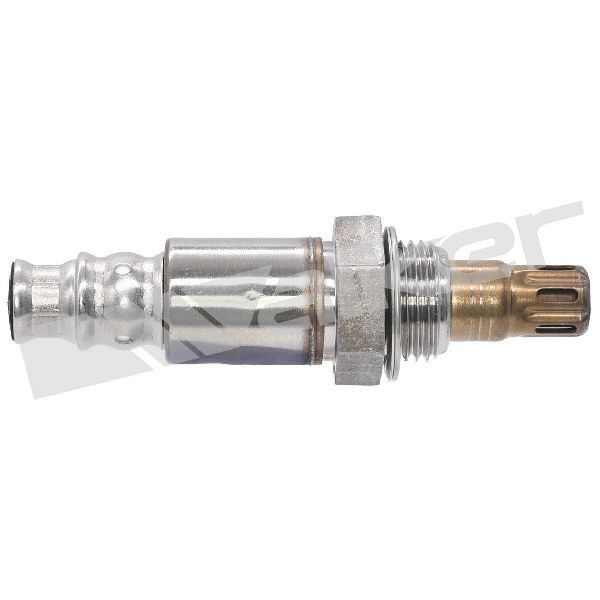
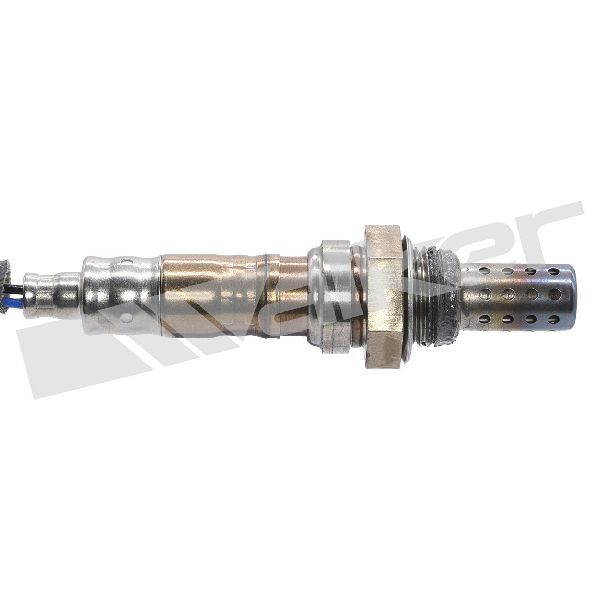
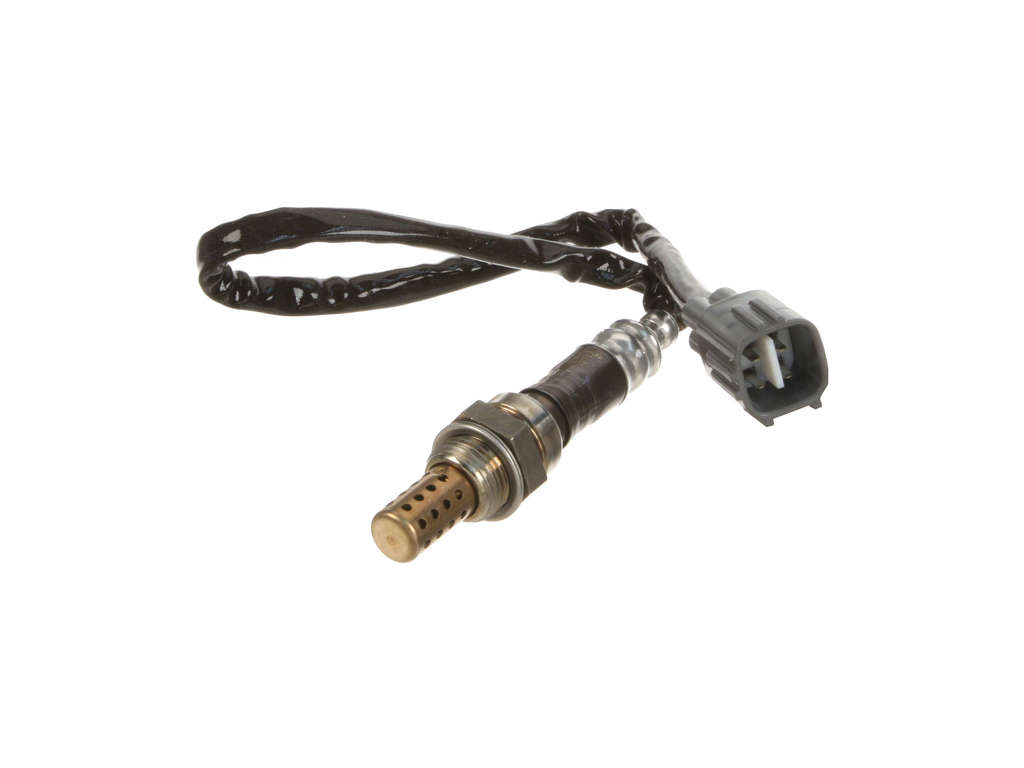
- Rear Oxygen Sensor (Downstream)
(OEM #22690AB070)— This is the component that the P0140 code directly identifies as having no activity. It is a known failure item addressed by a specific Subaru TSB recommending a redesigned part.
Trusted brands: Denso (OEM supplier), NTK
OEM price range: $150-$200
Aftermarket price range: $90-$130
Related Codes That Often Appear With This One
- P0137 — This code for 'O2 Sensor Circuit Low Voltage' is for the same sensor and is mentioned in the same TSB, indicating a common failure mode. [⭐ MANUFACTURER TSB — highest authority] Bulletin #09-115-24R
- P0138 — This code for 'O2 Sensor Circuit High Voltage' is for the same sensor and is mentioned in the same TSB, indicating a common failure mode. [⭐ MANUFACTURER TSB — highest authority] Bulletin #09-115-24R
- P0141 — This code for 'O2 Sensor Heater Circuit' failure is for the same sensor and is often seen with P0140, as a failed heater can prevent the sensor from becoming active. This is also covered by the same TSB. [⭐ MANUFACTURER TSB — highest authority] Bulletin #09-115-24R
Technical Service Bulletins (TSBs) & Recalls
- 09-115-24R: The most current TSB, covering 2019-23MY Forester. It announces a redesigned rear oxygen sensor to fix P0140, P0137, P0138, and P0141 caused by internal sensor cracks.
- 09-115-24: The preceding version of the same TSB, also identifying the rear O2 sensor as the source of the fault.
Platform-Specific Known Issues
- Subaru has issued Technical Service Bulletins (TSB #09-115-24R and #09-115-24) for 2019-2023 Foresters that group P0140 with other rear O2 sensor codes (P0137, P0138, P0141). The TSB indicates the original sensor is prone to internal cracks and the fix is a redesigned sensor with an 'optimized coating'.
- A known 'quirk' of all modern Subarus is that almost any Check Engine Light, including P0140, will cause the EyeSight driver-assist system, cruise control, and other features to be disabled as a safety precaution until the code is cleared.
Mechanic-Grade Diagnostic Values
- Rear O2 Sensor (B1S2) Heater Circuit Resistance — expected: 5 - 15 Ohms. Failure: An open circuit (infinite resistance) or a reading over 50 Ohms indicates a failed heater element.
- Rear O2 Sensor (B1S2) Live Data Voltage (Warm Engine) — expected: Relatively stable voltage, typically greater than 0.5V with a good catalytic converter.. Failure: Voltage is stuck at a fixed value (e.g., 0.45V), reads 0V, is under 0.03V, or is above 1.2V.
Hidden / Shadow Codes Worth Checking
- Mode $06, TID $41, CID $02: On-board monitor test for the 'Minimum output voltage' of the Bank 1 Sensor 2 oxygen sensor. This value can show if the sensor signal has dropped below its minimum threshold. (see via Advanced OBD-II scan tool that supports Mode $06 data.)
- Mode $06, TID $41, CID $81: On-board monitor test for the 'Maximum output voltage' of the Bank 1 Sensor 2 oxygen sensor. This value shows if the sensor's peak voltage has exceeded its operational limit. (see via Advanced OBD-II scan tool that supports Mode $06 data.)
Wiring & Ground Locations

- Rear O2 Sensor Connector (B1S2) — On the passenger side of the engine compartment, accessible from underneath the vehicle by partially removing the front corner of the passenger-side fender liner. The connector is gray and clips to the frame or a nearby harness.. This is the primary connection point to inspect for corrosion, damage, or being unplugged, which are common causes of a 'No Activity' code.
OEM Part Supersession History
22690AB070→22690AB08A— The TSB #09-115-24R indicates a redesigned sensor with an 'optimized coating' to prevent internal cracks and open/short circuits.
Helpful Videos
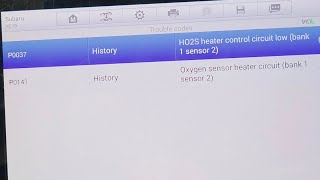
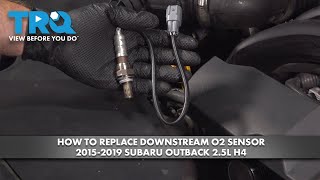

We Have This Part in Stock

The information in this article is provided for general reference and educational purposes only. Vehicle specifications, procedures, and part compatibility can vary by production date, trim level, and region. Always consult your vehicle's factory service manual and verify part numbers before purchasing or performing repairs. Safety-critical components such as airbags, seat belts, and braking systems should be installed by a qualified professional.
- Subaru FORESTER:
- 🧭 Diagnostic Flowchart
- 🎬 Helpful Videos
- 🛍️ Shop This Part
- What's Unique About the 2019-2023 Subaru FORESTER
- Symptoms You May Notice
- Most Likely Causes
- Rare But Worth Checking
- Diagnosis Steps
- Parts You'll Likely Need
- Related Codes That Often Appear With This One
- Technical Service Bulletins (TSBs) & Recalls
- Platform-Specific Known Issues
- Mechanic-Grade Diagnostic Values
- Hidden / Shadow Codes Worth Checking
- Wiring & Ground Locations
- OEM Part Supersession History
- 🎟️ Get 5% Off