

P0140 on 2020-2024 Subaru Legacy: Causes and Fixes for O2 Sensor Inactivity
On a 2020-2024 Subaru Legacy, code P0140 almost always points to a failed rear oxygen sensor (Bank 1, Sensor 2). This is a known issue cited in Subaru Technical Service Bulletin #09-115-24R, which states the original sensors can develop internal cracks. Replacing the sensor with the updated OEM version or a quality aftermarket part is the definitive fix. Parts cost around $45-$100 for aftermarket and $120-$180 for an OEM part.
- P0140 on your 2020-2024 Legacy is overwhelmingly likely to be a failed rear oxygen sensor due to a known design flaw acknowledged by Subaru in TSB #09-115-24R.
- The specific cause is internal cracking, and the fix is a redesigned sensor with an improved internal coating.
- Driving is safe, but you will fail emissions tests and could mask a real catalytic converter problem.
- Before replacing the sensor, do a quick visual check of the wiring and connector for damage, and confirm the failure with a scan tool's live data or a multimeter test of the heater circuit.
- The same issue affects other Subarus from the same era, including the Outback, Forester, Crosstrek, and Impreza.
What's Unique About the 2020-2024 Subaru LEGACY
For this generation of Subaru, the P0140 code is frequently linked to a known issue with the original-spec rear O2 sensors. Subaru issued Technical Service Bulletin #09-115-24R for this problem across multiple models, including the Legacy. The TSB explains that the original sensors are prone to failure because of internal cracking; the redesigned replacement parts have an "optimized coating application" to prevent this. This makes a faulty sensor a much higher probability than on other vehicles where wiring or exhaust leaks might be more common primary causes.
Diagnostic Flowchart
Tap your situation to follow the diagnostic path that matches what you're seeing on this vehicle.
Symptoms You May Notice
- Check Engine Light is on
- Vehicle will fail an emissions test
- Potential for slightly reduced fuel economy, though often not noticeable
- In some cases, owners report no symptoms other than the light, while others have noted the light only appears under specific conditions, like when the ambient temperature is above freezing. 🎬 Watch: A detailed breakdown of P0140 causes and symptoms.
- Replacing the catalytic converter. A P0140 code indicates a problem with the sensor monitoring the converter, not necessarily the converter itself.
- Replacing the wrong oxygen sensor. Ensure you are replacing Bank 1, Sensor 2 (the rear/downstream sensor). The front sensor (Sensor 1) is a different part with a different function.
- Ignoring an aftermarket exhaust modification. Vehicles with a 'decat' or 'test pipe' (catalytic converter removed) can sometimes throw a P0140 code because the sensor readings are not what the ECU expects to see.
Most Likely Causes
- Failed Rear Oxygen Sensor (Bank 1, Sensor 2) 🔴 High Probability → Shop Oxygen Sensor Subaru has issued TSB #09-115-24R for this exact code, indicating a known issue with the sensor's durability. The bulletin states the original sensors can develop internal cracks, leading to short/open circuits and a 'no activity' condition.
How to confirm: Use a scan tool to monitor live data for 'O2 Sensor B1S2'. If the voltage is flat and unresponsive (e.g., stuck near 0.45V) as the engine warms up and runs, the sensor has failed. You can also test the sensor's internal heater circuit with a multimeter; disconnect the sensor and measure resistance between the two heater wires (often the same color). A good sensor should have a low resistance (e.g., around 8 ohms), while an open circuit (infinite resistance) or very high resistance (over 50 ohms) confirms failure.
Typical fix: Replace the rear oxygen sensor with the updated OEM part or a quality aftermarket equivalent from a brand like Denso or NTK. 🎬 See this walkthrough on replacing Subaru oxygen sensors.
Est. part cost: $120-$180 - Damaged Wiring or Connector 🟡 Medium Probability The sensor and its harness are located under the car and are exposed to road debris, moisture, and heat, which can cause wires to break, melt, or connectors to corrode. Water intrusion in the connector is a specifically cited cause for Subarus.
How to confirm: Visually inspect the wiring harness from the sensor to where it enters the cabin. Look for frayed wires, melted insulation, or contact with hot exhaust components. Unplug the connector and check for green/white corrosion or water inside the connector itself. Check for power and ground at the connector with a multimeter.
Typical fix: Repair the damaged section of the wiring harness or clean/replace the connector. Ensure the harness is properly secured away from heat sources.
Est. part cost: $10-$50 - Exhaust Leak ⚪ Low Probability
How to confirm: Listen for an audible ticking or hissing sound from the exhaust system, especially when the engine is cold. A leak before the sensor can introduce oxygen and cause a flat reading. A shop can perform a smoke test to pinpoint the location of a small leak.
Typical fix: Replace the leaking exhaust gasket or repair the cracked pipe.
Est. part cost: $20-$100
Rare But Worth Checking
- Blown Fuse: The O2 sensor's heater circuit is often protected by a fuse. While a blown fuse more commonly triggers a P0141 (Heater Circuit) code, the TSBs group these codes together, suggesting it can sometimes present as P0140 if the sensor fails to warm up and become active.
- Faulty Engine Control Module (ECM): → Shop Engine Control Module (ECM) This is extremely rare. The ECM itself could fail in a way that it can no longer read the signal from the O2 sensor. This should only be considered after all other possibilities have been exhaustively ruled out. Forum users mention this as a last-resort possibility.
Diagnosis Steps
- Read the code with an OBD-II scanner and check for any other related codes (P0137, P0138, P0141).
- Visually inspect the Bank 1, Sensor 2 (rear) oxygen sensor and its wiring harness. Look for any signs of physical damage, melting, corrosion, or water in the connector.
- Use a scan tool to view the live data stream for the 'B1S2 O2 Sensor Voltage'. The reading should fluctuate. If it is a flat line or stuck at a specific voltage (e.g., 0.45V) after the engine is fully warmed, the sensor is not active.
- Check the fuse for the O2 sensor heater circuit. Consult your owner's manual for the fuse box diagram.
- If wiring and fuse are good, test the sensor's heater circuit resistance with a multimeter. A reading over 50 ohms or an open loop indicates a bad sensor.
- If the sensor and wiring test good, check for exhaust leaks between the catalytic converter and the rear O2 sensor.
- For advanced diagnosis, test for power and ground at the sensor connector using a multimeter to rule out a wiring issue before replacing the part. 🎬 Watch: Step-by-step guide to fixing the P0140 circuit error.
Parts You'll Likely Need
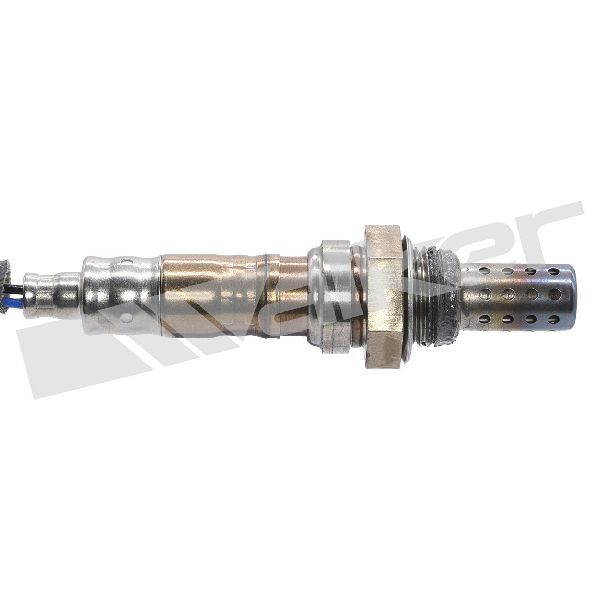
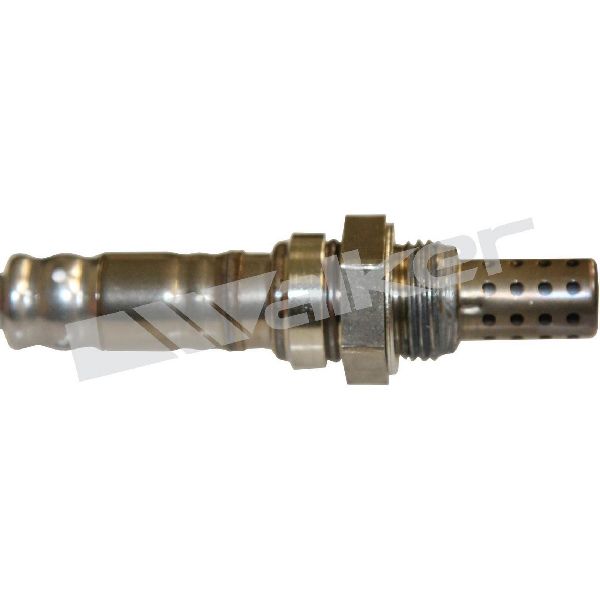
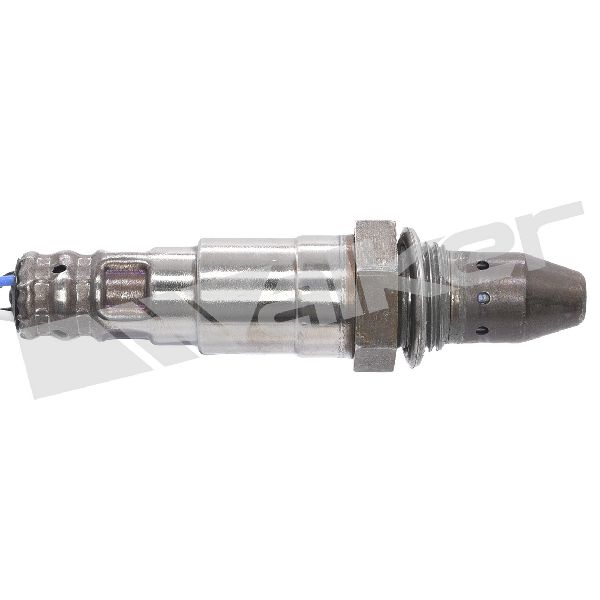
- Rear Oxygen Sensor (Bank 1, Sensor 2)
(OEM #Varies by VIN. An updated version of the original part is required per TSB 09-115-24R. The part number itself did not change, but the new part can be identified by its Denso part number.)— This is the component that the P0140 code directly identifies as inactive. Due to the known issues of internal cracking cited in Subaru TSB #09-115-24R, the sensor itself is the most common point of failure.
Trusted brands: Denso (OEM Supplier), NGK/NTK, Bosch
OEM price range: $120-$180
Aftermarket price range: $45-$100
Related Codes That Often Appear With This One
- P0137 — Stands for 'O2 Sensor Circuit Low Voltage'. Both codes are listed in the same Subaru TSB and point to a failure of the same sensor (Bank 1, Sensor 2), often due to an internal short/open circuit.
- P0138 — Stands for 'O2 Sensor Circuit High Voltage'. This is another related fault for the same sensor, also mentioned in the Subaru TSB as being caused by the same internal failure.
- P0141 — Stands for 'O2 Sensor Heater Circuit Malfunction'. The heater brings the sensor to operating temperature. A heater failure will prevent the sensor from becoming active, directly causing a P0140. The TSBs group these codes together as they often stem from the same faulty sensor.
Technical Service Bulletins (TSBs) & Recalls
- 09-115-24R: Announces a redesigned rear oxygen sensor to fix P0140, P0137, P0138, and P0141 caused by internal cracking. Applies to 2020-24 Legacy/Outback 2.5L, among other models.
- 09-115-24: An earlier version of the same bulletin, also citing P0140.
Platform-Specific Known Issues
- Subaru TSB for Rear O2 Sensor Failure: → Shop Oxygen Sensor Subaru has issued Technical Service Bulletin #09-115-24R which covers the P0140 code, along with P0137, P0138, and P0141. It states the cause is potential cracking on the sensor's internal surfaces. The fix is to replace the sensor with a redesigned version that has an 'optimized coating' to prevent this cracking. The TSB notes that the Subaru part number did not change, but the new part can be identified by the Denso part number engraved on it.
Mechanic-Grade Diagnostic Values
- Rear O2 Sensor (B1S2) Heater Circuit Resistance — expected: 5.6 Ohms +/- 0.8 Ohms at 20°C (68°F). Some sources state a general range of 3-25 Ohms is acceptable.. Failure: An open circuit (infinite resistance/no reading) or a very high reading (over 50 Ohms) indicates a failed heater element.
- Rear O2 Sensor (B1S2) Live Data Voltage (Engine Warm, Idle) — expected: Slow, relatively stable fluctuations, typically between 0.45V and 0.7V with a functioning catalytic converter.. Failure: Voltage is stuck at a fixed value (e.g., 0V, 0.45V, or 1.25V), is completely flat, or reads below 0.03V or above 1.2V.
- Rear O2 Sensor Heater Power at Connector — expected: Battery Voltage (approx. 12V) with key on, engine off.. Failure: No voltage indicates a problem upstream in the wiring, fuse, or relay.
Hidden / Shadow Codes Worth Checking
- Mode $06, TID $41, CID $81: This is the on-board monitor test ID for the 'Maximum output voltage' of the Bank 1 Sensor 2 oxygen sensor. (see via Use an advanced OBD-II scan tool that supports Mode $06 diagnostics to see if the sensor's peak voltage has exceeded its operational limit.)
- Mode $06, TID $41, CID $02: This is the on-board monitor test ID for the 'Minimum output voltage' of the Bank 1 Sensor 2 oxygen sensor. (see via Use an advanced OBD-II scan tool that supports Mode $06 diagnostics to check if the sensor's minimum voltage has fallen below its operational limit.)
Scan Tool Commands That Help
- Subaru Select Monitor (SSM) or equivalent professional scanner: Current Data Display & Save > Rear O2 Sensor — This is the dealer-level method to view and graph the live voltage output of the rear O2 sensor to definitively confirm if it is active or stuck at a fixed voltage. While most consumer scan tools can show this PID, the SSM is the authoritative tool for diagnosis.
Wiring & Ground Locations
- ECU Grounds — On many Subaru engines, the primary grounds for the ECU are located on the top of the intake manifold.. A poor ground connection at the intake manifold can cause a variety of strange electrical issues and incorrect sensor readings, including those from oxygen sensors. This is a known Subaru-specific quirk. If TGV deletes or phenolic spacers are installed, the ground path can be interrupted, leading to sensor codes.
- Main Chassis Ground — The main ground cable from the negative battery terminal typically attaches to the chassis near the strut tower or directly to the engine block near the starter.. Corrosion or a loose connection at this primary ground point can affect the entire electrical system, including the stability of sensor circuits. Ensuring this connection is clean and tight is a fundamental step in diagnosing any electrical fault.
- Alternator Ground — The alternator is grounded through its mounting bracket to the engine block.. While not a direct cause, a poor alternator ground can introduce electrical noise into the system, which can potentially interfere with sensitive sensor signals. Some owners add a redundant ground wire from the alternator housing to the chassis as part of a 'Big 3' wiring upgrade.
Real Owner Repair Stories
- Reddit user discussion on r/subaru (Subaru WRX (similar platform/logic) with cat delete) — Persistent P0140 and P0138 codes that appear after driving for 30+ minutes.
❌ Tried (didn't work) Replacing the O2 sensor
✅ What actually fixed it The issue was caused by the aftermarket catless downpipe. The ECU was not receiving the expected signal because the catalytic converter was missing. The resolution is to either reinstall the stock downpipe and flash a stock tune, or find a tuner who can 'write out' the rear O2 sensor from the ECU's logic (which may not be possible with modern tuning software due to regulations).
OEM Part Supersession History
Varies by specific model/VIN. Example: 22690AB070→The Subaru part number did not change, but the component was redesigned. The new part is identifiable by its Denso part number. Example: Old Denso P/N 150200-9001 was replaced by new Denso P/N 150200-9002.— The new sensors have an 'optimized coating application' to prevent internal cracking that could lead to short/open circuits, which was the root cause for TSB 09-115-24R.
Helpful Videos

We Have This Part in Stock

The information in this article is provided for general reference and educational purposes only. Vehicle specifications, procedures, and part compatibility can vary by production date, trim level, and region. Always consult your vehicle's factory service manual and verify part numbers before purchasing or performing repairs. Safety-critical components such as airbags, seat belts, and braking systems should be installed by a qualified professional.
- Subaru LEGACY:
- 🧭 Diagnostic Flowchart
- 🎬 Helpful Videos
- 🛍️ Shop This Part
- What's Unique About the 2020-2024 Subaru LEGACY
- Symptoms You May Notice
- Most Likely Causes
- Rare But Worth Checking
- Diagnosis Steps
- Parts You'll Likely Need
- Related Codes That Often Appear With This One
- Technical Service Bulletins (TSBs) & Recalls
- Platform-Specific Known Issues
- Mechanic-Grade Diagnostic Values
- Hidden / Shadow Codes Worth Checking
- Scan Tool Commands That Help
- Wiring & Ground Locations
- Real Owner Repair Stories
- OEM Part Supersession History
- 🎟️ Get 5% Off