

P0140 on 2020-2024 Subaru Outback: Rear O2 Sensor Inactivity Causes and Fixes
On a 2020-2024 Subaru Outback, P0140 almost always means the rear oxygen sensor (Bank 1, Sensor 2) has failed. This is a known issue addressed in Subaru TSB #09-115-24R, which introduced a redesigned sensor to prevent internal cracking. Expect to pay around $150 for an OEM sensor and $80-$120 for a quality aftermarket replacement from brands like Denso or NTK. It is a DIY-friendly repair requiring a 22mm O2 sensor socket.
- P0140 on your 2020-2024 Outback means the rear oxygen sensor (Sensor 2) is not sending a signal.
- The most common cause by far is a failed sensor, a known issue addressed by Subaru in TSB #09-115-24R.
- Replacement is DIY-friendly, but you will fail an emissions test until it's fixed.
- Always check for related codes like P0137, P0138, and P0141, as they all point to the same faulty sensor.
What's Unique About the 2020-2024 Subaru OUTBACK
For the 6th generation Subaru Outback, the P0140 code is a well-documented issue. Subaru has released Technical Service Bulletin #09-115-24R that specifically addresses this and related codes (P0137, P0138, P0141). The TSB announces a redesigned rear O2 sensor with an 'optimized coating application to help prevent cracking within the internal surfaces reducing any possibility of short/open circuits'. This indicates a recognized component failure rather than a random or complex diagnostic problem, making the fix highly predictable.
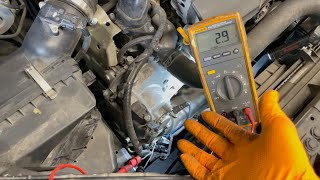
🎬 Watch: P0140 code symptoms, causes, and common fixes explained.Diagnostic Flowchart
Tap your situation to follow the diagnostic path that matches what you're seeing on this vehicle.
Symptoms You May Notice
- Check Engine Light is on.
- Vehicle will fail an emissions test.
- In rare cases, a slight decrease in fuel economy.
- Some owners on Reddit report the code appears intermittently, sometimes only when the ambient temperature is above freezing.
- Replacing the catalytic converter. A P0140 code indicates a problem with the sensor monitoring the converter, not necessarily the converter itself. A failing converter typically sets a P0420 code. However, a user on Reddit noted that after replacing a faulty sensor that caused P0139, the new sensor correctly identified a bad catalytic converter with a P0420 code.
Most Likely Causes
- Failed Rear Oxygen Sensor (Bank 1, Sensor 2) 🔴 High Probability → Shop Oxygen Sensor This is a common failure item, and its failure is documented in Subaru's own Technical Service Bulletin #09-115-24R, which specifies the cause as potential internal cracking leading to an open or short circuit.
How to confirm: Use a scan tool to observe the live data for the B1S2 O2 sensor. If the voltage is flat (stuck around 0.45V or 0V) and does not fluctuate when the engine is warm, the sensor has failed. A healthy sensor should show fluctuating voltage. A multimeter can also be used to test the heater circuit resistance; a reading over 50 ohms or an open circuit indicates failure.
Typical fix: Replace the rear oxygen sensor. A 22mm (or 7/8") O2 sensor socket is required.
Est. part cost: $70-$200 - Damaged Wiring or Connector 🟡 Medium Probability The sensor wiring is routed under the vehicle and can be susceptible to damage from road debris, corrosion, or heat from the exhaust. On some Subarus, the harness connector is located on top of the transmission, where it can be damaged during other maintenance like a clutch replacement.
How to confirm: Visually inspect the wiring harness and connector leading to the rear O2 sensor for any signs of breaks, melting, corrosion, or loose pins. Ensure the connector is dry inside, as water intrusion can cause this code.
Typical fix: Repair the damaged section of the wiring harness or clean/replace the connector.
Est. part cost: $5-$50 - Exhaust Leak ⚪ Low Probability
How to confirm: Listen for unusual exhaust noises. A visual inspection may reveal soot or cracks around exhaust pipe flanges and gaskets located before the rear O2 sensor. A smoke test can definitively identify leaks. An exhaust leak can introduce outside air, causing a false flat-line reading.
Typical fix: Replace the leaking gasket or repair the cracked exhaust component.
Est. part cost: $20-$100
Rare But Worth Checking
- Blown Fuse for O2 Sensor Heater: → Shop Oxygen Sensor The sensor must heat up to operate correctly. A blown fuse for the heater circuit can prevent it from sending a signal, resulting in a 'no activity' code. This is more commonly associated with code P0141, but the TSBs group them together as related faults stemming from the same sensor assembly.
- Faulty Engine Control Module (ECM): → Shop Engine Control Module (ECM) This is extremely rare. The ECM itself could fail to process the signal from a perfectly good sensor. All other possibilities should be exhausted before considering ECM replacement.
Diagnosis Steps
- Scan for Codes: Use an OBD-II scanner to confirm P0140 is present and check for any other related codes (like P0137, P0138, P0141).
- Inspect Wiring: Perform a thorough visual inspection of the rear O2 sensor's wiring harness and connector. The connector is often located on the passenger side near the transmission. Look for any signs of damage, melting, or corrosion. Check for water inside the connector.
- Check for Exhaust Leaks: With the engine running, listen and feel for any exhaust leaks between the engine and the rear O2 sensor.
- Analyze Live Data: Use a scan tool to monitor the live voltage data from the Bank 1 Sensor 2. A healthy sensor will show fluctuating voltage once the engine is warm. A reading that is flat or stuck (e.g., below 0.03V or above 1.2V) indicates a problem with the sensor or its circuit.
- Test the Sensor: If the wiring is good, the most likely cause is a failed sensor. It can be tested with a multimeter for resistance in the heater circuit (pins for the two same-colored wires). A good sensor will typically have 5-15 ohms of resistance; a very high reading (over 50 ohms) or no reading indicates a failed heater circuit. Given the high failure rate and TSB, replacement is often the most practical step.
- Clear Codes and Test Drive: After replacing the part, clear the trouble codes with the scanner and perform a test drive to ensure the Check Engine Light does not return. Disconnecting the battery for a few minutes will also reset the light and the ECU's fuel trims.
Parts You'll Likely Need
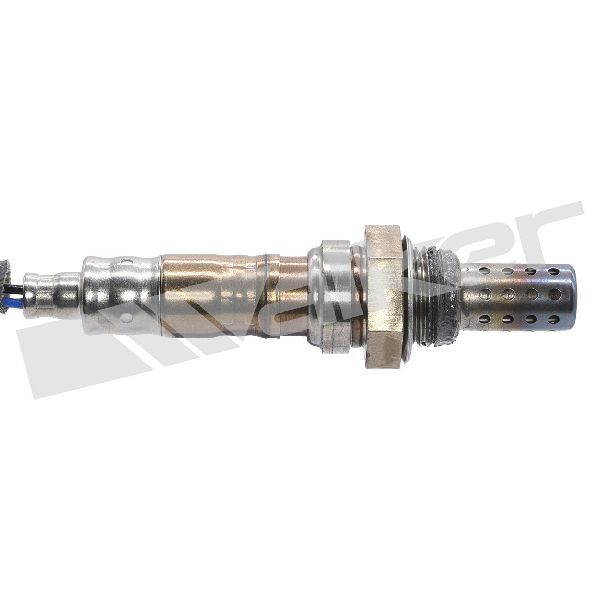
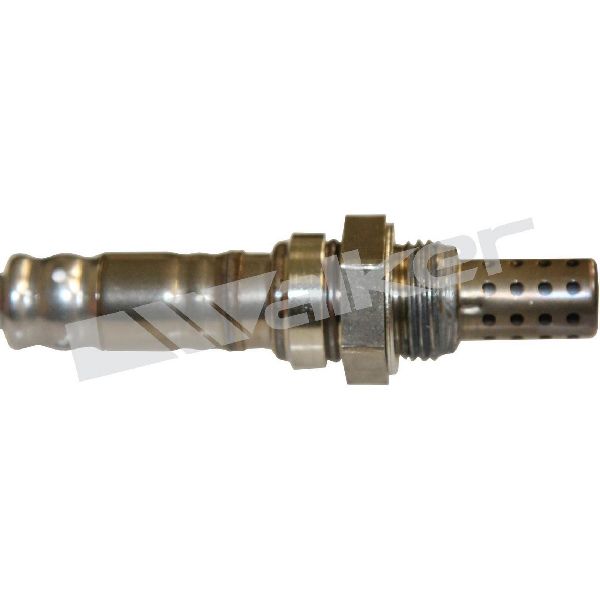
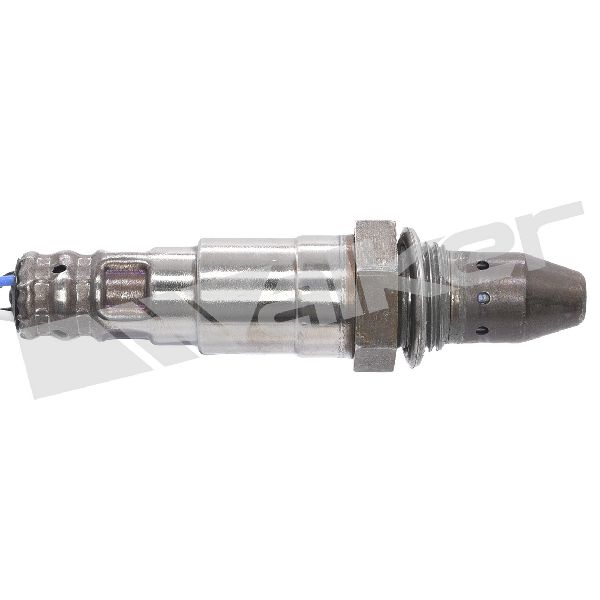
- Rear Oxygen Sensor (Bank 1, Sensor 2)
(OEM #22690AB010)— This is the component that has failed in the vast majority of P0140 cases, as confirmed by manufacturer TSB #09-115-24R. Note: The TSB states the part number itself did not change, but the new part can be identified by the Denso part number engraved on it.
Trusted brands: Subaru (OEM), Denso (e.g., 234-4583), NTK/NGK
OEM price range: $140-$200
Aftermarket price range: $70-$120
Related Codes That Often Appear With This One
- P0137 — This code for 'O2 Sensor Circuit Low Voltage' can be triggered by the same failing sensor.
- P0138 — This code for 'O2 Sensor Circuit High Voltage' can also be caused by an internal short in the same failing sensor.
- P0141 — This code for 'O2 Sensor Heater Circuit Malfunction' is very common with P0140, as a failure of the internal heater will prevent the sensor from becoming active.
Technical Service Bulletins (TSBs) & Recalls
- 09-115-24R: Groups P0140 with other rear O2 sensor codes, indicating a common point of failure and announcing a redesigned part to prevent internal cracking.
- 09-115-24: Original bulletin grouping P0140 with related rear O2 sensor DTCs.
Platform-Specific Known Issues
- Subaru has issued Technical Service Bulletin #09-115-24R which groups P0140 with other rear O2 sensor codes (P0137, P0138, P0141). It announces a redesigned sensor with an 'optimized coating' to prevent internal cracking, which was the root cause of the failures.
Mechanic-Grade Diagnostic Values
- Rear O2 Sensor (B1S2) Live Data Voltage — expected: Slow, relatively stable fluctuations around 0.45V to 0.7V with the engine warm at idle.. Failure: Voltage is stuck/flat (e.g., 0V, 0.45V), or reads below 0.03V or above 1.2V.
- Rear O2 Sensor Heater Circuit Resistance — expected: Typically between 5-15 ohms. One source specifies 5.6 Ohms +/- 0.8 Ohms.. Failure: Resistance is very high (over 50 ohms) or shows an open circuit (infinite resistance).
- Rear O2 Sensor Heater Power at Connector — expected: Battery Voltage (approx. 12V) with key on, engine off.. Failure: No voltage or very low voltage, indicating a blown fuse or wiring issue upstream of the sensor.
Hidden / Shadow Codes Worth Checking
- Mode $06, TID:$02, CID:$11: This refers to the On-Board Monitoring Test for the Bank 1, Sensor 2 Oxygen Sensor. While not a 'hidden code' in the traditional sense, a 'Fail' status for this test in a professional scan tool can confirm the sensor is not passing its self-test, even before a DTC is set. (see via A professional scan tool with Mode $06 capability is required. The data is presented in hexadecimal and may need a manufacturer-specific chart to fully interpret.)
Scan Tool Commands That Help
- Subaru Select Monitor (SSM) or equivalent professional scan tool: Current Data Display / O2 Sensor Test — Used to view the live voltage data from the rear O2 sensor to confirm a lack of activity. The 'Oxygen sensor test' function under the OBD menu checks if the monitor has completed its self-test successfully.
Wiring & Ground Locations
- Rear O2 Sensor Connector (E25) — On the passenger side of the vehicle, the connector is typically located on the frame rail near the transmission.. This is the primary connection point to inspect for corrosion, water intrusion, or damage. A bad connection here will cause a 'no activity' code.
- Engine Ground — The main ECU ground is on top of the intake manifold. Additional grounds include the main battery-to-chassis ground and potentially a transmission ground strap.. A poor engine or ECU ground can cause a variety of strange electrical issues, including incorrect sensor readings. The ECU gets its ground reference from the intake manifold, making that connection critical.
Real Owner Repair Stories
- Maxima Forums user (Nissan Maxima (demonstrates a universal diagnostic principle)) — Persistent P0140 code.
❌ Tried (didn't work) Replacing the O2 sensor (twice), Replacing ignition coils, Replacing MAF sensor, Replacing spark plugs
✅ What actually fixed it The final cause was a vacuum leak from a poorly sealed aftermarket oil catch can, which was introducing unmetered air and causing the O2 sensor to report a constant lean condition that the ECU interpreted as 'no activity'. - Reddit user r/subaru (2011 Subaru WRX (modified)) — Recurring P0140, especially when driving uphill.
❌ Tried (didn't work) Replacing the rear O2 sensor with an OEM part.
✅ What actually fixed it The user had a catless downpipe (de-cat). The code was being caused by the exhaust modification, as the sensor was correctly reading a full-lean condition due to the absence of the catalytic converter. The fix requires an ECU tune to ignore the rear O2 sensor reading, not a parts replacement.
OEM Part Supersession History
22690AB010→22690AB010 (Redesigned Internals)— The original design was prone to internal cracking, leading to open/short circuits. The redesigned part has an 'optimized coating' for better durability.
Heads up: The Subaru part number did not change. The new, improved part must be identified by the engraved Denso part number. For example, for a related sensor, the old Denso PN was 150200-9001 and the new is 150200-9002.
Helpful Videos

We Have This Part in Stock

The information in this article is provided for general reference and educational purposes only. Vehicle specifications, procedures, and part compatibility can vary by production date, trim level, and region. Always consult your vehicle's factory service manual and verify part numbers before purchasing or performing repairs. Safety-critical components such as airbags, seat belts, and braking systems should be installed by a qualified professional.
- Subaru OUTBACK:
- 🧭 Diagnostic Flowchart
- 🎬 Helpful Videos
- 🛍️ Shop This Part
- What's Unique About the 2020-2024 Subaru OUTBACK
- Symptoms You May Notice
- Most Likely Causes
- Rare But Worth Checking
- Diagnosis Steps
- Parts You'll Likely Need
- Related Codes That Often Appear With This One
- Technical Service Bulletins (TSBs) & Recalls
- Platform-Specific Known Issues
- Mechanic-Grade Diagnostic Values
- Hidden / Shadow Codes Worth Checking
- Scan Tool Commands That Help
- Wiring & Ground Locations
- Real Owner Repair Stories
- OEM Part Supersession History
- 🎟️ Get 5% Off