

P0140 on 2014-2019 Toyota Corolla: O2 Sensor Circuit Diagnosis and Fix
On a 2014-2019 Toyota Corolla, code P0140 almost always means the downstream oxygen sensor (Bank 1, Sensor 2) has failed due to age, typically between 80,000 and 120,000 miles. Replacing this sensor is the most common fix. Expect to pay between $60-$100 for a quality aftermarket sensor (like Denso) and around $140 for the OEM part. Before replacing, quickly check the wiring harness for damage and verify the 'EFI' related fuses in both the interior and engine bay fuse boxes, as a blown fuse for t
- P0140 on a 2014-2019 Corolla points directly to a problem with the downstream oxygen sensor (Bank 1, Sensor 2).
- The most likely cause is a failed sensor that needs to be replaced. This is a common wear-and-tear part, often failing between 80k-120k miles.
- Driving is not dangerous with this code, but you will fail an emissions test and should get it fixed to ensure the emissions system is working correctly.
- Before replacing the sensor, perform a quick visual inspection of the wiring and connector for any obvious damage, as this can save you from buying an unnecessary part.
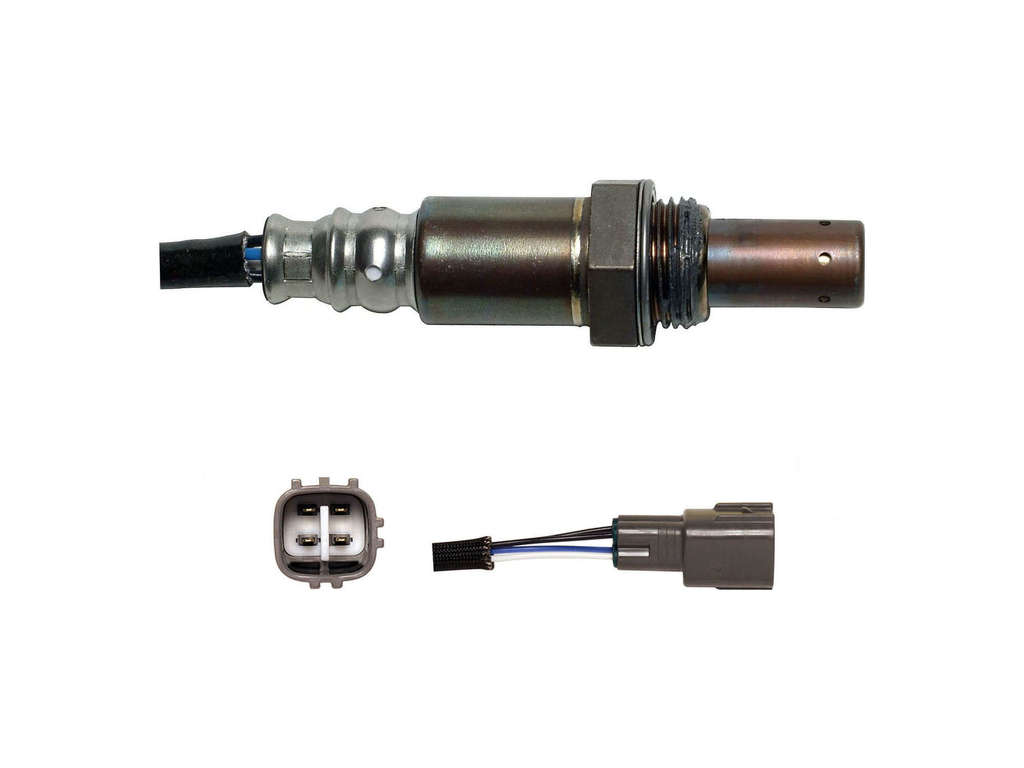
- The correct OEM part number is 89465-02390, and the quality aftermarket equivalent from the original manufacturer is Denso 234-4921.
What's Unique About the 2014-2019 Toyota Corolla
For the 11th generation (E170) Toyota Corolla with the 2ZR-FAE engine, the P0140 code is a very common and straightforward emissions fault. There are no widespread, unique platform-specific defects that cause this code. It typically points to a standard part failure—the oxygen sensor simply wears out over time. The diagnosis is generally not complex compared to other vehicles where this code might be triggered by software glitches, complex wiring issues, or frequent exhaust leaks. The fix is almost always a direct sensor replacement.
Symptoms You May Notice
- Check Engine Light is on
- Vehicle will fail an emissions test
- Slight decrease in fuel economy (rare and often unnoticed)
- Replacing the upstream Air/Fuel Ratio Sensor (Bank 1, Sensor 1) instead of the downstream Oxygen Sensor (Bank 1, Sensor 2). The upstream sensor is more expensive and will not fix a P0140 code.
- Cleaning the Mass Airflow (MAF) sensor. While some generic repair videos suggest this, it is not a valid fix for a P0140 code, which is specific to the O2 sensor circuit.
- Immediately replacing the catalytic converter. A P0140 code indicates a problem with the sensor *monitoring* the converter, not necessarily the converter itself. A failing converter typically sets a P0420 code.
Most Likely Causes
- Failed Downstream Oxygen Sensor (Bank 1, Sensor 2) 🔴 High Probability → Shop Oxygen Sensor Oxygen sensors are consumable items that degrade over time from constant exposure to high-temperature exhaust gases. On the Corolla, failure is common with age and mileage, rather than a specific design flaw.
How to confirm: Using a scan tool with live data, monitor the voltage of the B1S2 sensor after the engine is fully warmed up. A healthy sensor should show a relatively stable voltage, typically between 0.5V and 0.8V. If the voltage is stuck at 0V, 0.45V, or does not fluctuate at all, the sensor is likely dead. You can also test the sensor's internal heater circuit with a multimeter; an open circuit (OL reading) indicates a failed heater, which requires sensor replacement.
Typical fix: Replace the downstream oxygen sensor. Using an O2 sensor socket makes removal and installation much easier.
Est. part cost: $60-$140 - Wiring or Connector Issue 🟡 Medium Probability The sensor and its wiring are located under the vehicle, exposed to road debris, moisture, and potential physical damage from road hazards or improper servicing. The harness can sometimes be damaged by contact with hot exhaust components.
How to confirm: Visually inspect the entire wiring harness from the O2 sensor to where it enters the main loom. Look for any signs of melting, chafing, corrosion in the connector pins, or breaks. Use a multimeter to check for continuity on the signal and heater circuit wires and ensure there are no shorts to ground.
Typical fix: Repair the damaged section of the wiring harness or clean/replace the connector.
Est. part cost: $5-$50 - Blown Fuse for O2 Sensor Heater ⚪ Low Probability → Shop Oxygen Sensor
How to confirm: The O2 sensor's heater circuit allows it to warm up quickly for accurate readings. A short in the sensor's heater element can blow the corresponding fuse. On this Corolla, there is no single fuse labeled 'O2 Sensor'. Power is supplied via fuses labeled 'EFI'. Check the engine bay fuse box (fuses #3, 6, 10, 12, 29, 30, 31, 32) and the interior fuse box under the dash (fuses #3, 24, 25, 29). If a new fuse blows immediately, a short circuit exists in the heater element or wiring.
Typical fix: Replace the blown fuse. If the fuse blows again, the short circuit in the sensor or wiring must be found and fixed. Often, replacing the shorted O2 sensor resolves the issue.
Est. part cost: $1-$5 - Exhaust Leak ⚪ Low Probability
How to confirm: Listen for hissing or ticking noises from the exhaust system, especially when the engine is cold. Visually inspect the exhaust pipes and gaskets between the catalytic converter and the downstream O2 sensor for black soot marks, which indicate a leak. An exhaust leak can introduce outside oxygen, causing the sensor to read incorrectly, though this more commonly causes other codes.
Typical fix: Repair the leak by replacing the faulty gasket or section of exhaust pipe.
Est. part cost: $20-$200
Rare But Worth Checking
- Faulty Engine Control Module (ECM): → Shop Engine Control Module (ECM) This is extremely rare. The ECM's internal driver for the O2 sensor circuit can fail, but this should only be considered after all other possibilities (sensor, wiring, fuses) have been exhaustively ruled out by a professional.
Diagnosis Steps
- Read the code with an OBD-II scanner to confirm P0140 is the only code present. If other codes exist, diagnose them first.
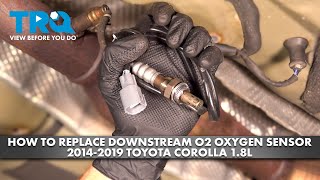
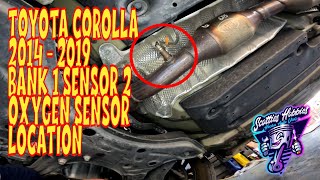
- Visually inspect the downstream O2 sensor's wiring harness and connector. It is located on the exhaust pipe after the catalytic converter. 🎬 Watch: See exactly where the downstream sensor is located. Look for obvious damage like melting, chafing, or corrosion.
- Check the fuse boxes for any blown fuses related to the emissions systems. On this model, check fuses labeled 'EFI' in both the engine bay and interior fuse boxes.
- Inspect the exhaust system for any leaks between the catalytic converter and the downstream O2 sensor. Look for soot trails near flanges.
- Use a scan tool with live data. Warm the engine to operating temperature. Observe the 'O2S B1S2' voltage. A healthy sensor monitoring an efficient converter should show a relatively steady voltage between 0.5V and 0.8V. If the voltage is stuck flat (e.g., 0V or 0.45V) and does not respond to changes in engine RPM, the sensor has failed.
- If the sensor appears inactive, test the heater circuit. Disconnect the sensor and measure the resistance between the two heater pins (usually the two same-colored wires) on the sensor side. A healthy sensor will have a low resistance (typically 2-10 Ohms). A reading of 'OL' (over-limit) indicates an open circuit and a bad sensor.
- If the sensor's heater circuit is good, check for voltage and ground at the harness connector (engine side) to ensure the ECM is providing power.
- If all wiring and fuses are confirmed good, and the sensor is new but the code persists, the issue may be with the ECM, but this is highly unlikely.
Parts You'll Likely Need
- Downstream Oxygen Sensor (Bank 1, Sensor 2)
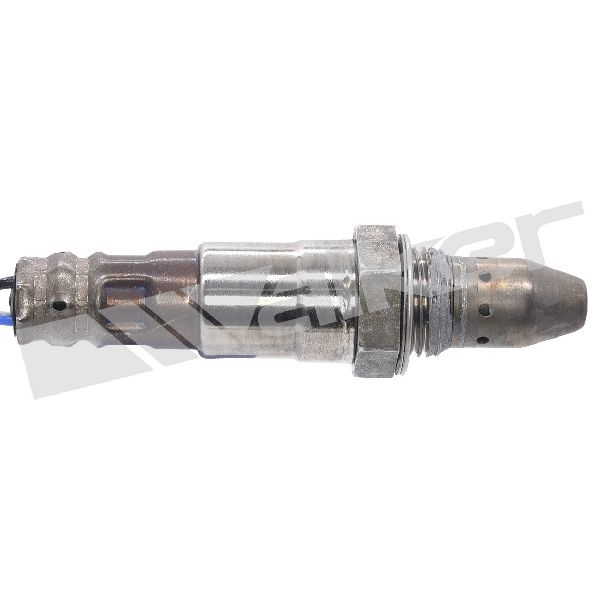
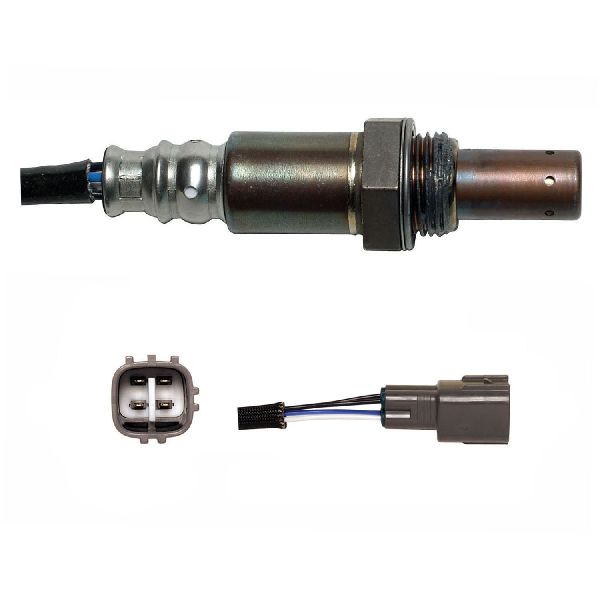
(OEM #89465-02390)— This is the most common component to fail and cause the P0140 code. Denso is the original equipment manufacturer (OEM) for Toyota, so the Denso aftermarket part is equivalent to the dealer part.
Trusted brands: Denso (OEM supplier), NGK/NTK
OEM price range: $130-$150
Aftermarket price range: $60-$100 - Oxygen Sensor Socket Set — A specialized socket with a slit for the wire is often required to easily remove and properly torque the oxygen sensor without damaging the harness. This is a highly recommended tool for DIY replacement. 🎬 See this walkthrough on how to replace the sensor.
Trusted brands: Lisle, OEMTOOLS, Generic
Aftermarket price range: $10-$30
Technical Service Bulletins (TSBs) & Recalls
- No specific TSBs for P0140 on this platform were found. There are TSBs for other oxygen sensor codes on different Toyota engines (e.g., T-SB-0151-18 for P0138 on 2AR-FE engines), but none directly address P0140 on the 2ZR-FAE, reinforcing that it's typically a simple part failure.
Platform-Specific Known Issues
- On forums like Toyota Nation, owners of 2014-2019 Corollas report that the P0140 code is a very common, straightforward issue. The overwhelming consensus is that replacing the downstream O2 sensor (Denso 234-4921) resolves the code without further issue. Failure mileage is frequently cited as being between 80,000 and 120,000 miles.
Mechanic-Grade Diagnostic Values
- Downstream O2 Sensor (B1S2) Voltage — expected: Relatively steady voltage between 0.5V and 0.8V after the engine is at operating temperature and idling.. Failure: Voltage is stuck flat at 0V, ~0.45V, or any other value and does not respond to changes in engine RPM. The P0140 code sets when the signal is inactive for an extended period.
- O2 Sensor Heater Circuit Resistance — expected: Between 2 and 10 Ohms when measured across the two heater pins on the sensor connector.. Failure: A reading of 'OL' (Over Limit / Open Loop) on a multimeter indicates the internal heater element has failed.
Hidden / Shadow Codes Worth Checking
- Mode $06, TID $01-$0A (varies): Mode $06 data shows the results of non-continuous monitor self-tests. Before a P0140 code fully matures and turns on the Check Engine Light, the downstream O2 sensor may fail its internal self-test. A technician can view this data to spot a component that is on the verge of failure. For Toyota, catalyst and O2 sensor tests are often under Monitor IDs (MID) like $21 or Test IDs (TID) like $01. (see via A professional-level scan tool with Mode $06 capability (e.g., Toyota Techstream, advanced OBD Fusion, Innova scanners).)
Scan Tool Commands That Help
- Toyota Techstream / Advanced OBD-II Scanner: Live Data Graphing (PID: O2S B1S2) — This is the primary diagnostic function. It is used to visually confirm if the sensor's voltage is flat and unresponsive, which is the direct cause of a P0140 code. A healthy sensor monitoring a good catalytic converter will have a steady, high voltage, not a flat line at 0V.
- Toyota Techstream / Advanced OBD-II Scanner: Mode $06 Test Results — Use this to check the raw test results for the O2 sensor monitors. This can help identify an intermittent failure or a sensor that is performing poorly but has not yet failed badly enough to set a persistent hard code.
Wiring & Ground Locations
- A/F HEATER or EFI Fuses — In both the main engine bay fuse box and the interior fuse box located under the driver's side dashboard.. The O2 sensor's heater circuit is critical for its operation. On this Corolla, power for the heater does not come from a dedicated 'O2' fuse. It is tied into the Electronic Fuel Injection (EFI) system fuses. A blown EFI fuse will cut power to the heater, preventing the sensor from activating and triggering a P0140.
- Engine Ground Points (AA, AB, AC, etc.) — Various points on the engine block, cylinder head, and chassis in the engine bay. For the 2ZR-FE, key grounds are located on the cylinder head near the intake and on the transmission housing.. A poor engine ground can cause a variety of erratic electrical issues, including incorrect sensor readings. While not a direct cause of P0140 typically, if the code persists after sensor and wiring checks, verifying that the main engine-to-chassis ground straps are clean and tight is a crucial step.
- ECM Connector Pins — At the Engine Control Module (ECM), typically located in the engine bay or behind the glove box.. The four wires from the O2 sensor (heater power, heater control, signal, and signal ground) terminate at specific pins on the ECM. Advanced diagnosis involves testing for voltage, ground, and continuity directly at these pins to isolate a wiring fault from a faulty ECM driver.
Real Owner Repair Stories
- Reddit user in r/autorepair (Unknown make/model, but demonstrates a common Toyota scenario.) — Check Engine Light with code P0139 (O2 Sensor Slow Response, Bank 1 Sensor 2).
❌ Tried (didn't work) The user noted the existing sensor was a cheap aftermarket part.
✅ What actually fixed it The user replaced the slow downstream O2 sensor with a new OEM sensor. This cleared the P0139 code, but after 50 miles, a new code, P0420 (Catalyst System Efficiency Below Threshold), appeared. This story is a classic example of how a new, properly functioning O2 sensor can be *more* sensitive and accurate, revealing an underlying problem (a failing catalytic converter) that the old, lazy sensor was unable to detect.
Model Year Variations Within This Range
- 2014-2019: The Corolla LE Eco trim used the 2ZR-FAE engine with Valvematic, while other trims like the L and LE used the standard 2ZR-FE engine. While the 2ZR-FAE has a more complex valvetrain, the downstream oxygen sensor and its monitoring strategy for code P0140 are functionally identical between these two engines.
Diagnostic Flowchart
Other Known Issues on This Vehicle
Issues unrelated to this code that are worth knowing about as an owner of this generation:
- CVT Transmission Issues (2014-2016 models) 🟠 Medium — Commonly reported on earlier models of this generation. Symptoms include jerking, hesitation, or momentary power loss. Often addressed with a software update or, in some cases, fluid changes. (Ref: Software updates were released. A recall (J17/J07) was issued for the 2019 Corolla Hatchback for a different torque converter issue.)
- Infotainment System Glitches/Freezing 🟡 Low — Frequently reported across forums. The touchscreen may become unresponsive, reboot randomly, or freeze. Sometimes fixed with a software update, but can require expensive head unit replacement out of warranty. (Ref: TSB T-TT-0578-19 addresses some Bluetooth connectivity concerns.)
- Premature Front Suspension Bushing Wear 🟡 Low — Some owners report clunking or squeaking noises from the front suspension over bumps at relatively low mileage (under 60k miles). The front lower control arm rear bushing is a common culprit. (Ref: TSB T-SB-0068-20 was issued for a squeak noise from the front lower suspension arm rear bushing.)
- Melting/Sticky Dashboard 🟡 Low — This was a major issue on older Toyota models (like the 2007-2011 Camry) leading to a warranty enhancement program (ZE6). While not as widespread on the 2014-2019 Corolla, some complaints exist, but it is not a chronic, recognized problem for this specific generation. (Ref: No specific recall or warranty program for the 2014-2019 Corolla dashboard.)
- Minor Oil Consumption at High Mileage 🟡 Low — The 2ZR-FE/FAE engine is generally very reliable, but like many modern engines with low-tension piston rings, it can start to consume oil as it accumulates high mileage (typically over 150,000 miles). This is usually not a sign of imminent failure but requires owners to check oil levels periodically. (Ref: No recall. Toyota considers consumption up to 1 quart per 1,200 miles to be within specification.)
Used vs. New Parts: Buying Guide for This Vehicle
When a used part is the smart pick: For this specific repair, using a used part is NOT recommended. Oxygen sensors are wear-and-tear components with a finite lifespan. A used sensor from a junkyard has an unknown history and could fail shortly after installation, wasting time and money.
What to inspect on the donor part:
- Not applicable as used parts are not advised.
OEM-only on this vehicle (don't cheap out):
- While not strictly 'OEM-only', using a cheap, unbranded oxygen sensor from online marketplaces is a major risk. These are often counterfeit or low-quality parts that can be dead-on-arrival or fail quickly.
Aftermarket brands forum-validated for this vehicle:
- Denso (This is the Original Equipment Manufacturer for Toyota; the Denso aftermarket part is identical to the dealer part).
- NGK / NTK
Brands owners have reported issues with on this vehicle:
- Any unbranded or suspiciously cheap sensors from eBay or Amazon. These often have high failure rates and may not be manufactured to the correct specifications, causing persistent codes.
Real Owner Stories
Aggregated from forums and TSBs cited above. Mileages and costs reflect what owners reported in those sources.
2014-2019 Toyota Corolla 1.8L — ~100000 miles
Symptoms: Check Engine Light is on; the P0140 code is described as a very common, straightforward issue on forums.
What fixed it: Replacing the downstream O2 sensor with a Denso 234-4921 unit.
Source hint: ToyotaNation Forums - Multiple threads discuss P0140 on 11th-gen Corollas
2017-2019 Toyota Corolla iM 1.8L
Symptoms: Check Engine Light on; vehicle shares the same powertrain and emissions components as the sedan.
What fixed it: Replacement of the rear O2 sensor.
Source hint: Reddit r/Corolla & r/MechanicAdvice
Related OBD-II Codes
Frequently Asked Questions
Which replacement oxygen sensor is recommended for the 2014-2019 Toyota Corolla?
Is there a TSB for P0140 on the 2ZR-FAE engine?
Where are the fuses for the O2 sensor heater located on this Corolla?
Does the Corolla iM share this same P0140 issue?
At what mileage does the downstream O2 sensor typically fail on this generation?
Can a clunking sound from my front suspension be related to the P0140 code?
Helpful Videos
We Have This Part in Stock


The information in this article is provided for general reference and educational purposes only. Vehicle specifications, procedures, and part compatibility can vary by production date, trim level, and region. Always consult your vehicle's factory service manual and verify part numbers before purchasing or performing repairs. Safety-critical components such as airbags, seat belts, and braking systems should be installed by a qualified professional.
- Toyota Corolla:
- 🧭 Diagnostic Flowchart
- 🎬 Helpful Videos
- 🛍️ Shop This Part
- What's Unique About the 2014-2019 Toyota Corolla
- Symptoms You May Notice
- Most Likely Causes
- Rare But Worth Checking
- Diagnosis Steps
- Parts You'll Likely Need
- Technical Service Bulletins (TSBs) & Recalls
- Platform-Specific Known Issues
- Mechanic-Grade Diagnostic Values
- Hidden / Shadow Codes Worth Checking
- Scan Tool Commands That Help
- Wiring & Ground Locations
- Real Owner Repair Stories
- Model Year Variations Within This Range
- Other Known Issues on This Vehicle
- Used vs. New Parts: Buying Guide for This Vehicle
- Real Owner Stories
- 2014-2019 Toyota Corolla 1.8L — ~100000 miles
- 2017-2019 Toyota Corolla iM 1.8L
- Related OBD-II Codes
- Frequently Asked Questions
- 🎟️ Get 5% Off