

P0140 on 2004-2009 Toyota Prius: Causes and Fixes for O2 Sensor No Activity
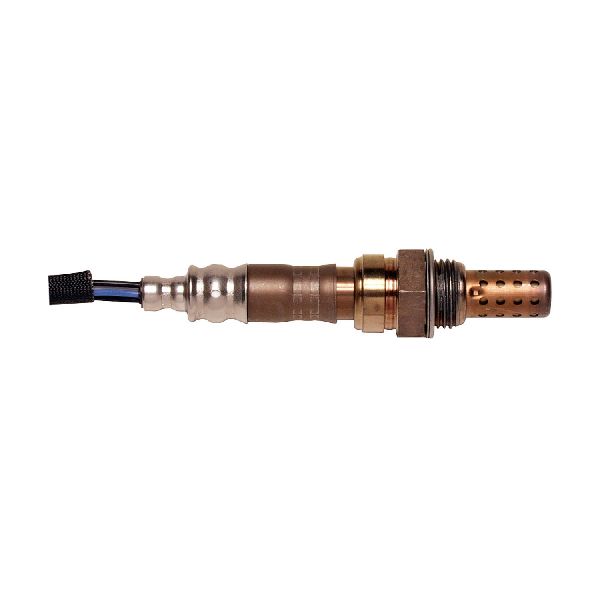
On a 2004-2009 Prius, code P0140 almost always means the downstream oxygen sensor (Bank 1, Sensor 2) has failed due to age. Replacing it is a common DIY fix, with an OEM-quality Denso sensor costing around $50-$90. The sensor's electrical connector is conveniently located inside the cabin, protecting it from corrosion.
- P0140 on a Gen 2 Prius is almost certainly a bad downstream O2 sensor.
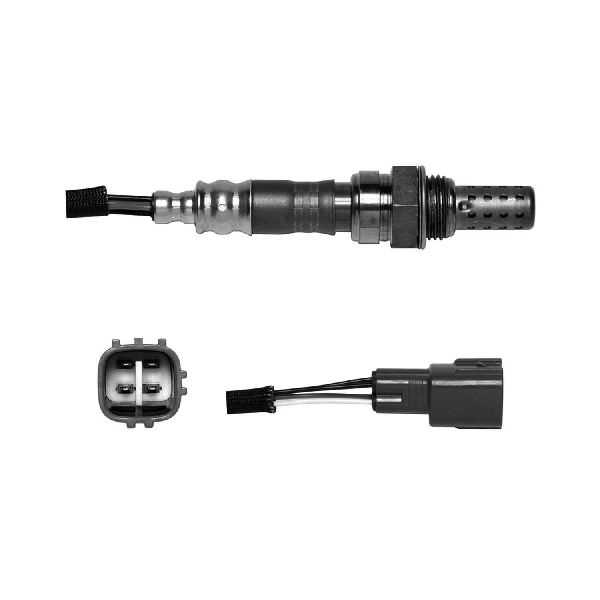
- The correct replacement part is Denso #234-4623, which is the OEM supplier, ensuring compatibility.
- This is a good DIY job. You'll need a 22mm (or 7/8") O2 sensor socket and basic hand tools. The electrical plug is inside the car on the passenger side, under the carpet.
- Don't immediately assume you need a new catalytic converter; this code points to the sensor that *monitors* the converter, not the converter itself.
- Ignoring the code won't stop the car from driving, but you will fail an emissions test and won't have a way to know if your catalytic converter is working correctly.
What's Unique About the 2004-2009 Toyota Prius
For the second-generation Prius, this code is straightforward. The 1NZ-FXE is a simple inline-four engine, so it only has one exhaust bank ("Bank 1"). The downstream O2 sensor (Sensor 2) is a common failure item due to age and heat cycles. Unlike many vehicles where the sensor's electrical connector is exposed under the car, the Gen 2 Prius has the connector located inside the cabin in the passenger-side footwell. This design protects it from the elements but requires pulling back the carpet for access during replacement.
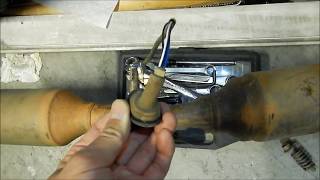
🎬 Watch: How to find the hidden interior sensor connector.Symptoms You May Notice
- Check Engine Light is on.
- Vehicle will fail an emissions test.
- In some rare cases, a rough or irregular idle may be noticed.
- Replacing the upstream Air/Fuel Ratio sensor (Bank 1, Sensor 1) instead of the downstream Oxygen Sensor (Bank 1, Sensor 2).
- Replacing the catalytic converter when the actual fault is just the sensor that monitors it. P0140 points directly to the sensor circuit, not converter efficiency (which is typically code P0420).
Most Likely Causes
- Failed Downstream Oxygen Sensor (Bank 1, Sensor 2) 🔴 High Probability → Shop Oxygen Sensor The sensor's internal heating element or sensing element simply wears out over time from constant exposure to high-temperature exhaust gases. This is the most common reason for P0140 on a high-mileage Prius.
How to confirm: Use an OBD-II scanner to monitor live data for 'O2S B1S2'. If the voltage is stuck (e.g., at 0.45V) and does not fluctuate when the engine is warm and running, the sensor has failed. A healthy sensor should show voltage slowly cycling between approximately 0.1 and 0.9 volts. A P0140 may be set if the voltage does not change for more than 74 seconds.
Typical fix: Replace the downstream oxygen sensor. The sensor is located in the exhaust pipe under the car, after the catalytic converter. A 22mm or 7/8" oxygen sensor socket is requ 🎬 See this step-by-step downstream sensor replacement walkthrough.ired.
Est. part cost: $50-$150 - Wiring or Connector Issue ⚪ Low Probability While the main connector is protected inside the car, the wire runs through a grommet in the floor and along the underbody, where it can be damaged by road debris, snagged, or melted on the exhaust.
How to confirm: Visually inspect the wiring from the sensor to where it enters the cabin floor. Unplug the connector (passenger footwell, under the carpet) and check for corrosion, moisture, or damage to the pins.
Typical fix: Repair the damaged section of wire or clean/replace the corroded connector.
Est. part cost: $5-$30 - Exhaust Leak ⚪ Low Probability Rust can cause leaks at the flange gaskets or in the flex pipe located before the sensor. An exhaust leak allows outside air to enter the pipe, which can cause the sensor to send an inaccurate, flat-lined signal.
How to confirm: Listen for a ticking or hissing sound from the exhaust system, especially when the engine is cold. Visually inspect the exhaust pipe and flanges between the catalytic converter and the sensor for black soot marks, which indicate a leak.
Typical fix: Replace the leaking gasket or repair the leaking section of the exhaust pipe.
Est. part cost: $10-$50
Rare But Worth Checking
- Faulty Engine Control Module (ECM): → Shop Engine Control Module (ECM) This is extremely rare. All other possibilities, especially the sensor and its wiring, must be exhaustively ruled out before considering the ECM as the cause.
- Blown Fuse: The oxygen sensor's heater circuit is often protected by a fuse. While uncommon, a blown fuse can cause the sensor to fail to warm up, leading to a 'no activity' code. Check the 'EFI' fuse in the engine compartment fuse block.
Diagnosis Steps
- Confirm P0140 is present using an OBD-II scanner. Check for any other codes, like P0141, which would further point to a failed sensor.
- Using the scanner's live data function, monitor the voltage for 'O2S B1S2' (Bank 1, Sensor 2) with the engine fully warmed up. A healthy sensor will show voltage slowly fluctuating. A reading that is stuck, flat, or shows 0V indicates a problem.
- Raise and safely support the vehicle on jack stands.
- Locate the sensor in the exhaust pipe, downstream of the catalytic converter.
- Inspect the visible wiring leading to the sensor for any signs of melting, chafing, or physical damage.
- Inside the car, pull back the passenger-side floor carpet near the firewall to access the sensor's electrical connector. It is typically a grey connector.
- Disconnect the sensor and inspect the connector pins on both the harness and sensor side for corrosion, moisture, or damage.
- If the wiring and connector look good and the live data was flat, the sensor itself is the most likely culprit.
- For advanced diagnosis, you can test the sensor's heater circuit resistance with a multimeter (typically between 11 and 16 ohms). You can also check for 12V power at the heater circuit pins on the harness side of the connector with the ignition on.
Parts You'll Likely Need
- Downstream Oxygen Sensor (Bank 1, Sensor 2)
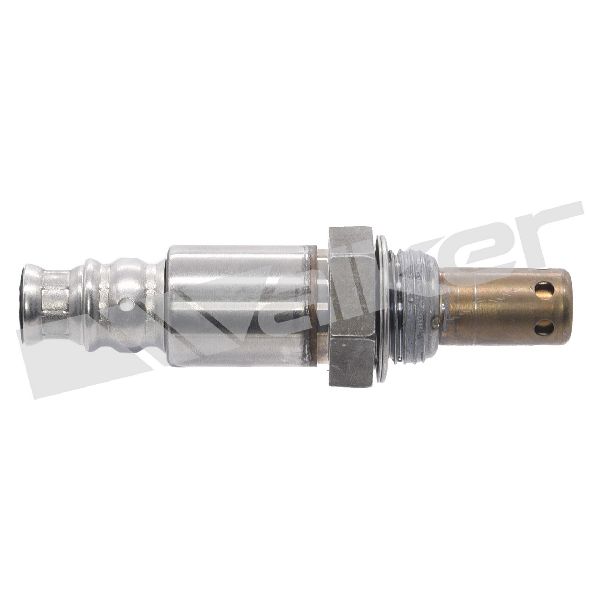
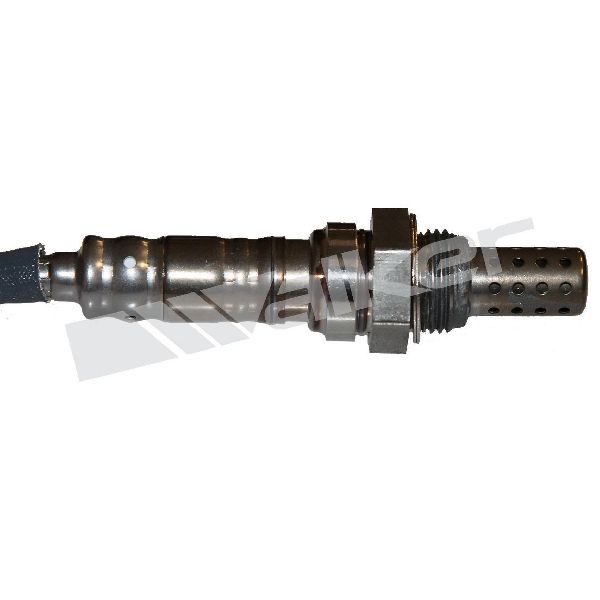
(OEM #89465-47070)— This sensor is the primary cause of P0140. Its internal components fail from age and heat, causing it to stop sending a signal. Denso is the Original Equipment Manufacturer (OEM) for Toyota, making their aftermarket parts a reliable choice.
Trusted brands: Denso (OEM Supplier, Part #234-4623), NGK/NTK, Bosch
OEM price range: $120-$180
Aftermarket price range: $50-$90
Related Codes That Often Appear With This One
- P0141 — P0141 indicates a failure in the same sensor's internal heater circuit. It's very common to see both codes together when the sensor fails completely, as the heater is required for the sensor to function.
- P0420 — If the O2 sensor is failing slowly or giving inaccurate (but not 'no activity') readings, it might incorrectly trigger a P0420 (Catalyst System Efficiency Below Threshold) code. However, P0140 points more directly to the sensor itself being dead.
Platform-Specific Known Issues
- Real-World Repair Story: A user on PriusChat with a 2009 Prius at 171k miles experienced a P0140 code. The fix was a straightforward replacement of the downstream O2 sensor. 🎬 Watch a mechanic replace the sensor on a 2007 Prius. The owner noted the ease of access to the connector under the passenger carpet and confirmed that a Denso replacement resolved the Check Engine Light.
Mechanic-Grade Diagnostic Values
- Downstream O2 Sensor (B1S2) Heater Circuit Resistance — expected: 11 to 16 Ω at 20°C (68°F). Failure: A reading of 'OL' (Open Loop/infinite resistance) or a value outside the specified range indicates a failed heater element.
- Downstream O2 Sensor (B1S2) Heater Current — expected: 0.4 to 1.0 A at idle with battery voltage between 11-14V. Failure: A current draw of less than 0.25A or more than 2A will trigger a heater circuit fault code (like P0141).
- Voltage at B1S2 Connector (Harness Side) — expected: Approximately 12V (battery voltage) at the +B (power) pin with the ignition ON.. Failure: 0V or significantly low voltage points to a wiring issue, a blown EFI fuse, or a problem with the EFI relay.
Wiring & Ground Locations
- Downstream O2 Sensor Connector (H13) — Inside the cabin, under the passenger-side carpet near the firewall.. This is the connection point for all diagnostic tests of the sensor and its harness. Knowing its location is critical for replacement and testing.
- H13 Connector Pinout (Harness Side) — Pin 1: HT (Heater Control, Green wire), Pin 2: +B (Heater Power, Black wire), Pin 3: OX (Sensor Signal, Blue wire), Pin 4: E (Sensor Ground, White wire). Note: Wire colors can vary slightly.. These specific pin assignments are required to accurately test for power, ground, and resistance on the correct circuits with a multimeter.
- Ground Points EB, EC, ED — Located in the engine compartment, on or near the engine block and transaxle housing.. The Engine Control Module (ECM) and its related sensors rely on clean ground connections. While a bad ground is a low-probability cause for P0140 specifically, a corroded or loose engine ground can cause a wide range of erratic sensor readings and codes.
Real Owner Repair Stories
- PriusChat Forum (2006 Toyota Prius) — Check Engine Light with code P2237 (related to O2 sensor positive current control). The catalytic converter had been stolen and replaced with an aftermarket unit and aftermarket O2 sensors.
❌ Tried (didn't work) Using cheap aftermarket O2 sensors, which continued to cause codes.
✅ What actually fixed it The consensus and recommended fix from veteran forum members was to replace the problematic aftermarket sensor with a high-quality Denso sensor, which is known to be reliable and resolve such issues. - Reddit r/autorepair (Vehicle not specified, but general automotive context) — Initially had code P0139 (O2 Sensor Slow Response), replaced the downstream sensor with an OEM part.
❌ Tried (didn't work) Clearing the code by disconnecting the battery.
✅ What actually fixed it After replacing the faulty downstream sensor, the code changed from a sensor-specific code (P0139) to P0420 (Catalyst Efficiency). This indicates the new, functional sensor was now correctly identifying a failing catalytic converter, which was the underlying problem the old, slow sensor was masking.
OEM Part Supersession History
89465-47070→89465-47070 remains the current OEM part number.— N/A
Heads up: No supersession or incompatibility issues are noted for this part within the 2004-2009 generation.
Diagnostic Flowchart
Other Known Issues on This Vehicle
Issues unrelated to this code that are worth knowing about as an owner of this generation:
- Combination Meter Failure 🟠 Medium — Very common, especially in colder climates. Can happen intermittently at first, often after 100k miles. The display for the speedometer and fuel gauge goes blank. (Ref: T-SB-0172-09 acknowledges the issue and provides a part number for an updated meter.)
- Excessive Oil Consumption 🟠 Medium — Frequently reported on the 1NZ-FXE engine, typically starting after 100k-150k miles. The cause is often attributed to piston rings getting clogged with carbon.
- HID Headlight/Ballast Failure 🟡 Low — Common on models equipped with HID headlights. Symptoms include flickering, headlights turning off randomly, or changing color. The ballast (ECU) is a frequent failure point, sometimes due to water intrusion. (Ref: A warranty extension was offered for this issue in the past.)
- Brake Actuator Assembly Failure 🔴 High — A well-known and expensive failure. Symptoms include a loud, frequent buzzing/pumping noise from the engine bay, and multiple brake-related warning lights (ABS, VSC, etc.). (Ref: Toyota issued a Warranty Enhancement Program (ZEP/ZG1) to extend coverage for this specific part, though it has since expired for most vehicles.)
- Hybrid Inverter Coolant Pump Failure 🔴 High — A common failure that will trigger a master warning light and the code P0A93, potentially causing the hybrid system to shut down. The pump wears out over time. (Ref: A recall was issued for this component (NHTSA ID: 12V536000).)
Used vs. New Parts: Buying Guide for This Vehicle
When a used part is the smart pick: For this repair, buying a used oxygen sensor is strongly discouraged. O2 sensors are wear-and-tear items with a finite lifespan, similar to spark plugs or filters. A used sensor from a junkyard has unknown remaining life and may fail shortly after installation, wasting time and money.
What to inspect on the donor part:
- Not applicable as used purchase is not recommended.
OEM-only on this vehicle (don't cheap out):
- While not strictly 'OEM-only', using the OEM supplier (Denso) is highly recommended for oxygen sensors on this vehicle. Cheaper, no-name aftermarket sensors are a frequent source of recurring codes and compatibility problems.
Aftermarket brands forum-validated for this vehicle:
- Denso (OEM supplier, direct-fit part #234-4623)
- NGK/NTK
- Bosch (ensure it is a direct-fit model with the correct connector, not a universal splice-in type)
Brands owners have reported issues with on this vehicle:
- Generic, unbranded sensors from online marketplaces (e.g., eBay, Amazon) are frequently cited on forums as being poor quality and failing prematurely or not working correctly out of the box.
Real Owner Stories
Aggregated from forums and TSBs cited above. Mileages and costs reflect what owners reported in those sources.
2009 Toyota Prius 1NZ-FXE — 171000 miles
Symptoms: Check Engine Light was on with code P0140.
What fixed it: Straightforward replacement of the downstream O2 sensor using a Denso replacement part.
Source hint: PriusChat.com user report cited in vehicle_specific_issues
2004-2009 Toyota Prius 1NZ-FXE — ~150000 miles
Symptoms: Oil consumption issue caused by clogged oil control rings.
What fixed it: Performed a 'piston soak' with a solvent like Berryman's B12 to clean clogged oil control rings.
Source hint: Reddit r/prius citation
Related OBD-II Codes
Frequently Asked Questions
Where is the downstream oxygen sensor connector located on the 2004-2009 Prius?
Which specific replacement part is recommended for a P0140 on this vehicle?
Can I use a used sensor from a salvage yard to fix this code?
How long does the voltage need to remain flat before the Prius triggers a P0140?
Is there a TSB for the oil consumption issues often mentioned alongside P0140 on this model?
What tools are required to replace the Bank 1, Sensor 2 oxygen sensor?
Helpful Videos
We Have This Part in Stock


The information in this article is provided for general reference and educational purposes only. Vehicle specifications, procedures, and part compatibility can vary by production date, trim level, and region. Always consult your vehicle's factory service manual and verify part numbers before purchasing or performing repairs. Safety-critical components such as airbags, seat belts, and braking systems should be installed by a qualified professional.
- Toyota Prius:
- 🧭 Diagnostic Flowchart
- 🎬 Helpful Videos
- 🛍️ Shop This Part
- What's Unique About the 2004-2009 Toyota Prius
- Symptoms You May Notice
- Most Likely Causes
- Rare But Worth Checking
- Diagnosis Steps
- Parts You'll Likely Need
- Related Codes That Often Appear With This One
- Platform-Specific Known Issues
- Mechanic-Grade Diagnostic Values
- Wiring & Ground Locations
- Real Owner Repair Stories
- OEM Part Supersession History
- Other Known Issues on This Vehicle
- Used vs. New Parts: Buying Guide for This Vehicle
- Real Owner Stories
- 2009 Toyota Prius 1NZ-FXE — 171000 miles
- 2004-2009 Toyota Prius 1NZ-FXE — ~150000 miles
- Related OBD-II Codes
- Frequently Asked Questions
- 🎟️ Get 5% Off