

P0141 on 2008-2012 Audi A4 2.0T: O2 Sensor Heater Circuit Causes and Fixes
This code almost always means the heater element inside the downstream oxygen sensor (after the catalytic converter) has failed. Replacing the sensor is the most common fix. Expect to pay $60-$120 for an aftermarket sensor or $150-$250 for an OEM part.
- P0141 on your Audi A4 points to a fault in the heater circuit of the oxygen sensor located after the catalytic converter.
- The most likely cause is a failed oxygen sensor, which is a common wear item. This is a straightforward DIY replacement for those with basic tools.
- Before replacing the sensor, it's wise to quickly check the corresponding fuse, as it's a simple and inexpensive potential fix.
- Do not ignore this code. While it won't strand you, it will cause an automatic failure on an emissions test and can lead to reduced fuel efficiency.
- Always use a 'direct-fit' replacement sensor from a reputable OEM supplier like Bosch to ensure compatibility and a lasting repair.
What's Unique About the 2008-2012 Audi A4
The 2008-2012 Audi A4 (B8 generation) with the 2.0L TFSI engine has a standard emissions control setup. While P0141 is a generic code, the specific part and its location are key. On this inline-four engine, there is only one exhaust bank, so "Bank 1" is the only bank. "Sensor 2" is the post-catalytic converter sensor. Failure of this sensor's heater is a common issue across many brands and not a unique weakness of this Audi platform, but using a quality direct-fit replacement part is crucial for a lasting repair.
Symptoms You May Notice
- Check Engine Light is on
- Vehicle will fail an emissions test
- Slightly decreased fuel economy, though it may not be noticeable to the driver
- Rough idle or engine misfires (rare)
- Replacing the upstream (pre-catalyst) oxygen sensor instead of the downstream (post-catalyst) one.
- Replacing the catalytic converter. A bad catalytic converter typically sets a P0420 code, not a P0141 heater circuit code.
Most Likely Causes
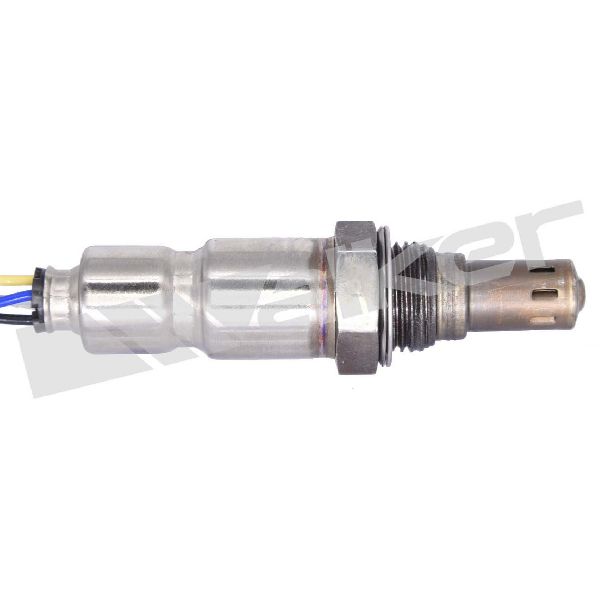
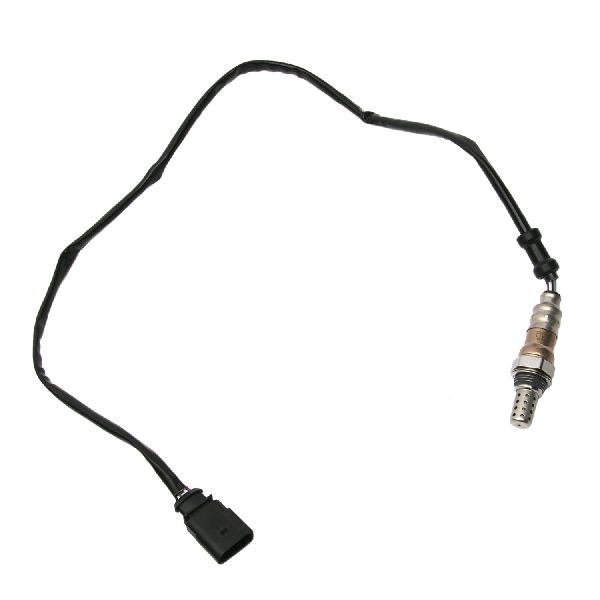
- Failed Downstream Oxygen Sensor (Bank 1, Sensor 2) 🔴 High Probability → Shop Oxygen Sensor The internal heater element is a common failure point in oxygen sensors due to constant heat cycles. This is the most frequent cause for P0141. 🎬 Watch: A breakdown of P0141 causes and how to fix them.
How to confirm: Disconnect the sensor and test the resistance between the two heater circuit pins (usually the two wires of the same color, often white or brown) with a multimeter. A healthy sensor should typically read between 5-20 ohms when cold. An open circuit (infinite resistance) confirms a bad heater element.
Typical fix: Replace the downstream (post-catalytic converter) oxygen sensor.
Est. part cost: $60-$250 - Damaged Wiring or Connector 🟡 Medium Probability The wiring harness leading to the sensor is located under the vehicle and is exposed to road debris, moisture, and extreme heat from the exhaust, which can cause corrosion, shorts, or open circuits over time.
How to confirm: Visually inspect the wiring harness from the sensor to the main loom for any signs of melting, chafing, or breaks. Check the electrical connector for corrosion, bent pins, or a loose connection. The harness often routes over the transmission.
Typical fix: Repair the damaged section of wiring or clean/replace the connector.
Est. part cost: $5-$50 - Blown Fuse for the O2 Heater Circuit ⚪ Low Probability Less common than sensor failure, but a short in the sensor or wiring can cause the corresponding fuse to blow as a protective measure.
How to confirm: Check the fuse boxes. On a B8 A4, there are panels on both the driver's and passenger's side of the dashboard, and one in the engine bay under the plastic plenum cover near the windshield. A wiring diagram indicates the fuse for 'Lambda probe 1 after catalytic converter -GX7-' may be Fuse 7 (SB7) in the fuse holder in the engine compartment.
Typical fix: Replace the blown fuse. If the new fuse blows immediately, it indicates a persistent short circuit in the wiring or sensor that must be found and fixed.
Est. part cost: $1-$5
Rare But Worth Checking
- Faulty Engine Control Module (ECM): → Shop Engine Control Module (ECM) This is extremely rare. The driver circuit within the ECM that powers the heater can fail, but this should only be considered after all other possibilities (sensor, wiring, fuse) have been definitively ruled out by a professional.
- Exhaust Leak: A significant exhaust leak before the sensor can sometimes cause erratic readings or trigger heater codes, although it's more likely to cause other codes like P0420. This is an unlikely but possible contributing factor.
Diagnosis Steps
- Read the trouble codes with an OBD-II scanner to confirm P0141 is the active code.
- Visually inspect the downstream oxygen sensor (Bank 1, Sensor 2), which is located on the exhaust pipe after the catalytic converter. Look for any obvious damage to the sensor or its wiring harness, paying attention to where it routes over the transmission.
- Inspect the electrical connector for corrosion, moisture, or loose pins.
- Check the fuse for the O2 sensor heater circuit. On the B8 A4, this is likely Fuse 7 (SB7), a 15A fuse in the engine bay fuse holder (Fuse Holder B).
- If the fuse and wiring appear intact, disconnect the O2 sensor connector.
- Using a multimeter set to Ohms, measure the resistance across the two heater pins on the sensor side of the connector (typically same-colored wires). A typical reading is between 5-20 Ohms. An infinite reading (open circuit) or zero Ohms (short circuit) confirms the sensor has failed and needs replacement.
- If the sensor resistance is within spec, check for power at the harness connector. With the ignition on (engine off), use a multimeter to verify that one of the heater circuit pins has battery voltage (approx. 12V). The other heater pin is a ground controlled by the ECM; it may show a pulsing ground signal when the engine is started.
- If voltage is present and the sensor's resistance is good, the issue may be an intermittent wiring problem or a poor ground. If no voltage is present, there is a fault in the wiring or fuse box that needs to be traced.
- After repairs, clear the code with the OBD-II scanner and perform a test drive to ensure the Check Engine Light does not return.
Parts You'll Likely Need
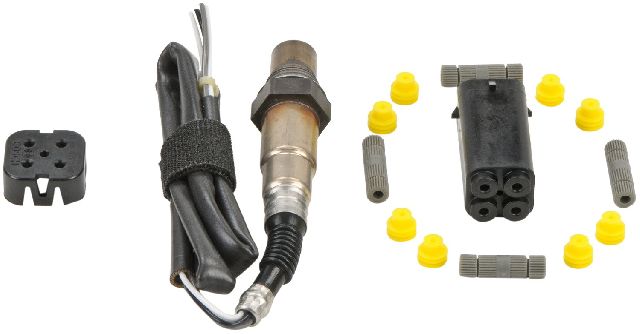
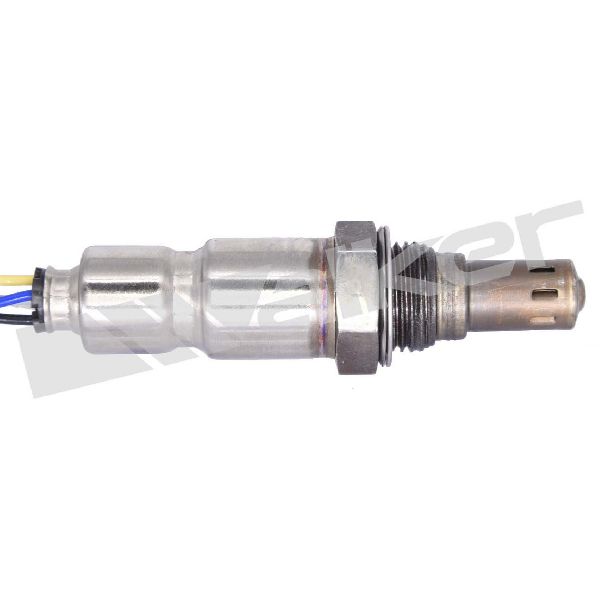
- Downstream Oxygen Sensor (Post-Catalyst, Bank 1 Sensor 2)
(OEM #1K0998262T (This part number may supersede older numbers like 06A906262CL, 06F906262P, etc.))— This is the component that contains the heater element that fails, triggering the P0141 code. It is the most common and direct fix.
Trusted brands: Bosch (OEM supplier, specific part number is often 17090 or 16002), NGK/NTK, Denso
OEM price range: $150-$250
Aftermarket price range: $60-$120 - Oxygen Sensor Socket — A special 22mm (7/8") socket with a slot for the wire is often required to remove and install the oxygen sensor, especially if access is tight.
Trusted brands: Lisle, OEMTools, Gearwrench
Aftermarket price range: $10-$25
Platform-Specific Known Issues
- Access to the downstream sensor can be tight. While some owners can reach it from underneath the car, others find it easier to access from the top after removing the airbox and intake piping to reach down the back of the engine.
- The electrical connector is often clipped to a metal bracket on the transmission, which can be difficult to release without knowing the tab location. It's often easier to slide the connector off the bracket first, then disconnect the two halves.
Mechanic-Grade Diagnostic Values
- O2 Sensor Heater Element Resistance — expected: 5 - 20 Ohms when cold. Failure: An open circuit (infinite resistance) or a direct short (0 Ohms) indicates a failed heater element.
- Heater Circuit Supply Voltage — expected: Approximately 12V (Battery Voltage) with Key On, Engine Off. Failure: No voltage indicates a blown fuse or a break in the power supply wire.
- Heater Circuit Ground Signal — expected: The ECM provides a pulsing ground signal to control the heater. A test light connected to battery positive and this pin should pulse when the engine is started.. Failure: No pulsing ground signal from the ECM (with power confirmed on the other pin) points to a wiring or ECM driver issue.
- Engine-to-Chassis Ground Voltage Drop — expected: Less than 0.15 Volts at idle. Failure: Readings higher than 0.15V suggest a degraded main engine ground strap, which can cause various electrical issues, including sensor faults.
Scan Tool Commands That Help
- VCDS (VAG-COM): Advanced Measuring Blocks — To observe the O2 sensor heater resistance in real-time as an aid to diagnosis. This can help identify intermittent connection issues or confirm the ECM's reading of the heater circuit's status.
- VCDS (VAG-COM): Output Tests — While not explicitly detailed for this specific code in the search results, VCDS typically allows for output tests where you can command the ECM to activate specific components, such as the O2 sensor heater. This would be used to verify the ECM's ability to send the signal and check for voltage at the sensor connector simultaneously.
Wiring & Ground Locations
- Fuse SB7 — In the engine compartment fuse box (Fuse Holder B), located under the plenum cover near the windshield.. This 15A fuse is specified in wiring diagrams as powering 'Lambda probe 1 after catalytic converter -GX7-', which is the component associated with P0141.
- G18 Ground Point — On the engine block, at the left rear of the engine compartment.. This is a primary ground point for multiple engine components, including ignition coils and the oil level sensor. A poor connection here can cause widespread electrical issues and erratic sensor behavior.
- G32 Ground Point — Behind the driver's side kick panel in the cabin.. While not a primary engine ground, poor cabin grounds can sometimes affect the ECM or other control modules, leading to bizarre electrical faults. It's a key ground point for many interior electronics.
Real Owner Repair Stories
- Ross-Tech Forums (2018 Audi S4 (B9), but principle applies) — Intermittent P0141 code appearing during Wide-Open Throttle (WOT) runs after installing an aftermarket downpipe with an O2 sensor spacer.
❌ Tried (didn't work) Replacing the O2 sensor
✅ What actually fixed it The issue was not a faulty part but a condition created by the modification. The O2 spacer, intended to prevent a P0420 catalyst efficiency code, was likely causing the sensor's heater to work outside its expected parameters during high-flow exhaust conditions, triggering the P0141 heater circuit fault. The discussion points to the modification being the root cause, not a component failure.
OEM Part Supersession History
06F906262P, 06A906262CL, 06F906262AE→1K0998262T— Standard part evolution for improved reliability, material changes, or supplier consolidation.
Heads up: While the latest part number (1K0998262T) is the correct replacement kit, always verify fitment with a VIN. Using older, superseded parts is not recommended as they may have been updated for a reason.
Model Year Variations Within This Range
- 2009-2011 vs 2012+: Early B8 models (2009-2011) with the 2.0T EA888 Gen 2 engine were known for significant oil consumption issues related to piston rings. While this doesn't directly cause P0141, excessive oil burning can contaminate and shorten the life of oxygen sensors and catalytic converters. The issue was largely addressed in later model years.
- 2012 (B8.5 Facelift): The B8 platform received a facelift for the 2013 model year, often called the B8.5, but some 2012 models may have facelift features. While the core engine and emissions layout for the 2.0T remained similar, there were aesthetic and minor mechanical updates. For P0141, part numbers and diagnostic procedures are generally consistent across the 2008-2012 range, but it's worth noting the B8.5 transition when sourcing parts for a 2012 vehicle.
Diagnostic Flowchart
Other Known Issues on This Vehicle
Issues unrelated to this code that are worth knowing about as an owner of this generation:
- Excessive Oil Consumption 🔴 High — Very common in 2009-2011 models. Can start as early as 50,000-70,000 miles. Often requires 1 quart of oil every 1,000-1,500 miles. (Ref: TSB 17 13 43 (also cited as 2027731/5) was issued for 2009-2011 models, initially involving a new PCV valve and crankshaft seal, but the root cause was often faulty piston rings requiring a multi-stage repair or engine rebuild.)
- Timing Chain Tensioner Failure 🔴 High — A critical issue for early EA888 Gen 2 engines (approx. 2008-2012). The original tensioner can fail without warning, often between 70,000 and 110,000 miles, leading to catastrophic engine damage. (Ref: A class-action lawsuit led to an extended warranty (U35) covering the timing chain and tensioner for 10 years/100,000 miles on affected vehicles. An updated tensioner part was later introduced.)
- Water Pump / Thermostat Housing Failure 🟠 Medium — Common failure item. The original plastic housing becomes brittle and can crack, or the gasket can fail, causing coolant leaks. Failures can occur as early as 25,000 miles but are more common from 60,000 miles onward.
- PCV Valve Failure 🟡 Low — The diaphragm in the Positive Crankcase Ventilation (PCV) valve can tear, leading to a rough idle, whistling noises, and increased oil consumption. It's a common failure point across all EA888 generations. (Ref: Part of the initial oil consumption TSB, but can also fail independently.)
- Carbon Buildup on Intake Valves 🟠 Medium — As a direct-injection engine, fuel doesn't wash over the intake valves, leading to carbon deposit accumulation over 50,000-80,000 miles. This can cause misfires, rough idle, and reduced performance.
Used vs. New Parts: Buying Guide for This Vehicle
When a used part is the smart pick: For this repair, sourcing used parts is generally not recommended. The primary failure is the O2 sensor itself, which is a wear-and-tear item with a finite lifespan. A used sensor has unknown remaining life and may fail shortly after installation. A used wiring harness pigtail could be a viable option if only the connector is damaged and a new one is unavailable.
Donor-vehicle mileage cap: roughly under 50000 miles for the part to have meaningful remaining life.
What to inspect on the donor part:
- For a wiring pigtail, ensure the insulation is not brittle, cracked, or melted.
- Check connector pins for corrosion, bending, or signs of water intrusion.
- Avoid parts from vehicles with signs of flood or fire damage.
OEM-only on this vehicle (don't cheap out):
- While not strictly 'OEM-only', using a sensor from the original equipment manufacturer (OEM), such as Bosch, is highly recommended. Cheaper, no-name aftermarket sensors have a high rate of premature failure or can have slightly different resistance values, causing the code to return.
Aftermarket brands forum-validated for this vehicle:
- Bosch (often the OEM supplier)
- NGK / NTK
- Denso
Brands owners have reported issues with on this vehicle:
- Generic, unbranded sensors from online marketplaces are frequently cited in forums as being problematic and a waste of money for this platform.
Real Owner Stories
Aggregated from forums and TSBs cited above. Mileages and costs reflect what owners reported in those sources.
Audi A4 2.0T
Symptoms: The owner observed codes P0141 and P0036 appearing together, noting that the car 'goes off the line' and seeking clarification on whether the O2 sensor was the definitive cause.
What fixed it: The community confirmed the codes point to the O2 sensor heater circuit, requiring a replacement of the Bank 1 Sensor 2 oxygen sensor.
Source hint: AudiWorld Forums
2008-2012 Audi A4 2.0L TFSI
Symptoms: Multiple reports of P0141 codes where the Check Engine Light is on and the vehicle faces potential emissions test failure.
What fixed it: Replacing the downstream (post-catalytic converter) oxygen sensor with an OEM-supplier part like Bosch.
Source hint: Audizine.com
Audi A4 (B8) 2.0T
Symptoms: Check Engine Light with P0141; owner found the electrical connector difficult to release from its bracket.
What fixed it: Sliding the connector off the metal bracket on the transmission first to gain better leverage before disconnecting the two halves.
Source hint: vehicle_specific_issues
Related OBD-II Codes
Frequently Asked Questions
Where is the Bank 1, Sensor 2 oxygen sensor located on my B8 A4?
Is there a specific fuse I should check for the P0141 heater circuit on my Audi?
I'm having trouble reaching the sensor; do I have to go under the car?
Could my Audi's known oil consumption issues be related to this O2 sensor failure?
What brand of replacement sensor is recommended for the 2.0T TFSI engine?
How can I confirm the sensor is actually bad before buying a new one?
Helpful Videos

We Have This Part in Stock

The information in this article is provided for general reference and educational purposes only. Vehicle specifications, procedures, and part compatibility can vary by production date, trim level, and region. Always consult your vehicle's factory service manual and verify part numbers before purchasing or performing repairs. Safety-critical components such as airbags, seat belts, and braking systems should be installed by a qualified professional.
- Audi A4:
- 🧭 Diagnostic Flowchart
- 🎬 Helpful Videos
- 🛍️ Shop This Part
- What's Unique About the 2008-2012 Audi A4
- Symptoms You May Notice
- Most Likely Causes
- Rare But Worth Checking
- Diagnosis Steps
- Parts You'll Likely Need
- Platform-Specific Known Issues
- Mechanic-Grade Diagnostic Values
- Scan Tool Commands That Help
- Wiring & Ground Locations
- Real Owner Repair Stories
- OEM Part Supersession History
- Model Year Variations Within This Range
- Other Known Issues on This Vehicle
- Used vs. New Parts: Buying Guide for This Vehicle
- Real Owner Stories
- Audi A4 2.0T
- 2008-2012 Audi A4 2.0L TFSI
- Audi A4 (B8) 2.0T
- Related OBD-II Codes
- Frequently Asked Questions
- 🎟️ Get 5% Off