

P0141 on 2009-2016 Audi A4 2.0T: O2 Sensor Heater Failure Causes and Fixes
On a 2009-2016 Audi A4 2.0T, code P0141 almost always means the downstream oxygen sensor (after the catalytic converter) has failed. The internal heater burns out, triggering the check engine light. Replacing the sensor is the typical fix, costing around $100-$180 for a quality part.
- P0141 points specifically to the heater circuit in the O2 sensor located *after* the catalytic converter.
- The most likely cause is a failed sensor. Don't suspect the catalytic converter or other sensors unless other codes are present.
- You can continue driving the car, but you will fail an emissions test and may experience slightly worse gas mileage.
- Before replacing the sensor, perform a quick visual inspection of the wiring for obvious damage and check related fuses in the dash and trunk fuse boxes.
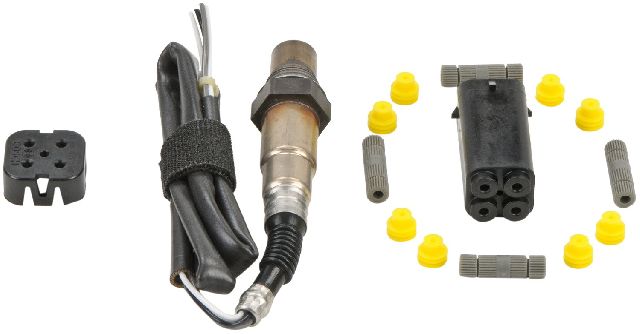
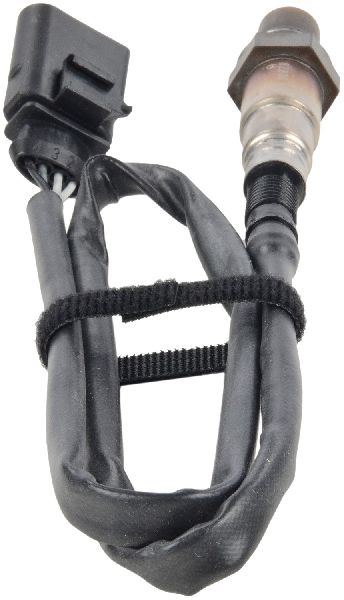
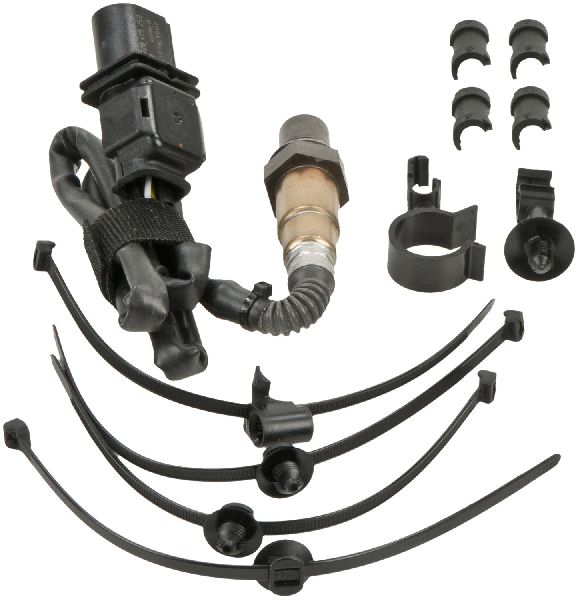
- A direct-fit sensor from an OEM brand like Bosch (part #17090) is highly recommended to ensure compatibility and avoid wiring issues.
What's Unique About the 2009-2016 Audi A4
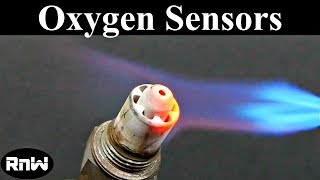
For the B8 and B8.5 generation Audi A4, the P0141 code is a straightforward and common issue. There are no widespread, unique platform flaws that cause this code outside of the typical reasons. The failure is almost always the sensor itself, which is a standard wear-and-tear item. 🎬 Watch: Overview of causes and fixes for the P0141 code Bosch is a frequent original equipment (OE) supplier for these sensors, so a direct-fit replacement from them is often identical to the dealer part and a highly recommended choice.
Generation note: This year range covers the Audi A4 B8 (2009-2012) and B8.5 (2013-2016) generations. The cause, symptoms, and repair process for code P0141 are identical for both generations. While part numbers may have been updated over the years, replacement parts are typically compatible across the entire range.
Symptoms You May Notice
- Check Engine Light is on
- Guaranteed failure of an emissions/smog test
- Potential for slightly reduced fuel economy
- Rough idle or engine hesitation in rare cases
- Replacing the upstream (pre-catalyst) oxygen sensor. P0141 is specific to Sensor 2, which is the downstream sensor.
- Replacing the catalytic converter. A bad catalytic converter typically sets a P0420 code, not a P0141 heater circuit code.
Most Likely Causes
- Failed Downstream Oxygen Sensor 🔴 High Probability → Shop Oxygen Sensor The internal heater element is a common failure point on oxygen sensors as they age from constant, extreme heat cycles in the exhaust.
How to confirm: Disconnect the sensor and measure the resistance between the two heater circuit wires (often two white wires). 🎬 See this guide on testing sensors and identifying wire functions A reading of infinite resistance (open circuit) or zero resistance (short circuit) confirms the sensor is bad. A good sensor typically has a low resistance, often between 4-10 ohms when cold.
Typical fix: Replace the Bank 1, Sensor 2 (downstream) oxygen sensor.
Est. part cost: $80-$180 - Damaged Wiring or Connector 🟡 Medium Probability The wiring harness runs under the vehicle and is exposed to heat, moisture, and road debris, which can cause wires to break or connectors to corrode over time. The harness can also be damaged during unrelated undercar repairs.
How to confirm: Visually inspect the wiring harness leading to the downstream O2 sensor for any signs of melting, chafing, or broken wires. Check the connector pins for corrosion or damage. Use a multimeter to verify 12V power at the heater circuit pins in the connector with the ignition on.
Typical fix: Repair the damaged section of the wiring harness or clean/replace the connector.
Est. part cost: $5-$50 - Blown Fuse ⚪ Low Probability
How to confirm: Check the fuse(s) related to the emissions system or engine controls. On the B8/B8.5 A4, the fuse for the O2 sensor heater is often located in the fuse box in the engine bay, under the plenum cover near the ECU. It may be labeled 'Engine Control' or similar. Check fuse F14 in the engine bay fuse box. Also inspect fuse panels on both sides of the dashboard and in the trunk.
Typical fix: Replace the blown fuse. If the fuse blows again immediately, it indicates a short circuit in the wiring or the sensor itself that must be found.
Est. part cost: $1-$5
Rare But Worth Checking
- Faulty Engine Control Module (ECM): → Shop Engine Control Module (ECM) This is extremely rare. The ECM should only be considered as a cause after all other possibilities (sensor, wiring, fuses) have been exhaustively tested and ruled out.
Diagnosis Steps
- Read the code with an OBD-II scanner to confirm P0141 is the only code present.
- Visually inspect the wiring harness and electrical connector for the downstream (post-catalytic converter) O2 sensor. Look for any obvious signs of damage, melting on the exhaust, or corrosion.
- Inspect fuses. The primary fuse to check is in the engine bay fuse box, which may require removing the plastic plenum cover for access. Also check the panels on the driver's side of the dash, passenger's side, and in the right side of the trunk.
- Test the sensor's heater circuit. Disconnect the sensor and use a multimeter set to Ohms to measure the resistance between the two heater wires on the sensor side of the connector (typically the two wires of the same color, e.g., white). A reading of ~4-10 Ohms is good. An open circuit (infinite resistance) or a short (zero ohms) means the sensor has failed and must be replaced.
- Test for power at the harness. With the sensor disconnected and the ignition key in the 'On' position, use a multimeter to check for 12V power at the corresponding heater circuit pins on the vehicle's harness connector. If there is no voltage, a wiring or fuse issue is likely.
- If the sensor's resistance is good and the harness has power, the issue may be in the ground or signal wire back to the ECM. This requires more advanced wiring diagram diagnostics.
- If all tests pass, the most likely culprit is still an intermittent failure within the O2 sensor. Replacing the sensor is the next logical step.
Parts You'll Likely Need
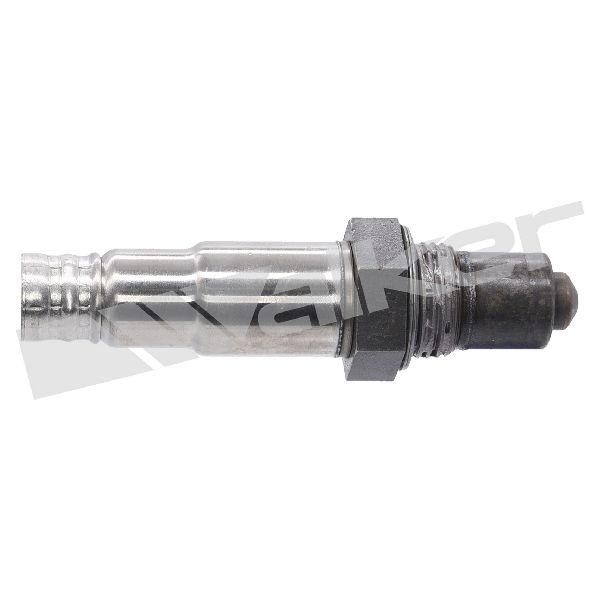
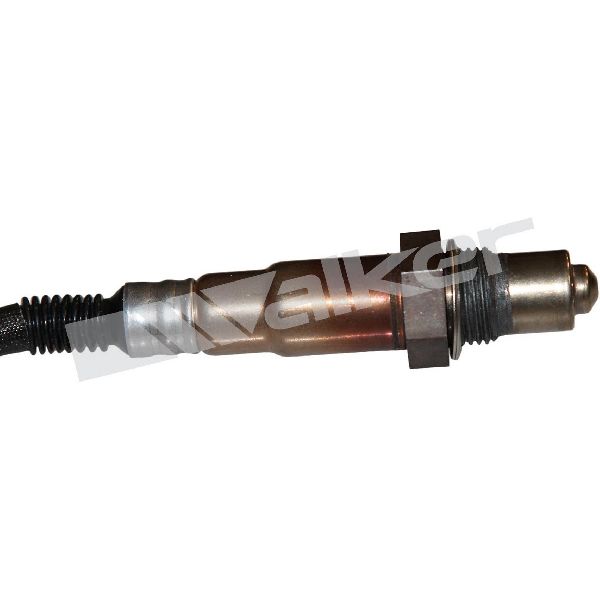
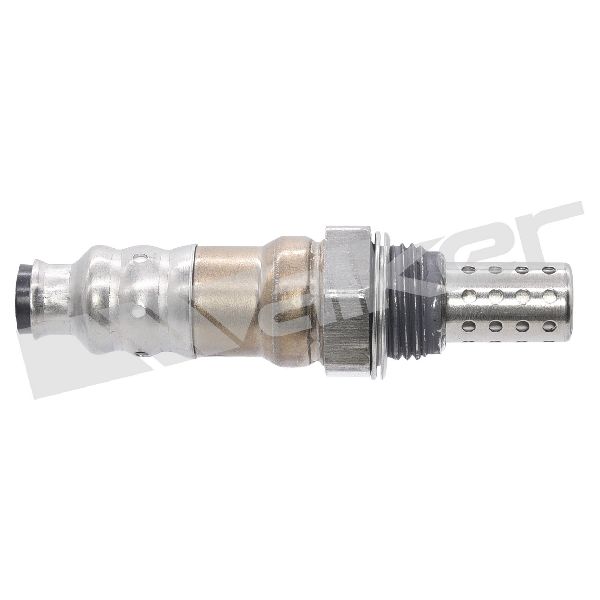
- Downstream Oxygen Sensor (Bank 1, Sensor 2)
(OEM #06H906262S, 06J906262AA (superseded))— This is the most common failure for code P0141, as the internal heater element burns out over time.
Trusted brands: Bosch (OEM supplier, part #17090), NGK/NTK, Denso
OEM price range: $150-$200
Aftermarket price range: $80-$150
Platform-Specific Known Issues
- Owner Experience: A user on Audizine reported chasing a P0141 for weeks. After replacing the sensor didn't work, they eventually traced the issue to a broken wire inside the insulation near the connector, which was not visually apparent until they tugged on the individual wires.
- Repair Tip: When replacing the sensor, applying anti-seize compound to the threads is crucial, but be careful not to get any on the sensor tip itself, as this can contaminate it and cause premature failure. Many new sensors come with anti-seize pre-applied.
Mechanic-Grade Diagnostic Values
- Downstream O2 Sensor (B1S2) Heater Element Resistance — expected: Between 4 and 10 Ohms when cold. Some sources cite a wider range of 5-20 Ohms.. Failure: Infinite resistance (open circuit) or near-zero resistance (short circuit). A reading over 20 Ohms is also considered a failure.
- Voltage at O2 Sensor Heater Power Supply Pin (at harness connector) — expected: Battery voltage (~12V) with the key in the 'On' position (engine off).. Failure: No voltage or significantly low voltage, indicating a problem with the fuse or wiring from the power distribution center.
- VCDS Live Data - O2 Sensor Heater Activation — expected: Using a scan tool like VCDS, you can observe the heater circuit status. The ECU performs a feedback loop and cross-check to verify heater operation.. Failure: A deviation from the expected current draw or resistance range during the ECU's test will trigger the DTC.
Scan Tool Commands That Help
- VCDS (VAG-COM): Advanced Measuring Blocks — Can be used as a diagnostic aid to observe the O2 sensor heater resistance as seen by the ECU, though direct measurement with a multimeter is more definitive.
- VCDS (VAG-COM): Output Tests — While not explicitly detailed for P0141 in the search results, VCDS Output Tests are generally used to command components like heaters to turn on, allowing a technician to verify circuit integrity and component function in real-time.
Wiring & Ground Locations
- Fuse SB7 — In the fuse holder 'B' (black) located in the main fuse box in the engine bay plenum (under the plastic cover near the ECU).. This 15A fuse powers the heater for both the pre-cat (GX10) and post-cat (GX7) Lambda probes. A blown fuse here will cause a P0141 and likely a P0135 as well.
- G11 / G26 — G11 is a primary chassis ground located in the plenum chamber, right of the battery. G26 is another engine compartment ground on the left side.. The Engine Control Module relies on clean, solid ground connections to accurately monitor and control circuits like the O2 sensor heater. Poor grounds at these locations can cause erratic electrical behavior and fault codes.
- Downstream O2 Sensor Connector (T4n) — The 4-pin connector for the downstream O2 sensor is located on a bracket attached to the transmission.. This is the primary test point. Pin 1 (Power, often Black/Red) should have ~12V with ignition on. Pin 2 (Ground, often Brown/Gray) is the ground controlled by the ECM. Pins 3 and 4 are for the sensor signal.
Real Owner Repair Stories
- Go-Parts.com Owner Story (Volkswagen Jetta with EA888 engine) — P0141 code that would return after long intervals.
❌ Tried (didn't work) Clearing the code, Testing the sensor's heater resistance (which was a good 15 ohms), Confirming 12V power at the connector
✅ What actually fixed it The O2 sensor wiring harness had rubbed through against the front driveshaft, causing an intermittent short circuit. The damaged sensor was replaced and the new harness was secured away from the driveshaft to prevent recurrence.
OEM Part Supersession History
06F906262R, 06F906262AC→06J906262AA— Part revision and consolidation by the manufacturer.
Heads up: While many part numbers supersede, always verify fitment with a VIN. The physical sensor and connector are often the same, but internal calibration can differ. The part number 06H906262S listed in Pass 2 is also a valid number for this application.
Model Year Variations Within This Range
- 2009-2013 (B8) vs 2014-2016 (B8.5): All US-market B8 and B8.5 A4s use a version of the EA888 Gen 2 engine. However, the 2014-2015 models received a revised Gen 2 with some internal updates (e.g., thicker piston rings) to address issues like oil consumption. For the P0141 code, the downstream O2 sensor, its function, and the diagnostic procedure remain identical across the B8 and B8.5 range. The core cause is the same.
Diagnostic Flowchart
Other Known Issues on This Vehicle
Issues unrelated to this code that are worth knowing about as an owner of this generation:
- Excessive Oil Consumption 🔴 High — Very common, especially on 2009-2012 models. Caused by faulty piston ring design. Often requires adding a quart of oil every 1,000-2,000 miles. (Ref: Subject of class-action lawsuits and multiple TSBs regarding oil consumption tests and piston/ring replacement.)
- Timing Chain Tensioner Failure 🔴 High — A critical issue on early B8 models (approx. 2009-2012) with the original tensioner design. Failure can occur without warning, typically between 60k-100k miles, leading to catastrophic engine damage. (Ref: An updated tensioner part was released. No recall, but a well-documented failure covered by TSBs and a class-action lawsuit.)
- Water Pump / Thermostat Housing Failure 🟠 Medium — Extremely common across all B8/B8.5 years. The original plastic housing cracks and leaks coolant. Failure can occur as early as 40k miles, but is very likely by 80k-100k miles. (Ref: Multiple TSBs exist. Many owners proactively replace the plastic unit with an aftermarket all-aluminum housing.)
- PCV Valve Failure 🟠 Medium — Common failure item, often after 50,000 miles. A torn diaphragm in the PCV (oil separator) leads to high crankcase vacuum, a loud whistling noise at idle, rough running, and can cause other oil seals to fail.
- Intake Valve Carbon Buildup 🟠 Medium — Inevitable on all direct-injection (GDI) engines like the EA888. Significant buildup causing misfires (P0300 series codes) and poor performance can occur by 60,000-80,000 miles and requires manual (walnut blasting) cleaning.
Used vs. New Parts: Buying Guide for This Vehicle
When a used part is the smart pick: Never. Oxygen sensors are wear-and-tear items with a finite lifespan, typically 60,000 to 90,000 miles. The internal heating element is the most common failure point. A used sensor has unknown remaining life and is highly likely to fail soon, if it doesn't arrive already faulty. The labor cost to install it makes buying used a poor financial decision.
What to inspect on the donor part:
- Not applicable as buying used is not recommended.
OEM-only on this vehicle (don't cheap out):
- While not strictly OEM-only, using a sensor from the Original Equipment Manufacturer (OEM), like Bosch, is highly recommended. Cheap, unbranded sensors are notorious for failing quickly or having incorrect heater resistance values, causing the P0141 code to return.
Aftermarket brands forum-validated for this vehicle:
- Bosch (often the original supplier)
- NGK / NTK
- Denso
Brands owners have reported issues with on this vehicle:
- Generic, unbranded, or 'no-name' sensors from online marketplaces. These often fail to meet the precise specifications required by the Audi ECU for heater current monitoring.
Real Owner Stories
Aggregated from forums and TSBs cited above. Mileages and costs reflect what owners reported in those sources.
2015 Audi A4 B8.5 2.0T
Symptoms: Check engine light flickering intermittently after replacing the catalytic converter.
What fixed it: The code was identified as P0141 (Oxygen Sensor Heater Circuit Malfunction Bank 1, Sensor 2).
Source hint: AliExpress Product Page/Article owner_reports
2009-2016 Audi A4 2.0T
Symptoms: Chasing a P0141 for weeks; replacing the sensor did not resolve the issue.
What fixed it: Traced the issue to a broken wire inside the insulation near the connector that was only found by tugging on the wires.
Source hint: Audizine forum user report in vehicle_specific_issues
2009-2016 Audi A4 B8 2.0T
Symptoms: Check Engine Light (CEL) with code P0141.
What fixed it: Confirmed the fault was Bank 1 Sensor 2 and replaced the sensor.
Source hint: audiworld.com/forums/a4-b8-platform-discussion-127/p0141-cel-2873030/
2008-2014 Volkswagen GTI (EA888 Gen 2)
Symptoms: Heater circuit failure on the downstream O2 sensor.
What fixed it: Replaced the sensor with the Bosch OEM equivalent.
Source hint: reddit.com/r/GolfGTI/comments/m4z2e1/p0141_bank_1_sensor_2_location_help_o2_sensor/
Related OBD-II Codes
Frequently Asked Questions
Where is the fuse for the O2 sensor heater located on a B8/B8.5 Audi A4?
Which specific oxygen sensor needs to be replaced for a P0141 code on my 2.0T EA888?
Can I test the sensor myself before buying a new one?
Is there a known wiring issue I should look for on the Audi A4 B8 platform?
Does the P0141 code relate to the common oil consumption issues on the 2009-2012 A4?
What should I be careful of when installing a new downstream O2 sensor?
Helpful Videos

We Have This Part in Stock

The information in this article is provided for general reference and educational purposes only. Vehicle specifications, procedures, and part compatibility can vary by production date, trim level, and region. Always consult your vehicle's factory service manual and verify part numbers before purchasing or performing repairs. Safety-critical components such as airbags, seat belts, and braking systems should be installed by a qualified professional.
- Audi A4:
- 🧭 Diagnostic Flowchart
- 🎬 Helpful Videos
- 🛍️ Shop This Part
- What's Unique About the 2009-2016 Audi A4
- Symptoms You May Notice
- Most Likely Causes
- Rare But Worth Checking
- Diagnosis Steps
- Parts You'll Likely Need
- Platform-Specific Known Issues
- Mechanic-Grade Diagnostic Values
- Scan Tool Commands That Help
- Wiring & Ground Locations
- Real Owner Repair Stories
- OEM Part Supersession History
- Model Year Variations Within This Range
- Other Known Issues on This Vehicle
- Used vs. New Parts: Buying Guide for This Vehicle
- Real Owner Stories
- 2015 Audi A4 B8.5 2.0T
- 2009-2016 Audi A4 2.0T
- 2009-2016 Audi A4 B8 2.0T
- 2008-2014 Volkswagen GTI (EA888 Gen 2)
- Related OBD-II Codes
- Frequently Asked Questions
- 🎟️ Get 5% Off