

P0141 on 2000-2005 Chevrolet Impala: O2 Sensor Heater Fault Causes and Fixes
This code means the heater inside the downstream oxygen sensor (Bank 1, Sensor 2) has failed. On a 2000-2005 Impala, this is almost always fixed by replacing the sensor itself. Expect to pay $25-$60 for an aftermarket sensor or $70-$110 for an OEM part. It's a straightforward DIY fix. For the LS4 V8 (found in 2006-2009 Impala SS models), the cause and fix are identical.
- The user-provided vehicle (2000-2005 Impala) and engine (LS4 5.3L V8) do not match. The V8 was in the 2006-2009 Impala SS.
- P0141 points specifically to a failure in the heater circuit of the downstream (post-catalytic converter) oxygen sensor on Bank 1.
- The most common fix, by far, is to replace the Bank 1, Sensor 2 oxygen sensor.
- Before replacing the sensor, it is wise to perform a quick visual inspection of the wiring and check the corresponding fuse.
- This fault will not leave you stranded but should be addressed to maintain fuel efficiency and pass emissions testing.
What's Unique About the 2000-2005 Chevrolet Impala
There is a significant conflict in the vehicle details provided. The 2000-2005 Chevrolet Impala (8th generation, W-Platform) was never equipped with the LS4 5.3L V8 engine; its available engines were the 3.4L V6, 3.8L V6, and the supercharged 3.8L V6. The LS4 5.3L V8 was only available in the 9th generation Impala SS from 2006-2009. This guide will primarily address the 2000-2005 models with their V6 engines but will include part information for the 2006-2009 LS4 V8 for clarity, as the fundamental cause of P0141 is the same for both.
Symptoms You May Notice
- Check Engine Light is on.
- Failing a vehicle emissions test.
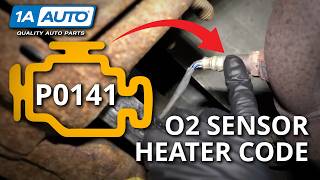
- Slight decrease in fuel economy over time. 🎬 Watch: Understanding the causes and fixes for code P0141
- Rough idle or misfires (rare).
- Replacing the wrong oxygen sensor (e.g., the upstream Sensor 1 instead of the downstream Sensor 2).
- Replacing the catalytic converter. A P0141 code is related to the sensor's heater circuit, not the converter's efficiency (which would typically set a P0420 code).
- Ignoring a blown fuse and repeatedly replacing the O2 sensor.
Most Likely Causes
- Failed Oxygen Sensor 🔴 High Probability → Shop Oxygen Sensor The internal heater element is a common failure point on O2 sensors due to constant, rapid heat cycles over many years and miles. It's a wear-and-tear component.
How to confirm: After confirming power and ground at the sensor connector, test the resistance of the heater circuit pins on the sensor itself with a multimeter. An open circuit (infinite resistance) or a reading outside the typical 4-20 ohm range confirms the heater has failed.
Typical fix: Replace the Bank 1, Sensor 2 (downstream) oxygen sensor. Many owners on forums report that using AC Delco or Denso branded sensors is crucial to prevent the code from returning.
Est. part cost: $25-$110 - Damaged Wiring or Connector 🟡 Medium Probability The sensor is located under the vehicle and exposed to road debris, water, and extreme exhaust heat, which can degrade the wiring insulation or corrode the connector pins over time. The harness can also be damaged by contact with the hot exhaust pipe.
How to confirm: Visually inspect the wiring harness and connector leading to the O2 sensor for any signs of melting, chafing, corrosion, or broken wires. Perform a continuity test on the heater circuit wires from the PCM connector to the sensor connector if no visual damage is found.
Typical fix: Repair the damaged section of wiring or replace the connector pigtail.
Est. part cost: $10-$30 - Blown Fuse ⚪ Low Probability
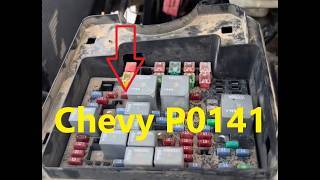
How to confirm: Check the fuse box for the fuse related to the O2 sensor heaters (often labeled O2 HTR, HTR O2, or similar). For a 2000-2005 Impala, check the fuse panels on both sides of the dashboard for a fuse labeled 'OXY SEN'. For a 2006+ Impala, check the underhood and passenger-side interior fuse boxes. A blown fuse is a strong indicator of a short circuit in the wiring or the sensor itself.
Typical fix: Replace the blown fuse. If the fuse blows again immediately, it indicates a short circuit in the wiring or a shorted sensor that must be found and repaired.
Est. part cost: $1-$5
Rare But Worth Checking
- Faulty Powertrain Control Module (PCM): → Shop Engine Control Module (ECM) This is extremely rare. The PCM should only be considered after all other possibilities (sensor, wiring, fuses) have been exhaustively tested and ruled out.
Diagnosis Steps
- Scan the vehicle for trouble codes to confirm P0141 is the primary code. Note any other heater circuit codes (P0135, P0155, P0161) that may indicate a shared power or ground issue.
- Visually inspect the Bank 1, Sensor 2 oxygen sensor, its connector, and wiring. On V6 and V8 Impalas, Bank 1 is the cylinder bank closer to the firewall. Sensor 2 is located after the catalytic converter. Look for physical damage, melting on the exhaust, or corrosion in the connector pins.
- Locate and check the fuse for the oxygen sensor heater circuit. This is often a 15A fuse labeled 'OXY SEN'. On 2000-2005 models, check the fuse panels on both the driver's and passenger's side of the dashboard. On 2006+ models, check the underhood fuse block and the passenger footwell fuse block.
- If the fuse is good, turn the ignition key to the 'ON' position (engine off). Use a multimeter to verify that the sensor connector is receiving ~12 volts on the heater power wire (often pink) and has a good ground on the ground wire (often black).
- If power and ground are present, turn the ignition off and disconnect the sensor. Measure the resistance across the two heater circuit pins on the sensor itself (usually two wires of the same color). A good reading is typically between 4 and 20 ohms. A reading of infinite resistance (OL) means the internal heater is broken and the sensor must be replaced.
- If the sensor's resistance is good, but power was not present at the connector, the fault lies in the wiring between the fuse box and the sensor. Trace the power and ground wires for breaks or shorts.
- After replacing the part, clear the trouble code with a scan tool and perform a drive cycle to ensure the fix was successful and the Check Engine Light does not return.
Parts You'll Likely Need
- Downstream Oxygen Sensor (For 2000-2005 V6 Engines)
(OEM #ACDelco 213-1552 (GM 12574924))— This is the Bank 1 Sensor 2 O2 sensor. Its internal heater element is the most common failure point for code P0141. 🎬 Watch: Step-by-step O2 sensor replacement on this GM platform
Trusted brands: ACDelco, Denso, NGK/NTK, Bosch
OEM price range: $70-$110
Aftermarket price range: $25-$60 - Downstream Oxygen Sensor (For 2006-2009 LS4 V8 Engine)
(OEM #ACDelco 213-4230 (GM 12615124))— This is the correct downstream sensor for the V8 Impala SS. The cause of failure (heater circuit) is the same. Note that for 2006-2007 models, some catalogs list Denso 234-4647.
Trusted brands: ACDelco, Denso, NGK/NTK, Bosch
OEM price range: $70-$110
Aftermarket price range: $30-$65
Related Codes That Often Appear With This One
- P0135 (O2 Sensor Heater Circuit Malfunction Bank 1, Sensor 1)
- P0161 (O2 Sensor Heater Circuit Malfunction Bank 2, Sensor 2)
- P0155 (O2 Sensor Heater Circuit Malfunction Bank 2, Sensor 1)
Technical Service Bulletins (TSBs) & Recalls
- While no TSBs directly address P0141 specifically, TSB #00-02-35-003N and its revisions deal with a common intermediate steering shaft clunk, a well-known issue on this platform.
Platform-Specific Known Issues
- Owner experiences on forums like Car Talk Community frequently mention that using non-OEM (ACDelco or Denso) oxygen sensors can cause the P0141 code to persist or return shortly after replacement, suggesting the PCM is sensitive to the heater's resistance values.
Mechanic-Grade Diagnostic Values
- O2 Sensor Heater Element Resistance — expected: 4 - 20 Ohms at ambient temperature. Some sources state a tighter range of 4-10 Ohms or 5-20 Ohms.. Failure: Infinite resistance (Open Loop/OL) or near zero Ohms (short circuit).
- O2 Sensor Heater Power Supply Voltage — expected: 10-14 Volts (approximately battery voltage) with Key On, Engine Off.. Failure: Voltage below 9V indicates a supply problem from the fuse, relay, or PCM circuit.
- O2 Sensor Heater Current (Amperage) — expected: 0.2 - 2.0 Amps when the heater is active (viewed with a scan tool).. Failure: Current greater than ~2.9 Amps or less than ~0.3 Amps for more than 8 seconds will trigger the code.
- O2 Sensor Signal Wire Bias Voltage — expected: ~450 mV on the signal wire with the sensor unplugged and key on.. Failure: No voltage or significantly different voltage indicates a problem with the PCM or the wiring between the PCM and sensor connector.
Scan Tool Commands That Help
- Tech 2 / GDS2: Output Control -> O2S Heater Driver (or similar path) — This bidirectional command allows a technician to manually turn the O2 sensor heater circuit ON and OFF directly from the scan tool. It is used to verify that the PCM driver, wiring, and relay (if applicable) are capable of activating the heater, which helps isolate the fault to the sensor itself if the circuit responds correctly.
Wiring & Ground Locations
- OXY SEN Fuse (15A) — For 2000-2005 models, located in one of the two instrument panel fuse boxes (driver's or passenger's side).. This fuse provides the 12V power to the O2 sensor heater element. A blown fuse will cause P0141 and likely other heater codes (P0135, etc.).
- EMISSIONS 1 Fuse (15A) — For 2006-2009 models, located in the underhood fuse block.. On the LS4-equipped Impala SS, this fuse often powers the O2 sensor heaters. A blown fuse will cut power to the heater circuit.
- G103 Ground — For V6 models, typically located on the cowl, above the brake booster in the engine compartment.. This is a major ground point for the Body Control Module (BCM) and other critical components. While not the primary engine ground, a poor connection here can cause widespread, difficult-to-diagnose electrical issues.
- G203 Ground — For V6 models, located under the dash near the brake pedal bracket.. This is an interior ground point. Issues are less likely, but it's part of the overall vehicle grounding scheme that can affect module performance if compromised.
- Heater Power Wire — At the O2 sensor connector, this wire is typically Pink (PNK).. This is the wire to test for ~12V with the key on to confirm the circuit is receiving power from the fuse.
Real Owner Repair Stories
- ImpalaForums user post (2004 Chevrolet Impala 3.4L V6) — Persistent P0141 code, Check Engine Light.
❌ Tried (didn't work) Replacing the downstream O2 sensor (Bank 1, Sensor 2) multiple times., Checking the 'OXY SEN' fuse, which was not blown.
✅ What actually fixed it The wiring harness for the O2 sensor had fallen from its clip and was resting on the exhaust pipe. The heat melted the insulation on the wires, causing them to short together. Repairing the melted section of the wiring harness and securing it away from the exhaust finally resolved the code.
OEM Part Supersession History
GM 12574924→ACDelco 213-1552 is the service replacement. The original GM part number may have been superseded multiple times.— Standard part evolution, potential minor improvements in materials or manufacturing.
Model Year Variations Within This Range
- 2000-2005: The fuse for the O2 sensor heater is labeled 'OXY SEN' and is located in one of the two interior fuse panels (driver or passenger side).
- 2006-2009: The fuse is typically labeled 'EMISSION 1' or similar and is located in the underhood fuse block. The interior fuse box is in the passenger footwell, not the side of the dash.
Diagnostic Flowchart
Other Known Issues on This Vehicle
Issues unrelated to this code that are worth knowing about as an owner of this generation:
- Lower Intake Manifold (LIM) Gasket Failure (3.8L V6) 🔴 High — Extremely common, typically between 60,000 and 120,000 miles. Caused by the original plastic-carrier gaskets degrading from Dex-Cool coolant.
- Transmission Pressure Control (EPC) Solenoid Failure (4T65-E) 🔴 High — Very common issue on the 4T65-E transmission used in all 8th-gen Impalas, often occurring around 100,000 miles. Causes harsh shifts, shuddering, and can set code P1811. (Ref: Technical Bulletin #783A addresses diagnosis.)
- Intermediate Steering Shaft Clunk 🟡 Low — A widespread problem causing a clunking noise or feeling in the steering wheel at low speeds. Can occur at any mileage. (Ref: GM TSB #00-02-35-003 and its many revisions describe lubing or replacing the shaft.)
- Passlock Security System Failure 🟠 Medium — Common on early 2000s models, causing intermittent no-start conditions where the security light flashes. Often requires replacing the ignition lock cylinder.
- AFM/DoD Lifter Failure (LS4 5.3L V8) 🔴 High — A signature failure on the 2006-2009 LS4 engine. The Active Fuel Management lifters can collapse, causing misfires, engine noise, and potential camshaft damage, often between 100,000-180,000 miles.
Used vs. New Parts: Buying Guide for This Vehicle
When a used part is the smart pick: For this repair, a used part is almost never a smart choice. The primary failure is the internal heater, a wear item. A used sensor has an unknown number of heat cycles and remaining life. The only time it might be considered is for a used wiring harness pigtail if the connector is damaged and a new pigtail is unavailable.
Donor-vehicle mileage cap: roughly under 50000 miles for the part to have meaningful remaining life.
What to inspect on the donor part:
- For a pigtail: Check for brittle plastic, corroded pins, or any signs of melting or heat stress.
- Do not buy a used oxygen sensor itself. The risk of premature failure is too high for the minimal cost savings.
Aftermarket brands forum-validated for this vehicle:
- ACDelco (OEM)
- Denso
- NGK / NTK
Brands owners have reported issues with on this vehicle:
- Unnamed or 'white-box' generic brands from online marketplaces. Forum consensus strongly suggests these parts have a high failure rate or can cause the code to return due to incorrect heater resistance values.
Real Owner Stories
Aggregated from forums and TSBs cited above. Mileages and costs reflect what owners reported in those sources.
2005 Chevrolet Impala
Symptoms: The owner replaced both O2 sensors, but the P0141 code persisted.
What fixed it: The owner was advised that the problem could be the use of non-ACDelco parts or a fault in the wiring rather than the sensor itself.
Source hint: Car Talk Community - 'Oxygen sensor problems I would appreciate some help with'
Related OBD-II Codes
Frequently Asked Questions
Does TSB #00-02-35-003N apply to my P0141 code on the 2000-2005 Impala?
Where is the fuse for the O2 sensor heater located on my 2005 Impala?
Can I use a generic universal oxygen sensor to fix P0141 on my Impala?
Which sensor do I need to replace for a P0141 code on the LS4 V8 engine?
Is the P0141 code related to the AFM/DoD lifter failures common on the 5.3L LS4?
Helpful Videos

We Have This Part in Stock


The information in this article is provided for general reference and educational purposes only. Vehicle specifications, procedures, and part compatibility can vary by production date, trim level, and region. Always consult your vehicle's factory service manual and verify part numbers before purchasing or performing repairs. Safety-critical components such as airbags, seat belts, and braking systems should be installed by a qualified professional.
- Chevrolet Impala:
- 🧭 Diagnostic Flowchart
- 🎬 Helpful Videos
- 🛍️ Shop This Part
- What's Unique About the 2000-2005 Chevrolet Impala
- Symptoms You May Notice
- Most Likely Causes
- Rare But Worth Checking
- Diagnosis Steps
- Parts You'll Likely Need
- Related Codes That Often Appear With This One
- Technical Service Bulletins (TSBs) & Recalls
- Platform-Specific Known Issues
- Mechanic-Grade Diagnostic Values
- Scan Tool Commands That Help
- Wiring & Ground Locations
- Real Owner Repair Stories
- OEM Part Supersession History
- Model Year Variations Within This Range
- Other Known Issues on This Vehicle
- Used vs. New Parts: Buying Guide for This Vehicle
- Real Owner Stories
- 2005 Chevrolet Impala
- Related OBD-II Codes
- Frequently Asked Questions
- 🎟️ Get 5% Off