

P0141 on 2000-2003 Chevrolet Malibu: O2 Heater Circuit Causes and Fixes
This code almost always means the downstream oxygen sensor (Bank 1, Sensor 2) has failed. Replacing the sensor is the most common fix. Before buying, check the 'O2 Sensor' fuse in the engine bay fuse box, as this is a simple potential fix.
- P0141 on a 2000-2003 Malibu points to a problem with the heater in the downstream O2 sensor.
- Before replacing any parts, check the 'O2 Sensor' fuse (slot #47) in the under-hood fuse box.
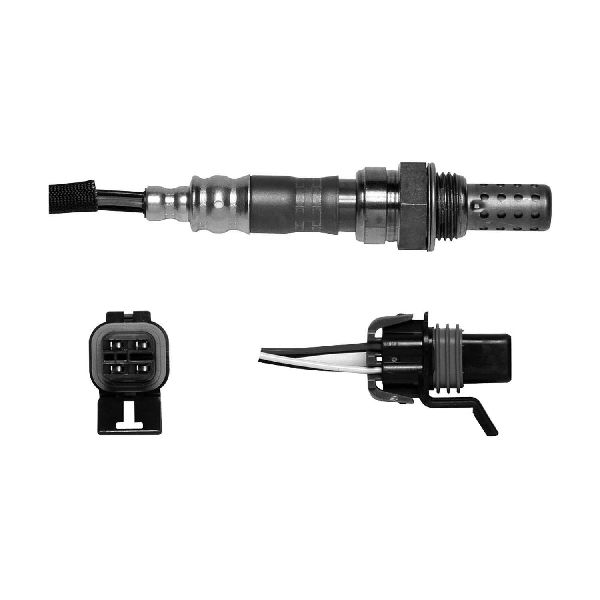
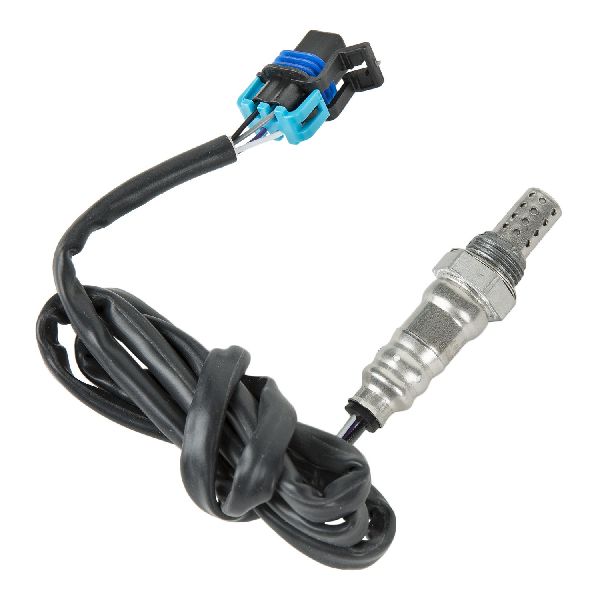
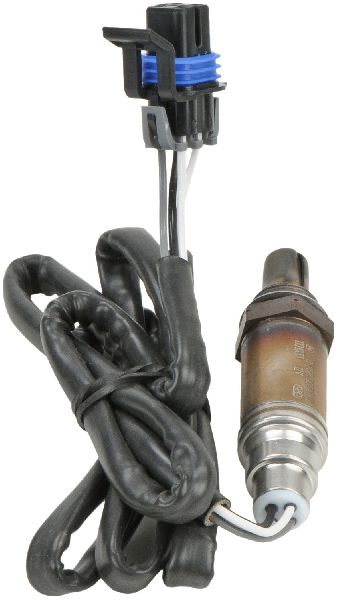
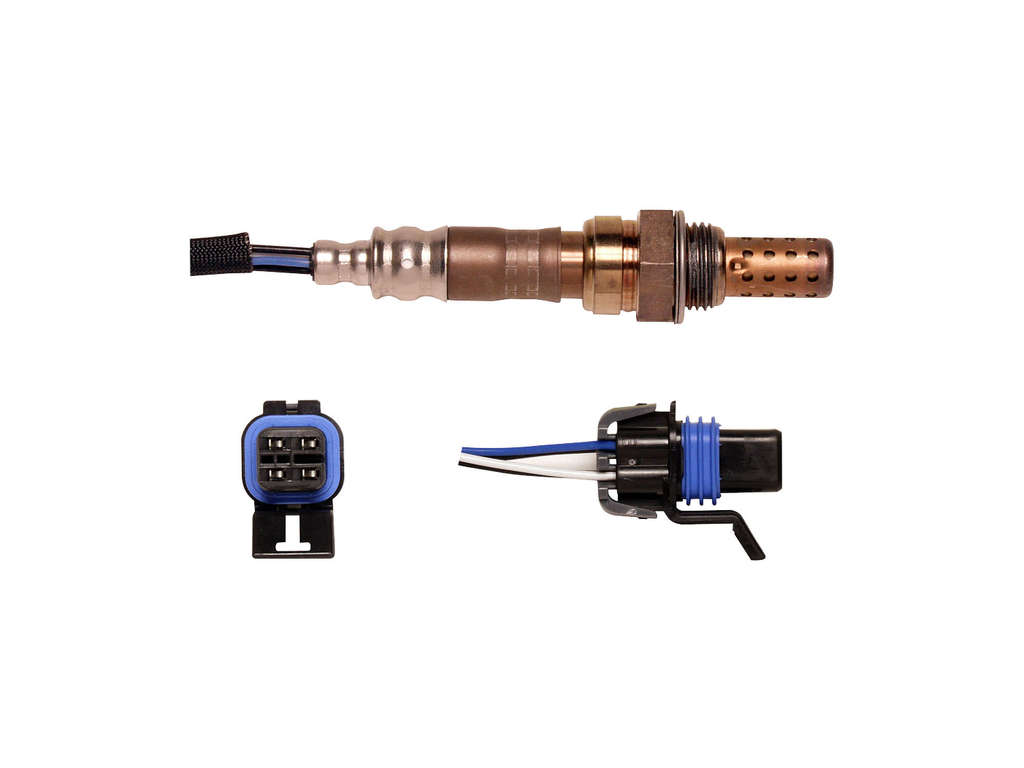
- The most likely fix is replacing the downstream (Bank 1, Sensor 2) oxygen sensor, ACDelco part AFS106 or equivalent.
- This fault will not cause driving problems but needs to be fixed to pass an emissions test.
- Owners of this vehicle should be aware of the extremely common intake manifold gasket leak (TSB 03-06-01-010B), which is a separate and more severe issue.
What's Unique About the 2000-2003 Chevrolet Malibu
For the 2000-2003 Malibu, whether equipped with the 3.1L V6 or one of the 4-cylinder engines, the architecture is straightforward. There is only one exhaust bank to worry about ('Bank 1'), and Sensor 2 is the downstream sensor after the catalytic converter. Unlike some vehicles with complex wiring or frequent computer issues causing this code, the Malibu from this era, along with its platform mates like the Pontiac Grand Am and Oldsmobile Alero, typically experiences this fault due to a simple part failure—either the sensor's internal heater burning out or its fuse blowing.
Symptoms You May Notice
- Check Engine Light is on.
- Failing a state emissions inspection.
- Replacing the upstream (Sensor 1) oxygen sensor instead of the downstream (Sensor 2) sensor.
- Replacing the catalytic converter. A P0141 code points specifically to the sensor's heater circuit, not the performance of the converter itself.
Most Likely Causes
- Failed Oxygen Sensor (Bank 1, Sensor 2) 🔴 High Probability → Shop Oxygen Sensor The internal heater element within the oxygen sensor is a common failure point due to age and constant, rapid heat cycles. It simply burns out over time, creating an open circuit.
How to confirm: After confirming the fuse is good and there is power at the connector, test the resistance of the heater circuit within the sensor itself using a multimeter. 🎬 See how to test the heater circuit with a multimeter. An open circuit (infinite resistance or 'OL') confirms the heater has failed. A typical good sensor has a resistance between 4 and 10 ohms when cold.
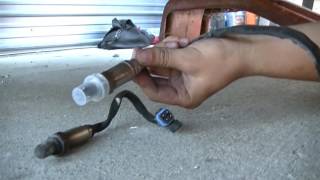
Typical fix: Replace the downstream oxygen sensor. 🎬 Watch this video to see the sensor replacement process. This is a 4-wire, heated sensor.
Est. part cost: $40-$90 - Blown O2 Sensor Fuse 🟡 Medium Probability → Shop Oxygen Sensor
How to confirm: Locate the fuse box in the engine compartment. Check the fuse in slot #47, labeled 'O2 Sensor'. Visually inspect if the fuse is blown or test for continuity with a multimeter. On most GM vehicles of this era, this circuit is protected by a fuse but not a relay.
Typical fix: Replace the blown fuse with one of the same amperage. If the new fuse blows immediately, it indicates a short circuit in the wiring harness or within the O2 sensor itself that needs to be traced.
Est. part cost: $1-$5 - Damaged Wiring or Connector ⚪ Low Probability The sensor and its wiring are located under the vehicle and are exposed to road debris, moisture, and extreme exhaust heat. Wires can become brittle and break, or melt if they come into contact with the exhaust pipe.
How to confirm: Visually inspect the entire wiring harness leading to the downstream O2 sensor. Look for any signs of melting, chafing, breaks, or corrosion in the connector pins. Use a multimeter to check for 12V power (typically a pink wire on this harness) and a good ground at the sensor connector with the key in the 'On' position.
Typical fix: Repair the damaged section of wiring or replace the connector pigtail.
Est. part cost: $10-$30
Rare But Worth Checking
- Faulty Powertrain Control Module (PCM): → Shop Engine Control Module (ECM) This is extremely rare and should be considered a last resort. The PCM should only be suspected after the sensor, fuse, and wiring have all been tested and confirmed to be good.
Diagnosis Steps
- Retrieve the P0141 code 🎬 Watch a quick 2-minute guide on fixing the P0141 code. using an OBD-II scanner.
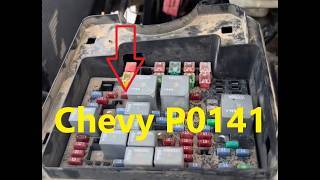
- Locate the engine compartment fuse box. Inspect the fuse in slot #47, labeled 'O2 Sensor'. Replace it if it is blown.
- If the fuse is good, safely raise the vehicle and locate the downstream oxygen sensor (Bank 1, Sensor 2), which is installed in the exhaust pipe after the catalytic converter.
- Visually inspect the sensor's wiring harness and connector for any obvious signs of damage, such as melted plastic, frayed wires, or heavy corrosion.
- Disconnect the sensor. With the ignition key in the 'On' position (engine off), use a multimeter to verify that there are 10-12 volts at the power pin on the vehicle-side connector.
- Check for a good ground on the corresponding ground pin in the connector.
- If power and ground are present, measure the resistance across the two heater circuit pins (usually the two wires of the same color) on the O2 sensor itself. A reading of 'OL' (over-limit/open) indicates a failed heater element, and the sensor must be replaced. A good sensor should have a low resistance reading, typically between 4-10 ohms.
- If the sensor's resistance is good, but power is missing at the connector, the problem lies in the wiring between the fuse box and the sensor.
Parts You'll Likely Need
- Downstream Oxygen Sensor (Bank 1, Sensor 2)
(OEM #ACDelco AFS106 (or GM 19178945) is a widely cross-referenced equivalent for this application.)— The internal heater element is the most common point of failure for this code.
Trusted brands: ACDelco, Denso, Bosch, NGK/NTK, Walker Products
OEM price range: $70-$120
Aftermarket price range: $40-$90
Technical Service Bulletins (TSBs) & Recalls
- GM TSB 03-06-01-010B: Details the diagnosis and repair for common coolant and oil leaks from the lower intake manifold gaskets on the 3.1L V6 engine. While not a cause for P0141, it is a critical, well-documented issue for this platform.
Mechanic-Grade Diagnostic Values
- O2 Sensor Heater Element Resistance — expected: 4-10 Ohms at room temperature.. Failure: Infinite resistance (OL) indicates an open circuit (bad sensor). Near 0 Ohms indicates a short circuit (bad sensor).
- Voltage at O2 Sensor Connector (Power Pin) — expected: 10-14 Volts with Key On, Engine Off.. Failure: 0 Volts indicates a blown fuse, a break in the power wire, or a faulty fuse box connection.
- Heater Circuit Current Draw — expected: 0.2 Amps to 2.35 Amps during operation.. Failure: Current draw outside this range will trigger the P0141 code.
Scan Tool Commands That Help
- Tech 2: O2 Heater Diagnostic / Drive Cycle Test — After a repair, a technician can use the Tech 2 to monitor the O2 sensor data. The PCM runs a test on the heater circuit during a specific cold start and idle procedure. The Tech 2 can verify if the sensor voltage responds correctly within the first two minutes, confirming the heater is working.
- Tech 2: Data Display > O2S Data — To monitor the live voltage output of all oxygen sensors. While P0141 is a heater circuit code, observing a flatline voltage from Sensor 2 (e.g., stuck at 450mV) after the repair can help confirm the sensor is now active, whereas before it may have shown no activity.
Wiring & Ground Locations
- Fuse #47 (Engine Compartment Fuse Block) — In the fuse box located in the engine compartment, near the air cleaner.. This fuse, labeled 'O2 Sensor', provides the 12V power to the heater element in the oxygen sensor. It is the first and most common electrical check.
- PCM Connector Wires — At the main Powertrain Control Module (PCM) connector.. For a definitive wiring check, continuity must be tested from the sensor connector to the PCM. For the B1S2 sensor on a similar 3.1L V6, the signal wire is Tan and the low reference is Purple. While these are for the sensor signal (related to P0140), the heater ground control wire also runs to the PCM and must be intact for the heater to function. A break in the heater power (Pink) or ground control wire between the sensor and PCM/fuse block will cause P0141.
Real Owner Repair Stories
- YouTube Comment Section (2002 Chevrolet Malibu) — P0141 code, Check Engine Light on.
❌ Tried (didn't work) Replaced the downstream O2 sensor twice., Checked the O2 sensor fuse, which was good.
✅ What actually fixed it The wiring harness had fallen against the exhaust pipe and melted, causing the power wire to short to ground. This was blowing a different, related fuse instantly. Repairing the melted section of the harness and replacing the correct fuse resolved the issue. - NHTSA ODI #11221744 — An owner reported an ongoing issue where the dashboard goes blank while driving, accompanied by several codes including P0141, P0036, and P0138. The report mentions multiple accelerator pedal replacements and a throttle harness issue.
OEM Part Supersession History
ACDelco GM OE (Various)→GM Genuine Parts AFS106 / 19178945— Branding change and part consolidation over time. 'ACDelco GM Original Equipment' was rebranded to 'GM Genuine Parts'.
Heads up: The AFS106 is a widely used 4-wire heated O2 sensor for GM vehicles of this era and is the correct service replacement. Using a 'universal' sensor that requires splicing is a common failure point and is not recommended, as poor connections can mimic a failed heater.
Diagnostic Flowchart
Other Known Issues on This Vehicle
Issues unrelated to this code that are worth knowing about as an owner of this generation:
- Leaking Lower Intake Manifold Gaskets 🔴 High — Extremely common on the 3.1L V6. Can occur anytime after 60,000 miles. Leads to coolant and oil mixing, which can cause catastrophic engine damage if ignored. (Ref: GM TSB 03-06-01-010B)
- Passlock Security System Failure 🟠 Medium — A very common issue causing a no-start condition where the 'Security' light flashes. The engine may crank but will not start.
- Ignition Switch Failure 🟠 Medium — Common failure leading to a no-start or intermittent stalling condition. Often related to the Passlock issue.
- Premature Brake Wear 🟡 Low — Frequently reported by owners, including rapid wear of pads and rotors.
- Piston Slap on Cold Start 🟡 Low — A known design characteristic of the 3.1L V6, presenting as a knocking sound when the engine is cold that typically lessens as it warms up. Generally considered a nuisance rather than a critical failure.
Used vs. New Parts: Buying Guide for This Vehicle
When a used part is the smart pick: For this specific repair, buying a used part is almost never a smart choice. The primary failure is the O2 sensor itself, which is a wear-and-tear item with a finite lifespan. A used sensor from a junkyard has unknown remaining life and is very likely to fail soon, if it works at all.
Donor-vehicle mileage cap: roughly under 20000 miles for the part to have meaningful remaining life.
What to inspect on the donor part:
- If forced to use a used part, select one from the lowest-mileage vehicle possible.
- Visually inspect the wiring and connector to ensure they are not brittle, cracked, or oil-soaked.
- Avoid sensors from vehicles that show signs of a major engine failure (e.g., coolant in oil), as contaminants can poison the sensor.
Aftermarket brands forum-validated for this vehicle:
- ACDelco (OEM supplier)
- Denso
- Bosch
- NGK/NTK
- Walker Products
Brands owners have reported issues with on this vehicle:
- No-name 'universal' sensors that require wire splicing. While cheaper, the risk of a poor connection causing the same code is very high.
- Ultra-cheap, unbranded sensors from online marketplaces often use lower-quality heater elements that fail prematurely or have incorrect resistance values out of the box.
Real Owner Stories
Aggregated from forums and TSBs cited above. Mileages and costs reflect what owners reported in those sources.
2002 Chevrolet Malibu — 33000 miles
Symptoms: Extended crank, injectors not firing when the problem is occurring. Also had a U1040 code.
What fixed it: The source is a request for help and does not state the final solution, though it confirmed the P0141 code was present alongside communication issues.
Source hint: iATN (International Automotive Technicians Network)
Related OBD-II Codes
Frequently Asked Questions
Where is the fuse for the O2 sensor heater located on my 2000-2003 Malibu?
Does GM TSB 03-06-01-010B explain why my Malibu has a P0141 code?
What is the correct resistance for a new Bank 1 Sensor 2 oxygen sensor on this vehicle?
My Malibu has a P0141 and won't start; is this related to the O2 sensor?
Can I use a used O2 sensor from a 2005 Pontiac Grand Am to fix my P0141?
Which wire should I test for power at the downstream O2 sensor connector?
Helpful Videos
![How to Fix P0141 Engine Code in 2 Minutes [1 DIY Methods / Only $19.45]](https://img.youtube.com/vi/Pbt0uaiGfb8/mqdefault.jpg)
We Have This Part in Stock


The information in this article is provided for general reference and educational purposes only. Vehicle specifications, procedures, and part compatibility can vary by production date, trim level, and region. Always consult your vehicle's factory service manual and verify part numbers before purchasing or performing repairs. Safety-critical components such as airbags, seat belts, and braking systems should be installed by a qualified professional.
- Chevrolet Malibu:
- 🧭 Diagnostic Flowchart
- 🎬 Helpful Videos
- 🛍️ Shop This Part
- What's Unique About the 2000-2003 Chevrolet Malibu
- Symptoms You May Notice
- Most Likely Causes
- Rare But Worth Checking
- Diagnosis Steps
- Parts You'll Likely Need
- Technical Service Bulletins (TSBs) & Recalls
- Mechanic-Grade Diagnostic Values
- Scan Tool Commands That Help
- Wiring & Ground Locations
- Real Owner Repair Stories
- OEM Part Supersession History
- Other Known Issues on This Vehicle
- Used vs. New Parts: Buying Guide for This Vehicle
- Real Owner Stories
- 2002 Chevrolet Malibu — 33000 miles
- Related OBD-II Codes
- Frequently Asked Questions
- 🎟️ Get 5% Off