

P0141 on 1997-2004 Dodge Dakota 4.7L: O2 Sensor Heater Circuit Fixes
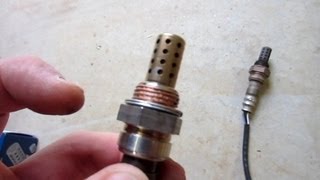
This code means the heater inside the downstream oxygen sensor on the driver's side has failed. The most common fix is to replace the Bank 1, Sensor 2 oxygen sensor. Expect to pay between $40 and $80 for a quality aftermarket part from a brand like NTK or Denso.
- P0141 on your Dakota almost always points to the downstream O2 sensor on the driver's side.
- The most likely cause is a failed heater element inside the sensor itself, which can be confirmed with a multimeter resistance test.
- Before replacing the sensor, always check the O2 sensor fuse in the under-hood PDC first, especially if you also have a P0161 code.
- Use a quality brand like NTK or Denso for the replacement sensor to ensure compatibility with your truck's computer.
- You will need a special O2 sensor socket (a 22mm or 7/8" slotted socket) to easily remove and install the sensor.
What's Unique About the 1997-2004 Dodge Dakota
For the second-generation Dodge Dakota, the O2 sensor heater circuits are relatively straightforward. A key point for owners is that if you see this code P0141 along with P0161 (the code for the passenger side downstream sensor), the problem is very likely a shared power source, like a fuse or relay in the under-hood Power Distribution Center (PDC), not two failed sensors. These trucks are also known to be sensitive to the brand of O2 sensor used; forum consensus strongly recommends using OEM-equivalent brands like NTK or Denso to avoid compatibility issues and repeat failures. Some owners report issues with Bosch sensors on this platform. For 2004 models with the New Generation Controller (NGC), the O2 heater circuit may not use a relay in the PDC, with the NGC directly controlling the voltage.
Symptoms You May Notice
- Check Engine Light is on.
- Will not pass an emissions/smog test.
- Slightly increased emissions, especially during cold starts.
- Replacing the oxygen sensor without first checking the fuse. If the fuse is blown, the new sensor's heater will also not work, and the code will return.
- Replacing only one sensor when both P0141 and P0161 are present, indicating a likely shared power supply issue.
Most Likely Causes
- Failed Oxygen Sensor 🔴 High Probability → Shop Oxygen Sensor Oxygen sensors are wear items that operate in a harsh exhaust environment. The internal heater element is a common failure point after many years and thousands of heat cycles.
How to confirm: Disconnect the sensor and measure the resistance between the two same-colored wires (usually black or white) on the sensor side of the connector. An open circuit (infinite resistance, or 'OL' on a multimeter) indicates a failed heater element. A typical good heater measures between 3 and 30 ohms when cold. One owner with a similar Dodge vehicle reported a good sensor reading around 4 ohms.
Typical fix: Replace the Bank 1, Sensor 2 (driver's side, downstream) oxygen sensor. A special 22mm (7/8") slotted socket is recommended for removal. 🎬 Watch: Step-by-step guide to replacing the sensor on your Dakota.
Est. part cost: $40-$80 - Blown Fuse or Faulty Relay 🟡 Medium Probability This is especially likely if you have both P0141 and P0161 codes at the same time, as the two downstream sensors may share a power circuit fed by a single fuse or relay. A short in the wiring from towing a trailer with faulty wiring has also been reported as a cause for a blown fuse.
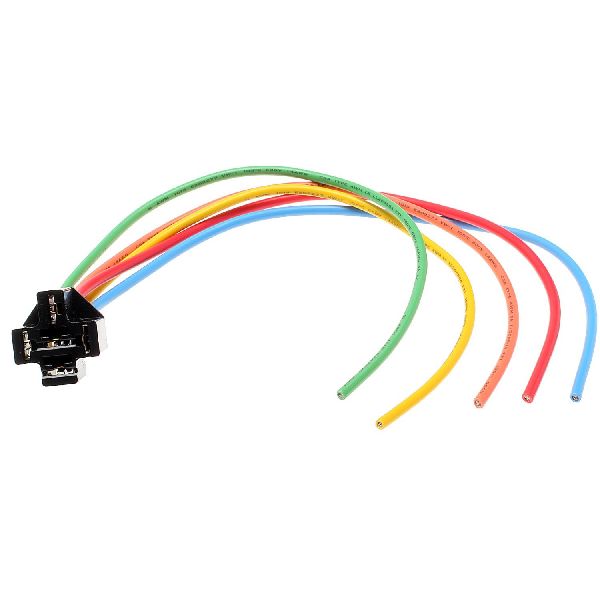
How to confirm: Check the fuses in the Power Distribution Center (PDC) under the hood. Look for a fuse labeled 'O2' or similar. You can also swap the O2 sensor relay (if present on your model year) with another identical relay (like the horn or A/C relay) to see if the problem is resolved.
Typical fix: Replace the blown fuse or faulty relay.
Est. part cost: $1-$20 - Damaged Wiring or Connector ⚪ Low Probability The wiring harness runs under the truck and is exposed to road debris, exhaust heat, and moisture, which can cause wires to melt, chafe, or break, and connectors to corrode over time. A common chafe point is where the harness crosses over the gas tank.
How to confirm: Visually inspect the wiring harness and connector leading to the driver's side downstream O2 sensor for any signs of melting, chafing, corrosion, or broken wires. With the key on and engine off, use a multimeter to check for 10-12 volt power at the harness-side connector on the specified power wire (often Orange/Dark Green for this vehicle). Also check for continuity to ground on the ground wire.
Typical fix: Repair the damaged section of the wiring harness or clean/replace the connector.
Est. part cost: $5-$50
Rare But Worth Checking
- Faulty Powertrain Control Module (PCM): → Shop Engine Control Module (ECM) This is extremely rare. The PCM's driver circuit for the heater could fail, but all other possibilities (sensor, fuse, wiring) should be exhaustively ruled out before considering PCM replacement. However, on some Dodge/Jeep platforms of this era, multiple O2 heater codes appearing at once have been resolved by replacing the PCM.
Diagnosis Steps
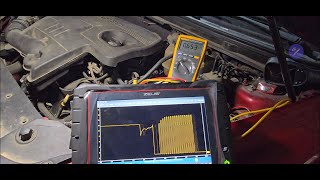
- Read the code with an OBD-II scanner to confirm P0141 is present. 🎬 Watch: A DIY walkthrough for diagnosing and fixing code P0141.
- Inspect the O2 sensor fuse in the Power Distribution Center (PDC) under the hood. If it's blown, replace it, clear the codes, and see if the fault returns.
- If P0161 is also present, suspect the O2 sensor relay in the PDC (if your model year has one). Swap it with a known-good, identical relay from a non-critical system (e.g., horn) and see if the code clears.
- Locate the Bank 1, Sensor 2 O2 sensor on the driver's side, after the catalytic converter. Visually inspect its wiring and connector for any obvious damage, melting, or corrosion.
- Disconnect the sensor. Turn the ignition to the 'ON' position (engine off). Use a multimeter to verify there are 10-12 volts at the power wire in the harness-side connector (typically an Orange/Dark Green wire on these trucks).
- If power is present, test the sensor itself. Set your multimeter to measure resistance (Ohms) and probe the two heater circuit pins (usually the two same-colored wires, often black or white) on the sensor. A reading of 'OL' or infinite resistance means the heater is broken and the sensor must be replaced. A good sensor should read between 3 and 30 Ohms.
- If the sensor's resistance is within spec and the power supply is good, the issue may be in the ground-side control wire running back to the PCM, which requires more advanced wiring diagram tracing. The PCM provides a pulse-width modulated ground to control the heater.
Parts You'll Likely Need
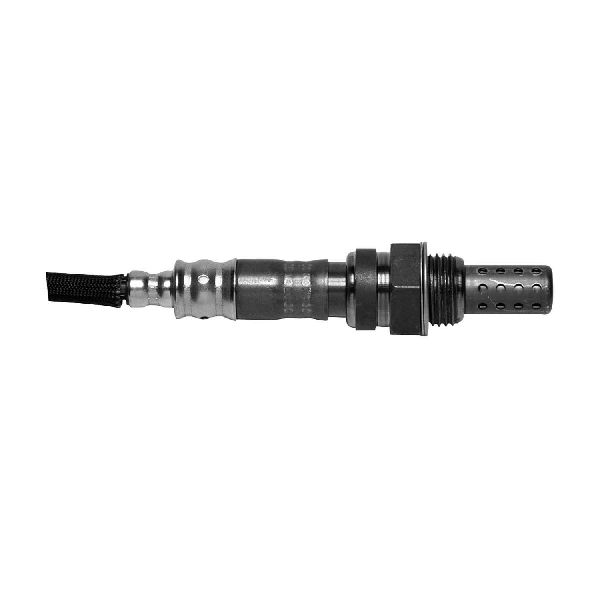
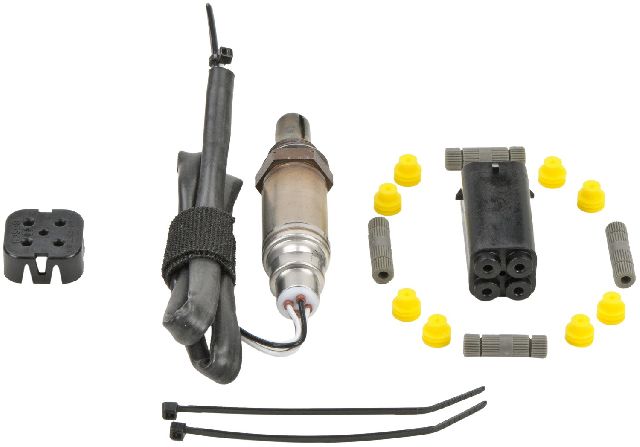
- Oxygen Sensor (Bank 1, Sensor 2)
(OEM #56029052AA (cross-reference, verify by VIN))— The internal heater element fails from age and heat cycles. This is the most common cause of P0141.
Trusted brands: NTK, Denso
OEM price range: $70-$120
Aftermarket price range: $40-$80
Related Codes That Often Appear With This One
- P0161 — P0161 is the same heater circuit fault but for Bank 2, Sensor 2 (passenger side, downstream). If both appear together, it strongly points to a shared power supply issue, like a fuse or relay, rather than two failed sensors.
- P0138 — This code indicates 'O2 Sensor Circuit High Voltage (Bank 1, Sensor 2)'. A short circuit or wiring issue that triggers P0141 could potentially also cause high voltage readings, as seen in some owner reports where multiple codes appeared together before a sensor was replaced.
Platform-Specific Known Issues
- Fuse/Relay Location: On some 4.7L models, the O2 sensor heater relay and fuse are in the Power Distribution Center (PDC) near the battery. However, later models (e.g., 2004) with the Next Generation Controller (NGC) may not have a user-serviceable relay for this circuit, as it's controlled internally by the PCM.
- Brand Sensitivity: Multiple forum discussions confirm these trucks run best on OEM-style NTK or Denso sensors. Using other brands, particularly for the upstream sensors, can sometimes cause persistent issues, though downstream sensors are generally more tolerant.
Mechanic-Grade Diagnostic Values
- O2 Sensor Heater Element Resistance — expected: 3 to 30 Ohms when cold.. Failure: An open circuit (OL on multimeter) or very high resistance indicates a failed heater element.
- Heater Circuit Power Supply Voltage — expected: 10-12 Volts DC with Key On, Engine Off.. Failure: 0 Volts indicates a blown fuse, bad relay, or an open in the power wire.
- Heater Circuit Ground Control — expected: A pulsing voltage or blinking test light when connected to battery positive, indicating the PCM is duty-cycling the ground.. Failure: No activity (light stays off or on solid) can indicate a PCM driver fault or a break in the control wire.
Scan Tool Commands That Help
- DRB III or equivalent professional scanner: O2 Heater Test — A bidirectional scanner can command the O2 heater circuit on, allowing a technician to actively test the circuit's response. This can confirm if the PCM driver is functional and if the circuit can carry a load, helping to differentiate between a wiring, sensor, or PCM fault without having to wait for a drive cycle.
Wiring & Ground Locations
- B1S2 Heater Power Wire — Orange wire with a Dark Green stripe (ORG/DK GRN) at the 4-pin sensor connector.. This is the wire that should have 12V power with the key on. Verifying voltage here is a primary diagnostic step to rule out a power supply issue from the fuse/relay.
- Engine to Chassis/Firewall Ground Strap — Typically a braided strap from the passenger-side cylinder head to the firewall, near the battery tray area.. While the O2 heater is controlled by a dedicated ground from the PCM, all vehicle grounds must be clean and secure for the PCM and other modules to function correctly. A poor main ground can cause floating voltages and unpredictable electrical issues, including O2 sensor codes.
- Harness Chafe Point — The wiring harness section that crosses over the gas tank.. A documented failure point where the harness can rub and cause wires to break or short, leading to intermittent or persistent P0141 and P0138 codes.
Real Owner Repair Stories
- DodgeForum.com user (1999 Dodge Dakota 3.9L (similar wiring principles)) — Persistent P0138 and P0141 codes for the downstream sensor.
❌ Tried (didn't work) Replacing the O2 sensor, Clearing codes, Adding fuel system cleaner
✅ What actually fixed it Found pinched and damaged wires in the O2 sensor harness where it passed underneath a bracket. Splicing in new wires resolved the codes. Another user on the same platform fixed the issue by finding a broken wire in the harness where it crosses over the gas tank. - Dakota-Durango.com forum user (2001 Dodge Dakota 4.7L) — P0141 and P0161 codes appearing simultaneously.
❌ Tried (didn't work) Resetting the computer
✅ What actually fixed it The user suspected a shared power source issue due to both downstream heater codes appearing at once. Another member suggested swapping the O2 sensor relay in the Power Distribution Center (PDC) with an identical relay (like the one for the horn) as a diagnostic step. This points to a common fix for dual heater codes being a faulty relay, not two bad sensors.
OEM Part Supersession History
56029052AA→N/A— This part number is still listed as the primary OEM part for many applications.
Heads up: This part number (56029052AA) is often listed for 2004-2005 Chrysler/Dodge minivans with 3.3L/3.8L engines as an upstream sensor. It is critical to verify the correct part number for the specific Dakota 4.7L application by VIN, as using a part intended for another vehicle, even if it physically fits, can cause issues. The correct downstream sensor for a 2001-2003 Dakota 4.7L is often cited as Mopar part number 56041344AA.
Model Year Variations Within This Range
- 2000-2003: These models typically use a conventional setup with a dedicated fuse and relay for the O2 sensor heaters located in the Power Distribution Center (PDC) under the hood.
- 2004: The 2004 model year introduced the Next Generation Controller (NGC). On these trucks, the O2 sensor heater relay may be integrated into the PCM itself and is not a separate, user-serviceable part in the PDC. A failure of this internal relay requires PCM repair or replacement.
Diagnostic Flowchart
Real Owner Stories
Aggregated from forums and TSBs cited above. Mileages and costs reflect what owners reported in those sources.
Dodge Dakota
Symptoms: Owner experienced both P0141 and P0161 codes simultaneously.
What fixed it: Diagnosed as a shared power relay issue in the Power Distribution Center (PDC).
Source hint: DodgeForum.com thread titled 'Oxygen Sensors'
Dodge Dakota
Symptoms: Owner expressed frustration after replacing the oxygen sensor twice and still having the P0141 code.
What fixed it: Community pointed towards checking the two fuses that protect the rear O2 sensor circuit as the next logical step.
Source hint: Dakota-Durango.com thread titled 'Code P0141, need help.'
2008 Dodge Ram 1500 4.7L V8
Symptoms: Truck 'didn't like' NTK sensors and threw codes.
What fixed it: Switched to Denso sensors, which resolved the issue.
Source hint: RamForum.com
Related OBD-II Codes
Frequently Asked Questions
Which oxygen sensor needs to be replaced for P0141 on my 4.7L Dakota?
I replaced the O2 sensor on my Dakota but the P0141 code came back. What else should I check?
What brand of oxygen sensor should I use for my Dodge Dakota?
I have both P0141 and P0161 codes on my Dakota. Are they related?
How can I test the O2 sensor heater circuit on my Dakota?
Does my 2004 Dakota have an O2 sensor relay I can swap?
Helpful Videos
We Have This Part in Stock


The information in this article is provided for general reference and educational purposes only. Vehicle specifications, procedures, and part compatibility can vary by production date, trim level, and region. Always consult your vehicle's factory service manual and verify part numbers before purchasing or performing repairs. Safety-critical components such as airbags, seat belts, and braking systems should be installed by a qualified professional.
- Dodge Dakota:
- 🧭 Diagnostic Flowchart
- 🎬 Helpful Videos
- 🛍️ Shop This Part
- What's Unique About the 1997-2004 Dodge Dakota
- Symptoms You May Notice
- Most Likely Causes
- Rare But Worth Checking
- Diagnosis Steps
- Parts You'll Likely Need
- Related Codes That Often Appear With This One
- Platform-Specific Known Issues
- Mechanic-Grade Diagnostic Values
- Scan Tool Commands That Help
- Wiring & Ground Locations
- Real Owner Repair Stories
- OEM Part Supersession History
- Model Year Variations Within This Range
- Real Owner Stories
- Dodge Dakota
- Dodge Dakota
- 2008 Dodge Ram 1500 4.7L V8
- Related OBD-II Codes
- Frequently Asked Questions
- 🎟️ Get 5% Off