

P0141 on 2018-2019 Ford EcoSport 2.0L: O2 Sensor Heater Circuit Causes and Fixes
For the 2018-2019 EcoSport, code P0141 is most often fixed by replacing the downstream oxygen sensor (Bank 1, Sensor 2) and reprogramming the engine computer (PCM), as outlined in Ford's Technical Service Bulletin 19-2005. This TSB is the definitive guide for vehicles built between September 2017 and November 2018. Expect to pay around $70 for an OEM part and 1-2 hours of labor for replacement and programming.
- The most likely cause of P0141 on a 2018-2019 EcoSport is a failed downstream O2 sensor, especially on models built before December 2018.
- A Ford Technical Service Bulletin (19-2005) specifies that the correct fix involves BOTH replacing the sensor AND reprogramming the vehicle's main computer (PCM).
- Simply replacing the sensor without the software update may not permanently fix the problem.
- This is a DIY-friendly repair for those comfortable working under a vehicle, but the final PCM reprogramming step requires a dealer or a properly equipped independent shop.
- The correct OEM part number for the downstream sensor is GN1Z-9G444-E.
What's Unique About the 2018-2019 Ford EcoSport
For this specific vehicle and year range, the story of P0141 is dominated by a Ford Technical Service Bulletin (TSB). Ford issued TSB 19-2005 for 2018-2019 EcoSport models built between September 2017 and November 2018. The bulletin acknowledges that this code, often appearing with P0137, is likely due to a combination of a faulty sensor and outdated PCM software. Unlike many other vehicles where a simple sensor swap is the complete fix, Ford specifies that both the sensor must be replaced and the PCM must be reprogrammed with updated software to permanently resolve the issue.
Symptoms You May Notice
- Check Engine Light (Malfunction Indicator Lamp) is on.
- Failing a state emissions inspection.
- Slight decrease in fuel economy may be noticed by some drivers.
- In rare cases, a foul smell from the exhaust if the fueling issue becomes more pronounced.
- Replacing the upstream (pre-catalytic converter) oxygen sensor instead of the downstream (post-catalytic converter) one.
- Replacing the O2 sensor but not performing the required PCM software update on vehicles covered by TSB 19-2005, which may lead to the code returning.
- Assuming a bad catalytic converter. P0141 is an electrical fault with the sensor's heater, not a reading of converter inefficiency (which would be a P0420 code).
Most Likely Causes
- Faulty Downstream Oxygen Sensor (Catalyst Monitor Sensor) 🔴 High Probability → Shop Oxygen Sensor Ford identified a high failure rate for this part on vehicles built before late November 2018, as documented in TSB 19-2005. The internal heater element burns out, creating an open circuit.
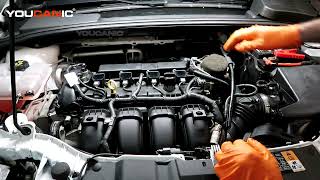
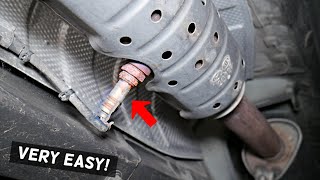
How to confirm: Check the vehicle's build date on the driver's door jamb sticker. If it falls within the TSB range (Sept 2017 - Nov 2018), the sensor is the prime suspect. A multimeter can also be used to test the resistance of the heater circuit within the sensor; an open circuit (infinite resistance) confirms failure. The sensor is located after the catalytic converter, accessible from underneath the vehicle. 🎬 See this walkthrough for replacing the downstream oxygen sensor
Typical fix: Replace the downstream (post-catalytic converter) oxygen sensor. The OEM part is GN1Z-9G444-E, which supersedes GN1Z-9G444-A.
Est. part cost: $70-$150 - Outdated PCM Software 🔴 High Probability TSB 19-2005 explicitly states that a PCM software update is required as part of the fix, suggesting the original software may be too sensitive or improperly calibrated for the sensor parameters, leading to the code returning if not performed.
How to confirm: A Ford dealer or a shop with a Ford-specific scan tool (like FDRS) can check the current software calibration version against the latest available version from Ford.
Typical fix: Reprogram the Powertrain Control Module (PCM) to the latest software version. This is typically done in conjunction with replacing the sensor and may cost between $75-$150 if performed as a standalone service.
Est. part cost: $0 - Damaged Wiring or Connector ⚪ Low Probability The wiring harness runs under the vehicle and is exposed to road debris and heat from the exhaust, making it susceptible to damage over time.
How to confirm: Visually inspect the wiring harness and connector leading to the downstream O2 sensor for any signs of melting, chafing, corrosion, or broken wires. Trace the harness from the sensor up to the main loom.
Typical fix: Repair or replace the damaged section of the wiring harness or the connector pigtail.
Est. part cost: $15-$60 - Blown Fuse ⚪ Low Probability
How to confirm: Check the vehicle's owner's manual or fuse box diagram to locate the fuse for the O2 sensor heater circuit (often shared with other emissions components) in the engine bay fuse panel and verify it is not blown.
Typical fix: Replace the blown fuse. If it blows again, this indicates a short circuit in the heater circuit wiring or the sensor itself that must be diagnosed.
Est. part cost: $1-$5
Rare But Worth Checking
- Powertrain Control Module (PCM) Failure: → Shop Engine Control Module (ECM) This is extremely rare and very expensive, with replacement costs potentially exceeding $1,400. Before condemning the PCM, all other possibilities, especially the sensor, wiring, fuse, and required software update, must be thoroughly ruled out.
Diagnosis Steps
- Retrieve the trouble code using an OBD-II scanner to confirm P0141 is present.
- Determine the vehicle's build date (found on the driver's side door jamb sticker).
- If the build date is between September 1, 2017, and November 28, 2018, assume TSB 19-2005 applies. The recommended procedure is to replace the downstream O2 sensor and have the PCM reprogrammed.
- For vehicles outside the TSB date range or for further verification, perform a visual inspection of the downstream O2 sensor's wiring and connector for any physical damage like melting or chafing.
- Using a multimeter, disconnect the sensor and measure the resistance across the two heater circuit pins (typically the two wires of the same color). A reading of infinite resistance (open circuit) or zero resistance (short circuit) confirms the heater has failed 🎬 Watch: How to diagnose an O2 sensor heater circuit malfunction and the sensor needs replacement. A good sensor should have a resistance between 4 and 10 ohms at room temperature.
- With the sensor disconnected and the key in the 'On' position (engine off), use a multimeter to check for 12V power and a good ground on the corresponding pins of the vehicle's harness connector. Lack of power or ground points to a wiring or fuse issue upstream of the sensor.
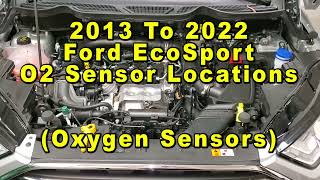
- To remove the sensor, a special 22mm (or 7/8") slotted oxygen sensor socket is required. 🎬 Watch: Locate the upstream and downstream sensors on your EcoSport Access is from underneath the vehicle after removing the splash shield if present.
Parts You'll Likely Need
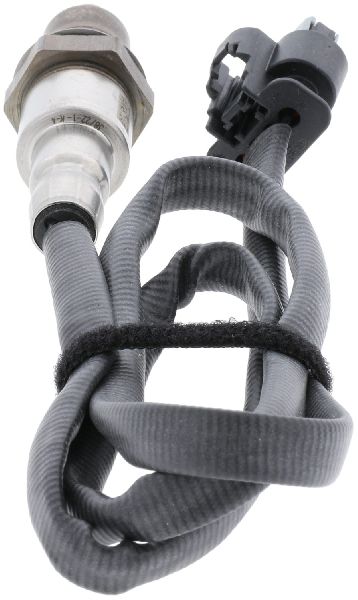
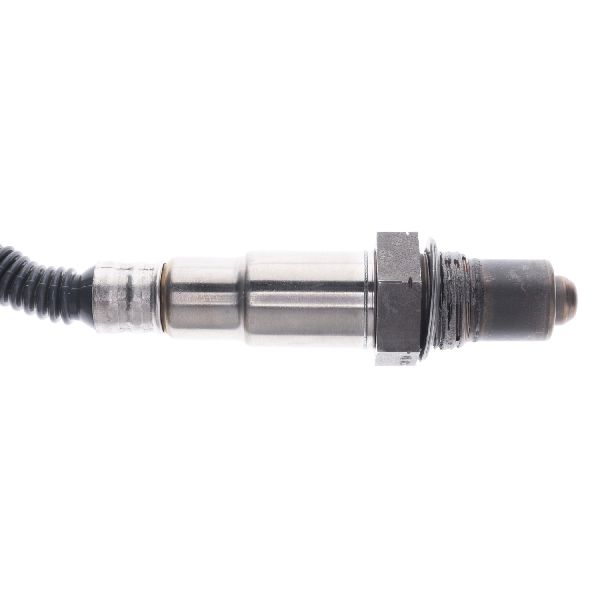
- Downstream Oxygen Sensor (Bank 1, Sensor 2)
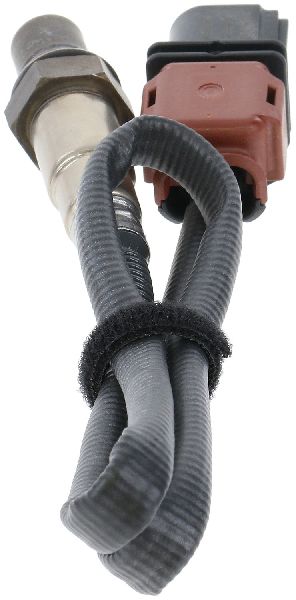
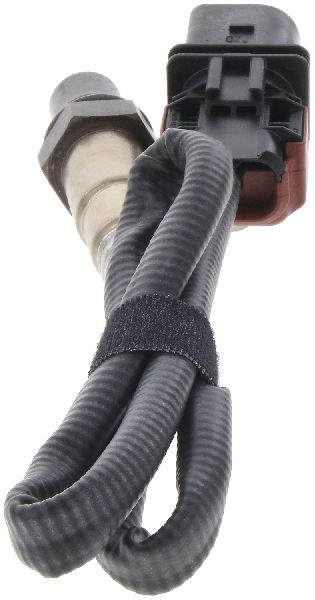
(OEM #GN1Z-9G444-E)— This is the component whose internal heater circuit fails, triggering the code. TSB 19-2005 specifically calls for its replacement to fix the issue on affected vehicles. This part number supersedes the older GN1Z-9G444-A.
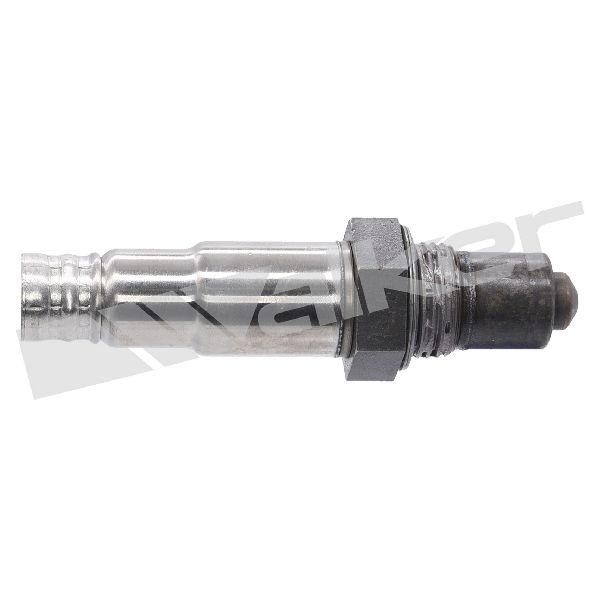
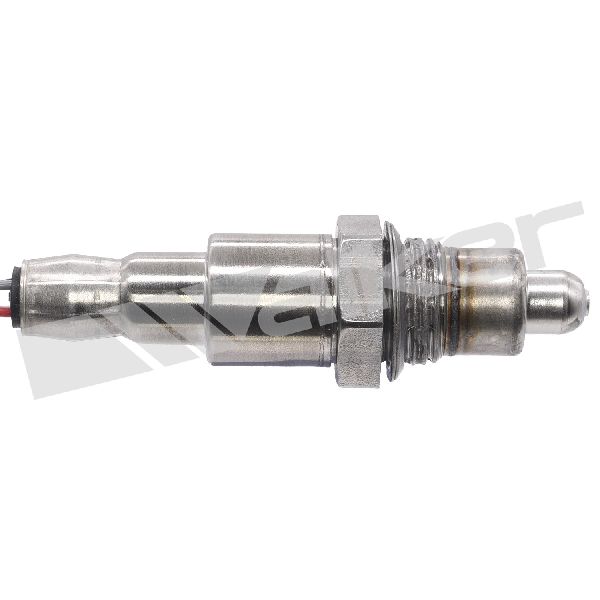
Trusted brands: Motorcraft (OEM), Bosch (e.g., 16224), Walker (e.g., 250-241305), Denso, NTK
OEM price range: $70-$110
Aftermarket price range: $50-$100
Related Codes That Often Appear With This One
- P0137 — P0137 (O2 Sensor Circuit Low Voltage Bank 1 Sensor 2) is mentioned alongside P0141 in TSB 19-2005, as both can be caused by the same faulty sensor and software issue.
Technical Service Bulletins (TSBs) & Recalls
- 19-2005: 2.0L Duratec - Automatic Transmission - MIL On With DTCs P0137 And/Or P0141 - Built On 1-Sep-2017 And Through 28-Nov-2018
Platform-Specific Known Issues
- TSB 19-2005: Ford issued this bulletin for 2018-2019 EcoSport models with the 2.0L engine built from 1-Sep-2017 through 28-Nov-2018. It states that DTCs P0141 and/or P0137 may be present due to a faulty catalyst monitor sensor and PCM software. The official repair is to replace the sensor (part GN1Z-9G444-E) and reprogram the PCM.
Mechanic-Grade Diagnostic Values
- Downstream O2 Sensor (HO2S12) Heater Circuit Resistance — expected: 4.0 to 10.0 Ohms at room temperature. Some sources cite a wider range of 2-20 Ohms.. Failure: Infinite resistance (OL) indicates an open circuit (burned out heater). Zero ohms indicates a short circuit. Both require sensor replacement.
- Voltage at Harness Connector (Heater Power Pin) — expected: 12V (Battery Voltage) with Key On, Engine Off.. Failure: 0V or significantly low voltage indicates a problem with the fuse, relay, or wiring from the power distribution box.
- Ground at Harness Connector (Heater Control Pin) — expected: The PCM provides a pulsed ground to control the heater. With a test light connected to battery positive, the light should pulse when connected to this pin and the engine is running.. Failure: No pulse or a steady ground/open may indicate a wiring issue or a fault in the PCM driver circuit.
Scan Tool Commands That Help
- Ford IDS / FORScan: Heated Oxygen Sensor (HO2S) Heater Test / Output State Control — This bidirectional command allows a technician to manually turn the O2 sensor heater on and off. It is used to verify the integrity of the wiring and the PCM's ability to control the circuit. If the heater can be commanded on and current flow is observed (or voltage drop on the ground side), it confirms the wiring and PCM are likely good, isolating the fault to the sensor itself.
Wiring & Ground Locations
- HO2S 12 Connector — On the exhaust pipe, downstream of the catalytic converter. The harness connector is typically clipped to a bracket on the transmission or subframe.. This is the primary connection point for testing. The connector and its wiring are exposed to heat and road debris, making them a potential point of failure due to melting, corrosion, or physical damage.
- HO2S Heater Circuit Fuse — Located in the Battery Junction Box (engine compartment fuse panel). The specific fuse number should be verified with the owner's manual or a vehicle-specific diagram, but it is often shared with other emissions components.. A blown fuse will cut power to the heater circuit, causing P0141. If the fuse blows repeatedly, it indicates a short circuit in the wiring or within the O2 sensor itself.
- PCM Connector — The Powertrain Control Module is located in the engine compartment. The ground control wire for the HO2S12 heater runs from the sensor connector to a specific pin on the PCM connector.. In rare cases of persistent faults where the sensor and wiring test good, checking for continuity and pin fitment at the PCM connector is a necessary final step before condemning the PCM.
- Main Engine/Chassis Ground — There are several key ground points in the engine bay, typically bolted to the engine block, transmission case, or chassis frame rails.. While not specific to the heater circuit itself, a poor main engine or PCM ground can cause a wide range of electrical issues, including erratic sensor behavior. Verifying these grounds are clean and tight is good practice during any electrical diagnosis.
OEM Part Supersession History
GN1Z-9G444-A→GN1Z-9G444-E— Ford identified a high failure rate in the original sensor, leading to TSB 19-2005. The new part is a revised, more durable design.
Heads up: While the old part number will physically fit, it is prone to the same failure. Always use the latest revision (GN1Z-9G444-E) or a quality aftermarket equivalent for repair.
Model Year Variations Within This Range
- 2018 models built before 28-Nov-2018: Vehicles built within the TSB 19-2005 date range (Sept 2017 - Nov 2018) require both a sensor replacement AND a mandatory PCM software update to resolve P0141. Vehicles built after this date likely have the updated software from the factory, and a standard sensor failure would typically only require sensor replacement.
Diagnostic Flowchart
Other Known Issues on This Vehicle
Issues unrelated to this code that are worth knowing about as an owner of this generation:
- 6F35 Transmission Problems 🟠 Medium — Reported semi-frequently by owners, can manifest as harsh shifting, bucking, jerking, or premature failure. Some failures have been reported under 100,000 miles. (Ref: Multiple class-action lawsuits have been filed regarding this transmission across various Ford models.)
- Engine Oil Pump Failure (1.0L EcoBoost Engine) 🔴 High — This issue is specific to the 1.0L engine, not the 2.0L this article focuses on, but is a major known problem for the EcoSport platform overall. Failure of the oil pump drive belt or tensioner leads to catastrophic loss of oil pressure. (Ref: Ford Safety Recall 23V-905 was issued for this problem.)
- Engine Coolant Leaks 🟠 Medium — Some owners have reported coolant leaks, sometimes leading to coolant intrusion into the engine, which can cause stalling or complete engine failure.
- Keyless Entry / No Start Condition 🟡 Low — An issue affecting models built on or before September 2018 where the vehicle may not start and displays a 'Key Not Detected' message. (Ref: TSB #SSM 47601)
Used vs. New Parts: Buying Guide for This Vehicle
When a used part is the smart pick: For this repair, a used part is strongly discouraged. Oxygen sensors are wear items with a finite lifespan, and the failure mode is an internal burnout. A used sensor has unknown remaining life and could fail shortly after installation.
What to inspect on the donor part:
- Not applicable, as used sensors are not recommended.
OEM-only on this vehicle (don't cheap out):
- While not strictly 'OEM-only', using the genuine Motorcraft part (GN1Z-9G444-E) is the safest bet, especially on vehicles covered by the TSB. It guarantees compatibility with the required PCM software update.
Aftermarket brands forum-validated for this vehicle:
- Bosch (often the OE supplier for Ford), NTK, and Denso are widely considered to be high-quality, reliable alternatives to Motorcraft.
- Walker is also a commonly available and generally accepted aftermarket option.
Brands owners have reported issues with on this vehicle:
- Unnamed, 'white-box', or unusually cheap sensors from online marketplaces should be avoided. They often use lower-quality materials, may not have the correct heater resistance, and can fail quickly, leading to the code returning.
Real Owner Stories
Aggregated from forums and TSBs cited above. Mileages and costs reflect what owners reported in those sources.
2018-2019 Ford EcoSport (2.0L Duratec)
Symptoms: Illuminated malfunction indicator lamp (MIL) with DTCs P0137 and/or P0141.
What fixed it: Replace the catalyst monitor sensor (Ford part GN1Z-9G444-A) and perform a powertrain control module (PCM) software update.
Source hint: Ford TSB 19-2005
2018-2019 Ford EcoSport
Symptoms: Check engine lights and subsequent dealer repairs involving sensor replacements and software flashes.
What fixed it: Sensor replacements and software flashes aligning with the TSB's prescribed fix.
Source hint: r/FordEcoSport on Reddit
Related OBD-II Codes
Frequently Asked Questions
Does TSB 19-2005 apply to my 2018 Ford EcoSport?
What is the recommended fix for P0141 on a 2.0L EcoSport within the TSB date range?
Can I just replace the sensor myself to fix P0141?
Is there a specific part number I should look for when replacing the downstream O2 sensor?
Why does the PCM need to be reprogrammed for an O2 sensor code?
Are there other common issues with the 2018-2019 EcoSport I should be aware of while fixing this?
Helpful Videos
We Have This Part in Stock

The information in this article is provided for general reference and educational purposes only. Vehicle specifications, procedures, and part compatibility can vary by production date, trim level, and region. Always consult your vehicle's factory service manual and verify part numbers before purchasing or performing repairs. Safety-critical components such as airbags, seat belts, and braking systems should be installed by a qualified professional.
- Ford EcoSport:
- 🧭 Diagnostic Flowchart
- 🎬 Helpful Videos
- 🛍️ Shop This Part
- What's Unique About the 2018-2019 Ford EcoSport
- Symptoms You May Notice
- Most Likely Causes
- Rare But Worth Checking
- Diagnosis Steps
- Parts You'll Likely Need
- Related Codes That Often Appear With This One
- Technical Service Bulletins (TSBs) & Recalls
- Platform-Specific Known Issues
- Mechanic-Grade Diagnostic Values
- Scan Tool Commands That Help
- Wiring & Ground Locations
- OEM Part Supersession History
- Model Year Variations Within This Range
- Other Known Issues on This Vehicle
- Used vs. New Parts: Buying Guide for This Vehicle
- Real Owner Stories
- 2018-2019 Ford EcoSport (2.0L Duratec)
- 2018-2019 Ford EcoSport
- Related OBD-II Codes
- Frequently Asked Questions
- 🎟️ Get 5% Off