

P0141 on 2015-2020 Ford F-150: O2 Heater Circuit Fixes & Part Guide
This code almost always means the downstream oxygen sensor on the passenger side has failed. The internal heater element burns out, requiring sensor replacement. Expect to pay $40-$80 for an aftermarket sensor or $100+ for OEM Motorcraft. It's a straightforward DIY fix for many owners, but always check the shared heater fuse first, especially if multiple O2 codes are present.
- P0141 on a 2015-2020 F-150 points to a problem with the heater in the passenger side, downstream O2 sensor.
- The most common fix is to replace the sensor itself. This is a manageable DIY job for many owners with basic tools and an O2 sensor socket.
- Before buying a new sensor, always check the wiring for damage and make sure the connector is plugged in tightly.
- Also, check the O2 sensor heater fuse (likely Fuse 95 in the engine bay fuse box), especially if you have other O2 heater codes.
What's Unique About the 2015-2020 Ford F-150
For the 2015-2020 F-150, the P0141 code is a very common and straightforward issue, typically pointing directly to the sensor itself. Unlike some codes that can have multiple complex causes, this one is usually simple. Owners report that the most frequent cause is simply the heater element inside the original Motorcraft sensor failing from age. Before replacing the sensor, it's worth checking that the connector hasn't been accidentally unplugged during other service. Also, if multiple heater codes (P0135, P0155, P0161) appear at once, the problem is almost certainly the shared 25A fuse in position F95 of the under-hood fuse box for 2015-2020 models.
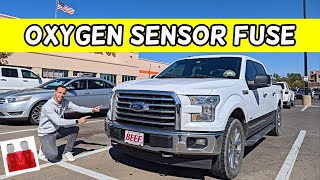
🎬 Watch: How to find and replace the O2 sensor fuseSymptoms You May Notice
- Check Engine Light is on.
- Failing a state emissions inspection.
- Slightly reduced fuel economy (often not noticeable by the driver).
- Engine may run in a 'safe' or 'open-loop' mode longer after startup, which can affect cold-weather performance.
- Replacing the catalytic converter. A P0141 code points specifically to the sensor's heater circuit, not the performance of the catalytic converter. A bad converter would typically set a P0420 code.
Most Likely Causes
- Failed Bank 1, Sensor 2 Oxygen Sensor 🔴 High Probability → Shop Oxygen Sensor The internal heater element is a common failure point on O2 sensors as they age. The sensor is exposed to extreme heat cycles in the exhaust, leading to eventual failure of the delicate internal components like the ceramic heater element. This is the most frequent resolution reported by owners.
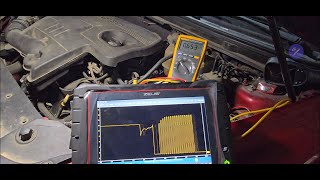
How to confirm: After checking the fuse and wiring, test the resistance of the heater circuit within the sensor using a multimeter. Disconnect the sensor and measure across the two pins with the same color wires. 🎬 See this video on how to test O2 heater circuits A reading of 'OL' (open loop) or infinite resistance indicates a failed heater element. A good heater circuit typically has a resistance between 2 and 30 ohms when cold.
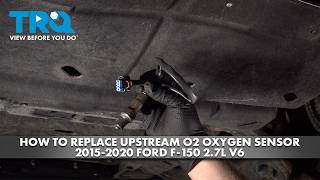
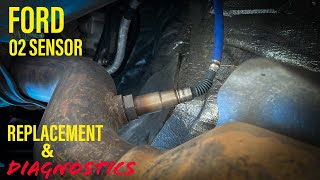
Typical fix: Replace the Bank 1, Sensor 2 oxygen sensor. This is the downstream sensor on the passenger side. It is recommended to use a special slotted O2 sensor socket to avoid damaging the wires during removal and installation. 🎬 Watch: Complete guide to F-150 O2 sensor diagnostics and replacement
Est. part cost: $40 - $150 - Damaged Wiring or Loose Connector 🟡 Medium Probability The sensor's wiring harness runs underneath the truck and is exposed to road debris, water, and heat, which can cause wires to break, fray, or corrode. Sometimes the connector is simply not plugged in securely or has water intrusion. Manufacturer bulletin #TSB 21-2090 notes that water intrusion into the heated oxygen sensor can cause an illuminated MIL with codes including P0141.
How to confirm: Visually inspect the entire length of the wiring from the O2 sensor to its connection point. Look for any signs of melting (especially on EcoBoost models near the turbo), chafing, or broken wires. Ensure the connector is clean, free of corrosion, and securely clicked into place. Check for 12V power at the harness connector with the key on, engine off.
Typical fix: Repair the damaged section of wire or clean the connector terminals. If the connector itself is damaged, it may need to be replaced.
Est. part cost: $5 - $50 - Blown O2 Sensor Heater Fuse ⚪ Low Probability → Shop Oxygen Sensor A short circuit in the wiring or within one of the O2 sensors can cause the shared fuse to blow. This is a less common cause if P0141 is the only code present. If you have multiple O2 heater codes (e.g., P0135, P0155, P0161), a blown fuse is the most likely culprit.
How to confirm: Locate the fuse for the O2 sensor heaters in the under-hood fuse box. For 2015-2020 models, this is consistently identified as fuse #95, a 25A fuse. Visually inspect the fuse or test it for continuity with a multimeter.
Typical fix: Replace the blown fuse. If the new fuse blows immediately, it indicates a short circuit in the heater wiring for one of the O2 sensors that must be found and repaired. The most common cause of the fuse blowing is one of the sensors shorting out internally.
Est. part cost: $1 - $5
Rare But Worth Checking
- Faulty Powertrain Control Module (PCM): → Shop Engine Control Module (ECM) This is extremely rare. The PCM should only be considered a potential cause after all other possibilities (sensor, wiring, fuse) have been exhaustively tested and ruled out. A PCM failure would likely present with other, more severe symptoms and codes. However, manufacturer bulletin #TSB 19-2005 suggests that in some Ford models, P0141 may be due to a combination of a faulty catalyst monitor sensor and PCM software.
Diagnosis Steps
- Confirm the code with an OBD-II scanner. Note any other codes that are present. If P0135, P0155, or P0161 are also present, go directly to step 4.
- Locate the Bank 1, Sensor 2 O2 sensor. It is on the passenger side of the truck, screwed into the exhaust pipe just after the catalytic converter.
- Visually inspect the sensor's wiring harness and electrical connector. Look for obvious damage, melting, corrosion, or a loose connection.
- Check the O2 sensor heater fuse. In 2015-2020 F-150s, this is fuse F95 (25A) in the engine bay fuse box. If it's blown, replace it. If it blows again, one of the four O2 sensors has an internal short and is the root cause.
- If the fuse is good, disconnect the sensor and test the resistance across the two heater circuit pins (same color wires) on the sensor side. A good sensor will have low resistance (typically 2-30 ohms). An infinite resistance or 'OL' reading means the heater is broken and the sensor must be replaced.
- If the sensor's resistance is good, check for power at the harness connector. With the key on (engine off), one pin should have 12V power. If not, there is a wiring issue between the fuse box and the sensor.
- If all wiring and fuses are good and the sensor resistance test fails, the cause is a failed heater element inside the O2 sensor, which requires sensor replacement.
Parts You'll Likely Need
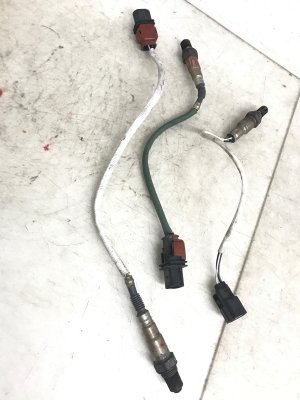
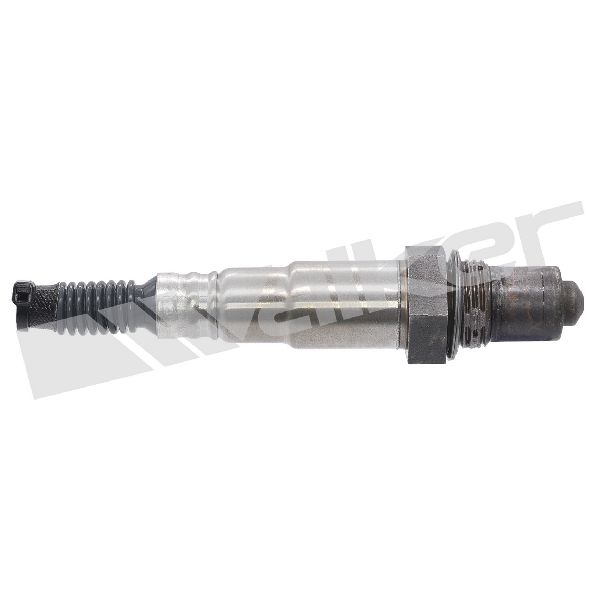
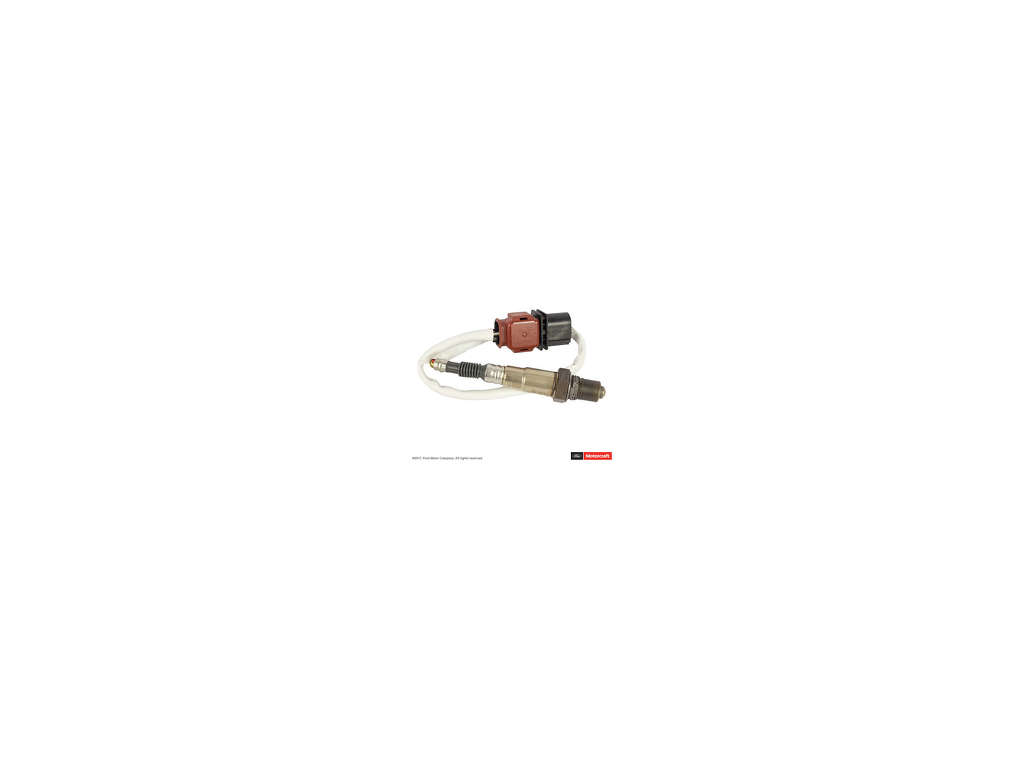
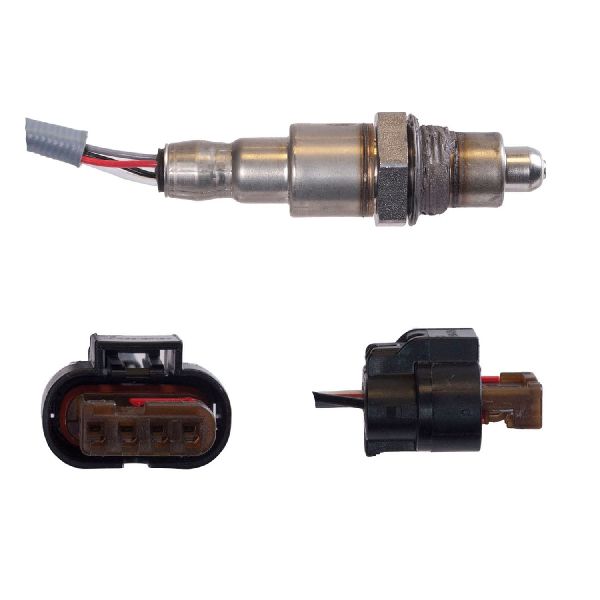
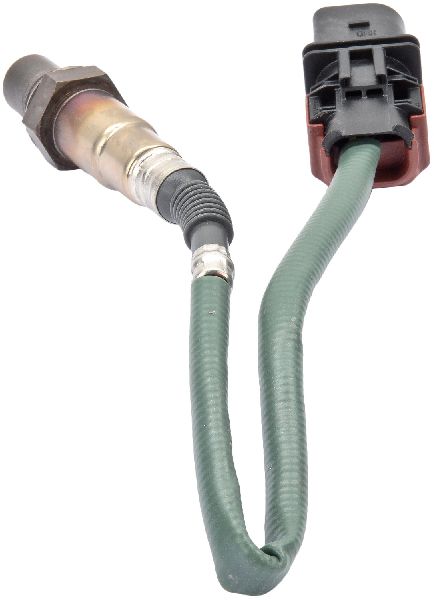
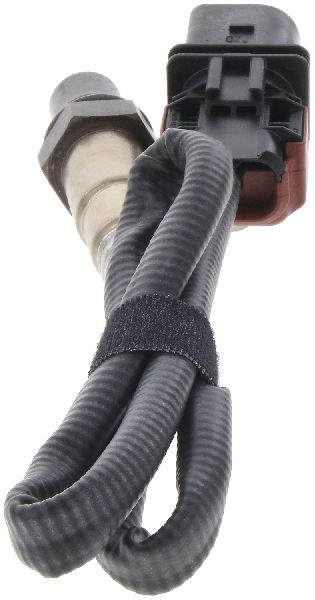
- Oxygen Sensor (Bank 1, Sensor 2)
(OEM #Motorcraft DY-1154 (Varies by engine/year, confirm with VIN))— This is the downstream (post-catalytic converter) sensor on the passenger side. The internal heater element fails, which is the direct cause of the P0141 code.
Trusted brands: Motorcraft, Bosch, Denso, NTK
OEM price range: $100-$150
Aftermarket price range: $40-$80
Related Codes That Often Appear With This One
- P0161 — P0161 is the same heater circuit fault but for Bank 2, Sensor 2 (driver's side). Seeing both codes together could indicate a shared problem like a blown fuse or that both sensors have failed around the same time due to age.
- P0135 — P0135 is for the Bank 1, Sensor 1 (upstream passenger side) heater circuit. If multiple heater codes appear at once (P0135, P0141, P0155, P0161), it strongly suggests a common power or ground issue, such as the shared F95 fuse.
Platform-Specific Known Issues
- If multiple O2 sensor heater codes (P0135, P0141, P0155, P0161) appear simultaneously, the root cause is almost certainly not four failed sensors. The problem is most likely the shared fuse for the heater circuits (Fuse 95, 25A, in the under-hood fuse panel).
- A user on f150forum.com reported chasing intermittent P0141 and P0036 codes, which was ultimately suggested to be a poor ground connection for the sensor circuit on the passenger side.
- Manufacturer Bulletin #15-0072 specifically notes that F-150 models with a 3.5L EcoBoost engine may illuminate the MIL with P0141 among other codes.
- Bulletin #SSM 50230 mentions that an illuminated MIL with code P0141 may be due to an exhaust gas oxygen sensor seal, requiring an updated oxygen sensor.
Mechanic-Grade Diagnostic Values
- O2 Sensor Heater Element Resistance — expected: 2 to 30 Ohms (typically 4-10 Ohms when cold). Failure: Infinite resistance (OL) indicates an open circuit (burned out heater). Near zero Ohms indicates a short circuit.
- Voltage at Heater Power Supply Pin (Harness Side) — expected: 12V (Battery Voltage) with Key On, Engine Off. Failure: 0V indicates a break in the power supply wire from the fuse box or a blown fuse.
- Heater Circuit Ground (PCM Control) — expected: The PCM provides a ground to complete the circuit and activate the heater. A scan tool can monitor the duty cycle of this ground.. Failure: If power is present but the heater doesn't work, the issue could be a break in the ground wire back to the PCM or a failed driver in the PCM (rare).
Scan Tool Commands That Help
- High-end Bi-Directional Scanners (e.g., Ford IDS, Autel, Foxwell): O2 Heater Actuation Test / Bi-Directional Control — This command allows the technician to manually turn the O2 sensor heater on and off from the scan tool. It's used to verify if the entire circuit (power, ground, and the heater element itself) is functional. If the heater can be commanded on and the sensor warms up (verified via live data), it rules out wiring and sensor issues, pointing towards a potential PCM logic problem.
Wiring & Ground Locations
- Fuse F95 (BJB) — In the Battery Junction Box (the under-hood fuse panel).. This 25A fuse provides power to all four O2 sensor heaters. If it blows, multiple heater codes (P0135, P0141, P0155, P0161) will appear simultaneously. This is a critical first check when multiple codes are present.
- O2 Sensor Grounds — The sensors are grounded near the PCM on the firewall. Some trucks may have one or two ground points for these circuits.. A corroded or loose ground connection can cause intermittent or high resistance faults for the heater circuit, leading to a P0141 code even if the sensor and power supply are good.
- Bank 1 Sensor 2 Connector — Underneath the truck on the passenger side, where the sensor pigtail connects to the main vehicle harness. The harness is often clipped to the transmission or frame rail.. This connector is a common point of failure due to exposure to water, salt, and road debris causing corrosion. It's also susceptible to damage during transmission service or other under-vehicle repairs.
Technical Service Bulletins (TSBs) & Recalls
- Bulletin #TSB 16-0163 — Notes that various drivability issues and an illuminated MIL with code P0141 may occur intermittently on certain Ford vehicles.
Real Owner Repair Stories
- Ford F150 Forum thread 'All my O2 sensors are suddenly bad?' (2017 F-150 5.0L) — Check engine light with codes P0135, P0141, P0155, and P0161 all appearing at once. Truck ran fine.
❌ Tried (didn't work) Initial thought was multiple failed sensors or a major wiring harness issue.
✅ What actually fixed it The user found and replaced the blown 25A fuse in position F95 of the under-hood fuse box. After replacement, the codes were cleared and did not return. The root cause was one of the O2 sensors shorting out, which blew the shared fuse. - YouTube video '2016 Ford F150 Heated 02 Sensor Circuit Diag - P0056' (2016 Ford F-150 (with a P0056, the Bank 2 equivalent of P0141)) — Check Engine Light with code P0056.
❌ Tried (didn't work) Initial resistance test of the cold sensor showed 4.2 ohms, which is within the good range (2-20 ohms)., Power and ground circuit tests from the PCM to the sensor connector were all good.
✅ What actually fixed it The technician tested the sensor's resistance while the heater was activated by the running engine. The resistance reading became erratic and went to open-loop (OL), indicating the heater element was failing under a thermal load, even though it tested good when cold. Replacing the O2 sensor resolved the issue. This demonstrates that a cold resistance test can sometimes be misleading.
OEM Part Supersession History
Varies by engine and specific year.→Motorcraft part numbers are frequently updated. For example, for a 2015-2017 5.0L, a downstream sensor might be FL3Z-9G444-D.— Minor design improvements, manufacturing changes, or consolidation of part numbers.
Heads up: While physical connectors are often the same across engines (e.g., 5.0L vs 3.5L), the internal calibration resistance and wire lead length can differ. Using a sensor for a 3.5L EcoBoost on a 5.0L V8 (or vice-versa) can cause performance issues or prevent the code from clearing, even if it plugs in. Always verify the part number against the vehicle's VIN.
Diagnostic Flowchart
Other Known Issues on This Vehicle
Issues unrelated to this code that are worth knowing about as an owner of this generation:
- Harsh/Erratic Shifting in 10R80 Transmission 🟠 Medium — Widespread in 2017-2020 models, can occur at any mileage. Symptoms include hard shifts, jerking, and delayed engagement. (Ref: Multiple TSBs issued for PCM reprogramming (e.g., TSB 21-2315) to improve shift logic. Some cases require valve body or full transmission replacement.)
- Excessive Oil Consumption (5.0L V8) 🟠 Medium — Common in 2018-2020 models with the 5.0L engine. Defined as consumption greater than 1 quart per 3,000 miles. (Ref: TSB 19-2365 addresses this with a PCM reprogram to reduce engine vacuum, a new dipstick, and an oil change. In some early cases, engine long block replacement was performed under TSB 19-2058.)
- Warped Instrument Panel (Dashboard) 🟡 Low — Common on 2015-2019 XL and XLT trim levels. The dash material lifts and separates near the defrost vents due to heat and sun exposure. (Ref: TSB 19-2041 (and later revisions) was issued to cover the replacement of the upper instrument panel section under warranty.)
- Frozen or Inoperative Door Latches 🟠 Medium — Affects 2015-2017 models, especially in cold or wet climates. Doors may fail to open, fail to latch closed, or open while driving. (Ref: Multiple recalls (e.g., 17S33, 18N03, 23S36) and customer satisfaction programs were issued to install water shields, replace cables, and/or replace the latch mechanisms.)
- Timing Chain Rattle on Cold Start (3.5L EcoBoost) 🔴 High — Prevalent in earlier 2015-2017 3.5L EcoBoost engines. A metallic rattle for a few seconds on cold start indicates worn cam phasers or timing chain components. (Ref: TSB 15-0131 was one of several bulletins addressing the issue, which often requires costly replacement of cam phasers, timing chain, and tensioners.)
Used vs. New Parts: Buying Guide for This Vehicle
When a used part is the smart pick: Never. Oxygen sensors are wear items with a finite lifespan, exposed to extreme heat and exhaust gases. A used sensor from a junkyard has unknown remaining life and may fail shortly after installation, wasting time and money. The cost of a new aftermarket sensor is low enough that buying used provides no real value.
What to inspect on the donor part:
- Not applicable as buying used is not recommended.
OEM-only on this vehicle (don't cheap out):
- While not strictly 'OEM-only', using a Motorcraft sensor is the safest bet for guaranteed compatibility. However, top-tier aftermarket brands are generally reliable for this part.
Aftermarket brands forum-validated for this vehicle:
- Bosch
- Denso
- NTK (NGK)
- TRQ
Brands owners have reported issues with on this vehicle:
- Avoid unbranded, 'no-name' parts from online marketplaces. While they may be cheap, they have a high failure rate and may use lower quality heater elements that fail prematurely or have incorrect resistance values.
Real Owner Stories
Aggregated from forums and TSBs cited above. Mileages and costs reflect what owners reported in those sources.
2017 Ford F-150 5.0L V8
Symptoms: Owner received four simultaneous codes: P0135, P0141, P0155, and P0161.
What fixed it: Replacing a blown 25A fuse in the under-hood fuse panel.
Source hint: f150forum.com: 'All my O2 sensors are suddenly bad?'
2016 Ford F-150
Symptoms: Check engine light with code P0141.
What fixed it: Replacement of the Bank 1, Sensor 2 oxygen sensor due to a failed internal heater element.
Source hint: f150forum.com: 'P0141'
2018 Ford F-150 3.5L EcoBoost
Symptoms: Owner experienced intermittent issues where the code changed from P0141 to P0036.
What fixed it: The community suggested checking for a poor ground connection for the sensor circuit on the passenger side.
Source hint: f150forum.com: 'went from a P0141 to P0036, Oxygen sensor, O2'
Related OBD-II Codes
Frequently Asked Questions
Where is the fuse for the O2 sensor heaters located on my 2015-2020 F-150?
I have P0141 along with P0135, P0155, and P0161. Do I really need to replace all four sensors?
Which specific sensor do I need to replace for a P0141 code on my F-150?
Are there any specific wiring issues I should look for on my EcoBoost F-150?
What resistance should I see when testing the O2 sensor heater circuit?
Is there a specific tool recommended for replacing the sensor on this vehicle?
Helpful Videos
Used OEM Parts in Stock
New Aftermarket Parts Available

The information in this article is provided for general reference and educational purposes only. Vehicle specifications, procedures, and part compatibility can vary by production date, trim level, and region. Always consult your vehicle's factory service manual and verify part numbers before purchasing or performing repairs. Safety-critical components such as airbags, seat belts, and braking systems should be installed by a qualified professional.
- Ford F-150:
- 🧭 Diagnostic Flowchart
- 🎬 Helpful Videos
- 🛍️ Shop This Part
- What's Unique About the 2015-2020 Ford F-150
- Symptoms You May Notice
- Most Likely Causes
- Rare But Worth Checking
- Diagnosis Steps
- Parts You'll Likely Need
- Related Codes That Often Appear With This One
- Platform-Specific Known Issues
- Mechanic-Grade Diagnostic Values
- Scan Tool Commands That Help
- Wiring & Ground Locations
- Technical Service Bulletins (TSBs) & Recalls
- Real Owner Repair Stories
- OEM Part Supersession History
- Other Known Issues on This Vehicle
- Used vs. New Parts: Buying Guide for This Vehicle
- Real Owner Stories
- 2017 Ford F-150 5.0L V8
- 2016 Ford F-150
- 2018 Ford F-150 3.5L EcoBoost
- Related OBD-II Codes
- Frequently Asked Questions
- 🎟️ Get 5% Off