

P0141 on 2012-2018 Ford Focus 2.0L: O2 Sensor Heater Circuit Fixes
This code almost always means the downstream oxygen sensor (Bank 1, Sensor 2) has failed. The internal heater circuit breaks, triggering the check engine light. Replacing the sensor is the typical fix, costing around $50-$100 for an aftermarket part or $80-$150 for an OEM Motorcraft part. It's a straightforward DIY job for many, requiring a 22mm (or 7/8") O2 sensor socket.
- P0141 specifically points to a failure in the heater circuit of the O2 sensor located *after* the catalytic converter (Bank 1, Sensor 2).
- The most common and likely fix is to replace the downstream O2 sensor. The job requires a 22mm (7/8") O2 sensor socket.
- Before buying a new sensor, perform a quick visual check of the wiring for any obvious damage and check fuse F32 (10A) in the engine bay fuse box.
- This is a DIY-friendly repair for most home mechanics with basic tools.
- Do not confuse this with a P0420 code, which indicates a problem with the catalytic converter itself.
What's Unique About the 2012-2018 Ford Focus
The 2012-2018 Ford Focus (Mk3 generation) with the 2.0L GDI engine uses a fairly standard emissions control setup. The P0141 code is a very common and straightforward issue on these cars, typically pointing directly to the downstream O2 sensor itself rather than more complex wiring or computer problems. Owners on forums like FocusFanatics and Ford Owners Club consistently report this as a frequent failure point as the cars age, but thankfully, it's also a relatively simple and inexpensive repair. The factory-installed sensor is often a Bosch unit.
Symptoms You May Notice
- Check Engine Light is on
- Failing a vehicle emissions test
- Slightly decreased fuel economy
- Rough idle or poor engine performance (less common for a downstream sensor issue)
- Replacing the upstream O2 sensor (Sensor 1) instead of the downstream one (Sensor 2).
- Replacing the catalytic converter. A bad converter typically sets codes like P0420, not a heater circuit code like P0141.
Most Likely Causes
- Failed Downstream O2 Sensor (Bank 1, Sensor 2) 🔴 High Probability → Shop Oxygen Sensor The internal heater element within the oxygen sensor is a common failure point due to age and constant, extreme heat cycles. It's considered a regular wear-and-tear item on high-mileage vehicles.
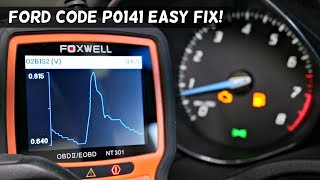
How to confirm: Test the resistance of the heater circuit on the sensor itself using a multimeter. Disconnect the sensor and measure between the two same-colored wires (usually white or black). A reading of 'OL' (Open Loop) or infinite resistance indicates a broken internal heater. A good heater circuit should typically have a resistance between 2 and 10 ohms. 🎬 Watch: How to test and fix the O2 heater circuit.
Typical fix: Replace the Bank 1, Sensor 2 oxygen sensor. This is the sensor located after the catalytic converter, accessible from under the car.
Est. part cost: $50-$150 - Damaged Wiring or Connector 🟡 Medium Probability The sensor and its wiring are located under the vehicle, exposed to road debris, moisture, and corrosion which can damage the harness or connector pins. The wire can also be melted if it comes loose from its retaining clips and touches the hot exhaust pipe.
How to confirm: Visually inspect the wiring harness leading to the downstream O2 sensor for any signs of fraying, melting, or corrosion. Check the connector for bent or corroded pins. Use a multimeter to check for 12V power at the harness connector (on the appropriate pin) with the key on, engine off.
Typical fix: Repair the damaged section of the wiring harness or clean/replace the connector. Ensure the wire is secured in all factory clips to prevent future heat damage.
Est. part cost: $5-$50 - Blown Fuse ⚪ Low Probability
How to confirm: Check the fuse panel located in the engine bay. For the 2012-2018 Focus, the O2 sensor heater circuit is typically protected by fuse F32, which is a 10A fuse. Visually inspect the fuse or test it with a multimeter for continuity.
Typical fix: Replace the blown fuse. If the fuse blows again immediately, it indicates a short circuit in the wiring or the sensor itself that must be diagnosed. A shorted sensor is a common reason for a blown fuse.
Est. part cost: $1-$5
Rare But Worth Checking
- Powertrain Control Module (PCM) Issue: → Shop Engine Control Module (ECM) This is extremely rare. Before suspecting the PCM, all other possibilities (sensor, wiring, fuses) must be exhaustively ruled out. A TSB for some 2018-2019 models (outside this primary range but related) mentions a PCM software update for P0141, but the primary cause was still a faulty sensor that needed replacement along with the software update.
Diagnosis Steps
- Read the code with an OBD-II scanner to confirm P0141 is the primary code present. Check for both stored and pending codes.
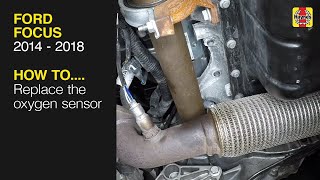
- Locate the Bank 1 Sensor 2 (downstream) oxygen sensor. On the 2.0L Focus, it is on the exhaust pipe after the catalytic converter, accessible from underneath the car. 🎬 See this walkthrough for replacing the sensor on 2014-2018 models. You may need to remove a plastic splash shield held on by T30 Torx screws.
- Visually inspect the sensor's wiring harness and connector. Look for obvious damage like melting, chafing, or corrosion. Ensure the wire is properly secured in its retaining clips to keep it away from the exhaust.
- Check fuse F32 (10A) in the under-hood fuse box.
- If the wiring and fuse are okay, disconnect the sensor's electrical connector. Use a multimeter set to Ohms to test the resistance across the two heater circuit pins on the sensor side (usually the two wires of the same color). An open circuit ('OL') confirms the heater inside the sensor has failed. A good sensor should read between 2-10 ohms.
- If the sensor's heater circuit has correct resistance, check for 12-volt power at the harness connector with the ignition on. If no power is present, the problem is upstream from the connector.
- If power is present and the sensor's resistance is good, the issue may be in the ground control side of the circuit leading back to the PCM, which may require more advanced diagnostics.
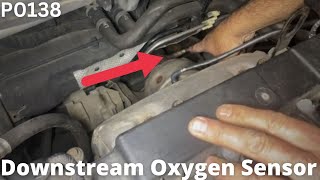
- If the sensor's heater has failed, replace the downstream O2 sensor using a 22mm or 7/8" O2 sensor so 🎬 Watch: Step-by-step guide to replacing the downstream oxygen sensor.cket.
Parts You'll Likely Need
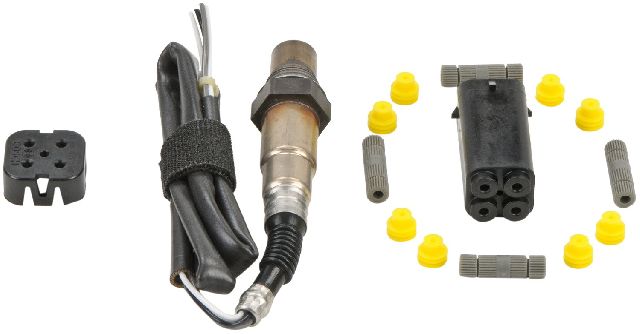
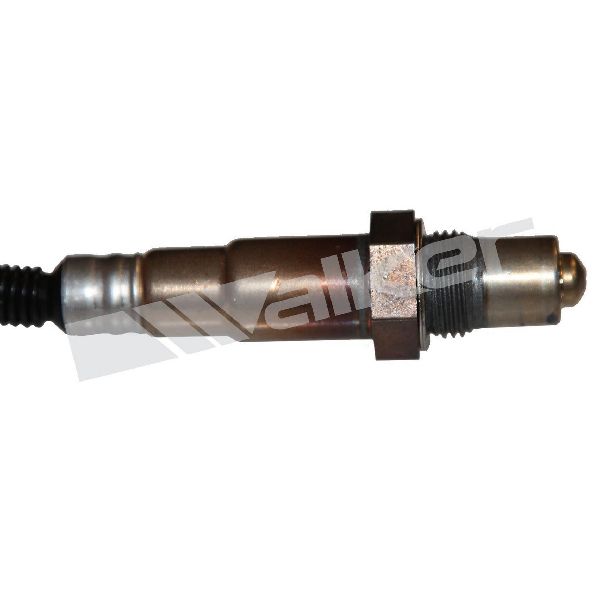
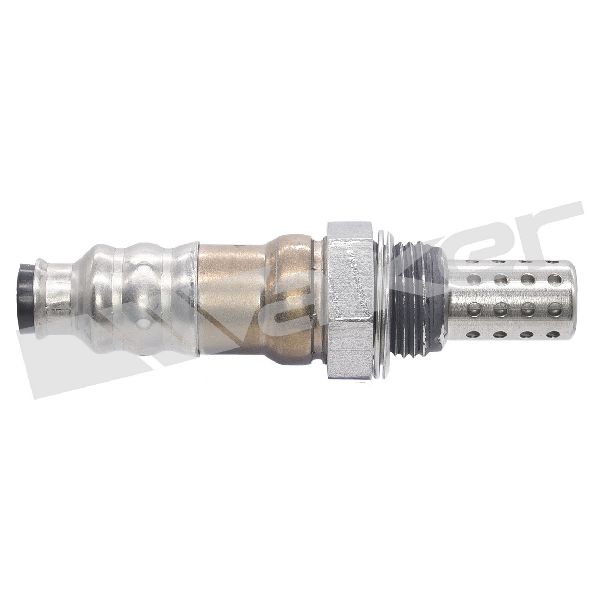
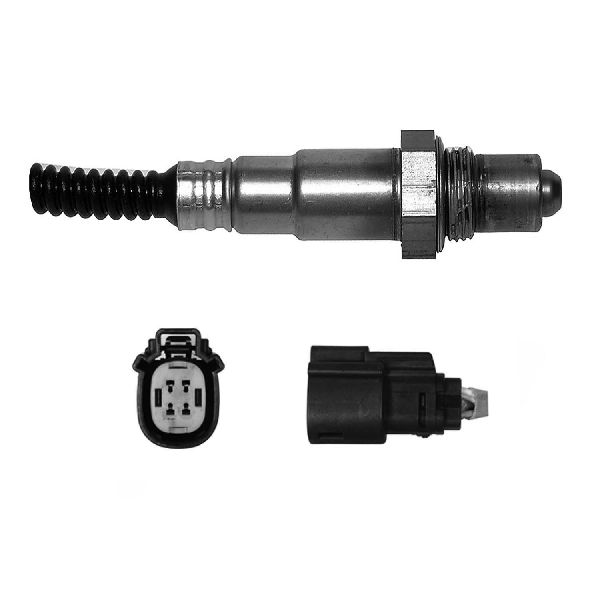
- Downstream Oxygen Sensor (Bank 1, Sensor 2)
(OEM #DY-1179)— This is the component that contains the heater circuit that fails and triggers the P0141 code.
Trusted brands: Motorcraft (OEM), Bosch (Often the OE supplier, P/N 15717 is a common replacement), Denso, NTK (P/N 23179 is a common replacement), Walker Products
OEM price range: $80-$150
Aftermarket price range: $50-$100
Technical Service Bulletins (TSBs) & Recalls
- TSB 19-2005: While written for the 2018-2019 EcoSport 2.0L, this TSB is relevant as it addresses DTCs P0137 and P0141. It states the cause may be a faulty catalyst monitor sensor (the downstream O2 sensor) and may also require a PCM software update. This shows a Ford pattern where the sensor itself is the primary point of failure even when software updates are involved.
Platform-Specific Known Issues
- Owner Repair Experience: A user on the Ford Owners Club forum with a Mk8 Fiesta (similar system) reported a P0141 code. They noted it occurred after a drive on a bumpy lane, but confirmed that replacing the Bosch sensor resolved the check engine light, reinforcing that sensor failure is the most direct cause even if external factors seem coincidental.
Mechanic-Grade Diagnostic Values
- Downstream O2 Sensor (HO2S B1S2) Heater Resistance — expected: 4.2 - 6.6 Ohms at room temperature.. Failure: A reading of infinite resistance (Open Loop / 'OL') or near zero ohms (short circuit) indicates a failed heater element.
- Downstream O2 Sensor (HO2S B1S2) Heater Circuit Power Supply — expected: Battery Voltage (approx. 12.6V with key on, engine off; ~14V with engine running) at the harness-side connector.. Failure: 0V or significantly low voltage indicates a problem upstream, such as a blown fuse (F32), a faulty relay, or a break in the power wire.
- FORScan Live Data PID - O2S12 Voltage — expected: After warm-up, the downstream sensor voltage should be relatively stable, typically above 0.5V (e.g., 0.6V - 0.8V) if the catalytic converter is healthy.. Failure: While not a direct test for the P0141 heater code, observing a sensor that is stuck, lazy, or mimicking the upstream sensor can indicate a related failure. A voltage stuck at a specific, unchanging value (like 1.27V) can point to a circuit or sensor fault.
Scan Tool Commands That Help
- FORScan: Heated Oxygen Sensor (HO2S) Heater Actuation Test / Bidirectional Control — After verifying the fuse and wiring are intact, you can use FORScan or a similar high-level scan tool to command the O2 sensor heater on and off. This directly tests the PCM's ability to control the ground circuit and the integrity of the entire circuit under a load, confirming if the fault lies with the sensor or the control side.
Wiring & Ground Locations
- G104 (or G102) — Located on the left front of the motor compartment, under the airbox area, on the chassis frame rail.. This is a primary engine bay ground point. While not exclusively for the O2 sensor, a corroded or loose G104 can cause a variety of intermittent electrical issues for engine sensors, including creating a weak ground path for the PCM-controlled heater circuit, leading to heater fault codes. It's a common source of hard-to-diagnose electrical gremlins on this platform.
- Downstream O2 Sensor Connector (C149) — Located on the back of the engine, clipped to a bracket near the exhaust manifold area, accessible from the top of the engine bay. The downstream sensor wire runs up to meet it.. This is the main connection point for all tests. The typical wire colors on the harness side are: Heater Power (often a colored wire like Green/Violet), Heater Control from PCM (another color), Signal (Grey), and Signal Ground (Black). The two heater wires on the sensor itself are typically the same color (e.g., two white wires).
Real Owner Repair Stories
- Ford Owners Club Forum User (Ford Fiesta Mk8 (uses a similar Bosch sensor and emissions logic)) — Check Engine Light with code P0141, appeared after driving on a bumpy road.
❌ Tried (didn't work) Initially suspected wiring damage due to the bumpy road.
✅ What actually fixed it The user inspected the wiring and found no damage. They proceeded to replace the downstream (post-cat) Bosch oxygen sensor, which resolved the code and turned off the Check Engine Light.
OEM Part Supersession History
DY-1179→CV6Z-9G444-A— Standard part number consolidation and potential minor revisions by Ford/Motorcraft over the vehicle's production run.
Heads up: Both DY-1179 and CV6Z-9G444-A refer to the same downstream sensor for the 2.0L non-turbo engine and are interchangeable. When ordering, using the vehicle's VIN is the best way to ensure the correct part, but both numbers are valid references.
Diagnostic Flowchart
Real Owner Stories
Aggregated from forums and TSBs cited above. Mileages and costs reflect what owners reported in those sources.
Ford Fiesta Mk8
Symptoms: Check engine light illuminated with a P0141 code shortly after driving the vehicle down a bumpy lane.
What fixed it: Replaced the downstream oxygen sensor with a new Bosch sensor.
Source hint: Ford Owners Club forum thread titled 'Mk8 fiesta engine light and fault code p0141'
2018-2019 Ford EcoSport 2.0L
Symptoms: Vehicle presented with DTCs P0141 and P0137.
What fixed it: Replaced the faulty catalyst monitor sensor (downstream O2 sensor) and performed a PCM software update.
Source hint: TSB 19-2005
Related OBD-II Codes
Frequently Asked Questions
Does TSB 19-2005 apply to my 2012-2018 Focus 2.0L?
Which fuse controls the O2 sensor heater circuit on the 2012-2018 Focus?
Where is the Bank 1 Sensor 2 oxygen sensor located on the 2.0L Focus?
What tools do I need to replace the downstream O2 sensor on my Focus?
What is the normal resistance for a good O2 sensor heater on this vehicle?
Are other Ford vehicles prone to this exact P0141 issue?
Helpful Videos
We Have This Part in Stock


The information in this article is provided for general reference and educational purposes only. Vehicle specifications, procedures, and part compatibility can vary by production date, trim level, and region. Always consult your vehicle's factory service manual and verify part numbers before purchasing or performing repairs. Safety-critical components such as airbags, seat belts, and braking systems should be installed by a qualified professional.
- Ford Focus:
- 🧭 Diagnostic Flowchart
- 🎬 Helpful Videos
- 🛍️ Shop This Part
- What's Unique About the 2012-2018 Ford Focus
- Symptoms You May Notice
- Most Likely Causes
- Rare But Worth Checking
- Diagnosis Steps
- Parts You'll Likely Need
- Technical Service Bulletins (TSBs) & Recalls
- Platform-Specific Known Issues
- Mechanic-Grade Diagnostic Values
- Scan Tool Commands That Help
- Wiring & Ground Locations
- Real Owner Repair Stories
- OEM Part Supersession History
- Real Owner Stories
- Ford Fiesta Mk8
- 2018-2019 Ford EcoSport 2.0L
- Related OBD-II Codes
- Frequently Asked Questions
- 🎟️ Get 5% Off