

P0141 on 2005-2014 Ford Mustang: O2 Sensor Heater Failure Causes and Fixes
This code means the heater inside the downstream oxygen sensor on the passenger side has failed. The most common fix is replacing the Bank 1, Sensor 2 oxygen sensor. Expect to pay $40-$80 for an aftermarket sensor or $90-$150 for an OEM Motorcraft part. It's a straightforward DIY job for most owners.
- P0141 on your Mustang points to a fault in the heater circuit of the passenger-side, post-catalytic converter O2 sensor.
- The most likely cause is a failed O2 sensor, which is a common wear item. The second most likely cause, especially on modified cars, is damaged wiring.
- Diagnosis is straightforward with a multimeter by checking the sensor's heater resistance (should be 4-10 ohms) and verifying power/ground at the harness connector.
- Ensure you purchase the correct part number for your specific year and engine, as they changed with the 2011 model year update.
What's Unique About the 2005-2014 Ford Mustang
For the 2005-2014 Mustang, P0141 is a very common and straightforward code. The S197 platform places the downstream O2 sensors in a relatively accessible location on the exhaust, making diagnosis and replacement easier than on many other vehicles. While the specific part number changes between the V6 and V8 engine updates in 2011, the cause and repair procedure are virtually identical across the entire generation span. 🎬 Watch: How to replace O2 sensors on 05-14 Mustangs Owners often encounter this code after installing aftermarket exhaust systems if the sensor wiring is not properly secured and makes contact with hot exhaust pipes or the driveshaft. In some cases, the code can appear if a tune does not properly disable the rear O2 sensors when running a catless or off-road mid-pipe.
Generation note: The 2005-2014 year range covers the entire S197 Mustang generation, including the 2005-2009 (S197 I) and 2010-2014 (S197 II) models. Engine options changed significantly in 2011 (4.0L V6 to 3.7L V6; 4.6L V8 to 5.0L V8), so you must verify the correct O2 sensor part number for your specific year and engine. However, the meaning of the code and the diagnostic process are the same for all models in this range.
Symptoms You May Notice
- Check Engine Light is on.
- Failing a state emissions inspection.
- Slightly reduced fuel economy (though often not noticeable).
- In rare cases, rough idle, though this may point to a separate, concurrent issue as downstream sensors have minimal impact on fuel trim.
- Replacing the catalytic converter. A P0141 code is specific to the sensor's heater circuit and is not caused by a failing catalytic converter. A bad converter would typically set a P0420 (Catalyst System Efficiency Below Threshold) code.
Most Likely Causes
- Failed O2 Sensor Heater Element 🔴 High Probability → Shop Oxygen Sensor The internal heating element is a common failure point on O2 sensors after many heat cycles and years of use. It simply burns out like an old light bulb.
How to confirm: Disconnect the sensor and use a multimeter to check the resistance between the two heater circuit pins (usually the two wires of the same color, e.g., two white or two black wires). An open circuit (infinite resistance) or a reading far outside the typical 4-10 ohm range confirms a bad heater element.
Typical fix: Replace the Bank 1, Sensor 2 oxygen sensor.
Est. part cost: $40-$150 - Damaged Wiring or Connector 🟡 Medium Probability The sensor and its wiring are located under the car, exposed to heat, moisture, and road debris. Wires can melt on the exhaust, get snagged and torn, or the connector pins can corrode. This is especially common after installing aftermarket headers or exhaust. A user on TrackMustangsOnline.com reported their wiring harness had melted on the header, causing a short and blowing a fuse.
How to confirm: Visually inspect the entire length of the sensor's wiring harness from the sensor to the main connector for any signs of melting, chafing, or breaks. Check the connector for corrosion or pushed-out pins. A user on the forum traced their persistent P0141 to a chafed wire near the A/C compressor 🎬 See common Mustang wiring harness locations and issues that was shorting intermittently.
Typical fix: Repair the damaged section of wiring or replace the connector pigtail. Secure the harness away from heat sources and moving parts using zip ties.
Est. part cost: $10-$30 - Blown Fuse ⚪ Low Probability A short in the O2 sensor heater or its wiring can cause the corresponding fuse to blow.
How to confirm: Check the vehicle's fuse box for a blown fuse. For a 2012 Boss 302, one owner reported the issue was fuse #49 in the under-hood fuse panel, which powers the O2 sensor heaters. A blown fuse often indicates a short circuit in the wiring or the sensor itself, so you must find the root cause before simply replacing the fuse.
Typical fix: Replace the blown fuse after diagnosing and repairing the underlying short circuit.
Est. part cost: $1-$5
Rare But Worth Checking
- Faulty Powertrain Control Module (PCM): → Shop Engine Control Module (ECM) This is extremely rare. Before condemning the PCM, all other possibilities, including wiring and the sensor itself, must be exhaustively ruled out. A PCM failure would typically be accompanied by other codes or more severe symptoms.
Diagnosis Steps
- Read the code with an OBD-II scanner to confirm P0141 is present.
- Visually inspect the Bank 1, Sensor 2 (passenger side, post-catalytic converter) oxygen sensor and its wiring. Look for obvious signs of damage, such as melted wires on the exhaust, frayed insulation, or a damaged connector. Ensure the wiring is secured and not touching the exhaust pipe or driveshaft.
- If the wiring looks good, check the fuse for the O2 sensor heater circuit. On some models, this may be fuse #49 in the under-hood fuse box. Refer to your owner's manual for the specific fuse location.
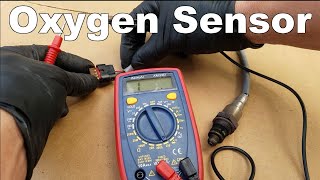
- If the fuse is okay, disconnect the O2 sensor connector. Use a multimeter to test the resistance of the heater circuit on the sensor side. You should find 🎬 Watch: How to test and replace a heater circuit sensor two pins with matching wire colors; test between these. A healthy sensor will typically read between 4 and 10 ohms. An infinite reading (open circuit) means the sensor's internal heater is broken and the sensor must be replaced.
- If the sensor resistance is good, you must check for power and ground at the harness-side connector. With the key in the 'On' position (engine off), one pin should have 12V power, and another should have a good ground. If power or ground is missing, you have a wiring issue between the fuse box/PCM and the sensor.
- If all wiring checks out and the sensor itself tests good, the issue could be an intermittent connection. If the problem persists after replacing the sensor, a more in-depth wiring trace or PCM diagnostics may be required, as noted by a forum user who had to run a new wire to the PCM.
Parts You'll Likely Need
- Oxygen Sensor (Bank 1, Sensor 2)
(OEM #GU2Z-9G444-A (2005-2010 4.6L V8), BR3Z-9G444-A / DY1162 (2011-2014 V6 & V8))— The internal heater element failing is the most common cause of P0141. Part numbers vary by engine and year, so always verify fitment. The GU2Z-9G444-A is for the earlier 4.6L V8. The BR3Z-9G444-A (also known as Motorcraft DY1162) fits the downstream position for 2011-2014 models with the 3.7L V6, 5.0L V8, and other specialty engines.
Trusted brands: Motorcraft, Bosch, Denso, NGK/NTK
OEM price range: $90-$150
Aftermarket price range: $40-$80
Platform-Specific Known Issues
- A user on TrackMustangsOnline.com with a 2012 Boss 302 chased a P0141 code after replacing the sensor. The ultimate cause was found to be a melted wiring harness shorting on the exhaust header, which also blew fuse #49 in the under-hood panel. This highlights the importance of checking wiring after installing aftermarket headers.
- On S197Forum.com, a user reported getting P0141 and P0161 after installing an off-road H-pipe without bungs for the rear O2 sensors. The discussion confirmed that the sensors must either be reinstalled or properly 'turned off' in the vehicle's tune to avoid these heater circuit codes, as simply disconnecting them leaves the circuit open.
Mechanic-Grade Diagnostic Values
- O2 Sensor Heater Element Resistance — expected: 4-10 Ohms is a common range, with some sources stating 2-5 Ohms or 5-20 Ohms. A reading within this general low-ohm range is good.. Failure: An open circuit (infinite resistance or 'OL' on a multimeter) or a direct short (near 0 Ohms) indicates a failed heater element.
- Heater Circuit Power Supply Voltage — expected: 10-12V DC (Battery Voltage) at the harness-side connector with the key on, engine off.. Failure: No voltage indicates a blown fuse or a break in the power wire from the fuse box.
- Mode $06, Test ID $81, Component ID $11-$14 — expected: The PCM monitors the heater circuit current draw. The measured value should be within a specific min/max range set by the manufacturer.. Failure: A value outside the minimum or maximum threshold will fail the test and contribute to setting the P0141 code. This can be viewed with an advanced scan tool.
Scan Tool Commands That Help
- Ford IDS / FORScan: HO2S Heater Live Data PID (e.g., O2S12_HTR) — Use this to monitor the PCM's command to the heater circuit (On/Off) and check for fault flags in real-time. A scan tool can show if the PCM is commanding the heater on and if it detects a fault, which helps distinguish between a wiring problem and a sensor failure.
Wiring & Ground Locations
- Fuse F45 (2010-2014) / F1.36 (2005-2009) — In the Battery Junction Box (under the hood). For 2010-2014 models, a 10A fuse at position 45 is listed in schematics for the O2 sensor heaters. For 2005-2009, it may be a 15A fuse in position F1.36.. This fuse provides the 12V power to the heater element. A short in the sensor or wiring will cause this fuse to blow, creating an open circuit and triggering P0141.
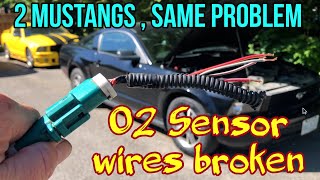
- Harness Chafe Point — On top of the transmission bell housing, directly behind the engine.. A known design flaw on early S197 models is a short, tight section of the O2 sensor harness that runs over the bell housing. Engine and transmission flex can cause the wires to break at this point, leading to an open circuit for the heater.
- Heater Ground Wire — The ground for the heater circuit is controlled by the Powertrain Control Module (PCM).. The PCM pulses the ground connection to control the heater. If the control wire between the sensor connector and the PCM is broken or shorted to ground, the heater will not function correctly, triggering the code.
- Engine Ground Strap — A braided ground strap often connects from the back of the engine block or cylinder head to the firewall.. While the heater circuit is grounded through the PCM, a poor main engine ground can cause a variety of electrical issues and floating grounds, potentially affecting sensor readings and performance. This ground is often overlooked or left disconnected during engine or transmission work.
Real Owner Repair Stories
- Reddit user in r/Mustang (2006 Mustang V6, Manual Transmission) — Persistent O2 heater circuit codes (P0135, P0141, P0155) even after replacing sensors.
❌ Tried (didn't work) Replacing all oxygen sensors., Swapping fuses, which only cleared one of the codes (P0135).
✅ What actually fixed it The final fix was replacing the Powertrain Control Module (PCM). The owner had previously pinched the O2 sensor power wire between the engine and bell housing during a clutch change, which is believed to have damaged the driver circuit inside the original PCM. - YouTube video by 'Pony Express' (2005 Mustang V6) — O2 sensor codes (P0130, P0131, P0132) on one bank, but the principle applies to P0141 wiring failures.
❌ Tried (didn't work) Replacing the O2 sensor did not fix the issue.
✅ What actually fixed it The wiring harness for the O2 sensor had broken right where it tees off from the main harness on top of the transmission bell housing. The wire was too short from the factory and broke due to engine/transmission flex. The fix was to splice in a longer piece of wire to add slack.
OEM Part Supersession History
BR3Z-9G444-A→No direct supersession found, but this part is also sold under the Motorcraft number DY1162.— N/A
Heads up: This part is for 2011-2014 models. It is not backward compatible with 2005-2010 models, which use a different sensor and connector.
Model Year Variations Within This Range
- 2005-2009: The fuse box (BJB) layout is different. The O2 sensor heater fuse is often cited as F1.36 (15A). The wiring harness chafe point over the transmission is also more commonly reported on these earlier S197 models.
- 2010-2014: The fuse box layout was updated. Schematics point to fuse #45 (10A) or #49 in the BJB for the O2 heater circuits. The engines were updated in 2011, requiring different O2 sensor part numbers (BR3Z-9G444-A).
Diagnostic Flowchart
Other Known Issues on This Vehicle
Issues unrelated to this code that are worth knowing about as an owner of this generation:
- Passenger-Side Water Leak 🟠 Medium — Very common across all years. Caused by clogged cowl drains or failed body grommets, leading to water entering the passenger footwell and potentially damaging the Smart Junction Box (SJB). (Ref: TSB 08-26-7)
- 4.6L 3-Valve Spark Plug Breakage 🔴 High — Affects 2005 to mid-2008 V8 models. The original two-piece spark plug design can cause the lower part of the plug to separate and get stuck in the cylinder head during removal. (Ref: TSB 08-7-6)
- Getrag MT-82 Manual Transmission Issues 🔴 High — Common on 2011-2014 models. Symptoms include high-RPM lockout, grinding gears, difficult shifting, and premature failure. A class-action lawsuit was filed regarding this issue. (Ref: Multiple TSBs were issued, but no formal recall.)
- 4.0L V6 Timing Chain Rattle 🔴 High — Affects 2005-2010 V6 models. The timing chain guides and tensioners are known to fail, causing a 'death rattle'. Repair is labor-intensive.
- Aluminum Hood Corrosion 🟡 Low — Common on many S197 Mustangs, where paint bubbles and corrosion appear on the leading edge of the hood due to contamination during manufacturing.
Used vs. New Parts: Buying Guide for This Vehicle
When a used part is the smart pick: A used wiring harness pigtail from a junkyard is a viable option if only the connector is damaged. A complete engine harness could be considered if extensive wiring damage is found, but it's a labor-intensive job.
Donor-vehicle mileage cap: roughly under 100000 miles for the part to have meaningful remaining life.
What to inspect on the donor part:
- For a connector pigtail, inspect for brittle plastic, corrosion on pins, and any signs of melting.
- Ensure the locking tab on the connector is intact.
- Check that the wires have sufficient length for splicing and are not cracked or frayed.
OEM-only on this vehicle (don't cheap out):
- Powertrain Control Module (PCM) - While a used PCM can be purchased, it requires specific programming (PATS key matching, VIN flashing) to the vehicle, which often necessitates a dealer or specialized shop. It's not a simple plug-and-play swap.
Aftermarket brands forum-validated for this vehicle:
- NTK (NGK)
- Denso
- Bosch
Brands owners have reported issues with on this vehicle:
- Unnamed, no-brand 'white box' sensors from online marketplaces are frequently reported to fail prematurely or be dead-on-arrival.
Real Owner Stories
Aggregated from forums and TSBs cited above. Mileages and costs reflect what owners reported in those sources.
2012 Ford Mustang Boss 302
Symptoms: Persistent P0141 code even after replacing the oxygen sensor.
What fixed it: Traced the issue to a melted wiring harness shorting on the exhaust header, which had blown fuse #49 in the under-hood panel.
Source hint: TrackMustangsOnline.com thread titled 'REPLACED O2 SENSOR AND STILL GETTING A P0141 CODE ON 2012 BOSS - ANY THOUGHTS?'
2014 Ford Mustang (S197)
Symptoms: Getting both P0141 and P0161 codes simultaneously after exhaust modifications.
What fixed it: The owner installed an off-road H-pipe without bungs for the rear sensors; the fix requires either reinstalling the sensors or adjusting the ECU tune to account for their removal.
Source hint: S197Forum.com thread titled 'p0141 and p0161 o2 heater circuit'
2005 Ford Mustang
Symptoms: Check Engine Light with P0141; concerned about catalytic converter failure or performance loss.
What fixed it: Confirmed as a heater circuit failure requiring either a new sensor or wiring repair; determined it did not affect performance significantly.
Source hint: StangNet Mustang Forums 2005 thread
Related OBD-II Codes
Frequently Asked Questions
I have a 2012 Boss 302 and replaced the sensor, but P0141 is still there. Could it be a fuse?
I just installed an off-road H-pipe on my S197 and now have P0141 and P0161. Do I need new sensors?
Could my P0141 code be related to the common passenger-side water leak issue?
Is P0141 a sign that my catalytic converter is failing?
I have aftermarket headers; why did my P0141 code appear shortly after installation?
Helpful Videos

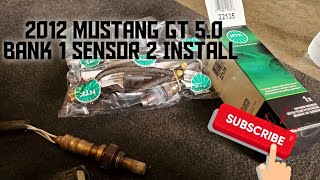
We Have This Part in Stock

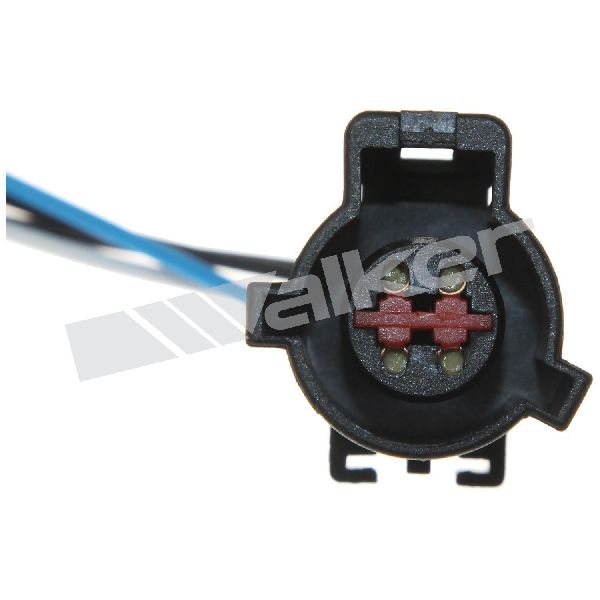
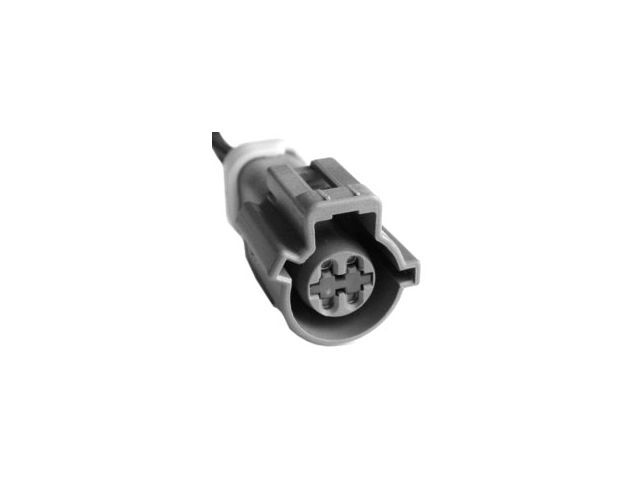

The information in this article is provided for general reference and educational purposes only. Vehicle specifications, procedures, and part compatibility can vary by production date, trim level, and region. Always consult your vehicle's factory service manual and verify part numbers before purchasing or performing repairs. Safety-critical components such as airbags, seat belts, and braking systems should be installed by a qualified professional.
- Ford Mustang:
- 🧭 Diagnostic Flowchart
- 🎬 Helpful Videos
- 🛍️ Shop This Part
- What's Unique About the 2005-2014 Ford Mustang
- Symptoms You May Notice
- Most Likely Causes
- Rare But Worth Checking
- Diagnosis Steps
- Parts You'll Likely Need
- Platform-Specific Known Issues
- Mechanic-Grade Diagnostic Values
- Scan Tool Commands That Help
- Wiring & Ground Locations
- Real Owner Repair Stories
- OEM Part Supersession History
- Model Year Variations Within This Range
- Other Known Issues on This Vehicle
- Used vs. New Parts: Buying Guide for This Vehicle
- Real Owner Stories
- 2012 Ford Mustang Boss 302
- 2014 Ford Mustang (S197)
- 2005 Ford Mustang
- Related OBD-II Codes
- Frequently Asked Questions
- 🎟️ Get 5% Off