

P0141 on 2000-2007 Ford Taurus: O2 Sensor Heater Fault Causes and Fixes
This code almost always means the downstream oxygen sensor (Bank 1, Sensor 2) has failed and needs to be replaced. The internal heater element, which helps the sensor warm up quickly, burns out. Expect to pay $40-$80 for a quality aftermarket sensor and another $50-$150 for labor if you don't do it yourself. The repair is straightforward for a DIYer with basic tools.
- P0141 on a 2000-2007 Taurus points directly to a problem with the heater inside the downstream O2 sensor on the firewall side of the engine.
- The most likely fix is to replace the Bank 1, Sensor 2 oxygen sensor.
- Before buying parts, perform a quick visual inspection of the wiring for obvious damage and check the 20A fuse for the O2 heaters in the engine bay fuse box.
- This is a DIY-friendly repair for most home mechanics, but a special slotted 22mm (or 7/8") oxygen sensor socket will make the job much easier.
- Driving with this code is safe, but you will fail an emissions test and should get it fixed to ensure the emissions system is functioning correctly.
What's Unique About the 2000-2007 Ford Taurus
On the 2000-2007 Ford Taurus, this code is a very common and straightforward issue, typically related to the age and mileage of the vehicle. The key difference for this platform is identifying which of the two 3.0L V6 engines you have—the OHV Vulcan or the DOHC Duratec—as this can affect physical access to the sensor. However, the cause and solution are almost always the same: a bad sensor. The Bank 1 downstream sensor connector is often reached by going up and over the transmission's tail shaft from underneath the vehicle, with the lock tab facing the rear of the car.
Symptoms You May Notice
- Check Engine Light is on
- Failing a vehicle emissions (smog) test.
- Slight decrease in fuel economy (10-20% in some cases).
- Engine may take longer to enter 'closed-loop' operation from a cold start.
- Replacing the wrong oxygen sensor. The code is specific to Bank 1 (firewall side) and Sensor 2 (downstream, after the catalytic converter). Always confirm the location before replacing parts.
- Replacing the catalytic converter. This code specifically points to the sensor's heater circuit, not the performance of the converter itself.
Most Likely Causes
- Failed Oxygen Sensor 🔴 High Probability → Shop Oxygen Sensor The internal heater element is a common failure point on high-mileage sensors after many thousands of heat cycles. It's a simple wear-and-tear item.
How to confirm: After confirming the wiring and fuse are good, test the resistance of the heater circuit at the sensor's connector. Unplug the sensor and find the two same-colored wires (usually white or black). A healthy heater circuit should have a low resistance (typically 2-10 ohms). An open circuit (infinite resistance) or a direct short (zero resistance) confirms the heater has failed and the sensor needs replacement.
Typical fix: Replace the Bank 1, Sensor 2 oxygen sensor.
Est. part cost: $40-$90 - Damaged Wiring or Connector 🟡 Medium Probability The sensor and its wiring are located under the vehicle and are exposed to road debris, moisture, and extreme heat from the exhaust. This can cause corrosion in the connector pins, or the wiring can become melted, chafed, or brittle and break over time.
How to confirm: Visually inspect the wiring harness and connector leading to the O2 sensor for any signs of melting, chafing, corrosion, or broken wires. Check for 12-volt power on one heater wire and a good ground on the other at the harness-side connector with the ignition on.
Typical fix: Repair the damaged section of the wiring harness or clean/replace the connector.
Est. part cost: $5-$50 - Blown Fuse ⚪ Low Probability
How to confirm: Check the fuse for the Heated Oxygen Sensors (HO2S) in the engine compartment fuse box. It is often labeled as fuse #7 (20A) which protects the heaters for all four O2 sensors. If this fuse is blown, it may indicate a short circuit in one of the sensors or its wiring, which caused the fuse to blow.
Typical fix: Replace the blown fuse. If it blows again, further diagnosis is needed to find the short circuit in the wiring or one of the O2 sensors.
Est. part cost: $1-$5
Rare But Worth Checking
- Powertrain Control Module (PCM) Fault: → Shop Engine Control Module (ECM) This is very rare. The PCM driver that controls the heater circuit can fail, but this should only be considered after all other possibilities (sensor, wiring, fuse) have been exhaustively ruled out by a professional.
Diagnosis Steps
- Read the code with an OBD-II scanner to confirm P0141 is present. 🎬 Watch: Understanding the P0141 heater circuit malfunction code.
- Visually inspect the Bank 1, Sensor 2 oxygen sensor, its connector, and wiring harness. Look for any signs of melting, corrosion, or physical damage. The sensor is located after the rearmost catalytic converter.
- Locate the engine compartment fuse box. Check the fuse for the oxygen sensor heaters (often a 20A fuse at position #7). If it's blown, replace it and see if the code returns. If it blows again, suspect a short circuit in the wiring or one of the O2 sensors.
- If the fuse is good, disconnect the O2 sensor. Use a multimeter to check for 12V power on the heater circuit wire at the harness-side connector (key on, engine off).
- On the sensor itself, measure the resistance between the two heater pins (usually the two wires of the same color). A reading of infinite resistance (open circuit) or zero resistance (short) means the sensor's internal heater is broken. A good sensor should read between 2-10 ohms. 🎬 See how to easily test the O2 heater circuit yourself. Some sources state a tighter range of 4-6 ohms is standard.
- If power is present at the harness and the sensor's resistance is within spec, the issue is likely in the ground or signal return wire to the PCM, which may require a more advanced wiring diagram to trace.
Parts You'll Likely Need
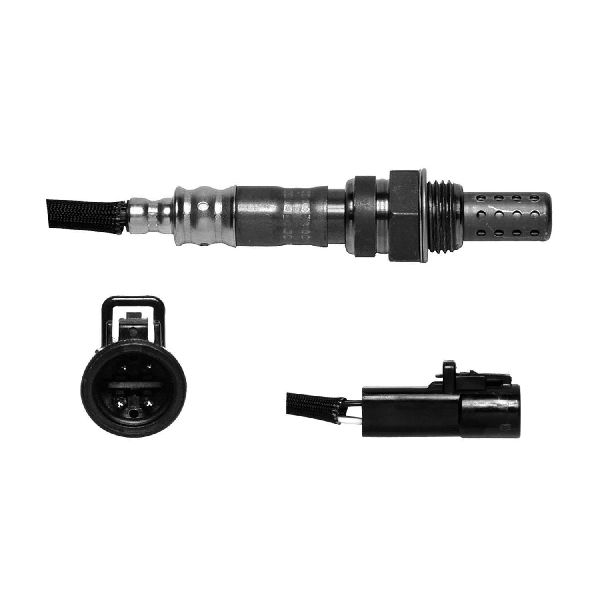
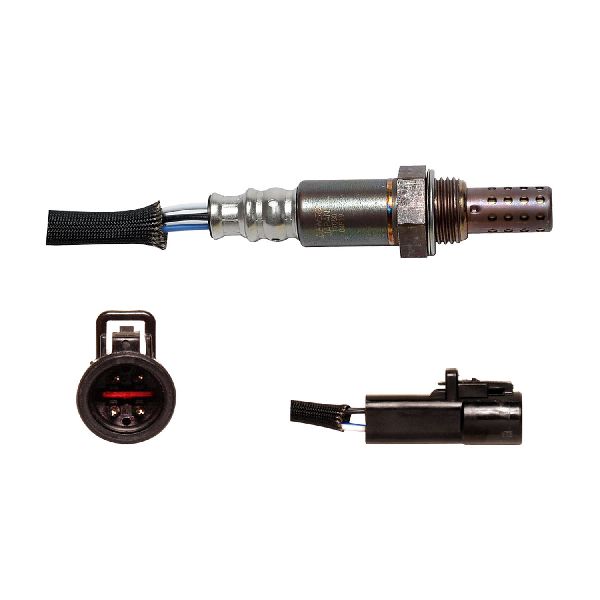
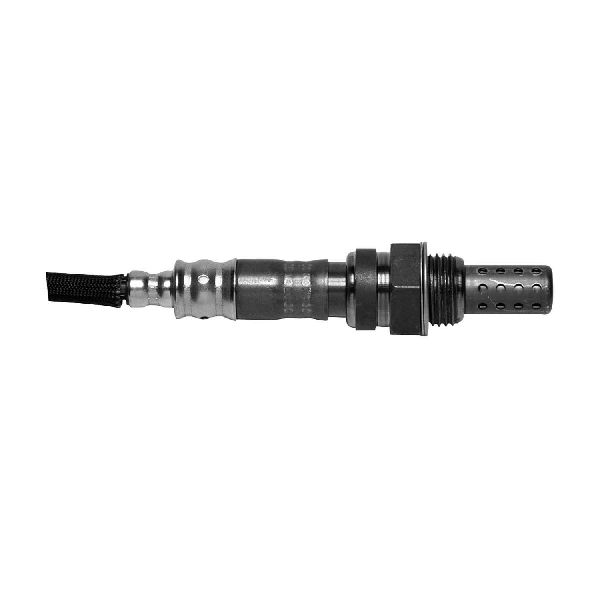
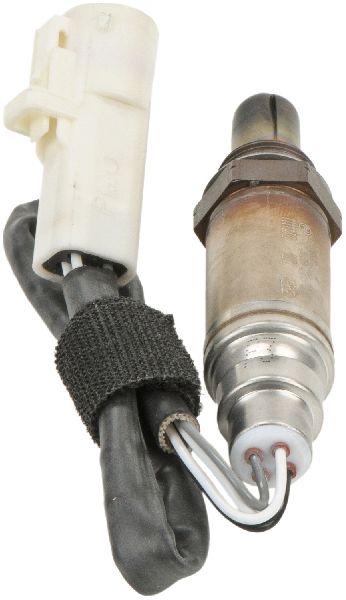
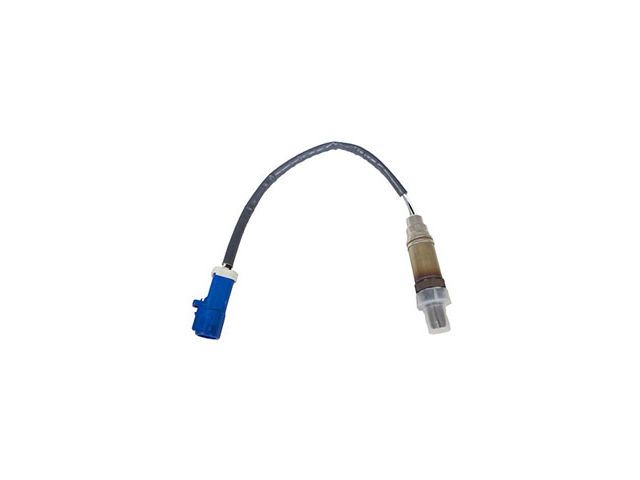
- Oxygen Sensor (Bank 1, Sensor 2)
(OEM #Motorcraft DY-1092 (Note: Part numbers can vary by specific year and engine. Always verify with VIN before purchasing).)— This is the component that contains the heater element that fails, triggering the P0141 code. It is the most common point of failure.
Trusted brands: Motorcraft, NTK, Denso, Bosch
OEM price range: $70-$120
Aftermarket price range: $40-$90
Related Codes That Often Appear With This One
- P0140 — P0140 indicates 'O2 Sensor Circuit No Activity Detected (Bank 1 Sensor 2)'. If the sensor's heater fails, the sensor may not reach operating temperature, leading the PCM to also flag it for inactivity.
- P0161 — This is the same heater circuit fault but for Bank 2, Sensor 2. It's not uncommon for sensors of similar age to fail around the same time.
Platform-Specific Known Issues
- Accessing the Connector: A common repair tip is that the electrical connector for the B1S2 sensor is best accessed from underneath the car by reaching up and over the transmission tail shaft. The connector can be difficult to see, but can be unclipped by feel.
Mechanic-Grade Diagnostic Values
- O2 Sensor Heater Element Resistance — expected: 4-10 Ohms when cold. Some sources cite a wider range of 2-10 Ohms or a tighter range of 4-6 Ohms.. Failure: Infinite resistance (open circuit) or near-zero resistance (short circuit).
- Voltage at Heater Circuit Power Wire (Harness Side) — expected: Battery voltage (approx. 12V) with key on, engine off.. Failure: Zero volts indicates an open in the power supply from the fuse/relay.
- PCM Heater Circuit Monitoring — expected: The PCM turns the heater on and off and looks for a corresponding change in voltage and current to verify circuit integrity.. Failure: If the PCM commands the heater on and does not see the expected voltage drop or current draw, it sets a fault code.
Wiring & Ground Locations
- HO2S 12 Heater Wires — Within the 4-wire connector for the Bank 1, Sensor 2 O2 sensor.. On Ford sensors, the two same-colored wires (often both white) are for the heater circuit. These are the pins to test for resistance on the sensor side and for power/ground on the harness side.
- Heater Circuit Power — Power is supplied from the Battery Junction Box (under the hood) via a fuse (e.g., Fuse #7, 20A in Pass 2 info, or Fuse #28, 10A in a 1999 model).. This is the power source for the heater. A blown fuse here will cause P0141 and likely other heater codes (P0135, P0155, P0161) simultaneously.
- Heater Circuit Ground — The ground for the heater circuit is controlled (switched on and off) by the Powertrain Control Module (PCM).. A break in the ground wire between the sensor connector and the PCM, or a failed driver inside the PCM, will prevent the heater from working and set this code.
- S119 / S136 (Splice Locations) — Wiring diagrams show splices like S119 (top of engine) and S136 (left side of engine compartment) where multiple circuits join.. While not a common failure point, corrosion at a critical splice that serves the O2 heater power or ground circuit could cause an intermittent or permanent fault.
Real Owner Repair Stories
- 2CarPros Forum User ACES2604 (1999 Ford Taurus, 3.0L Vulcan V6) — Check Engine Light on, failing emissions test. Codes P0135, P0136, P0141, P0155, P0161 (all four O2 heater circuits) plus P1451 (EVAP vent solenoid).
❌ Tried (didn't work) Replacing the blown 15A fuse (#9 under the hood) worked temporarily, but the fuse would blow again as soon as the car was shut off and restarted.
✅ What actually fixed it The user was advised that a short in one of the components on the circuit was causing the fuse to blow. The diagnostic procedure is to unplug all four O2 sensors and the canister vent solenoid, replace the fuse, and then plug in each component one by one (cycling the key each time) until the fuse blows again. The component that causes the fuse to blow is the one with the internal short and needs to be replaced.
Diagnostic Flowchart
Other Known Issues on This Vehicle
Issues unrelated to this code that are worth knowing about as an owner of this generation:
- Automatic Transmission Failure (AX4N/AX4S) 🔴 High — Very common, especially in 2000-2005 models. Failures can occur anywhere from 60,000 to 150,000 miles. Symptoms include harsh shifting, slipping, or complete loss of forward gears.
- Broken Front Coil Springs 🔴 High — Common, particularly in regions that use road salt. A spring can fracture without warning, potentially puncturing the front tire. This was subject to a safety recall in some earlier models and regions. (Ref: NHTSA Action Number: EA08018 (Investigation), Recall 04S12 (for some models))
- Camshaft Synchronizer Failure (3.0L Vulcan OHV) 🔴 High — A well-known issue on the Vulcan V6. The synchronizer, which replaced the distributor, has bushings that wear out, causing a 'chirping' or 'squeaking' noise from the back of the engine. If it fails completely, it stops driving the oil pump, leading to catastrophic engine failure.
- Leaking Oil Pan Gasket 🟡 Low — A very common oil leak source on both Vulcan and Duratec engines. Oil drips onto the hot exhaust crossover pipe, causing a burning smell and smoke from the engine bay.
- Failed Hydraulic Engine Mounts 🟠 Medium — The fluid-filled lower engine mounts are prone to leaking and collapsing, causing a noticeable 'clunk' on acceleration and excessive engine vibration at idle.
Used vs. New Parts: Buying Guide for This Vehicle
When a used part is the smart pick: For this repair, a used part is almost never a smart choice. The oxygen sensor is a wear-and-tear item with a finite lifespan. Installing a used sensor is likely to result in another failure in the near future.
Donor-vehicle mileage cap: roughly under 20000 miles for the part to have meaningful remaining life.
What to inspect on the donor part:
- If forced to use a used part, look for one from a very low-mileage wreck.
- Avoid sensors with any physical damage, corrosion on the connector, or heavy carbon buildup on the tip.
- Test the heater resistance before purchase; it should be between 4-10 ohms.
OEM-only on this vehicle (don't cheap out):
- While not strictly 'OEM-only', using the OEM brand (Motorcraft) or a known OEM supplier (like NTK or Denso) is highly recommended. Some vehicles are sensitive to the specific resistance and response time of the O2 sensor, and off-brand parts can cause the code to return or other performance issues.
Aftermarket brands forum-validated for this vehicle:
- NTK (also known as NGK)
- Denso
- Bosch (though some forum users report mixed experiences, it is often an OEM supplier for Ford)
Brands owners have reported issues with on this vehicle:
- Universal-fit sensors that require splicing wires. While they can work, they introduce a potential point of failure at the splices and are generally not recommended over a direct-fit part.
- Unbranded or 'white-box' parts from online marketplaces, as their quality and calibration are unknown.
Real Owner Stories
Aggregated from forums and TSBs cited above. Mileages and costs reflect what owners reported in those sources.
2002 Ford Taurus, 3.0L DOHC
Symptoms: Check engine light with codes P0141 and P0161. The light stays off after being reset but returns the next day upon cranking.
What fixed it: Mechanics suspected a PCM failure after new OEM downstream sensors were installed and other electrical components checked out, though the repair was quoted at a high cost and not yet performed.
Cost: $1500+
Source hint: Reddit r/MechanicAdvice owner report regarding AirCare Colorado test help and PCM problems
2000-2007 Ford Taurus — ~120000 miles
Symptoms: High-mileage vehicle with a P0141 code; owner needed to identify the correct sensor location and replacement procedure.
What fixed it: Replacement of the Bank 1, Sensor 2 oxygen sensor, following a guide that identifies the connector location above the transmission tail shaft.
Source hint: 1A Auto YouTube: 'How to Replace Bank 1 Sensor 2... 2000-07 Ford Taurus'
2000-2007 Ford Taurus
Symptoms: Check Engine Light on; owner inquiring if the vehicle is safe to drive short-term with a heater circuit code.
What fixed it: The owner was advised to fix the sensor to pass emissions and restore normal operation, though the car remains drivable as exhaust heat eventually warms the sensor.
Source hint: Reddit r/MechanicAdvice thread titled 'p0141_code_question'
Related OBD-II Codes
Frequently Asked Questions
Where is the Bank 1, Sensor 2 oxygen sensor located on my 2000-2007 Ford Taurus?
I'm having trouble reaching the electrical connector for the B1S2 sensor. Is there a trick to it?
Could a blown fuse cause the P0141 code on my Taurus?
Is it safe to drive my Taurus with a P0141 code?
What should the resistance be for a healthy O2 sensor heater on this model?
Does the Mercury Sable suffer from this same P0141 issue?
Helpful Videos
We Have This Part in Stock


The information in this article is provided for general reference and educational purposes only. Vehicle specifications, procedures, and part compatibility can vary by production date, trim level, and region. Always consult your vehicle's factory service manual and verify part numbers before purchasing or performing repairs. Safety-critical components such as airbags, seat belts, and braking systems should be installed by a qualified professional.
- Ford Taurus:
- 🧭 Diagnostic Flowchart
- 🎬 Helpful Videos
- 🛍️ Shop This Part
- What's Unique About the 2000-2007 Ford Taurus
- Symptoms You May Notice
- Most Likely Causes
- Rare But Worth Checking
- Diagnosis Steps
- Parts You'll Likely Need
- Related Codes That Often Appear With This One
- Platform-Specific Known Issues
- Mechanic-Grade Diagnostic Values
- Wiring & Ground Locations
- Real Owner Repair Stories
- Other Known Issues on This Vehicle
- Used vs. New Parts: Buying Guide for This Vehicle
- Real Owner Stories
- 2002 Ford Taurus, 3.0L DOHC
- 2000-2007 Ford Taurus — ~120000 miles
- 2000-2007 Ford Taurus
- Related OBD-II Codes
- Frequently Asked Questions
- 🎟️ Get 5% Off