

P0141 on 2015 Ford Transit 3.7L: O2 Sensor Heater Fault Causes and Fixes
On a 2015 Ford Transit 3.7L, code P0141 is most often caused by a chafed wiring harness shorting out, as described in Ford TSB 15-0160. Before replacing the O2 sensor, check fuse F36 (a 15A fuse) in the underhood fuse box and inspect the harness near the transmission heat shield and cylinder head. If the fuse and wiring are good, the Bank 1 Sensor 2 oxygen sensor needs replacement.
- For a 2015 Transit 3.7L with P0141, always suspect the wiring harness chafe issue from TSB 15-0160 before buying parts.
- Checking the 15A fuse in position F36 of the underhood fuse box is the fastest and easiest first step.
- If the fuse is blown, you must find and repair the short circuit in the harness; simply replacing the fuse will not solve the problem.
- The Bank 1 Sensor 2 is the downstream O2 sensor on the passenger side of the vehicle.
What's Unique About the 2015-2015 Ford Transit
For the 2015 Ford Transit with the 3.7L engine, this code has a very specific and well-documented cause beyond simple sensor failure. Ford issued Technical Service Bulletin (TSB) 15-0160 for vans built on or before June 11, 2015, warning that the oxygen sensor wiring harness is prone to rubbing against the transmission or cylinder head. This chafing can cause a short circuit, blow fuse F36 (a 15A fuse), and trigger P0141 along with a host of other codes. This makes a thorough wiring inspection the absolute first step in diagnosis for this specific vehicle.
Symptoms You May Notice
- Check Engine Light (CEL) is illuminated
- Failing an emissions test
- Slightly reduced fuel economy
- Inability to use remote start (if equipped), as the CEL is active
- Immediately replacing the oxygen sensor without first checking fuse F36 and inspecting the wiring harness for chafing as described in TSB 15-0160.
Most Likely Causes
- Chafed O2 Sensor Wiring Harness (per TSB 15-0160) 🔴 High Probability → Shop Oxygen Sensor A documented issue for 2015 3.7L models built on or before 6/11/2015 where the harness rubs against the transmission heat shield or cylinder head, causing a short.
How to confirm: Visually inspect the O2 sensor wiring harness, especially near the right rear of the transmission and the back of the cylinder head, for signs of rubbing, melting, or exposed wires. Check if fuse F36 (15A) in the underhood fuse box is blown. The TSB repair procedure involves removing the transmission heat shield for better access to the harness.
Typical fix: Repair the damaged section of the wiring harness using the solder splicing method and heat-shrink tubing. Wrap the repaired area with anti-abrasion tape (like Coroplast™ tape). Re-route or secure the harness to prevent future contact. Replace the blown 15A F36 fuse.
Est. part cost: $5-$25 - Failed Oxygen Sensor (Bank 1, Sensor 2) 🟡 Medium Probability → Shop Oxygen Sensor
How to confirm: If wiring and fuse F36 are intact, test the resistance of the heater circuit at the sensor's electrical connector using a multimeter. Disconnect the sensor and measure between the two heater pins. An open circuit (infinite resistance) or a reading outside of the manufacturer's specification (typically 3-25 ohms for many Ford sensors) confirms a failed internal heater.
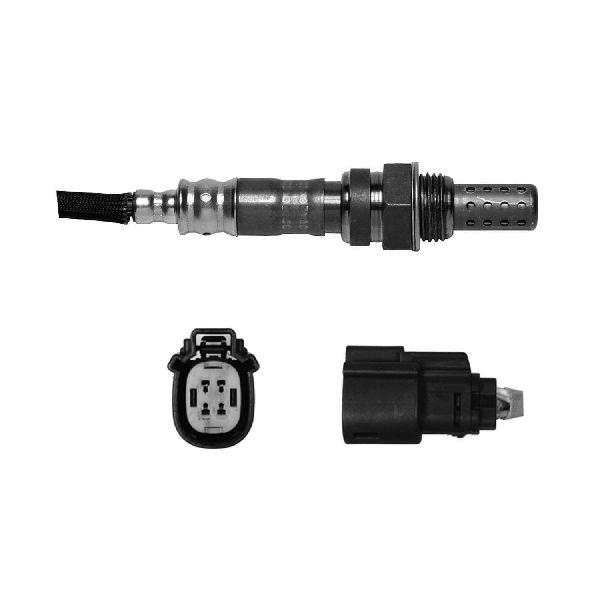
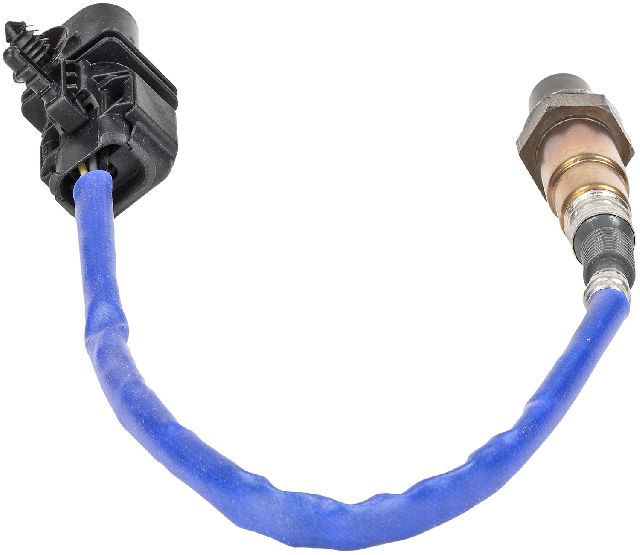
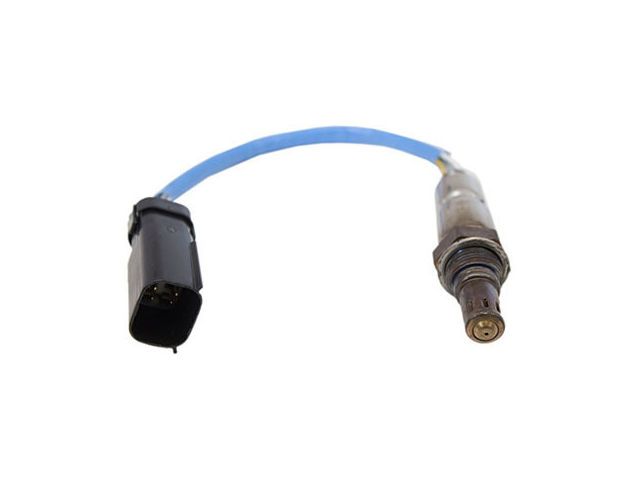
Typical fix: Replace the Bank 1, Sensor 2 oxygen sensor. This is the downstream sensor on the passenger side. An oxygen sensor socket is recommended for removal and installation.
Est. part cost: $50-$150 - Blown Fuse (F36) ⚪ Low Probability This is almost always a symptom of the chafed wiring harness issue rather than a standalone cause.
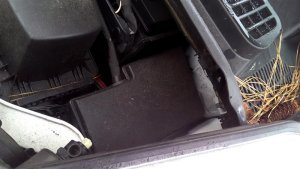
How to confirm: Locate the underhood fuse box (Battery Junction Box). Check fuse F36, which is a 15A fuse for the gasoline engine models, to see if it is blown.
Typical fix: Replace the fuse. If it blows again immediately, a short circuit exists in the harness and must be found and repaired per the TSB.
Est. part cost: $1-$5
Rare But Worth Checking
- Damaged or Corroded Connector: The electrical connector for the O2 sensor can become filled with dirt, water, or corrosion, leading to a poor connection. Always inspect the connector pins when replacing the sensor.
- Powertrain Control Module (PCM) Fault: → Shop Engine Control Module (ECM) This is extremely rare. The PCM's internal driver for the O2 sensor heater circuit could fail. This should only be considered after all other possibilities have been exhaustively ruled out by a professional.
Diagnosis Steps
- Verify the vehicle's build date. If it was built on or before June 11, 2015, TSB 15-0160 is highly relevant.
- Locate the underhood fuse box and inspect fuse F36 (15A). If it is blown, there is a high probability of a short circuit in the harness.
- Raise the vehicle safely. Remove the transmission heat shield at the right rear of the transmission for better access.
- Visually inspect the entire O2 sensor wiring harness for Bank 1 (passenger side), paying close attention to the area near the transmission and the rear of the cylinder head for any signs of chafing, melting, or damage.
- If wiring damage is found, repair the wires using a solder and heat-shrink method, wrap the harness, replace the F36 fuse, and secure the harness away from any sharp edges or heat sources.
- If the fuse and wiring are in good condition, disconnect the Bank 1 Sensor 2 electrical connector.
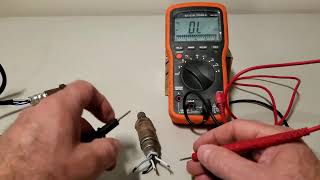
- Use a multimeter set to Ohms to measure the resistance between the two heater circuit pins on the sensor side of the connector. A reading of infinite resistance (OL) means the sensor's heater is broken and the sensor must be replaced. A good heater will typically read between 3 and 25 Ohms.
- If resistance is within spec, check for 12V power on the supply wire and a good ground on the ground wire of the vehicle-side harness connector (with the key on, engine off). If either is missing, there is a wiring issue between the fuse box/PCM and the connector.
- If all wiring checks out and the sensor's heater circuit is confirmed to be open (infinite resistance), replace the Bank 1, Sensor 2 oxygen sensor.
Parts You'll Likely Need
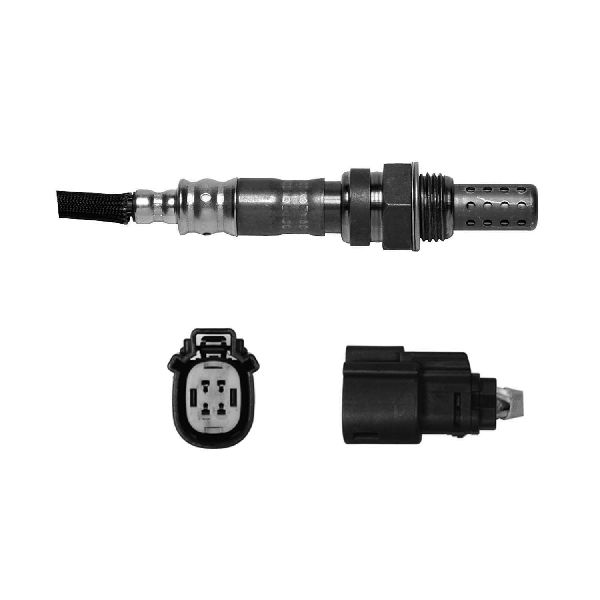
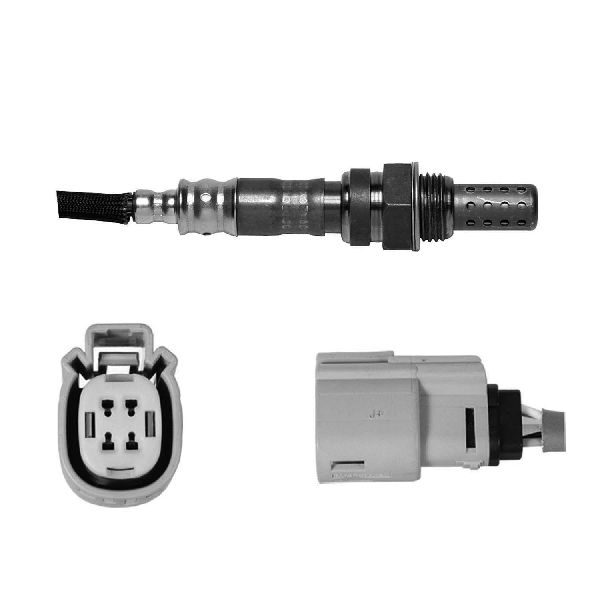
- Oxygen Sensor (Bank 1, Sensor 2)
(OEM #GK4Z-9G444-A)— This is the downstream (post-catalyst) oxygen sensor for the passenger side. Its internal heater is the most common component to fail if wiring issues are not present.
Trusted brands: Motorcraft (DY-1333), Bosch, Denso, NTK
OEM price range: $90-$140
Aftermarket price range: $50-$100 - Mini Fuse (15A) — Fuse F36 in the underhood fuse box is a 15A fuse that protects the O2 heater circuits and may be blown due to a shorted wiring harness as described in TSB 15-0160.
Trusted brands: Bussmann, Littlefuse
OEM price range: $1-$5
Aftermarket price range: $1-$5
Related Codes That Often Appear With This One
- P0131, P0155, P0161, P0010, P0013, P0020, P0023, P0443 — These are other oxygen sensor, VCT solenoid, and EVAP system codes that Ford lists as potentially being triggered along with P0141 when the wiring harness chafes and blows fuse F36, as this fuse powers multiple components.
Technical Service Bulletins (TSBs) & Recalls
- TSB 15-0160: Notes that an illuminated MIL with various DTCs (including P0141) and/or an open F36 fuse may be due to the HO2S wire harness chafing. Applies to 2015 Transit with 3.7L engine built on or before 6/11/2015. The repair involves inspecting, repairing with solder, and re-securing the harness.
Platform-Specific Known Issues
- TSB 15-0160: For 2015 3.7L models built on or before 6/11/2015, the O2 sensor wiring harness can chafe against the transmission or cylinder head, causing a short circuit that blows fuse F36 and triggers DTC P0141. The official repair procedure from Ford has a labor time of 2.2 hours.
Mechanic-Grade Diagnostic Values
- O2 Sensor Heater Element Resistance — expected: 3 to 25 Ohms. Failure: An open circuit (OL or infinite resistance) or a reading significantly outside the expected range indicates a failed heater element.
- HO2S Heater Circuit Voltage (Scan Tool) — expected: Voltage drops from a baseline (e.g., 4V) when the heater is commanded on.. Failure: Voltage does not change when the heater is activated, or the 'Heater Fault' PID shows a fault.
- Heater Power Supply at Connector — expected: Battery voltage (approx. 12V) with Key On, Engine Off.. Failure: Low or no voltage indicates a problem with the power supply from fuse F36.
Scan Tool Commands That Help
- Ford IDS (or equivalent professional scanner): HO2S Heater Test — This is a bidirectional control that allows the technician to command the O2 sensor heater on and off to verify circuit integrity. It can be used to see if the PCM is capable of controlling the circuit and if the circuit responds electrically.
- Ford IDS (or equivalent professional scanner): Monitor 'Heater Fault' PID — While monitoring live data, this PID will explicitly state if the PCM has detected a fault with the heater circuit, confirming the reason for the DTC.
Wiring & Ground Locations
- HO2S12 Connector — On the vehicle harness side for the Bank 1 Sensor 2 (downstream, passenger side) oxygen sensor.. This is the connector where you will perform resistance and voltage tests. The pins are: Pin 1: VPWR (Voltage Power), Pin 2: HTR12 (Heater Control), Pin 3: SIGRTN (Signal Return/Ground), Pin 4: HO2S12 (Signal). The heater circuit uses pins 1 and 2.
- C1575 — Main transmission electrical connector.. TSB 15-0160 requires disconnecting this connector to gain slack and access to the harness section that is prone to chafing.
- HO2S12 and HO2S22 Connectors — Connectors for both downstream oxygen sensors.. TSB 15-0160 instructs to disconnect both downstream sensor connectors as part of the harness inspection and repair procedure.
- G10x Series Grounds — General engine bay ground points, often on the fender aprons or near the firewall.. While not directly cited for this fault, a poor engine or chassis ground can cause a variety of electrical issues, including erratic sensor behavior. Verifying main grounds are clean and tight is a good practice if direct circuit tests are inconclusive.
OEM Part Supersession History
GK4Z-9G444-A→Motorcraft DY-1333— DY-1333 is the service part number for the component originally identified by the Ford engineering number GK4Z-9G444-A.
Heads up: This part (DY-1333) is specified for multiple 3.7L applications across the Ford lineup, including Transit models from 2016-2019, indicating it is the correct and current replacement.
Model Year Variations Within This Range
- 2015 (build date on or before June 11, 2015): Vehicles built on or before this date are subject to TSB 15-0160, which identifies a specific manufacturing issue where the O2 sensor wiring harness is prone to chafing on the transmission or cylinder head. Vehicles built after this date likely have a revised harness routing from the factory, making this specific cause much less likely.
Diagnostic Flowchart
Real Owner Stories
Aggregated from forums and TSBs cited above. Mileages and costs reflect what owners reported in those sources.
2017 Ford F-150
Symptoms: Experienced multiple O2 heater codes simultaneously, including P0135, P0141, P0155, and P0161, leading the owner to wonder if all sensors failed at once.
What fixed it: Diagnosed as a common power supply and wiring issue rather than actual sensor failures.
Source hint: Ford F150 Forum - 'All my O2 sensors are suddenly bad?'
Ford F-150 6.2L
Symptoms: Triggered a P0141 code. The owner replaced the oxygen sensor, but the code immediately returned.
What fixed it: Realized the issue was in the circuit itself and had to request wiring diagrams to trace the harness.
Source hint: Ford F150 Forum - 'Oxygen Sensor Wiring Diagram'
Related OBD-II Codes
Frequently Asked Questions
Does TSB 15-0160 apply to my 2015 Ford Transit 3.7L?
Why did my F36 fuse blow at the same time the P0141 code appeared?
How long does the official Ford repair for the chafed wiring harness take?
Should I just replace the Bank 1 Sensor 2 oxygen sensor right away?
What kind of tape should I use if I find and repair a chafed wire on my Transit?
How can I test the O2 sensor itself if the wiring and fuse are fine?
Helpful Videos
Used OEM Parts in Stock
New Aftermarket Parts Available


The information in this article is provided for general reference and educational purposes only. Vehicle specifications, procedures, and part compatibility can vary by production date, trim level, and region. Always consult your vehicle's factory service manual and verify part numbers before purchasing or performing repairs. Safety-critical components such as airbags, seat belts, and braking systems should be installed by a qualified professional.
- Ford Transit:
- 🧭 Diagnostic Flowchart
- 🎬 Helpful Videos
- 🛍️ Shop This Part
- What's Unique About the 2015-2015 Ford Transit
- Symptoms You May Notice
- Most Likely Causes
- Rare But Worth Checking
- Diagnosis Steps
- Parts You'll Likely Need
- Related Codes That Often Appear With This One
- Technical Service Bulletins (TSBs) & Recalls
- Platform-Specific Known Issues
- Mechanic-Grade Diagnostic Values
- Scan Tool Commands That Help
- Wiring & Ground Locations
- OEM Part Supersession History
- Model Year Variations Within This Range
- Real Owner Stories
- 2017 Ford F-150
- Ford F-150 6.2L
- Related OBD-II Codes
- Frequently Asked Questions
- 🎟️ Get 5% Off