

P0141 on 1996-2000 Honda Civic: O2 Sensor Heater Circuit Fixes and Causes
On a 1996-2000 Honda Civic, code P0141 almost always means the downstream (secondary) oxygen sensor has failed. The fix is to replace the sensor, which costs about $40-$70 for a quality Denso or NGK part and is a straightforward DIY job. Before replacing, check the 7.5A fuse in position #15 of the interior fuse box.
- This code applies to 1996-2000 Civics, not earlier OBD-I models.
- The problem is almost certainly a bad downstream (secondary) O2 sensor.
- Before buying a new sensor, check the #15 7.5A fuse in the interior fuse box.
- Confirm the sensor is bad by measuring resistance across its two black wires; it should be 10-40 Ohms. An open circuit ('OL') means it's bad.
- Use a Denso (p/n 234-4065) or NGK/NTK (p/n 24633) sensor for best results.
- If the fuse and sensor are good, inspect the wiring harness between the sensor and the PCM for damage, especially if a catalytic converter was recently stolen or replaced.
What's Unique About the 1992-2000 Honda Civic
For the 6th generation (1996-2000) Civic, this is a very common and straightforward code. The cause is almost always the sensor itself, as the heater elements have a finite lifespan. Unlike some vehicles where wiring is a frequent culprit, on this Civic, it's less common unless the harness has been physically damaged, for instance, during a catalytic converter theft or from rubbing on a heat shield. Owners and mechanics strongly recommend using OEM-supplier brands like Denso or NGK/NTK, as these Hondas can be sensitive to off-brand sensors, sometimes setting codes even with a new part. Some owners have reported issues like poor fuel economy with Bosch sensors on this platform.
Generation note: The specified range of 1992-2000 covers two Civic generations. However, P0141 is an OBD-II code, which is only applicable to the 6th generation (1996-2000). The 5th generation (1992-1995) uses an older OBD-I system with different trouble codes and will not display P0141.
Symptoms You May Notice
- Check Engine Light is on
- Failing a state emissions inspection
- Slightly reduced fuel economy in some cases
- Replacing the catalytic converter. A bad converter will typically set a P0420 'Catalyst Efficiency' code, not a P0141 heater circuit code. 🎬 See this breakdown of common causes for the P0141 code.
- Replacing the primary (upstream) O2 sensor. P0141 specifically refers to Sensor 2, the downstream sensor. The upstream sensor would trigger a P0135 code.
- Ignoring a blown fuse. If a new sensor is installed but the fuse is blown, the code will return immediately.
Most Likely Causes
- Failed Secondary O2 Sensor 🔴 High Probability → Shop Oxygen Sensor The internal heater element within the oxygen sensor is a common failure point due to age and countless heat cycles. It's a wear item.
How to confirm: Unplug the sensor and measure the resistance between the two same-colored wires (usually black) on the sensor's connector. A good sensor for this Civic should read between 10 and 40 Ohms when cold. A brand new Denso or NGK sensor often reads around 9-11 Ohms. If you get an 'OL' or infinite reading, the heater circuit is open, and the sensor is bad.
Typical fix: Replace the downstream (post-catalytic converter) oxygen sensor. An O2 sensor socket (a 7/8" or 22mm socket with a slot for the wire) is highly recommended for removal. 🎬 Watch: A step-by-step guide to replacing your Civic's O2 sensor.
Est. part cost: $40 - $70 - Blown Fuse 🟡 Medium Probability A short circuit in the sensor's heater element or its wiring can cause the fuse to blow as a protective measure. This is the first thing to check before buying parts.
How to confirm: Check the 7.5A fuse in position #15 of the interior fuse box, located under the driver's side of the dashboard. Some forum users have mistakenly referenced fuse #4, but #15 is the correct one for the secondary O2 sensor heater circuit. If it's blown, replace it. If it blows again immediately, you have a short circuit to find, likely in the O2 sensor wiring.
Typical fix: Replace the blown fuse. If it reoccurs, inspect the O2 sensor wiring for shorts to ground.
Est. part cost: $1 - $5 - Damaged Wiring or Connector ⚪ Low Probability Wiring under the car is exposed to road debris, heat, and moisture. Wires can also be damaged or cut during a catalytic converter theft, a common issue with these cars. A missing splash shield can also lead to premature wire damage.
How to confirm: Visually inspect the wiring harness leading to the secondary O2 sensor for any signs of cracking, melting on the exhaust, chafing, or corrosion in the connector pins. With the key on (engine off), use a multimeter to check for 12V power at the Black/White wire on the vehicle's harness-side connector and check for ground on the Black/Yellow wire.
Typical fix: Repair the damaged section of the wire harness or clean/replace the connector. Ensure the repaired harness is secured away from the hot exhaust pipe.
Est. part cost: $5 - $25
Rare But Worth Checking
- Faulty Powertrain Control Module (PCM): → Shop Engine Control Module (ECM) This is extremely rare. The driver circuit inside the PCM that provides the ground for the heater can fail, but this should only be considered after you have definitively ruled out the sensor, fuse, and wiring. A user on Honda-Civic-Forum.com suspected this after replacing a sensor to no avail, highlighting that the PCM provides a switched ground that can be difficult to test.
Diagnosis Steps
- Read the code with an OBD-II scanner to confirm P0141 is the only code present.
- Locate the interior fuse box under the driver's side dashboard and check the #15 fuse (7.5A). Replace if blown.
- If the fuse is good, safely raise the vehicle and locate the secondary O2 sensor, which is screwed into the exhaust pipe just after the catalytic converter.
- Visually inspect the sensor's wiring harness and connector for obvious damage, such as melting, chafing, or cut wires from a catalytic converter theft.
- Disconnect the sensor. Turn the ignition to the 'ON' position (engine off). Use a multimeter to verify that the Black/White wire on the vehicle's harness-side connector has battery voltage (approx. 12V).
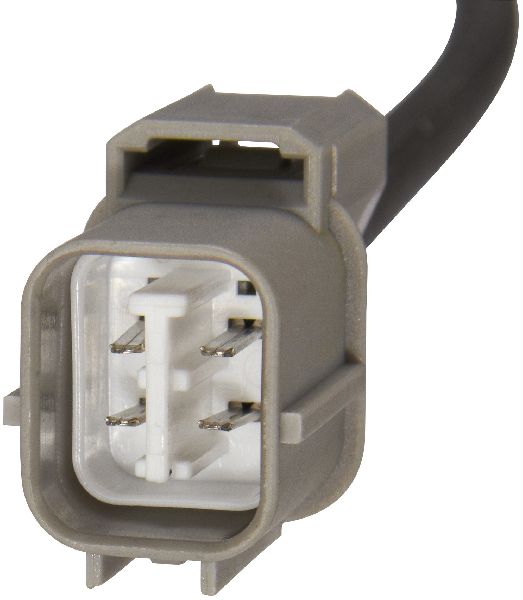
- With the sensor still disconnected, switch your multimeter to the Ohms (Ω) setting. Measure the resistance between the two pins that have same-colored wires (black) on the SENSOR side of the connector.
- A healthy sensor will show a resistance between 10 and 40 Ohms. If the reading is infinite (Open Loop / 'OL'), the sensor's heater is broken and the sensor must be replaced.
- If the sensor and fuse both test good, and power is present at the harness, the problem likely lies in the ground wire (Black/Yellow) running back to the PCM or the PCM itself, which is a rare failure.
Parts You'll Likely Need
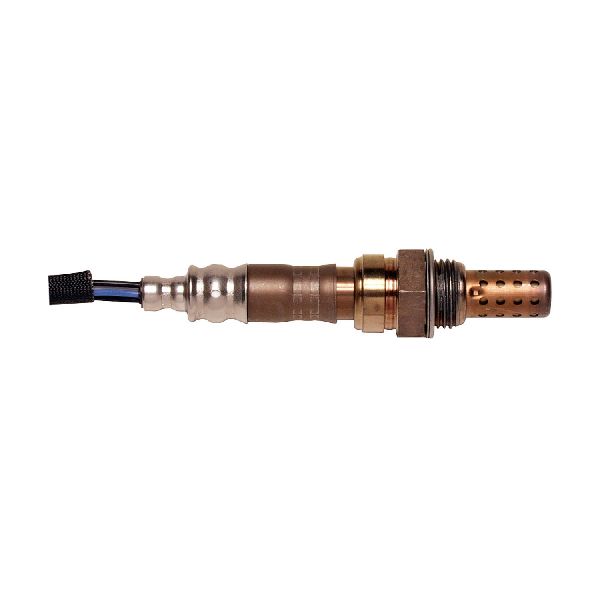
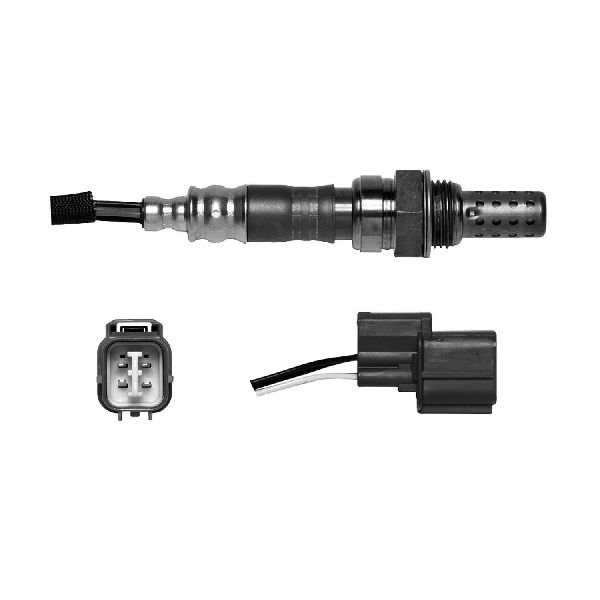
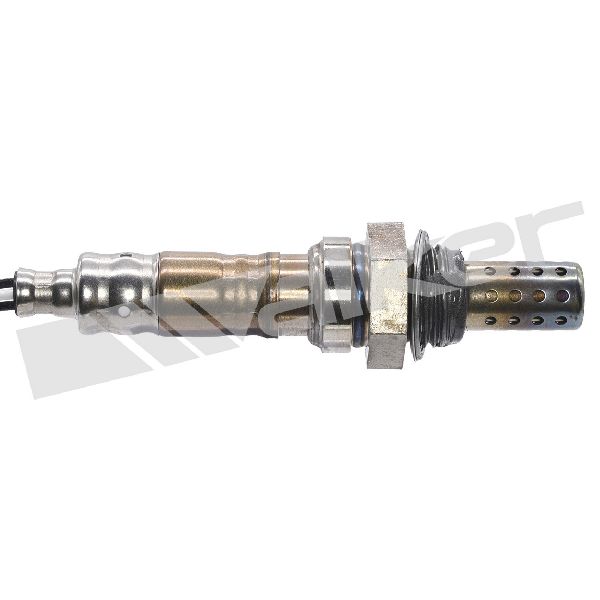
- Downstream Oxygen Sensor
(OEM #36532-P2E-A01)— This is the most common failure for code P0141. The internal heater element burns out over time.
Trusted brands: Denso (p/n: 234-4065), NGK/NTK (p/n: 24633)
OEM price range: $90-$140
Aftermarket price range: $40-$70
Platform-Specific Known Issues
- Catalytic Converter Theft Leading to P0141: The 6th generation Civic is a frequent target for catalytic converter theft. Thieves often cut the O2 sensor wires when removing the converter, which will immediately cause a P0141 code (and others) due to the open circuit, even after a new converter is installed. A user on Reddit reported this exact issue after replacing a stolen cat.
- Missing Splash Shield: A user on Honda-Tech.com noted that a missing engine splash shield can expose the O2 sensor and its wiring to excessive water and debris, potentially causing the wiring to fray and fail, leading to a P0141 code.
Mechanic-Grade Diagnostic Values
- Secondary O2 Sensor Heater Element Resistance — expected: 10 - 40 Ohms (cold). Failure: Infinite resistance or 'OL' on a multimeter, indicating an open circuit.
- New Denso/NGK Sensor Heater Element Resistance — expected: ~9 - 11 Ohms (cold). Failure: A reading significantly outside this range, even on a new sensor, may indicate a defective part.
- Voltage at Harness Connector (Power Side) — expected: ~12V (Battery Voltage) at the Black/White wire with ignition ON, engine OFF.. Failure: No voltage indicates a blown fuse (#15) or a break in the power wire.
Wiring & Ground Locations
- A5 (OBD2A) / A8 (OBD2B) — On the 'A' connector of the ECU/PCM, located behind the passenger side kick panel.. This pin, typically a Black/White wire, is the 'SO2SHTC' (Secondary O2 Sensor Heater Control). The ECU provides a switched ground through this pin to activate the heater. Testing continuity from this pin to the sensor connector is a key step in diagnosing a wiring fault vs. a bad PCM.
- PG1 / PG2 (Power Ground) — On the 'A' connector of the ECU/PCM (Pins A10, A23 for OBD2A). These are typically Black wires.. These are the main power grounds for the ECU. While not directly for the O2 sensor circuit, a poor connection at these ground points can cause a variety of erratic ECU behaviors and codes, including sensor heater faults.
Real Owner Repair Stories
- Honda-Tech.com user 'delsolproblems' (Unknown year Civic/Del Sol) — Initially had a P0420 (Catalyst Efficiency) code. After replacing the secondary O2 sensor as a first step, the car immediately began throwing a P0141 code that would return instantly after being cleared.
❌ Tried (didn't work) Replacing the secondary O2 sensor (this action *caused* the P0141), Trying two other O2 sensors, including the original one, Resetting the ECU multiple times
✅ What actually fixed it The resolution was not posted in the thread, but the user was advised to check for wiring issues between the sensor connector and the ECU, suggesting that the act of replacing the sensor may have damaged the old, brittle harness wiring, creating an open or short in the heater circuit. - ClubCivic.com user 'TomTomTuning' (2000 Civic CX Hatch with a D16Y8 (EX) engine swap) — Check engine light for secondary O2 sensor (OBD1 Code 65, equivalent to P0141) after an engine swap.
❌ Tried (didn't work) Wiring a universal 4-wire O2 sensor directly to the ECU pins based on a pinout diagram, but the code returned.
✅ What actually fixed it The user discovered that on EX/Si models, the secondary O2 sensor is part of the cabin wiring harness, not the engine harness like on DX/CX models. The swap created a situation where there was no provision for the sensor. The final fix is to manually wire the sensor to the correct ECU pins, ensuring the heater power comes from a switched 12V source and the heater ground and signal wires go to the correct ECU pins.
Documented NHTSA Reports
- NHTSA ODI #10284957: In a cross-manufacturer reference involving a Honda CR-V, an owner reported that while attempting to accelerate, the vehicle's check engine light came on. A dealership inspection identified codes P0102, P0141, and P0340. Although the codes were cleared and the vehicle test driven, the lights returned one month later while entering a highway.
OEM Part Supersession History
36532-P2E-A01→Discontinued— Part is no longer manufactured by Honda.
Heads up: While the OEM part is discontinued, direct-fit aftermarket replacements from Denso (234-4065) and NGK/NTK (24633) are readily available and function identically.
Model Year Variations Within This Range
- 1996-2000: On DX, CX, and LX models (non-VTEC), the secondary O2 sensor wiring is integrated into the main engine harness. On EX and Si models (VTEC), the secondary O2 sensor wiring is part of the separate cabin harness. This is a critical detail for anyone performing an engine swap between these trims, as a P0141 will be guaranteed if the harness mismatch is not addressed by manually wiring the sensor.
Diagnostic Flowchart
Other Known Issues on This Vehicle
Issues unrelated to this code that are worth knowing about as an owner of this generation:
- Main Relay Failure 🟠 Medium — Very common on 1990s Hondas. Often causes an intermittent no-start condition, especially when the cabin is hot. The car may crank but not fire, or start and immediately stall. (Ref: While no specific recall exists for all models, the issue is widely documented. The fix is often re-soldering cracked joints on the relay's circuit board or replacing the relay.)
- Rear Quarter Panel/Wheel Arch Rust 🔴 High — Extremely common, especially in regions that use road salt. Rust typically starts in the seam of the rear wheel arch and can spread significantly.
- Distributor Failure (Internal Coil or Igniter) 🟠 Medium — Common as the vehicles age. Can cause a no-spark condition leading to a crank-no-start, or intermittent stalling. The bearing can also fail, causing a squeaking noise.
- Cracked Exhaust Manifold 🟡 Low — Fairly common on D-series engines. A hairline crack can develop, causing an exhaust leak noise (ticking) when cold that may quiet down as the engine warms up.
- Ignition Switch Electrical Failure 🟠 Medium — A recall was issued for the ignition switch, which could cause the engine to stall without warning while driving. (Ref: Official Honda Recall)
Used vs. New Parts: Buying Guide for This Vehicle
When a used part is the smart pick: For this repair, a used part is almost never a smart choice. The O2 sensor is a wear-and-tear item with a finite lifespan determined by heat cycles and contamination. The cost savings of a used sensor are minimal compared to the high risk of receiving a part that is already near the end of its life or completely failed.
Donor-vehicle mileage cap: roughly under 50000 miles for the part to have meaningful remaining life.
What to inspect on the donor part:
- If forced to use a used sensor, visually inspect for heavy carbon deposits, white contamination (from coolant/oil), or physical damage to the sensor tip or wiring.
- Before purchasing, test the heater circuit resistance with a multimeter. It must be within the 10-40 Ohm range. If the seller cannot facilitate this test, do not buy it.
OEM-only on this vehicle (don't cheap out):
- While not strictly 'OEM-only', sticking to the OEM suppliers (Denso, NGK/NTK) is highly recommended. Hondas of this era are known to be sensitive to sensor inputs, and off-brand or generic sensors can fail prematurely or not work correctly, causing the code to return.
Aftermarket brands forum-validated for this vehicle:
- Denso (Part number: 234-4065)
- NGK / NTK (Part number: 24633)
Brands owners have reported issues with on this vehicle:
- Universal sensors that require splicing wires. While they can work if done correctly, they introduce a common point of failure (the splice) and are often lower quality.
- Unbranded, 'no-name' sensors from online marketplaces, which have a high failure rate.
Real Owner Stories
Aggregated from forums and TSBs cited above. Mileages and costs reflect what owners reported in those sources.
2000 Honda Civic DX
Symptoms: Check Engine Light is on with code P0141.
What fixed it: The owner was advised to check the #15 fuse and verify sensor resistance between 10-40 Ohms; a missing splash shield was noted as a potential contributor to wire damage.
Source hint: Honda-Tech.com - Thread '2000 Civic dx CEL code p0141'
1996-2000 Honda Civic
Symptoms: P0141 code appeared immediately after replacing a stolen catalytic converter.
What fixed it: Repairing the O2 sensor wiring that was cut by thieves during the theft of the original catalytic converter.
Source hint: Reddit r/civic - Thread 'O2 sensor issues (p0141)'
1992-2000 Honda Civic
Symptoms: The P0141 code remained even after the oxygen sensor was replaced with a new unit.
What fixed it: Investigation of the PCM's switched ground circuit (Black/Yellow wire) after confirming the sensor and fuse were functional.
Source hint: Honda-Civic-Forum.com - Thread 'P0141 Ground Issue'
1996 Honda Civic LX
Symptoms: Check Engine Light for secondary O2 sensor heater circuit.
What fixed it: Checking and replacing the 7.5A fuse in position #15 of the interior fuse box.
Source hint: Honda-Civic-Forum.com - Thread 'P0141 on 96 Civic LX'
Related OBD-II Codes
Frequently Asked Questions
Which fuse should I check for a P0141 code on my 1992-2000 Civic?
What resistance should a new O2 sensor have for this generation of Civic?
Can a stolen catalytic converter cause the P0141 code on my 6th gen Civic?
Is there a specific O2 sensor part number recommended for the 1996-1997 Del Sol?
Could a missing engine splash shield be related to my P0141 code?
Is there a recall for the ignition switch that might cause stalling on my Civic?
Helpful Videos

We Have This Part in Stock



The information in this article is provided for general reference and educational purposes only. Vehicle specifications, procedures, and part compatibility can vary by production date, trim level, and region. Always consult your vehicle's factory service manual and verify part numbers before purchasing or performing repairs. Safety-critical components such as airbags, seat belts, and braking systems should be installed by a qualified professional.
- Honda Civic:
- 🧭 Diagnostic Flowchart
- 🎬 Helpful Videos
- 🛍️ Shop This Part
- What's Unique About the 1992-2000 Honda Civic
- Symptoms You May Notice
- Most Likely Causes
- Rare But Worth Checking
- Diagnosis Steps
- Parts You'll Likely Need
- Platform-Specific Known Issues
- Mechanic-Grade Diagnostic Values
- Wiring & Ground Locations
- Real Owner Repair Stories
- Documented NHTSA Reports
- OEM Part Supersession History
- Model Year Variations Within This Range
- Other Known Issues on This Vehicle
- Used vs. New Parts: Buying Guide for This Vehicle
- Real Owner Stories
- 2000 Honda Civic DX
- 1996-2000 Honda Civic
- 1992-2000 Honda Civic
- 1996 Honda Civic LX
- Related OBD-II Codes
- Frequently Asked Questions
- 🎟️ Get 5% Off