

P0141 on 2003-2011 Honda Element: O2 Sensor Heater Malfunction Causes and Fixes
This code means the heater inside your downstream O2 sensor has failed. On the Honda Element, this is almost always fixed by replacing the sensor itself (Bank 1, Sensor 2), which is located after the catalytic converter. Before replacing, check the 15A fuse #6 in the under-hood fuse box. Expect to pay $40-$80 for a quality aftermarket sensor (like Denso 234-4797) and $150-$220 for an OEM part.
- P0141 on a Honda Element almost always means you need a new downstream (rear) oxygen sensor.
- Before buying parts, check the 15A fuse #6 in the under-hood fuse box.
- This is a DIY-friendly repair that can be done with basic tools and a 22mm wrench or O2 sensor socket.
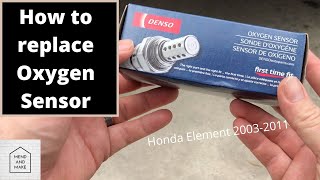
- The correct OEM part number is 36532-PZD-A01, and a popular direct-fit aftermarket option is Denso 234-4797.
- Ignoring this code will cause an automatic failure on an emissions test.
- If your catalytic converter was recently stolen, suspect wiring damage as the primary cause of the code.
What's Unique About the 2003-2011 Honda Element
For the K24A engine in the Honda Element, the P0141 code is a straightforward and very common issue. The primary cause is overwhelmingly the failure of the original downstream O2 sensor's internal heating element. Unlike some vehicles with complex wiring issues, the Element's diagnosis is typically simple. Owners often find that replacing the sensor with a quality part, such as from Denso (specifically P/N 234-4797) or NGK, resolves the issue for many more years. A notable issue for the Element is the high incidence of catalytic converter theft; the thieves often cut the O2 sensor wires, causing this code.
Symptoms You May Notice
- Check Engine Light is on.
- Failure to pass a state emissions inspection.
- Slightly reduced fuel economy in some cases.
- Engine takes longer to enter 'closed-loop' operation for optimal fuel control.
- Replacing the upstream (Bank 1, Sensor 1) Air/Fuel ratio sensor instead of the downstream (Bank 1, Sensor 2) oxygen sensor.
- Replacing the catalytic converter, which is not indicated by this specific code.
- Using a generic or 'universal' oxygen sensor that requires splicing wires. These often lead to incorrect resistance or poor connections, causing the code to return. A direct-fit sensor is strongly recommended.
Most Likely Causes
- Failed Downstream Oxygen Sensor 🔴 High Probability → Shop Oxygen Sensor The internal heating element within the oxygen sensor has a finite lifespan and is subjected to extreme temperatures and vibrations, causing it to eventually burn out like a light bulb filament.
How to confirm: Disconnect the sensor and measure the resistance between the two heater circuit wires (typically the two wires of the same color, often black). A reading that is infinite (open circuit) or far from the Honda-specific 4.2-6.6 ohm range confirms a failed heater. Many multimeters will show 'O.L.' for an open circuit.
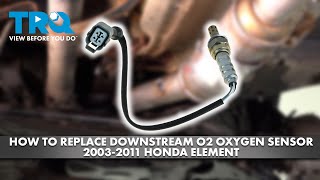
Typical fix: Replace the downstream (Bank 1, Sensor 2) oxygen sensor. The Denso P/N 234-4797 is a commonly cited direct-fit replacement.
Est. part cost: $40-$220 - Blown Fuse 🟡 Medium Probability A short in the sensor's heating element or its wiring can cause the associated fuse to blow as a protective measure.
How to confirm: Locate the under-hood fuse box. Check fuse #6 (15A), which protects the PGM-FI Main Relay circuit that powers the O2 sensor heaters. Visually inspect the fuse or test for continuity with a multimeter. A Reddit user also noted checking the 10A fuse in this box. 🎬 See this guide to locate your Element's fuse panels.
Typical fix: Replace the blown fuse. If the fuse blows again immediately, a short circuit exists in the wiring or the new sensor itself that must be found and repaired.
Est. part cost: $1-$5 - Damaged Wiring or Connector ⚪ Low Probability The sensor wiring is located under the vehicle and is exposed to road debris, moisture, and heat. More significantly, Honda Elements are frequent targets for catalytic converter theft, and thieves often cut or rip the O2 sensor wiring during the process.
How to confirm: Visually inspect the entire wiring harness and connector leading from the downstream O2 sensor up into the vehicle's body. Look for any signs of cuts, breaks, chafing, melting, or corrosion, paying special attention to the area around the catalytic converter.
Typical fix: Repair the damaged section of wiring or replace the connector pigtail. Ensure all connections are soldered and heat-shrunk for a durable, weather-resistant repair.
Est. part cost: $10-$30
Rare But Worth Checking
- Faulty Powertrain Control Module (PCM): → Shop Engine Control Module (ECM) This is extremely rare. The PCM is the last item to suspect after all other possibilities (sensor, wiring, fuses) have been exhaustively tested and ruled out. A failure of the PCM's internal driver for the heater circuit can cause this code, as documented in a complex case on a 2005 CR-V with the same engine family.
- Poorly Functioning Aftermarket Catalytic Converter: In cases where the catalytic converter was recently replaced (especially after a theft), a low-quality aftermarket converter can sometimes cause persistent O2 sensor codes, including P0141, even with a new sensor. The sensor may not be able to operate within its expected parameters.
Diagnosis Steps
- Read the code with an OBD-II scanner to confirm P0141 is present.
- Check the fuse for the O2 sensor heater circuit. In the under-hood fuse box, inspect the 15A fuse in position #6. Replace if blown.
- If the fuse is good, raise the vehicle safely and locate the downstream O2 sensor, which is installed in the exhaust pipe after the catalytic converter.
- Inspect the sensor's wiring and connector for any visible damage, such as burns, chafing, cuts from a prior catalytic converter theft, or corrosion.
- Disconnect the sensor. With the key in the 'ON' position (engine off), use a multimeter to verify that battery voltage (approx. 12V) is present on the power wire at the harness-side connector.
- Check for a good ground on the ground wire at the harness-side connector.
- Using a multimeter set to Ohms (Ω), measure the resistance across the two heater pins (usually same-colored wires) on the sensor side of the connector. A good sensor for this Honda should read between 4.2 and 6.6 ohms at room temperature. An infinite reading (O.L.) indicates an open circuit and a failed heater element, which is the most common finding.
- If the sensor tests good but the code persists, check for continuity on the signal wire between the sensor connector and the PCM to rule out a broken wire.
- If wiring, fuse, and sensor are all confirmed to be good, the issue may be an intermittent connection or a very rare PCM fault.
Parts You'll Likely Need
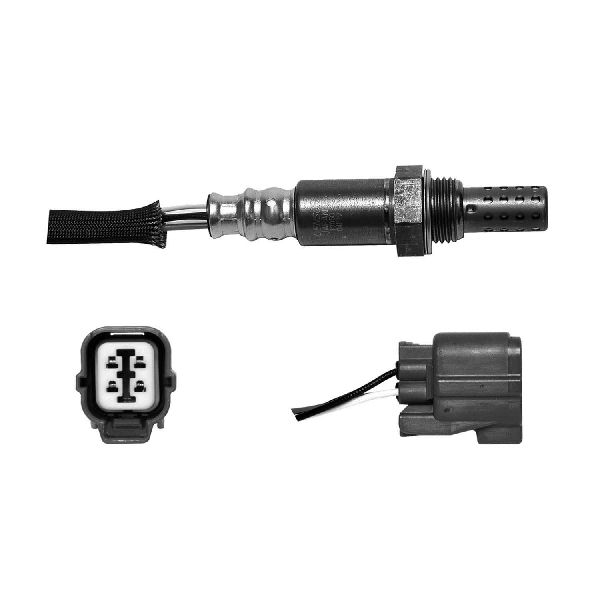
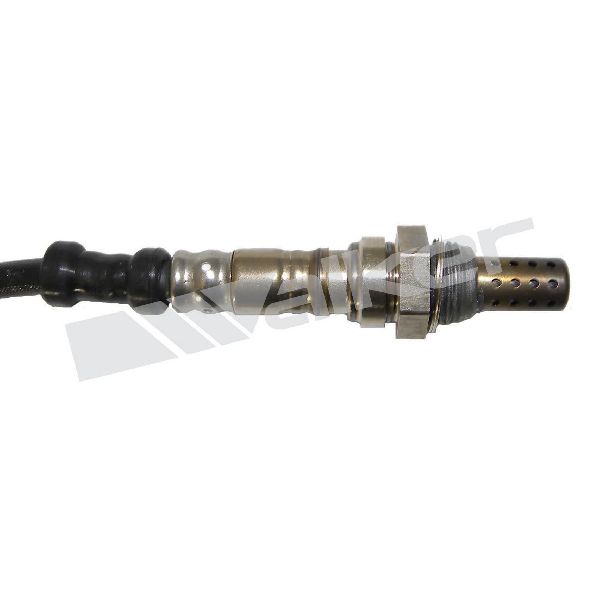
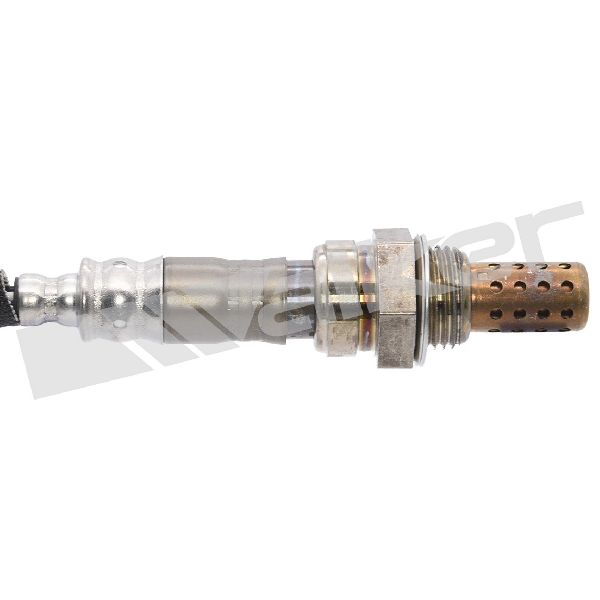
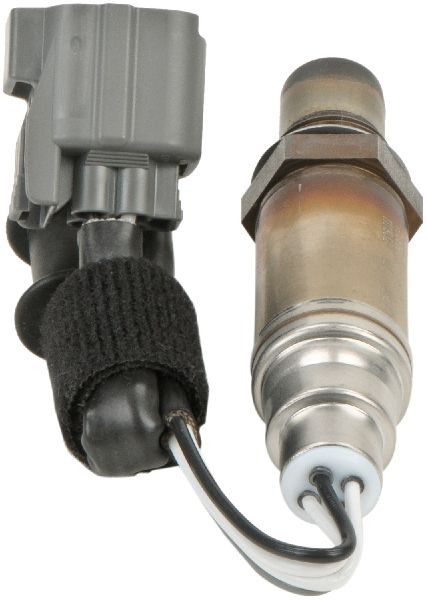
- Downstream Oxygen Sensor (Bank 1, Sensor 2)
(OEM #36532-PZD-A01)— This is the most common failure point for a P0141 code, as the internal heater element burns out over time.
Trusted brands: Denso (OEM supplier), NGK/NTK, Bosch
OEM price range: $150-$220
Aftermarket price range: $40-$80
Platform-Specific Known Issues
- Catalytic Converter Theft: The Honda Element is a prime target for catalytic converter theft due to its high ground clearance, making access easy for thieves. When the converter is cut out, the downstream O2 sensor and its wiring are almost always destroyed or severely damaged, directly causing a P0141 code along with a very loud exhaust noise. Repair often involves replacing the converter, the sensor, and repairing the cut wiring harness.
Mechanic-Grade Diagnostic Values
- Secondary O2 Sensor Heater Resistance — expected: 5-20 Ohms is a general range, but Honda-specific documentation often points to a tighter range like 4.2-6.6 Ohms.. Failure: An infinite reading ('O.L.') indicates an open circuit (burnt out heater). A reading of zero or near-zero indicates a short circuit.
- O2 Sensor Heater Circuit Current Draw — expected: Up to 8 Amps, though this varies.. Failure: Zero current draw when the PCM commands the heater on points to an open in the circuit (fuse, wiring, or sensor). Excessively high current draw points to a short circuit.
- Voltage at PCM Connector E, Pin 21 — expected: 0.1V or less with the ignition ON (II) and sensor disconnected.. Failure: Voltage significantly higher than 0.1V suggests a short to power in the harness.
Scan Tool Commands That Help
- Honda HDS (Honda Diagnostic System): DTCs MENU -> Clear DTC — Used to clear the P0141 code after a repair has been completed.
- Honda HDS (Honda Diagnostic System): DTCs MENU -> OBD STATUS for DTC P0141 — After clearing the code and running the vehicle, this function is used to monitor the status and confirm if the repair was successful ('PASSED') or if the fault persists ('FAILED').
Wiring & Ground Locations
- PCM Connector E (31P), Pin 21 — The PCM is located behind the glove box. Connector E is one of the several large connectors plugged into it.. This is the specific pin on the PCM for the secondary O2 sensor heater circuit. It's a critical test point for diagnosing an open or short in the wiring between the PCM and the sensor.
- PCM Connector A (31P), Pin 5 — The PCM is located behind the glove box. Connector A is another of the main connectors.. This is a ground reference pin on the PCM. A service manual procedure for a related vehicle uses this pin in conjunction with E21 to test for voltage, confirming the PCM's internal state.
- G101 — On the left side of the engine compartment, near the battery.. This is a primary engine bay ground point. While not directly for the O2 sensor heater (which is often grounded through the PCM), a poor G101 connection can cause a multitude of bizarre electrical issues, including incorrect sensor readings and PCM problems.
- Under-dash Fuse/Relay Box, Fuse #18 (15A) — Located under the driver's side of the dashboard.. A service manual for a 2006 Accord with the same engine family lists the No. 18 ACG (15 A) fuse in the under-dash box as protecting the secondary HO2S heater circuit. This contradicts the under-hood fuse mentioned in Pass 2 and provides an alternative, critical location to check.
OEM Part Supersession History
36532-PZD-A01→36532-PZD-A01 (no supersession)— N/A
Heads up: This part number appears to be consistent for all 2003-2011 Honda Element models.
Model Year Variations Within This Range
- 2003-2006 vs 2007-2011: The engine was updated from the K24A4 to the K24A8 in 2007. However, for the P0141 code, the downstream oxygen sensor part number (36532-PZD-A01) and the general diagnostic procedure remain the same across all model years.
Diagnostic Flowchart
Real Owner Stories
Aggregated from forums and TSBs cited above. Mileages and costs reflect what owners reported in those sources.
2004 Honda Element K24A
Symptoms: Check Engine Light came on with a P0141 code.
What fixed it: Checked the underhood fuse block and found the O2 heater circuit fuse, which was a 10A fuse on this specific model year, needed to be replaced.
Source hint: r/HondaElement on Reddit
Honda Element K24A
Symptoms: The P0141 code persisted even after a stolen catalytic converter and the missing oxygen sensor were replaced.
What fixed it: Thoroughly checked and repaired the vehicle's wiring harness, which had been damaged by the thieves during the converter theft.
Source hint: r/HondaElement on Reddit
2004-2008 Acura TSX K24A2
Symptoms: Triggered a P0141 code and experienced confusion distinguishing between the upstream and downstream oxygen sensors during diagnosis.
What fixed it: Checked the sensor connections to ensure the correct downstream sensor was being tested and addressed.
Source hint: AcuraZine - 2004-2008 TSX Forum
Honda CR-V (K-Series Engine)
Symptoms: An owner reported that while attempting to accelerate, the check engine light illuminated. A dealership inspection identified codes P0102, P0141, and P0340.
What fixed it: The dealer cleared the codes and test drove the vehicle, though the lights returned one month later (NHTSA ODI #10284957).
Source hint: NHTSA ODI #10284957
Related OBD-II Codes
Frequently Asked Questions
Why did my Honda Element suddenly get a P0141 code and a really loud exhaust?
What is the correct resistance for the downstream oxygen sensor on my 2.4L Element?
Which fuse should I check for the P0141 code on my Element?
What is the recommended replacement part for the downstream O2 sensor?
I replaced my stolen catalytic converter on my Element, but the P0141 code came back. What's wrong?
Does the P0141 code affect other Honda models with the 2.4L engine?
Helpful Videos

We Have This Part in Stock


The information in this article is provided for general reference and educational purposes only. Vehicle specifications, procedures, and part compatibility can vary by production date, trim level, and region. Always consult your vehicle's factory service manual and verify part numbers before purchasing or performing repairs. Safety-critical components such as airbags, seat belts, and braking systems should be installed by a qualified professional.
- Honda Element:
- 🧭 Diagnostic Flowchart
- 🎬 Helpful Videos
- 🛍️ Shop This Part
- What's Unique About the 2003-2011 Honda Element
- Symptoms You May Notice
- Most Likely Causes
- Rare But Worth Checking
- Diagnosis Steps
- Parts You'll Likely Need
- Platform-Specific Known Issues
- Mechanic-Grade Diagnostic Values
- Scan Tool Commands That Help
- Wiring & Ground Locations
- OEM Part Supersession History
- Model Year Variations Within This Range
- Real Owner Stories
- 2004 Honda Element K24A
- Honda Element K24A
- 2004-2008 Acura TSX K24A2
- Honda CR-V (K-Series Engine)
- Related OBD-II Codes
- Frequently Asked Questions
- 🎟️ Get 5% Off