

P0141 on 1999-2004 Jeep Grand Cherokee 4.0L: O2 Sensor Heater Causes and Fixes
This code indicates a failure in the heater circuit of the downstream oxygen sensor (Bank 1, Sensor 2). The most common fix is replacing the sensor itself, with NTK or Denso brands being highly recommended. Before buying parts, check the 15A fuse for the O2 heaters in the under-hood fuse box (slot #17) and thoroughly inspect the wiring harness near the front driveshaft for chafing or melting, a very common failure on this specific vehicle.
- P0141 points to a problem with the heater in the downstream O2 sensor, located after the catalytic converter.
- Before buying a new sensor, first check the 15A O2 sensor fuse (slot #17) in the under-hood fuse box.
- Carefully inspect the sensor's wiring harness for damage, especially where it runs near the front driveshaft, as this is a very common failure point on this Jeep.
- If the fuse and wiring are good, test the sensor's heater resistance (expect 4-7 ohms). If it fails the test, replacing the downstream O2 sensor is the most likely fix.
- Using an NTK (p/n 23099) or Denso brand sensor is highly recommended for compatibility; avoid Bosch sensors.
What's Unique About the 1999-2004 Jeep Grand Cherokee
On the WJ Grand Cherokee, the 4.0L engine is a durable workhorse, but its emissions components are common failure points with age. The wiring for the downstream O2 sensor is a specific weak point; it is routed near the front driveshaft and transfer case, making it highly susceptible to damage from heat, road debris, or direct contact with the spinning driveshaft if it comes loose from its clips. Many owners have fixed a P0141 code simply by repairing this harness, avoiding the cost of a new sensor. A video from South Main Auto Repair specifically shows a 2004 Grand Cherokee where the P0141 code was caused by broken heater wires right at the connector, highlighting the importance of a visual inspection.
Symptoms You May Notice
- Check Engine Light is on.
- Failing an emissions/smog test.
- Slightly reduced fuel economy over time.
- Hesitation on acceleration, particularly when the engine is cold, before the PCM reverts to a default fuel map.
- Replacing the catalytic converter. A P0141 code is specific to the sensor's heater circuit, not the efficiency of the converter. A bad converter would typically trigger a P0420 code.
- Replacing the wrong O2 sensor. The 4.0L engine has two O2 sensors. P0141 is for Sensor 2, the one located *after* the catalytic converter.
- Using an incompatible sensor brand. Many owners report issues when using Bosch sensors on this platform, leading to persistent codes. Sticking to NTK or Denso is the recommended solution.
Most Likely Causes
- Failed Downstream O2 Sensor 🔴 High Probability → Shop Oxygen Sensor The internal heating element is a common wear-and-tear item that fails over time and with mileage due to constant, extreme heat cycles.
How to confirm: Disconnect the sensor and measure the resistance across the two same-colored wires (usually black on the sensor side for this model) for the heater circuit. A healthy sensor typically reads between 4 and 7 ohms when cold. A reading of infinity (OL) indicates an open circuit and a failed heater. A reading of zero ohms indicates a short circuit within the sensor.
Typical fix: Replace the Bank 1, Sensor 2 (downstream) oxygen sensor. Owners and mechanics strongly recommend using NTK or Denso brand sensors and advise against using Bosch sensors, which have been reported to cause recurring codes on this platform.
Est. part cost: $35-$70 - Damaged Wiring Harness or Connector 🟡 Medium Probability The harness is routed near the front driveshaft and can easily be damaged by chafing, melting on the exhaust, or snagging on road debris if it is not properly secured in its clips. This is a widely documented issue in owner forums.
How to confirm: Visually inspect the entire length of the O2 sensor wiring harness from the sensor to where it connects to the main body harness above the transmission crossmember. Look for signs of rubbing against the driveshaft, melting on the exhaust, or corrosion in the connector pins. Pay special attention to the wires right at the connector body, as they can break internally.
Typical fix: Repair the damaged section of wire using solder and heat-shrink tubing, then secure the harness away from any moving parts or hot surfaces using high-temperature wire loom and zip ties.
Est. part cost: $5-$25 - Blown O2 Sensor Heater Fuse ⚪ Low Probability → Shop Oxygen Sensor A short circuit in the wiring (especially the common downstream harness damage) or in any of the vehicle's O2 sensors can cause the shared fuse to blow, cutting power to both heaters.
How to confirm: Locate the fuse for the O2 sensor heaters in the Power Distribution Center (under-hood fuse box). On WJ models, this is a 15A fuse in slot #17. Visually inspect the fuse and test for continuity. If codes P0135 (Upstream Heater) and P0141 are present simultaneously, a blown fuse is the most likely cause.
Typical fix: Replace the blown fuse. If it blows again, there is a persistent short circuit in the system that must be diagnosed and repaired.
Est. part cost: $1-$5
Rare But Worth Checking
- Faulty Powertrain Control Module (PCM): → Shop Engine Control Module (ECM) This is extremely rare. The PCM's internal driver for the heater circuit can fail, but all other possibilities (sensor, wiring, fuse) should be exhaustively ruled out before considering PCM replacement.
- Faulty Auto Shutdown (ASD) Relay: The ASD relay, located in the under-hood Power Distribution Center, supplies power to the O2 sensor heater circuit. While a complete failure of this relay would cause a no-start condition, an intermittent fault could theoretically affect the heater circuit. This is uncommon for an isolated P0141 code.
Diagnosis Steps
- Confirm the code P0141 is present using an OBD-II scanner.
- Check the O2 sensor heater fuse (15A fuse in slot #17 of the under-hood Power Distribution Center). Replace if blown.
- Perform a thorough visual inspection of the downstream O2 sensor's wiring harness. Pay close attention to the area where it passes the front driveshaft and exhaust components for any signs of melting, chafing, or breaks. Check the connector itself for damage or broken wires right at the housing.
- If the wiring appears intact, disconnect the O2 sensor connector (a 4-pin connector, usually above the transmission crossmember).
- With the key on, engine off, use a multimeter to check for battery voltage (~12V) at the power wire on the vehicle-side of the connector. Power is supplied by the ASD relay.
- Use the multimeter to test the resistance of the heater element on the sensor-side of the connector (across the two same-colored wires, typically black). A normal reading is between 4 and 7 ohms. An infinite (OL) reading means the heater is burned out and the sensor must be replaced.
- If voltage is present at the harness and the sensor's heater resistance is good, check the ground control circuit from the PCM for continuity. A test light connected to battery positive should pulse when connected to the ground pin on the harness side shortly after engine start.
- If all wiring, the fuse, and power/ground signals are good, the most likely cause is a failed O2 sensor.
Parts You'll Likely Need
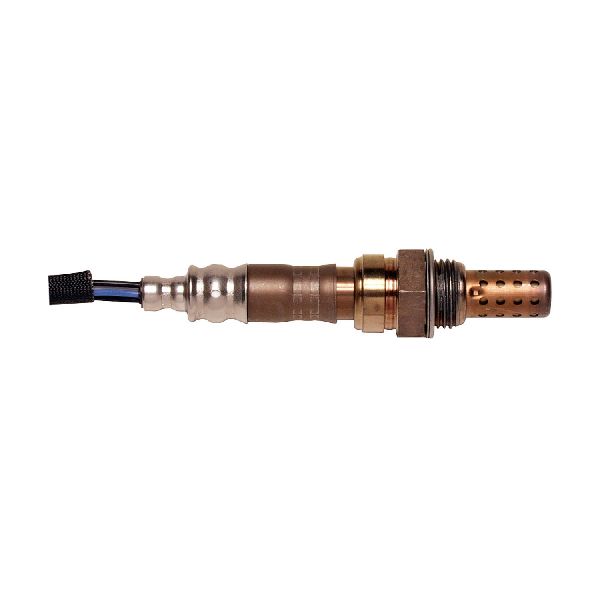
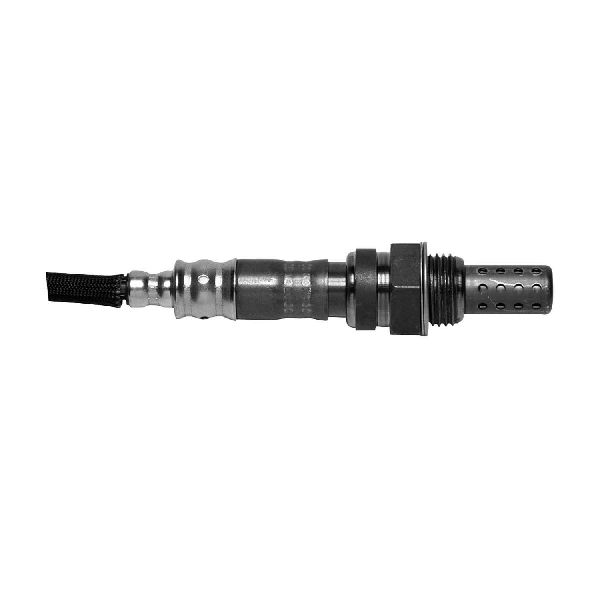
- Downstream Oxygen Sensor (Bank 1, Sensor 2)
(OEM #56041845AB)— The internal heater element is the most common failure point for this code. It is a normal wear item.
Trusted brands: NTK (OEM Supplier), Denso, Mopar
OEM price range: $100-$180
Aftermarket price range: $35-$70
Related Codes That Often Appear With This One
- P0138 — This code indicates 'O2 Sensor Circuit High Voltage (Bank 1, Sensor 2)'. It can appear alongside P0141 if the sensor has failed internally or if there is a wiring short, causing both a heater fault and a signal voltage fault.
- P0135 — This is the heater circuit code for the *upstream* sensor (Bank 1, Sensor 1). If P0135 and P0141 appear together, it strongly suggests a problem with a component common to both heater circuits, most likely the shared 15A fuse in the Power Distribution Center.
Platform-Specific Known Issues
- Forum users on JeepForum.com and NAXJA.org frequently report that the P0141 code on the 4.0L WJ is caused by the downstream O2 sensor wiring harness rubbing against the front driveshaft, leading to a short. Repairing the wires and securing the harness often resolves the issue without needing a new sensor.
- A YouTube video by South Main Auto Repair documents a 2004 Grand Cherokee with P0141 where the cause was simply broken heater wires right at the plastic sensor connector, a fix that required only a connector repair, not a new sensor.
Mechanic-Grade Diagnostic Values
- O2 Sensor Heater Element Resistance — expected: 4 to 7 Ohms when cold (at room temperature).. Failure: A reading of infinity (OL) indicates an open circuit/burned-out element. A reading near zero indicates an internal short.
- O2 Sensor Heater Circuit Voltage (Harness Side) — expected: ~12V (Battery Voltage) with Key On, Engine Off.. Failure: 0 Volts indicates a problem with the power supply, likely the 15A fuse in slot #17 or the ASD relay.
- Live Data - Downstream O2 Sensor (B1S2) Voltage — expected: A relatively stable voltage, typically between 0.5V and 0.8V after the engine is warm and in closed loop.. Failure: With a heater circuit failure, the sensor may be slow to respond and the voltage may read erratically or stay fixed at a certain level (e.g., 1V) when viewed on a scan tool.
Wiring & Ground Locations
- G104 — On the right rear of the engine block, near the transmission dipstick tube.. This is the primary ground point for the oxygen sensors on the 4.0L engine. A loose or corroded connection at G104 can cause intermittent or persistent heater circuit codes for both upstream and downstream sensors.
- Downstream O2S Connector — A 4-pin connector typically located on or just above the transmission crossmember.. This is the main connection point for testing. The two same-colored wires (often black) are for the heater circuit. One receives ~12V power from the ASD relay (via fuse #17), and the other is the ground, which is controlled (pulsed) by the PCM.
- PCM Connector C1 (Black) — The black connector of the three main PCM connectors located on the passenger side of the firewall.. For 1996-1998 models (and likely similar for 1999+), the downstream O2 sensor signal wire is located at Pin A-25 (Black/Pink wire). The heater ground control wire is also located in one of these connectors, allowing for continuity checks back to the PCM if a wire break is suspected.
Real Owner Repair Stories
- Reddit user Steve1101 on r/JeepTJ (Jeep TJ (similar 4.0L wiring to WJ)) — Persistent P0141 code.
❌ Tried (didn't work) Repairing a known wiring short., Replacing the downstream O2 sensor.
✅ What actually fixed it The fuse for the O2 heater circuit was blown. This was overlooked initially, and replacing the fuse after the other repairs resolved the code. - YouTube user Bullshitkorner (2003 Jeep TJ (similar 4.0L wiring to WJ)) — P0138 (O2 Circuit High Voltage) and P0141 (Heater Circuit Malfunction) present together.
❌ Tried (didn't work) Initial diagnosis pointed to a complex wiring issue.
✅ What actually fixed it Using a scan tool to view live data, it was observed that the Bank 1 Sensor 2 voltage was stuck at a constant 1V while other sensors were fluctuating normally. This confirmed the sensor itself was faulty. Replacing the downstream O2 sensor fixed both codes.
OEM Part Supersession History
56030111AA→56041845AA, then 56041845AB— Standard part revision and supplier changes over time.
Model Year Variations Within This Range
- 1999-2004: Some 4.0L WJ models were built with California Emissions standards, which use four O2 sensors (two upstream, two downstream) and three catalytic converters (two mini-cats in the manifold, one main cat). Federal Emissions models use only two O2 sensors (one upstream, one downstream) and one main catalytic converter. P0141 refers to the downstream sensor in either case, but physical location and part numbers can vary. Check the Vehicle Emissions Control Information (VECI) label under the hood to confirm which system the vehicle has.
- 1999-2001 vs 2002-2004: The Powertrain Control Module (PCM) changed during the WJ's production run (from JTEC/JTEC+ to the NGC). While the fundamental diagnosis for P0141 remains the same, wiring colors or pin locations at the PCM could differ slightly. However, the sensor-side wiring and common failure points (harness, fuse, sensor) are consistent across all years.
Diagnostic Flowchart
Other Known Issues on This Vehicle
Issues unrelated to this code that are worth knowing about as an owner of this generation:
- Cracked 0331 Cylinder Head 🔴 High — Common on 2000-2001 models with the 4.0L engine. The crack typically forms between cylinders 3 and 4 and can lead to coolant mixing with oil, causing catastrophic engine failure if not caught early.
- Blend Door / HVAC Actuator Failure 🟠 Medium — Extremely common across all WJ model years. The plastic blend doors or their actuators inside the dashboard break, resulting in a loss of temperature control for the HVAC system (e.g., stuck on full heat). Repair is labor-intensive as it requires removing the entire dashboard.
- Window Regulator Failure 🟡 Low — Very common. The plastic clips that hold the window glass to the regulator break, causing the window to fall down into the door. It's a frequent annoyance for owners.
- Blower Motor Resistor Failure 🟡 Low — Common failure where the HVAC fan will only operate on the highest speed setting. The resistor and its wiring connector are prone to overheating and melting. The fix is replacing the resistor block, which is relatively easy and inexpensive.
- Transmission Overheating (42RE/44RE) 🟠 Medium — The 4-speed automatic transmissions paired with the 4.0L can be prone to overheating, especially when towing or during heavy use, which can lead to premature failure. Installing an auxiliary transmission cooler is a common preventative measure.
Used vs. New Parts: Buying Guide for This Vehicle
When a used part is the smart pick: A used part is a smart choice for the O2 sensor's WIRING CONNECTOR PIGTAIL. If your connector is damaged or the wires are broken right at the connector body, sourcing a pigtail from a junkyard vehicle is an excellent, cost-effective repair. Never buy a used oxygen sensor itself.
Donor-vehicle mileage cap: roughly under 150000 miles for the part to have meaningful remaining life.
What to inspect on the donor part:
- Find a donor vehicle with no obvious signs of underbody damage or fire.
- Inspect the wiring pigtail for flexibility; avoid any that are brittle, cracked, or stiff.
- Check the connector pins to ensure they are clean, straight, and free of corrosion (no green crust).
- Cut the pigtail several inches back from the connector to give yourself plenty of wire to work with.
OEM-only on this vehicle (don't cheap out):
- Powertrain Control Module (PCM)
Aftermarket brands forum-validated for this vehicle:
- NTK (OEM supplier)
- Denso
Brands owners have reported issues with on this vehicle:
- Bosch (widely reported by Jeep owners to cause compatibility issues and repeat codes on this platform)
Real Owner Stories
Aggregated from forums and TSBs cited above. Mileages and costs reflect what owners reported in those sources.
2004 Jeep Grand Cherokee 4.0L
Symptoms: Check Engine Light on for bank one sensor two heater; O2 sensor appeared shiny and new but code persisted.
What fixed it: Repairing broken heater wires (the two white wires) right at the plastic sensor connector.
Source hint: YouTube video by South Main Auto Repair
1999-2004 Jeep Grand Cherokee 4.0L
Symptoms: P0141 code present; visual inspection of the harness showed signs of rubbing.
What fixed it: Repairing the damaged section of wire using solder and heat-shrink tubing, then securing the harness away from the front driveshaft using high-temperature wire loom and zip ties.
Source hint: JeepForum.com and NAXJA.org reports regarding front driveshaft interference
1997-2001 Jeep Cherokee (XJ) 4.0L
Symptoms: Downstream O2 sensor wiring damaged by the front driveshaft, causing an identical failure mode to the WJ Grand Cherokee.
What fixed it: Repairing the wiring harness and securing it to prevent further contact with the driveshaft.
Source hint: Platform mate comparison for 1997-2001 Jeep Cherokee (XJ) 4.0L
Related OBD-II Codes
Frequently Asked Questions
Which brand of O2 sensor should I use for my 1999-2004 Grand Cherokee 4.0L to fix P0141?
Where is the O2 sensor heater fuse located on a WJ Grand Cherokee?
My Jeep has both P0135 and P0141; does this mean both sensors are bad?
Why does my 4.0L Grand Cherokee hesitate when cold but run better once warmed up?
Is there a common wiring problem on the Grand Cherokee that causes P0141?
What should the resistance be for a healthy O2 sensor on a 4.0L Jeep?
Helpful Videos
![Engine Fault Code P0141 - O2 Sensor Heater Circuit [Symptoms, Causes, and Fixes]](https://img.youtube.com/vi/vBY3c_DON3Y/mqdefault.jpg)
We Have This Part in Stock

The information in this article is provided for general reference and educational purposes only. Vehicle specifications, procedures, and part compatibility can vary by production date, trim level, and region. Always consult your vehicle's factory service manual and verify part numbers before purchasing or performing repairs. Safety-critical components such as airbags, seat belts, and braking systems should be installed by a qualified professional.
- Jeep Grand Cherokee:
- 🧭 Diagnostic Flowchart
- 🎬 Helpful Videos
- 🛍️ Shop This Part
- What's Unique About the 1999-2004 Jeep Grand Cherokee
- Symptoms You May Notice
- Most Likely Causes
- Rare But Worth Checking
- Diagnosis Steps
- Parts You'll Likely Need
- Related Codes That Often Appear With This One
- Platform-Specific Known Issues
- Mechanic-Grade Diagnostic Values
- Wiring & Ground Locations
- Real Owner Repair Stories
- OEM Part Supersession History
- Model Year Variations Within This Range
- Other Known Issues on This Vehicle
- Used vs. New Parts: Buying Guide for This Vehicle
- Real Owner Stories
- 2004 Jeep Grand Cherokee 4.0L
- 1999-2004 Jeep Grand Cherokee 4.0L
- 1997-2001 Jeep Cherokee (XJ) 4.0L
- Related OBD-II Codes
- Frequently Asked Questions
- 🎟️ Get 5% Off