

P0141 on 2018-2023 Kia Stinger 3.3L: O2 Sensor Heater Causes and Fixes
On a 2018-2023 Kia Stinger 3.3L V6, code P0141 almost always means the passenger-side, downstream oxygen sensor's internal heater has failed. The most common fix is replacing the sensor (Bank 1, Sensor 2), which costs around $70-$120 for an aftermarket part and is a straightforward DIY job requiring an O2 sensor socket. Before replacing, it's wise to check the 'SENSOR 3' 15A fuse in the engine bay fuse box.
- P0141 on your Stinger means the heater in the passenger-side, post-catalytic converter O2 sensor has failed.
- This is a common issue and does not indicate a major engine problem; you can continue driving, but you will fail an emissions test.
- The most effective fix is to replace the Bank 1, Sensor 2 oxygen sensor.
- Before replacing the sensor, take a moment to check the 15A 'SENSOR 3' fuse in the engine bay fuse box.
- Do not mistake this for a catalytic converter failure; this code is specific to the sensor's electrical heater circuit.
What's Unique About the 2018-2023 Kia Stinger
On the Stinger's twin-turbo 3.3L V6, the P0141 code doesn't point to a unique design flaw, but rather a common failure point for modern engines. The high-performance nature of the engine generates significant exhaust heat, which can contribute to the eventual failure of exhaust components like oxygen sensors and their wiring harnesses over time. Owner forums for the Stinger and its platform-mate, the Genesis G70, corroborate that failure of these sensors between 60,000 and 100,000 miles is a common occurrence and considered a wear-and-tear item.
Symptoms You May Notice
- Check Engine Light is illuminated
- Failed emissions test
- Drive modes may become unavailable (reported by some owners when a CEL is active)
- Replacing the catalytic converter. A P0141 code specifically points to the sensor's heater circuit, not the performance of the catalytic converter. A bad converter would typically set a P0420 (Bank 1) or P0430 (Bank 2) code.
- Replacing the wrong oxygen sensor. This code is for Bank 1, Sensor 2 (passenger side, downstream). Replacing the upstream sensor (Sensor 1) or the Bank 2 (driver's side) sensor will not fix the issue.
Most Likely Causes
- Failed Oxygen Sensor Heater Element 🔴 High Probability → Shop Oxygen Sensor The internal heating element is a common wear-and-tear component that fails from age and repeated, rapid heat cycles, which are significant in a turbocharged engine. This is the most frequent cause of P0141.
How to confirm: After checking the fuse and wiring, the most definitive test is to measure the resistance across the two heater circuit pins on the disconnected sensor (terminals 3 and 4). An open circuit (infinite resistance, 'OL' on a multimeter) or a reading far outside the manufacturer's specification confirms a failed heater. A typical good heater has a resistance of around 3.3-4.1 ohms when cold (at ~70°F/21°C).
Typical fix: Replace the Bank 1, Sensor 2 oxygen sensor. This is the downstream sensor on the passenger side.
Est. part cost: $70-$180 - Damaged Wiring or Connector 🟡 Medium Probability The wiring harness is routed near hot exhaust components and is exposed to road debris. Retaining clips can fail, allowing the harness to sag and melt against the exhaust, causing a short or open circuit.
How to confirm: Visually inspect the entire wiring harness from the O2 sensor to the main engine harness. Look for any signs of melting, chafing, corrosion in the connector, or broken wires. Pay close attention to where the harness is secured near the exhaust and underbody.
Typical fix: Repair the damaged section of wiring and secure the harness away from heat sources. If the connector is damaged, it may need to be replaced. A pigtail from a donor Kia Stinger or Genesis G70 can be used.
Est. part cost: $10-$50 - Blown O2 Sensor Heater Fuse ⚪ Low Probability → Shop Oxygen Sensor A short circuit in the wiring or the sensor itself can cause the fuse to blow as a protective measure. This is a less common cause but is the easiest to check first.
How to confirm: Locate the fuse for the O2 sensor heater circuit in the engine compartment fuse box. For the 3.3L V6, this is the 15A fuse in position F38, labeled 'SENSOR 3'. Visually inspect the fuse or test for continuity with a multimeter.
Typical fix: Replace the blown 15A fuse. If the fuse blows again immediately, it indicates a persistent short circuit in the sensor or wiring that must be diagnosed and repaired.
Est. part cost: $1-$5
Rare But Worth Checking
- Failing Powertrain Control Module (PCM): → Shop Engine Control Module (ECM) This is extremely rare and should only be considered after all other possibilities (sensor, wiring, fuse) have been exhaustively ruled out.
Diagnosis Steps
- Confirm the P0141 code is present using an OBD-II scanner.
- Check the fuse for the O2 sensor heater circuit in the engine bay fuse box. For the 3.3L engine, this is a 15A fuse labeled 'SENSOR 3'. Replace if blown.
- If the fuse is good, safely raise the vehicle and locate the Bank 1, Sensor 2 oxygen sensor. It is on the passenger side of the vehicle, installed in the exhaust pipe after the catalytic converter.
- Carefully inspect the sensor's wiring harness and connector for any visible damage, such as melting, frayed wires, or corrosion.
- If the wiring appears intact, disconnect the sensor. Use a multimeter set to Ohms to measure the resistance between terminals 3 and 4 on the sensor side of the connector. A reading of 'OL' (over-limit) or infinite resistance indicates a failed heater element. A good sensor should read between 3.3-4.1 ohms at ~70°F.
- If the sensor resistance is within spec, check for battery voltage (~12V) at one of the heater pins on the vehicle-side connector with the ignition on, engine off. Check for ground on the other heater pin.
- If power and ground are present and the sensor tests good, there may be an intermittent wiring issue. If a new sensor does not resolve the code, a more thorough diagnosis of the wiring harness to the PCM is needed, or a very rare PCM fault may be present.
Parts You'll Likely Need
- Oxygen Sensor (Bank 1, Sensor 2)
(OEM #39210-3L120)— This is the downstream oxygen sensor for the passenger side. The internal heater element is the most common failure point that triggers code P0141.
Trusted brands: Kia (Genuine), Bosch (e.g., 16092), NGK/NTK (e.g., 25249), Denso
OEM price range: $120-$200
Aftermarket price range: $70-$120
Related Codes That Often Appear With This One
- P0139 (O2 Sensor Circuit Slow Response Bank 1 Sensor 2): A failing heater can cause the sensor to be slow to respond, potentially triggering P0139 alongside P0141.
- P0036 (HO2S Heater Control Circuit Bank 1 Sensor 2): This is an alternate code for the exact same fault and is often used interchangeably by different scan tools or in documentation.
Platform-Specific Known Issues
- Fuse Location Clarification: The fuse panel diagram for the 2018-2023 Stinger 3.3T shows the fuse for the downstream O2 sensors (B1S2 and B2S2) is in the engine compartment box, labeled 'SENSOR 3', and is rated at 15A. This differs from the 2.0T model which uses different fuse labels and ratings.
- Real-World Owner Experience: While specific forum threads for P0141 on the 3.3T are less common than for other codes, owners of the mechanically identical Genesis G70 3.3T frequently report the equivalent code (P0036), confirming the downstream O2 sensor as the culprit. The repair is consistently cited as a straightforward replacement of the sensor.
Mechanic-Grade Diagnostic Values
- O2 Sensor Heater Resistance (Bank 1, Sensor 2) — expected: 3.3 - 4.1 Ω at 21°C (69.8°F). Failure: Infinite resistance (OL) indicates an open circuit (burned out heater). A reading outside the specified range indicates a faulty sensor.
- Heater Circuit Power Supply (at harness connector) — expected: ~12V (Battery Voltage) with Key On, Engine Off (KOEO). Failure: 0V or significantly low voltage indicates a blown fuse, bad relay, or an open in the power supply wire from the ECM/fuse box.
- Live Data - Downstream O2 Sensor Voltage (engine at operating temp) — expected: A relatively steady voltage between 0.6V and 0.8V.. Failure: While not a direct test of the heater, if the sensor voltage is stuck low (e.g., <0.2V) even when the engine is hot, it can suggest the sensor is not reaching operating temperature, which could be due to a failed heater.
Scan Tool Commands That Help
- Kia GDS (Global Diagnostic System): Actuation Test -> Heated Oxygen Sensor Heater — This bidirectional command allows a technician to manually activate the O2 sensor heater while monitoring voltage and current draw on the scan tool. It can confirm if the PCM is capable of commanding the heater on and if the circuit is drawing the correct amount of amperage, helping to isolate a wiring issue from a sensor failure.
Wiring & Ground Locations
- B1S2 Connector Pins 3 & 4 — On the 4-pin electrical connector for the Bank 1, Sensor 2 (passenger side, downstream) oxygen sensor.. These are the specific pins for the heater circuit. Resistance must be measured across these two pins on the sensor itself to test the heater element. Voltage and ground from the vehicle are tested on the corresponding pins of the harness-side connector.
- Engine Ground Strap (91860-J5010) — Main ground wire assembly for the engine harness, connecting the engine block to the chassis.. While not a direct cause, a corroded or loose main engine ground can create unstable voltage and ground references for all engine sensors, including the O2 sensors. This can lead to erratic behavior or incorrect diagnostic codes. Ensuring this ground is clean and tight is a crucial step in any complex electrical diagnosis.
Real Owner Repair Stories
- GenesisForums.org user / StingerForum.org user (2018-2023 Kia Stinger GT / Genesis G70 with 3.3T engine) — Check Engine Light with code P0036 (the equivalent code to P0141). The code sometimes appeared intermittently before becoming permanent.
❌ Tried (didn't work) Clearing the code with a scanner (it returned).
✅ What actually fixed it After confirming the 'SENSOR 3' fuse was intact, the Bank 1 Sensor 2 (passenger side, downstream) oxygen sensor was replaced. This permanently resolved the code.
OEM Part Supersession History
39210-3L120→39210-3L200— Part number update or revision by the manufacturer. Functionality remains the same.
Heads up: The part is listed for both Bank 1 and Bank 2 downstream positions on some Stinger and G70 models, indicating they are interchangeable for the rear sensors. Always verify with VIN.
Model Year Variations Within This Range
- 2022-2023: The 2022 facelift introduced a new factory variable sport exhaust system. However, this change did not affect the location, function, or part number of the downstream oxygen sensors. The diagnostic procedure for P0141 remains identical across all 2018-2023 model years.
Diagnostic Flowchart
Other Known Issues on This Vehicle
Issues unrelated to this code that are worth knowing about as an owner of this generation:
- Carbon Buildup on Intake Valves 🟠 Medium — Common on GDI engines, typically becomes noticeable between 40,000 and 80,000 miles, causing rough idle or misfires.
- High-Pressure Fuel Pump (HPFP) Failure 🔴 High — Affects 2018-2021 models, can cause stalling and loss of power. A recall (NHTSA 23V-653) was issued. (Ref: NHTSA #23V-653)
- Electronic Controlled Suspension (ECS) Faults 🟠 Medium — Some owners, particularly on 2018 models, report 'Check Electronic Suspension' warnings, often caused by a faulty sensor on a strut or a bad control module, leading to a harsh ride.
- Turbocharger Wastegate Actuator Rattle/Failure 🟡 Low → Shop Turbocharger — The electronic wastegate actuator rod can develop a rattle or, in some cases, fail, causing boost control problems and fault codes like P2562.
- Low-Pressure Fuel Pump Manufacturing Defect 🔴 High — A small number of 2020-2021 models were recalled (SC198) for a plastic burr in the fuel pump that could cause fuel starvation. (Ref: Kia Recall #SC198)
- Left Turbocharger Oil Feed Pipe Leak 🔴 High → Shop Turbocharger — A recall (NHTSA 24V191000 / Kia SC305) was issued for the 3.3T engine due to a deteriorating oil feed pipe and hose assembly that can leak oil, increasing fire risk. (Ref: NHTSA #24V191000 / Kia #SC305)
Used vs. New Parts: Buying Guide for This Vehicle
When a used part is the smart pick: For this repair, a used part is generally not recommended for the oxygen sensor itself, as it is a wear-and-tear item with a finite lifespan. However, sourcing a used wiring harness pigtail from a junkyard is a very smart and cost-effective choice if only the connector is damaged.
Donor-vehicle mileage cap: roughly under 60000 miles for the part to have meaningful remaining life.
What to inspect on the donor part:
- For a pigtail connector: Ensure the plastic is not brittle or cracked.
- Check that the locking tab is intact and functional.
- Inspect the wire insulation for at least 4-6 inches back from the connector, ensuring there are no signs of melting, chafing, or brittleness.
- Look at the pins inside the connector for any signs of green or white corrosion.
Aftermarket brands forum-validated for this vehicle:
- NGK / NTK
- Bosch
- Denso
Brands owners have reported issues with on this vehicle:
- Unbranded, 'white-box' generic sensors are highly discouraged. They often use incorrect heater resistance values or have slow response times, which can prevent the code from being resolved or cause other performance issues.
Real Owner Stories
Aggregated from forums and TSBs cited above. Mileages and costs reflect what owners reported in those sources.
2018-2023 Kia Stinger 3.3L Twin-Turbo V6
Symptoms: Check Engine Light is illuminated and drive modes may become unavailable.
What fixed it: Replacement of the Bank 1, Sensor 2 oxygen sensor (downstream sensor on the passenger side).
Source hint: stingerforum.org: A general list of OBD-II codes confirms P0141 as 'Oxygen Sensor Heater Circuit Malfunction – Bank 1 Sensor 2'
2018-2024 Genesis G70 3.3T V6
Symptoms: Owner reported the equivalent heater circuit failure code (P0036) on the mechanically identical 3.3T platform.
What fixed it: Replacing the Bank 1 Sensor 2 oxygen sensor after checking the 'SENSOR 3' fuse.
Source hint: Genesis G70 Forums: Owners of the G70 with the same 3.3T engine report the equivalent code, P0036
Related OBD-II Codes
Frequently Asked Questions
Where is the fuse for the O2 sensor heater on my 3.3L Stinger located?
Why are my drive modes unavailable while the P0141 code is active?
Can I use a used oxygen sensor from a donor Kia Stinger to fix this?
Is there a recall for the 3.3T engine that might be related to exhaust or sensor issues?
What are the specific resistance specs I should look for when testing the Bank 1 Sensor 2 heater?
Helpful Videos


Used OEM Parts in Stock
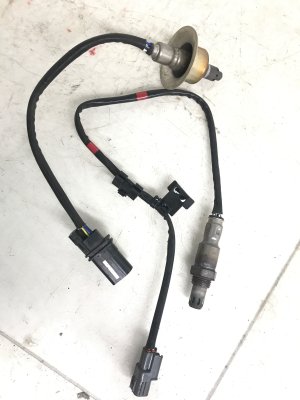
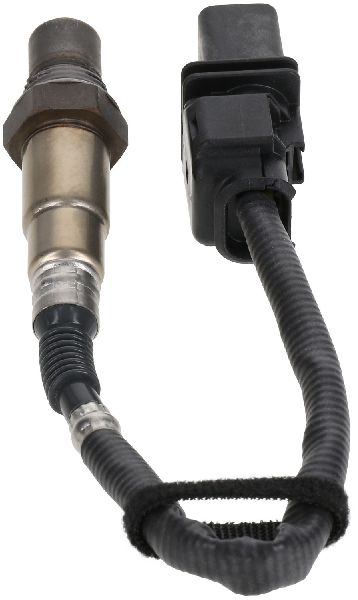
New Aftermarket Parts Available

The information in this article is provided for general reference and educational purposes only. Vehicle specifications, procedures, and part compatibility can vary by production date, trim level, and region. Always consult your vehicle's factory service manual and verify part numbers before purchasing or performing repairs. Safety-critical components such as airbags, seat belts, and braking systems should be installed by a qualified professional.
- Kia Stinger:
- 🧭 Diagnostic Flowchart
- 🎬 Helpful Videos
- 🛍️ Shop This Part
- What's Unique About the 2018-2023 Kia Stinger
- Symptoms You May Notice
- Most Likely Causes
- Rare But Worth Checking
- Diagnosis Steps
- Parts You'll Likely Need
- Related Codes That Often Appear With This One
- Platform-Specific Known Issues
- Mechanic-Grade Diagnostic Values
- Scan Tool Commands That Help
- Wiring & Ground Locations
- Real Owner Repair Stories
- OEM Part Supersession History
- Model Year Variations Within This Range
- Other Known Issues on This Vehicle
- Used vs. New Parts: Buying Guide for This Vehicle
- Real Owner Stories
- 2018-2023 Kia Stinger 3.3L Twin-Turbo V6
- 2018-2024 Genesis G70 3.3T V6
- Related OBD-II Codes
- Frequently Asked Questions
- 🎟️ Get 5% Off