

P0141 on 2010-2013 Mazda 3 2.0L: O2 Sensor Heater Circuit Causes and Fixes
This code indicates a malfunction in the heater circuit of the downstream oxygen sensor (Bank 1, Sensor 2). The most common fix is replacing the sensor itself, which costs around $40-$100 for an aftermarket part. Before replacing, check the sensor's fuse and inspect the wiring for damage.
- P0141 points to a problem with the heater inside the downstream O2 sensor (after the catalytic converter).
- The most likely fix is to replace the downstream O2 sensor.
- Before buying parts, perform a quick visual inspection of the sensor's wiring and check the corresponding fuse (e.g., ENG+B F24).
- This issue will not prevent you from driving the car, but it will cause an automatic failure on an emissions test.
- The electrical connector for this sensor is usually found in the engine bay, attached to the firewall, making it easier to access for testing.
What's Unique About the 2010-2013 Mazda 3
For the 2010-2013 Mazda 3 (second generation, BL), the P0141 code is a straightforward and common issue, almost always pointing to the downstream O2 sensor. Unlike some cars where wiring is a frequent culprit, on this platform, the sensor's internal heater simply fails with age and heat cycles. A unique and helpful quirk for this model is that the downstream sensor's electrical connector is often located up in the engine bay, clipped to the firewall on the passenger side, rather than under the car. This makes access for testing significantly easier than on vehicles where the connector is exposed to underbody corrosion.
Symptoms You May Notice
- Check Engine Light is on.
- Failure to pass an emissions test.
- Slightly decreased fuel efficiency in some cases, though often not noticeable.
- Replacing the upstream (Sensor 1) oxygen sensor instead of the downstream (Sensor 2) sensor.
- Replacing the catalytic converter. A bad converter typically sets a P0420/P0421 efficiency code, not a P0141 heater circuit code.
Most Likely Causes
- Failed Downstream Oxygen Sensor 🔴 High Probability → Shop Oxygen Sensor The internal heater element is a common failure point due to constant heat cycles over many miles. It is considered a wear-and-tear item.
How to confirm: Disconnect the sensor and test the resistance between the two heater circuit pins (often the two same-colored wires) using a multimeter. A reading of an open circuit (infinite resistance or 'OL') confirms the heater has failed. A healthy sensor for this vehicle should have a low resistance, typically in the range of 5-20 Ohms when cold.
Typical fix: Replace the downstream (Bank 1, Sensor 2) oxygen sensor. Using a 22mm (or 7/8") slotted oxygen sensor socket is highly recommended.
Est. part cost: $40 - $120 - Damaged Wiring or Connector 🟡 Medium Probability The wiring harness runs under the vehicle and is exposed to road debris, heat, and moisture, which can cause wires to fray, break, or corrode over time. However, the connector's location in the engine bay on many of these models reduces the risk of connector-specific corrosion compared to under-car connectors.
How to confirm: Visually inspect the entire length of the sensor's wiring harness from the sensor to the engine bay connector for any signs of melting, chafing, or breaks. Check the connector pins for corrosion (green or white powder) or damage.
Typical fix: Repair the damaged section of wire or clean/replace the connector.
Est. part cost: $5 - $30 - Blown Fuse for O2 Heater Circuit ⚪ Low Probability
How to confirm: Consult the owner's manual or the fuse box diagram for the engine bay fuse box located between the battery and fender. While a specific fuse labeled 'O2 heater' may not exist, the circuit is often protected by a fuse labeled 'ENG' or similar, such as the 10A 'ENG+B' fuse in slot F24. Visually inspect the fuse and test for continuity.
Typical fix: Replace the blown fuse. If the new fuse blows immediately, it indicates a short circuit in the wiring that must be diagnosed.
Est. part cost: $1 - $5
Rare But Worth Checking
- Powertrain Control Module (PCM) Fault: → Shop Engine Control Module (ECM) This is extremely rare. Before suspecting the PCM, all other possibilities, including the sensor, wiring, and fuses, must be exhaustively ruled out. A PCM failure would likely present with other trouble codes as well.
Diagnosis Steps
- Scan the vehicle for any other trouble codes. Address other codes first if they are present, especially P2096, which may indicate an exhaust leak that should be checked with a smoke test.
- Locate the downstream oxygen sensor (Bank 1, Sensor 2) in the exhaust pipe, after the catalytic converter.
- Follow the wire from the sensor up to the engine bay. Locate the gray electrical connector, typically clipped to the firewall on the passenger side.
- Visually inspect the sensor's wiring harness and connector for any obvious damage, such as melting, fraying, or corrosion.
- Check the fuse for the O2 sensor heater circuit (e.g., 'ENG+B' fuse F24) in the engine bay fuse box. Replace if blown.
- If the wiring and fuse are okay, disconnect the sensor. Use a multimeter set to Ohms to measure the resistance of the heater circuit on the sensor side (between the two same-colored wires). An open circuit (infinite resistance) or a reading outside of the typical 5-20 Ohm range indicates a failed sensor.
- If the sensor's resistance is good, check for power and ground at the vehicle-side connector with the key on, engine off. You should have battery voltage (~12V) on one pin and a good ground on another. Lack of either points to a wiring or PCM issue.
- If the sensor has failed, replace it. Soaking the threads with penetrating oil (like PB B'laster) beforehand is highly recommended as they are often seized. A 22mm O2 sensor socket will be necessary.
- After replacement, clear the trouble code with a scanner and perform a test drive to ensure the light does not return.
Parts You'll Likely Need
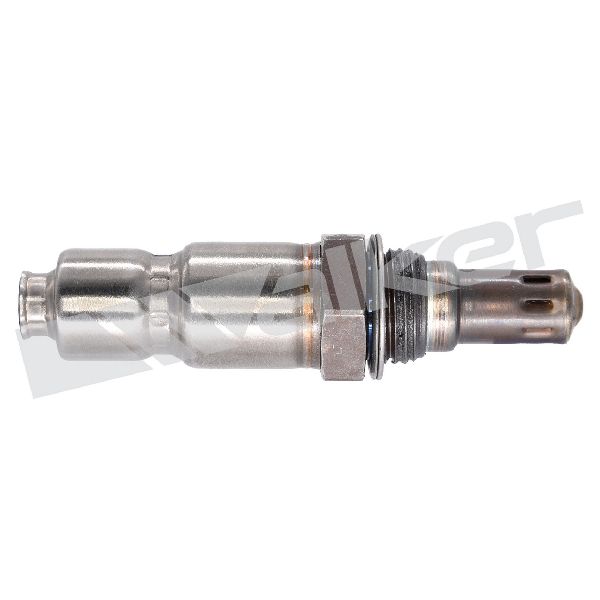
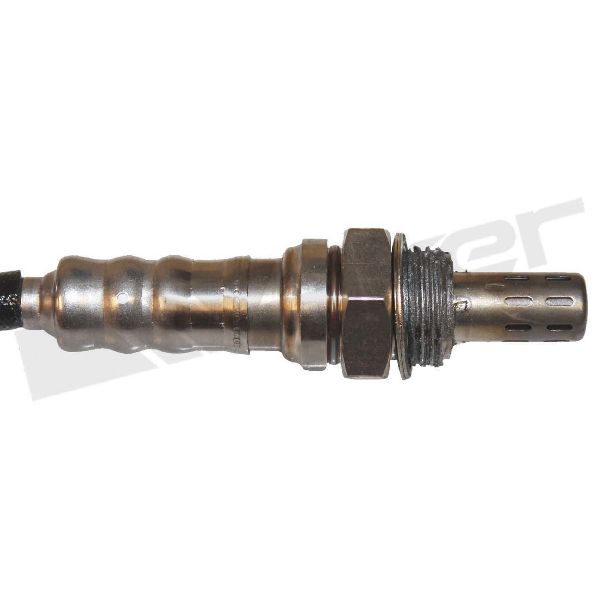
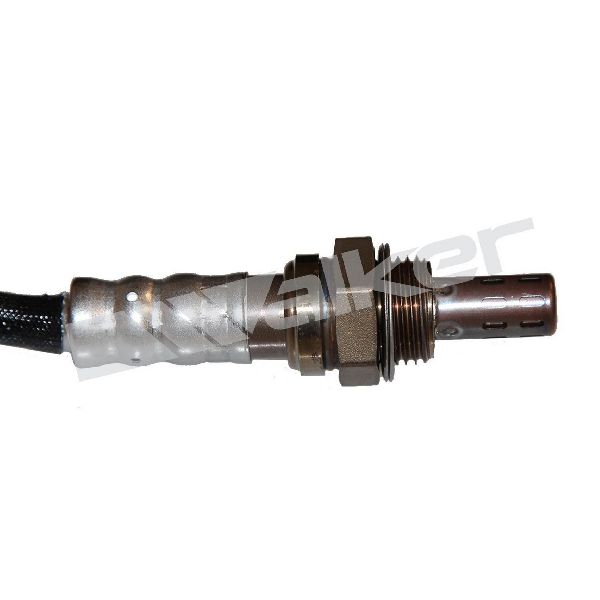
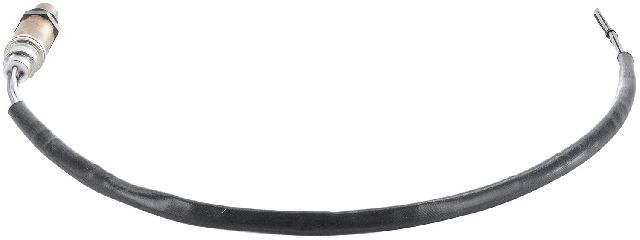
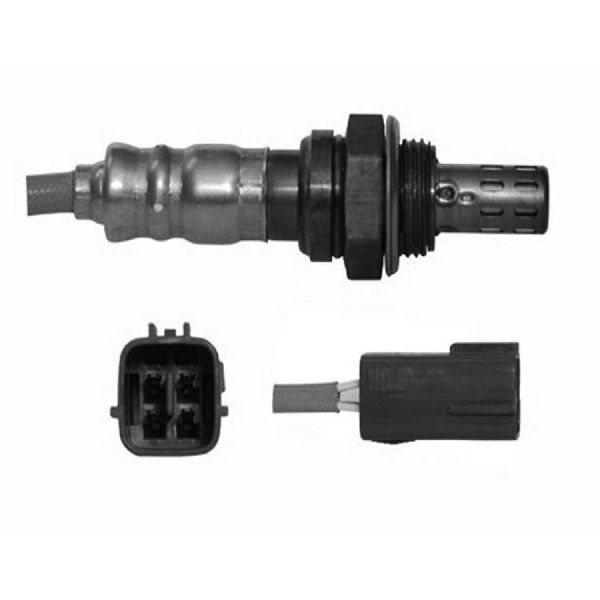
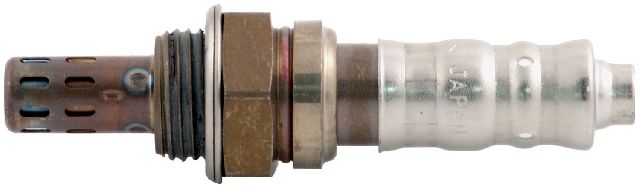
- Downstream Oxygen Sensor (Bank 1, Sensor 2)
(OEM #LF8R-18-8G1)— This is the most common cause of a P0141 code, as the internal heater element fails over time.
Trusted brands: Denso (e.g., 234-4330), NGK/NTK, Bosch, Walker
OEM price range: $150-$200
Aftermarket price range: $40-$120
Related Codes That Often Appear With This One
- P0140 — P0140 indicates 'No Activity' from the same sensor. A failed heater (P0141) can prevent the sensor from warming up and sending a signal, thus triggering P0140.
- P0137 — P0137 indicates 'Low Voltage' from the same sensor. A wiring issue or sensor failure causing the P0141 heater fault could also lead to a low voltage reading.
- P2096 — This code for 'Post Catalyst Fuel Trim System Too Lean' is a very common companion on this platform. An exhaust leak between the two O2 sensors can cause both codes to appear. The leak introduces oxygen, making the sensor read lean (P2096) and flatline, which the PCM can interpret as inactivity or a fault (P0140/P0141).
Platform-Specific Known Issues
- Real Owner Experience: P0141 and P2096 Together: A user on Reddit with a 2010 Mazda 3 reported having the downstream O2 sensor replaced multiple times by a shop to fix a P0140/P2096 combination, but the codes kept returning. The actual root cause was found to be a small leak in the exhaust system, not the sensor itself. This highlights the importance of performing an exhaust smoke test when P0141 is paired with a lean code like P2096 before replacing parts.
Mechanic-Grade Diagnostic Values
- Downstream O2 Sensor Heater Circuit Resistance — expected: 5 - 20 Ohms (when cold). Failure: Open circuit (OL or infinite resistance) or a value significantly outside the expected range.
- O2 Sensor Heater Power Supply (at vehicle-side connector) — expected: ~12V (Battery Voltage) with Key On, Engine Off (KOEO). Failure: No voltage or significantly low voltage, indicating a problem with the fuse or power supply wiring.
- O2 Sensor Heater Ground Circuit (at vehicle-side connector) — expected: Pulsing ground signal when tested with a test light connected to battery positive, shortly after engine start.. Failure: No pulsing ground signal from the PCM, which could indicate a wiring issue or a fault in the PCM driver circuit.
Wiring & Ground Locations
- Main Engine Ground — On the engine block near the passenger-side motor mount, where the main negative battery cable connects.. A poor main engine ground can cause a variety of electrical issues, including erratic sensor behavior. While not a direct cause of a P0141 heater circuit fault, ensuring this ground is clean and tight is a foundational step in any electrical diagnosis.
- Transmission Grounds — There are several ground points on the transmission case, including one large and one small ground on the front of the case.. The PCM and other modules rely on solid ground paths through the engine and transmission. A corroded or loose ground here can affect the reference voltage for various sensors.
- Heater Circuit Ground Path — The ground for the O2 sensor heater element is not a direct chassis ground. It is controlled and supplied by the Powertrain Control Module (PCM).. This is critical for diagnosis. A lack of ground at the connector does not mean the wire is broken; it means the PCM is not commanding the heater to turn on, or the PCM's driver circuit has failed. The PCM pulses this ground to regulate heater temperature.
OEM Part Supersession History
LF8R-18-8G1→LF8R-18-8G1A— Standard part revision and update by the manufacturer.
Heads up: The original part number LF8R-18-8G1 is listed for the upstream (Sensor 1) on 2006-2009 models, while LF8R-18-8G1A is for the upstream sensor on 2010-2011 models. This part number is for the UPSTREAM sensor, not the downstream sensor related to P0141. This highlights a common parts lookup error. The correct downstream sensor part number must be verified by VIN, but common aftermarket replacements include Denso 234-4330.
Model Year Variations Within This Range
- 2012-2013: The Skyactiv-G 2.0L engine was introduced as an option in 2012. This engine uses different oxygen sensors and has different part numbers compared to the MZR 2.0L engine covered in this guide. It is crucial to verify the engine type before ordering parts.
Diagnostic Flowchart
Other Known Issues on This Vehicle
Issues unrelated to this code that are worth knowing about as an owner of this generation:
- Automatic Transmission Control Module (TCM) Failure 🔴 High — A very common problem for the 2010-2011 models in particular. The TCM is mounted on the transmission, causing it to fail from heat. Symptoms include harsh shifting, getting stuck in gear, and the 'AT' light illuminating.
- Melting/Sticky Dashboard 🟡 Low — Widespread issue on 2010-2013 models, especially in hot, sunny climates. The dashboard material deteriorates, becoming sticky and creating a dangerous glare on the windshield. (Ref: Mazda issued a warranty extension (SSP A4) for this issue, but it has since expired for most vehicles.)
- Premature Manual Transmission Clutch Failure 🟠 Medium — Reported frequently on 2010-2012 models with manual transmissions, sometimes failing in under 80,000 km. This led to a class-action lawsuit.
- Failing Passenger-Side Engine Mount 🟠 Medium — The hydraulic passenger-side engine mount is prone to leaking and collapsing, causing excessive engine vibration and noise at idle and when shifting into gear. This is a common failure point as the cars age. (Ref: TSBs like 01-012/16 exist for similar issues on later models, but this is a known wear item on the BL generation.)
Used vs. New Parts: Buying Guide for This Vehicle
When a used part is the smart pick: For this specific P0141 repair, using a used part is almost never recommended. The primary failure is the internal heater element of the oxygen sensor, which is a wear-and-tear item. A used sensor has an unknown amount of life left and is very likely to fail soon, if it's not already faulty.
Donor-vehicle mileage cap: roughly under 30000 miles for the part to have meaningful remaining life.
What to inspect on the donor part:
- If forced to use a junkyard part, source it from the newest, lowest-mileage vehicle possible.
- Inspect the wiring for any signs of fraying, melting, or brittleness.
- Check the connector for corrosion or damage.
- Avoid sensors that show heavy carbon buildup or physical damage to the sensor tip.
Aftermarket brands forum-validated for this vehicle:
- Denso (often the Original Equipment Manufacturer)
- NGK / NTK
- Bosch
Brands owners have reported issues with on this vehicle:
- Generic, unbranded, or 'no-name' sensors from online marketplaces are frequently reported on forums to fail quickly or be dead-on-arrival. It is best to stick with reputable brands even if they cost slightly more.
Real Owner Stories
Aggregated from forums and TSBs cited above. Mileages and costs reflect what owners reported in those sources.
2010 Mazda 3 2.0L — 142000 miles
Symptoms: Check engine light with persistent P0420 and P0141 codes. Live data showed erratic voltage swings from the sensor between 0.1V and 1.1V.
What fixed it: Replaced the downstream O2 sensor with part PE01-18-8G1.
Source hint: AliExpress Blog/User Review
2010 Mazda 3
Symptoms: Recurring P0140 and P2096 codes; the downstream O2 sensor had been replaced multiple times by a shop but the codes kept returning.
What fixed it: Repairing a small leak in the exhaust system.
Source hint: Reddit r/mazda3
Mazda 3 (High Mileage) — ~100000 miles
Symptoms: Simultaneous P0135 and P0141 codes, indicating dual heater failures.
What fixed it: Installation of a new Lambda sensor.
Source hint: AliExpress Blog/User Review
Related OBD-II Codes
Frequently Asked Questions
Where is the downstream O2 sensor connector located on my 2010-2013 Mazda 3?
Can I use a standard wrench to replace the sensor on my MZR engine?
My 2010 Mazda 3 has P0141 and P2096; should I just replace the sensor?
Which fuse protects the O2 heater circuit on the 2010-2013 Mazda 3?
What resistance should I see when testing the heater circuit on a new sensor?
Is the P0141 code related to the common 'sticky dashboard' or TCM issues on this generation?
Helpful Videos
![Engine Fault Code P0141 - O2 Sensor Heater Circuit [Symptoms, Causes, and Fixes]](https://img.youtube.com/vi/vBY3c_DON3Y/mqdefault.jpg)
We Have This Part in Stock

The information in this article is provided for general reference and educational purposes only. Vehicle specifications, procedures, and part compatibility can vary by production date, trim level, and region. Always consult your vehicle's factory service manual and verify part numbers before purchasing or performing repairs. Safety-critical components such as airbags, seat belts, and braking systems should be installed by a qualified professional.
- Mazda 3:
- 🧭 Diagnostic Flowchart
- 🎬 Helpful Videos
- 🛍️ Shop This Part
- What's Unique About the 2010-2013 Mazda 3
- Symptoms You May Notice
- Most Likely Causes
- Rare But Worth Checking
- Diagnosis Steps
- Parts You'll Likely Need
- Related Codes That Often Appear With This One
- Platform-Specific Known Issues
- Mechanic-Grade Diagnostic Values
- Wiring & Ground Locations
- OEM Part Supersession History
- Model Year Variations Within This Range
- Other Known Issues on This Vehicle
- Used vs. New Parts: Buying Guide for This Vehicle
- Real Owner Stories
- 2010 Mazda 3 2.0L — 142000 miles
- 2010 Mazda 3
- Mazda 3 (High Mileage) — ~100000 miles
- Related OBD-II Codes
- Frequently Asked Questions
- 🎟️ Get 5% Off